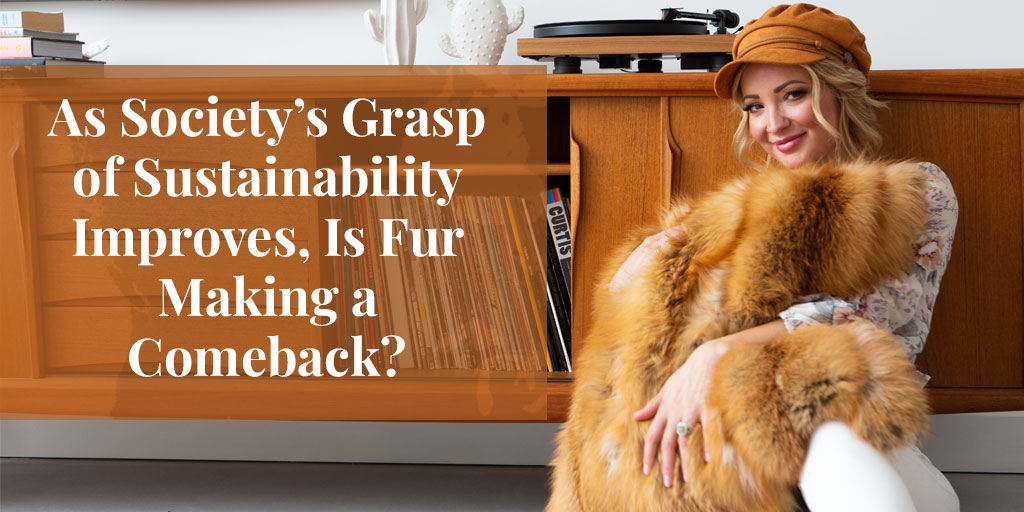
You may recall that Coloradans recently defeated an anti-fur ballot initiative, and probably assume that the state is safe for… Read More
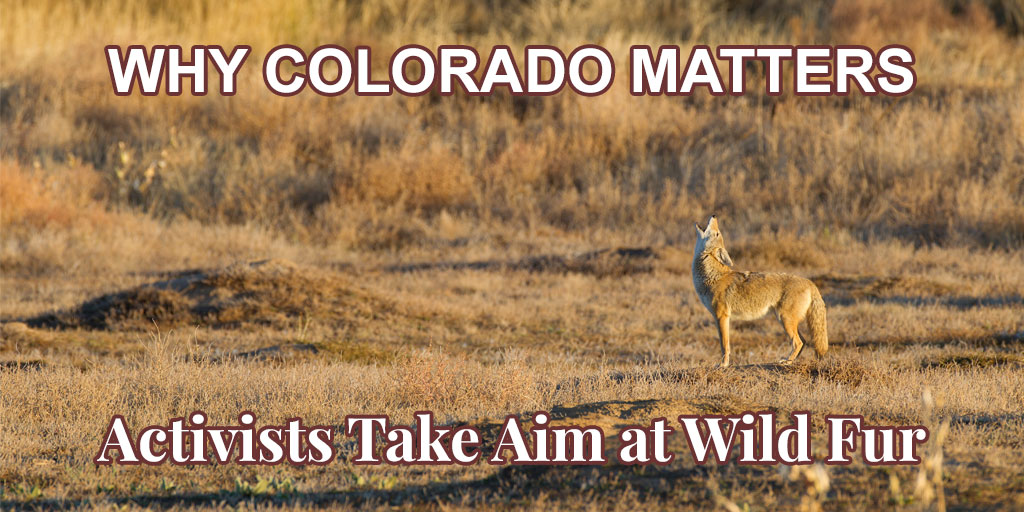
A coyote howls in Rocky Mountain Arsenal National Wildlife Refuge. Photo: USFWS Mountain-Prairie, Public domain, via Wikimedia Commons.
You may recall that Coloradans recently defeated an anti-fur ballot initiative, and probably assume that the state is safe for now. But your assumption would be wrong. Now opponents of fur are looking to introduce a statewide ban on the sale of all wild fur – something they've not tried in the past.
That battle, which garnered a lot of news coverage, especially for the slogan "Hands off our hats", sent a clear message that most Coloradans would not stand for animal rights groups telling them what they could and couldn't trade. But perhaps the message was not clear enough. Now a petition from the anti-fur Center for Biological Diversity has accused the Colorado Parks and Wildlife Commission (CPWC) of violating sound conservation practices, with the aim of forcing a statewide ban on all trade in wild fur.
Attacking Wild Fur
As Executive Director of the Fur Institute of Canada (FIC), I frequently attend meetings, auctions, trade shows and the like, across Canada and around the world, where fur is the number one topic of conversation. But at many of these events, I am also in a minority. Why? Because our organization represents the interests of all kinds of fur, including wild fur.
Much of the global fur trade deals only with ranch fur. Many designers and manufacturers, for example, are concerned above all with the different colour phases of ranch foxes and mink, but have no interest in where or when the best coyotes are harvested. (This reality is also why fur ranchers attract so much attention from anti-fur activists.)
When combined with the strong and easily understood arguments in favour of regulated trapping, this explains why many folk assume wild fur is comparatively “safe”. Trapping plays a key role in wildlife management, it's an important part of livelihoods for Indigenous communities, and its heritage underpins so much of our shared history across North America.
But that idea is now being challenged in Colorado. If successful, the anti-fur lobby will use the CPWC to introduce a statewide ban on the sale, trade and bartering of all wild fur.
Over the last 40 years or so, trappers have grown used to attacks that focus on the welfare of individual animals caught in traps, but this time things are different.
This time, the aim of the anti-fur lobby is not to attack wild fur for how it's harvested, but rather to claim that the mere act of trapping violates the North American Model of Conservation, as spelled out by the Association of Fish and Wildlife Agencies.
When the CPWC meets next on March 4–5, it will discuss a proposal from the Center for Biological Diversity that says the state's current science-driven regulations are not fit for purpose, and that there needs to be a statewide commercial ban on wild fur.
As a community, we must stand together against efforts to restrict, reduce or eliminate the fur trade. That includes trappers, hunters, farmers, ranchers, First Nations, rural landowners, fur buyers, manufacturers, retailers, designers and artisans, from all parts of North America. Everyone who enjoys our world-class garments and accessories needs to be heard.
Both the FIC and the CRWM firmly believe that by standing together, we can be far more than the sum of our parts. Now is the time for all of us to support efforts to keep commercial fur trapping alive in Colorado. And that is why the FIC will be joining CRWM in Denver next week, giving voice to all Canadians who support science-based, well-regulated wildlife management.
the Citizen Petition Form "Prohibiting the sale of furbearer furs with exemptions", June 16, 2025;
"Petition to amend 2 CCR 406-018 to prohibit the commercial sale of wildlife fur in Colorado", submitted by the Center for Biological Diversity, June 16, 2025; and
the recommendation to deny the above petition submitted by the Division of Parks and Wildlife, Department of Natural Resources, February 19, 2026.
Consumers are receiving mixed signals, with some saying fur is back and others saying it’s on its last legs. So… Read More
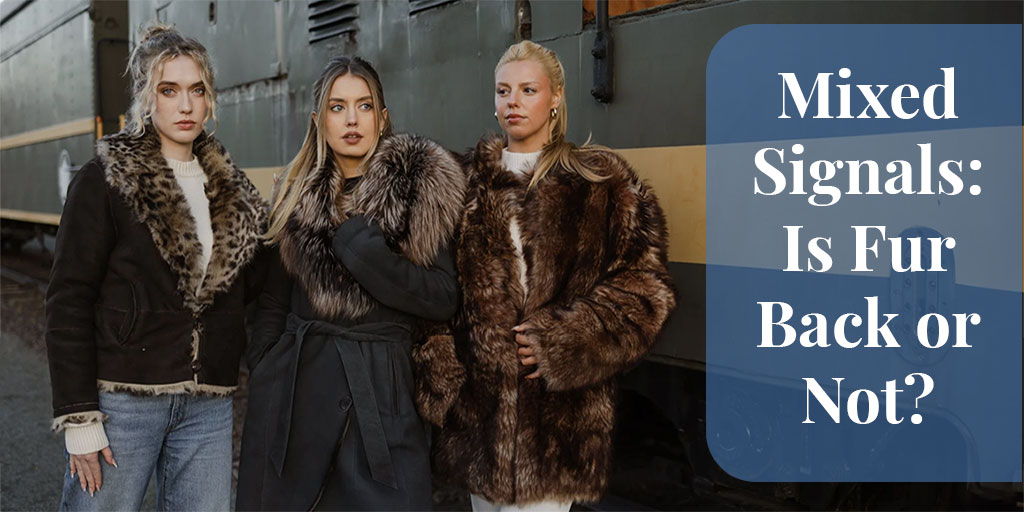
Is fur in or out? Or can it be both at the same time? Photo: Always in Vogue.
Consumers are receiving mixed signals, with some saying fur is back and others saying it’s on its last legs. So does someone have the story wrong? Let’s see where the evidence points.
Compared with the 1980s, when fur sales were strong in all traditional markets, today’s trade has shrunk, a fact it blames on the anti-fur lobby. But it also says fur is making a modest comeback. In contrast, anti-fur campaigners insist the fur trade is terminal.
In our quest for the truth, let’s journey back in time, hoping this will help explain where fur really stands today.
Animal Rights Playbook
The anti-sealing campaign was the start of the modern animal rights movement.
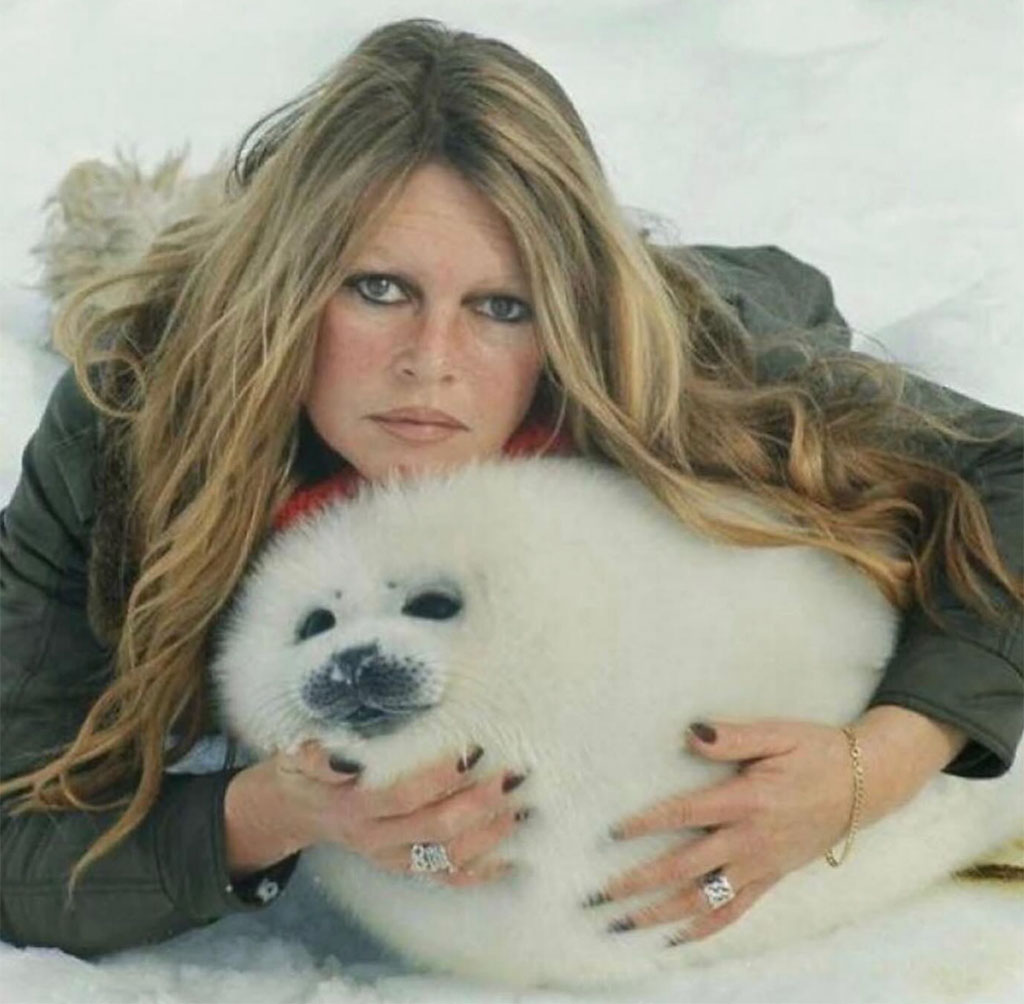
The modern animal rights playbook was written in the 1970s on the blood-stained ice floes of Atlantic Canada. With a cast of cute seal pups and “evil” sealers wielding hakapiks, protesters learned that all they had to do was provoke a fight (think Paul Watson) while Brigitte Bardot added credibility and sex appeal. The media lapped it up, and the campaign was hugely effective.
Another landmark came in 1990 when People for the Ethical Treatment of Animals launched the campaign “I’d rather go naked than wear fur”. Everyone knew that sex sold, but this was the first time animal rights had been conflated with naked women. Again the campaign was a media hit, prompting PETA founder Ingrid Newkirk to tell The New Yorker in 2003: “We are complete press sluts”. (PETA officially “retired” the campaign in 2020, but this was probably just to give media an excuse to run old campaign photos.)
Meanwhile, the fur trade was losing ground. The media (and their viewers) were by now hooked on images of stressed animals and naked women, and the fur trade couldn’t compete. Plus, funds were running low for public relations, and while some people were determined to fight back, they couldn’t agree on how to do this.
New Tactics
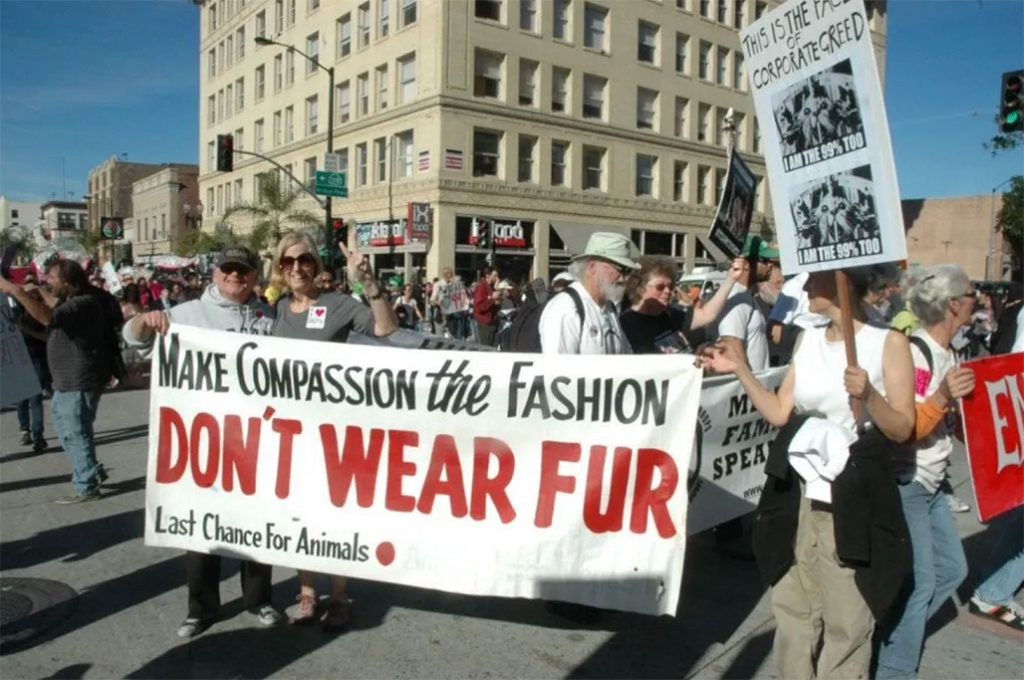
West Hollywood was the first Californian city to ban fur sales. Photo: Last Chance for Animals.
Then the 2000s arrived and the anti-fur lobby expanded its already strong arsenal with some new tactics.
Pushing local fur bans: One tactic has been to push US city governments to ban production and/or sales of fur. The fur trade must then file lawsuits to have ordinances overturned.
Almost all of the anti-fur lobby's victories so far have come in Californian cities, followed by a statewide ban from 2023. Notably absent has been the snowball effect campaigners hoped for in major cities and states elsewhere.
Still, it’s an effective tactic even when ban attempts fail, since it generates media exposure and costs the fur trade money. This has happened in cities where fur is more entrenched, like New York City in 2020, Denver in 2024, and Chicago in 2025.
Pressuring players to switch from real fur to fake: Another tactic has been to get key players to drop real fur in favour of fake, with the anti-fur lobby then taking credit for players “seeing the light”. While a few early converts required little persuasion, most victories have only come about after harassing executives with methods like demonstrating outside workers’ homes. Targets have been diverse, ranging from luxury brands and designers, to department stores, fashion shows and even magazines.
Fur farming bans: Yet another tactic has been to pressure governments to ban fur farming or pass regulations so draconian that it makes no sense to continue.
Though in its third decade, this campaign gained fresh legs during the Covid-19 pandemic as activists stoked fear that mink farms breed zoonotic diseases. This fear was key in the 2020 move by Denmark – then the world's leading mink farmer – to cull its entire herd, and British Columbia’s 2021 decision to phase out mink farming.
This campaign has been especially effective in the European Union, with most members having already introduced partial or total bans, the latest being Poland. Meanwhile, the "Fur Free Europe" citizens' initiative gathered over 1.5 million signatures opposed to fur farming and the sale of farmed products, obliging the European Commission to decide by next March whether to propose an EU-wide ban.
Whether an EU-wide ban happens is still unknown, plus the issue of wild fur will remain on the table. But with some 70% of fur currently coming from farms, and global output contracting steadily, who, if anyone, will pick up the slack?
So kudos to the anti-fur lobby. Though it has often fought dirty, its tactics have undeniably hurt the fur trade.
Plastic Windfall
As Gucci president and CEO in 2017, Marco Bizzarri demonstrated a complete misunderstanding of sustainable use. Photo: Gpautou, CC BY-SA 4.0 via Wikimedia Commons.
But another version of this story has it that fur is making a comeback. If true, it all began with a windfall for the trade: a miscalculation by its opponents.
When the modern animal rights movement emerged in the 1970s, Western society was made keenly aware of animal welfare issues. These remain important today, but have been superseded by existential issues threatening the very future of the planet.
In recent years, society has undergone a sea change, with terms like “sustainability”, “climate change”, “global warming” and “renewable energy” entering everyday usage. And the cause célèbre is how to wean ourselves off fossil fuels like petroleum.
Of course, the fur trade has always known fur is sustainable: it’s durable, biodegradable and renewable, and its environmental footprint is a lot smaller than the anti-fur lobby claims. So logically, society's shift in priorities should benefit real fur, and work against fake fur made of non-renewable, polluting, non-biodegradable, petroleum-based plastics that only add to the tons of microplastics already in our watersheds and oceans.
So what have most anti-fur groups done? Rather than keeping their message simple and opposing all fur, real and fake, they have thrown their support behind fake fur as a replacement for the real deal, falsely claiming it is more sustainable!
This is now backfiring. Not only has fake fur kept the furry look (real or fake) on the fashion radar, it has also exposed the anti-fur lobby as dishonest.
Perhaps the biggest shock for the fur trade came in 2017, when Gucci announced it was dropping real fur. Both the world-famous brand and its animal rights handlers effused about how the move enhanced sustainability, and for a while the fur trade feared society would simply fall for this deception. But now, the media and consumers are at least questioning whether fake fur was the right way to go.
The anti-fur lobby, meanwhile, has attempted damage control, such as by calling plastic garments “vegan clothing”, and promising we'll all be wearing “bio-fur” soon, made of fungi, nettles, pineapple and the like.
Maybe one day we will. But for now, almost all manufacturers of fake fur still prefer the petrochemical kind, so the harm it does to the environment continues.
Recycled Vintage Fur
Outside London Fashion Week, wearing fur is fine, but inside is a different story. Photo: garryknight, CC BY 2.0, via Wikimedia Commons.
Then, to confuse matters further, along came vintage fur.
As any fashionista knows, recycled and remodeled vintage furs have been in vogue for a few seasons. Many come from thrift stores and are at least 40 years old, though with demand still strong, it's inevitable that dwindling supplies are seeing ages fall.
For an example of just how vintage furs have confused the picture, look at media coverage last February of the New York and London Fashion Weeks.
Hoping as always for a new angle, on Feb. 16 the New York Times ran a piece titled “What happened to the stigma of wearing fur?” “[I]n January,” wrote Jessica Iredale, “women and men all over town were busting their furs out of storage in what felt like an abrupt reversal of social values.” For years, wearing fur in the US and Europe had felt taboo. “Except, suddenly, people don’t seem to care – especially if the wearer can assert the mantle of ‘vintage’, as no animals were freshly killed and upcycling old clothes is more virtuous than buying new.”
The irony was that last December, New York Fashion Week announced a ban on fur from 2026!
Even more ironic was a report in The Standard (Feb. 21) during London Fashion Week titled “How luxury fell back in love with real fur and crocodile skins”. It was commenting on the street scene rather than on the show’s runways, because it couldn’t do otherwise. London Fashion Week had already banned fur, in 2023, followed the next year by exotic skins and feathers!
What message were these reports sending to consumers?
Was the real story not about vintage furs, but about the resurgence of fur in general? Were the likes of New York and London Fashion Weeks just part of an ivory tower trying to move past fur, while the streets said the opposite?
Predictions
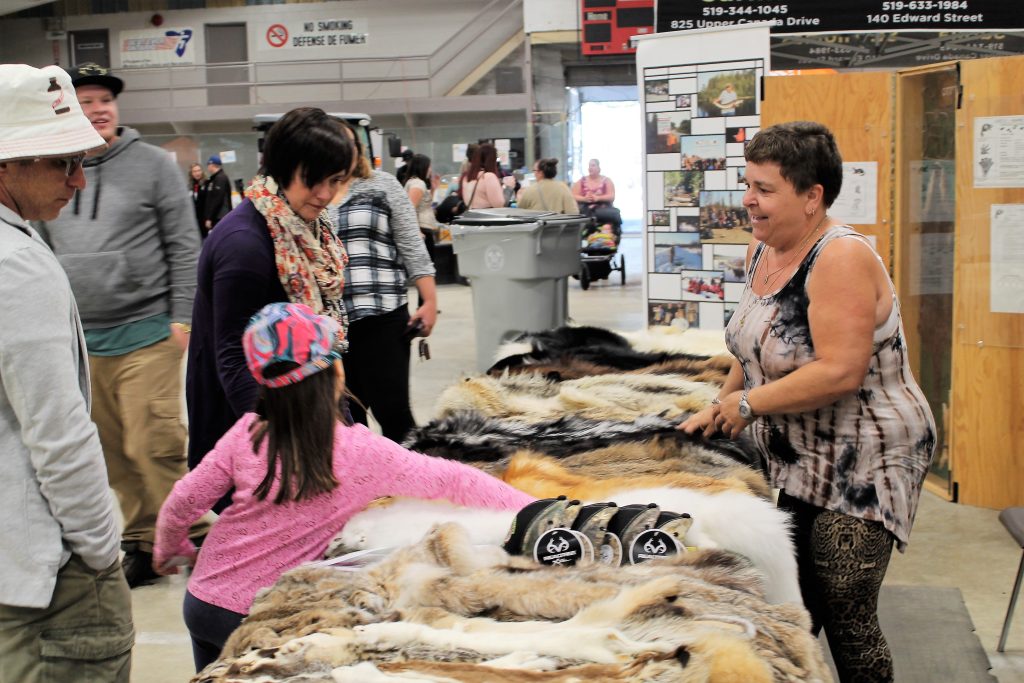
If there is a shortage of farmed fur, sales of wild fur are likely to increase. Photo: Timmins Fur Council.
So where does this leave the fur trade today?
Let's first agree who we’re talking about. I'll call it the Western fur trade, that caters primarily to certain consumers in two regions: North America and Europe, and an East Asian bloc, centering on China and South Korea, that buys a lot of pelts at Western auctions and has designers showing on Western runways. Millions of fur users, especially Indigenous peoples in the High North, don't belong in this category, and won't stop using fur just because of a few bans passed in Western capitals.
That said, the Western fur trade has been under attack for decades, giving the anti-fur lobby plenty of time to refine some highly effective tactics.
No one will deny that these tactics have hurt the fur trade, but many believe the trade has now turned a corner to recovery. Assuming this is true, how durable that recovery is depends on the trade's ability to change.
One change that may be unavoidable is a fall in total output of farmed fur, plus a shift in suppliers. When shortages seemed likely in the past, North American, European and (in this century) Chinese farms simply increased production. But this time around will be different.
Obviously, EU production is falling and may stop entirely, but it's also down in North America due to bad publicity from the anti-fur lobby, and no one is expanding right now. So unless Chinese farmers step up again, or another country fills the breach, a supply shortage could be looming that requires the fur trade to operate at a reduced scale.
There are, however, a few avenues that are already expanding.
One is sales of wild fur. Pelt prices are edging up for some species; for example, at Fur Harvesters Auction last month, interest was strong in bobcats, marten and wild mink. Also, the number of trappers is increasing in many places. And since trapping is now widely recognised as an important conservation tool, choosing wild fur is one way consumers can show their support for sustainable use. There is still opposition to trapping where wildlife and human habitats coincide, notably among dog walkers, but also on the rise are problem animals like coyotes with mange, rabid raccoons and destructive beavers, so trapping won't disappear anytime soon.
Other avenues for expansion are better opportunities for artisanal designers and online retailers, especially in remote areas. Factors fueling this growth include the departure of most luxury brands and department stores from the real fur market, the closure of many brick-and-mortar furriers in expensive downtown locations, and of course the rise of the Internet, which makes it possible to run businesses in remote locations that were not viable before.
Whether all this translates into a comeback for fur remains to be seen, but the signs so far are promising. For now, there's a paradox: on the one hand, the anti-fur lobby continues its efforts to end the fur trade, with a lot of success. But on the other, many media reports and eye-witness accounts say fur is back in fashion. Who is right? Only time will tell for sure.
The news about fur is so muddled these days, it’s no wonder some people are confused. Take the surging popularity… Read More
Politically-correct designers say shearling is not fur at all! Photo: HiSO.
The news about fur is so muddled these days, it’s no wonder some people are confused.
Take the surging popularity of used furs. As we reported recently, GenZ is embracing “vintage” as a guilt-free way to enjoy the comfort and beauty of fur. After all, the animals died long ago, and reusing old clothing is better for the planet than contributing to mountains of discarded – usually petroleum-based – fast fashion. Fine, but why stop there? After all, today’s new furs will be tomorrow’s vintage.
Similarly, shearling is trending on fashion runways, with politically-correct designers claiming it is not fur at all. But isn’t it? Shearling is an animal hide (sheepskin) processed with the hair attached, the same as any other fur. Some find it reassuring that sheep are raised for food, that my shearling jacket is just the packaging from someone’s rack of lamb – a distinction that probably wouldn’t impress sheep. In any case, Indigenous and other trappers eat beaver, muskrat, seal, and other fur animals. What’s the difference?
Meanwhile, anti-fur campaigning continues: governments are lobbied to ban fur production; many apparel companies have stopped selling it; and Vogue – following the retirement of their dauntlessly independent editor, Anna Wintour – recently announced that fur will no longer appear in the magazine, even in advertising.
So, is fur back in fashion, or isn’t it? Why is sheepskin now cool, but mink and beaver not so much? And how does fur become more ethical with age, or is it just the lower price point that draws young people to “vintage”?
Quite the muddle.
Why All the Fuss About Fur?
Of course, there’s nothing new in muddled thinking about fur. Animal activists have spent decades tarring fur trapping as cruel – even as millions were invested by governments and industry to assure the humaneness of trapping.1
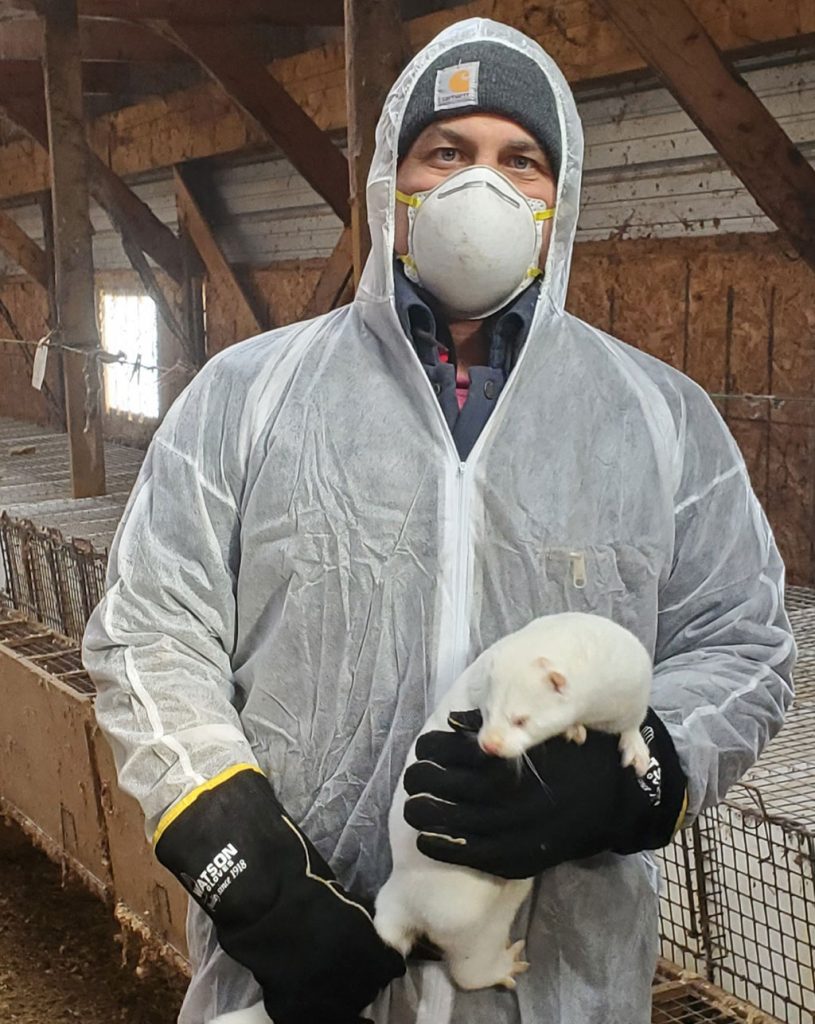
Activists also denounce mink farming, claiming that it’s cruel to keep “wild animals” in pens. But mink have been raised on farms in North America since the 1870s. After more than 150 generations of selective breeding they are very different than their wild cousins – they are twice the size, much tamer, and well adapted to life on the farm.2
The fur trade is not a rogue industry, it has adopted responsible practices just like other agricultural sectors. From an animal-welfare perspective, it sometimes scores better: wild furbearers roam freely in nature until the moment they’re captured; farmed mink – precisely because they are not used for food – are spared the long truck ride to distant abattoirs. And yet, in a society where literally billions of animals are eaten each year, the fur trade has been treated as a pariah. Go figure.
Sustainability
Animal rights groups provide a cover for petroleum-based synthetics that are anything but sustainable. Photo: Genghiskhanviet.
Another example of muddled thinking is the belief that we should stop using fur if we wish to protect nature. When Gucci CEO Marco Bizzarri announced that his prestigious designer label would go “fur-free”, in 2018, he claimed this demonstrated “our absolute commitment to making sustainability an intrinsic part of our business.” Other companies followed suit, revealing how little they understood (or cared?) about what sustainability really means.
Many wild species are indeed threatened by climate change, pollution, urban sprawl, and other challenges. Some fear we are witnessing a “Sixth Mass Extinction”. But the modern fur trade does not deplete wildlife populations; the fur we use today comes from abundant populations. Government regulations ensure that only part of the surplus that nature produces is taken each year – which is true sustainability. This is why Greenpeace, the Worldwide Fund for Nature (WWF), the International Union for Conservation of Nature (IUCN) and other serious environmental conservation groups do not oppose the fur trade. The North American fur trade is a conservation success story that deserves to be better known.
And so, anti-fur campaigners – and companies that yield to their pressure – are not promoting sustainability at all. Quite the contrary: because “animal rights” groups oppose using any animal products – no fur, no leather, no wool, not even silk -- they provide cover for petroleum-based synthetics that are not renewable or biodegradable, that leach micro-plastics into the environment each time they are worn or washed – but are now often marketed as virtuously “vegan”.
The Medium Is the Message
For many of today's children raised in cities, cartoons define their fantasies of nature.
Confusion about fur is not accidental. Animal-rights advocates are not interested in acknowledging the animal-welfare and conservation achievements of the fur trade because they oppose any use of animals. As PeTA’s website clearly asserts: “Animals are not ours to experiment on, eat, wear, use for entertainment, or abuse in any other way.” But because few people are prepared to follow PeTA to such lofty heights of moral purity – only 4% of North Americans are vegetarian; barely 1% say they are vegan – attacks on fur (and other animal-based industries) are disguised as animal-welfare campaigns, sensationalizing real or purported abuses.
Industry efforts to correct misinformation face the problem that, in an age of information overload, attention spans are limited, especially for subjects remote from most people’s daily lives. One gory photo trumps volumes of expert testimony.
Meanwhile, to retain fickle audiences, the media are drawn to controversy and confrontation. Trappers and mink farmers diligently tending their traplines or barns are not news; a dozen shouting protesters make better television – especially if some are topless. “We’re media sluts,” says PeTA co-founder Ingrid Newkirk. “We didn’t make the rules but we learned to play the game.”
The game is also rIgged demographically. Not so long ago, most North Americans still had family living on farms; summer vacations provided hands-on education about where food comes from – and respect for the skills and knowledge of people who fish, hunt, and raise livestock.
Now, for the first time in human history, most of us live in cities, with little or no contact with the land. Children are raised on Disney fantasies of nature, where the lion frolics with the lamb. The animals we frequent are mostly our pets, which increasingly are treated as “children”. Often, they sleep in our beds. When the only canine you know is your dog, it is easy to be upset by images of coyote trapping or fox farming – especially when the images are carefully selected to shock.
Fur is denounced as an “unnecessary luxury”, catering to spoiled rich people. But, despite its luxury image, the fur trade remains small-scale and artisanal; it lacks the financial and other resources that larger industries can deploy in response to misleading activist campaigns.
Protection Racket
Confusion is also caused when anti-fur campaigns become self-reinforcing feedback loops. When Canada Goose and other prominent apparel brands stop using fur, it suggests that something must be wrong with it; people must no longer want it. But the real reasons why companies drop fur have little to do with ethics or consumer demand. Store invasions, rowdy protests at the homes of CEOs, social media attacks, and other aggressive tactics simply make fur too hot to handle. When security and brand-reputation costs for a small segment of a company’s sales become too great, dropping fur is a business decision.
Consumers could also be bullied – especially because most were women. (A leading animal-rights theorist once told me he thought PeTA would show more integrity if they protested biker gangs for wearing leather jackets!) Many women stopped wearing fur, not because they thought it was wrong but for fear of having paint thrown at them. Ethics, indeed!
The Future of Fur
From an environmental perspective, fur is not a “frivolous luxury”. Photos: Benzing Charlebois.
So where do all these mixed messages leave us? Is the recent popularity of vintage fur and shearlings just a fashion blip, or the beginning of a real shift in the tectonic plates of social consciousness?
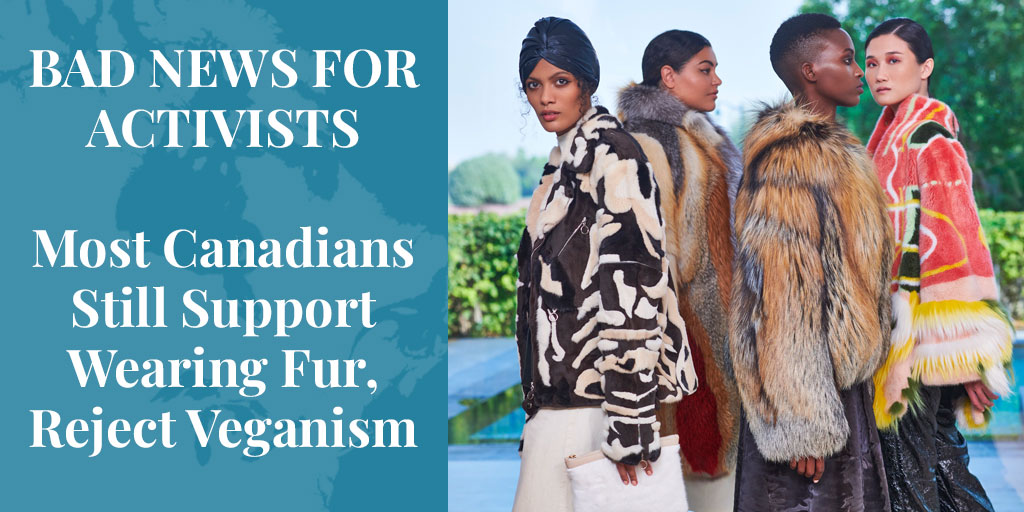
One encouraging sign: despite decades of negative publicity, most people have a more positive view of fur than animal activists would have us believe. An opinion poll commissioned by the Natural Fibers Alliance, in 2022, found that two-thirds (65%) of Canadians think wearing fur is acceptable so long as the industry is well regulated and animals are treated humanely. Only one-in-five (21%) disagrees – with just 10% saying they “strongly disagree”.
In the US, same story: 61% agree that brands and retailers can responsibly use and sell animal-based products including leather, wool, silk, and fur. Only 9% strongly disagree.3
More than three-quarters (77%) of Canadians also believe that wearing fur is “a matter of personal choice” – similar to findings in previous US studies – putting the lie to activist claims that the public supports their call for the governments to ban fur farms and retail fur sales.
Especially interesting: for the first time in the 25 years that I have reviewed such surveys, younger people (18-25) now see fur in a more positive light than their elders. GenZ’s love affair with fur is not a fluke.
People are becoming more aware of the environmental costs of non-biodegradable, petroleum-based “fast fashion” – not to mention concerns about the leaching of micro plastics into the food chain each time these synthetics are worn or washed. Bits of plastic are now being found in marine life, breast milk, and in our brains. Cruelty-free indeed.
Bottom line: people do need clothing, and if our goal is to embrace more sustainable lifestyles, fur checks all the boxes. Made from a natural, renewable resource, fur apparel is extremely long-wearing, can be re-styled as fashions change, and is often passed from one generation to the next – as highlighted by the current popularity of vintage. From an environmental perspective, fur is not a “frivolous luxury”.
From a cultural perspective, the fur trade preserves a treasure-trove of human knowledge, skills, and culture. Indigenous and other trappers are some of the last representatives of our hunter-gatherer heritage; with most of us now living in cities, they are our eyes and ears on the land, often the first to sound the alarm when pollution or habitat destruction threaten wildlife. Mink are raised on multi-generational family farms, providing income and employment for embattled rural communities. Fur artisans (my own grandfather was one) maintain extraordinary handcraft skills that have been transmitted through generations.
None of this means that everyone will want to wear fur. But the popularity of vintage furs and shearlings bucks the – until recently – seemingly irresistible push to “cancel” the fur trade. As Leonard Cohen sang: “There’s a crack, a crack in everything, that’s how the light gets in!” Time will tell whether GenZ’s new interest in fur will open the door to a more honest appreciation of this remarkable North American heritage industry.
FOOTNOTES
1) The program directed by the Fur Institute of Canada (since 1983) allows new trap designs to be rigorously tested and certified. It has supported new state and provincial regulations, trapper training programs, and, in 1997, the Agreement on International Humane Trapping Standards (AIHTS) – the world’s first international animal-welfare treaty. See also: Neal Jotham: A life dedicated to humane trapping. Truth About Fur, 2016.
2) Mink housing, nutrition, and care standards are set out in codes of practice developed by animal scientists and veterinarians, under the auspices of the National Animal Care Council.
3) Natural Fibers Alliance, personal communication.
Lately, I forced myself to watch the quite popular Paul Watson : Une vie pour les océans [Paul Watson: A… Read More
Paul Watson is troubled, megalomaniacal and dangerous. Photo: Witty lama, CC BY-SA 3.0, via Wikimedia Commons
Lately, I forced myself to watch the quite popular Paul Watson : Une vie pour les océans [Paul Watson: A Life for the Oceans], broadcast on the European public service TV channel Arte. After learning that I appeared in it, I sort of had no choice but to check it out, right?
Full disclosure: I don’t like Watson, and you’ll quickly understand why.
The advertising film (because that’s what it really is) tries to ennoble the pseudo captain – a fake title that suits his equally fake character very well.
Because, if the "captain" has neither title nor official certification, he is part of a short list of characters who have managed, like other guys of the genre (for example UFO religion founder Raël, International Fund for Animal Welfare [IFAW] founder Brian Davies, and wealthy televangelist Joel Osteen), to make a living with others’ money, and that, before the advent of web influencers. Applying a well-tested recipe, these characters have all experienced a "moment of awakening". Raël, for example, was abducted by aliens, while Osteen was contacted by God. For Watson, the epiphany came from the eye of a dying sperm whale. In the narrative, it looks chic.
One can, of course, romanticize Watson's life, as Arte has done so well. Or one can see it for what it really is.
Violent Temperament
https://www.youtube.com/watch?v=vHtn13rca_o
Paul Watson is known today for his shock of white hair, but he wasn't always that way!
Like hundreds of thousands of young people, especially in the 1970s, Watson wanted to change the world, and participated in protests of all kinds. Environmental issues were starting to get traction around that time. He joined Greenpeace, which quickly kicked him out in 1977 because of his instability and violent temperament. As he relates in the long Arte commercial, his father was violent, and his mother died when he was still young. Any human being remains marked by this kind of childhood.
A year later, in 1978, he gave an interview to Barbara Frum of the Canadian Broadcasting Corp. (CBC) in which, in an attempt to take revenge on his former colleagues, he revealed the true motivations and financial tactics of these activist groups. Decades later, their tactics are still the same: using charismatic species to get donations from people. Truly endangered species, if non-charismatic, rarely get attention.
When Watson realized that his strategy did nothing to diminish donations to Greenpeace, he created the Sea Shepherd Conservation Society (SSCS) and used the same tactics, with the same animal that filled the coffers of Greenpeace and IFAW: the seal.
It was during this period that I met Watson in the Magdalen Islands. You can see me for a few seconds in his commercial ... without my permission, of course. I am the only one who speaks in this excerpt (as French is my first language, my English is a little broken!), but not the only one whose images have been used without permission and who would refuse to be associated with such a criminal.
He and his minions would like the world to believe that the Magdalen Islanders expelled him (to put it politely) from their archipelago because they were drunk and hated him for wanting to "save the baby seals", but that's obviously very far from the truth.
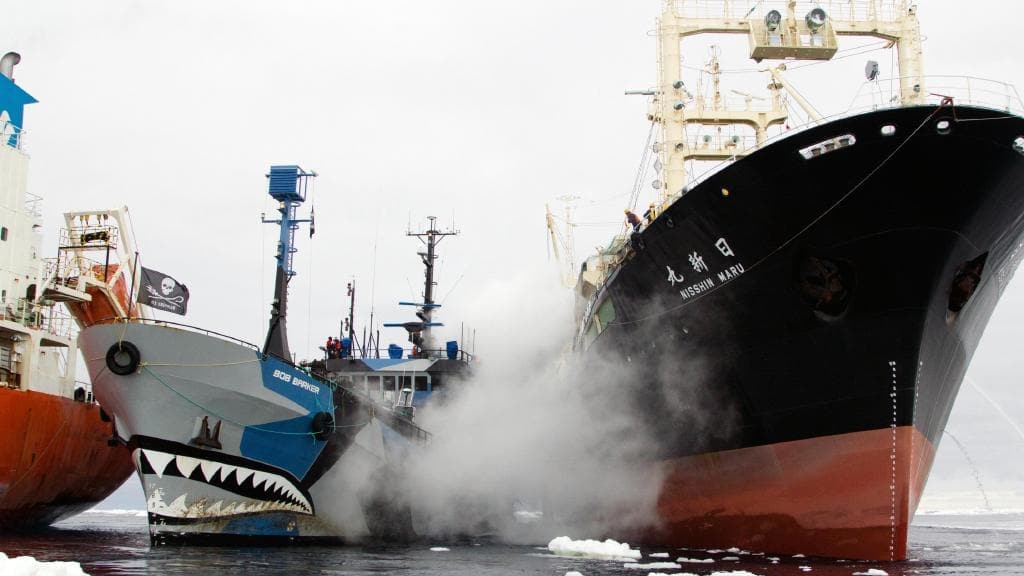
On several occasions throughout his career, Watson has instructed his crews to carry out maneuvers that endanger the lives of sailors, fishermen, hunters, husbands, fathers, and friends. The sailors of the Magdalen Islands have not escaped his intimidation techniques and they hated him for his scatterbrained and dangerous behaviour.
In the few minutes that Arte devotes to this episode, Watson tells more lies than I can relate here, but the funniest is when he claims to have "knocked out three of them with my stun gun". Even today, 30 years later, if you were to run into one of these sturdy guys, you'd quickly realize that the "captain" was no match for anyone in the group, even with the stun gun he invented to make it sound more Hollywood-like.
More precisely, when the dozen hunters entered the room, he crashed to the floor, livid, fear having sawed off his legs.
He knew exactly what he was doing when he came to taunt them on their own turf with his wacky proposal. As usual, he came to collect media images that he would use in fundraising activities. Efficient deceptions still require some effort and investment.
Since he was born not far from the Magdalen Islands, in New Brunswick, he would have been well aware of the affable nature of the people of the Maritimes. He certainly wouldn't have been treated with the same leniency in several other regions, as he surely knew very well.
Paul Watson has built his entire career on provocation. In 2008, when four Magdalen Island sealers lost their lives at sea, Watson couldn't resist shining a spotlight on himself by sullying their memory. His comments enraged all sailors worthy of the name, and, in solidarity, fishermen from the French territory of Saint-Pierre-et-Miquelon cut the moorings of his boat while docked on their archipelago. "Il peut revenir, mais à ses risques et périls," their representative said at the time ["He can return, but at his own risk."]
In truth, Watson is a troubled, megalomaniacal and dangerous being. Not in great physical shape, he's had no choice but to calm down with age, but that does not forgive his past actions.
It’s nothing short of a miracle nobody has died because of his reckless actions. Sure, lots of alcoholics drink and drive their whole lives without killing anyone, but that doesn’t mean they shouldn’t be taken out of circulation for everyone’s sake.
Watson only shifted to the whale-saving business because most of the funds intended for the rescue of "baby seals" was going to other organizations that were similar to his own but more effective in their propaganda and disinformation campaigns since they used media stars to reach people’s pockets. At the SSCS, he was the star, and he couldn't stand sharing the spotlight.
He says it himself in his interview with CBC: "There are over a thousand animals on the [US] Endangered Species List, and the harp seal isn't one of them." And nor is "the whale" because there is no such thing as "the whale". There are almost a hundred species of cetaceans. Some populations are doing well, others less so, but Watson does not trade in subtlety; it would become too complex for his generous admirers.
It was more valuable to create "THE whale" – the majestic, singing, intelligent, protective, wise one – the charismatic one. The one that brings in money for its valiant defender.
Watson went all-in with the bad boy persona (as much of the Sea Shepherd artwork proclaims loud and clear), and he naturally had the personality to match: the one who decides right and wrong, who doesn't have to follow the laws of inferior beings, i.e., all those who think otherwise. An interesting marketing strategy.
To simplify things further, Watson decides alone who’s poaching – not the competent authorities, the scientists or the sovereign nations. And whoever contradicts him obviously becomes the villain in his narrative. Sometimes in a Hollywood movie, the one who defies authority becomes the hero, but, unfortunately for him, in reality, that's also what defines a criminal.
"Empathetic Predator"
For decades now, I’ve been wondering why even seemingly brilliant minds sometimes fall for such devious characters and their masquerades.
Religious gurus have been around since the dawn of humanity, a phenomenon that is well documented. But environmental gurus (the environment being sort of the new religion) operate on new parameters.
When I discovered the fascinating work of the French ethnologist Charles Stépanoff, I found some clarity as a couple of our specie’s particularities caught my attention. Cooperative parenting, as an example, incites us to take care of offspring other than our own. And trans-species empathy allows deep feelings for otherness. The plethora of interactions between humans and other species, mixing ownership, companionship, domestication and sometimes even a form of family love, presents a complexity that is, indeed, difficult to match elsewhere in nature.
Most of the time, people living in natural, rural settings weave complex links with animal otherness. For example, a farmer can consider a dog or cat as a family member, spend nights watching over a sick cow, and also slaughter pigs. The entanglement of those forms of relationship are common and widespread. These people usually see themselves as an integral part of nature. Stépanoff qualifies their interspecies relationship as a “réseau dense" ["dense network”]. They love nature so much that they choose to live in its midst.
On the other hand, urban faunae maintain much simpler links with nature and other animal species. In the city, plants are potted, birds are caged, and cats are neutered. As for the people themselves, they visit a countryside they would prefer to be virgin and wild, like the ones they saw on National Geographic channel. They observe nature from afar and want to protect it, while removing any sign of it from their sterile environment at home. For the ethnologist, they maintain a "réseau étendu" [“spread network”] with animal otherness. Their lack of closeness with nature makes them vulnerable to animalist groups’ simplified rhetoric.
Besides, from a young age, we’re all comforted by plushies, anthropomorphized critters and Walt Disney’s cartoons. Some simply never really grow out of it.
On top of that, our world is increasingly urbanised, and those dense pockets of voters hold the balance of power in most democratic societies. In other words, those of us who are the most disconnected from nature are the ones calling the shots for us all, which explains in large part why our environment is deteriorating.
Paradoxically, urbanites believe they are part of the solution, not the problem. At best, letting them decide what’s ecologically sound is counterproductive. Most of the time, it is eco-colonialism in its purest form.
Stépanoff speaks of Homo sapiens as a "prédateur empathique" ["empathetic predator"]. Our ability to imagine ourselves in our prey’s position makes us an excellent hunter, but, without discernment, our empathy also requires us to question the morality of taking lives. Indeed, if you picture yourself in the prey's position, killing becomes a tragedy to avoid.
Some groups and individuals have turned this human duality into a business and prey on those of us who don’t maintain a dense network of relations with animal otherness. I don’t give them credit for that finding. Brian Davies, founder of IFAW, was one of the first to uncover the immense economic potential of this human singularity with seals in the 1970s, but that was a total fluke.
Most of those groups are disembodied ideological organizations such as IFAW, People for the Ethical Treatment of Animal (PETA) or Greenpeace. Others, such as the SSCS, rely heavily on a single persona – in this case, "Captain" Paul Watson.
His feat is to have succeeded in convincing an impressive number of people of his act. Many have tried to apply the formula: "A lie repeated a thousand times becomes the truth," but before the Internet, few have succeeded on a large scale. It’s also true that the lone ranger fighting against the evil corporation story fits well in the now popular “conspiracy theories”. It’s all very poetic and everybody loves bedtime stories.
Logo, slogans, shocking images, charismatic species, good vs evil … the man knows how to manipulate the media and the masses, I’ll give him that much.
Does he still believe his own actions are well-founded? Of course. They've brought him fame and fortune, and his entourage identify him with this facade. After just a couple of years of that regime, there was no turning back. He became the character he had created, and it served him well too. I’m sure it’s the same with Raël and all other gurus.
Here, I would like to make a distinction. Most followers of these activist groups are sincerely hoping to do some good for the environment. Because of their urban living and natural empathetic disposition for otherness, they just don’t know any better. Leaders of those movements don’t have such excuses. Being fatly paid full-time to improve their knowledge on those issues, they either should know better and are being dishonest about it, or suffer from intellectual deficiency which, to that extent, is unlikely.
Beyond lying, individuals who take advantage of other humans’ weaknesses to enrich themselves leave negative impacts in their wake. Watson is no different.
Ecological Criminal
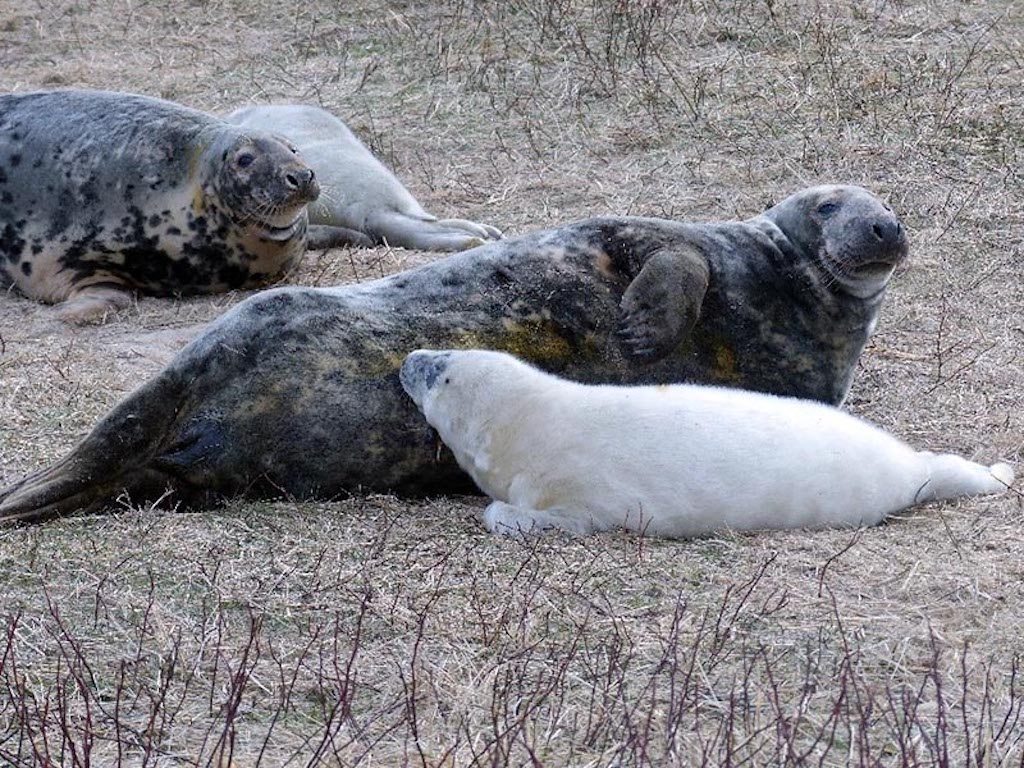
Thanks to Paul Watson et al., the grey seal population today is creating havoc in Eastern Canada. Photo: Christine Abraham.
By helping to over-protect seals, Watson has also contributed to weakening the Gulf of St. Lawrence’s ecosystem in Eastern Canada. Since the debacle of the sealing industry, over-predation by these pinnipeds has had a huge negative impact on the marine biodiversity of the region. Hunters and fishermen predicted that much as early as the 1980s, but today, it is scientists who have no choice but to admit it. The grey seal population in Eastern Canada has grown from about 5,000 in the 1970s to 400,000 today. Multiply the population of any apex predator by 80 in any given ecosystem and, of course, you’re going to create havoc.
Yes, you’ve read that right; Captain Watson is also an ecological criminal.
Isn’t this the ultimate irony? Animalist groups have created the perfect loop: the more money you give them, the worse the environment becomes. And the worse the environment becomes, the more money people give them.
Of course, society needs people to take care of nature's biodiversity, but not just anybody. Ecosystems are complex, more so than, let’s say, air traffic control. Would you let someone without any proper training or credentials direct plane landings? Of course not. So why trust a fake captain with it? If we’re not happy with the way our ecosystems are being managed, we need to train those in charge better, not follow the first self-appointed guru.
There it is. The grand illusion. People who give support to these groups think they’re contributing to a better planet while doing exactly the opposite.
Now you know. The disappearance of Atlantic cod, yellowtail flounder, white hake and many other fish species does not bother the noble captain in the slightest.
It is not Watson who will go bankrupt; it is the evil fisherman in his 17-metre boat. Watson is not the one who will have nothing left to feed his children, since his fortune is assured. It is not his community that will decline since he now lives in France. Who cares about uncharismatic species that are not even good for a small fundraising activity? Biodiversity? Bah … who cares?
Mink farmers were shocked and saddened recently by a leaked video showing Dr. Bonnie Henry, British Columbia’s Public Health Officer,… Read More
British Columbia's Government has treated its mink farmers disgracefully..
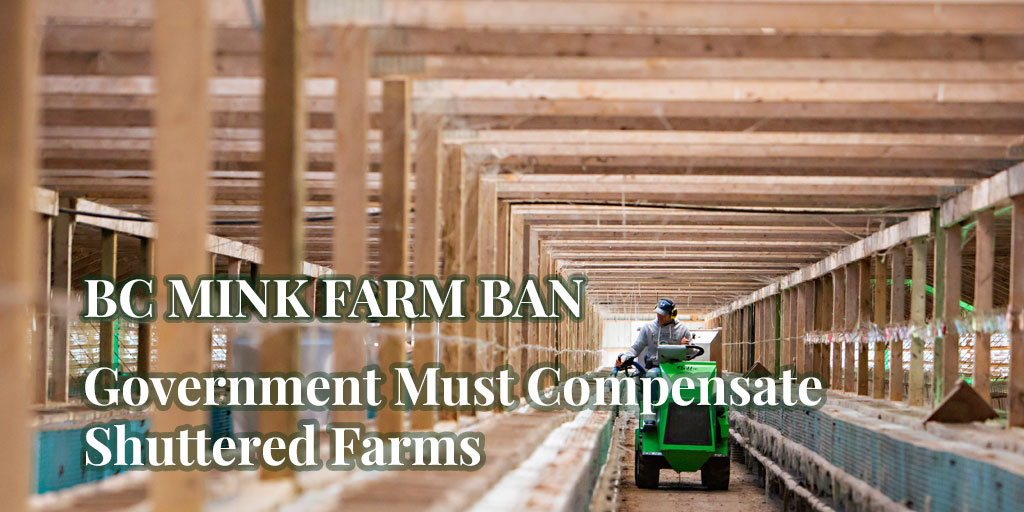
Mink farmers were shocked and saddened recently by a leaked video showing Dr. Bonnie Henry, British Columbia’s Public Health Officer, laughing as she informed her federal and provincial counterparts that the court had rejected a suit seeking fair compensation for farms shut down on her recommendation.
It was the end of a conference call with Canada’s “One Health” committee, in May. As Canada’s Chief Public Health Officer, Dr. Theresa Tam, prepared to wrap up the meeting, Dr. Henry interjected for a final word: “On a positive note, we shut down mink farms in BC, as you may know,” she began with a grin. “Ontario be aware, you still have them,” she laughed. “And they launched a lawsuit against us that was just thrown out yesterday, so, hah hah,” she chuckled. (None of the other public health officers smile during Dr. Henry’s comments.)
This was the latest bizarre twist in the sad saga of the BC Government’s vendetta against the province’s mink farmers.
Dr. Bonnie Henry (top centre) was clearly elated at the suffering she had caused mink farmers.
The scene had been set in Denmark, in November 2020, where concerns about a new “Cluster 5” variant of the SARS-CoV-2 virus traced back to farmed mink led the government to hastily order a mass cull.
It soon became clear that the risks had been overblown – the “Cluster 5” variant disappeared as quickly as it had emerged – and that the cull was ordered without proper legal authority.(1) The Agriculture Minister resigned, and the Prime Minister was forced to apologize to farmers and call a new election after a scathing report on her government’s mishandling of the issue. But the damage was done; animal activists jumped at this opportunity to fan fears and call for a complete ban on mink farming everywhere.
In British Columbia, a One Health Committee was established in October 2020, to coordinate efforts by animal- and public-health officials to monitor and manage potential Covid risks on mink farms. In December, the BC Centre for Disease Control judged that Covid on mink farms did not present an increased risk to public health.(2) In June 2021, a risk assessment found the probability of a dangerous variant emerging from BC mink farms to be “unlikely/very-unlikely”.
Nonetheless, after mink on three of the province’s nine farms had contracted Covid-19, on July 26, 2021, the Public Health Officer imposed a moratorium on new farms, and capped the number of mink at existing levels.
The farmers worked with the PHO to augment strict biosecurity measures: access to farms was limited; protective clothing, masks, and visors were used; and workers with flu-like symptoms did not enter the barns. The farmers felt they were working cooperatively with their Government to responsibly manage any possible risks.
During Covid-19, Canada's mink farmers cooperated fully with regional governments in implementing strict biosecurity measures. Photo: Matt Moses.
Just a few months later, however, on November 5, 2021, the Government suddenly announced that mink farming would be “phased out” in BC, following “the recommendations of public health officials and infectious disease experts,” said Agriculture Minister, Lana Popham. “We believe the risk is too great for operations to continue as they were,” said Dr. Henry.(3)
By Order in Council, on November 26, farmers were ordered not to breed their mink, and were given 15 months (until April 1, 2023) to pelt or sell their remaining animals – destroying, with the stroke of a pen, the life-work and livelihoods of the province’s mink-farming families.
This harsh directive was suspect from the start because, while farmed mink in several US states had also tested positive for Covid-19, the US Centers for Disease Control (CDC) determined that the risk to human health was low so long as farmers maintained good biosecurity protocols.(4) No other North American jurisdiction has followed BC’s decision to ban mink farming.
Influence of Animal Rights Groups Suspected
BC farmers suspected that the province’s militant animal-rights groups had unduly influenced the Government’s over-the-top response, and these concerns soon seemed to be confirmed.
In response to the farmers’ motion (February 15, 2022) for a judicial review of the mink-farming ban – seeking to have the Order in Council “suspended and declared to be of no force and effect”, the province refused to provide the full record of documents and other information that Cabinet had consulted. Full disclosure was not needed, government lawyers argued, because Cabinet was legally entitled to revise the fur-farming regulations as it wished.
On May 13, 2022, lawyers representing the farmers, with their provincial and national associations, formally petitioned for the full record of documents consulted by Cabinet. They argued that the farm ban was unreasonable because more responsive and less invasive measures were available to protect public health, including enhanced biosecurity.
Furthermore, it was blatantly illogical for the government to claim that a farm ban was urgently needed to protect public health while allowing live mink to remain on farms until April 2023.
Above all, it was unjustified to impose a permanent ban when there was no evidence that mink were playing a significant role in the spread of Covid-19 to humans.
Government Lawyers Resist Court Order
In response, on October 5, 2022, Justice Millman of the Supreme Court of British Columbia ordered the Government to file the full record of documents with the court.(5) Government lawyers appealed his decision, but on July 31, 2023, the BC Court of Appeal upheld most of the lower court’s order.(6)
Rather than comply, the Government appealed again, this time to the Supreme Court of Canada, claiming Cabinet privilege – and there it still sits.
While the Government’s stable of in-house lawyers stalled the judicial review, the clock was ticking (not coincidentally?) through the two-year limit available for the mink farmers to claim compensation for their losses. In November 2023, therefore, to ground their compensation claim in a “cause for action”, five farms sued the Province (and the then-Minister of Agriculture, the then-Chief Veterinarian, and the Public Health Officer) for “misfeasance in public office”. The Province was also sued for “constructive taking”, a sort of de facto expropriation.
The farmers claimed misfeasance because, they argued, the mink farm ban did not serve any legitimate purpose related to the Animal Health Act (the legislation under which the Fur Farm Regulations are enacted), but rather was done for “improper collateral political, social, or public opinion reasons.” In other words, mink farming did not pose a serious or urgent threat to public health, and the Government knew it ... or should have known it.
In his May 7, 2024, judgement for the Supreme Court of British Columbia, however, Justice Francis deemed that, as a political body, Cabinet is entitled to make decisions based on political or any other considerations.(7) He found no misfeasance or constructive taking. This was the judgement that so tickled Dr. Henry’s fancy – but it would be troubling if governments could, indeed, act without regard to facts or their own publicly-stated intentions. The farmers will be appealing.
"Cruel and Cynical Game"
Rob Bollert accuses the BC Government of creating "terrible emotional and financial hardship".
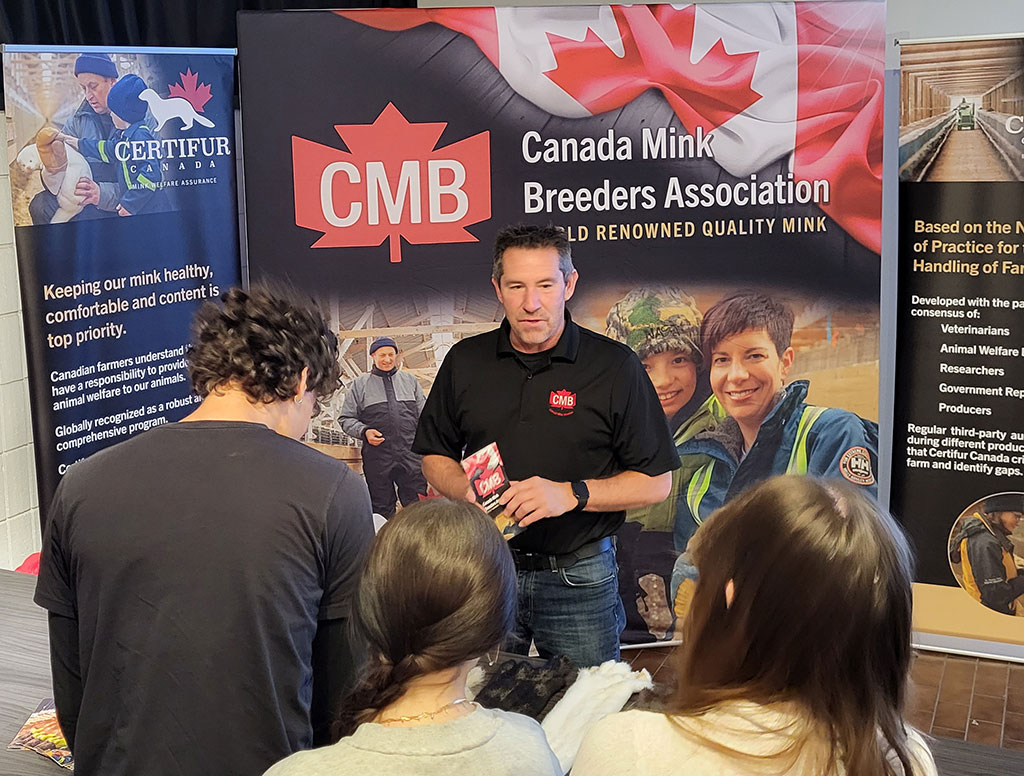
“It’s a cruel and cynical game the Government is playing,” says Rob Bollert, president of the Canada Mink Breeders Association. “Each time they drag out proceedings, the farmers have to find money to pay more lawyers.”
“We have to wonder why BC was the only North American jurisdiction to consider it necessary to ban mink farming, and why the Government has refused to provide the full record of how this decision was made. What was the role, access, and influence of animal-rights groups in the Government’s action? Is this what they are hiding? And why is the BC Government refusing fair compensation for the farmers whose livelihoods they so arbitrarily destroyed?"
“This tragic story raises important questions that should concern everyone in a democratic society,” says Bollert.
The questions are also timely because mink farming boasts some impressive sustainability credentials. Farmed mink are fed leftovers from abattoirs and fish-processing plants, the parts of food animals that humans don’t consume – recycling wastes into valuable products. Mink apparel and accessories are handcrafted by skilled artisans; they are warm, and long-lasting, and after decades of use can be thrown into the garden compost where they will biodegrade completely. If we are looking for sustainably produced clothing materials, mink checks all the boxes.
Mink farms in British Columbia were licensed by the provincial Government, and inspected to ensure compliance with responsible animal-welfare and biosecurity standards. In fact, the high-quality mink for which BC was known can only be produced when the animals are provided with excellent nutrition and care.
“Mink produced in British Columbia received some of the highest prices in international markets, reflecting generations of work to develop top breeding stock,” says Bollert. “Mink farmers generated millions of dollars in exports for British Columbia, and provided employment in rural communities. In good faith, they made substantial investments to ensure animal welfare and sustainable growth. Through no fault of their own, they are now saddled with debts they have no way to repay. The government's knee-jerk reaction to Covid concerns has created terrible emotional and financial hardship for these farm families.”
And what of the Government’s promise to help mink farmers “transition” to other agricultural sectors? “Nothing,” one farmer told me bluntly. “The contacts they gave us all went dead once we called for a judicial review. All they offered was grief counselling!”
Hypocrisy at Play
There seems to be a fair measure of hypocrisy at play. Despite real concerns about avian and swine flu, the BC Government doesn’t shut down chicken and pork production – although animal-rights groups want this too. Were mink farmers sacrificed to animal-extremist demands because they lacked the financial and political clout of these larger sectors?
Whatever the reasons – and whatever our personal opinions about mink farming – surely we can agree that if “society”, as represented by our elected government, chooses, rightly or wrongly, to shut down a well-regulated agricultural sector, and legislate hard-working farmers out of business, the least these families deserve is fair compensation for their losses.
With all due respect, Dr. Henry, this is really no laughing matter.
* * *
FOOTNOTES
(1) On Nov. 12, 2020, the European Centre for Disease Prevention and Control concluded that although people working directly with mink should take extra precautions, the risk posed by SARS-CoV-2 mink-related variants was low for the general public, no different than other (non-mink) strains. The Danish public health institute Statens Serum Institut concluded in its May 2022 report that the risk was low that mink farming would lead to the emergence of variants of concern. "Overall, the probability can be characterised as low," it said. "and is assumed to be significantly less than the probability that these will arise in a world population of 7.9 billion people." One European study argued that governments should maintain mink on farms, not cull them, because the reduced lethality and infectivity of mink-specific mutations of virus may be useful as vaccine for humans! See: "SARS-CoV-2 mutations among minks show reduced lethality and infectivity to humans."
(3) While Dr. Henry seemed eager to shut down mink farms, she was sometimes less enthusiastic about implementing internationally recognized measures to reduce Covid-transmission risks. From 2020-2022 she was criticized several times by public health experts for being slow to mandate the wearing of masks in the province’s schools and hospitals, and for lack of transparency about infection rates in those institutions. As recently as April 2023, BC’s Human Rights Commissioner, Kasari Govender, stated that Dr. Henry’s removal of mask requirements in BC medical settings “does not uphold a human-rights centred approach to public health.”
(4) “Currently, there is no evidence that mink are playing a significant role in the spread of COVID-19 to people,” said an updated CDC statement on Apr. 7, 2023. Another expert opinion was that of Dr. Anthony Fauci, then Director of the National Institute of Allergy and Infectious Diseases, who told a webinar in November 2020, “It does not appear, at this point, that that mutation that’s been identified in the minks is going to have an impact on vaccines and affect a vaccine-induced response.” See also the reply by John Easley, DVM, Director of Research, Fur Commission USA.
(6) The Court of Appeal removed only the requirement to provide documents that had been “indirectly” consulted by Cabinet, e.g., studies or reports that may have informed documents reviewed by the Ministers. British Columbia (Lieutenant Governor in Council) v Canada Mink Breeders Association, 2023 BCCA 310.
I was just putting a salmon filet (marinated with mustard and maple syrup) into the oven when the phone rang…. Read More
Vegans can eat soy beans if they want, but I like to enjoy my food. Photo: I, Gerard cohen, CC BY-SA 3.0, via Wikimedia Commons.
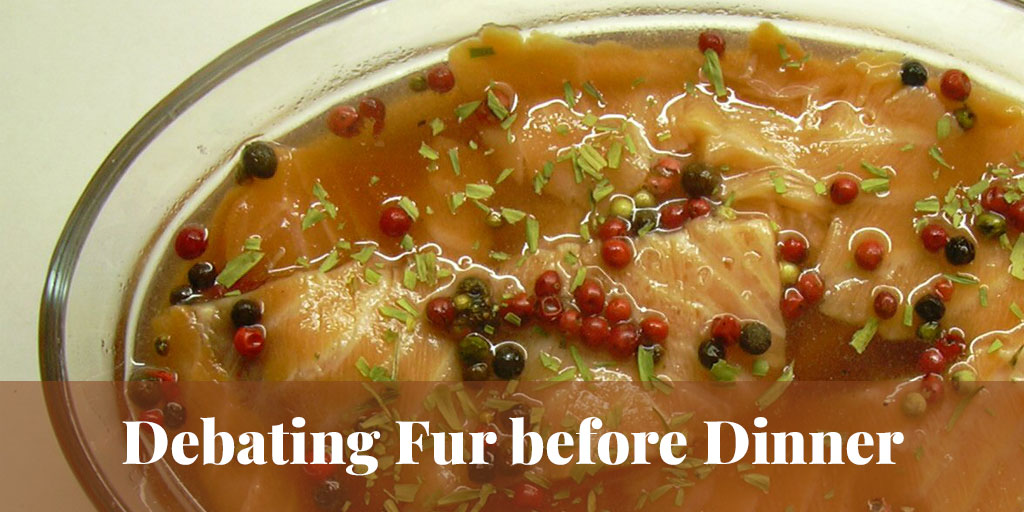
I was just putting a salmon filet (marinated with mustard and maple syrup) into the oven when the phone rang. Nothing was farther from my mind than debating fur as the young man on the line asked if I would be renewing my support for Friends of Canadian Media. But when I explained that I never responded to phone solicitations, he chose instead to ask about my email address. Why was “fur council” in the domain name?
“It’s a non-profit association that supports the Canadian fur trade,” I said.
“Why would the fur industry have a non-profit?”
“Because the Fur Council of Canada is an industry association, not a business. It provides services including public education about why fur is a responsible and sustainable choice.”
“How can using fur be sustainable when animals are going extinct?” he snapped. The tone of the conversation had heated up a notch or two.
“Well,” I began, “there are two types of fur. If we begin with wild fur, one of Canada’s founding industries, …”
“Canada was founded on the genocide of aboriginal people and the destruction of forests,” he interjected before I could get any further. “Just because it’s foundational does not mean the fur trade is morally acceptable!”
“Fair enough. But we were talking about animals going extinct. The modern fur trade is very well regulated. All the furs we use are now from abundant species.”
“But we don’t need to kill animals for fur anymore. There are alternatives!”
“You mean fake fur and the other petrochemical-based synthetics in more than 60% of our clothing? Synthetics that we now know shed enormous quantities of microplastics into the environment …”
“Yes, plastics in the water, in the animals; that’s not right either," he conceded. "But it doesn’t justify killing animals for fur. We’re destroying nature.”
“Using nature doesn’t have to mean destroying it,” I said, trying to remain patient. “In any case, we can’t stop using nature, we are part of it. But animals and plants produce more young than their habitat can support. Most of this ‘surplus’ feeds others; that’s the real meaning of ecology: all life is intertwined. If we don’t want to saw the limb out from under us, we have to protect the habitat where plants and animals live -- and use only part of the surplus that nature produces each year. That’s the original meaning of sustainability -- ‘sustainable use’ is a concept coined by the World Conservation Strategy …”
Being a young man of his time, my interlocutor had found the World Conservation on the internet as I was speaking.
“Yes, I see that the World Conservation Strategy was published in 1980. Nice ideas, but I guess they’re not working because there are more animals than ever going extinct,” he proclaimed smugly.
“But not because of the fur trade!" I replied. "Beaver and other furbearer populations were seriously depleted in much of North America by the early 20th Century. But thanks to excellent regulations – and policies supported by trappers – all those populations have been restored. The modern fur trade is a real environmental success story … a true example of sustainable use.”
“That doesn’t mean it’s morally acceptable to kill animals for frivolous needs!”
Ping-Pong Debate
How can fur be "immoral" when 95% of Canadians eat meat? Photo: Seal burger from Boucherie Côte à Côte.
“OK, that’s a different question.” I was trying to keep cool, but I hadn’t eaten dinner, and I’ve had too many of these ping-pong debates with activists who keep shifting the ground as soon as you answer one of their misconceptions.
“But how can we condemn using fur as ‘immoral’," I asked, when 95% of Canadians eat meat or dairy, and use leather, wool, and other animal products?”
“I’d say 100%,” he said, catching me by surprise. “I am vegan, but I sometimes sit on leather chairs or sofas …”
“Good point.”
“… and I am against vaccines that are made with eggs or tested on animals, but I work with the elderly, so I was vaccinated. I have arguments with other vegans about these things, but I am fact-driven, and the facts say there’s no need for trapping.”
Let’s talk about that when beavers flood your basement, I was going to say, or when rabies spreads to within 40 kilometres of Montreal, as it is again right now. But just then I remembered: the salmon! I tucked my phone under my ear, donned my oven mitts, and pulled out the Pyrex dish of sizzling, golden-brown fish.
“Gotta let you go – dinner’s ready. But if you want facts you should check out TruthAboutFur.com.” Saved by the bell, I’d had enough verbal sparring for one night. Heck, I’m supposed to be retired!
Why Bother?
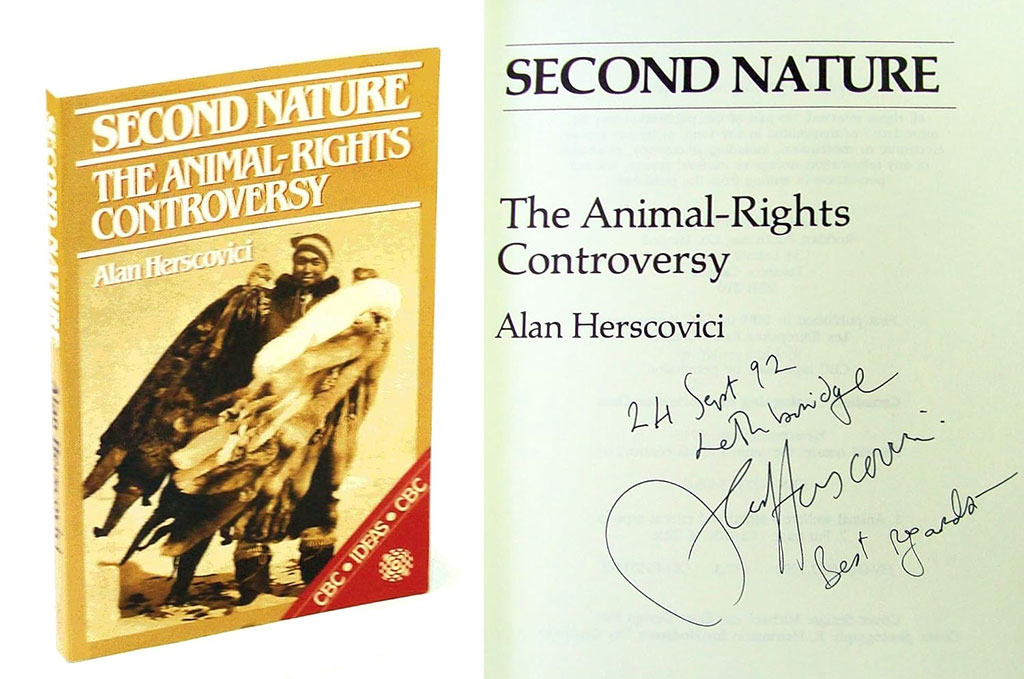
I was passionate over 30 years ago, when I wrote Second Nature: The Animal Rights Controversy, and I'm still passionate today.:
We made an effort to say goodbye in a fairly civilized tone, but my adrenaline was pumping. That old familiar feeling. I wrote my environmental critique of the animal rights ideology more than 30 years ago, and since then have participated in countless debates, interviews, op-eds, websites, communications strategies … but the fur trade remains an easy target for activists, and a favourite scapegoat for society’s confused guilt trip about nature.
Why do I still bother talking with these people? I suppose because it was clear that my phone friend really cared, he was sincere in his belief that the fur trade is evil, and he was passionate – much like me.
I suppose I could have asked what humans are to wear if fur, wool, and leather are verboten, and he acknowledges the problems with petroleum-based synthetics -- and most cotton production is an environmental catastrophe. Talk about a naked ape!
But none of my arguments would sway him because he doesn’t believe humans have a right to use animals at all. (Which begs the question of why humans are the only animals that shouldn’t use other animals. Are we part of nature or aren’t we?)
Of course, we don’t really need to convince dedicated vegans like my caller – although I could have told him that I know several vegetarian furriers.
The good news is that most Canadians (like Americans, Europeans, and people everywhere) do believe that humans have a right to use animals for food, clothing, and other purposes. To win their support, we have to do a better job explaining that the modern fur trade is well-regulated, responsible, and sustainable. We also need to explain the positive contributions that trappers make to wildlife management, habitat conservation, and public safety.
As the aboriginal peoples of North America understood long ago, using animals is not incompatible with respecting animals. Quite the contrary: recognizing how important animals are for our well-being provides the strongest incentive for protecting their habitat to ensure they will be there for us tomorrow.
After decades of shrinking markets amid incessant attacks from animal rights groups, could real fur actually be on the verge… Read More
Sustainability is the strongest argument in fur's favour. Photo: Cahill Fur Collection.
After decades of shrinking markets amid incessant attacks from animal rights groups, could real fur actually be on the verge of a comeback? And will it hinge on society's better understanding of sustainability?
These are both prestigious titles not known for making stuff up, but there are plenty of other articles out there telling a similar story.
So if it's really true, why is it happening now? And should we really be surprised?
Understanding Sustainability
https://www.youtube.com/watch?v=nY7LetEbu8M
The last two decades have been tough for the fur trade, above all because of effective campaigns by animal rights groups to win over the media and vote-hungry politicians. It's impossible to count the number of media reports and pieces of legislation (particularly in the US) that have relied on half-truths and lies spoon-fed by these groups.
Two anti-fur campaigns have been particularly effective at hogging the media spotlight, in large part because they are highly repeatable. One involves pressuring well-known designer brands and retailers into dropping fur. The other seeks legal bans on fur production and retail at the town, city or state level. When one target has either capitulated or been bled dry of headlines, campaigners just move on to the next.
But while all this has been going on, the zeitgeist of society has changed dramatically. Thanks to the Internet, information is more available than ever before. And the conversation has changed too, and become more inclusive.
Above all, our focus now is on climate change. Scientists have been predicting trouble for years, but until recently they spent most of their time talking to one another, and most of us had little say. But now we're all involved, and many more of us can talk intelligently on topics as diverse as single-use plastics, watershed pollution, habitat loss, greenhouse gases, ozone holes and carbon footprints. Our grasp of these concepts has come on by leaps and bounds in a very short space of time.
As a result, some of the arguments the fur trade has been making for decades are now resonating with a much broader audience, among them the strongest argument in fur's favour: sustainability.
Just to recap the facts, in case you don't already know: Fur is a renewable natural resource, which means it is, by definition, sustainable. In contrast, petroleum-based synthetics like polyester, that now dominate the fashion industry, are non-renewable and therefore unsustainable. And contrary to what animal rights groups may want us to believe, fur is biodegradable, petroleum-based synthetics are not, and the environmental footprint of fur production is insignificant in comparison to that of synthetics.
Do you really believe fake fur is better for the planet because it does not involve killing animals? Photo: Genghiskhanviet.
Because most people now get the facts, we are also far less gullible than we once were. How many of the following half-truths and lies did you once believe but now reject?
• Fake fur is better for the planet than real fur, because it does not involve killing animals. This is demonstrably false on several grounds. Both extracting petroleum and producing fake fur are polluting processes which kill millions of animals indirectly. Furthermore, fake fur sheds harmful microplastics into the food chain when washed, and at the end of its life, it's either burned or sits in landfills, causing further pollution.
• For the same reason, "vegan fashion" is good for the planet. Most vegan fashion is made of plastic, while much of the rest uses cotton, with all the harm to the environment that cotton production entails. Do you remember "pleather"? It didn't take a genius to figure out it was made of polyurethane, so marketers rebranded it as "vegan leather". But it's the same thing.
• Fur is a special case because it's especially "cruel" and "unnecessary". All animal-users have known for years that this claim is false. Fur is just a soft target, and the ultimate goal of the animal rights movement is to end all animal use. In 2022, longtime advocate of sustainable use Canada Goose yielded to pressure to drop fur, hoping animal rights groups would leave it alone. Instead, protesters just took aim at its use of down stuffing instead.
• Inhumane treatment of animals is unsustainable. Despite the fact that animal welfare and sustainability are fundamentally different issues, animal rights groups have enjoyed great success persuading fashion brands and retailers to drop fur by convincing them they are part of the same package. Companies like Gucci and Canada Goose have even incorporated animal welfare into their sustainability policies.
How many consumers now see through such nonsensical arguments is impossible to say, but surely the number is growing, and product endorsements from animal rights groups are fast losing their value.
Mob Wife Look
The Mob Wife look is driving new demand for fur. TikTok ensemble by Distractify.
So against this backdrop, why do some media pundits think fur's comeback may be happening right now?
Almost every story about fur's comeback in the last few months mentions a fashion trend called the "Mob Wife aesthetic". Born on TikTok, the Mob Wife look asks ladies to dress how they think the wives of Sonny Corleone, John Gotti or Tony Soprano dress. And the look is not just for clubbing. If you're visiting the grocery store, throw on your leopard-print jumpsuit, high heels, giant shades and bling jewellery, and top it all off with a fur stole.
But where did the Mob Wife look itself come from? Fashionistas theorise that there's a rebellion against the "clean girl" and "quiet luxury" looks, but at a deeper level, there may also be a connection with our improved understanding of sustainability.
Here's the logic. As we question "fast fashion", reliant as it is on petroleum-based synthetics, we are turning to "slow fashion", with investment pieces made of more durable, natural materials. And as part of this trend, we're also seeing a surge in recycling, including buying used clothing at thrift stores.
Enter vintage furs. They're both slow fashion and recycled – and an integral part of the Mob Wife look.
On balance, growth of the vintage fur market must be beneficial to the fur market as a whole. A nuanced ethical debate is now being played out by people who – for now, at least – say they reject new fur because it involves taking animal life, but embrace vintage fur because the animals are dead anyway. Indeed, putting their fur to good use, they say, is actually more ethical than throwing it away.
So now there's a mix of people out there, wearing new, vintage and fake fur, all acknowledging its beauty and functionality, while having a spirited debate about which is more sustainable. This is far more positive than the predictable pro- and anti- arguments we've been hearing for decades (and that the media are probably bored with).
Meanwhile, realists point to the fact that supplies of vintage furs are limited, and that as supplies dwindle, some of its fans at least will switch to buying new.
What the future holds for fur is hard to predict, but we are now in an age of greater awareness about sustainability, and are counting on consumers to make wise choices. An obvious loser will be petroleum-based synthetic garments, while winners will come from a range of renewable natural resources. That should include fur.
This article was first published in Country Squire Magazine on Jan. 12, 2024, and has been slightly edited. It is… Read More
This article was first published in Country Squire Magazine on Jan. 12, 2024, and has been slightly edited. It is reproduced with permission.
Being an Old Testament bloke, I usually reply in kind to those rude people who call law-abiding farmers, hunters, field-sportspeople and wildlife managers “murderers, killers and evil monsters”. I insult people who tell blatant lies about trophy hunting, and I mock demented Animal Rights (AR) evangelists who are so blinded by zealotry that they can’t tell a human from a hippo. It is therefore with awful sadness and restraint that I comment on one of my heroes and favourite people on TV, the wonderful Stephen Fry, whose appearances in Blackadder as Lord/General Melchett over 30 years ago and as the genial host of QI over 20 years ago (I know!) has enriched my life a bit and made him a firm favourite with the nation.
But now he has gone and done his own round of QI’s “General Ignorance”, concerning the bearskins worn by His Majesty’s Guards. Fry has unfortunately seen fit to front a campaign by PeTA ostensibly aimed at getting the Guards to use fake plastic fur instead of real fur bearskins – and fake sums up the whole AR campaign.
PeTA (also known as “PeTAnnihilation” from its habit of killing pets) you might recall, is the global AR behemoth (UK income £6 million, Global income $66 million and part of the $88 million that the network of mega AR parasites rake in annually). PeTA’s founder, stark-raving Ingrid Newkirk (“Phasing out the human race will solve every problem on Earth”), who openly condones ecoterrorism, set up PeTA to spread the mental disease of AR and oppose any use of animals by humans – no pets, no seeing dogs, no mine-detecting rats, no drug dogs, no farming animals, no nothing.
Unfortunately, since all of our physical resources and clearing land for any building work or farming, even vegetable farming (yes, vegans) or any other primary industry, involves killing animals, it is a simple fact of life that we humans couldn’t exist without killing animals, so the AR ideology is, in reality, an intellectual cow-pat. This is hardly surprising because Newkirk, like the rest of the AR souls, was apparently intoxicated by reading Peter Singer’s brain-fart of a book, Animal Liberation. He, in turn, is infamous for suggesting that, given a choice, competent monkeys should be given more rights than mentally incompetent human infants and he is AR’s founding father. There is, in fact, no such thing as animal rights, as any deer fawn can explain, shortly before being torn to shreds by an omnivorous black bear.
As Baldrick might have put it, “AR is a cunning plan, as cunning as a fox who’s just been appointed Professor of Cunning at Oxford University”. AR is just about as realistic as that, too.
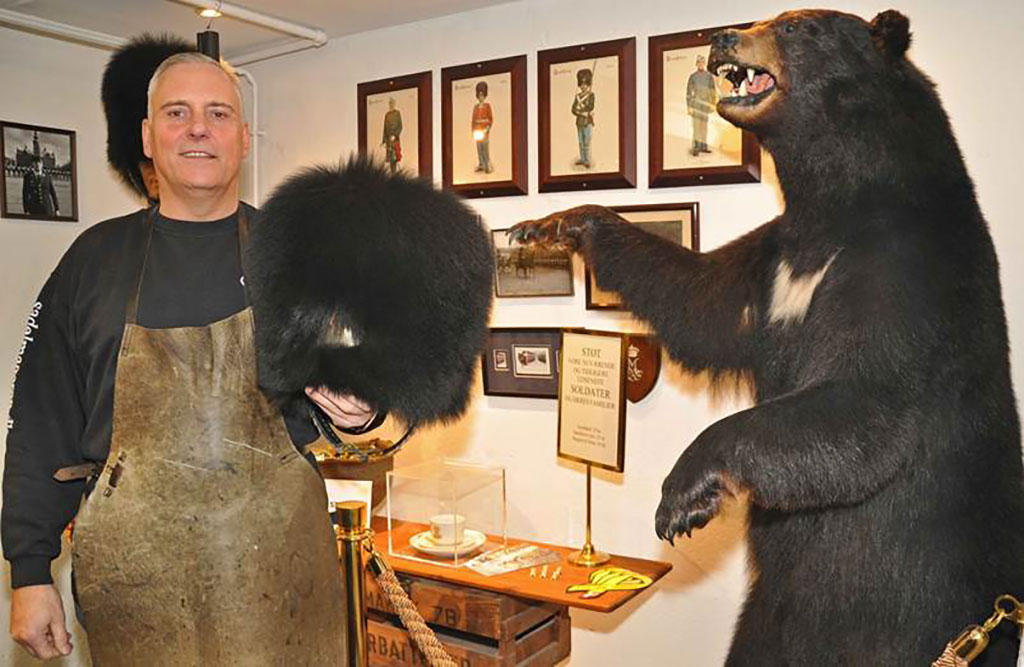
If the Ministry of Defence stopped using bearskins, it wouldn't make a blind bit of difference to either the sustainable bear harvest or its market. Photo: Swaminathan Iyer, CC BY 3.0, via Wikimedia Commons
This story isn’t new. Bears and the King’s Guards, like naked women and red paint, make for wonderful press photos, so they have been a favourite target for PeTA for years; in fact the suggestion has been made that PeTA might want to let this particular golden goose live on. In the past, PeTA organised the usual petition and got their empty-vessel, willing donkey MPs to waste time in the Westminster Asylum debating their anti-bearskin nonsense and waste money taking the MOD to court in 2022. Bears are very charismatic in the UK – you will notice that AR souls make much less fuss here about rats, but even then, PeTA suggests that rats “should be caught gently in live catch traps and released not more than 100 yards from where they are caught” – an idea with obviously only one oar in the water, like most AR souls’ ideas. This is really all about publicity, not bears.
And what of the bears?
Well, according to Canadian government wildlife authorities, who may know a tad more about fur than either nut-roast PeTA or vegetarian Mr Fry, black bears are abundant and common in Canada. There is an estimated black bear population of about 500,000 black bears in Canada that is both healthy and stable. Black bear hunting and trapping has a very long history and is strictly regulated by both season and quota. In Canada, it contributes to food security and economic sovereignty in Indigenous communities and is an important source of rural income, especially where alternative economic opportunities are few. Bear meat and red offal are eaten, while grey offal is laid out for the natural scavengers or buried if you don’t want a bear’s picnic. There is nothing strange about any of it. We humans have been predators since before we were humans. Hunting by modern humans and our ancestors goes back at least 1,600,000 years.
PeTA has been around for about 43 years.
Stephen Fry is simply wrong when he repeats PeTA’s dishonest but obligatory “Trophy hunting” jibe – harvesting bears per se is not trophy hunting. He’s having a stir. Trophy hunting (usually conducted by hunting tourists) is something entirely different – trophy hunters keep their bear skins for a start. The Canadian bear harvest is not a “sport” – it is closer to subsistence hunting, an ancient and honourable human activity aimed at sustainably harvesting a natural resource, like rabbits, deer or fish in the UK and, like all predation, it doesn’t have to be “fair” – it’s not some kind of frivolous urban game to be played.
Bearskins are not just a UK thing. As of 2020, the militaries of 14 countries use them. Photo: Sadelmageren, Denmark.
Things get killed. It is a way of life and a cultural tradition. The number of Canadian bears annually harvested by legal hunting and trapping is only a maximum of 6% of the total population and the harvest is RATS – Regulated, Accountable, Transparent and Sustainable. The meat is eaten while skins, bones, claws, and grease, etc. are important by-products of this harvest and are sent to market, no different to leather, feathers, hide glue, deer antlers for handles or dog chews that end up in UK pet shops.
Could someone please tell critics that the MOD don’t look at a tatty old bearskin cap and immediately phone someone in Canada to go out and club a bear to death for a new one. The MOD has nothing to do with the Canadian bear harvest or its market any more than it buys steel for its guns or leather for its boots. The MOD buys their bearskin caps from a supplier, representing (in number) a minuscule 0.04% of the skins available from the bear population and if those suppliers did not buy them, it would not make a blind bit of difference to either the sustainable bear harvest or its market.
It is therefore not true for Fry to suggest that buying them “encourages hunting”. Bear pelts are a natural commodity like any other. As of 2020, there were 14 countries whose militaries used bearskin as a part of their ceremonial uniforms and there is an interesting piece about making the UK bearskin caps on the excellent and most illuminative Fieldsports Channel.
Of course, the public are not Royal Guards, so PeTA and Fry and their usual posse of rich, virtue-signalling slebs can pretend to their doting and donating public that plastic fur makes a better substitute and from there imply deceptively that it will save bears’ lives.
Wrong on both counts, as usual.
The MOD have made it clear here that fake fur isn’t up to scratch (so to speak) and, as you can see from the link, using fake fur won’t save a single bear. Quite apart from these practical and sensible considerations, there is also the serious matter of military tradition and esprit de corps.
AR souls, whose self-indulgent, look-at-me ideology is only possible because they are safe and well protected by the sharp sword and bright armour of the military, have no more idea about military tradition than they do about hunting culture. In the earlier debate about bearskins in the Westminster Asylum, Martyn Day MP (nothing to do with the shamed Al Sweady lawyer) got up to pee on military tradition, saying, “As the writer and philosopher G. K. Chesterton wrote: Tradition means giving votes to the most obscure of all classes, our ancestors. It is the democracy of the dead.” He omitted to acknowledge that the sacrifices of those dead allowed him to stand in Parliament and freely spout his wrong-headed opinions.
Dear Readers, there is another serious, real-world note. Fake fur is made up of millions of tiny oil-based plastic fibres that snap off in sunlit use and inevitably break down into smaller and smaller pieces. We all know that trillions of micro plastics are shed by synthetic plastic clothes (up to 700,000 in a 6kg wash), exfoliants (up to 94,000 in a single use) and tyres (18,000 tons annually), making up 65% of the micro plastics released into UK surface waters that end up in the oceans and inside us. What we should be doing is stopping using fake plastic Franken-fur, not promoting it. It may well be poisoning all of us (and, ironically, the bears in Canada) just to keep a handful of gobby urban head-bangers happy.
Natural fur, on the other hand, has another story. It is an unbeatably warm and beautiful, sustainable and replaceable natural resource that can be absorbed back into nature’s own cycle – one that we have been using for the whole of our history. It is bio-degradable and uses fewer chemicals to produce than, say, leather. Sustainably utilising natural resources like fur and meat while managing wildlife populations is an excellent use for vast areas of remote wilderness, ensuring that it is self-protected from development or other uses such as farming. In doing so, all the other fauna and flora is conserved, too. Armchair conservationists may grumble and the AR happy clappers may moan, but hunters on the ground are often the first eyes and ears monitoring the condition of the environment and its residents.
Looking at the state of the world at the moment, surely we have much more important problems to attend to rather than waste time and money, pointlessly pandering to PeTA the Parasites or to the twisted ideology and emotions of rich, virtue-signalling AR souls – even souls of the otherwise exemplary stature of Stephen Fry, bless him.
On Nov. 23-24, all the right people – leaders from the European Union and Canada – were gathered in St…. Read More
Photos: Canadian Prime Minister Justin Trudeau by Eurasia Group, CC BY 2.0; European Commission President Ursula von der Leyen by Dirk Vorderstraße, CC BY 3.0; via Wikimedia Commons
On Nov. 23-24, all the right people – leaders from the European Union and Canada – were gathered in St. John’s for the Canada-EU Summit. Those of us representing Canadians who make their livings in remote and rural areas from Prince Rupert to Newfoundland’s outports, by harvesting fur and seals, were hopeful. Meetings such as these provide high-level government representatives with an opportunity to discuss issues that matter to their respective governments behind closed doors and far removed from everyday citizens.
And, this summit was different. Instead of being monitored only by political gadflies and lobbyists, people in remote communities across Eastern and Northern Canada watched closely. They watched because the summit was held in Newfoundland, where the ocean and its bounties have long been the bedrock of the economy and culture.
This, of course, is the same St. John’s that once was home port to steamers, which brought hundreds of Newfoundlanders to the ice of the North Atlantic to harvest seals. The same St. John’s where European celebrities descended to hold press conferences in front of TV cameras to attack the livelihoods of hunters who put their lives on the line on the ice to provide for their families. The same St. John’s where, for over 30 years, the elected officials of the provincial government sat on sealskin chairs as they debated the business of the day.
In 2009, the predecessors of those same EU officials who were fêted in St. John’s banned the trade of Canadian seal products, striking a blow to rural communities across Eastern and Northern Canada that had relied on the hunting of seals for hundreds of years. Regulation No 1007/2009 inflicted untold damage not only to communities in Newfoundland and Labrador and Quebec, but also to Inuit communities across Canada’s North.
The impact on Inuit communities was the genesis of a challenge to the ban in the European Court of Justice, brought by Inuit Tapiriit Kanatami and supported by the Fur Institute of Canada and others. This was followed by a challenge by the Government of Canada at the World Trade Organization. Though it upheld the ban, the WTO challenge forced the EU to allow an exemption for seals harvested by “Inuit and other Indigenous communities”.
This is the exemption that European Commission President Ursula von der Leyen said was “working well” and that a “good balance” had been found on seals. This is completely and unambiguously false. Only two bodies in Canada are recognized as being able to certify that a seal product comes from an Indigenous harvest: the Government of Nunavut and the Government of Northwest Territories. In a report from her own Commission, it shows that Nunavut has only exported two sealskins to Europe, in 2020, and the Northwest Territories exported just two sealskin coats, in 2022.
European Sealers Also Hamstrung
Perhaps even more revealingly, that same report contains four EU member states saying that the ban’s “impact has gone beyond its intended purpose”. These four states – Estonia, Latvia, Finland and Sweden – all still have their own seal hunts but are hamstrung the same way Canadian sealers are when it comes to trading their products.
In terms which would be shockingly familiar to anyone on Canada’s East Coast, these states raise concerns about the impacts of seals eating cod and salmon, about infecting fish with parasites, and impacts on commercial and recreational fisheries.
Unfortunately, EU and Canadian officials did not avail themselves of an ideal opportunity to reverse the historic injustice of the 2009 seal ban when they gathered in St. John’s.
But it’s not too late. The European Commission is launching a review of the Regulation on Trade in Seal Products in 2024. Canada can, should, and must work closely with the EU member states that are unhappy with the ban, supported by Canada’s sealing industry and Indigenous leadership, to overturn the regulation.
We also need European Commission leadership to engage honestly and candidly on the damage done by this ban and chart a course to move beyond the mistakes of the past. This conversation must be elevated to the most senior levels and involve representatives of the industry and Indigenous communities directly impacted, not the extremist animal-activist groups whose goal is to destroy the way of life of people who live close to the land – and sea – and who use renewable natural resources responsibly and sustainably..
Considering how much trapping of wildlife takes place in Canada, it is very rare for pet dogs to become accidental… Read More
No one wants to see a pet dog caught in a trap, and that includes trappers. Photo: HeartSpoon, CC BY-SA 4.0, via Wikimedia Commons.
Considering how much trapping of wildlife takes place in Canada, it is very rare for pet dogs to become accidental victims. Finding a dog in their trap or snare is not something any trapper wants, but accidents do happen, and they almost always involve someone breaking the law. Maybe a trap was illegally set, or maybe a dog was off-leash where it shouldn't have been. Yet when the media report these stories, they hardly ever investigate the crime that's been committed. Instead they turn the story into an indictment of all trapping, including by licensed, law-abiding trappers.
Why is this imbalance occurring? And what can the trapping community do to encourage more balanced and accurate reporting?
Let's start by looking at two recent stories involving traps catching the wrong animals.
Case Study 1 – Prince Edward Island
Last December on Prince Edward Island, a four-year-old Pyrenean mountain dog called Caspie died in a snare while exercising with her owner, Debbie Travers. The dog was off leash, which was perfectly legal because they were on private property belonging to Travers's family. Authorities investigated and found that the snare had been set illegally by someone who had failed to get the landowner's permission. They also found and removed three other snares nearby.
Local media predictably jumped on this human interest story. Man's best friend had been killed, she had a name, a bereaved owner wanted justice, and there were photos of Caspie in happier times. The story's hook practically wrote itself.
The problem arose in the choice of people interviewed for context.
After covering the human interest angle, it should have been a straightforward crime story. There was a victim, the dog (or, legally, its human owner). And there was a perpetrator, the person who set the illegal trap.
A good reporter would address the legality of pet dogs exercising off-leash on this particular land, and explain how the story could have been different under different circumstances. He or she would also stress that the perpetrator was trespassing, and had set the snare without permission and with intent to poach. And while the dog's death was surely unintentional, she died as a direct result of these illegal acts, not due to legal trapping.
For expert comments, the reporter could then interview law enforcement, the government body regulating trapping, and the local trapping association. Between them, these sources could say exactly what laws had been broken, and make an educated guess as to why.
Instead, Canada's public broadcaster, CBC, devoted a sizeable chunk of its report to the views of an ambulance-chasing anti-trapping group. "These traps are indiscriminate, they injure both the target and non-target animals," said Aaron Hofman, a director of The Fur-Bearers. "Dogs, they have keen senses of smell, so what's gonna stop them from wandering into a trap versus, say, a coyote or fox?"
No representatives of the trapping community were interviewed.
Our second case is different, but hopefully also instructive to reporters looking to ask the right questions.
This January, a bobcat in Calgary spent two weeks walking around a community with a small trap on its front paw. Authorities finally caught "Bobby" (as some locals called him), and took him to a wildlife rehabilitation facility, where we understand he's doing fine.
We can't be sure exactly what happened, but if reporters had bothered to ask people who actually know trapping, this is what they'd have heard.
The trap was a Conibear 110, a body-gripping trap designed to instantly kill small animals that enter it head first. It was not a foothold trap, even though it held the bobcat's paw.
We can also say that the trap was almost certainly not set by a licensed commercial trapper. Such a trapper would never use a small trap like this for a bobcat, and if it were set in an open area, he would have placed it in some kind of box to keep larger animals out. He might also have tethered the trap to something like a tree, as an extra precaution against a larger animal wandering off with the trap attached.
So what almost certainly happened was that someone with no trapping experience set the trap to deal with a small animal, and did it wrong. Maybe they were after a rat, or thought it would stop the neighbour's cat pooping in their flower bed.
Unfortunately, once again the CBC reporter did not interview any trapping experts, instead featuring a wildlife rehabilitation expert who said: “the device clamped on the animal's paw was a conibear trap, which is typically used to ensnare skunks, raccoons or foxes.” As trappers reading this know, 110s are only AIHTS-certified for muskrat and weasels, not raccoons or skunks, and it would be too small for fox. This is likely not intentional misinformation, but simply an over-simplification from a non-expert on trapping. A trapper would have been able to tell the reporter that Conibear-style traps come in a wide range of sizes and strengths, and that no trapper worth his salt would set a 110 for a bobcat.
What to Do?
We all want to be fully informed on subjects that matter to us, and seek out media that produce balanced and accurate reporting. But as these examples show, that's not always easy.
To understand why, consider the life of a local news reporter. In this fast-paced world, deadlines are getting ever shorter, plus most local stories have short shelf lives anyway. If a cat gets stuck up a tree, it either makes the evening news or it's forgotten. So reporters bang out their 800 words as fast as they can, and just hope they got the facts as straight as they could.
Anti-trapping groups pander to this weakness. Even though they don't know how to trap, and have no experience in improving trapping technologies, practices, or regulations, they have made themselves go-to sources for comment whenever trapping makes the news. They make themselves very accessible, and have sound bytes and images ready to go.
They're sneaky too. On their websites they're clear about wanting to ban all trapping, but for the media, they take a soft-sell approach to make them sound reasonable. Regulations should be tightened, they say. More safeguards are needed. They may even act like they have a great new idea, though in truth every option to make trapping safer has already been considered somewhere in the country.
And the result, almost always, is a news report that is a one-sided indictment of all trapping, including the legal activities of licensed commercial trappers. We all get tarred with the same brush.
So if we hope to see balanced, objective reports about trapping, we need to be playing this game too. We are the authorities, not them, and we need to make sure reporters know this. But even more important, we need to be accessible, and that's the tricky part.
We can't match the accessibility of anti-trapping groups because we simply don't have the manpower to flood reporters' email or voice mail. Plus we have other work to do – be it actual trapping, or unrelated jobs that most trappers have. In contrast, all anti-trapping groups have to do is make noise.
So we need to work smarter, and to that end I offer these suggestions:
• We must be proactive. Trapping associations must make sure their local reporters know they exist before a story breaks. Call them up, build a rapport, and let them know you are available for comment at any time. Invite them to your events, show them that trapping is alive and well, let them know what your organizations are up to.
• When a story does break and a reporter contacts you for comment, you need to respond as quickly as possible. This may mean establishing a rota at your association so one person is always available. The last thing a reporter with a deadline wants to hear is an automated reply like, "I'm out of the office for the next three days."
• If you see a news report that is negative about trapping and does not include a trapper's perspective, contact the reporter or editor and point out the omission. And, of course, suggest someone they can contact in future. As proof that this approach works, FIC reached out to CBC following its unbalanced report on the PEI incident, and two days later it published a new report which gave top billing to the views of an actual trapper.
• On the other hand, when you see a news report that is positive about trapping, and includes a trapper’s perspective: like, comment, share! Even contact the reporter and let them know that you noticed they provided balanced coverage. If reporters see that stories they write that feature trappers telling the truth about trapping get better feedback than the stories with the anti-trappers, they will be more likely to feature trappers again.
With luck, the next time a dog is caught in a trap, the trapping community will be treated fairly by reporters. And hopefully there will be fewer nasty quotes from anti-trapping groups that don't know what they're talking about.
Raised by humans for more than 150 years, farmed mink are significantly different from their wild cousins and are now… Read More
One of several differences between farmed and wild mink is litter size. Photo: Ted Parkinson.
Raised by humans for more than 150 years, farmed mink are significantly different from their wild cousins and are now clearly domesticated, despite animal activist claims to the contrary. This is important because the claim that farmed mink are not domesticated, but rather are “wild animals kept in captivity”, sits at the heart of activists' critique of mink farming.
Activists argue that, because wild mink travel and hunt over large territories, it is impossible to satisfy their fundamental needs on farms. Therefore, they claim, mink farming cannot be humane or ethical, and should be banned.
But is it true that mink farmers are keeping “wild animals” in captivity?
To support their claim that farmed mink are wild, activists point out that they have been raised by humans for only a short time compared with cattle, chickens, pigs or other farm animals. As a result, they say, farmed mink maintain much of their “wildness” – often they can only be handled wearing gloves – and are “biologically unchanged”, so they can survive if released (accidentally or intentionally) into the wild, and can even interbreed with wild mink.
Let’s look more closely at each of these claims.
How Long Does Domestication Take?
Try getting a wild mink to pose for the camera! Photo: Newfoundland and Labrador Fur Breeders Association.
It is true, of course, that mink have been raised by humans for much less time than many common farm animals. Mink were first bred and raised in captivity in North America as early as 1866, but the ancestor of our domestic chickens, the red junglefowl (Gallus gallus), was domesticated some 7,000 to 10,000 years ago in India and China. The domestic pig, derived from the Eurasian wild boar (Sus scrofa), dates from around the same time.
It is worth noting, however, that for most of their history, domesticated chickens, pigs, and other farm animals were raised mostly outdoors. The time these animals have been raised indoors, in more confined cages or pens, is not really that different from mink.
The more important question is how long is really required for an animal to become domesticated? And to answer that question, we must ask what domestication really means.
Animal scientists and biologists consider that domestication involves directional selection that produces morphological, physiological (or functional), and behavioural changes in the animal – changes that allow the animals to successfully adapt to husbandry conditions, and to better satisfy human needs.
Like other domesticated animals, selection for various traits in mink may be “active” (e.g., farmers selecting breeding pairs to develop new fur colours, or to produce larger animals with more fur per animal), or “passive” (e.g., physiological or behavioural changes that emerge because mink are no longer subjected to the natural selection pressures of finding food and mates, or avoiding predators).
Selection Brings Changes
Farmed mink are larger than wild mink, and most are a different colour too. Photo: Tom McLellan.
Following are some of the changes observed in farmed mink that show they have, in fact, undergone a process of domestication through active and passive selection.
CHANGES IN SIZE AND PHYSIQUE
Such changes are a common result of domestication. For example, chihuahuas and bulldogs are very different from wolves. Similarly, farmed mink can be twice the size of wild mink – the result of many generations of selecting for larger animals that produce more usable fur per animal.
CHANGES IN FUR COLOUR
Many domesticated species of mammals and birds show a range of fur and feather colouration that is either rare or unknown in the wild. Wild mink are usually dark brown, but farmed mink have been selectively bred for a wide variety of consistent colour phases, ranging from pure white to jet black. Paler-coloured mink also tend to be larger than darker strains, and more docile.
CHANGES IN MUSCLE AND FAT FORMATION
Farmed mink have more subcutaneous fat than their wild cousins. This fat is rendered into mink oil, for waterproofing and conditioning leather. The increased fat appears to be a secondary effect of selecting for larger animals.
PHYSIOLOGICAL CHANGES
Farmed mink are fertile over a longer period than wild mink, and they also have larger litter sizes. Wild female mink produce an average of two to three kits, while farmed mink average five to six, and sometimes as many as 12. Farmers sometimes select breeding stock for larger litter size, but there is evidence that the (passive or active) selection for less aggressive behaviour (“docility”) may also result in increased fertility and larger litters.
CHANGES IN BRAIN SIZE
It is well known that the brain volume of domesticated animals is generally smaller than in the wild animals from which they are descended. This can range from a reduction in volume of about 14% in domesticated ducks and guinea pigs, to as much as 25-34% in sheep, pigs, dogs, cats, and ferrets. Similarly, when corrected for body size, the brains of farmed mink are about 20% smaller than those of their wild cousins. The heart and spleen of farmed mink are also smaller, which had also been observed in other domesticated animals. Reduced brain volume and other changes are likely the result of the removal of natural selection forces including the need to find food and flee predators.
CHANGES IN BEHAVIOUR AND TEMPERAMENT
While most farmed mink must still be handled with gloves, they are considerably less fearful or aggressive than wild mink – as anyone who has visited a farm can attest. When we enter a barn, most mink will come to the front of their pens to see who’s there; they show curiosity rather than fear or aggression. While farmers have selected mink mostly for size, fur colour and quality, and sometimes for litter size or maternal instinct, there is also a degree of active and passive selection for tameness. This is because highly fearful or aggressive animals do not thrive in a farm environment, are more difficult to handle, and may not reproduce as readily. The codes of practice for raising mink in both the US and Canada include provisions for selecting against fearfulness and abnormal behaviours (sterotypies). Increased fertility, larger body size, reduced brain volume, and certain paler colour phases are also correlated with increased tameness.
Animal Activist Arguments
This brief summary shows that farmed mink clearly exhibit a number of morphological, physiological and behavioural traits commonly associated with domestication. But what about the issues animal activists raise to argue that farmed mink are not domesticated?
For example, take what happens when animal activists raid a mink farm and release the animals. Usually they remain close by and are easily recaptured, if they are not killed by passing cars first. But some can survive in the wild, and even interbreed with wild populations. Activists cite this as “proof” that farmed mink are really “wild animals”, but we know that cats, pigs, and other indisputably domesticated species are also able to survive, and breed, in the wild. Dogs, for example, can interbreed with wolves and coyotes.
Activists also claim that wild mink are agile (hard to handle), carnivorous, solitary, and shy in nature, and therefore not good candidates for domestication. However, other carnivorous animals – like cats and ferrets (a close cousin of the mink) – are also agile, solitary and shy in the wild, but have clearly been domesticated.
When pressed, activists argue that mink simply have not been raised on farms long enough to be domesticated. But the experiment conducted by Dmitri Belyaev and Lyyudmila Trut, in Siberia, famously demonstrated that selecting for just one trait – tameness – in farmed silver foxes was sufficient to produce dramatic physiological changes and dog-like behaviours in only 20 generations. Mink have been raised on farms in North America for about 150 years – that's 150 mink generations -- more than enough time for active and passive selection to have induced changes normally accepted as domestication, as summarised in this article.
What Scientists Say
Some farmed mink can even be handled without gloves. Photo: Newfoundland and Labrador Fur Breeders Association.
Much of the information in this brief summary is taken from two scientific papers: “Is the mink domesticated?” by Prof. Eddy Decuypere [Physiology Research Group, Faculty of Bioengineering Sciences, Catholic University of Leuven, 2005], and, “The welfare of farmed mink as compared to other farmed animals, and the question of domestication of farmed mink”, by Prof. B.M. Spruijt, [Animal Welfare Centre, Veterinary Faculty, Utrecht University, 1999]. Those interested in this subject would do well to consult these papers, as well as the extensive scientific references they cite to support their observations.
Prof. Spruijt concludes: “Farmed mink are surely a domesticated species, as evidenced by certain defined characteristics of domestication present in mink, like changes in fur colour, physiology and behavior brought about by selection.” While acknowledging that ”docility” is one aspect of domestication that seems less pronounced in mink (and that he thinks is worthy of further research), he reports that “Given the relatively short history of mink breeding, the welfare assessment of farmed mink suggests that mink have adapted reasonably well to captive conditions,” and that “Compared to the welfare of other farmed animals, there is no reason to suggest that their level of domestication presents an unacceptable welfare problem.”
Prof. Decuypere similarly concludes that, “based on a number of typical domestication characteristics such as changes in fur colour, the lengthening of the mating season, the reduction in brain volume and behaviour changes, and by analogy to changes in these characteristics in animals known to us from time immemorial, the bred mink is unmistakably a domesticated animal."
It should be noted that while we have focussed on farmed mink in this survey, many of the same arguments for domestication – e.g., on-going selection for increased size, new colour phases, more docile temperament – can also be made for farmed foxes.
Of course, none of this will satisfy activists who subscribe to the extreme “animal rights” philosophy. For them, animal welfare concerns like those raised by the domestication debate are just a smokescreen, because they know that most people do not share their belief that humans have no right to use animals at all, for any purpose.
The claim that farmed mink are not domesticated animals is just the latest Trojan Horse that animal activists are wheeling out to insinuate their no-animal-use agenda onto consumers, the media, and politicians. Like so many activist claims, it is not supported by the facts.
***
To learn more about donating to Truth About Fur, click here.
A major new public opinion poll shows that, despite decades of aggressive and misleading activist campaigning, most Canadians are still… Read More
For most Canadians, the environmental benefits of natural fur are clear. The big problem is synthetics. Photo: International Fur Federation.
A major new public opinion poll shows that, despite decades of aggressive and misleading activist campaigning, most Canadians are still fine with wearing fur and other natural clothing materials -- but are increasingly worried about the environmental costs of petroleum-based synthetics that activists love to promote as “vegan”.
The survey of 1,500 Canadians was commissioned by the Natural Fibers Alliance, and conducted in August 2022 by Abacus Data, a leading public affairs and market research consultancy.
The research completely contradicts animal activist claims that fur is no longer socially acceptable. In fact, two-thirds (65%) of Canadians believe that wearing fur is acceptable so long as the industry is well regulated and animals are treated humanely. Only one in five (21%) of Canadians do not agree – with just 10% saying they “strongly disagree”.
More than three-quarters (77%) of Canadians also believe that wearing fur is a matter of personal choice – putting the lie to activist claims that the public supports their call for fur bans. (Politicians take note!)
Seven in ten (71%) Canadians also agree that warm clothing is a necessity in many countries, and that natural fur is a sustainable warm clothing choice.
It is fascinating to see that, despite years of activist propaganda against mink farming, 35% of Canadians have a positive view of the sector while 25% are “neutral”, and only 21% have a negative view – of which only 10% are “very negative” – about mink farming. (18% feel they don't know enough to form an opinion.)
Encouraging for Mink Farmers
Canadian mink farmers like Tom McLellan can draw encouragement from the latest survey..
Mink farmers will also be encouraged to learn that younger people tend to have a more positive view of their sector: 41% of 18-29-year-olds have a positive view of mink farming, compared with 35% of 30-60-year-olds, and 25% of those over 60. Again, these findings completely contradict activist claims that the future is theirs.
Strong pluralities of Canadians also believe that the mink farming sector supports rural communities (41%; versus 8% who disagree); that it is environmentally sustainable (38%; versus 12% who disagree); and that it takes care to maintain animal health and welfare (37%; versus 16% who disagree.) About one in five Canadians are “neutral” about these questions, while the balance don’t feel they know enough to state an opinion.
More broadly, this study completely debunks activist claims that the public is buying into their no-animal-use, vegan agenda. Despite all the hype we see these days about vegan products and vegan menu choices, 96% of Canadians are still open to eating animal products like eggs and dairy, while 90% think it’s OK to eat meat. So much for the vegan wave!
Three-quarters (74%) of Canadians also say they are comfortable with people wearing clothing or accessories made from leather, fur, wool, down, or other animal-derived natural fibres. (15% are “not too comfortable” with such choices, while only 7% of Canadians say they are “not at all comfortable” with animal-derived clothing materials.)
In fact, it is not fur or other animal-derived natural clothing materials that have consumers worried, but petroleum-based synthetics. 83% of Canadians are concerned that such synthetics – now in more than 60% of all our clothing – don’t biodegrade. 86% worry that synthetic fibres pollute our waterways and poison aquatic life. 83% are concerned about microplastics in our food and water.
Because of such concerns, most Canadians (87%) now feel we should strive to use fewer synthetic fibres in our clothing (58%), or phase them out completely (29%).
Two-thirds of Canadians, in fact, now believe that “fast fashion” is contributing to an ecological crisis – and 60% of consumers feel that an environmental fee should be applied to all non-renewable clothing materials, because of their impact on the environment!
Again, completely contradicting activist claims, most consumers (77%) believe that natural fur is a more environmentally sustainable clothing choice than synthetics. Nearly two-thirds (64%) also believe that fur is a more socially responsible choice, while 59% consider fur to be a more ethical choice than synthetics.
Bottom line, this new research provides some important lessons for the fur trade, the fashion industry, consumers, politicians, and the media:
1. The Fashion Industry: Designers, manufacturers, and retailers should listen to their consumers. Contrary to activist claims, most Canadian consumers do want to buy and wear fur, leather, wool, and other animal-derived products, so long as they are produced responsibly and sustainably. In fact, consumers today are more comfortable with responsibly produced animal-based clothing products than they are with petroleum-based synthetics.
2. Politicians: This research puts the lie to activist claims that Canadians want mink farming banned. In fact, more Canadians have a positive impression of mink farming than a negative impression, and more believe that the sector respects animal welfare and environmental sustainability. The research also completely debunks activist claims that the public want the sale of fur products banned. Quite the contrary, an absolute majority of Canadians believe that it is morally acceptable to use fur, and more than three-quarters believe that wearing fur should be a matter of personal choice. (The father of the current Canadian prime minister, Pierre Elliot Trudeau, once famously said that “the government has no place in the bedrooms of the nation”. It’s time to remind politicians that they shouldn’t be in our clothes closets either!)
3. Consumers: Those who appreciate its warmth, comfort, and beauty can wear fur with confidence, knowing that most Canadians agree that wearing fur is morally acceptable, environmentally sustainable, and a matter of personal choice.
4. Media: With this research at hand, journalists should stop giving a free ride to fraudulent activist claims that “consumers no longer accept that wearing fur is ethical”, or that “80% of Canadians want fur farming banned.” This research shows clearly that it is petroleum-based synthetics that have Canadians worried, and that most think that fur and other responsibly-produced animal-based clothing materials are a better environmental choice.
5. People of the Fur Trade: This research provides a powerful and timely response to anti-fur propaganda — but it is only useful if it is seen by others. It is up to people in every sector of the fur trade – trappers, farmers, designers, manufacturers, and retailers – to make sure this important information is widely circulated. Share this summary with your local and regional politicians. Use these statistics to respond whenever you see activist lies reported in the media — and to reassure customers, friends and neighbours.
Charles Dickens’ classic novel A Tale of Two Cities begins with the wonderful sentence: “It was the best of times, it was the worst of times.” This describes very well the situation of the fur trade today. Clearly the industry has been seriously damaged by decades of activist bullying and lies. At the same time, the growing public concern for protecting the environment provides a golden opportunity for the fur trade: when it comes to responsibly and sustainably produced clothing, fur checks all the boxes. We have long known this, and now we have the statistics to prove that many Canadians understand it too.
It’s now up to everyone in the trade to share and promote this important news!
To learn more about donating to Truth About Fur, click here.
Manage Consent
To provide the best experiences, we use technologies like cookies to store and/or access device information. Consenting to these technologies will allow us to process data such as browsing behavior or unique IDs on this site. Not consenting or withdrawing consent, may adversely affect certain features and functions.
Functional
Always active
The technical storage or access is strictly necessary for the legitimate purpose of enabling the use of a specific service explicitly requested by the subscriber or user, or for the sole purpose of carrying out the transmission of a communication over an electronic communications network.
Preferences
The technical storage or access is necessary for the legitimate purpose of storing preferences that are not requested by the subscriber or user.
Statistics
The technical storage or access that is used exclusively for statistical purposes.The technical storage or access that is used exclusively for anonymous statistical purposes. Without a subpoena, voluntary compliance on the part of your Internet Service Provider, or additional records from a third party, information stored or retrieved for this purpose alone cannot usually be used to identify you.
Marketing
The technical storage or access is required to create user profiles to send advertising, or to track the user on a website or across several websites for similar marketing purposes.