Over the last couple of months, I needed care in our local hospital in Fraser Valley, British Columbia, for a… Read More
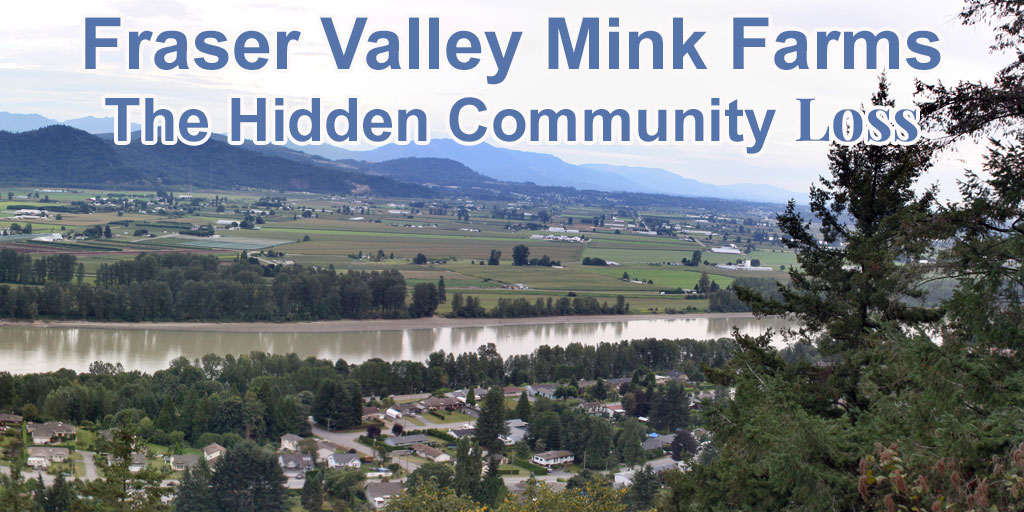
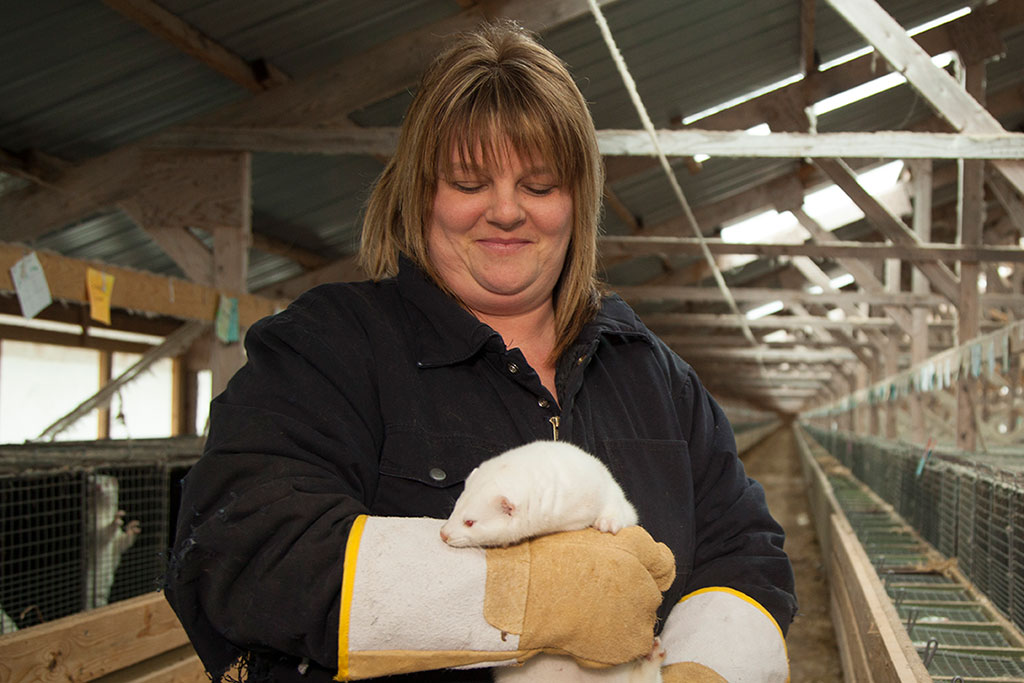
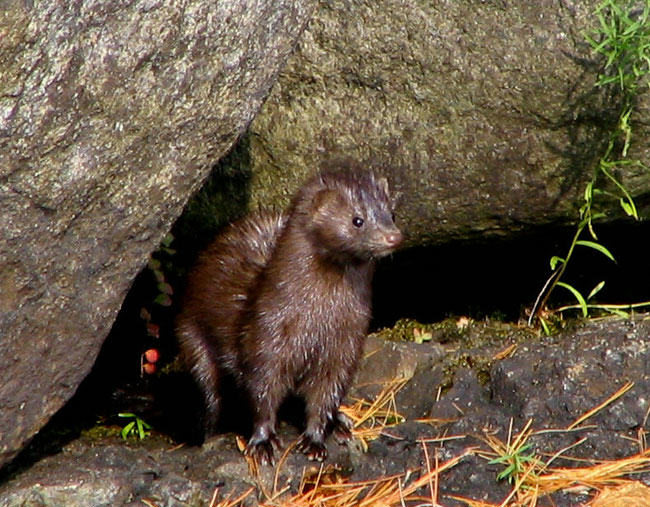
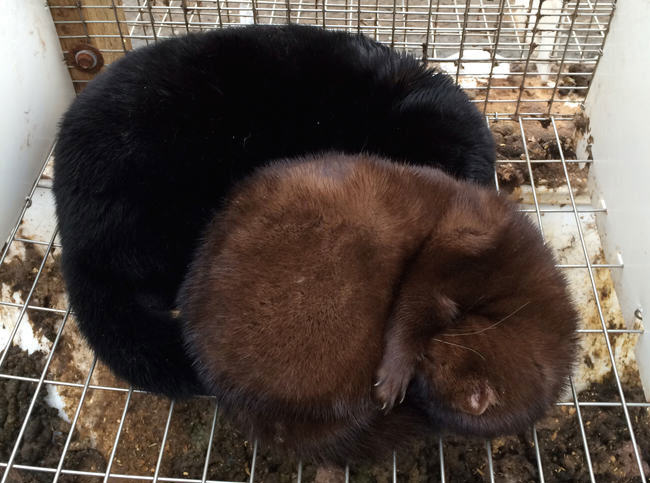
Shutting down mink farming in Fraser Valley has been a loss for the whole community. Photo: Mimigu at English Wikipedia, CC BY 3.0, via Wikimedia Commons.
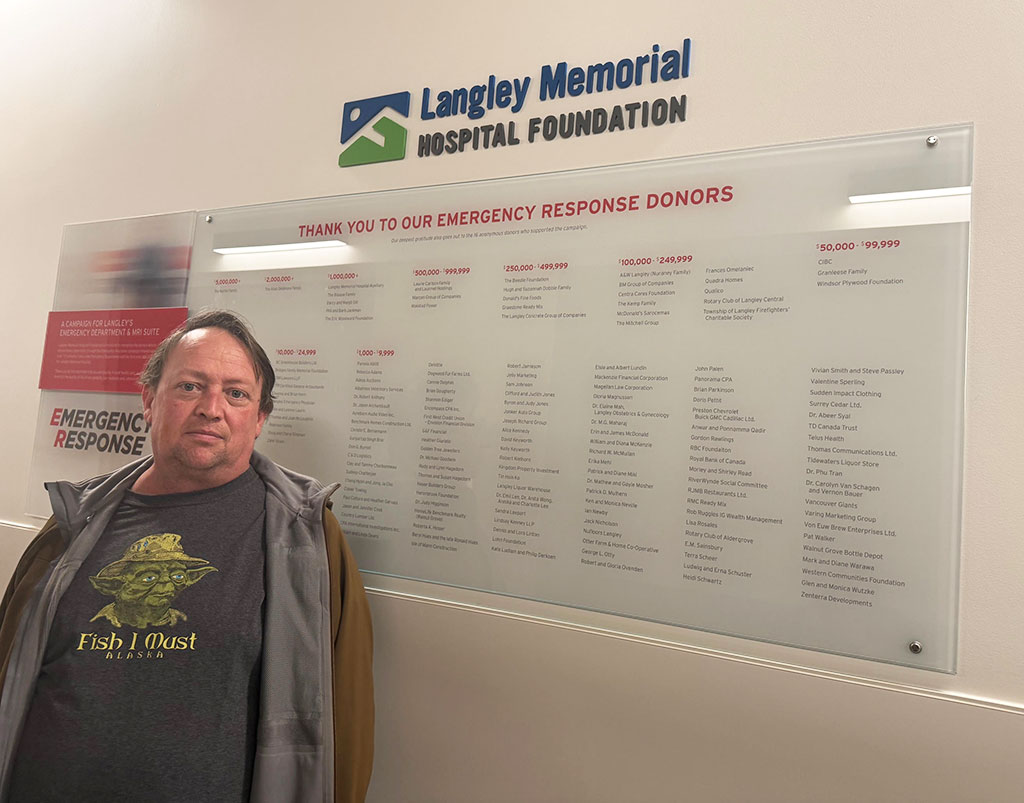
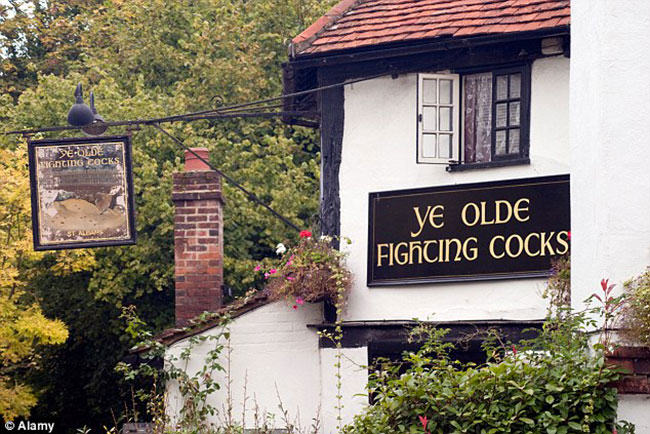
Over the last couple of months, I needed care in our local hospital in Fraser Valley, British Columbia, for a medical issue. (A big rave to the healthcare system and the great care I received!) While waiting during one of my visits, I was sitting close to a sign recognizing the contributors to a recent update to the hospital. All the donors were recognized, and I was a little surprised to see a local fur farm listed. There was also a local resident’s name that is also likely that of a family connected to the mink-farming community.
I was not surprised that they had donated. But I was surprised that they had chosen to be listed as donors.
You see, as a trapper, I have always felt that fur farming was important. The market for farmed fur has a major impact on the value we see for wild fur. So I've made a point of getting to know some of the local fur farmers and I've been impressed. They are multi-generational and very passionate. It felt like the list of donors was just that – people with close ties to the local community, and a long or rich history in the community. In short, they care about and support important projects.
But in 2021, the BC government decided to phase out all mink farms in the province, calling them a public health risk.
I do not have to ask to realize that support for the community from these farms has now gone. Farmers no longer have the capacity, the will or the desire to make donations. Despite being in an industry with a huge target on them, they had donated and also chosen to be recognized for that. Community pride at its best!
Yet it was the same world of charitable donations that eventually brought down BC's fur farms, and I find that sad.
Immoral Use of Charitable Donations
Langley Memorial Hospital is a valued member of its community, as the large number of donors shows..
The two groups responsible for pressuring the government to end fur farming in BC were The Fur-Bearers and the B.C. Society for the Prevention of Cruelty to Animals, both of which use the same model to solicit donations. They then used these donations to fight and shut the industry down.
It feels immoral to me that an organization can be allowed to fundraise as a charitable entity and then use those funds to fight and shut down a legal industry.
Further, it was done without fair and equitable treatment or compensation to the fur farmers, despite their years of local community support. Rather, an industry has gone because of the louder voices of a minority.
Also lost is the spin-off support farms gave to other local businesses in the community – the tractors and feed they bought, the staff they hired, the taxes they paid, and the stores they supported for so many years.
My moral compass feels charitable status should be reserved for a better society, not pushing the ideologies of a minority onto society.
I am proud to be Canadian, and proud also of our right to choose. If you do not wish to wear fur, that is your choice. I respect that, in the same way I respect the right of those who choose a vegan diet, wish to hunt, or wish to be a farmer, or identify as LGBTQ.
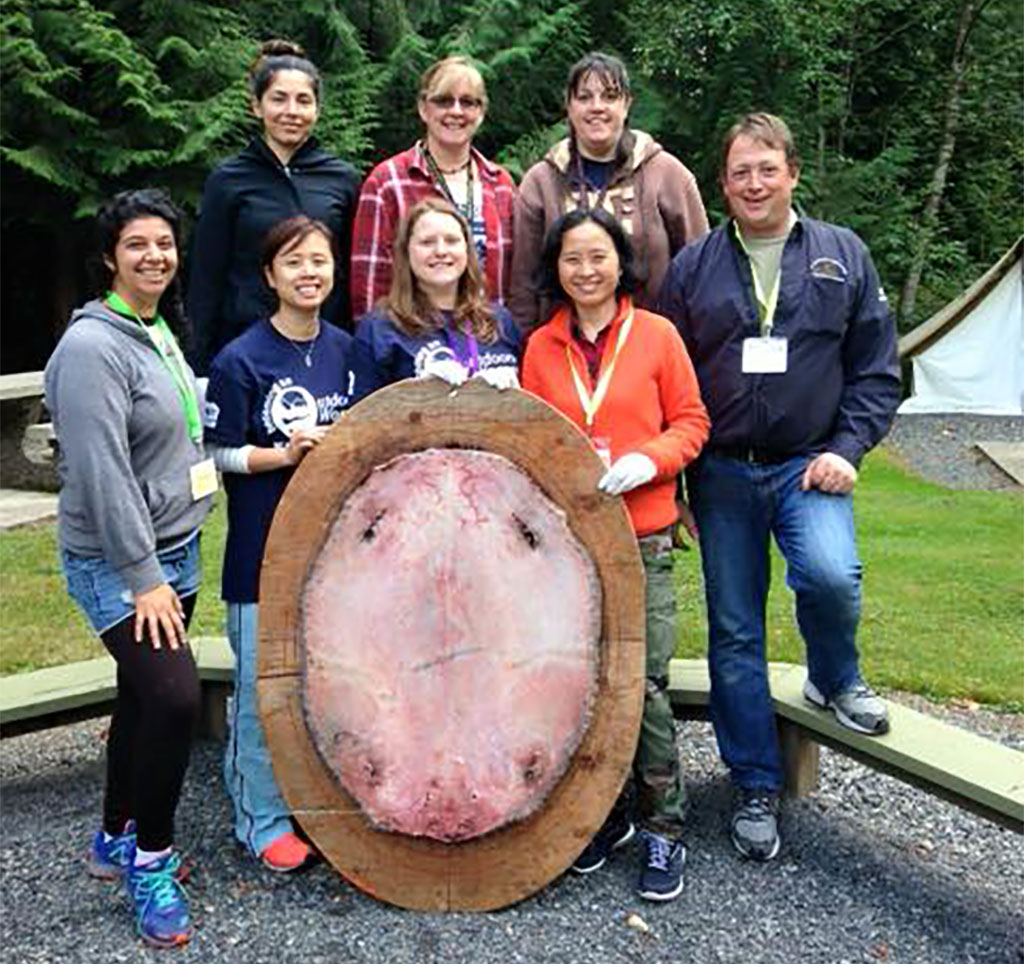
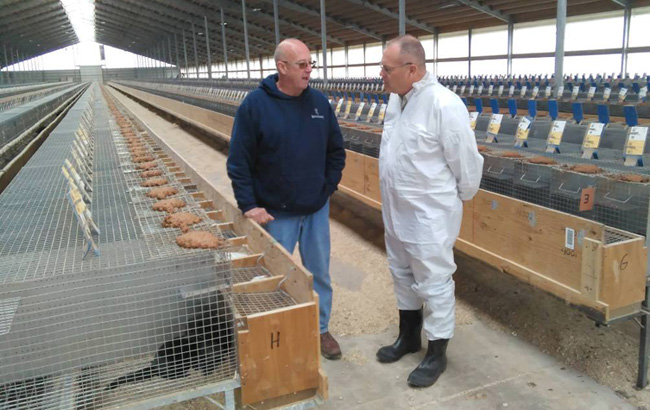
Before the latest health crisis, Tim Killey (right) and students show off a stretched beaver pelt.
The smoke and mirrors used by the government to depict our mink farms as a public health risk were insane.
Every industry comes with some risks to society, including all types of farming. For example, we have bird flu, mad cow disease, and swine fever. But we manage the risks.
Mink farms had the ability to manage the risk, including a new vaccine developed in the US specifically for Covid-19 – an option not available for all diseases. Meanwhile, of course, human populations were receiving their own vaccines. This combination was apparently acceptable to all, except of course for the BC government!
Leading the way for Canada's mink farmers was the government of Nova Scotia, which even offered to subsidize the cost of vaccinating mink against Covid-19. The only difference I could see between Nova Scotia's decision-makers and those in BC was that the former were doing their jobs, while the latter allowed themselves to be influenced by a vocal minority group.
I will continue to fight for the right to trap, hunt and fish, following in the footsteps of our forefathers that built the great nation we call Canada. I will also continue to defend our freedom to choose, and that includes our right to choose where to donate our hard-earned dollars. Hopefully my friends, family and colleagues will also take an extra minute the next time they donate funds, to review the options and pick a true charity dear to their heart.
Raised by humans for more than 150 years, farmed mink are significantly different from their wild cousins and are now… Read More
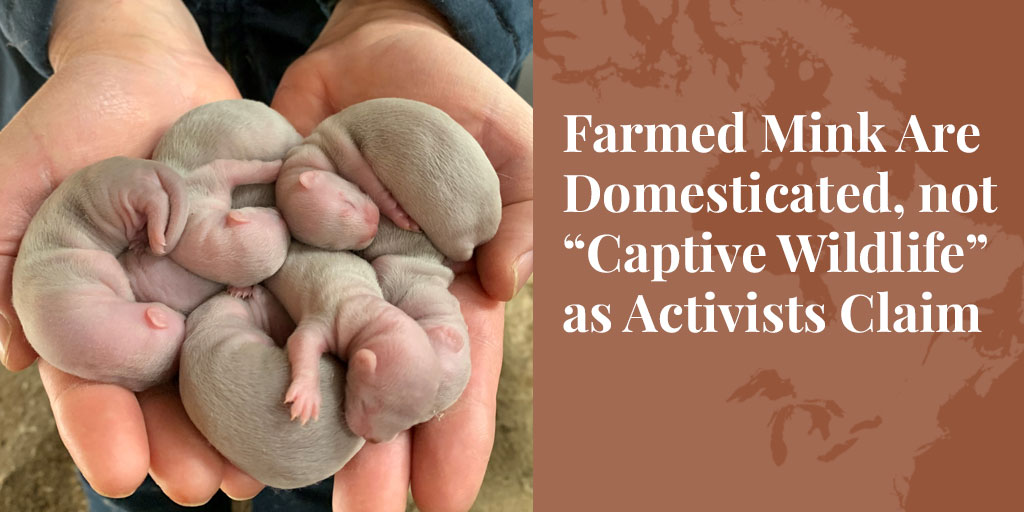
One of several differences between farmed and wild mink is litter size. Photo: Ted Parkinson.
Raised by humans for more than 150 years, farmed mink are significantly different from their wild cousins and are now clearly domesticated, despite animal activist claims to the contrary. This is important because the claim that farmed mink are not domesticated, but rather are “wild animals kept in captivity”, sits at the heart of activists' critique of mink farming.
Activists argue that, because wild mink travel and hunt over large territories, it is impossible to satisfy their fundamental needs on farms. Therefore, they claim, mink farming cannot be humane or ethical, and should be banned.
But is it true that mink farmers are keeping “wild animals” in captivity?
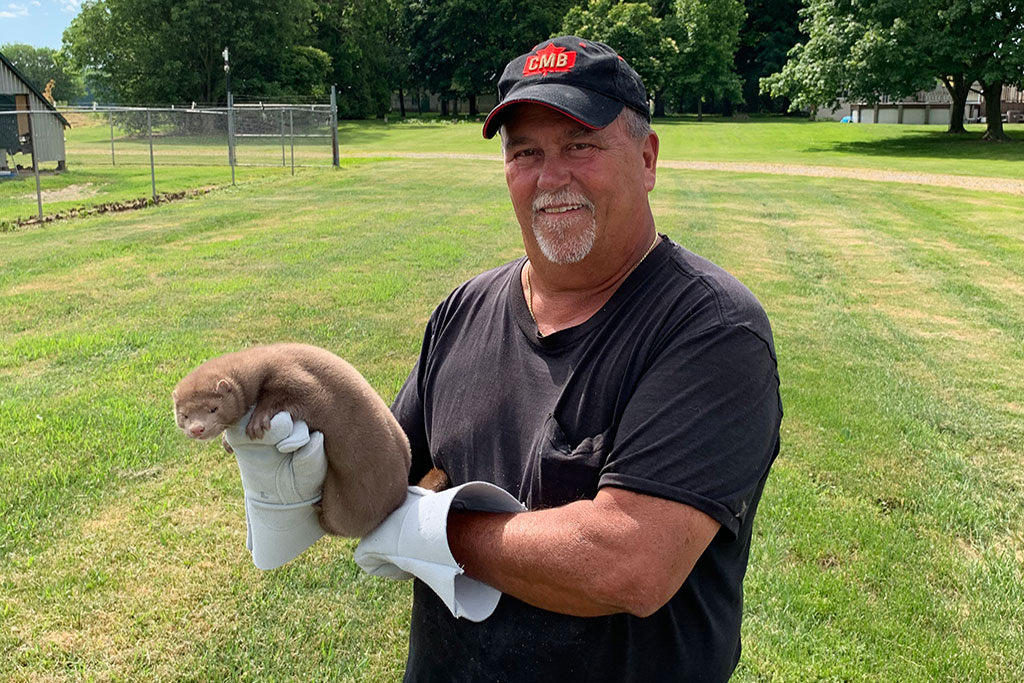
To support their claim that farmed mink are wild, activists point out that they have been raised by humans for only a short time compared with cattle, chickens, pigs or other farm animals. As a result, they say, farmed mink maintain much of their “wildness” – often they can only be handled wearing gloves – and are “biologically unchanged”, so they can survive if released (accidentally or intentionally) into the wild, and can even interbreed with wild mink.
Let’s look more closely at each of these claims.
How Long Does Domestication Take?
Try getting a wild mink to pose for the camera! Photo: Newfoundland and Labrador Fur Breeders Association.
It is true, of course, that mink have been raised by humans for much less time than many common farm animals. Mink were first bred and raised in captivity in North America as early as 1866, but the ancestor of our domestic chickens, the red junglefowl (Gallus gallus), was domesticated some 7,000 to 10,000 years ago in India and China. The domestic pig, derived from the Eurasian wild boar (Sus scrofa), dates from around the same time.
It is worth noting, however, that for most of their history, domesticated chickens, pigs, and other farm animals were raised mostly outdoors. The time these animals have been raised indoors, in more confined cages or pens, is not really that different from mink.
The more important question is how long is really required for an animal to become domesticated? And to answer that question, we must ask what domestication really means.
Animal scientists and biologists consider that domestication involves directional selection that produces morphological, physiological (or functional), and behavioural changes in the animal – changes that allow the animals to successfully adapt to husbandry conditions, and to better satisfy human needs.
Like other domesticated animals, selection for various traits in mink may be “active” (e.g., farmers selecting breeding pairs to develop new fur colours, or to produce larger animals with more fur per animal), or “passive” (e.g., physiological or behavioural changes that emerge because mink are no longer subjected to the natural selection pressures of finding food and mates, or avoiding predators).
Selection Brings Changes
Farmed mink are larger than wild mink, and most are a different colour too. Photo: Tom McLellan.
Following are some of the changes observed in farmed mink that show they have, in fact, undergone a process of domestication through active and passive selection.
CHANGES IN SIZE AND PHYSIQUE
Such changes are a common result of domestication. For example, chihuahuas and bulldogs are very different from wolves. Similarly, farmed mink can be twice the size of wild mink – the result of many generations of selecting for larger animals that produce more usable fur per animal.
CHANGES IN FUR COLOUR
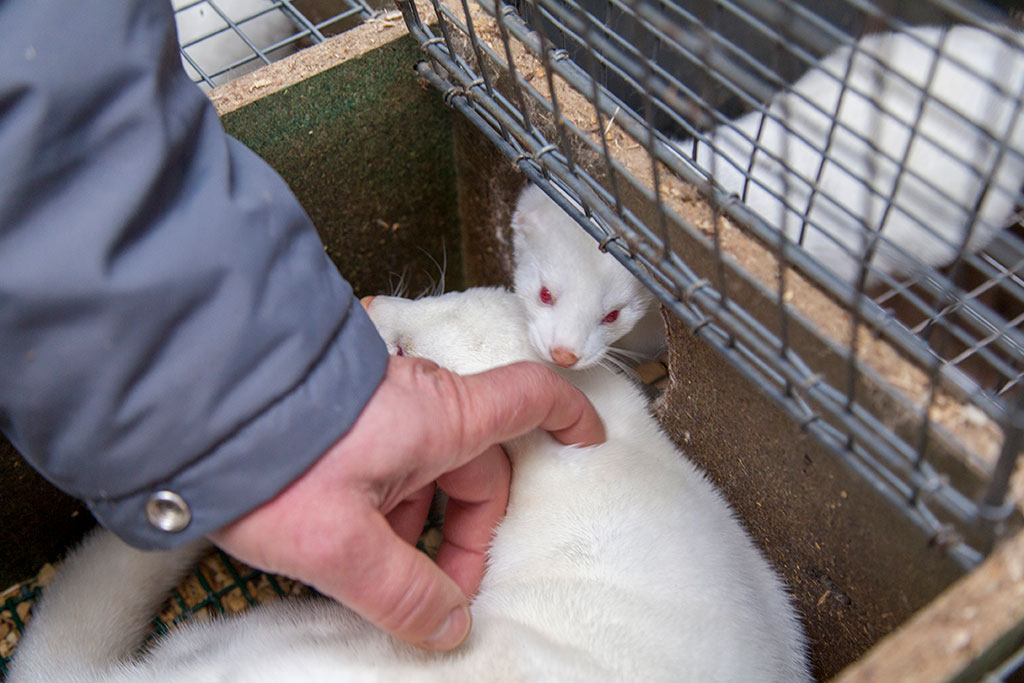
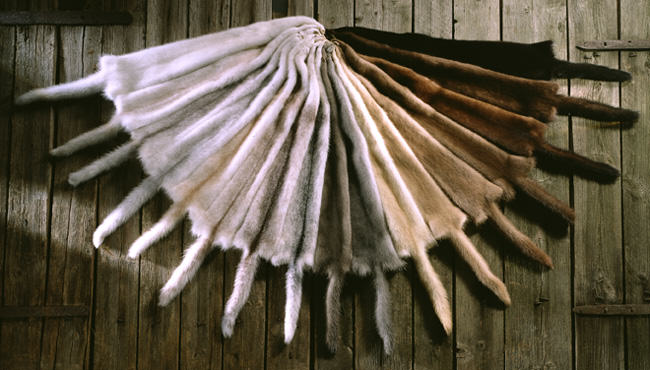
Many domesticated species of mammals and birds show a range of fur and feather colouration that is either rare or unknown in the wild. Wild mink are usually dark brown, but farmed mink have been selectively bred for a wide variety of consistent colour phases, ranging from pure white to jet black. Paler-coloured mink also tend to be larger than darker strains, and more docile.
CHANGES IN MUSCLE AND FAT FORMATION
Farmed mink have more subcutaneous fat than their wild cousins. This fat is rendered into mink oil, for waterproofing and conditioning leather. The increased fat appears to be a secondary effect of selecting for larger animals.
PHYSIOLOGICAL CHANGES
Farmed mink are fertile over a longer period than wild mink, and they also have larger litter sizes. Wild female mink produce an average of two to three kits, while farmed mink average five to six, and sometimes as many as 12. Farmers sometimes select breeding stock for larger litter size, but there is evidence that the (passive or active) selection for less aggressive behaviour (“docility”) may also result in increased fertility and larger litters.
CHANGES IN BRAIN SIZE
It is well known that the brain volume of domesticated animals is generally smaller than in the wild animals from which they are descended. This can range from a reduction in volume of about 14% in domesticated ducks and guinea pigs, to as much as 25-34% in sheep, pigs, dogs, cats, and ferrets. Similarly, when corrected for body size, the brains of farmed mink are about 20% smaller than those of their wild cousins. The heart and spleen of farmed mink are also smaller, which had also been observed in other domesticated animals. Reduced brain volume and other changes are likely the result of the removal of natural selection forces including the need to find food and flee predators.
CHANGES IN BEHAVIOUR AND TEMPERAMENT
While most farmed mink must still be handled with gloves, they are considerably less fearful or aggressive than wild mink – as anyone who has visited a farm can attest. When we enter a barn, most mink will come to the front of their pens to see who’s there; they show curiosity rather than fear or aggression. While farmers have selected mink mostly for size, fur colour and quality, and sometimes for litter size or maternal instinct, there is also a degree of active and passive selection for tameness. This is because highly fearful or aggressive animals do not thrive in a farm environment, are more difficult to handle, and may not reproduce as readily. The codes of practice for raising mink in both the US and Canada include provisions for selecting against fearfulness and abnormal behaviours (sterotypies). Increased fertility, larger body size, reduced brain volume, and certain paler colour phases are also correlated with increased tameness.
Animal Activist Arguments
This brief summary shows that farmed mink clearly exhibit a number of morphological, physiological and behavioural traits commonly associated with domestication. But what about the issues animal activists raise to argue that farmed mink are not domesticated?
For example, take what happens when animal activists raid a mink farm and release the animals. Usually they remain close by and are easily recaptured, if they are not killed by passing cars first. But some can survive in the wild, and even interbreed with wild populations. Activists cite this as “proof” that farmed mink are really “wild animals”, but we know that cats, pigs, and other indisputably domesticated species are also able to survive, and breed, in the wild. Dogs, for example, can interbreed with wolves and coyotes.
Activists also claim that wild mink are agile (hard to handle), carnivorous, solitary, and shy in nature, and therefore not good candidates for domestication. However, other carnivorous animals – like cats and ferrets (a close cousin of the mink) – are also agile, solitary and shy in the wild, but have clearly been domesticated.
When pressed, activists argue that mink simply have not been raised on farms long enough to be domesticated. But the experiment conducted by Dmitri Belyaev and Lyyudmila Trut, in Siberia, famously demonstrated that selecting for just one trait – tameness – in farmed silver foxes was sufficient to produce dramatic physiological changes and dog-like behaviours in only 20 generations. Mink have been raised on farms in North America for about 150 years – that's 150 mink generations -- more than enough time for active and passive selection to have induced changes normally accepted as domestication, as summarised in this article.
What Scientists Say
Some farmed mink can even be handled without gloves. Photo: Newfoundland and Labrador Fur Breeders Association.
Much of the information in this brief summary is taken from two scientific papers: “Is the mink domesticated?” by Prof. Eddy Decuypere [Physiology Research Group, Faculty of Bioengineering Sciences, Catholic University of Leuven, 2005], and, “The welfare of farmed mink as compared to other farmed animals, and the question of domestication of farmed mink”, by Prof. B.M. Spruijt, [Animal Welfare Centre, Veterinary Faculty, Utrecht University, 1999]. Those interested in this subject would do well to consult these papers, as well as the extensive scientific references they cite to support their observations.
Prof. Spruijt concludes: “Farmed mink are surely a domesticated species, as evidenced by certain defined characteristics of domestication present in mink, like changes in fur colour, physiology and behavior brought about by selection.” While acknowledging that ”docility” is one aspect of domestication that seems less pronounced in mink (and that he thinks is worthy of further research), he reports that “Given the relatively short history of mink breeding, the welfare assessment of farmed mink suggests that mink have adapted reasonably well to captive conditions,” and that “Compared to the welfare of other farmed animals, there is no reason to suggest that their level of domestication presents an unacceptable welfare problem.”
Prof. Decuypere similarly concludes that, “based on a number of typical domestication characteristics such as changes in fur colour, the lengthening of the mating season, the reduction in brain volume and behaviour changes, and by analogy to changes in these characteristics in animals known to us from time immemorial, the bred mink is unmistakably a domesticated animal."
It should be noted that while we have focussed on farmed mink in this survey, many of the same arguments for domestication – e.g., on-going selection for increased size, new colour phases, more docile temperament – can also be made for farmed foxes.
Of course, none of this will satisfy activists who subscribe to the extreme “animal rights” philosophy. For them, animal welfare concerns like those raised by the domestication debate are just a smokescreen, because they know that most people do not share their belief that humans have no right to use animals at all, for any purpose.
The claim that farmed mink are not domesticated animals is just the latest Trojan Horse that animal activists are wheeling out to insinuate their no-animal-use agenda onto consumers, the media, and politicians. Like so many activist claims, it is not supported by the facts.
***
To learn more about donating to Truth About Fur, click here.
A major new public opinion poll shows that, despite decades of aggressive and misleading activist campaigning, most Canadians are still… Read More
For most Canadians, the environmental benefits of natural fur are clear. The big problem is synthetics. Photo: International Fur Federation.
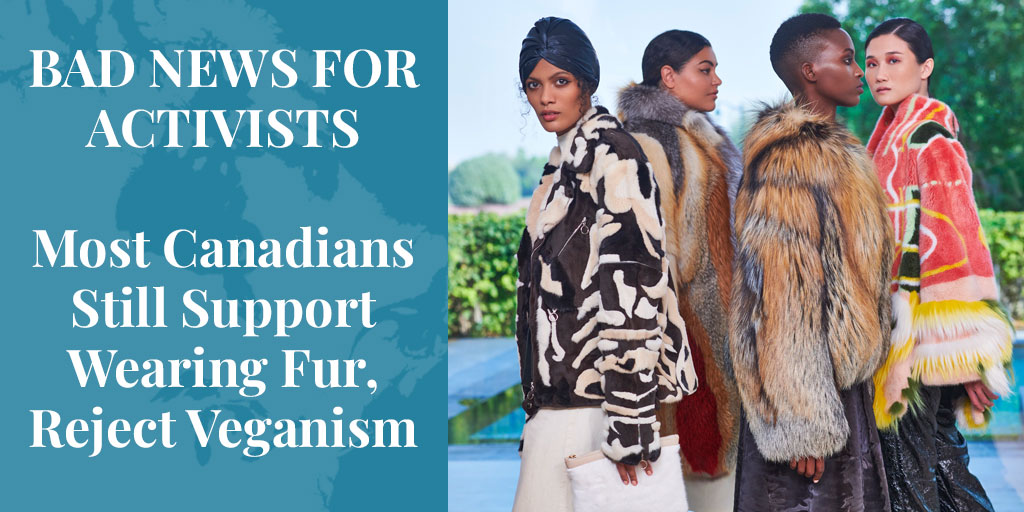
A major new public opinion poll shows that, despite decades of aggressive and misleading activist campaigning, most Canadians are still fine with wearing fur and other natural clothing materials -- but are increasingly worried about the environmental costs of petroleum-based synthetics that activists love to promote as “vegan”.
The survey of 1,500 Canadians was commissioned by the Natural Fibers Alliance, and conducted in August 2022 by Abacus Data, a leading public affairs and market research consultancy.
The research completely contradicts animal activist claims that fur is no longer socially acceptable. In fact, two-thirds (65%) of Canadians believe that wearing fur is acceptable so long as the industry is well regulated and animals are treated humanely. Only one in five (21%) of Canadians do not agree – with just 10% saying they “strongly disagree”.
More than three-quarters (77%) of Canadians also believe that wearing fur is a matter of personal choice – putting the lie to activist claims that the public supports their call for fur bans. (Politicians take note!)
Seven in ten (71%) Canadians also agree that warm clothing is a necessity in many countries, and that natural fur is a sustainable warm clothing choice.
It is fascinating to see that, despite years of activist propaganda against mink farming, 35% of Canadians have a positive view of the sector while 25% are “neutral”, and only 21% have a negative view – of which only 10% are “very negative” – about mink farming. (18% feel they don't know enough to form an opinion.)
Encouraging for Mink Farmers
Canadian mink farmers like Tom McLellan can draw encouragement from the latest survey..
Mink farmers will also be encouraged to learn that younger people tend to have a more positive view of their sector: 41% of 18-29-year-olds have a positive view of mink farming, compared with 35% of 30-60-year-olds, and 25% of those over 60. Again, these findings completely contradict activist claims that the future is theirs.
Strong pluralities of Canadians also believe that the mink farming sector supports rural communities (41%; versus 8% who disagree); that it is environmentally sustainable (38%; versus 12% who disagree); and that it takes care to maintain animal health and welfare (37%; versus 16% who disagree.) About one in five Canadians are “neutral” about these questions, while the balance don’t feel they know enough to state an opinion.
More broadly, this study completely debunks activist claims that the public is buying into their no-animal-use, vegan agenda. Despite all the hype we see these days about vegan products and vegan menu choices, 96% of Canadians are still open to eating animal products like eggs and dairy, while 90% think it’s OK to eat meat. So much for the vegan wave!
Three-quarters (74%) of Canadians also say they are comfortable with people wearing clothing or accessories made from leather, fur, wool, down, or other animal-derived natural fibres. (15% are “not too comfortable” with such choices, while only 7% of Canadians say they are “not at all comfortable” with animal-derived clothing materials.)
In fact, it is not fur or other animal-derived natural clothing materials that have consumers worried, but petroleum-based synthetics. 83% of Canadians are concerned that such synthetics – now in more than 60% of all our clothing – don’t biodegrade. 86% worry that synthetic fibres pollute our waterways and poison aquatic life. 83% are concerned about microplastics in our food and water.
Because of such concerns, most Canadians (87%) now feel we should strive to use fewer synthetic fibres in our clothing (58%), or phase them out completely (29%).
Two-thirds of Canadians, in fact, now believe that “fast fashion” is contributing to an ecological crisis – and 60% of consumers feel that an environmental fee should be applied to all non-renewable clothing materials, because of their impact on the environment!
Again, completely contradicting activist claims, most consumers (77%) believe that natural fur is a more environmentally sustainable clothing choice than synthetics. Nearly two-thirds (64%) also believe that fur is a more socially responsible choice, while 59% consider fur to be a more ethical choice than synthetics.
Bottom line, this new research provides some important lessons for the fur trade, the fashion industry, consumers, politicians, and the media:
1. The Fashion Industry: Designers, manufacturers, and retailers should listen to their consumers. Contrary to activist claims, most Canadian consumers do want to buy and wear fur, leather, wool, and other animal-derived products, so long as they are produced responsibly and sustainably. In fact, consumers today are more comfortable with responsibly produced animal-based clothing products than they are with petroleum-based synthetics.
2. Politicians: This research puts the lie to activist claims that Canadians want mink farming banned. In fact, more Canadians have a positive impression of mink farming than a negative impression, and more believe that the sector respects animal welfare and environmental sustainability. The research also completely debunks activist claims that the public want the sale of fur products banned. Quite the contrary, an absolute majority of Canadians believe that it is morally acceptable to use fur, and more than three-quarters believe that wearing fur should be a matter of personal choice. (The father of the current Canadian prime minister, Pierre Elliot Trudeau, once famously said that “the government has no place in the bedrooms of the nation”. It’s time to remind politicians that they shouldn’t be in our clothes closets either!)
3. Consumers: Those who appreciate its warmth, comfort, and beauty can wear fur with confidence, knowing that most Canadians agree that wearing fur is morally acceptable, environmentally sustainable, and a matter of personal choice.
4. Media: With this research at hand, journalists should stop giving a free ride to fraudulent activist claims that “consumers no longer accept that wearing fur is ethical”, or that “80% of Canadians want fur farming banned.” This research shows clearly that it is petroleum-based synthetics that have Canadians worried, and that most think that fur and other responsibly-produced animal-based clothing materials are a better environmental choice.
5. People of the Fur Trade: This research provides a powerful and timely response to anti-fur propaganda — but it is only useful if it is seen by others. It is up to people in every sector of the fur trade – trappers, farmers, designers, manufacturers, and retailers – to make sure this important information is widely circulated. Share this summary with your local and regional politicians. Use these statistics to respond whenever you see activist lies reported in the media — and to reassure customers, friends and neighbours.
Charles Dickens’ classic novel A Tale of Two Cities begins with the wonderful sentence: “It was the best of times, it was the worst of times.” This describes very well the situation of the fur trade today. Clearly the industry has been seriously damaged by decades of activist bullying and lies. At the same time, the growing public concern for protecting the environment provides a golden opportunity for the fur trade: when it comes to responsibly and sustainably produced clothing, fur checks all the boxes. We have long known this, and now we have the statistics to prove that many Canadians understand it too.
It’s now up to everyone in the trade to share and promote this important news!
“Fur farms in the U.S. are the only sector of animal agriculture unregulated by the federal government,” charges People for the… Read More
Fur farming in the US is subject to a host of government regulations which it then interprets in developing strict industry standards. Photo: Fur Commission USA.
"Fur farms in the U.S. are the only sector of animal agriculture unregulated by the federal government," charges People for the Ethical Treatment of Animals. And it's no throwaway statement either, making it onto PETA's list of Nine Shocking Fur Facts. When presented with no context, the casual reader will conclude that US fur farming is unregulated, period. But this could not be further from the truth.
The trick employed by PETA here relies on the fact that most readers will only see "unregulated by the government", and not even register the word "federal".
In common with all livestock in the US, almost every aspect of furbearers' lives comes under the jurisdiction of state departments of agriculture, not the federal government. State departments of agriculture are, of course, still government bodies, and love regulating just as much as the federal government. So are fur farms regulated by government? You bet they are, but - like most of animal agriculture - mostly by state and municipal governments.
Where the federal government does get involved in livestock production is in regulating the slaughter of animals raised for food, because there are human health concerns. Since farmed mink and fox are not produced or sold for human consumption, their production (including euthanasia) is mostly the responsibility of state governments.
That said, it's still not true to say that fur farms are completely exempt from federal regulation. While the federal government largely delegates implementation of the Clean Air Act and Clean Water Act to states, these are still federal laws, and fur farms must comply just like any other livestock operation.
Working with Government
Some opponents of fur take a different tack when trying to create the impression that US fur farming is unregulated. Fur farms, they say, just follow standards developed by the industry itself - a case of the fox guarding the chicken coop. While it's true that the industry places great importance on its own standards, that does not mean that farmers can do whatever they want.
First, it's important to understand that having industry standards is totally normal. In American agriculture, fur farmers were pioneers in developing such standards, but today every livestock sector has them. They have some important functions.
Standards are a basic tool for an industry that is committed to policing itself. This relieves some of the burden on government which typically does not have the resources to conduct regular inspections of every small farm, and may visit only when a complaint has been filed.
Standards also help farmers improve their operations because they incorporate the findings of research in areas where the industry is the recognized authority. In the case of fur farming, these include nutrition, housing and disease control (bio-security).
Standards also provide a buffer against attempts - for example by animal activist groups - to introduce arbitrary regulations that are based on ideology rather than scientific research.
However, the important point here is that industry standards are not alternatives to government regulations. Rather, they complement and build on them. This is why regulations governing livestock farming typically evolve through consultation between government and industry stakeholders, while taking advice from independent experts.
Animal-Welfare Statutes
A good example of how this works is in the area of animal welfare. Animal-welfare statutes are many and varied, covering everything from mistreatment and neglect, to intentional cruelty. Such statutes, however, can be short on specifics; it is neither possible nor desirable to regulate every scenario that might face every kind of animal. So this is an area where specific industry standards – for example concerning nutrition and housing – can complement and build on more general government statutes.
Thus, in the case of mink farms, industry association Fur Commission USA (FCUSA) has a certification program which includes, among many other requirements, a minimum size for mink pens. By setting this standard, and enforcing it through inspections by independent veterinarians, the industry complements more general government animal-welfare statutes.
Euthanasia is another example. Again, rather than developing statutes from scratch for every kind of livestock, states refer to recommendations of the American Veterinary Medical Association in its AVMA Guidelines for the Euthanasia of Animals. FCUSA takes the same recommendations on euthanasia and incorporates them in its industry standards. In other words, while it can be said that the industry "sets its own standards" on euthanasia, these standards are, in fact, based on the same recognized authority as states rely on; they effectively respect state statutes while adapting them to the specific characteristics and needs of fur farming.
In summary, US fur farms are regulated just like any other livestock sector, except that they are not subject to federal regulations for food animals. And industry standards are not alternatives to state statutes; they interpret and complement them. Therefore, PETA's "shocking" assertion that fur farming is "unregulated by the federal government" is as meaningful as saying, "Michael Jordan doesn't wear Under Armor shoes!" Of course he doesn't. He wears Nike.
For 70 years, American mink has been the world’s favourite fur, but why? Ask a dozen people and you’ll get… Read More
With its shiny guard hairs and dense underfur, American mink has been the world's favourite fur for 70 years. But how does it really fare against the competition? Photo: Mwanner.
For 70 years, American mink has been the world’s favourite fur, but why? Ask a dozen people and you’ll get a dozen different answers. The conundrum is that, of all the measures used for a fur's desirability, mink only ranks top in one - and that is one consumers don't even care about!
But first, a clarification: this is not a plug for mink produced in America. American mink refers to a member of the mustelid family, Neovison vison, which is, indeed, indigenous to North America, but is now bred on farms from Europe to China. The European mink (Mustela lutreola) is not used by the fur trade.
So if you’re ever asked why mink is so popular, take a deep breath, and explain there's no single answer. Here are no fewer than nine to get you started:
1) Mink Guard Hairs Are Fashionably Short
A fur's guard hairs are the ones that give it its shine and colour. Their length is also important because short-haired furs like mink are in fashion, while long-haired furs are mostly seen in trim these days. Given the famously fickle nature of fashion, that may not sound like much to pin mink's reputation on, but short-haired furs have been in fashion for 70 years!
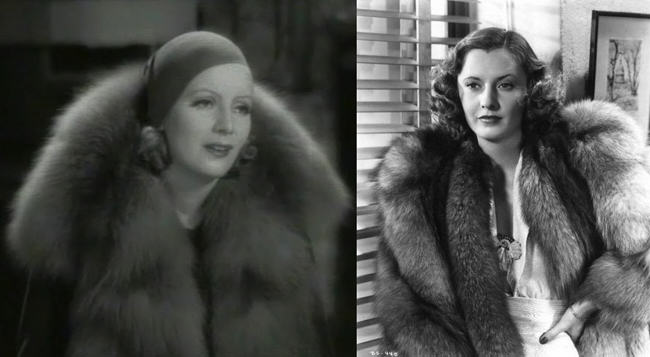
In the 1930s, Hollywood was a giant advertising billboard for fur. But fox was the star, with mink in a supporting role. Greta Garbo in Inspiration (1931), and Barbara Stanwyck in The Mad Miss Manton (1938).
It's not always been that way though. Back in the 1930s, fur's Golden Age, the scene was very different. Long-haired furs were the rage and fox was king, followed by skunk and muskrat.
Short-haired furs were never out of the picture; sable and ermine, in particular, have always been highly desired. But supplies of these wild furs were limited (sable farming had not yet begun), and mink farms were producing nothing like the quantity or quality they do today.
Then, with the end of World War II, mink rose suddenly to replace fox as a lady's favourite. Some say it was because more women were now in the work force and could buy their own furs, and what they chose did not make them look like trophies for rich male benefactors. Who knows? But the love affair between women and mink has been strong ever since.
2) Mink Fur Is Very Soft
If you like your furs as soft as a cloud, mink will satisfy you as long as you don't experience sea otter. But since, for conservation reasons, sea otter is now only available through a highly controlled cottage industry in Alaska, consider lowering your standards just a little!
Sea otter is the densest and softest of all furs. At the height of the North Pacific hunt, even the hunters enjoyed this luxury, though style took a back seat.
A fur’s softness reflects the density of its hairs, and sea otter takes the prize with a staggering 400,000 per cm2 on its sides and rump. Far behind in second place is chinchilla with about 50,000 per cm2, although a "show" chin may have up to 100,000.
All of which makes mink sound like a scouring pad. The densest mink is the dressed pelt of a farmed animal, not wild, but even so we're talking just 24,000 hairs per cm2, or 16 times less dense than sea otter.
But perspective is everything here. Mink is still one of the densest, and softest, furs around. By comparison, the hair on your head (unless you're bald) is 190 hairs per cm2 tops, and probably half that!
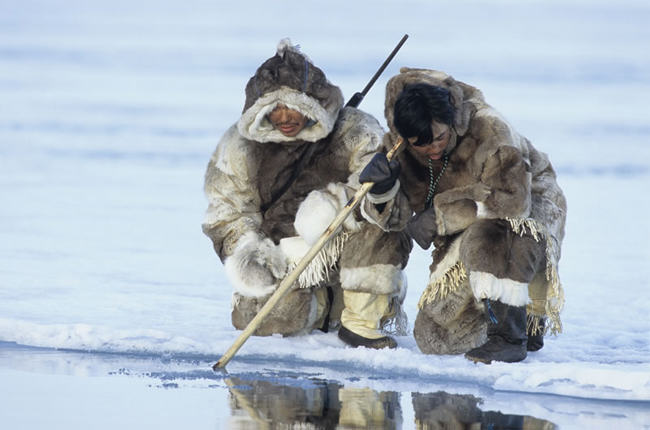
If you’re planning an ice-fishing trip in Nunavut, mink should not be your first choice for keeping warm. Try dressing from head to toe in caribou, and remember to undress when you get home or you'll overheat! The air-filled hairs of caribou are the secret here.
But remember, caribou fur is incredibly bulky, it sheds like crazy, and you definitely cannot buy this stuff off the peg.
If ice fishing in the Arctic is your thing, leave the mink at home! Nothing beats caribou fur. Photo: Francesc Bailon Trueba.
If the toughest challenge you face is a chilly evening stroll in Southern California, or even a freezing day in New York, mink fits the bill just fine.
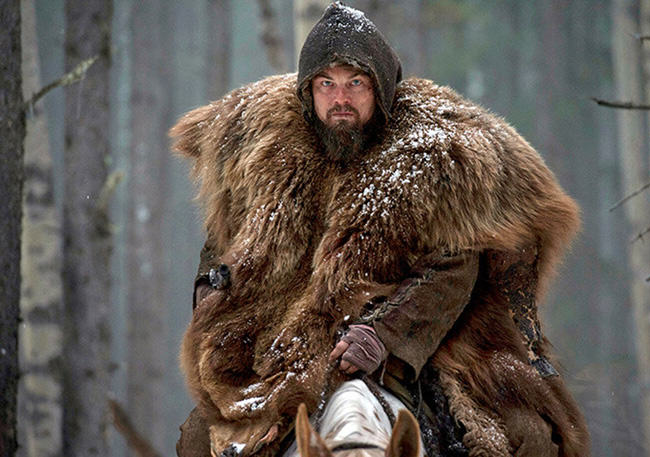
Durability is rarely the top consideration in choosing a fur garment, otherwise we’d all be wearing wolverine or bear (usually used for rugs) and looking like Mountain Men. On the other hand, we don’t want furs that shed their hair or tear if we shout at them, like rabbit or moleskin.
So you're going off grid in Alaska, and you can only take one coat? Wear bear! And when it turns cold, slather the coat and yourself in bear grease. But beef up first. Leonardo DiCaprio's coat in The Revenant weighed over 100 lbs when wet.
Among furs generally used for garments, sea otter and otter have been ranked the most durable, at 100. Beaver comes third at 90, followed by seal at 75. Skunk and mink tie for fifth at 70, the highest-ranking mustelids. Other mustelids include the European pine marten (65), sable (60), stone marten (40), and ermine (25).
Fox comes in at a modest 40, and the less said about moleskin (7) and rabbit (5), the better!
So mink is not the most durable fur, but it is surprisingly tough for something so beautiful and soft!
5) Sheared Mink Is Cheaper and Lighter than Beaver
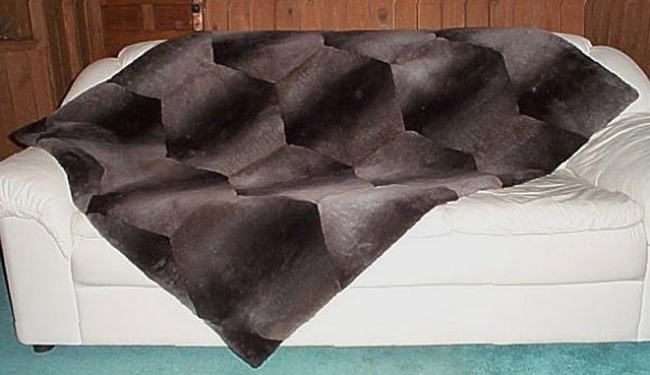
Shearing fur reduces the length of the hair to give a short, even pile, and a lighter, more supple material, almost like a textile. It's not a new treatment, but it's more popular now than ever, and the most common sheared fur today (not counting shearling) is mink. But does mink make the best sheared fur?
The ultimate sheared fur is beaver, but mink is lighter and cheaper. Photo: Glacier Wear.
For knowledgable fur lovers, no sheared fur beats the plushness of North American beaver. As a semi-aquatic animal, it has thick, dense underfur. This is normally sheared to 15 mm length, and with great skill can be taken as low as 6 mm. But it also has long, coarse guard hairs, which should be plucked before shearing, or the result feels like a scrubbing brush. Unfortunately this has been sheared beaver's downfall; plucking is a skilled process and also a Canadian speciality, and that means expensive labour.
The death knell for sheared beaver sounded in the early 1990s when Hong Kong manufacturers saw a whole new opportunity in shearing mink. As semi-aquatic mammals like beaver, mink were well suited with their dense underfur. Also, European mink pelts were then available very cheap. Plus there were other business advantages.
First, mink guard hairs are silky smooth, so don't need to be plucked before shearing. That was a big cost saving over beaver right there, plus it meant all processes, from tanning to shearing to dying, could be done in China, which meant lower labour costs.
Second, sheared mink is much lighter than beaver. Light is good in fashion, even if it means weaker leather, and Hong Kong took it to new levels, producing mink with a chiffon-like bounce.
Third, unlike beaver, mink pelts were available to manufacturers in huge quantities (see 9). Why should the industry promote a few hundred thousand shearing beavers when mink pelts could be had in the millions?
And fourth, mink was already the world's favourite fur, so sheared mink sold itself. No special marketing required!
6) Mink Are Suited to Farming
Most fur garments today use farmed pelts, most of these are mink, and of all furbearers currently being farmed, none is easier than mink. But it's definitely not the easiest!
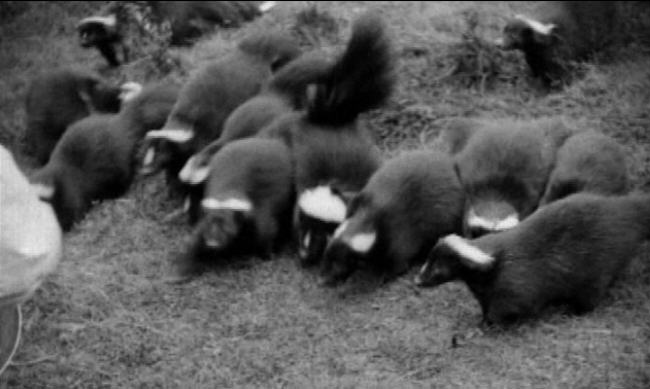
For the easy life, farm striped skunk. Eighty years ago, at the height of skunk fur's popularity, neophyte farmers often learned with skunk before graduating to the more valuable, trickier fox. Skunk thrive in large, open pens (they are sociable and hate climbing), eat table scraps, and come running at feeding time! They also showminimal or no delayed implantation (see below). The only hard part - impossible, actually - is making a profit, which is why no one farms skunk anymore.
Striped skunk are the easiest mustelid to farm, but there's no market anymore. Seen here is unique footage of an English skunk farm in 1931.
Mink, by contrast, need isolating in covered pens (they fight and climb) inside housing specially designed for ventilation, lighting, feed and water delivery, and ease of cleaning; a carefully balanced diet; and hands-on care by the farmer and his vet at all stages of their life cycle.
Still, farming mink, and specifically breeding mink, is so much easier than other mustelids.
The key is the little-understood characteristic of mustelids called delayed implantation. After the female is impregnated, the embryos do not immediately implant into the uterus and begin developing, but instead enter a state of dormancy. Depending on the species and, perhaps, the temperature, this delay can last from just a few days to more than 10 months. The gestation period of fisher can last a full year, and American marten - which many farmers once tried to raise - are close behind.
Mink, by contrast, delay implantation for six weeks tops, but if breeding is timed to coincide with warmer weather, this may fall to about 10 days. With skill and luck, a farmer can see his new litters after just 39 days, and since his biggest expense is feed, every day counts.
And that's why almost all mustelid farmers now choose mink. The only exception are a few die-hards who stick with sable. Yet even in Russia, where the finest sable pelts are produced, only a handful of farms survived the end of subsidies under the Soviet Union. Sable have a gestation period of up to 300 days, and to make matters worse, females reach sexual maturity at age two to three. Mink are already there at one. That's a lot of extra feed!
All livestock farming is fraught with uncertainty (unless you're subsidised by government), and mink farming is no exception. But of all the different types of fur farming that have been tried, none offers the relative security of mink. It's been in demand for 70 years. If you produce it, someone will buy it.
For sure, there are ups and downs. North America's crop of pelts in 2011 sold for an average of $94.30, a record high, but in 2014 made just $57.70. But prices very rarely go below production costs, or stay there long. After World War II, skunk and fox prices fell so hard, the skunk sector was wiped out and fox farming in North America barely survived.
Still, you can't just buy a couple of mink breeders and start turning a profit. Modern mink farms are big, and economies of scale are key to their success - a far cry from most of their 150-year history. In 1969, when the US Department of Agriculture began compiling figures, there were 2,635 mink farms in the US, small family businesses producing an average of 2,000 pelts each a year. Today there are just 275 farms, according to Fur Commission USA, and while most are still family-run, pelt production averaged 13,672 in 2014. Capital investment has grown also, of course.
So to say there's money in mink farming is simplistic. If you have the expertise, reliable feed suppliers, a vet who knows mink, and a huge chunk of start-up capital, there's money in mink!
8) A Rainbow of Colours
Some furbearers come in a variety of colours in the wild depending on season, region, subspecies, or genetic mutations (much like human blondes and red-heads), and none shows more variation than fox. Wild mink, meanwhile, vary much less, ranging from tawny brown to very deep brown.
Of all the mink colour "phases" now available, only a few resemble wild mink. Photo: Finnish Fur Sales.
On the farm, though, everything changes. Selective breeding over many generations has resulted in farmed mink in a wide range of colours, or "phases", never seen in nature. In terms of variety, only the dramatic range of farmed fox colours outdoes mink.
This is an enormous boon for designers and consumers alike. Browns the same as, or resembling, wild mink, such as "demi-buff" or "mahogany", are huge sellers, but you can also choose from white to black, and a host of phases in between like "pearl", "sapphire", "palomino" and "violet". The choices just keep on growing.
9) Mink Supply Is Reliable and Flexible
And finally, the one class in which American mink comes top: reliability and flexibility of supply. Designers, manufacturers and retailers base their collections on materials they know will be available, and in the fur trade that means mink. Ironically, the consumers who drive the fur trade have no interest in this key aspect behind mink's continuing success, but that's not unusual. We are all consumers, and we are all prone to buying what is available, or, in other words, what we're told to buy!
A recent major North American auction exemplified mink's extraordinary dominance. Pelts of several wild mustelids were on offer: 42,000 ermine, 30,000 marten, 25,000 mink, 5,500 fisher and 4,500 otter. By contrast, no fewer than 4 million farmed mink were offered.
At any fur auction today dealing in farmed and wild product, farmed mink totally dominates. Photo: North American Fur Auctions.
American mink is locked in a self-perpetuating cycle of success. All of its other merits created demand, which in turn stimulated supply, and now the entire industry is invested in creating more demand. It's not the softest, it's not the easiest to farm, it's not the most durable, and it's not the warmest. But it ranks high in every class, which is why people want it, and the industry wants you to want it - and no other fur can compete with that!
Have you ever visited a mink farm? Would you like to know more about how farmed mink are raised and… Read More
With the weather growing cooler, these fully grown mink are putting on their winter fur. Photo: Truth About Fur.
Have you ever visited a mink farm? Would you like to know more about how farmed mink are raised and cared for? Senior Truth About Fur writer Alan Herscovici asked “Les”, a third-generation Nova Scotia mink farmer, to give us a personal tour and explain the work he does during a typical year.
In Part 1: Breeding, Les explained how the mink production cycle begins early each spring. In Part 2: Whelping and Weaning, we got an insider’s view of life on the farm through one of the busiest periods, from April to June. In Part 3: Growing Up, we saw how the mink kits are vaccinated and separated into smaller groups as they grow. This time, we learn about some of the final steps in producing the high-quality mink for which Canada is known around the world.
Truth About Fur (TaF): When we last spoke, the intense work of vaccinating and separating the young kits into pairs had been completed and life on the farm was somewhat quieter as the mink grew through the summer months. What happens next?
“Les” (Nova Scotia mink farmer): As the days become shorter and the weather gets cooler in the Fall, the mink are about full grown and start putting on their winter fur. By early November we are deciding which females to keep for breeding the following Spring.
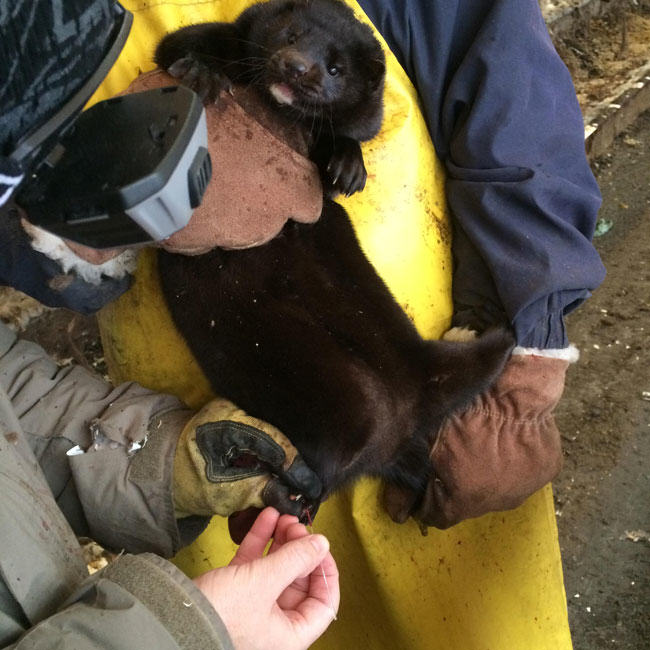
A blood sample is taken from a toe nail to test for any signs of illness. Photo: Truth About Fur.
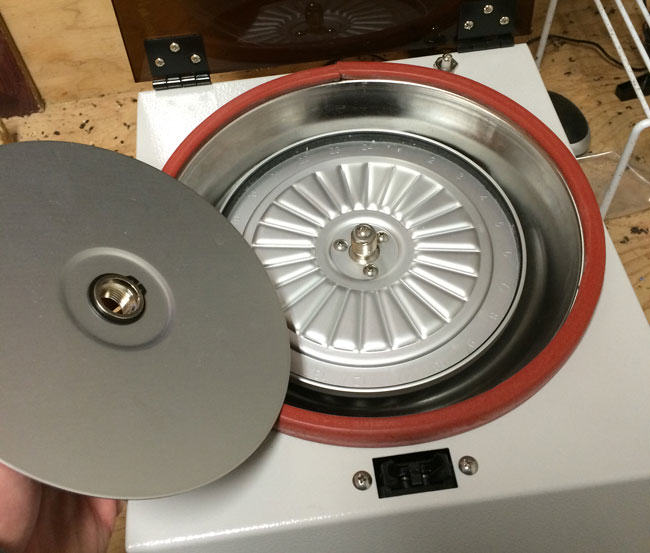
The first step is to do some blood tests. We clip the tip of a toe nail to take a few drops of blood from each mink. This is placed into a small glass tube and spun in a special centrifuge to separate the blood components.
A centrifuge is used to separate blood components. Photo: Truth About Fur.
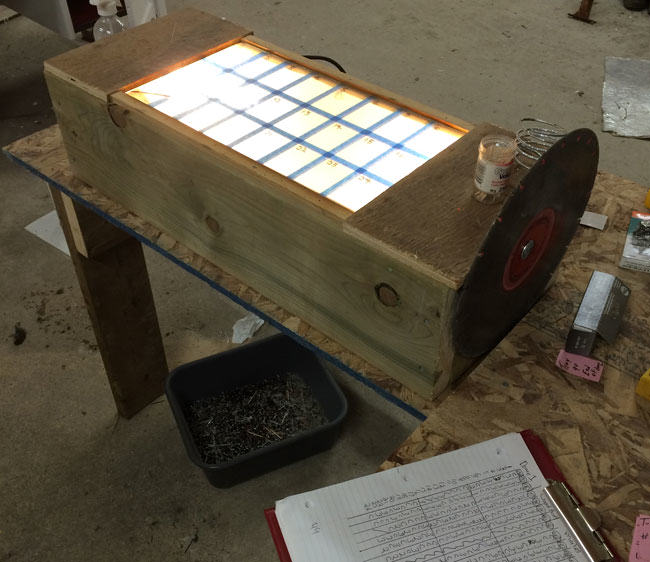
We then extract some of the clear whitish plasma and add a drop of iodine. If rust-colored clumps appear after adding the iodine, we know that some sort of disease or infection may be present. These mink will not be kept for breeding; the data cards on their cages are marked for pelting.
Blood samples are smeared on an illuminated work table, and a drop of iodine added to look for signs of disease or infection. Photo: Truth About Fur.
TaF: So are you choosing the healthiest mink for reproduction?
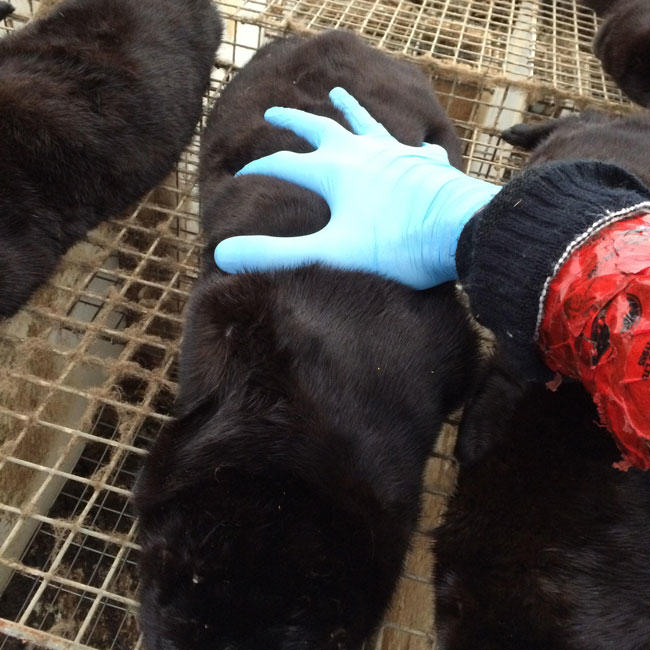
Les: That’s just the first step. Then we start the most important selection, hand-grading the mink for fur quality. We are looking for a number of crucial factors, especially the velvety short-nap fur that North America is famous for. But we are also checking for the softness of the fur and consistency of colour. If there are white hairs among the brown or black fur, for example, you want to eliminate that as much as possible from your herd. This hand-grading and selection is vital. It is what determines your fur quality for years to come.
TaF: So you are selecting for health and fur quality.
Les: Yes, but we also take into account the litter size females produced, and how well they cared for their young, as well as how calm and easy to handle they are. These are all factors in deciding which females we keep for breeding the following season. And each farmer makes these decisions somewhat differently, depending on how you are trying to develop your bloodlines and fur quality for the future.
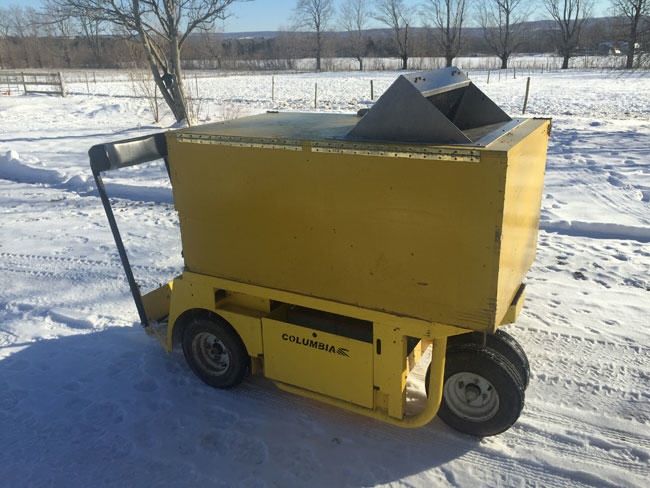
A mobile cart filled with the proper concentration of bottled carbon monoxide (CO) gas is used to euthanise mink quickly and humanely. Photo: Truth About Fur.
TaF: So you have balanced all these factors and decided which mink to keep for breeding. Then what?
Les: By December the mink are fully furred - we say the fur is “prime” - and it is time to euthanize the mink we will be pelting.
We wheel a special, air-tight box into the barn; it is filled with the proper concentration of bottled carbon monoxide gas. The mink are not stressed because normally it’s the feeding cart we bring through the barns.
One by one, we open the cages and place the mink into the gas-filled box. They turn around a few times, lie down peacefully, and in a few moments they are dead. Carbon monoxide is an odorless gas that acts very quickly and humanely.
TaF: And then you pelt them?
Les: Not right away. First we place them on top of the cages or onto a wire shelf, to cool thoroughly. That’s very important because the fur can be damaged if it rests too long against a solid surface while the mink are still warm. We usually send them to the pelting facility the following day.
Male mink being laid out atop their pens to cool after euthanasia. They will be sent for pelting the next day. Photo: Truth About Fur.
TaF: So what do you say to activist claims that mink are skinned while they are still alive?
Les: That’s complete nonsense, like so much that the activists say about us. It’s very frustrating, for sure: we work so hard all through the year to produce the best quality mink we can raise. It’s insulting and ignorant for activists to claim that we would mistreat these animals. We are proud of how we care for our mink. Our livelihoods depend on them!
TaF: What happens at the pelting facility?
Les: The mink are pelted by experts who have the experience to do this perfectly, without damaging the fur. The fur pelt is then cleaned and put onto a special stretching form to dry slowly in the proper size and shape. This has to be done at the right temperature and humidity. The fur will then be sent to the auction facility to be graded and prepared in lots for the next auction sale.
TaF: Is only the fur used? What happens to the rest of the mink?
Les: The fat from the mink is collected to make mink oil, which is used to waterproof and protect leather, or as a fine lubricant. The carcasses and manure are usually composted to make organic fertilizers. Here in Nova Scotia we also have a pilot facility to make methane from the manure to produce electricity. In Denmark they are already producing biofuels with mink carcasses.
TaF: So let me understand this: your mink were first fed by-products from our food supply – the parts of fish, poultry and meat animals that we humans don’t eat – and then, in addition to producing beautiful fur, their manure, soiled bedding straw and carcasses produce organic fertilizers to replenish the soil?
Les: That’s right, mink help to complete the agricultural nutrient cycle, while producing one of the most beautiful, long-lasting and ultimately biodegradable clothing materials in the world!
Have you ever visited a mink farm? Would you like to know more about how farmed mink are raised and cared… Read More
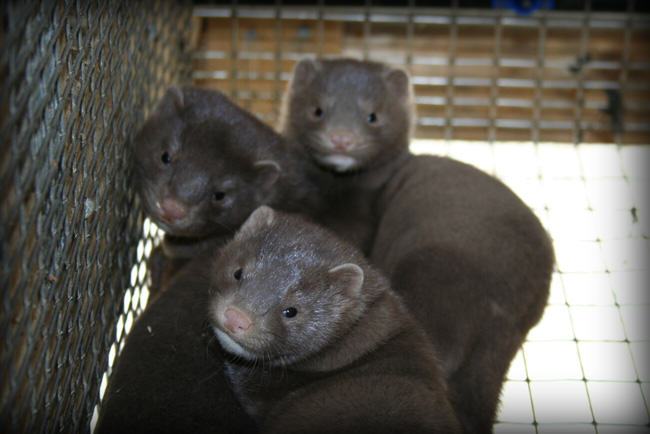
Two young male mink kits are curious to explore their new pen. Photo: Truth About Fur.
Have you ever visited a mink farm? Would you like to know more about how farmed mink are raised and cared for? Senior Truth About Fur writer Alan Herscovici asked "Les", a third-generation Nova Scotia mink farmer, to give us a personal tour and explain the work he does during a typical year.
In Part 1: Breeding, Les explained how the mink production cycle begins early each spring. In Part 2: Whelping and Weaning, we got an insider’s view of life on the farm through one of the busiest periods, from April to June. This time, we find out how young mink are cared for through the summer.
Truth About Fur (TaF): When we last spoke, you explained all the work involved in preparing and caring for the newly born mink kits. What happens next?
“Les” (Nova Scotia mink farmer): Most of our kits were born towards the end of April or beginning of May. At about one month old they start licking at the fresh feed we put onto the wire mesh of their pen, and a few weeks after that they are usually fully weaned. On our farm we install the nipples of the drinking water distribution system quite close to the nest box opening, to encourage the kits to explore the larger pen and become more independent.
These four sisters have just been moved into a pen of their own. Now they are eating the freshly ground, highly nutritious feed placed atop their pen, and growing quickly. Soon they will be separated again, into pairs. Photo: Truth About Fur.
TaF: Is that when you start breaking down the litters into smaller groups?
Les: Exactly. Around mid-June, on our farm, we start moving female kits into their own pens, in groups of four. If there are more than four females in a litter – say, six – we will take two female kits from another large litter to make two pens of four each.
TaF: So the kits are about six-weeks old when they’re separated from their mothers?
Les: On average. You are watching carefully to see when the kits can fend for themselves. If you move them when they’re too small, they may have trouble reaching the water nipples and become dehydrated. If you leave them together too long, they can quarrel and bite at each other to establish dominance.
TaF: What about the male kits?
Les: Some that we select for breeding next season are moved into their own pens in another barn. Most male kits, however, we usually leave, in pairs, with their mothers. Even when fully grown, the males seem to remain calm together with their mothers. And there is research from Denmark that shows they grow bigger and healthier that way.
TaF: So you are already selecting mink for breeding or harvesting at this stage?
Les: It’s a first selection. We do the same when we divide the female kits into groups of four: we are watching for the best fur colour and quality, size, vigour, and the ones from the largest litters. These are moved into a separate barn for breeding next season.
Summer is vaccination time. Here a young mink is vaccinated against distemper, pseudomonas, enteritis and botulism. Photo: Truth About Fur.
But the female kits don’t remain in fours for long. We leave the pens across the aisle empty, so we can divide each group of four into pairs a few weeks later. Some farms settle their kits into pairs directly. But we find that doing this in two steps – fours and then pairs – helps the kits to adapt with less stress. And because we have developed movable nest boxes (see Part 1), we minimise the need to catch or handle the young mink during the extra move.
During the move from fours to pairs we also vaccinate the young mink. In Canada a 4-Way vaccine is used, protecting against distemper, pseudomonas, enteritis and botulism. We try to get our mink settled into pairs and vaccinated by the first week of July, before the weather gets too hot.
TaF: What happens next?
Les: Through the summer, the mink eat and grow. We feed them at least twice a day, sometimes more. If we see that all the feed on the wire mesh of their pen has been eaten – or if the kits seem overly active – we increase their ration. Within a month, our feed order has doubled!
These two kits came from a large litter and quickly outgrew their nest box and adjoining pen. Here they enjoy some extra space after being separated from their siblings.
Traditionally, mink farmers had to source, store and mix their own feed every day – and many still do that. We are lucky because we receive our feed every morning, direct from a central kitchen that services a number of farms in the region. They have a vet on staff and professional nutritionists to ensure that the mink receive the right proportions of fat and protein and other nutrients for each stage of their development.
After the rush of whelping and weaning, and then separating the mink into pairs and vaccinating, the summer is also a quieter time for the mink farmer. We keep the mink fed and clean, of course, but we finally have more time to catch up on maintenance and paperwork ... and for some relaxation.
If you are lucky enough to have good people to help, there may even be some time for a vacation with the family. Which is just as well, because things will get busy again soon enough!
June was a busy month for mink, one of our favourite farmed animals and so much cuter than cows, right?… Read More
June was a busy month for mink, one of our favourite farmed animals and so much cuter than cows, right? So let's start our Fur in the News roundup with a mink farm attack in Ontario, Canada, where animal extremists (who later claimed responsibility) released 1,600 mink from their pens. Normally farmers manage to retrieve a lot of their animals following such attacks, but this time there was another danger: the mink were new mothers, and the lives of their tiny kits were put at great risk due to the cold temperature and their need to feed constantly.
For a change, it was our turn to show disturbing photos of animal suffering, because many of the mink did not run off to start a wonderful new life in the wild. Read our piece: Mink Liberation : 5 Facts the ALF Doesn’t Want You to Know.
Check out our new series, A Year on a Mink Farm. After mating, two mink enjoy a post-coital snuggle. Photo: Truth About Fur.
Does all this talk about mink farming put you in the mood to learn more? Then check out our new series entitled A Year on A Mink Farm (see above). Part 1 is about breeding and Part 2 is about whelping and weaning.
Dumb and Dumber
June wasn't a good month for the animal rights extremists (insert fist pump here) because they did some stupid things and the media took note.
We loved this VICE feature on YouTube's most famous Canadian trapper, and if you are looking for some new series to watch over the summer, look no further than the Katmai National Park live bear cam - documenting naps, fishing, and general furry cuteness all summer. This is reality television at its best.
If you haven't already subscribed to get our blog into your inbox, enter your email address here.
Have you ever visited a mink farm? Are you interested to know more about the care farmed mink receive? Senior… Read More
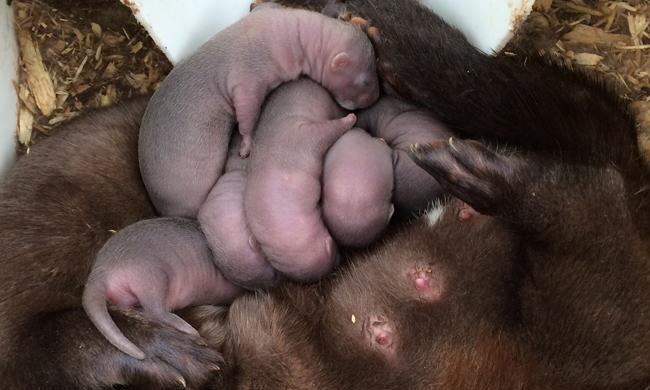
Mink kits are born with their eyes closed and without fur; they are completely dependent on their mothers for food and warmth. Photo: Truth About Fur.
Have you ever visited a mink farm? Are you interested to know more about the care farmed mink receive? Senior Truth About Fur writer Alan Herscovici asked "Les", a third-generation Nova Scotia mink farmer, to give us a personal tour and explain the work he does during a typical year. In Part 1: Breeding, Les explained the beginning of the mink production cycle that takes place in Spring. Now we move on to the period April - June and Part 2: Whelping and Weaning.
Truth About Fur (TaF): When are the young mink born and what do you do to prepare for them?
“Les” (Nova Scotia mink farmer): Some of the first litters can come as early as mid-April. Most are born towards the end of April, beginning of May. Even before the young are born, however, the mink farmer has plenty of work to do.
First we prepare the pens to receive young mink, or “kits”, by covering the regular 1 ½-inch by 1-inch flooring mesh with a ½-inch by 1-inch plastic-coated mesh. This does not allow manure to fall away as easily, but it protects the small kits.
We also install a plastic funnel guard at the entrance of the nest box, to keep in the straw or wood shavings that will make a warm nest when the kits are born. We are constantly building up those shavings and forming them into a bowl shape, to keep the kits near the centre of the nest where the mother can nurse them and keep them warm. When you are preparing nest boxes like this for several thousand females, it keeps you pretty busy!
TaF: Is there anything special you do when the kits are born?
Les: Whelping is one of the busiest times on a mink farm. From first thing in the morning until late at night we are in the barns, checking to see who’s been born, ensuring that their bedding is in a good shape to keep the kits in the centre of the box.
We are also watching for any kits that may be born tangled in their umbilical cords. 99% of the time, the moms take good care of things themselves: eating the placentas, cleaning and nursing the babies. But sometimes you will have five babies wound together in the umbilical cords so tightly that the mother can’t free them. We take them to the little surgery section of the barn where we have heat lamps and scalpels. Once we’ve cut them free and cleaned them up, we return them to their mothers.
While we’re ensuring that the new-borns are safe, we are also watching the kits born over the past few days, to be sure they are warm enough and nursing well. We are also on the look-out for little ones that are not getting enough milk; perhaps there are too many kits in the litter. You learn to recognize their weak, hungry cries. If necessary, we may move a kit to an adoptive mother with a smaller litter.
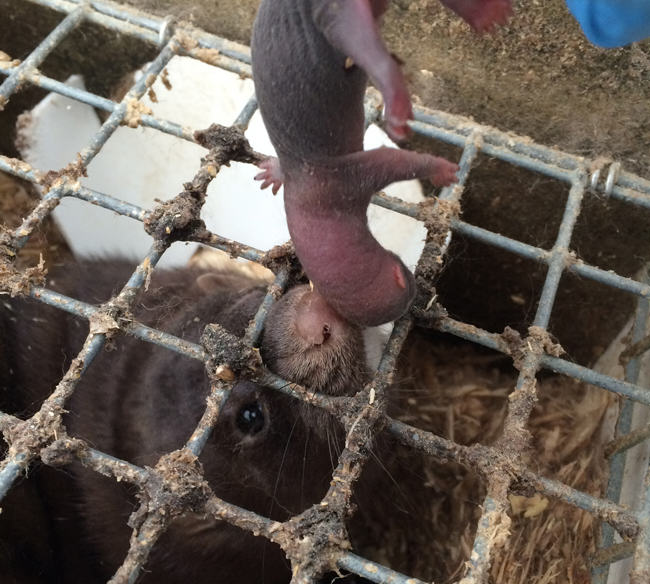
When litters are too large, the smallest kits may be offered to good mothers with small litters. The kit is first presented to the female at a safe distance. If she sniffs and licks at it, the kit can be placed into the nest box to be raised with her other kits. Photo: Truth About Fur.
TaF: Mink will adopt kits from another female?
Les: Often they will. You pick a female that is doing a good job caring for a small litter, and hold the tiny, young kit near her. If she snaps at it, you try another female. But if she sniffs and licks it, then you can slowly slide the kit beside her and usually she will care for it with the rest of her litter.
TaF: All this sounds like a lot of work with so many young mink.
Les: It is! During this whole period we are checking every litter several times each day. Newborn mink kits are tiny. At birth, their eyes are still closed and they have no fur, so they are very prone to hypothermia. In addition to a good bed of shavings, we keep a plywood cover over the nest box for a while, to keep in heat.
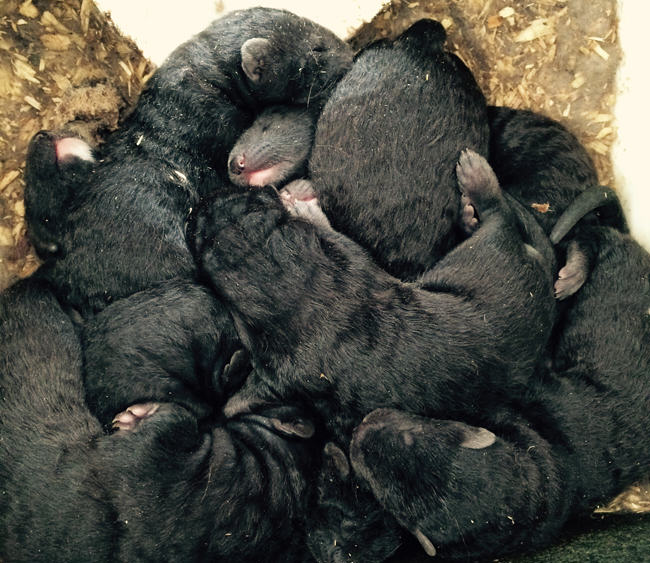
At about 20 days old, these mink kits now have fur, but still enjoy sleeping close to one another for warmth. Photo: Truth About Fur.
TaF: And when are the kits weaned?
Les: As the kits get bigger, we remove the plastic shield and move the food and water closer to the nest box. There is also a shelf in the pen area where the female can get away from the kits, to rest herself and encourage her young to fend for themselves.
At about one month, they will start licking at the fresh feed we put on the pens every day, and then it’s a few more weeks before they are fully weaned.
By mid-June, we can also start removing the small gauge mesh from the floor of the pens, to keep them cleaner. This continues through into late June for the litters born later. It is good that the litters are not all born at the same time; it helps to spread out the work!
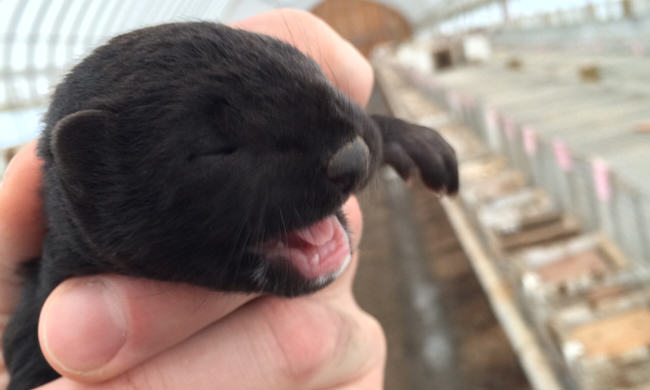
This mink kit is one month old and a little bigger than most at this age. He's an "only child" and gets all the milk! Photo: Truth About Fur.
TaF: It must be very satisfying to see the kits come out of the nest box and feed themselves.
Les: It is, because we have been working very hard to ensure that they make it. It is so strange - insulting really - when some activists claim that we are cruel to our animals, because we work so hard to ensure that they are healthy. We are watching for signs of dehydration, of hypothermia; it takes so much experience and concentration to watch for all the things that can go wrong with young animals. If you don’t love working with animals and caring for them, you probably shouldn’t be a mink farmer!
TaF: And how did you become a mink farmer, Les?
Les: I am the third generation of mink farmers in my family, and before that there were two more generations who were trappers and early experimenters with breeding mink in captivity. So I guess mink farming is in my genes. I enjoy working with animals, and I enjoy working with mink. It’s a passion, for sure!
Have you ever visited a mink farm? Are you interested to know more about the care farmed mink receive? Senior… Read More
Have you ever visited a mink farm? Are you interested to know more about the care farmed mink receive? Senior Truth About Fur writer Alan Herscovici asked "Les", a third-generation Nova Scotia mink farmer, to give us a personal tour and to explain the work he does during a typical year on a mink farm. In this first installment, Les explains the beginning of the mink production cycle: breeding. Welcome to Spring on a mink farm!
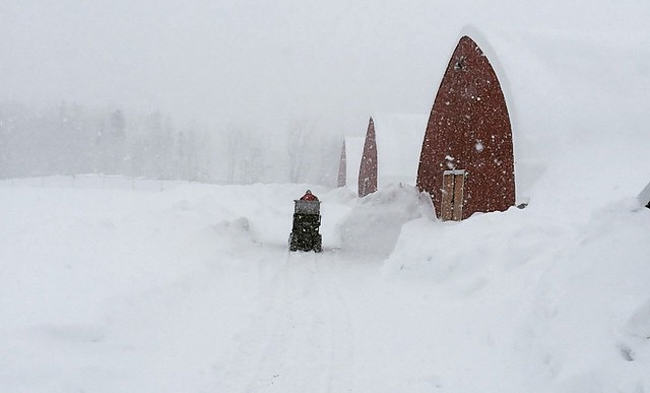
Winter doesn't release its grip easily in Nova Scotia! It's March and breeding season, as a farm worker heads out to the sheds with a delivery of mink feed. Photo: Truth About Fur.
Truth About Fur (TaF): What does Spring mean for you on the mink farm?
Les (Nova Scotia mink farmer): Like most farmers, our production cycle begins in the Spring. As the days get longer in the first half of March, it’s breeding season for the mink.
We will have selected our breeding stock back in November/December. In choosing breeders, we take several factors into account. We are looking for size, fur colour and quality, for sure. But we are also watching for females that produce larger litters and take good care of their young.
We also want mink that are easy to handle and that thrive in the farm environment.
Not least important, we select for resistance to disease; we use blood tests to help identify the most disease-resistant animals for reproduction. We are constantly working to improve the genetic quality of our herd, for health, temperament and fur quality.
Les: It’s all natural, there’s no artificial insemination. For breeding, we bring the females to the males because they are easier to manage.
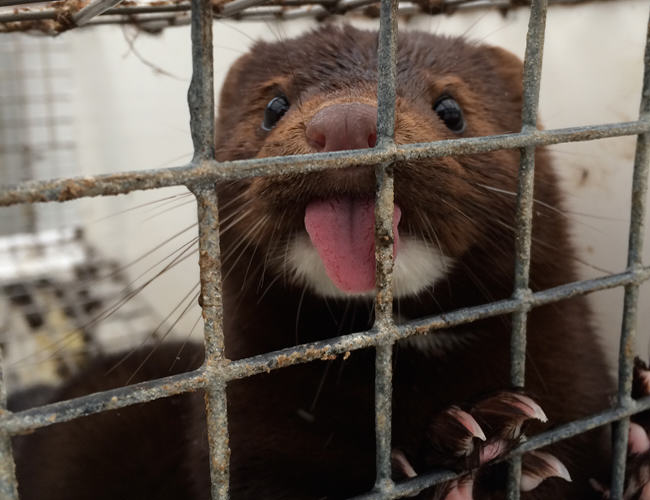
"Silly female mink with tongue out,” says Les. “This is not usual, but funny!" Photo: Truth About Fur.
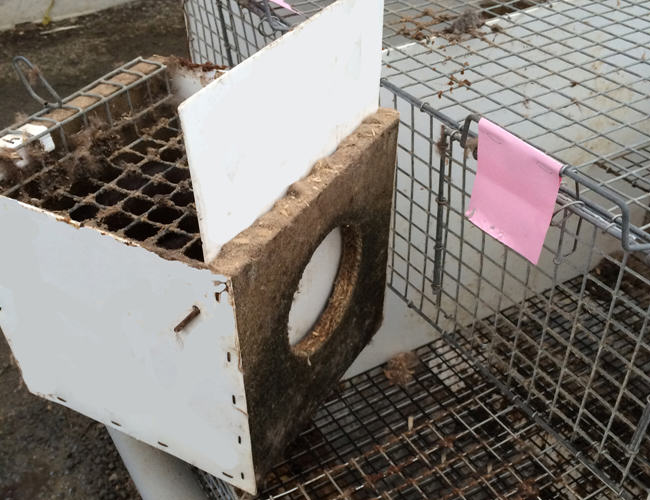
On our farm we have done something to make this much easier: instead of catching the female to move her, we developed removable and interchangeable nest boxes. When the female is in her nest box, we can close the door to her larger pen with a sliding panel. We carry her nest box, with the female in it, to the male’s pen and insert it there in place of his, after shooing the male into his pen. Then all we have to do is open the sliding panel and the party begins.
After mating, the female will return to her nest box, which is her territory. We close the sliding panel and bring her back to her pen. The whole operation is completed without handling the animals, with no trouble or stress for either mink or people!
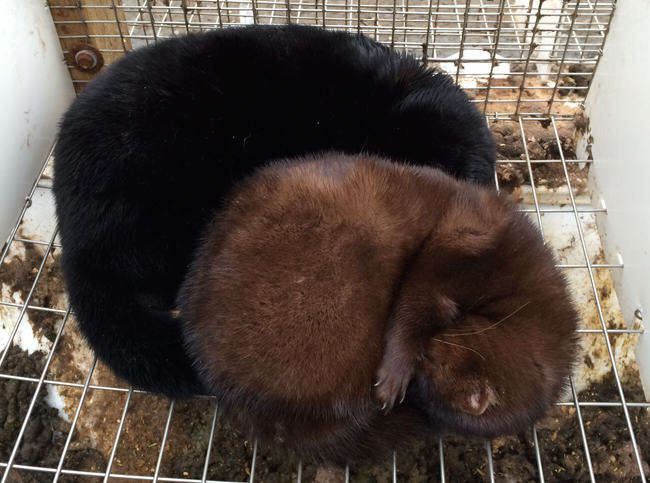
A black male mink and brown female rest after mating. As seen here, male mink are considerably larger than females. Photo: Truth About Fur.
TaF: Do males breed more than one female?
Les: Yes, each male is usually mated with about five females. When we introduce a female into a male’s pen, we watch to be sure that mating occurs and record that date. The female will be bred with a second male about a week later, because ovulation in mink is provoked by intercourse. The second mating also provides insurance in case the first male was infertile. We try to breed our females three times, for maximum assurance.
TaF: What happens next?
Les: It is important to disturb the mink as little as possible during the period when the fertilized eggs are implanting. Some producers will increase the hours of light in the barn during this period, but we find that the natural lengthening of the days is sufficient for implantation and gestation. We will also decrease the fat in the females’ diet and increase the percentage of protein during gestation.
Removable nest boxes allow female mink to be brought to a male's pen for breeding without the need for any physical handling that might cause stress. Photo: Truth About Fur.
If you’ve never visited a mink farm before, now is your chance! Zimbal Mink Farm is in Wisconsin, the largest mink-producing state in… Read More
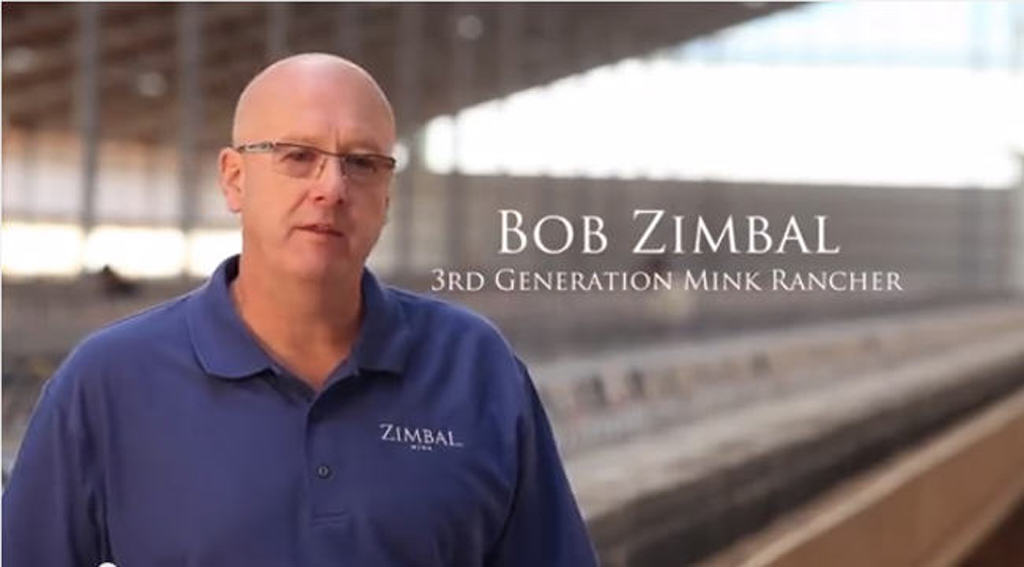
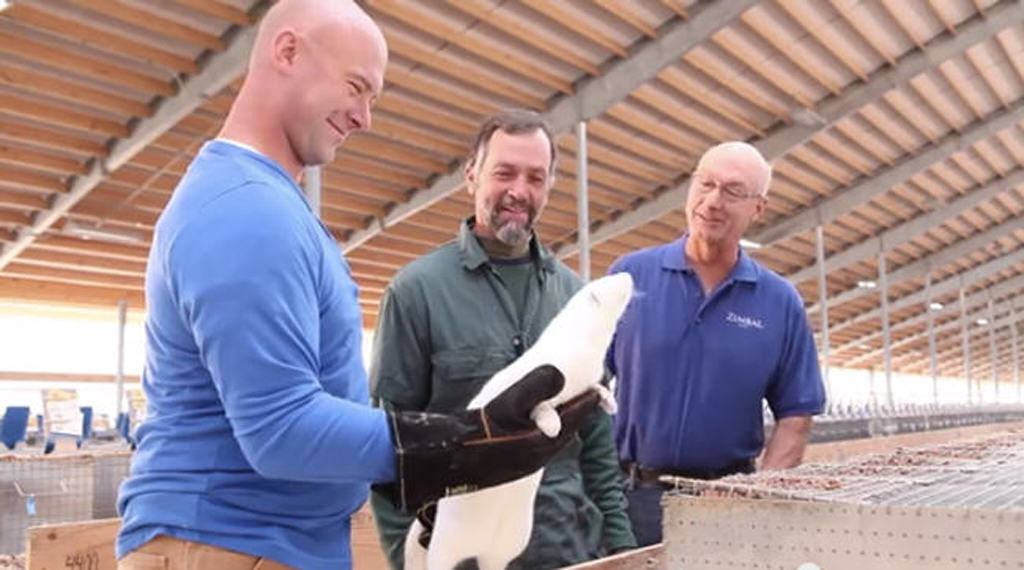
If you've never visited a mink farm before, now is your chance! Zimbal Mink Farm is in Wisconsin, the largest mink-producing state in the US (though Utah is not far behind). The farm is larger than most, but has one thing in common with almost every mink farm in the US: it's a family affair. Now let's meet the third and fourth generations of this mink-farming family ...
BOB ZIMBAL, third-generation mink farmer: So we’re located on the shores of Lake Michigan in Wisconsin, and Wisconsin is actually a great place to raise mink.
Raising mink is a lifestyle as much as a job and when we come out in the morning we look forward to caring for the animals and feeding them and taking care of their needs.
Sixty years ago my grandfather and my father started Zimbal Mink. Mink were just being domesticated, so there was a learning process how to care for the animals and feed the animals. As I child I always helped on the farm, and my father taught me to pay attention to the animals and look at their health and each individual mink’s needs.
My grandfather and my father were kind of pioneers in the industry, teaching and learning what it takes to raise a good-quality mink. And now we’re trying to pass that also the next generation of my sons and my nephew, as they come on to the farm.
The year really begins in the fall of the year where we select the breeders, and it’s all natural breeding on the farm. Breed them in March. And the end of April, beginning of May they have their litters. We are continually monitoring each female to see how she’s caring for those young ones. If there’s some difficulty, we can help them along, or sometimes if a mother can not take care of them, we can move them to the next animal.
We have a computer system which we use, and that helps us track each individual animal. Years ago when my father did it, it was all done by hand, but now it’s a computer system where we use a bar code, and we’re able to select and look for the genetic traits that we want to keep in the mink.
We look for size; size is important because it’s material that it takes to make the garment. Also we look at the quality of the hair. We’re looking for fine, soft hair on the mink, rather than coarser-type hair. And the thickness and the depth of the underfur is important.
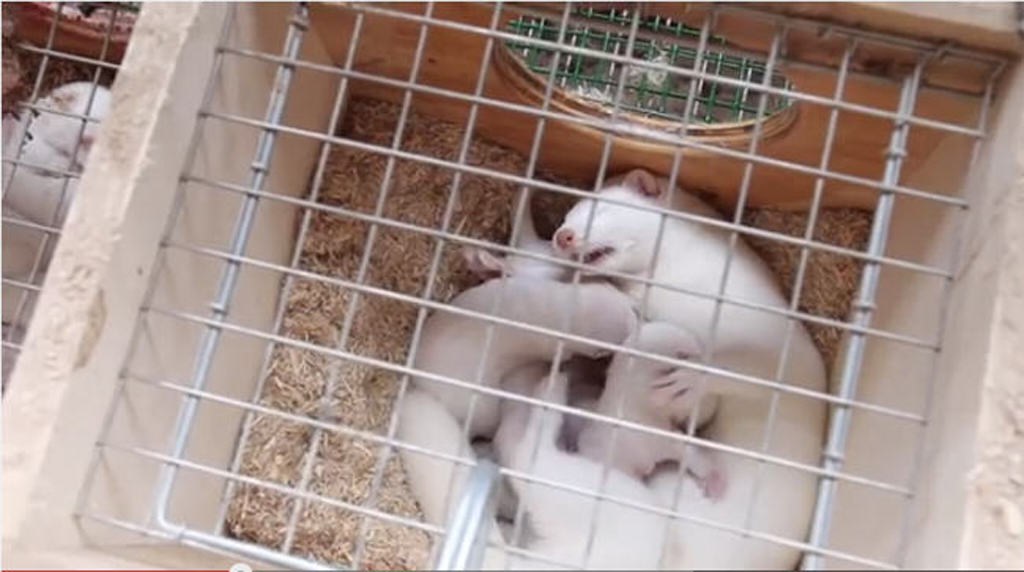
We raise seven different colors, from black to white. There are browns, there are greys in between – lighter greys, darker greys – but we have distinct, different breeds.
Healthy Diet, Healthy Mink
A healthy mink starts with a healthy diet, and in Wisconsin we’re fortunate to have a diverse agricultural community. We have things available to us like beef, cheese, eggs, poultry.
JIM ZIMBAL, fourth-generation mink farmer: The better food helps them grow a nice thick coat, and silky. If we didn’t feed them as well, they wouldn’t turn out as well.
BOB ZIMBAL: I’m not a formally trained nutritionist, but I do work with nutritionists, and at different times of the year, the mink’s needs are different. So when a mink is reproducing, its requirements are different than when it’s growing or furring. So our food is weekly sent in to a laboratory to have it analyzed to make sure that we’re meeting the needs of the mink.
The great thing about us taking these animal proteins that are not used for human consumption, we’re recycling that back into the mink industry and using that to feed the mink. So all our food is produced on our site, in our feed kitchen, keeping that food as fresh each day as possible.
We have a brand-new, state-of-the-art facility. We can open the roofs and sides and the air will flow through the building, to keep it cooler in the summer. But also we can close it up in bad weather in the winter to protect the animals from the environment.
Also this facility uses the natural light which the mink are accustomed to.
This facility is designed to make the mink comfortable, but also make it efficient for the people that are caring for the animals. So the way the bedding is put into them, the way the boxes are kept clean - things like that are designed with what’s comfortable for the animal but also what is efficient for the employees.
This facility is really a state-of-the-art facility that is going to be copied by other farmers throughout the world.
JOHN EASLEY, DVM, ranch services veterinarian: Zimbal Mink management techniques are always being developed on the farm here. They are always looking for different ways for them to produce and handle and care for these mink in a better way.
From a health standpoint, as a veterinarian, I look at how the animals are being taken care of on a daily basis.
The Zimbals are an active participant in Fur Commission USA’s Humane Herd Certification Program. During the herd certification process we look to see that the mink are being housed, cared for, fed, managed, to the criteria that are prescribed within the guidelines. By meeting those standards, they consistently produce some of the best-quality mink in the world, and that reflects on their caretaking abilities.
BOB ZIMBAL: My daughter, my son and my nephews and nieces travel the world, like Moscow, London, Milan, Hong Kong, New York, to keep up on the latest trends in the fashion industry. Really, what are these manufacturers and top designers looking for in the quality of the mink?
Buyers throughout the world expect consistent quality from us, and they’re expecting the highest standard in the world. Our quality exceeds their expectations, which makes Zimbal Mink the most sought-after brand in the world.
And it all starts here, on the farm, with our attention to detail.
To provide the best experiences, we use technologies like cookies to store and/or access device information. Consenting to these technologies will allow us to process data such as browsing behavior or unique IDs on this site. Not consenting or withdrawing consent, may adversely affect certain features and functions.
Functional
Always active
The technical storage or access is strictly necessary for the legitimate purpose of enabling the use of a specific service explicitly requested by the subscriber or user, or for the sole purpose of carrying out the transmission of a communication over an electronic communications network.
Preferences
The technical storage or access is necessary for the legitimate purpose of storing preferences that are not requested by the subscriber or user.
Statistics
The technical storage or access that is used exclusively for statistical purposes.The technical storage or access that is used exclusively for anonymous statistical purposes. Without a subpoena, voluntary compliance on the part of your Internet Service Provider, or additional records from a third party, information stored or retrieved for this purpose alone cannot usually be used to identify you.
Marketing
The technical storage or access is required to create user profiles to send advertising, or to track the user on a website or across several websites for similar marketing purposes.