The team at Truth About Fur has over 50 years of collective experience in the fur trade and we can… Read More
The team at Truth About Fur has over 50 years of collective experience in the fur trade and we can confirm that a communications role in this field is not for the faint-hearted. It is a job where we are often on the defense, regularly need to react at the speed of light, and work with a fraction of the budgets available to our critics. We’ve been called every name in the book and yet, day after day, we come back to our desks and do our best to defend and promote this trade that we love. But lately, we are feeling a bit discouraged and, surprisingly, it’s not because of activist insults. It’s because, all too often, we see our own supporters – fur fans who are supposedly on our side – making statements that are directly hurting our industry.
To promote our industry, we explain the environmental credentials and other positive contributions of the fur trade. And while we aim to be a positive voice for our trade, we also know that discrediting the animal extremists who mislead the public about fur is part of the job. But one thing we don’t do is insult the very people we are trying to educate – consumers, media, political leaders. And yet, all too often on our social media channels, our “supporters” insult potential fur customers or fur fans by endorsing a very simplistic and erroneous vision of the battle lines in this difficult discussion.
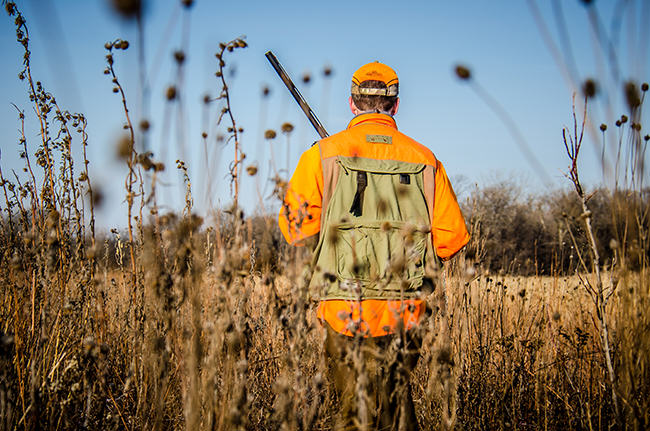
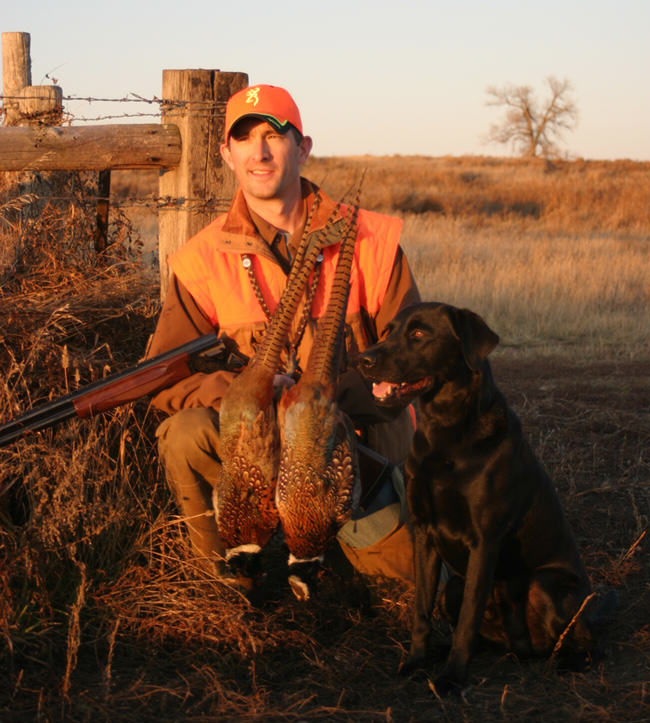
A love for nature and a desire to protect it by promoting and using sustainable products is not limited to one political belief. Whether it's a hunter wanting to protect his or her hunting grounds, or a hiker who wishes to keep his or her trails in pristine condition, environmental conservation is of interest to many.
Fur Fans Aren't All Conservative
There’s a common misconception that the people who support the fur trade are all “conservative” when it comes to politics. This simply is not true. While we have a great deal of support from conservatives, we know that many “center” and “left-leaning” people also support our trade. These people may be considered by some to be "liberals" or “tree huggers” but they believe that an industry that relies on the sustainable use of natural resources is the way forward for our planet.
There is also a misconception that the people who are anti-fur are all liberal. That is also wrong. Our social media team often checks the Facebook profiles of people leaving negative comments on our page. Many of them do show what could be considered politically liberal content. But many others show conservative content –including pro-Trump messages and support for the NRA.
So what does that say about the people who are pro-fur, and those who are against? It demonstrates that politics do not necessarily define a person’s understanding of our trade.
Even more importantly, we need to think about how we can make our industry and fur products attractive to more people. What kind of people? All of them. We already have considerable “right wing” support, it’s true, but there are still many who have not understood our message. And the liberals? We need them too! We need their support and we know it is ripe for the taking. The ethics and environmental benefits of our trade are attractive to so many people who consider themselves to be liberals. Many of them love the concept of living off the land, of using sustainable resources, and of buying good quality items that last a lifetime. There are many that could become fur fans with the right message.
It doesn’t take a genius to figure out that we are going to be stronger with more support. And given that North America is pretty much divided down the middle in terms of liberals and conservatives – it would be crazy to alienate either of those groups.
Our Cause is Stronger without Insults
If you think about it, it's not a formula for success to insult half the population on a page that is vying for their support. Just because an animal activist does something stupid, doesn’t mean that all liberals are to blame. And using works like “libt*rd” to describe the activists, who represent a very, very small percent of the population, is never going to help us to win over the majority of society. Even though many trappers and hunters may vote Republican, many potential consumers may identify differently. Why would we want to shut them out?
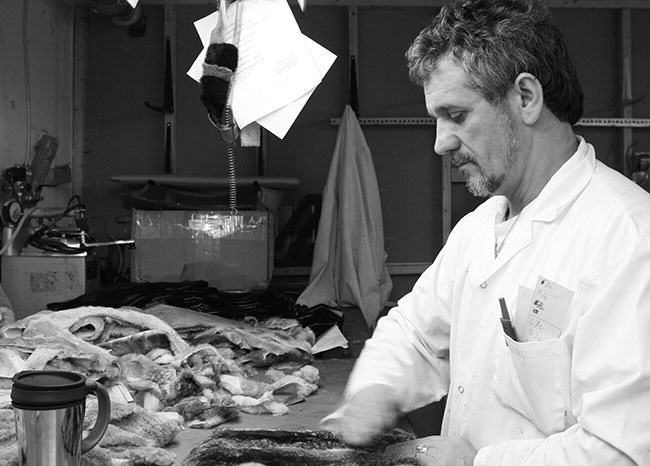
Everyone can appreciate craftmanship and handwork of all forms, and we should all support the preservation of these skills, regardless of our political affiliations. Photo: Claire Beaugrand-Champagne.
It would be wrong to say that politics doesn’t have a place on this page, because part of our job is to be aware of legislation that affects our trade and to ensure that politicians continue to support our industry. And research does show that more Republicans than Democrats believe that it is morally acceptable to use fur. But there is no place in this battle for insults about people’s political persuasions. Fact is, we often find excellent articles about the fur trade in left-of-center media and we have many supporters who lean left when it comes to politics. The activists are already aware that "animal rights" transcends tradition political labels: they now discuss how they can convert conservatives to their cause (let's make sure this never happens.)
So unless you are trying to sabotage our industry, please think twice about lashing out with simplistic political insults. Imagine a liberal coming to our page who is interested in learning about the how trapping works or the environmental benefits of wearing real fur – only to find themselves berated as “libt*rds”, tree huggers, snowflakes, and “lefties”. Do you think such rants will bring us new allies? What will newcomers to our page think if they encounter such language?
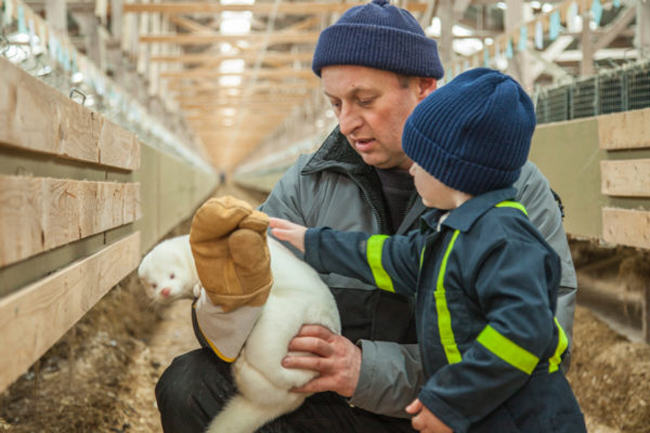
We don't care who you are, where you come from, or what your beliefs are. If you are a supporter of the fur trade, then you are welcome here. Photo: Newfoundland and Labrador Fur Breeders Association.
Truth About Fur Is Run by a Diverse Team
The trash talk is not just hurting our image, it is also hurting us. Truth About Fur is produced by a small team that includes what many would consider to be tree-huggers and (gasp) liberals (see Lefty Tree-Lover Catches Fur Bug). Our team and supporters include Muslims, Jews, and atheists; pro-choice campaigners, people of colour, and immigrants. We aren’t here to push our political or religious agendas, we are here to support the trade. So please: let's put politics aside and work together to create a space where everyone who appreciates fur, trappers, farmers, living off the land, and sustainability can feel welcome and help us to support this remarkable heritage industry.
The Sportsmen’s Alliance is a US organisation that protects the outdoor heritage of hunting, fishing, trapping and shooting in all… Read More
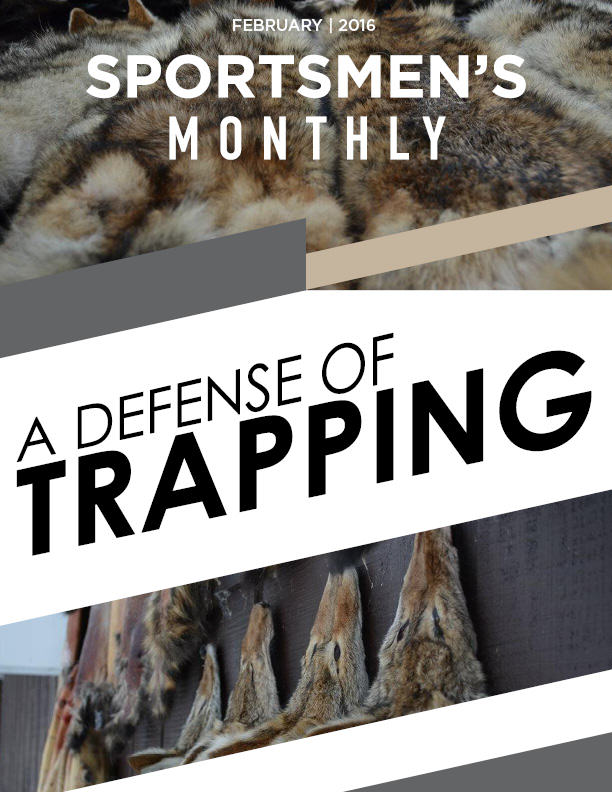
The Sportsmen’s Alliance is a US organisation that protects the outdoor heritage of hunting, fishing, trapping and shooting in all 50 states. Between fighting in the courts, political lobbying, and countering campaigns by animal activists, they are kept busy. We talked to Vice President Marketing and Communications Brian Lynn about trappers, hipsters and sound bytes.
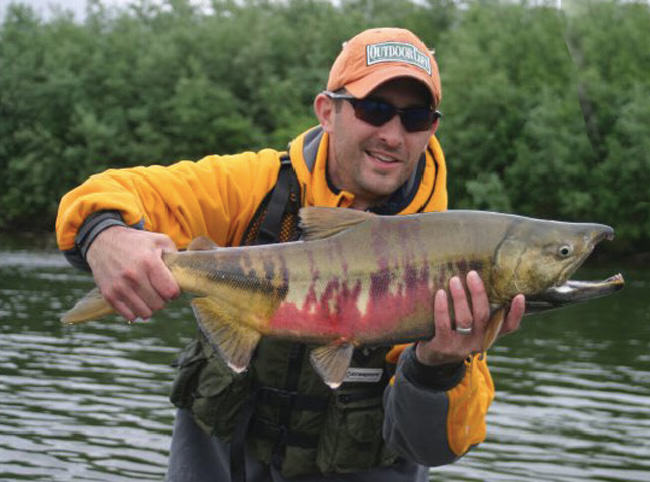
Brian Lynn: "Trappers are the most active, passionate, and engaged audience there is." Photo: Sportsmen's Alliance / Brian Lynn.
Alexandra: What percentage of your members are trappers versus hunters and fishermen?
Brian: I’d say somewhere between 10 and 20%. It’s not a huge number, but the trappers are the most active, passionate, and engaged audience there is.
Alexandra: Interesting you say that, because we think that too.
Brian: Trappers are the ones on the front lines. They are constantly under attack.
Alexandra: Are you referring to the amount of legislation that people are trying to put into place to try and ban trapping?
Brian: Yes. Animal rights organisations, legislation, the ballot box – trappers are constantly under attack. Whether it is changing the seasons, eliminating the seasons, or regulating traps, they are getting hammered left and right.
Alexandra: Do you think that trappers are getting attacked more because they are fewer in number? Or perhaps because in the US hunting is more associated with a weekend pastime?
Brian: It is both. There aren’t as many trappers, so it is more of a fringe endeavour. Also it lacks the idea of a sport – of you versus the animal. To the uninitiated, it just seems like you are going out there, putting some bait out, and whether a wolf, bobcat, bear, or your dog comes along, they get snapped up and killed cruelly. It looks barbaric, and it is a hard sell for us to protect. It is an easier sell to misrepresent. People already are ignorant about it; urban people are like, “You do what?” It is a harder thing to protect because of the ignorance, and it lacks the perception of sport and the “you versus the animal.”
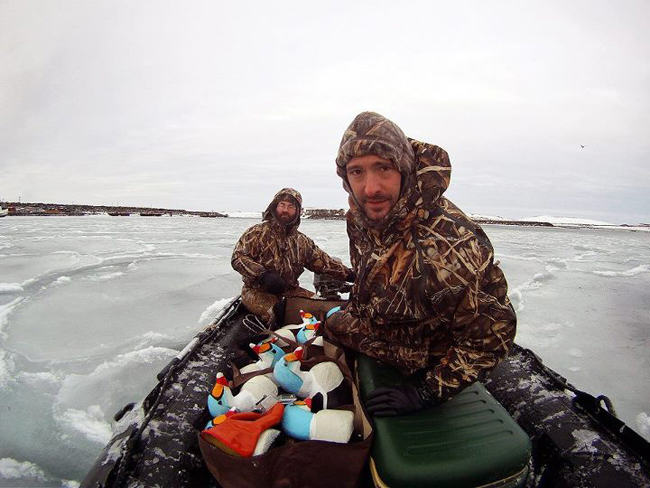
"[Trapping] is a hard sell for us to protect, it is an easier sell to misrepresent," says Brian, seen here hunting duck in Alaska. Photo: Sportsmen's Alliance / Brian Lynn.
Active or Passive Management
Alexandra: It's interesting how urban folk don’t mind trapping when there’s a coyote eating their cats, or beavers flooding their home.
Brian: That’s the whole thing. People say, “This doesn’t seem fair, that doesn’t sound right,” until it impacts them. Once the deer come in and start eating their petunias, now they're mad. Or they're hitting deer with their car. Now they want something done. Don't kill the bears until the bears start eating your kids. It boils down to active management versus passive management.
We did a piece on defensive trapping a couple of months ago in our newsletter, and without trapping, state agencies will spend hundreds of millions of dollars on trapping nuisance animals and flooding. Nobody understands that until it happens. The animal rights activists try to couch it as, “We don't need to manage populations." They try to pass off the Disney idea that “nature will balance itself”, which never really happens. But even they are saying passive management is ok. When the mountain lion becomes overpopulated and one starts eating their cats, then it's ok for the state to come in and kill that one lion. Well, it costs a ton of money, and it's not fixing the problem. With active management, you are mitigating the booms and busts and managing them actively with hunting and trapping. The animal rights groups just want to let everything go wild, and passively manage it when it becomes an issue with humans, which is just not going to work because we see disease, starvation, plus human-wildlife conflicts.
Alexandra: What are some of the biggest issues that you are dealing with right now, and have the kinds of issues evolved much over the past 20 years?
Brian: They go in waves and trends. In the 1980s, animal rights groups went after bow hunting, in the ’90s they went for mountain lions and some bear-hunting tactics. Last year we saw a lot of dog-related activity: kenneling, breeding, selling legislation. A lot of it is aimed at puppy mills, but if enforced to the letter of the law, it will stop hound hunting, kenneling, or selling those dogs.
We also saw a lot of apex predator issues – black bears and wolves. And now we are seeing them setting the table to come back for more of what they attacked in the ’90s - black bears and mountain lions in the west, and the Great Lakes wolves.
They hit something hard, in multiple states, for a couple of years, then let it rest. They let the social consciousness of the non-hunters absorb it a bit, they’ve made it an issue. Then they let their fundraising base rest, then come back and hammer it again several years later. It makes for a better news story again. Then it seems like a big issue that keeps coming out so they can get more funding, and it psychologically resounds with the public. “Oh, this is an issue, we need to do something about this!”
Great Lakes Wolves, Maine Bears
Alexandra: What are some of the activities that you do to fight the activists, and which campaigns have been successful?
Brian: Right now we are the lead on the Great Lakes wolves lawsuit. It is the Humane Society of the United States vs. the Sportsmen’s Alliance, the Department of the Interior, and the State of Wisconsin. So that is one we have been fighting for several years, and that should be moving through the court system, and we are appealing the last decision that was made in December 2014.
One of our more successful campaigns was the Maine Bear Ballot issue in 2014. The HSUS decided to go after bear hunting in Maine and hired a California firm to collect signatures and force it onto the ballot. The HSUS just self-funded the whole thing. If that had been successful, it would have basically put an end to bear hunting in Maine. It would have removed the use of traps, bait, and hounds to hunt bears, and that is 93% of the harvest. We went in, organised the grass roots groups, bought air time, created the messaging, and we ended up beating them by 8 points. And there was a couple of lawsuits out of that, that we fought and were successful in. We were successful all the way around and have a good base set up to protect it again, should they come back, and they have stated they are coming back again to stop it.
The thought is that they will just go after hounds and traps, because few people use these, so most people don’t care. This is when we get into apathy within our own ranks. If HSUS removes 85% of its opposition and 85% of its opposition’s funding, those who remain make easier targets.
"Sticking Up for One Another"
Alexandra: Some graphics in your social media send a message about uniting hunters, fishermen and trappers. What is the thinking here?
Brian: We need to be sticking up for one another, despite method of take. Even if you don’t participate in trapping and you don’t use bait, we can’t stand around and say, “That’s doesn’t affect me.” Once hound hunting falls, once bait hunting falls, once trapping falls, they are coming after what you do want to do. We need to be united regardless of how we are participating in these activities.
Alexandra: What percentage of Americans do you believe support hunting, trapping and fishing, and how many are opposed?
Brian: Hunters and anti-hunters are about the same size, 5-10% of the population. And all of the polls show that 75-80% of the general public support hunting as a management tool. That’s great. But the problem is that all that support goes right out the window as soon as emotion gets into it. People's minds are changed really quickly if they are shown an animal flopping around in a trap or a dead trophy shot. We move from the logical “That makes sense, I support hunting,” to the emotional “Oh, but I don't support it in this instance. It seems cruel.”
The other side can just throw words around like “slaughter” and sway those non-hunting voters.
Our biggest challenge is telling our story, why we have to do it, why it makes things better, the funding of conservation, managing populations, habitat, carrying capacity of the land. That’s a long story which can be boring if you aren’t into it, and if there is legislation or a ballot initiative, and a news anchor puts a microphone in your face and you try and explain carrying capacity of the land and funding of conservation, it is long, boring, and not sound-byte stuff. Then they ask the other side why we need to stop it and they say, “It's cruel, they are slaughtering animals with babies.” There’s your sound byte.
"Hipster Deal Big Move Forward"
Alexandra: Have the demographics of your supporters and members changed? There is a hipster trend now, with people doing things themselves, growing their own food and maybe hunting. They were traditionally more on the left of the political spectrum, whereas hunters tend to be on the conservative side. Do you see this new demographic supporting outdoor activities?
Brian: We are seeing a bit of a bump, which is great from a branding and messaging perspective. This is important for the hunting and trapping industry in general, but here at the Sportsmen’s Alliance we are very engaged, political, more hardcore. The new people coming in are a more holistic type of person, who may not be political.
For the broader industry, though, the whole hipster deal has been good. From the perspective of acceptance within the mainstream, those people are sharing with other people, within city life. It is about taking responsibility for their food, and them relaying their message in a way that their friends can understand. That’s where I see it as being the biggest move forward for the industry. How do you reach someone in LA? We aren't going to reach some hipster in LA, but some guy at an LA party who went out, harvested his own food and killed a deer, that is going to do more good than anything we are doing as an industry to disseminate the proper message.
Great sport and great eating too! Hipsters are "taking responsibility for their food, and ... relaying their message in a way that their friends can understand." Photo: Sportsmen's Alliance / Brian Lynn.
Alexandra: Do you cooperate with a Canadian counterpart?
Brian: There is some run-over, but nothing official. In Maine, we are involved in two lawsuits on trapping Canadian lynx. In Maine, Canadian lynx are on the Endangered Species List, but north of the border they are not.
There are incidental take permits, and a certain number of Canadian lynx can be caught in traps without the trapper or the state being in violation of the Endangered Species Act. The HSUS is trying to stop that; they are trying to get the incidental take permits revoked. If they succeed, that would mean that anywhere there is an endangered species of any kind, trapping can be stopped. If you take it a step further, anywhere there is an endangered fish in a river, you could apply the same logic. You can’t fully control what steps into a trap, therefore you can’t trap anywhere there is an endangered species, just like you can’t always control what is going to bite your hook, therefore no one can fish anywhere there is an endangered fish. So that’s a lawsuit we are involved in in Maine.
"Educate Those Not Within Your Group"
Alexandra: Is there any advice you have for trappers about protecting their rights, proactively?
Brian: They need to educate non-trappers about what they do: about how trapping is regulated, how hard it is, what you do to prevent non-target by-catch. People need to understand that, and it is not the people that are already in your social groups, it needs to be the non-trapper or the hunter that doesn’t understand it, so you can help eliminate that issue of hunters not caring. For example, there are a lot of bird dog hunters that hate trapping because traps will be out during grouse season and they are worried their dogs might get snagged up in them. We need to try and educate those people. It is all about educating those not within your group.
As for state and provincial organisations, they need to start collecting funds and putting these aside. This is something we are saying in Maine, start a war chest, because the attack is coming, it is just a matter of time. The HSUS is so rich they can self-fund any campaign they want to. They are a $130-150 million a year organisation, so they can just decide “this is where we are going to go, and we will spend $3 million.” If HSUS comes and you sit there fundraising for the first six months, that's a six-month head start they have in swaying public opinion. If you can hit the ground running, and you already have a war chest, you are better off. That’s hard for groups to do, though, because unless there is a bogeyman right there, those funds start to look very attractive to dip into and use for other things.
Alexandra: Thank you for taking the time to speak to us!
For further reading, check out this great Sportsmen's Alliance content:
The European Union recently announced that products made from seals hunted by Inuit people can continue to be sold in the… Read More
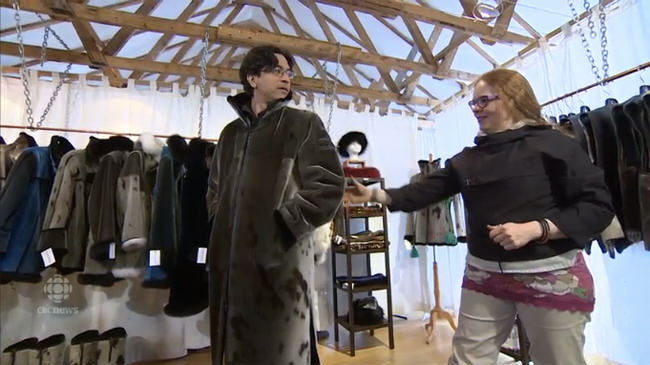
Putting sexy back in sealskin: Nunavut seamstresses aim for high-end fashion market. CBC News.
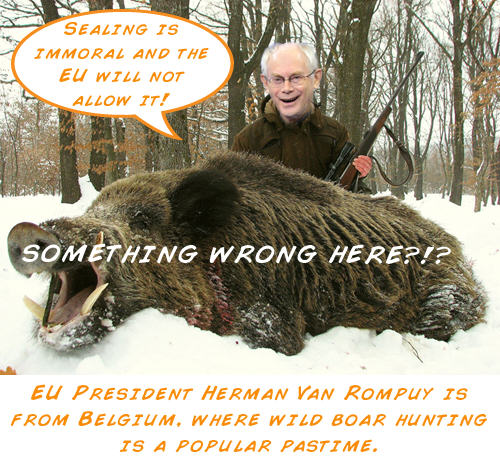
The European Union recently announced that products made from seals hunted by Inuit people can continue to be sold in the EU despite the 2009 ban that prevents the importation or sale of all other seal products. It is impossible to imagine a sealing policy that would be more hypocritical and anti-democratic.
Canadian sealing is a sustainable use of a natural resource carried out by licensed, well-trained sealers under the rules and regulations of the government of Canada, which have been developed based upon both population science and humane killing techniques. In 1971 a quota management program was established for the Northwest Atlantic harp seal stock, and the population is estimated to have grown since then from 1.8 million to the 5.9 million, according to the IUCN. World-wide the population is close to 8 million, with "All known stocks ... increasing in number".
Despite the comments of the animal rights groups, the world-wide markets for seal products (food, Omega-3 fatty acids, oil, fur, leather) continue to exist. They exist but are inaccessible because the decades-old animal rights propaganda campaigns have co-opted (bought?) politicians in the EU, the USA, and other countries to deny their citizens their democratic right to choose to buy seal products.
Even in its stronghold of North America, surveys suggest the animal rights philosophy (i.e., no animal use) is adhered to by less than 3 percent of people. And because of this lack of popular support, animal rights groups can only further their agenda by using their multi-million-dollar war chests to lobby politicians to pass laws denying citizens their right of choice: anti-democratic to say the least. Like autocrats throughout history, it seems that these wealthy activist groups don't trust individual citizens to do "the right thing".
Hypocrisy Everywhere
The World Trade Organisation enquiry found that the “seal ban” was against its rules, but in the interest of protecting the “morals” of EU citizens the ban would stand: thus buying into the animal rights propaganda that killing seals is immoral. An interesting decision given that many countries within the EU continue to kill seals legally in the Baltic and North seas.
Animal rights groups constantly make pious, politically correct statements that they are not against Inuit sealing. For decades, Inuit organisations (including the Inuit Circumpolar Council, or ICC, which represents Northern Aboriginal communities around the world) has rejected this “exemption” as being meaningless, based in a colonialist mentality, and little short of racism.
Thousands of rural Canadian citizens are directly and indirectly employed in the sealing industry earning a living for their families. Sealing is part of an annual mosaic of income for rural Canadians whose money is derived from a number of individual activities that in total provide a livelihood that enables them to live in their communities. The same thing applies to Canadian farmers, ranchers, trappers, hunters, and so on: the only difference is the species killed. Few rural Canadians have the luxury of a guaranteed annual salary.
Animal rights groups keep on about a “buyout” for those in the sealing industry. A one-year buyout? A two-year buyout? Or an annual buyout till all those involved have died? For whom? For sealers, plant workers, truckers, diesel suppliers, insurance agents, garment manufacturers, artists, artisans, grocery suppliers, gun and ammunition stores, vehicle sales people? For all or only some of them? Will they pay the many millions involved? No. These American-headquartered multi-million-dollar groups want the Canadian tax payer to subsidize their ridiculous views.
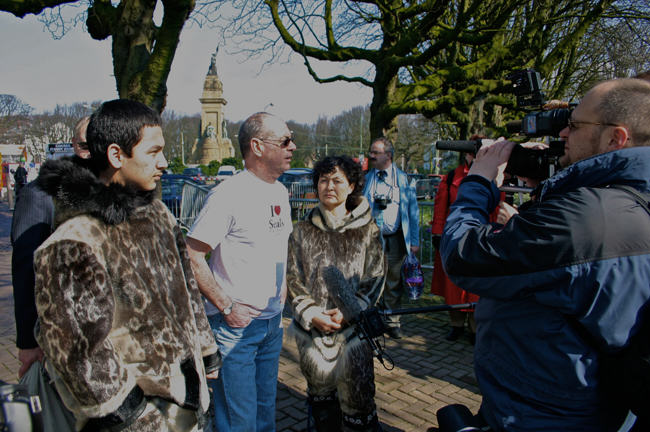
At an anti-sealing protest outside the Canadian embassy in the Hague in March 2007, the media were more interested in Aaju Peter (right), her son Aagu, and me than they were in the protesters. Besides being a lawyer and Inuk clothing designer, in 2011 Aaju was named a member of the Order of Canada for her work promoting and preserving Inuit culture.
Resource Use Is Not Disneyland
"Baby seals"? The use of the word "baby" is simply an anthropomorphism, the Bambi syndrome, designed to influence and upset urban people who have a total disconnect with the sources of their food, clothing, medicines and other objects of daily use. The seals killed are fully weaned, are independent of their dames, and are on their own to survive or not: this is nature, not Bambi in Disneyland.
Death by gunshot or hakapik is instantaneous as found by innumerable studies by independent vets from Canada, the USA and the EU. The only negative studies have been bought and paid for by animal rights groups. The reality is that no animal-killing is pretty: it is by nature ugly. But pretty and ugly are not synonyms for right and wrong or good and bad. Sealing is simply an outdoor abattoir without the offal problems of land-based abattoirs (dumping it in landfills) because what we cannot use we leave on the ice to return to the eco-system as food for birds, marine mammals, fish and crustaceans: ecologically correct and green.
Travesty of Fiction Over Fact
The reality of the 50 years of animal rights propaganda has been the diminution of the incomes of thousands of Canadian citizens while these American-headquartered groups have collected hundreds of millions of dollars from people who think they are supporting animal care and conservation. One group alone generates contributions close to $100 million annually.
To adapt Winston Churchill's famous turn of phrase, never have so many been so misled by so few for such nefarious reasons. For decades these groups have said nothing new, yet their comments are deemed “newsworthy”. They and their celebrity friends utter ridiculous comments and no journalists challenge them. It's a circus, a travesty of fiction over fact, and proof that hypocrisy reigns supreme. It is media manipulation of the highest order.
Propaganda is an insidious thing and unless countered by a free press prepared to ask the hard questions it will continue ad infinitum. It is time for individuals, politicians and media to remember the immortal line of Pogo: "We have met the enemy and he is us."
The anti-sealing story is the second greatest propaganda campaign of the last 85 years. Democracy is about the right of citizens to choose. History has shown us that when propaganda triumphs, democracy loses.
Nobody in the Canadian sealing industry wants people to buy their products if they do not wish to. Canadian sealers only want all citizens to have their democratic right to choose for themselves to use or not use seal products.
Animal rights is not animal conservation or animal welfare. The goal of animal rights groups like the Humane Society of the US (and its extension, Humane Society International) and People for the Ethical Treatment of Animals, to name but two, is not to end sealing but rather to end man’s use - not just killing, but any use - of all animals for any reason. Read their mission statements. Seals are the tactic not the goal.
Anti-sealing is the epitome of George Orwell’s position in Animal Farm: all animals are equal but some animals are more equal than others.
The animal rights anti-sealing movement may have won some battles but not the war. If it wins the war you will have to look around to see whom among you will be the next victim. The beef, pork, chicken or lamb producers? The trappers, hunters or fur farmers? The clothes manufacturer, shoemaker, auto manufacturer or furniture manufacturer? Anyone who uses animals for any purpose at all? You?
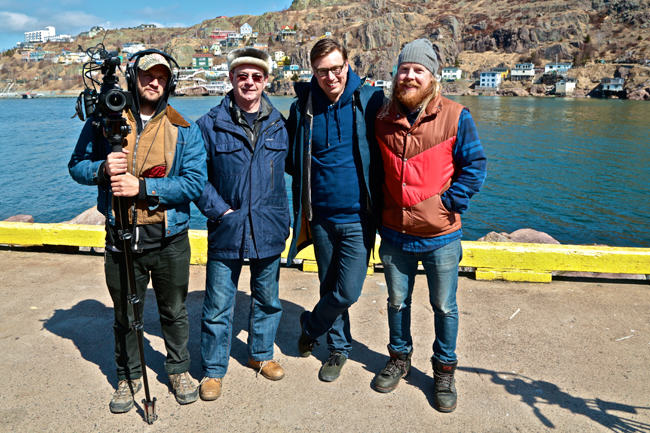
Yours truly (second from left) with an American camera crew shooting for the TV series The Politics of Food.
We are the people of the fur trade and we will be silent no longer! That is the new rallying… Read More
About 30 people gathered in Iqaluit in March 2014 to shoot a pro-seal hunting #sealfie to protest a $1.5 million donation from funds raised by Ellen DeGeneres's Oscar selfie to the Humane Society of the United States, an organization that fights seal hunting. Photo: Emily Ridlington/CBC.
We are the people of the fur trade and we will be silent no longer! That is the new rallying cry of our proud and historic trade, and it's long overdue.
It is hard to believe that the debate about fur has been raging for a full half-century – and a bit troubling to realize that I witnessed it all!
And while it is great to see all the fur on fashion runways and in the streets this winter, we still have a way to go to repair the damage caused by 50 years of activist lies, to reassure consumers that fur is produced responsibly and ethically.
Spotlight on Sealing
It was in March 1964, that a film on Radio-Canada, the French-language network of Canada’s public broadcaster, rocketed the northwest Atlantic seal hunt into the media spotlight for the first time. No matter that the shocking scenes of a live seal being poked by a sealer’s knife (“skinned alive”) would later prove to have been staged for the camera. (1)
In the 50 years that followed, the modus operandi of a lucrative new protest industry was refined: shocking images of questionable origin, celebrities to attract media attention, and emotional fund-raising campaigns that generated piles of money to drive more campaigns.
Markets for sealskins were weakened (with a US import ban in 1972 and a partial European ban in 1983), but the newly formed International Fund for Animal Welfare (IFAW) was soon pulling in $6 million annually – more than 3,000 Canadian sealers made risking their lives on the ice floes each Spring. Greenpeace and other groups jumped onto the gravy train, with help from Brigitte Bardot. (2)
In the 1980s – with wild furs more popular than they had been since the Roaring Twenties – the protesters turned their newly-honed media, fund-raising and political skills against trapping (3), a campaign that resulted in the European Union banning jaw-type “leg-hold” traps, in 1997. No matter that traps used in Europe were untested or that other methods used there to control wildlife (e.g., poisoning muskrats in Belgium and the Netherlands) had far-reaching animal-welfare and environmental consequences. Canadian diplomats were told: “Don’t worry about your scientific studies, don’t you understand that this is about politics?”
While campaigns against sealing and trapping continue, the anti-fur focus has now shifted to calls for a ban on fur farming – but the tactics are the same.
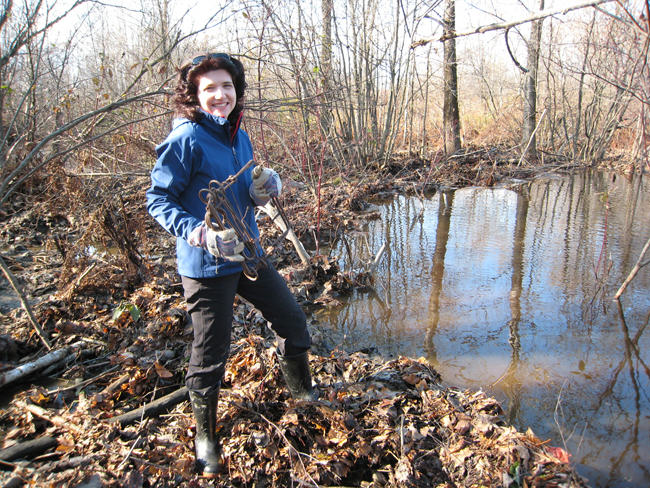
"Truth about Fur" shows real trappers, like Tanya Lynn Strong (about to set a beaver trap) pursuing their passion with full knowledge that they are on the frontline of wildlife and habitat conservation. They don't need lessons about respecting nature from urban activists. Photo: Serge Lariviere.
Absent: Voice of the Fur Trade
Throughout this debate, one voice was conspicuously absent: the voice of the people whose livelihoods and reputations were being attacked. There are several reasons for this, including the imperatives of modern media, where confrontation is “news” and “celebrities” are irresistible. Hunters, trappers and farmers, moreover, do not live in cities where most journalists are based, so they are rarely heard.
The structure of the fur trade itself – small-scale, decentralized and artisanal – also made it difficult for the industry to muster an effective response. And it didn’t help that those closest to the media and consumers – retail furriers – have little knowledge of production issues. Asking a furrier about trapping standards makes about as much sense as asking a seafood chef to explain fisheries management policy.
All this is about to change. After 50 years of turning the other cheek, the fur trade is finally speaking out more effectively. Under the banner “Truth About Fur”, fur farmers, trappers, biologists and veterinarians are setting the record straight.
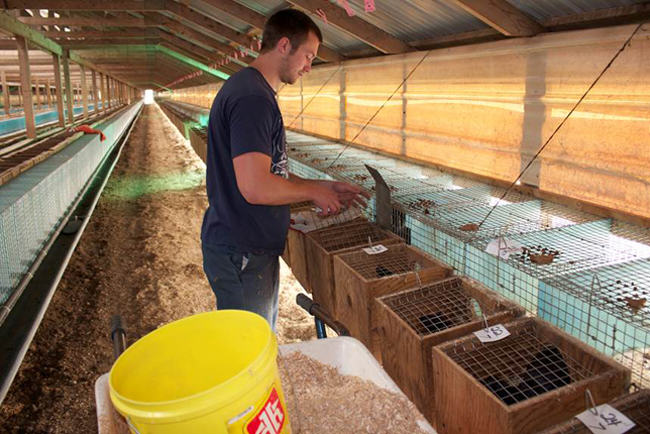
"Truth about Fur" shows real farmers at work on real fur farms. They don't need lessons about caring for animals from PeTA. Photo: Anne Troake.
Animal Activists Scrambling
The reaction of animal activists is revealing. Used to having the soapbox to themselves, they are scrambling to block or discredit the industry’s voice. I have experienced this personally.
When we refute lies or misinformation on-line, it doesn’t take long before a cyber-bully tries to shut down discussion. Rather than risk having their dogmatic beliefs shaken by facts, they shoot the messenger. Typical attacks include: “He’s paid to write this, don’t listen to him!” “He’s a fur industry troll!” Recently I was called “a sock puppet”.
I suppose it is better to be a sock puppet than a marionette, which would mean that someone was pulling my strings. But the bad news for these cyber-bullies is that we are not puppets. We are the people of the fur trade, and we will be silent no longer.
If the vicious lies and slanders leveled by activists against the fur trade for the past 50 years were directed at any other group in society, they would be denounced as hate crimes. It’s time that animal activists were exposed for what they are: intolerant bullies with little understanding of modern environmental thinking.
Aboriginal (or other) trappers do not need lessons about respecting nature from urban activists. Mink farmers do not need lessons about caring for animals from People for the Ethical Treatment of Animals (PeTA). The fur trade is not a crime against nature; it is a prime example of “the responsible and sustainable use of renewable natural resources”, a principle supported by the International Union for Conservation of Nature (IUCN) and every other environmental authority. These are some of the facts that are documented by Truth About Fur.
It is encouraging that close to 500 international designers now include fur in their collections, compared with only about 40 in the early 1990s. And it is wonderful to see people of all ages with coyote and fox trim on their parkas this winter. But it is especially satisfying to know that, whatever people choose to wear, the fur trade’s story is finally being told by the people who live it.
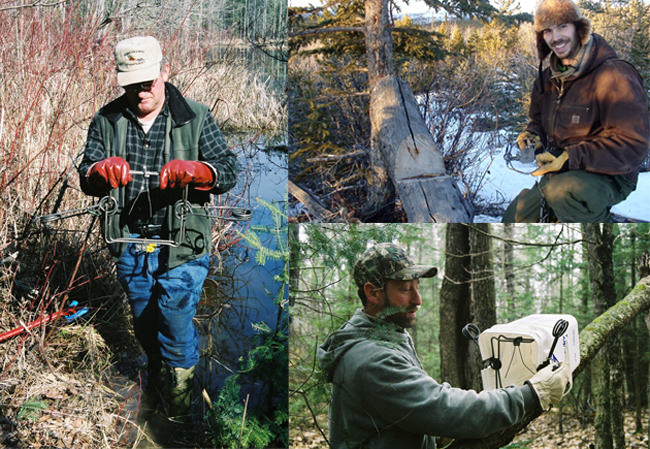
PROUD PROFESSIONALS EVERY ONE: (clockwise from left) Alcide Giroux sets a quick-killing Conibear trap for beaver in northern Ontario; Ryan Kole sets a footsnare for lynx in British Columbia; Randy Mersereau sets a dog-proof box trap for fisher or raccoon in Nova Scotia.
* * *
1) Alan Herscovici, Second Nature: The Animal-Rights Controversy (Canadian Broadcasting Corporation, 1985; Stoddart Publishing, 1991), p. 74.
The World Trade Organisation (WTO) was formed on the principles of free trade and non-discrimination. However, its Dispute Settlement Body… Read More
The World Trade Organisation (WTO) was formed on the principles of free trade and non-discrimination. However, its Dispute Settlement Body recently announced that it is supporting the EU's ban on the commercial trade in seal products, a ban that was set up on the grounds that the legislation served the 'public moral concerns' of a select segment of the EU population.
But what is 'public morality', really? The WTO itself doesn't have a definition. The General Agreements on Tariffs & Trade (GATT) does, but only that it allows each country to set its own definition.
This is opening a huge can of worms. It could allow a deluge of restrictive trade measures being justified on the grounds of 'public morals'. For example, a WTO member could block the import of pharmaceuticals based on a 'moral' objection to reliance on animals in medical research. No scientific support or data - just the belief it's immoral.
Similarly, governments could impose restrictions on the importation of animal products based solely on 'moral' concerns related to the animal husbandry practices employed in a particular country. No incentive to improve its animal welfare standards or attempt to correct long-held misapprehensions.
To take an example close to home - people still believe the fur industry skins animals alive for their pelts. Why would workers do something so unnecessarily cruel and make their own jobs that much harder? They don't, but many still think they do.
And why would WTO member states bother to negotiate complex trade disputes if they can just assert a moral objection and ban it? A decade ago, the EU, Russia and Canada addressed ethical concerns over fur trapping and that led to some of the most stringent animal welfare standards in the world - ones that apply to this day.
That would never have happened if they'd just said it was 'morally wrong' and slammed the door on any further discussion.
Freedom of Choice Denied
It's actually a matter of freedom of choice - something we take as a right, but that this decision has damaged massively. If someone doesn't want to wear fur, or eat beef, they have every right to do so. The same applies if they do.
This crops up in the fur trade because animals are involved, and that makes it emotional and divisive. Using 'public morals' to ban an animal product doesn't address the underlying issue of animal welfare or species conservation, as animals will continue to be hunted and farmed in the banned country and virtually every other country as well.
Instead, surely the responsible way forward is to promote welfare standards that create an incentive. This became abundantly clear after my recent trip to Sweden and Ireland, where hundreds of thousands of fur-bearing animals are trapped and killed - and virtually all are discarded. Why? For conservation and animal management.
This applies to the red fox in Switzerland, the 200,000-300,000 muskrats trapped in the Netherlands every year and millions of animals trapped throughout Europe, virtually all of which are discarded. Many consider that to be immoral.
So in essence, the anti-fur campaigns have stunted improvements in animal welfare and conservation practices and denied millions of Euros to rural people. But easy images of traps and "poor, innocent animals" are all we ever see. If these are the effects of public morality in action, we are indeed on a slippery slope.
To be honest, my own personal experience tells me it can be an easy mistake to make. As a former member of parliament I suspect I was at times guilty of thinking I had the right to set a moral agenda when I passed laws. All too often our politicians get too involved - lecturing the public on what's right or wrong - or worse still making sweeping judgements perhaps based on a few hundred protest cards or e mails rather than thinking about the silent majority.
With hindsight, I recognise that we are in dangerous territory when a politician or a government seeks to try and form a range of moral standards or assumptions. Making laws based on morality troubles me. Laws based on a set of basic human rights' principles or scientific evidence is a better measure than a politician's rather flimsy interpretation of what he or she thinks the moral values of the electorate might be.
Public morals and their protection are certainly a concern for governments, but is the EU abusing its authority in using… Read More
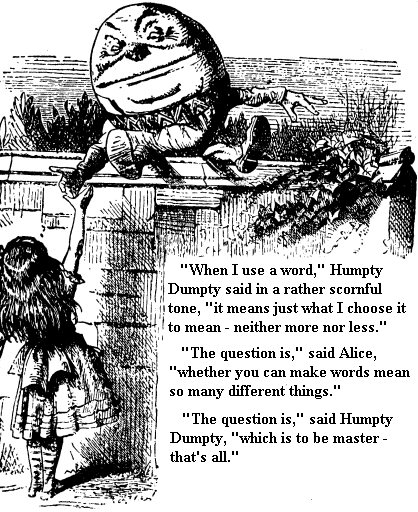
Through the Looking Glass, Chapter 6
Public morals and their protection are certainly a concern for governments, but is the EU abusing its authority in using morality as an excuse to ban trade? The World Trade Organization thinks not, and that should worry all of us.
On May 22nd, the WTO Appellate Body released a long-awaited decision about the EU ban on importation of seal products "to protect public morals". While activist groups were quick to trumpet victory, it will take some time to understand the full impact of this complex 250-page judgment.
Nonetheless, it is clear that this ruling will have far-reaching implications for anyone involved with animal production or trading in animal-based products.
On the positive side, the ban (implemented in 2010) was condemned by the WTO’s highest authority for “arbitrary and unjustifiable discrimination” against products of other countries, and the EU was instructed to amend its legislation accordingly.
The main issue here is an exemption for Inuit hunters. The WTO noted that “virtually all” Greenlandic (i.e., EU) seal products benefitted from this indigenous exemption while the “vast majority” of Canadian seal products did not.
It therefore found that the ban was discriminatory against Canada. In reality, the exemption did little for Inuit hunters anywhere, because the ban (and related campaigning) eroded markets for all seals. (1)
The real goal of the exemption was to provide cover for activists and EU politicians, since concern for indigenous rights is almost as politically correct as animal rights among the chattering classes, in theory at least.
The WTO, to its credit, saw through the ruse and denied that such racially or culturally defined exemptions “can be reconciled with, or is related to, the policy objective of addressing EU public moral concerns regarding seal welfare”.
The EU was hoisted by its own petard. If the way in which seals are hunted is so morally repugnant that a trade ban is justified, how can these same hunting methods be acceptable when employed by Inuit people? It will be interesting to see how the EU responds.
Of much greater importance, however, is that the WTO accepted the EU’s claim that trade restrictions based on animal-welfare concerns can be justified“to protect public morals”.
Until now, the WTO has refused to tolerate any ban based on the “means of production”. And for good reason: Say goodbye to world trade if countries can ban each other’s products because they don’t agree with their worker-safety regulations, environmental-protection controls – or now, animal-welfare concerns. (2)
No wonder that animal activist groups are cheering: a brave new world of political campaigning has just opened for them!
"This is a very exciting development,” gushed Sheryl Fink, director of Canadian wildlife campaigns for the International Fund for Animal Welfare (IFAW). “Hopefully it will have positive repercussions for other animals that are affected by trade as well." (3) Fur trappers and cattle ranchers take note!
But whose “morality” is really being protected here?
The EU had argued that “because of the way in which seals are killed, the EU public regards seal products from commercial hunts as morally objectionable and is repelled by their availability in the EU market.”
To justify this claim, activists and EU politicians often cite an Ipsos MORI public opinion survey commissioned by Humane Society International (HSI) and IFAW. Conducted in 2011, in 11 countries, the study found that 72% of Europeans supported the import ban on seal products. (4)
The responses to another question in this study, however, are less often quoted. Europeans were asked “how much –if at all – would you say you personally know [about the seal hunt]”. The findings are astounding: 25% of Europeans admitted that they had “never heard of it”.
Another quarter (23%) said they had heard of the seal hunt, but knew “nothing at all”. And another 30% said they knew “not very much”.
In summary: 78% of Europeans say that they know little or nothing at all about the seal hunt. So much for the burning moral issue that justified putting the world trading system at risk!
But despite knowing nothing, 72% of Europeans support the import ban on seal products. That shows what 50 years (sic!) of activist campaigning can do. And it shows why anyone involved with animal production should now be very concerned.
* * *
(1) Inuit leaders have claimed from the start that the exemption for the products from Inuit hunting would not protect their people.
“…Father believed that there was an animal even more dangerous than [humans], and one that was extremely common too: the… Read More
“…Father believed that there was an animal even more dangerous than [humans], and one that was extremely common too: the redoubtable species Animalus anthropomorphicus, the animal as seen through human eyes. We’ve all met one, perhaps even owned one. It is an animal that is ‘cute’, ‘friendly’, ‘loving’, devoted’, ‘merry’, ‘understanding’….In [all these] cases, we look at an animal and see a mirror.” Life of Pi, Yann Martel.
Two recent news stories cast a revealing spotlight on our muddled thinking about animals.
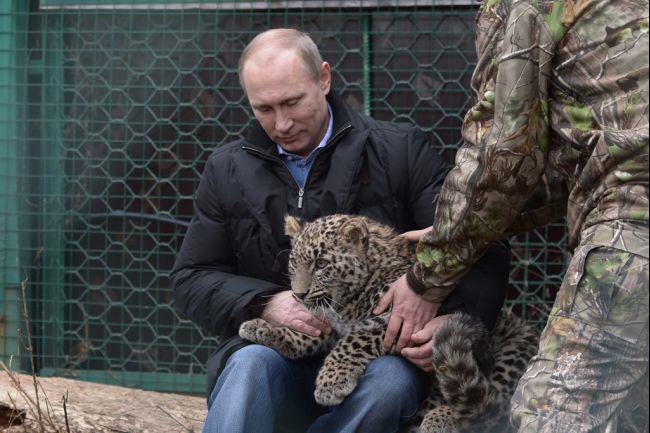
Putin caresses a Persian leopard cub in Sochi, Feb. 4, 2014. (Alexey Nikolsky/AFP//Getty Images)
First, in Sochi, president Vladimir Putin was photographed caressing a young Persian leopard cub at a newly-constructed breeding and rehabilitation center.
“The restoration of this endangered species will be part of the heritage of these games; the natural environment is much improved thanks to the Olympics,” said Mr. Putin.
Take that, environmental activists with all your whining about the construction of Olympic installations in a pristine wilderness!
One local activist was just sent to prison for three years for painting protest graffiti on the wall of a construction site. But there’s nothing to soften a tough politician’s image like cuddling a baby animal…especially a “charismatic” leopard or other big cat.
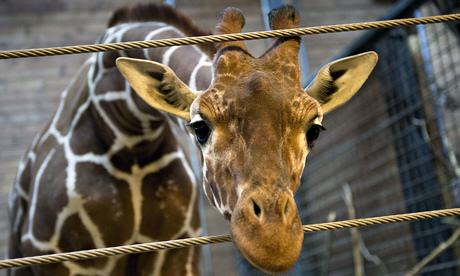
Next stop, Denmark, where the Copenhagen Zoo sparked animal activist ire – and an international media feeding frenzy – for euthanizing an 18-month-old giraffe named Marius.
As part of the European breeding program, the zoo must maintain genetic diversity in its limited space, so Marius was redundant.
Marius the giraffe. Photograph: Keld Navntoft/AFP/Getty Images
The European Association of Zoos and Aquaria (EAZA) fully supported the Copenhagen Zoo’s decision. But many were horrified when Marius was lured to lower his graceful 2-meter-long neck with a piece of rye bread – his favorite snack – and then shot through the brain with a captive-bolt pistol.
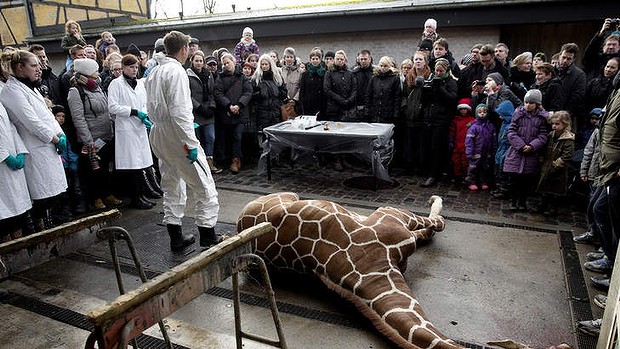
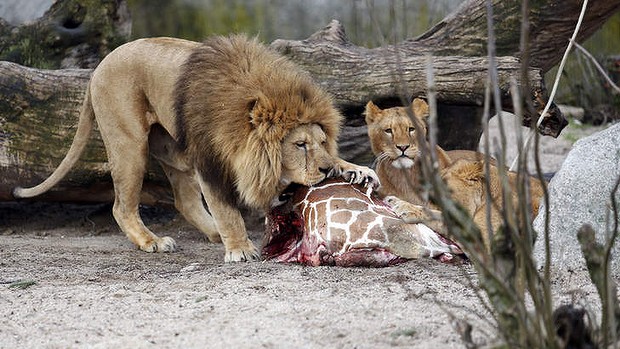
Even more shocking to many was the zoo’s decision to chop dead Marius into large pieces in front of visiting children and their parents, before feeding him to the lions.
Bengt Holst, scientific director of the Copenhagen Zoo was admirably calm and intelligent as he cut through the media sensationalism with plain talk.
“I know the giraffe is a nice-looking animal, but I don’t think there would be such outrage if it had been an antelope, and I don’t think anyone would have lifted an eyebrow if it was a pig,” said Holst.
Marius, a male giraffe, lies dead before being dissected,. Photo: AP
“There are 600 deer culled every year in a nature park north of Copenhagen, and no one gets upset. Humans have changed nature and we have a responsibility to maintain a balance.
“Humans kill and eat more than 50 billion animals a year. We have killed 5 giraffes since EAZA’s record-keeping began in 1828. Inbreeding can increase a population’s susceptibility to disease and other chronic conditions that can threaten the future survival of species under our care,” he explained patiently.
Nor did the zoo make any apologies for cutting Marius apart in front of children.
“It is not cruel, it is natural. Carnivores eat meat. If it was not the giraffe, it would have been a cow – what is the difference?
“Nature is not Disneyland where animals are only born but never die. In nature, animals must also die. Lions eat giraffes in nature. Why ‘protect’ children from reality?
“These children had the opportunity to see the wonder of the giraffe: for example, the huge heart that is needed to pump blood two metres up to their brain. They learned something in a way they would never learn from a book,” said Holst.
The carcass of Marius, a male giraffe, is eaten by lions after he was put down in Copenhagen Zoo. Photo: AP
All very logical and scientific. But did he really like these animals, asked a journalist? “Of course I like these animals, that is why we are working so hard to protect their future. Sometimes you have to do things that are not so pleasant, but it is important to be intelligent about such things,” said Holst.
Not least interesting in this story, of course, is our own conflicting feelings about “charismatic animals”. Like it or not, Putin’s leopards (or, in this case, Danish lions) eat giraffes like Marius.
This reminds me of one of the most impressive scenes in the 2005 film The March of the Penguins when, after enduring incredible hardships, our heroes finally make it to the sea, only to be torn to bits by leopard seals.
For some reason, anti-seal-hunt activists never feature this footage on their protest websites?!
But let’s be honest: none of us are totally free of anthropomorphism. It takes a pretty cold-hearted person not to feel some sympathy for long-lashed, dewy-eyed Marius. Or for fluffy “baby” seals. Or for almost any animal staring wistfully into a camera lens. Especially when most of us now live in cities and rarely see a wild animal.
When overpopulated beavers flood our roads or raccoons move into our attics, however, it is remarkable how fast perceptions can change!
In their attempt to discredit the environmental credentials of the fur trade, activists often cite a “life cycle assessment” (LCA)… Read More
Editor: in our last two blog posts we showed how two “studies” that are often quoted by animal activists (World Bank and University of Michigan/Ford Motor Company) are completely misrepresented. Now we turn our Truth-About-Fur detector to a third commonly cited study.
In their attempt to discredit the environmental credentials of the fur trade, activists often cite a “life cycle assessment" (LCA) produced by CE Delft, a Dutch research consultancy (see: NOTES, below). This study (The environmental impact of mink fur production, Delft, January 2011) found that: “Compared with textiles (including polyester, cotton, wool, and polyacrylic ‘fake furs’), fur has a higher impact on 17 of the 18 environmental themes, including climate change, eutrophication and toxic emissions.”
Because these claims, if true, would contradict our belief that fur is an environmentally responsible choice, we decided to take a closer look. It is lucky that we did!
Stated simply, we found that CE Delft’s negative assessment of fur results from several methodological assumptions or questionable statistics.
Among the most important concerns:
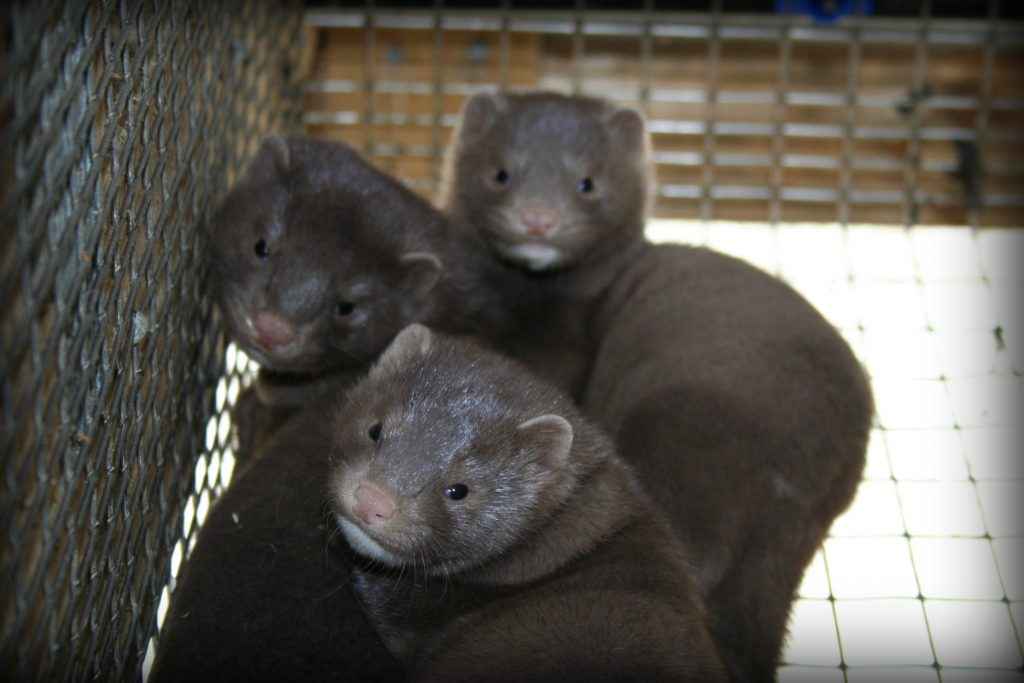
CE Delft used a significantly inflated figure (almost double our findings!) for the amount of feed required to produce farmed fur.
They ignored the fact that, because this feed is composed mostly of wastes from our food-production system, it could be considered an environmental benefit rather than a cost.
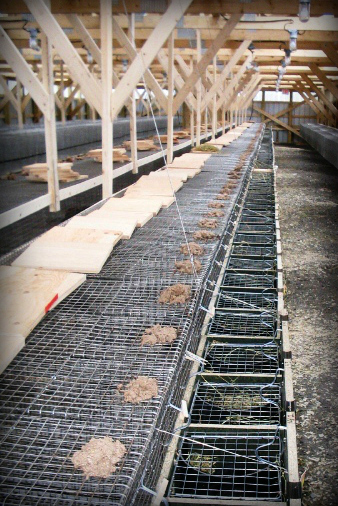
Mink manure made from soiled straw bedding and carcasses could also be assigned environmental credits rather than costs – for replacing synthetic fertilizers and fossil fuels.
Not least important, CE Delft discounts the environmental benefits of real fur apparel lasting much longer than fake furs or other textiles, i.e., if a real mink last five time longer than a fake fur coat, its environmental impact should be compared with that of five fakes, not one!
Let’s look at this CE Delft report in more detail ...
CE Delft (“Committed to the Environment”) describes itself as an "independent research and consultancy organization specialized in developing structural and innovative solutions to environmental problems. CE Delft’s solutions are characterized in being politically feasible, technologically sound, economically prudent and socially equitable.” [Socially equitable? Except for mink farmers, it would seem!]
This study, was commissioned by three European “animal-rights” groups that strongly oppose the use of fur: the Dutch Bont voor Dieren, the Belgian GAIA (Global Action in the Interest of Animals) and the Italian Lega Antivivisezione LAV). (No comment!)
Turning to the substance of this study: the feed used to produce mink is identified as one of two elements that account for most of the environmental costs of fur. This claim, however, is based on several assumptions:
- CE Delft sets out to compare 1 kilogram (kg) of mink fur with 1 kilogram of fake fur and other textiles. To this end, they propose that 11.4 mink pelts are needed to produce 1 kg of fur, and that each animal consumes close to 50 kg of feed (including a share for the mother). From these assumptions, CE Delft concludes that 563 kilograms of feed are required to produce one kilogram of fur (49.4 kg of feed x 11.4 pelts/kg of fur.), and this is the figure on which they base all their subsequent calculations of environmental impacts. [p.6]
- Our own survey of North American and European farmers – including statistics published by the Danish Faculty of Agricultural Science, Aarhus University (2010) -- suggests that it actually requires from 38-45 kg – or an average of about 41.5 kg of feed to produce a mink pelt. CE Delft’s figure for how many pelts are required to supply a kilogram of fur is also higher than what we found -- perhaps because their calculation was apparently based on two sample pelts provided by the Dutch activist group Bont voor Dieren, which may not represent a true average size? Using the same methodology as CE Delft but with a large data set provided by European fur auctions, we find that 1 kg of fur represents about 7.75 pelts – not 11.4, as CE Delft proposes. If an average of 41.5 kg of feed is required to produce one mink pelt, multiplying this by 7.75 pelts indicates that 322 kg of feed would be required to produce 1 kg of fur – i.e., a little more than half (57%) the amount of feed used by CE Delft in their calculations. This discrepancy alone explains much of the higher environmental impact they attribute to real fur.
- CE Delft also assumes that mink food is comprised of 70% chicken waste and 30% fish offal. But feed composition varies according to local availability. Thus, in Denmark (which produces three times more mink than Holland, where CE Delft is based) feed is more commonly composed of 80% fish offal and 20% chicken waste. But the environmental cost of fish offal is much lower than that of chicken wastes. In fact, in a 2013 follow-up study, CE Delft acknowledged that a mink diet based on fish rather than chicken would lower environmental impacts by 30%. [See, #6, below.]
- Most important of all: other uses would have to be found for this meat and fish waste -- or it would go into landfills or be incinerated -- if mink weren’t eating it. It could therefore be argued that an environmental CREDIT should be applied to mink food production, since the environmental costs of disposing of these meat and fish wastes are avoided.
In summary: Since mink feed is the predominant factor in 14 of the 18 environmental impacts that CE Delft considered, their assumptions raise serious questions about the credibility of their findings.
4. The second major source of environmental impacts identified by CE Delft is emissions associated with mink manure and other farm wastes.
Here again, CE Delft ignored the subsequent use of this manure and the environmental CREDITS that could be associated with reducing the need for artificial fertilizers when mink manure and other wastes (soiled straw bedding) are properly managed and applied to local agricultural lands. Mink carcasses and wastes are now also used to produce biofuels, thereby reducing the need for fossil fuels.
5. Finally,the way in which CE Delft framed the scope of its study has skewed its findings:
CE Delft did not do a complete, “cradle-to-grave” Life Cycle Assessment in its 2011 study. Instead, it did a partial (“cradle-to-gate”) analysis which included the environmental costs of raising of the mink on the farm, pelting, transportation, auction sale, and processing (dressing) – but stopped at the point when the fur would be made into a garment.CE Delft therefore completely ignored one of the most important environmental attributes of fur apparel, i.e., that it is much longer-lasting than most other clothing materials. Clearly, it matters whether the environmental costs of production are amortized over 5-10 years (fake fur coats) or 40, 50 or more years (real fur coats)!
6. To address this blatant methodological flaw, CE Delft published a follow-up study in June 2013 (“Natural mink fur and faux fur products, an environmental comparison”). This study completed the “life cycle” by assessing the manufacture, use/maintenance and ultimate disposal of real and fake (polyacrylic) furs – but again concluded that real fur apparel has a greater environmental cost than fakes. Here’s why:
- The new study used the same assumptions and calculations about mink feed production and manure/waste management that were presented in the first study – and these two elements still accounted for most of the environmental impacts.
- Furthermore, to blur the environmental advantages of fur apparel lasting much longer than fakes, CE Delft proposed several “scenarios”. It acknowledges that real fur may last as much as five times longer than fake, e.g., 30 years vs 6, as proposed in an LCA prepared for the International Fur Federation [DSS, 2011). But then it backtracks, suggesting that “it is conceivable that the lifespan is determined by the change in fashion; in this case the lifespan of a natural fur coat and a faux fur coat could be equal.” (p.5) This statement reveals ignorance or deviousness:it doesn’t seem to know (or doesn’t want its readers to know?) that fur apparel can be taken apart and completely reassembled (“remodeled”) as fashions change. This is one of fur’s important environmental attributes; no one throws away a fur coat because styles change. In fact, with the current revival of fur in fashion, retailers are busy remodeling coats their customers bought during the last fur boom, in the 1970s and 1980s, i.e. coats that are already 30–40 years old!
- CE Delft also claims that the longevity of real fur coats may be off-set by the environmental costs of cold storage during the off-season. They suggest that 30 years of seasonal cold storage would have more impact on climate change, for example, than the entire process of raising the mink, processing the pelts and producing the coat! (Figure 7, p. 34.) The energy costs of fur storage as estimated by CE Delft, however, are considerably higher than figures collected from real fur storage facilities. More to the point, most fur coats are simply not kept in special cold-storage vaults, especially now that many homes are air-conditioned through the summer months. Furthermore, off-season storage of furs has always been less common in Europe than in North America, and is almost non-existent in Russia and the booming new markets of Asia.
- More fundamentally: we could question CE Delft’s core contention that real and fake fur coats can be compared at all. The fact that people are prepared to pay considerably more money for real fur coats than for fakes would seem to confirm that they have different qualities and “value”.
- Finally, we note that neither CE Delft study appears to have been submitted for peer review.
In conclusion, CE Delft’s often-quoted claim that “fur has a higher environmental cost than fakes” appears to be based on a series of questionable assumptions and calculations. CE Delft is cautious in how it presents its findings, especially in its 2013 study where it provides a number of different “scenarios” to account for the uncertainties it acknowledges. Activists, however, show no such caution when they cite these findings.
The biggest threat to climate change, in fact, may be activist “hot air”!
Here are a few examples where the “CE Delft” study is cited in an attempt to discredit the environmental credentials of the fur trade:
1. “A study by consultancy firm CE Delft in 2011 found that the impact of fur production on 17 out of 18 environmental issues – such as climate change, ozone pollution and soil acidification – was found to be more harmful than when compared to common textiles.” From Cruel or cool? Worldwide sales of fur top £10 billion by Hayley Leaver, Metro.co.uk, 22 May 2013.
2. “PETA points to a 2011 study by a Netherlands consultancy firm CE Delft which compared the impact of fur production with common textiles on 18 different environmental issues such as climate change, ozone pollution, soil acidification and water and land use. ‘For 17 of the 18 issues, fur was found to be much more harmful than common textiles,’ says Ben Williamson, a spokesperson for PETA.” From Is the fur trade sustainable? By Tansy Hoskins, The Guardian, 29 October 2013.
3. “A 2011 study by Dutch independent researchers CE Delft calls fur production worse than textile production, in terms of environmental degradation. Carcinogens like chromium and formaldehyde, employed in dressing and dyeing processes, compromise fur’s biodegradability, not to mention ecological stability.” From Fur is Green. True or Faux? By Jody McCutcheon, Eluxe Magazine, 22 February 2013.
With fur now so prominent on the designer catwalks, in fashion magazines, and on the street, many publications are hosting… Read More
With fur now so prominent on the designer catwalks, in fashion magazines, and on the street, many publications are hosting debates about the ethics of wearing this noble but much-maligned material. Among all the arguments, for and against, one question is never asked: “Why is fur so controversial?”
True, animals are killed for fur. But more animals are killed for food every day in North America than are used for fur in a year!
But we don’t need fur, you say? Well, PETA and their friends argue that we don’t need to eat meat either.
The real reasons why fur is “controversial” may surprise you.
Let’s take a look ...
10 Top Reasons Why Fur Is “Controversial”
#1. The Fur Debate Is “Class War”: According to “animal-rights” philosophers, eating meat is no more justified than wearing fur. Even Peter Singer - whose book Animal Liberation launched the modern animal-rights movement – wrote that it is hypocritical to protest against the fur trade while most people eat animals daily. In practice, however, fur is an easy target because relatively few people wear it – and most of them are women. And fur apparel is expensive (because much of the work is done by hand) making it easy to dismiss as an “unnecessary luxury”.
Fur is a convenient cross-over issue for those who decry “capitalist exploitation" of both humans and animals. Thus, the “A” in “ALF” (Animal Liberation Front) is often circled – the graffiti code for “Anarchy” – and it is usually left-wing parties in Europe that endorse anti-fur positions.
The fact that those hurt by anti-fur campaigning are working people – aboriginal and other trappers, farm families, craftspeople – is something these “idealists” prefer to ignore. This is why PETA is so upset by the growing popularity of fur for small accessories or trim on parkas: this trend is making fur much more widely accessible, especially for young people.
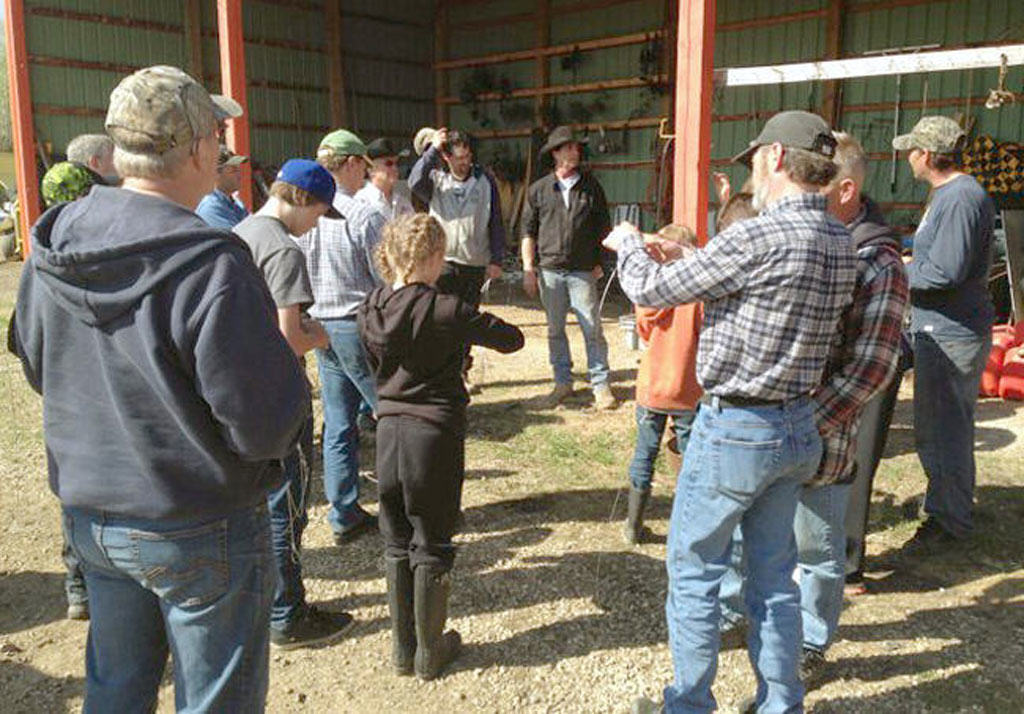
Anti-fur campaigns hurt working people like these, seen learning trapping skills from Alberta trapper and wildlife advocate Gordy Klassen (in black). Photo: Derek Martel.
#2. Fur as Scapegoat: We are bombarded with warnings that human activities are changing our climate, polluting the environment, destroying rainforests and driving record numbers of species into extinction.
These problems are complicated and solving them will require major changes in our lifestyles. So it may seem reasonable to claim that “if we care about nature, at least we should stop killing animals for frivolous products like fur!”
In fact, the trapping of wild furbearers is strictly regulated by state and provincial wildlife agencies to ensure that we use only a small part of the surplus nature produces each year. Endangered species are never used.
The modern fur trade is an excellent example of “the sustainable and responsible use of renewable natural resources”, a key ecological concept supported by all serious conservation authorities (International Union for Conservation of Nature, WWF, UNEP). Using renewable resources, like fur, is ecologically preferable to using synthetics derived from (non-renewable) petro-chemicals. And giving commercial value to wildlife provides a financial incentive to protect natural habitat, which is vital for the survival of wild species.
But why let facts get in the way of a good story?!
#3. “Media Sluts!” Speaking of stories, PETA co-founder and president Ingrid Newkirk explains its success in using the media to promote its issues (and brand!) as follows: “We’re media sluts ... we didn’t create the rules, we just learned how to play the game!”
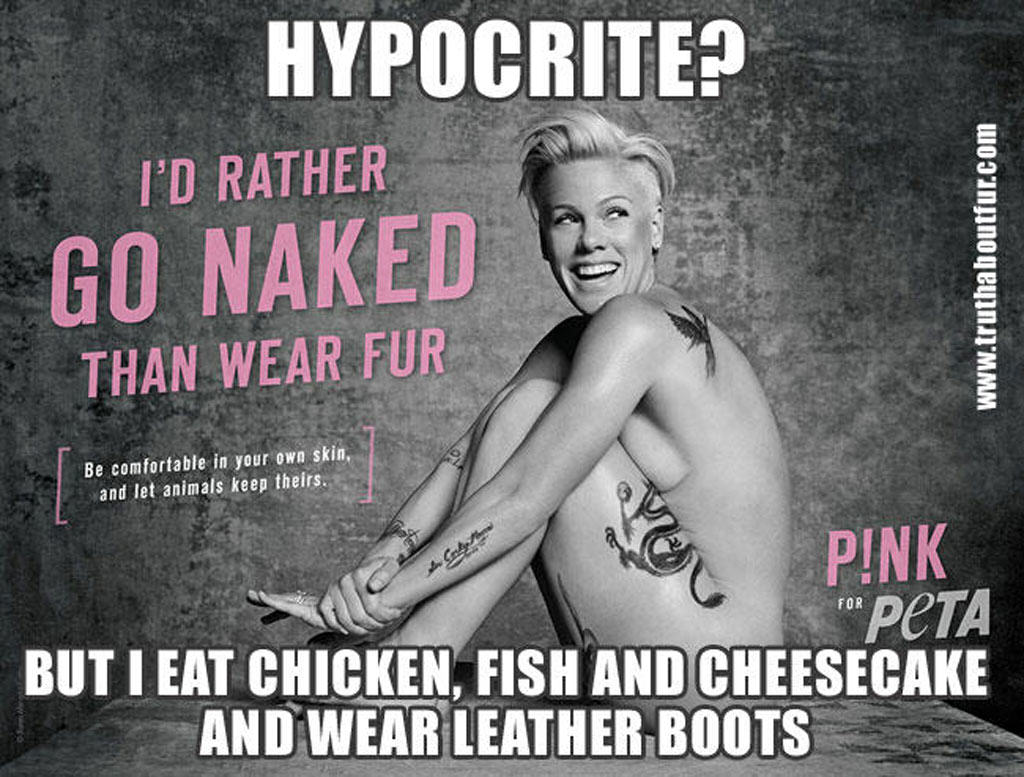
PETA understands that media can’t resist running a photo feature about a starlet, supermodel or other "celebrity" – especially if they are female and undressed. So what if these women know nothing about conservation or wildlife biology, “the medium is the message”. Of course, getting on the evening news does not pay the bills. That’s where modern fund-raising technology comes in. (See #4)
PETA understands that media can’t resist an undressed starlet, even if they know nothing about conservation. See Hypocrite Profile: Pink.
#4. Follow the Money! Many people don’t realize that campaigning against fur and other animal-based industries has become a very lucrative business. PETA and its affiliates rake in some $30 million annually; the so-called Humane Society of the United States (HSUS) collects more than $100 million. HSUS execs pull down six-figure salaries. And there are dozens of other groups.
Very little of this money goes to animal shelters; most is churned back into driving more “issues” and fund-raising campaigns.
PETA alone has more than 100 employees writing letters to editors and planning photo ops. The media stunts are quickly followed up with direct-mail, fund-raising appeals: “Please help us to stop this atrocious suffering!”
Computer technology allows this thriving new protest industry to target zip codes most likely to contribute. The money collected far exceeds what the fur trade – an artisanal industry comprised of thousands of small-scale, independent producers – can devote to telling their side of the story. So the activist message is most often heard – creating the impression that “there must be something wrong with the fur trade!”
As a leading animal activist once told me: “You can’t win because you have to spend money to fight us, but we make our money attacking you!”
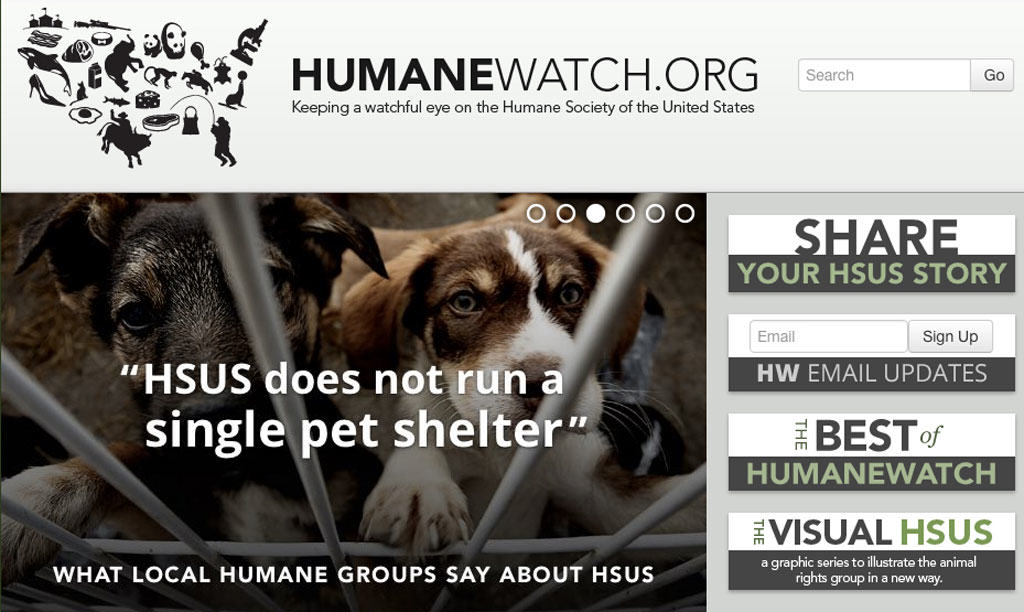
HSUS et al. churn most of their funds back into driving more “issues” and fund-raising campaigns. Learn more at HumaneWatch.org.
#5. Fur as Political Football: Lobbying to ban the production or sale of fur is emerging as a favorite activist tactic – especially because they don’t even have to win for it to work!
Political campaigns transform the parochial views of special interest groups into “hard news”. Well-informed journalists may resist providing free publicity for PETA’s street theater, but they cannot easily ignore a political campaign. And legislative bans carry a deeper message: if governments are prepared to shut down a tax-paying business, surely this must be a very evil industry indeed!
In fact, the real message of politics is ... politics.
Political attacks on the fur trade generally succeed only at the municipal level (an incestuous world where very few councillors make the decisions), or in countries with proportional representation. In these countries (including most of Europe), there are so many parties that complex coalitions are needed to cobble together a majority. Mink farmers (or seal hunters) wield limited economic clout – and fewer votes – making them ideal sacrificial lambs to bring left-wing or “green” partners into government coalitions.
Meanwhile, European governments now pay trappers to kill muskrats, (to protect dykes and farmland in Belgium and the Netherlands), or badgers (in Britain, to control bovine tuberculosis) – and destroy the furs. And while the EU banned the import of sealskins, fishermen there can shoot seals to protect their nets, without regulations or oversight, so long as they don’t sell the pelts!
Another revealing example is Israel, where a few members of the Knesset are hoping to ban all fur sales. Because there is almost no fur trade in Israel, it is very tempting for the government to yield to such pressures; there is no domestic downside. A fur ban in Israel would change almost nothing in that country, but activists hope to use it as a precedent for similar initiatives in Europe and North America – a rare example of “progressive” groups citing Israel as an ethical leader!
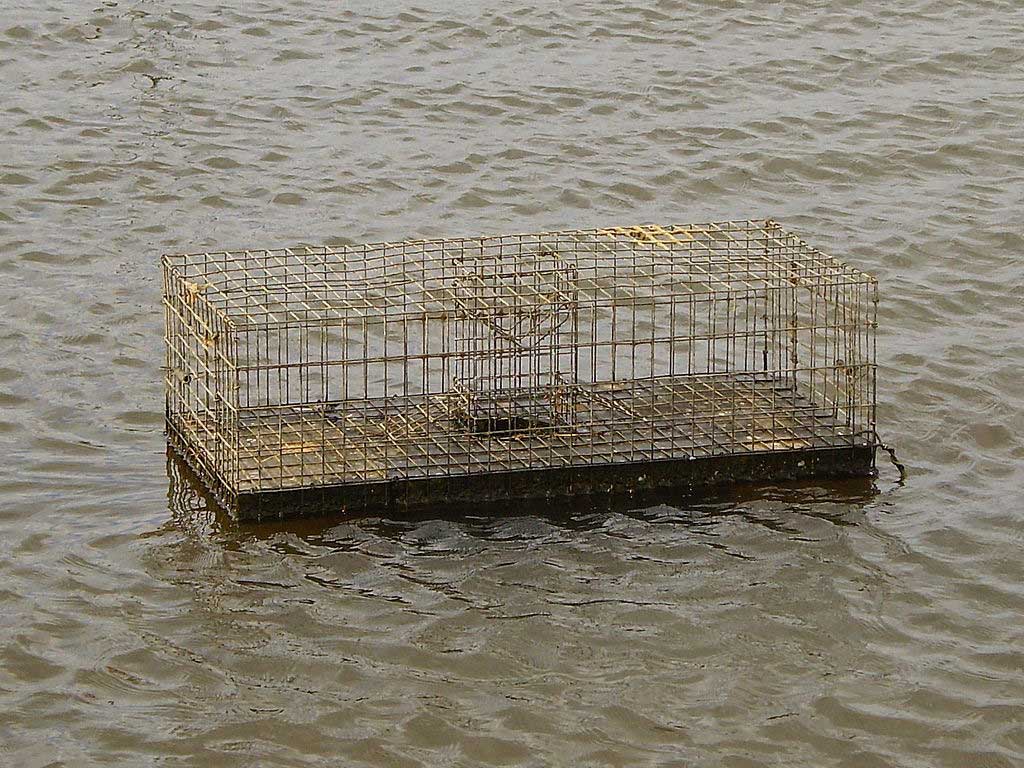
In the Netherlands, traps like this are used to catch muskrat. The pelts are then destroyed. Photo: Apdency.
#6. Nature as Disneyland: Not so long ago, most North Americans still had family on the land. Summers might include visits with grandparents or other relatives on the farm – people who understood that nature is not Disneyland and animals are not talking cartoon characters.
Today, for the first time in human history, most of us live in cities. We have little direct contact with (living) animals that are not pets. We do not know that taking some animals each year may be the best way to keep the rest of the population stable and healthy. Or that wildlife must be controlled to protect property and habitat (e.g., from beaver flooding), to protect nesting birds and their eggs from predators (coyotes, foxes), to prevent the spread of dangerous diseases (e.g., rabies in raccoons, skunks), and for many other reasons.
When our meat comes in Styrofoam trays in the supermarket, we are easily shocked by images of animal slaughter for any purpose. Animal activists complain that industrial/urbanized society has lost respect for nature and animals – but, ironically, their campaigns attack the livelihoods and cultures of the few people who still live close to the land.
#7. Harassment of Women: We are rightfully disgusted when women are attacked in some countries for wearing their skirts too short or not covering their heads. Animal activists, however, have little to learn from religious extremists when it comes to harassing women.
Some notable anti-fur slogans have included: “It Takes 40 Dumb Animals to Make a Fur Coat, But Only One to Wear It!” and “Shame!”, an HSUS campaign showing a woman in fur hiding her face with her handbag. The goal is clearly to intimidate women, to make them feel uncomfortable wearing fur.
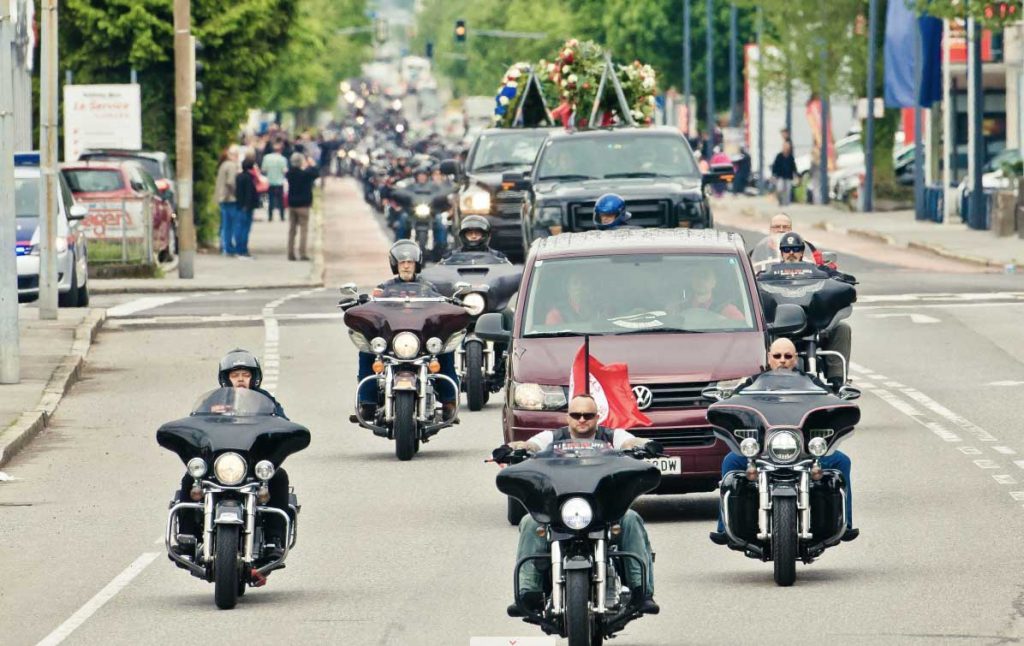
One wonders, would anti-fur campaigning have become so aggressive if men wore most of the fur coats? Perhaps PETA would show more moral conviction if they demonstrated against the use of leather by motorcycle gangs!
Animal activists like targeting women, but leather-wearing bikers are immune! Photo: Hells Angels World MC.
#8. Politically-Correct Bullies: “If you don’t remove fur from your store, we will picket every day before Christmas with a large-screen TV showing animals being skinned alive!”
When fur represents only a small proportion of their sales, fashion retailers cannot easily resist this sort of threat, even if fur is perfectly legal and their customers want to buy it. Those who persist may find their locks glued or windows broken. Or their homes may be splattered with red paint, their neighborhoods plastered with posters denouncing them as “murderers”. Security costs soon outweigh potential profits – or principles about freedom of choice.
When the mafia targets businesses in this way, it’s called a protection racket. When foreigners use threats of violence to make us do what they want, it’s called terrorism. But retailers targeted by animal activists are on their own; their tormenters are called “idealists”. And if the retailer decides to buy peace, their decision to drop fur is trumpeted by the bullies as a “moral victory” – and more proof that fur is “controversial”.
#9. Seeing Is Believing! Nothing has done more to fuel the fur “controversy” than a number of shocking videos posted on the web. These videos show animals in very bad condition on fur farms and even, in one particularly horrific example, an Asiatic raccoon being skinned while clearly still conscious, in a dusty village square somewhere in China.
Pictures are worth a thousand words and videos don’t lie ... or do they?
The injured animals shown in one “US fox farm” video were actually being kept for urine, to produce hunting lures. The farm never sold fur – fur from such poorly cared-for animals would have little or no value – and was later forced to clean up its act by the Illinois Department of Natural Resources. (The video mentions none of this.)
The Asiatic raccoon-skinning video is particularly upsetting, and especially dubious. No one would skin an animal alive. Morality aside, a conscious animal moves, increasing the risk of damaging the fur or cutting the operator. And with the heart still beating, an animal bleeds more, unnecessarily soiling the fur.
The only logical conclusion, shocking as this may be, is that someone paid a poor villager to do this terrible act for the camera.
When this video was first released by a Swiss animal rights group, in 2005, the International Fur Federation requested the full, uncut tape, with information about when and where it was filmed, so an investigation could be launched. There was no response – a strange reaction from a group supposedly concerned about animal welfare. Unless, of course, the real goal was to fuel controversy!
#10. A Culture in Search of Values: Above all, the controversy sparked by fur reflects a confusion of values in our fast-changing society.
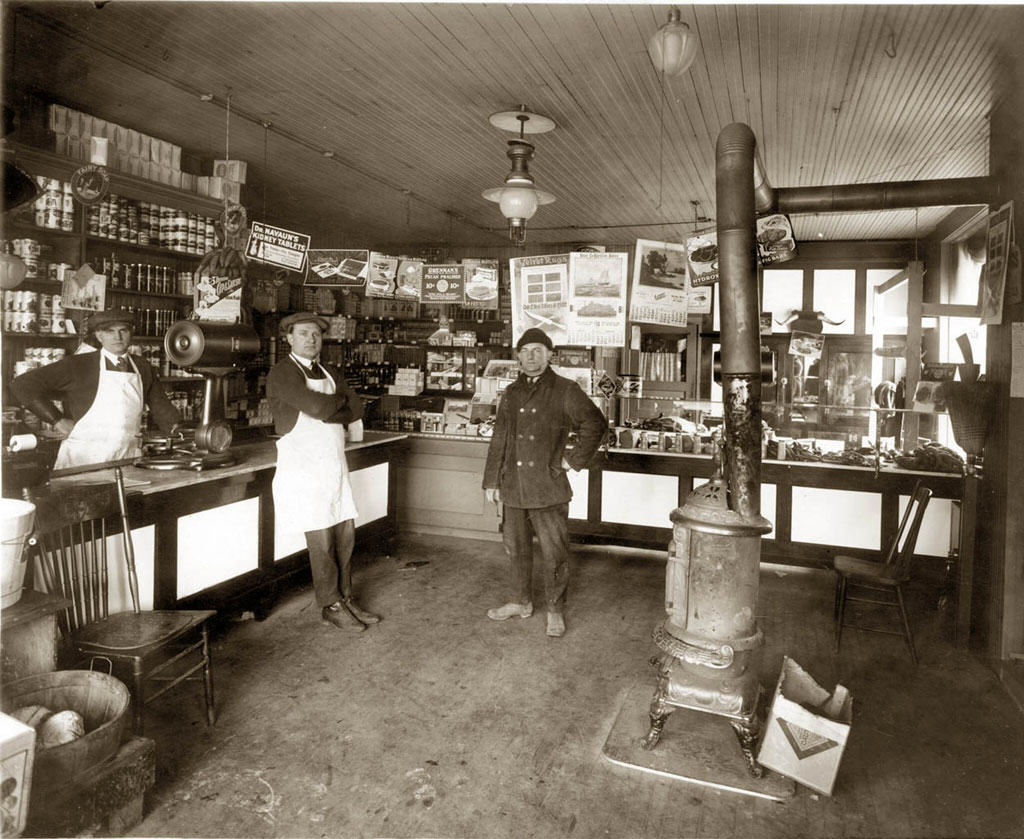
Wherever they were from, our grandparents lived in cultures with very clear ideas about what we should eat or wear, how we should speak or act. Urbanization, globalization, secularism and multi-culturalism have changed all that. It is no longer always clear what is right or wrong.
Without a social consensus, we live in constant doubt; sects flourish, politics become increasingly polarized, conspiracy theories abound. A simple trip to the grocery store becomes an existential experience: Should we eat meat? Is it better to buy organic or locally-produced food? What about low salt, high carbs, GMOs?
In this cloud of nutritional, ecological and ethical confusion, fur can become a flashpoint for the clash of urban and rural cultures, for troubling questions about our relationship with nature and animals, and, not least important, for the tension between collective values and individual freedom of choice.
As this 1922 photo of a Detroit grocery store suggests, our grandparents had a very clear idea about what we should eat and wear. But a trip to the store today is an existential experience! Photo: Author unknown, courtesy of Bill Whittaker / Wikipedia.
Final Word – Fur Leaves No One Indifferent!
Fur means different things in different cultures. Aboriginal people believed they could partake of animal power by wearing fur and that using these “gifts” showed respect for the animals that gave themselves so that humans might survive. (Much like many of us still say grace before meals.) Furs have also often conveyed status and power: furs adorn ceremonial robes and, in the Middle Ages, strict laws determined which furs might be worn by different classes. Ultra-Orthodox Jews wear fur-trimmed hats (streimels) on the Sabbath, to spiritually elevate both man and animal.
In the golden years of Hollywood, furs represented luxury and sensuality – as they still do for many. Today, animal activists would like to associate the wearing of fur with human arrogance and guilt, even as a new generation of designers rediscovers its natural beauty and makes fur more versatile and accessible than ever before. While some now denounce the fur trade as a crime against nature, others argue quite the contrary, i.e., that wearing and admiring fur can remind modern city dwellers that we are, ultimately, dependent on nature for our survival.
And this, perhaps, is the true nut of the fur debate: are humans “a rogue species”, “a cancer on the planet” that would be better eliminated, as some “deep ecologists” and the “voluntary human extinction movement” would have us believe? Or are we truly part of nature, a natural predator with as much right to be here as any other species (although with greater responsibilities, because of our unprecedented power and knowledge)?
Fur, in summary, has always been more than a beautiful, natural material. Fur has always had symbolic meaning, a powerful hold on the human imagination. The current “controversy” about fur is just the latest example of the on-going attraction of the most precious of natural clothing materials.
Manage Consent
To provide the best experiences, we use technologies like cookies to store and/or access device information. Consenting to these technologies will allow us to process data such as browsing behavior or unique IDs on this site. Not consenting or withdrawing consent, may adversely affect certain features and functions.
Functional
Always active
The technical storage or access is strictly necessary for the legitimate purpose of enabling the use of a specific service explicitly requested by the subscriber or user, or for the sole purpose of carrying out the transmission of a communication over an electronic communications network.
Preferences
The technical storage or access is necessary for the legitimate purpose of storing preferences that are not requested by the subscriber or user.
Statistics
The technical storage or access that is used exclusively for statistical purposes.The technical storage or access that is used exclusively for anonymous statistical purposes. Without a subpoena, voluntary compliance on the part of your Internet Service Provider, or additional records from a third party, information stored or retrieved for this purpose alone cannot usually be used to identify you.
Marketing
The technical storage or access is required to create user profiles to send advertising, or to track the user on a website or across several websites for similar marketing purposes.