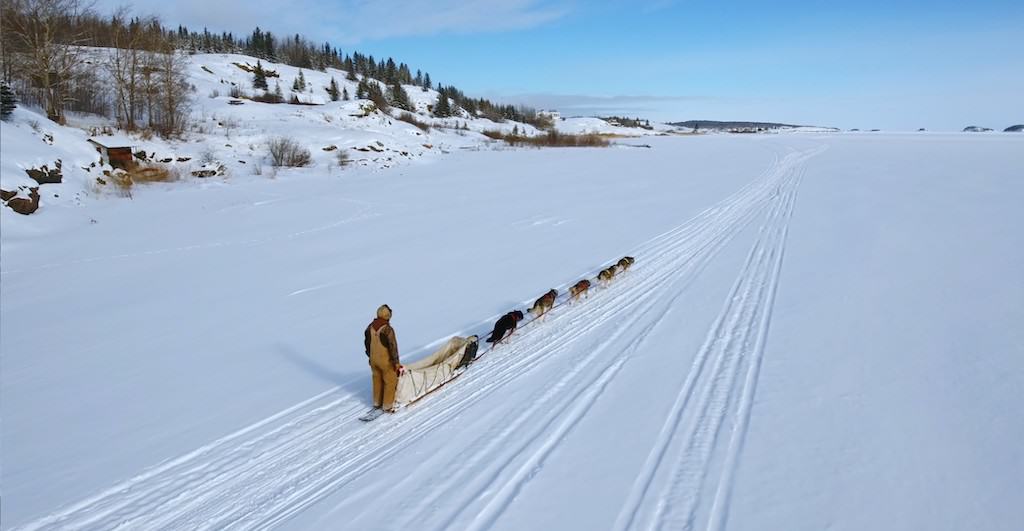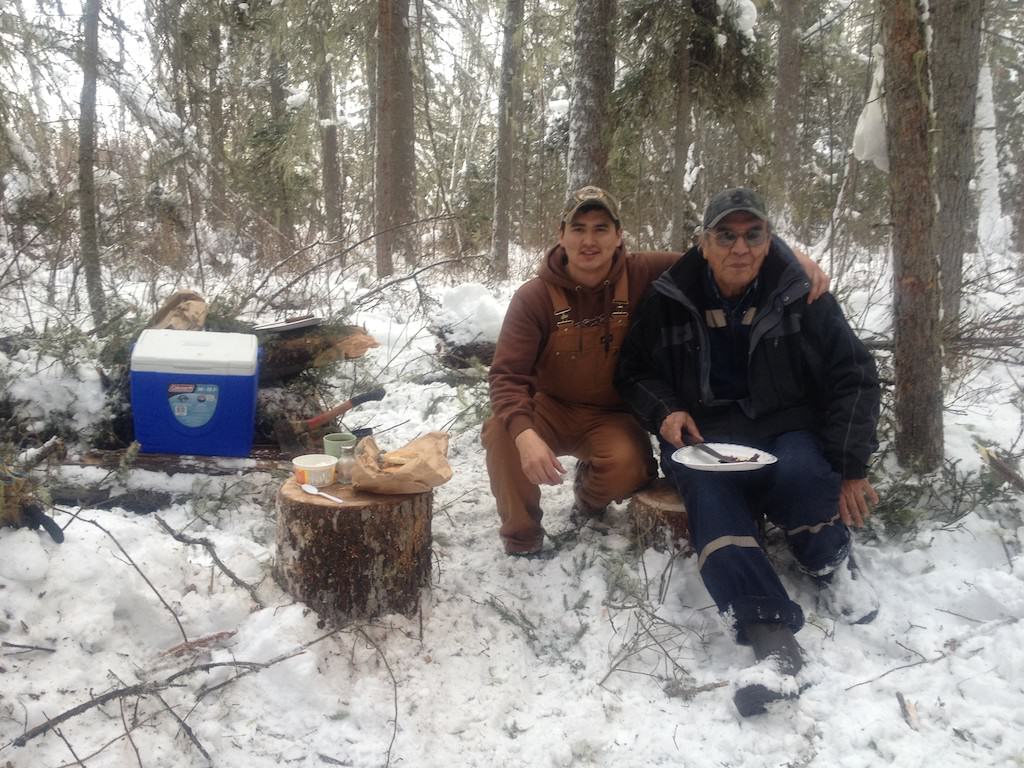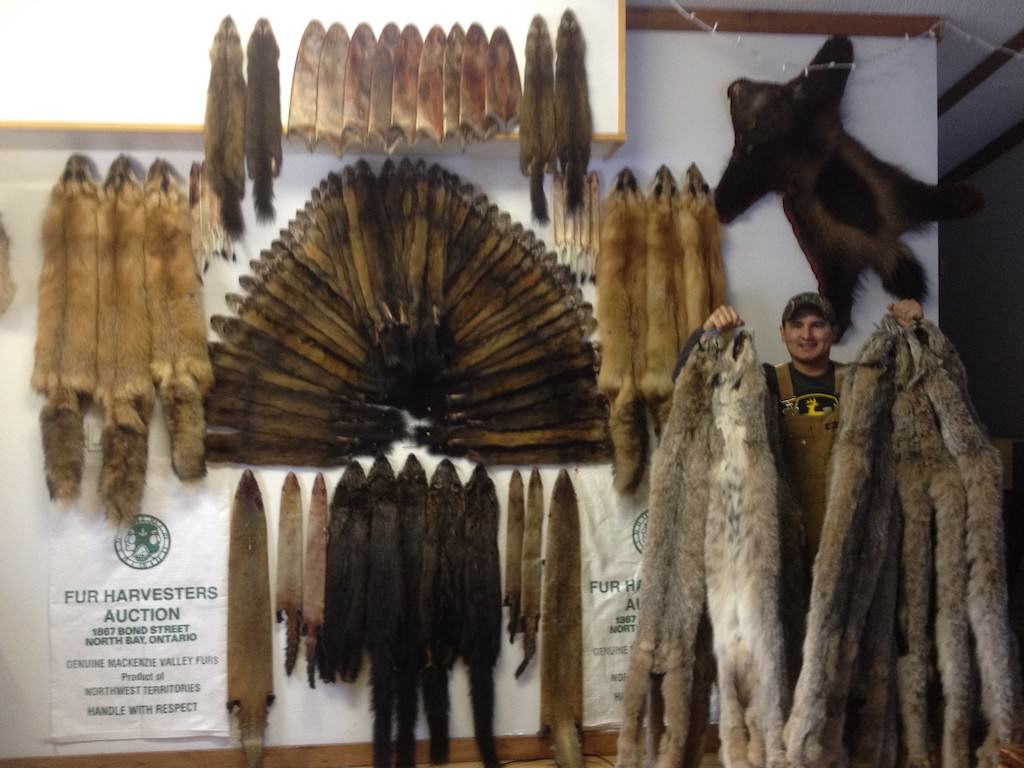
Recent proposals by Los Angeles, San Francisco, and now New York city councilors to ban fur sales should not only… Read More
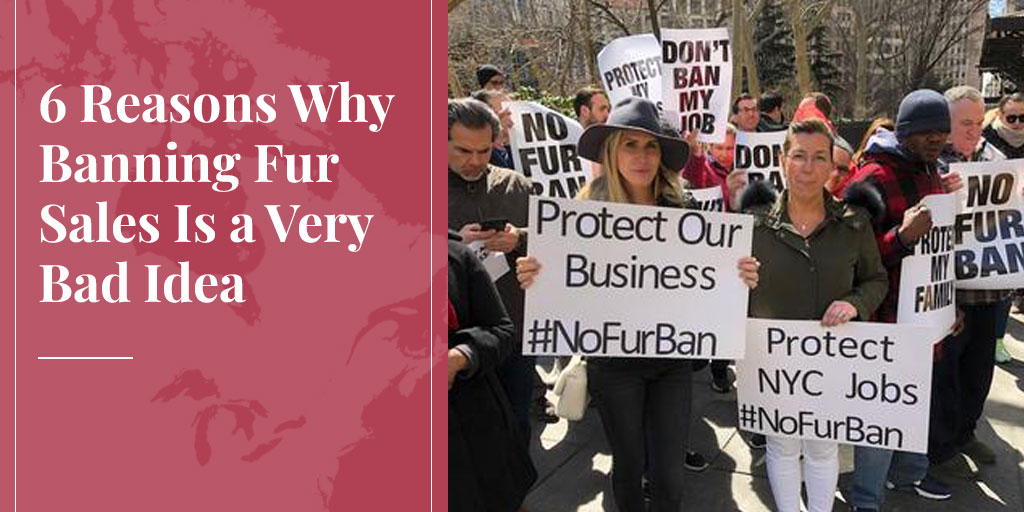
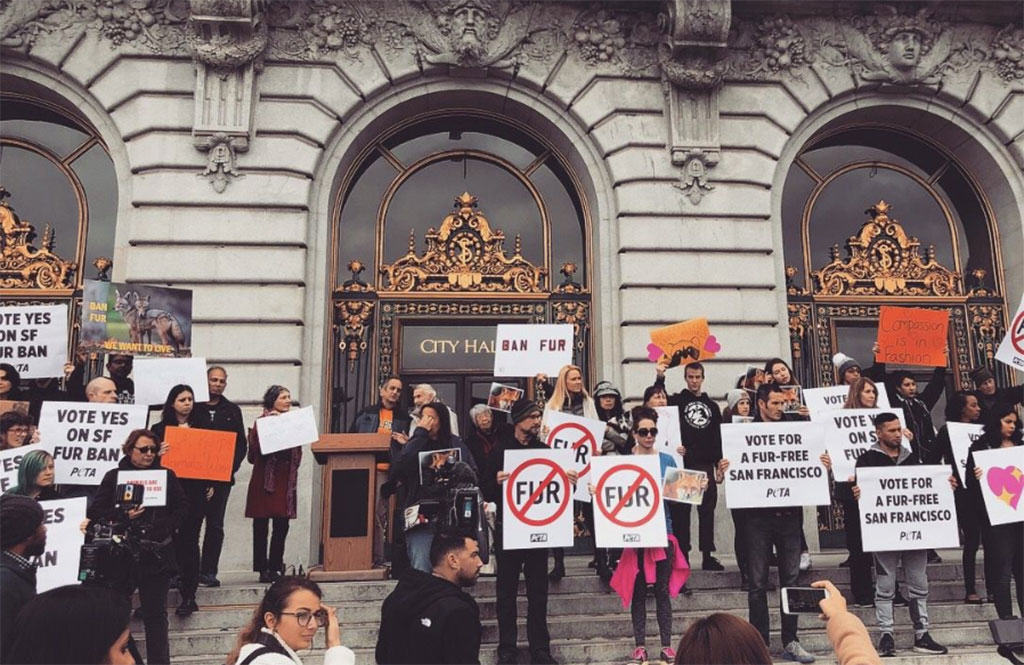
In March, a proposed ban on fur sales sparked the fur trade to protest at New York City Hall. Photo: Maria Reich.
Recent proposals by Los Angeles, San Francisco, and now New York city councilors to ban fur sales should not only worry furriers who risk losing their jobs and businesses. These proposals should be a matter of grave concern to anyone who values living in a free, fair and tolerant society.
There are so many things wrong about the proposed bans on fur sales that it is hard to know where to begin, but let’s look at six of the most important problems:
1. These proposals to ban fur sales are a flagrant example of arbitrary government infringement on fundamental human rights. No one is forced to wear fur, and animal activists are free to campaign against the fur trade, but this does not give them the right to impose their personal beliefs on others. After decades of anti-fur campaigning, many people still clearly want to buy fur. The activist response is to seek legislation that would take away our right to choose for ourselves. This should have alarm bells ringing on all sides of the political spectrum!
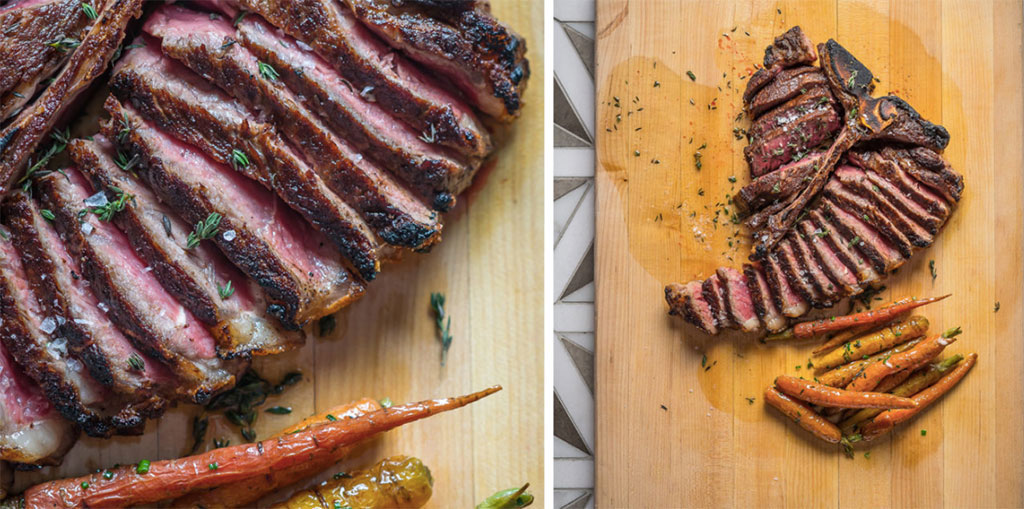
New York City is famous for its steakhouses, but no one is talking of banning them...yet! Photo: Porter House Bar and Grill, Columbus Circle, NYC.
2. It is illogical and discriminatory to consider banning fur sales when 95% of Americans eat meat and wear leather. Of course, PETA and other “animal rights” groups that are lobbying to ban fur sales are equally opposed to any use of animals, even for food. But most North Americans do not accept this extreme view; most of us believe that humans do have a right to use animals for food, clothing and other purposes, so long as these animals are treated responsibly. There is no justification for banning fur sales while hundreds of millions of cows, pigs and sheep, and several billion chickens, are killed each year for food in North America. Even philosopher Peter Singer stated in his landmark Animal Liberation – the book that launched the animal-rights movement – that it is completely hypocritical to campaign against the fur trade while most Americans continue to eat meat, eggs, fish and dairy.
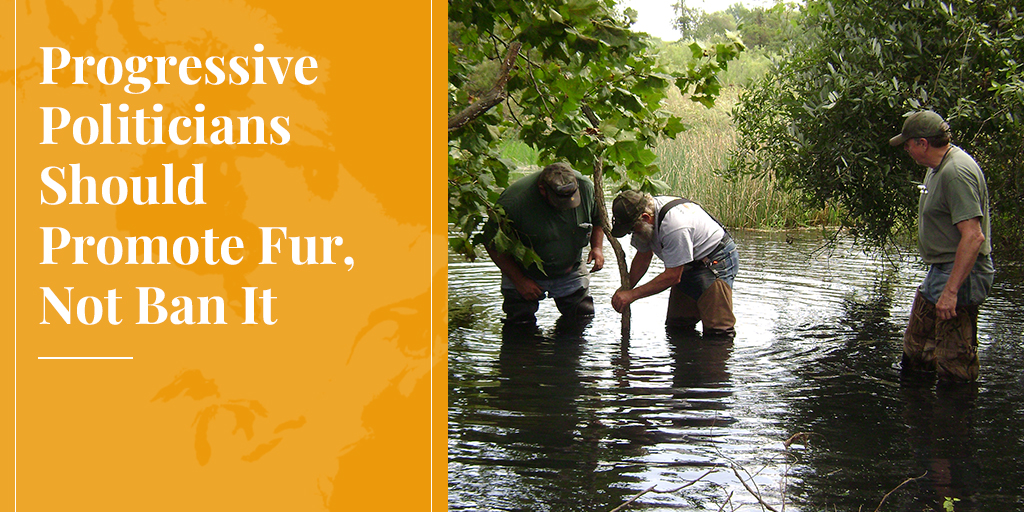
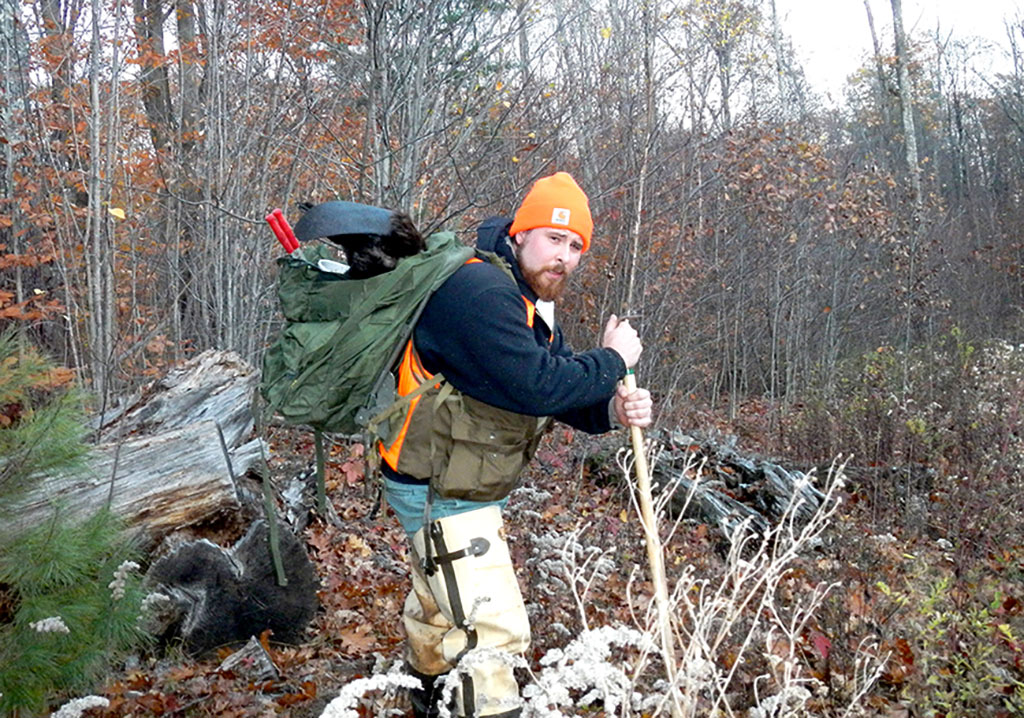
Trappers are our eyes and ears on the land, sounding the alarm when nature is threatened. Photo: Jeff Traynor / Furbearer Conservation.
3. As a society we do, of course, sometimes restrict personal choice, but only for very important reasons. To ensure that animals will be there for us in the future, for example, we ban trade in endangered species. But endangered species are never used in the fur trade; all the furs we use today are raised on farms or culled from abundant wildlife populations. This is assured by state, national and international regulations. Animal welfare must also be respected -- and decades of scientific research and government regulations ensure that fur today is produced responsibly and humanely. Trapping in North America is regulated by state (in Canada, provincial) wildlife authorities, in accordance with ISO standards and the Agreement on International Humane Trapping Standards. Fur farms are being inspected and certified to ensure compliance with codes of practice developed by veterinarians and animal scientists. There is simply no credible evidence that fur animals are treated less respectfully than other animals we use for food or clothing.
4. Wildlife populations often must be culled to protect property and human (and animal) health, whether or not we use their fur. Overpopulated beavers flood homes, farms and roads; raccoons and foxes spread rabies and other diseases; coyotes are the main predators of lambs and calves – and now attack pets and even people in urban areas; predators must also be managed to protect sea turtle eggs and other endangered species; and the list goes on. But if we must cull some of these animals, surely it’s more ethical to use the fur than to throw it away.
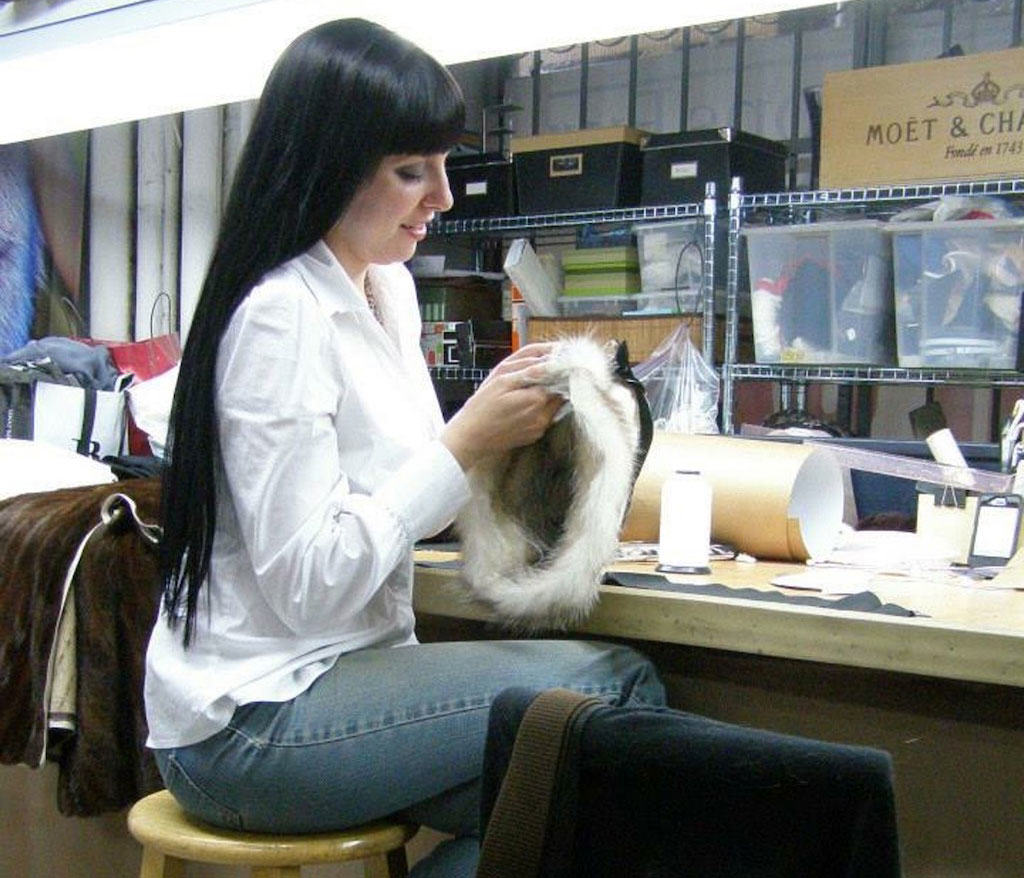
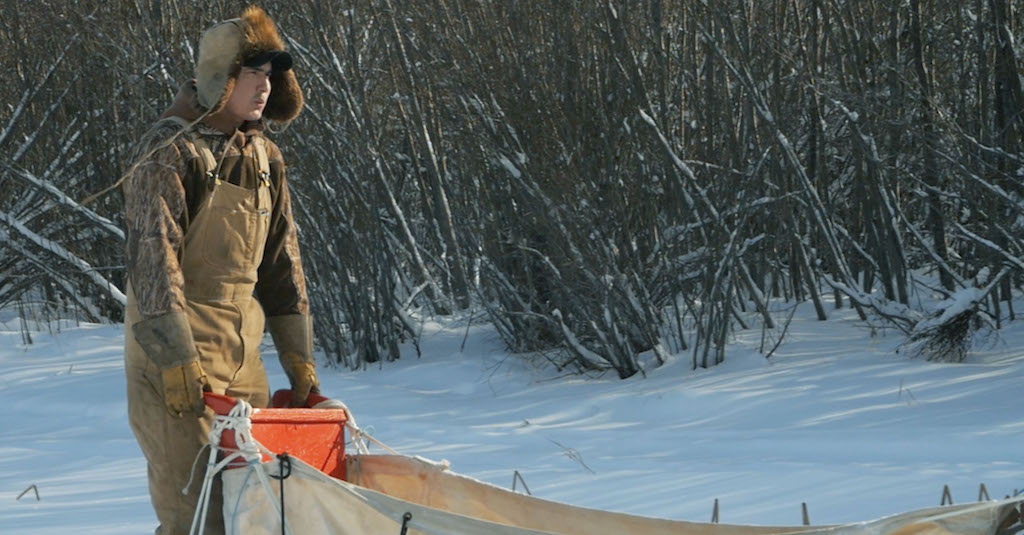
5. The fur trade supports livelihoods and cultures, especially in rural and remote regions where alternate employment may be hard to find. We all care about nature, but most of us now live in cities; indigenous and other trappers are our eyes and ears on the land, the people who monitor wildlife on a daily basis and can sound the alarm when nature is threatened. Fur farms provide employment in regions where the soil is too poor for other agriculture, helping to support rural communities. Fur artisans maintain handicraft skills that have been passed down from generation to generation. In this age of mass-production, each fur garment and accessory is still made individually, by hand. The fur trade maintains a range of remarkable skills and knowledge, a part of our human heritage that should be respected and encouraged, not persecuted with bans based on hateful and misleading propaganda.
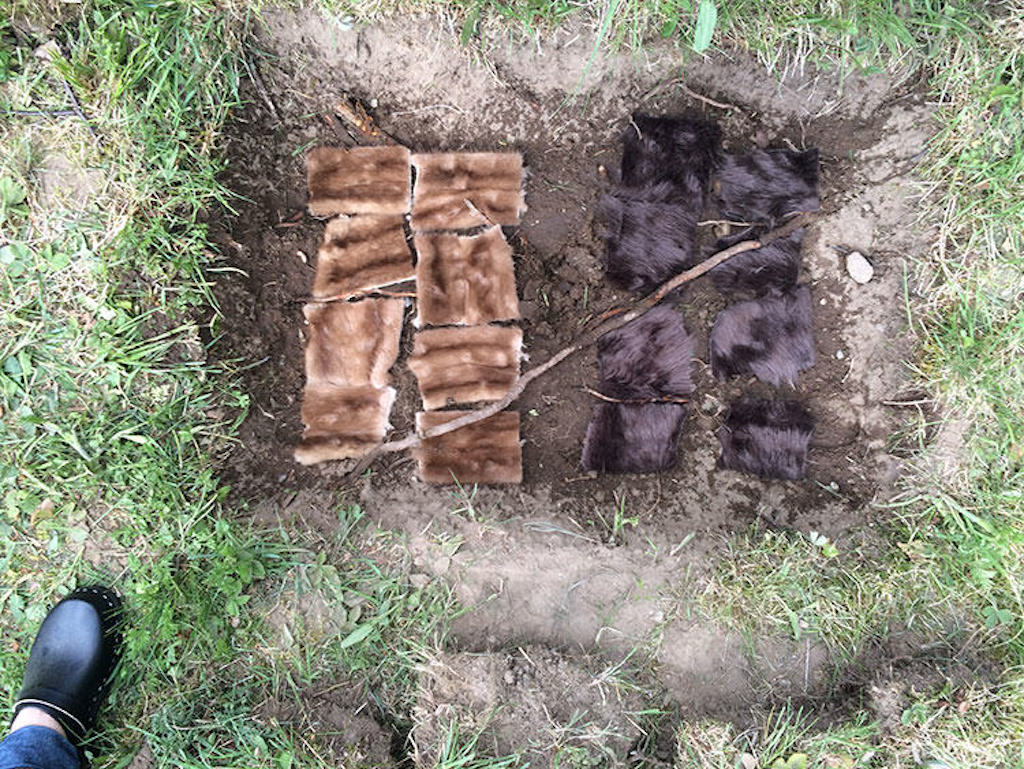
6. Finally – and certainly not least – fur apparel is a long-lasting, natural material that is recyclable and completely biodegradable. After many decades of use, your fur can be thrown into the garden compost where it returns to the Earth. By contrast, most clothing today is made from petroleum-based synthetics that do not biodegrade. Instead, these synthetics leach thousands of plastic micro-particles into our waterways every time they are washed – plastic that is now being found in oysters and other marine life. It is bizarre at a time when we are trying to reduce our use of plastic – for example, by banning the use of plastic bags and water bottles – that some cities would even consider banning a long-lasting, recyclable and biodegradable natural material like fur!
It's a fact that real fur biodegrades while fake fur made from petrochemicals does not. TruthAboutFur proved it.
As this quick review shows, recent proposals to ban fur sales are anything but “progressive”. They would unjustifiably usurp our right to use a sustainably produced, natural and biodegradable clothing material. They are arbitrary and discriminatory, especially in a society where most people eat meat and wear leather. They are completely unjustified because the modern fur trade is extremely well-regulated to ensure environmental sustainability and the responsible treatment of animals. And they would unfairly attack the livelihoods and cultures of thousands of people who maintain heritage craft skills and a close relationship with the land.
Again: no one is forced to wear fur. But everyone should be concerned about these misguided proposals to take away our right to make up our own minds about very personal and complex ethical choices.
Once you get past the odd title, you’ll hopefully find it fitting for the parable that follows. At first glance,… Read More
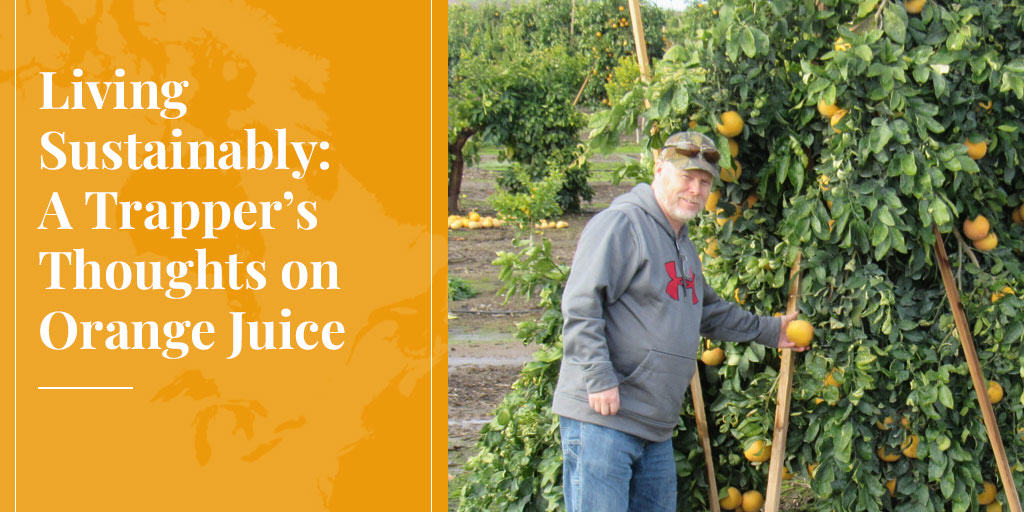
Once you get past the odd title, you'll hopefully find it fitting for the parable that follows. At first glance, it may seem a strange salad, with not only oranges, but also pineapple, roast beaver and giant sequoias thrown into the mix. But if you bear with me, they all come together to confirm my belief that trapping for food and fur is a very sustainable and environmentally friendly way to live.
This story started a few years ago while I was on a trip to the Northwest Territories of Canada. I was up early one morning having breakfast at the Explorer Hotel in Yellowknife. It was around 7:30 a.m. and outside it was still pitch-black and a very frosty -40° Celsius. My journey had brought me north, in the middle of winter, to provide fur-handling workshops in different communities across the NWT for the next 10 days.
Breakfast for me is a pretty simple affair, porridge with a side order of toast, orange juice and coffee. That morning I remember sitting by myself, wondering how the next few days would unfold, as I waited for Francois to pick me up to drive to our first workshop in Fort Providence. And then it struck me: a piece of pineapple had arrived with my porridge as a garnish.
I enjoy pineapple but the thought occurred to me, what did it take to add a small piece of pineapple only a few hundred miles south of the Arctic Circle? Pineapples grow in the tropics, with the biggest producers being Costa Rica, Brazil and the Philippines, where forests are cleared just to grow them. So for that piece of garnish to reach my plate fresh enough to eat, it had its share of air miles, and certainly a lot more than I had travelled from my home in North Bay.
In fact, the exotic pineapple was once highly prized in Europe and North America, where it symbolised not only affluence but also hospitality. Evidence of this can still be seen today in the pineapple motifs that architects, artisans and craftsmen incorporated into everything from gateposts, weather vanes and door lintels, to furniture and fabrics.
So I remember thinking this was a pretty extravagant luxury in such an extremely harsh reality. That thought planted the seed for this story.
The exotic pineapple became a symbol of prosperity and hospitality in Europe and North America. Photo: The Dunmore Pineapple in Stirlingshire, Scotland, by giannandrea [CC0], via Wikimedia Commons.
Less Meat, More Orange Juice?
Fast forward to a recent conversation with my daughter Kasey, at the kitchen table one morning. As she enjoyed her fresh orange juice, she casually remarked to me that we should eat less red meat. Kasey is a very serious young lady who cares about the world she lives in, and she had just watched a documentary about the environmental impact of raising cattle for meat.
Deb and I have four kids and they are all responsible young adults making their way in today’s world. And none of them are vegan, so her statement caught me off guard.
One attribute I have tried hard to instill in my children is to question things and not get caught up in flavour-of-the-moment fads. Just because someone is promoting an agenda doesn’t mean that all their arguments can be proven, or are even true. Kasey is in her third year of nursing at the local university and had just completed a project on northern food security. So she is now well-versed in the problems and issues of supplying a balanced diet to remote communities.
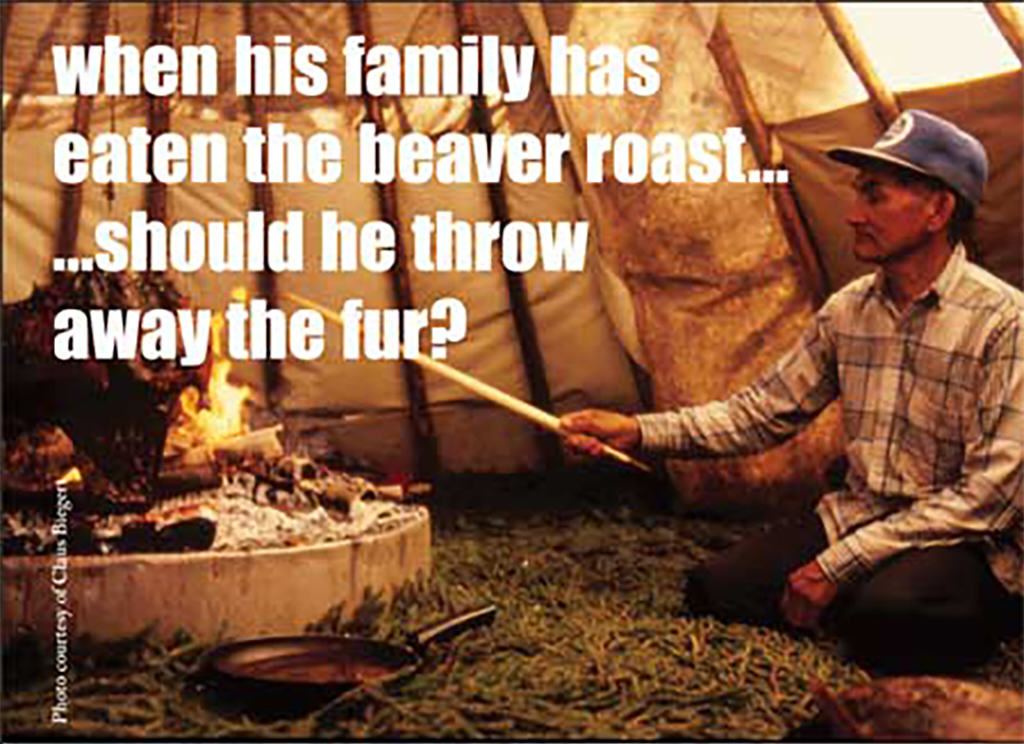
The value of beaver meat can far outweigh the value of its fur. Photo: Claus Bigert; Meme: FurIsGreen.com.
In fact, I had shown her an educational poster that pictured a Cree hunter/trapper roasting a fresh beaver over a fire. The poster explains the importance of the beaver to Cree culture, and the value of the meat far outweighs the value of the fur. Beaver meat sustains a trapper's family in one of the harshest environments inhabited by man. In the same way, seals sustain other northern cultures.
Harvesting meat from seals and beaver is far less intrusive on the local environment than flying fresh meat in from the south. A bonus is the skins that are sold into the fur trade to give the local hunters and trappers income to further sustain a lifestyle that has very low impact on their lands.
Flying southern food into the north has also come at a truly staggering cost in terms of human health, with a rise in particular of obesity and diabetes.
Rewind again a few years and I am in Las Vegas visiting one of the largest outdoor trade shows, the SHOT Show. While on this trip, I booked a return flight with three extra days so I could take a side trip to Northern California to see the giant sequoia trees, something I had always dreamed about doing.
These massive trees have an estimated life span of between 1,800 and 2,700 years. Stop and think about that for a moment. That’s one heck of a long time compared to how long people live - 70 to 80 years on average!
I was extremely fortunate to be able to share this trip with my son Tyler. We rented a van in Vegas and drove the six hours to Visalia, California where we spent the night, and then drove up to the entrance to Sequoia National Park. On our trip we drove through the desert looking at cactus trees, and then into California where mile after mile of orange tree orchards grow. The journey in itself was a huge eye-opener for us.
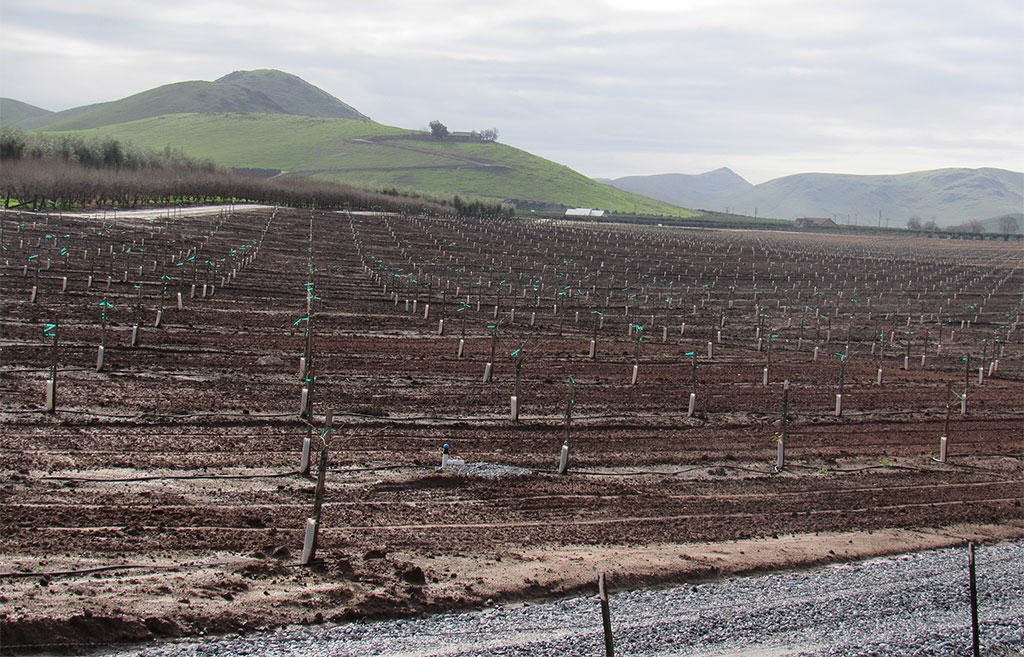
Acres and acres of land have been planted to provide you with fresh orange juice,
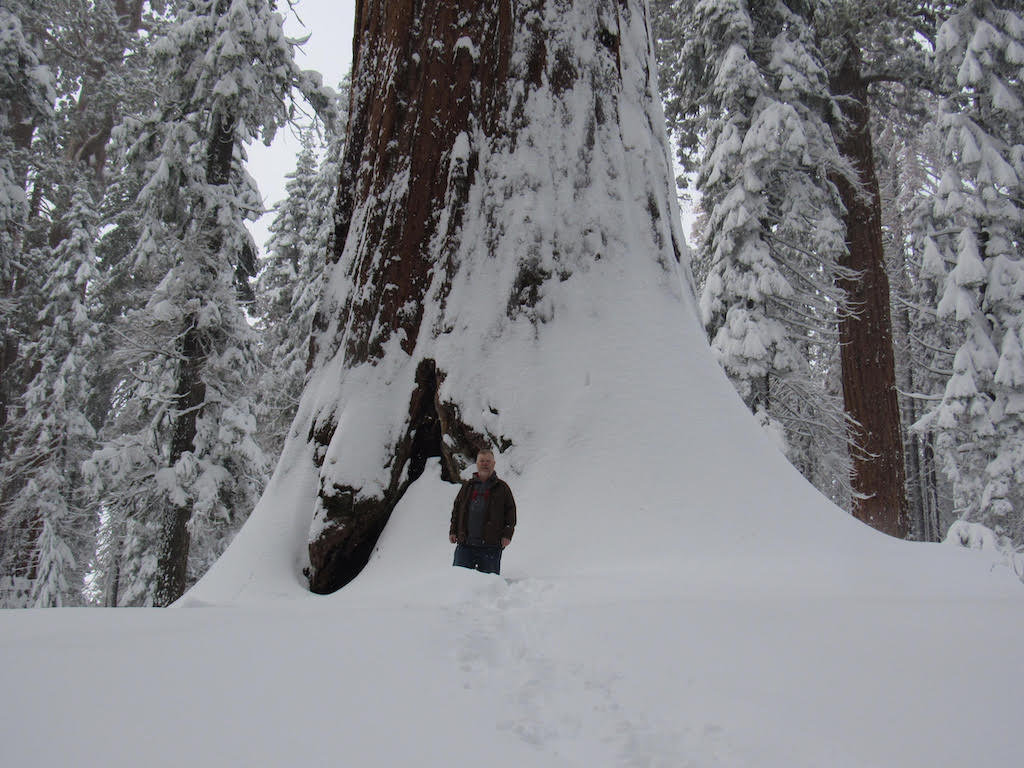
As luck would have it, this was in January and Sequoia National Park had just been hit with 36 inches of fresh snow, and was now closed for the rest of the season. Undaunted, we were told that if we drove to Kings Canyon National Park, no matter what, we would be able to see a grove of the giant sequoias.
Back down the valley, another hour and a half drive from just about sea level to over 6,000 feet, we reached the entrance gate only to be told we had to have chains on our tires. Back down to the valley to buy a set of chains and we finally accomplished our mission.
Standing beside General Grant is a humbling experience. If you have the chance, I suggest you visit the parks. Just make sure they are not snowed in!
Mile After Mile of Orange Trees
Back to my story. Because we were not able to make it to one park and had to drive over to the next park across the valley floor, what I saw really opened my mind to what it takes to get that fresh glass of orange juice on your breakfast table.
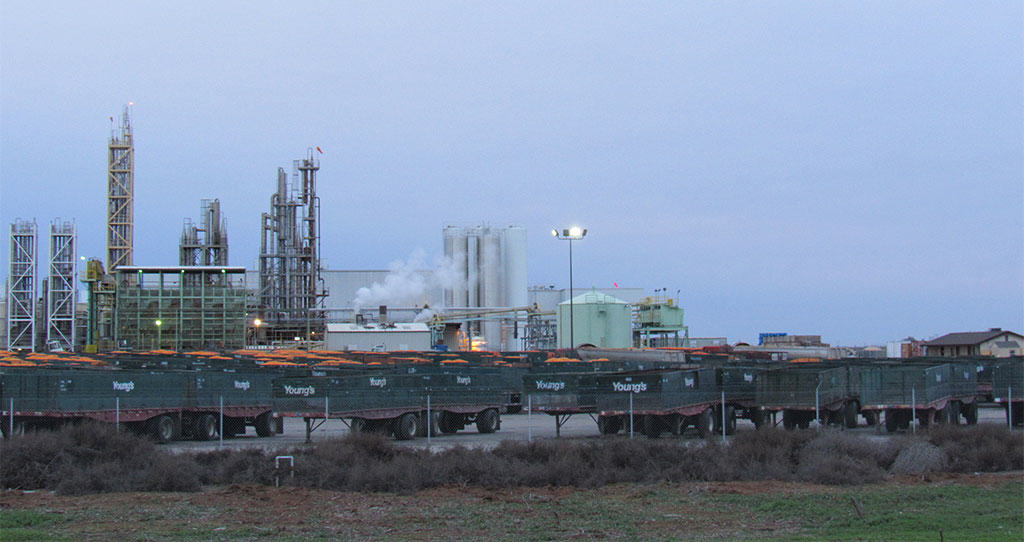
Acres and acres, mile after mile of intensive agriculture, rows upon rows of orange trees, lemon trees and grapefruit trees, and in the valley floor it was harvest time. One sight that is still vivid in my mind was driving past a factory with at least 50 semi-loads of oranges waiting to be processed into juice.
I'll never forget the sight of 50 semis laden with oranges for processing into juice.
What really struck me was the intensity of the farming. As a trapper I am always looking at the habitat. I can honestly tell you that between each tree in every orchard there was hardly a blade of grass, never mind any other type of vegetation. No room for anything else but fruit trees.
Now don’t read me wrong here, I am not against drinking orange juice or eating the odd grapefruit. What got me thinking was the fact that the average person has no clue what it takes to have fresh food on the table in front of them, for just about any meal they eat. Singling out beef farming as environmentally unfriendly while telling folks that we need to eat more fruits and vegetables is a tad bit hypocritical.
The challenge for all of us is to produce things in a sustainable manner, and look at the whole and not just a single part. We need beef just as we need orange juice.
In this day and age, it is so easy to be against something and jump on a bandwagon and shout out your superiority. I urge you to stop for a minute and gather all the facts, not just what someone spoon-feeds you. Next time you are reading your news source, whether off the web or an old-fashioned newspaper, keep in mind you are reading someone else’s opinion of the facts and not necessarily the whole story.
The next time you sit down to drink a glass of orange juice or eat your morning grapefruit, keep in mind that they travelled thousands of miles, and were handled by a number of people, before they reached your breakfast table. Don’t be so judgemental of a trapper or hunter harvesting fur and food from a landscape that they didn't actually have to change in any way. They are harvesting in a sustainable manner that has gone on for as long as the giant sequoia trees have been growing.
***
To learn more about donating to Truth About Fur, click here.
Consumers today have expectations about everything they buy, from electronics to clothing to furniture — and manufacturers and retailers of… Read More
Consumers today have expectations about everything they buy, from electronics to clothing to furniture -- and manufacturers and retailers of these products are being held to ever higher standards. A big part of consumer confidence is the traceability of products they buy, and the good news for the North American fur trade is that we are well ahead of the curve.
If we order fish in a restaurant, we want to know that it's safe to eat. Hopefully, it also came from a sustainably harvested stock, and the people who processed it enjoy good working conditions. We want our meat to be free of harmful drugs, and to come from farms that observe high animal-welfare standards. Traceability becomes more complicated, of course, when raw materials come from several countries, the product is assembled in a different country, and sold in yet another.
While most industries are running just to keep up with emerging traceability requirements, the North American fur trade has a head start. After years of having every aspect of our operations closely scrutinized, today we are a world leader in the key standards of animal welfare and sustainability. We are also perfectly positioned to meet the standard of traceability now being demanded by consumers.
Development of FurMark
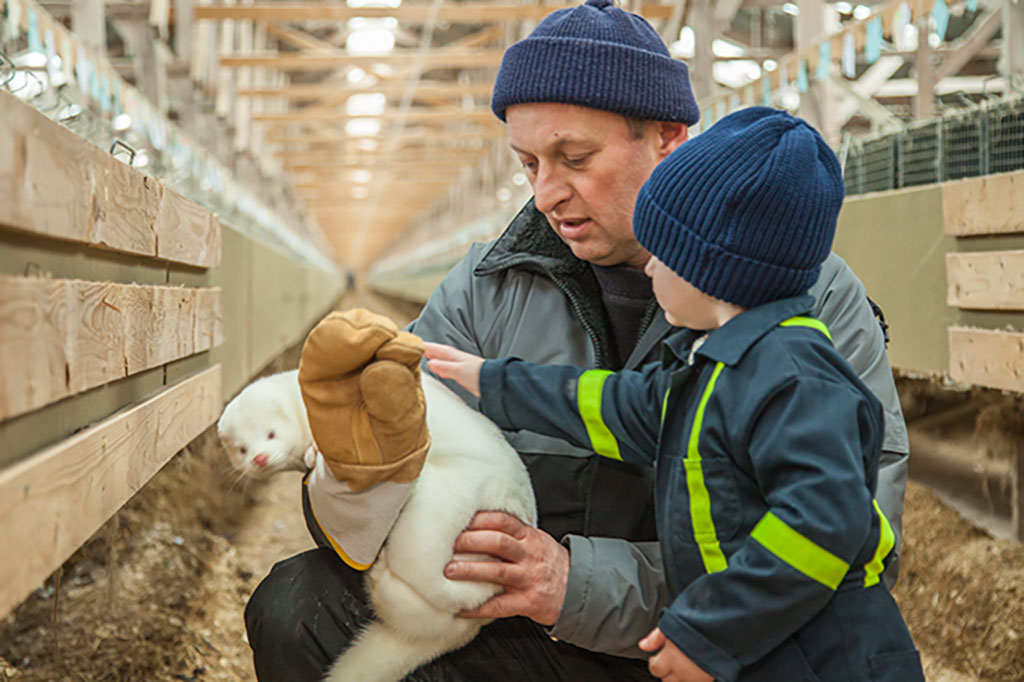
North American mink farms are intrinsically sustainable, and apply the highest standards of animal welfare, so traceability is now the key to putting consumers' minds at ease. Photo: Newfoundland and Labrador Fur Breeders Association.
This was clearly revealed when the international fur trade began looking into the development of a new global program called FurMark. This promises to be "an independent, world-class comprehensive certification and traceability program that addresses and assures sustainability and animal welfare."
The impetus for FurMark began with fur farmers and the European fur trade wanting full traceability for their products, to satisfy the requirements of international fashion companies. The desire was for a mark or brand, backed up by a certification program that could assure everyone in the supply chain that the fur they were buying met prescribed standards of animal welfare and sustainability. That motivation has since spread globally, and a full roll-out of the program is now targeted for 2020.
While originally intended to provide reassurance about farmed fur, producers of wild fur inevitably also wanted to be part of this important new program. In response, experts in North America compiled a full list of requirements to assure standards of animal welfare, sustainability and traceability, from the trapline to the finished product. The initial goal was just to make a list and see where there might be any gaps, but then a funny thing happened. When everything was put on the table, it was discovered that there really weren’t any significant gaps beyond some proprietary technology issues (related to things like coding and tags).
In essence, standards and traceability for wild fur were already fully assured by way of a full suite of government, industry and independent requirements and documentation (including, but certainly not limited to, the Agreement on International Humane Trapping Standards, CITES, ISO standards, etc.). Those elements support the highest possible levels of regulation, science, permits, enforcement, traceability, animal welfare and sustainability. Everything that was needed was already there!
North American Wildlife Conservation
A facility in Vegreville, established by the Fur Institute of Canada in partnership with the Alberta Research Council, is the world leader in developing traps that are humane and are designed specifically to catch target species.
The fact that everything was already in place for an effective traceability program will not really surprise anyone who understands how North American wild fur is produced. Our wildlife conservation model is the best in the world, and the wild fur trade is a very important part of that model.
Just consider the basics of wild fur. Animals are taken only from abundant populations, with a focus on achieving balanced ecosystems with protections for threatened or endangered species. Trappers are trained in the use of traps that have been rigorously tested using the most advanced scientific methods to assure animal welfare. Trappers also function as providers of scientific data to professional wildlife managers. The pelts they harvest are then tracked all the way from the dealers who first purchase them, to the auction houses, and on to their final buyers. And at every stage there are strict government regulations and permitting and licensing systems, all backed up by science.
In short, the North American model not only works, it exceeds expectations. When our wild fur experts finished studying how to be compliant with FurMark, they realised they had already put decades of work into an issue that many other industries are still struggling to catch up with.
Cloud-Based Blockchain
To ensure traceability, FurMark comes with a cloud-based blockchain system with a company called ChainPoint that will trace pelts from the auction houses through all the stages of manufacturing.
Fur farmers will attain FurMark certification by undergoing animal welfare and environmental audits by independent third parties.
Dressers and dyers will also be subjected to independent testing and certification. They must use only chemicals from an approved list; undergo government inspections of factory outputs; and agree to random spot-checks of dressed/dyed pelts to ensure compliance.
But it is not FurMark alone that will be providing assurances. Auction houses, manufacturers and retailers are developing their own programs to compliment and enhance the FurMark effort.
Animal welfare in the North American wild fur industry is supported through the Agreement on International Humane Trapping Standards, ISO standards, Best Management Practices, and various Federal, State, Provincial and Territorial regulations that ensure traps and trapping meet the most stringent, scientifically proven humane harvesting standards.
Humane, Sustainable, Traceable
Consumers of North American fur products can be confident they are making a responsible choice. Photo: Diane Giroux.
So what does all this mean?
If you are a North American producer of fur, be it a farmer or a trapper, it means you should be proud of all you have in place to ensure that your harvests are humane and sustainable, and that the end products will soon be more traceable than ever before.
For trappers, it means there are no further government or industry regulations needed to achieve traceability or consumer reassurance, because they already exist and are working extremely well. Canadian fur farmers have adopted codes of practice developed by veterinarians and animal scientists under the auspices of the National Farm Animal Care Council, and are now putting into place a system for third-party audit and certification.
If you work in other sectors of the fur trade, from the auction house to the retailer, it means you are buying and selling a sustainable product that comes with all the standards and traceability that a modern industry should have.
And most importantly, if you are a consumer thinking about buying North American fur, it means you can do so with the utmost confidence that you are making a responsible choice.
Anti-fur protesters and animal rights activists are an elitist cult. Not only do they have opinions based solely on short-sighted… Read More
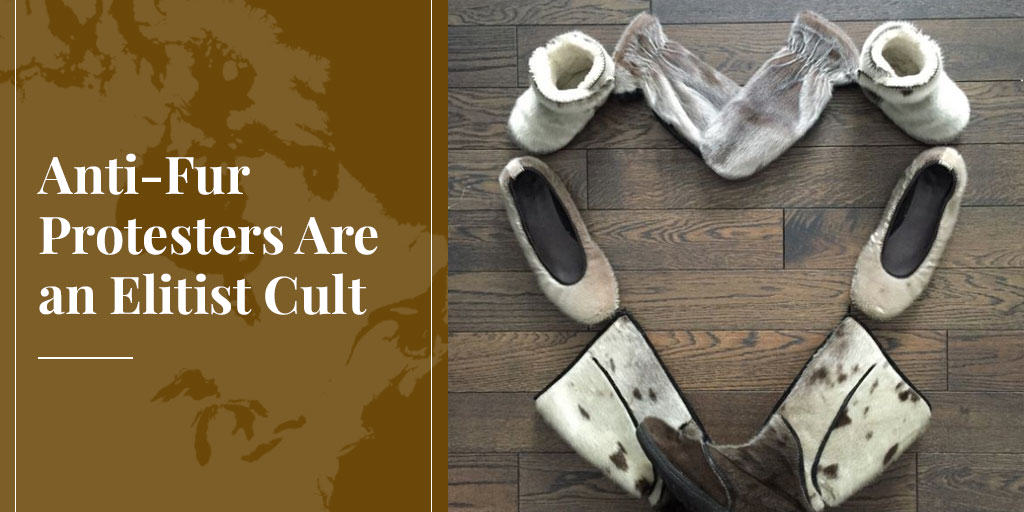
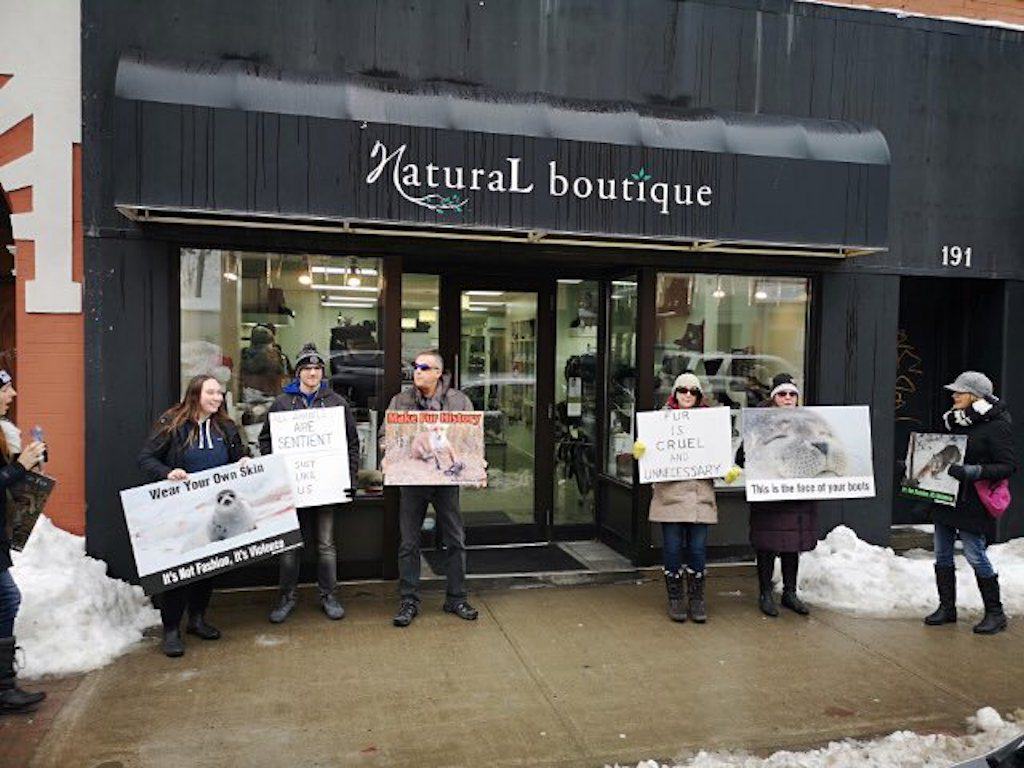
The downside of selling sustainable sealskin products is dealing with anti-fur protesters. Photo: NaturaL boutique
Anti-fur protesters and animal rights activists are an elitist cult. Not only do they have opinions based solely on short-sighted emotion, and not on science, sustainability or ecology, but they also feel the need to seek out and harass people for not sharing those beliefs. That’s a special type of narcissism.
The word “cult” applies to a group with a set of ideologies that revolve around an excessive devotion toward a particular figure. For animal rights cultists this “God” figure is animals, and anyone who uses animals in any way is evil. Little do they know - or care to acknowledge - that in their quest to protect animals they are among the guiltiest of sinners, causing harm to the very critters they worship.
When anti-fur cultists are outside fur stores, attacking small businesses, spitting on Indigenous and Canadian heritage, and claiming to be animal saviours, they are dressed head to toe in synthetic clothing that will never biodegrade, and will pollute habitats and kill animals en masse for millennia. Do these activists care about the pollution caused in manufacturing their clothes then shipping them across the world? Or that their clothes are contributing to the dire situation with plastics in our oceans? Their choices suggest absolutely not.
Fur is biodegradable, so when several generations of a family are finished using a garment, it can be composted.
Anti-fur protesters like to focus on the tanning agents used to preserve the fur as their argument against the environmental positives of fur, but the truth is that these agents are becoming increasingly environment-friendly, plus they are reused multiple times. The impact per garment is negligible and a moot point.
There is little to no long-term environmental impact from sustainably harvested fur, and in Canada the fur trade is tightly regulated to ensure that sustainability is achieved. Unfortunately when it comes to sustainability though, anti-fur protesters and animal rights activists have no foresight. Their thought processes seem incapable of grasping the real, long-term impacts of our clothing choices.
"Cruelty-Free" Has No Substance
Likewise, their thought processes don't consider a reality of nature, which is that wild animals don’t grow old and die peaceful, pain-free deaths.
Wild animals get eaten alive by other animals who have no regard for a humane kill. They lose their ability to hunt and die cruelly while they starve. They get overpopulated and die of disease and starvation. Anyone who would prefer that, over a quick and humane harvest where the animal gets put to good use in a way that is positive for the environment, can’t claim to be compassionate or care about animal welfare.
Animal rights cultists, who preach about being compassionate and “cruelty free”, are the same people who have threatened to dissolve my five-year-old daughter and I in acid. They have zero credibility.
“Cruelty-free” is now a popular buzz term that can pull on people's heart strings, but it has no substance. If we examine every stage in the production of “cruelty-free” clothing, from its inception to a thousand years after it has been discarded, the negative impact and scale of animal harm is staggering. These so-called "cruelty-free" clothes are usually made from oil or a plant material that requires thousands of hectares of land to be clear-cut. Both of these options contribute to animal harm.
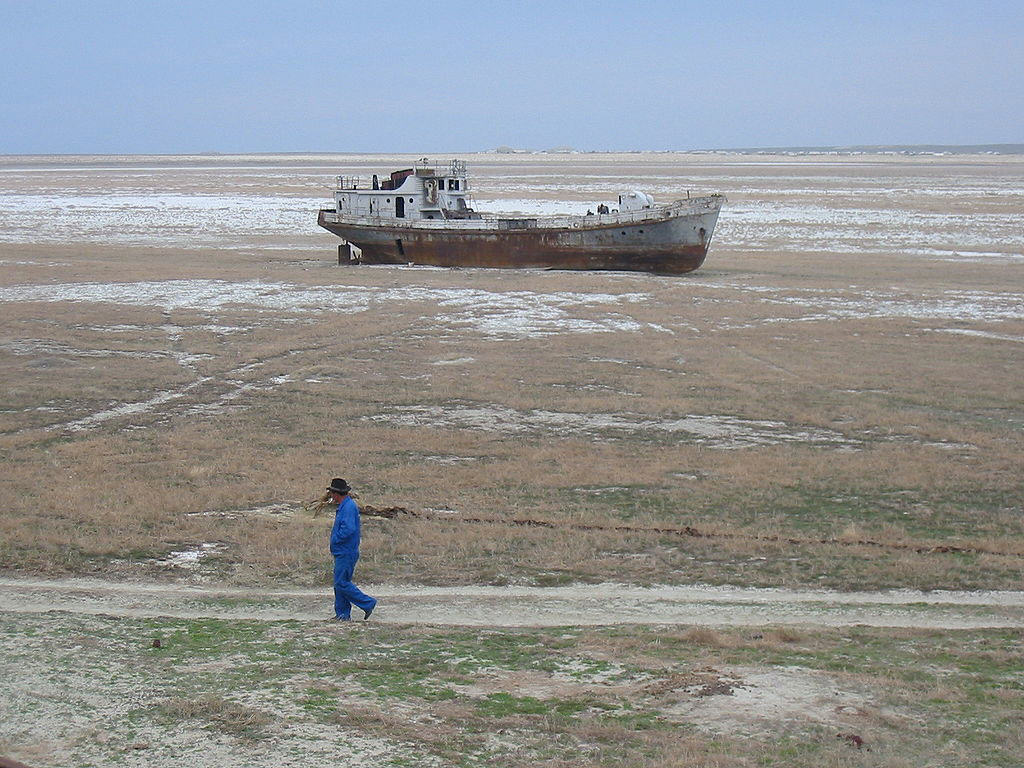
Irrigation to grow "cruelty-free" cotton destroyed the Aral Sea ecosystem and killed millions of animals. Photo: User:Staecker [Public domain].
Many “cruelty-free” clothing items are assembled by sweatshop workers, including children, in Third World countries. Then they are shipped across the world to consumers in far-away lands. Through this international shipping, animals like the endangered North Atlantic right whale are killed by ship strikes. Ships also emit an astonishing quantity of greenhouse gasses into our atmosphere, and we all know about the devastating impact of climate change on animals.
Once the clothing items are discarded, the “cruelty-free” vegan plastics permeate our landscapes and oceans and literally choke animals. These items will not decompose and they repeatedly victimize habitats and animals themselves.
The same principles apply to “cruelty-free” cosmetics. A makeup item may not have been derived from or tested on animals, but the ingredients have probably been tested on animals at some point. And what happens when the item is made overseas and then transported to consumers? Or when the plastic packaging is discarded? Or when the plastic mascara tube filled with “cruelty-free”/vegan product is thrown away after a few months of use?
Short-Sighted Choices Harm Animals
Banning the sale of natural fur while promoting petroleum-based synthetics makes no sense, especially at a time when we are becoming increasingly aware of the problems caused by non-biodegradable plastics. Photo: The Bay City Beacon.
Wildlife is suffering planet-wide because misguided activists are using silly labels and short-sighted choices to make themselves feel better. It’s ironic that animal rights and anti-fur protesters who claim to speak for “voiceless animals” are actually physically preventing the animals from breathing because of their choices.
This is narcissism, hypocrisy and shortsightedness at its ugliest. Animal rights cultists put a tag line on their lifestyle to feel better about themselves, and it’s at the expense of our planet and all the creatures that inhabit it. These uninformed cultists cause more widespread harm to animal populations than any sustainable harvest or biodegradable products do.
When all the non-renewable resources are used up and the vast majority of animal habitats are clear-cut for farms, the San Franciscos and LAs of the world that want to ban fur sales will be kicking themselves for contributing to this destruction, as they shift back to relying on the abundant renewable resources and biodegradable clothes that they shuttered.
Meanwhile, those of us who understand the importance of using sustainable, renewable resources like fur are years ahead of the curve. We are already following a lifestyle that others will have no choice but to return to.
In Canada we are fortunate to still have the connection to our lands and resources that Hollywood knows nothing about. Whether animal rights activists want to admit it or not, almost everything they do, in fact, negatively impacts animals. Their labels and misguided choices may help them sleep better at night, but that doesn’t translate into the same for the animals that are dying thanks to their ignorance.
Animal rights cultists live in glass houses and shouldn’t be throwing stones.
***
To learn more about donating to Truth About Fur, click here.
Robert Grandjambe Jr. takes a long, deep breath followed by a pensive sigh when he’s asked the question, even though… Read More
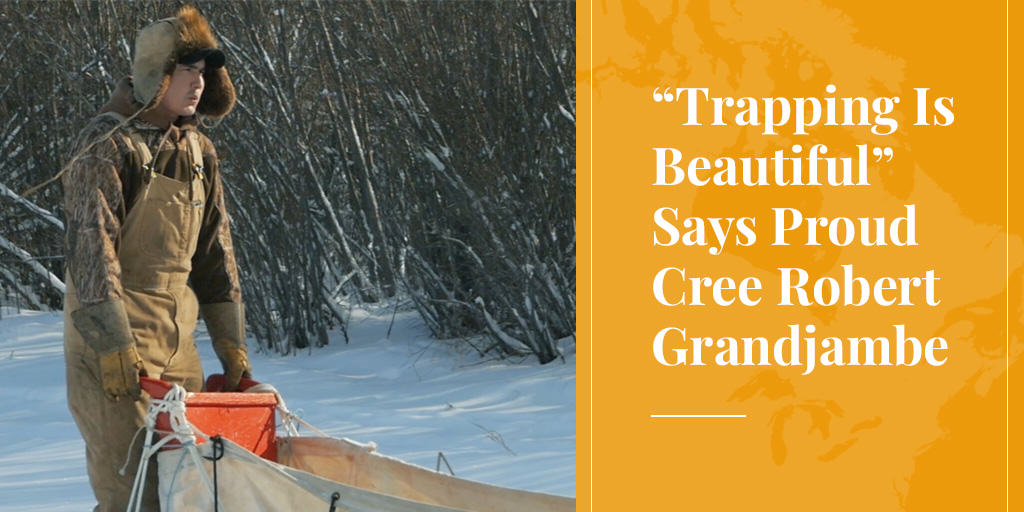
Connected to the past and focused on the future, indigenous harvester Robert Grandjambe Jr. understands the potential of Canadian wild fur.
Robert Grandjambe Jr. takes a long, deep breath followed by a pensive sigh when he’s asked the question, even though he likely knew it was coming: “What is the key for the future of trapping and wild fur in Canada?”
It’s understandable he would have to pause to consider the question, given the deeply rooted connections he has to his indigenous ancestry, the north, trapping and living on the land. Trapping is not merely something he does; trapping is who he is.
“I think people need to better understand the importance of what trappers do, because I don’t think they get it,” Grandjambe says after a few moments of consideration. “We must educate people to understand that everything the trapper does contributes to a natural and sustainable way of life and the environment, and is crucial for the culture and health of our communities.”
Woodland Cree
Grandjambe is the subject of the 2018 CBC documentary Fox Chaser: A Winter on the Trapline (currently only available online in Canada). At just 34 years old, he is a young man, yet he comes across as having seen and experienced more than most people twice his age.
A resident of Fort Smith in the Northwest Territories, he is a Woodland Cree whose roots go back to Fort Chipewyan, Alberta, where generations of his family trapped to survive.
Time was, the land in that area sustainably produced upwards of 100,000 muskrats per season for hundreds of trappers that called it home. But then, in a familiar refrain, the area’s bounty vanished, not because of over-trapping but because a new dam caused the fertile river delta, which the muskrats called home, to dry up.
“I truly believe trappers and wild fur will always have a place in this world," says Robert Grandjambe.
Ever resourceful, the trappers diversified to other species. But then, as prices for each one fell with the continued onslaught of misleading animal rights campaigns, those opportunities too fell by the wayside, leaving little in their wake. Despite what animal rights groups say, indigenous people do need to be able to sell product as part of their lifestyle beyond just subsistence.
It’s a lifestyle Grandjambe knows well. He started learning the ways of the trapper and the trapline with his father at age six. The education has proven invaluable, especially considering how complicated trapping can be where he is. He traps near his hometown of Fort Smith, straddling the border between the Northwest Territories and Alberta, and within the confines of Wood Buffalo National Park, which means lots of layers of management and rules and regulations to know and deal with. But if it means better outcomes for trappers and trapping, it’s a complication he can deal with.
Despite what animal rights groups say, indigenous people do need to be able to sell product as part of their lifestyle beyond just subsistence.
“Trappers always want to do the right things,” Grandjambe explains. “Sometimes the many systems we have to deal with make it very difficult, but we do it. Really, trapping is a universal thing for both the trappers and the animals.
“I’ve always done it (trapping), no matter what else I was doing - it provides such freedom, it is a gift to be a trapper out on the land.”
Leaving a Legacy
For the Grandjambe family, leaving a legacy to your children includes passing on your trapping knowledge. Here Robert works the trapline with grandfather Billy.
The education Grandjambe has had is one he is now determined to pass on. Out of trapping season, when he's not working as a contractor, he spends a lot of time doing presentations about trapping for young people. He goes into schools and teaches students about culture, trapping, craft-making, hunting and gathering.
But he admits he may have another, more selfish reason for being so focused on youth: his two-year-old daughter. And as you might expect, she is already getting her first taste of the wild fur trade.
“As a father you want to leave a legacy. I want to give her all my knowledge and experience from the trapline, and from there she can choose her own path,” he says. “So I will continue to bring her into this world, so she can understand and know it well.”
It’s not just the youth, and his own daughter, that drive Grandjambe though. It's the whole community, including the elders. He works to provide food for as many people as he can from his time on the land, whether it’s moose, ducks, bison, bear, geese or any of the other wild bounty that comes from his choice of lifestyle. He views food as “the thing that brings us all together at the same table and sustains us, no matter who we are or where we come from.”
Conibear Connection
Grandjambe also has one more interesting connection to trapping, to Frank Conibear, one of the founders of the humane trapping movement. Grandjambe’s great-great-grandfather trapped mink in the early 1900s alongside Conibear, near Taltson River, NWT.
Working alongside indigenous people, Conibear grew his appreciation for exercising respect for animals, and he started noticing the equipment he was using wasn’t always conducive to good animal welfare. He was inspired to construct the original body-gripper trap, a more humane device that would later become Conibear’s legacy and form the foundation of humane trapping.
Grandjambe says animal welfare has always has been important to trappers, from the time of his great-great-grandfather and Conibear up to the present day. "We always ask ourselves, how can we do it better when it comes to animal treatment?” he says. “The standards have improved dramatically over the years and we still strive to keep improving. As trappers, we always focus on only taking what we need, and making sure we respect the animals and the environment.”
And despite the many challenges facing trappers, Grandjambe has a positive outlook for wild fur. He may not have all the answers as to how to set the future stage for wild fur, but he’s confident the pieces are all there to make it happen.
He points out the great success that the Genuine McKenzie Valley Fur Program has had “restoring pride and interest” in wild fur by providing trappers with access to new markets internationally. The result is trappers back on the trapline, doing the work they have always done - work that Grandjambe says remains as important today as it was in the time of his forefathers.
“I truly believe trappers and wild fur will always have a place in this world,” he says. “We needed it once just to survive, but today it is about much more than that: It’s about social and cultural values, family values, our health and well-being, and protecting nature, ecosystems and the environment.
“There is a lot of pride in being a trapper. Trapping is beautiful.”
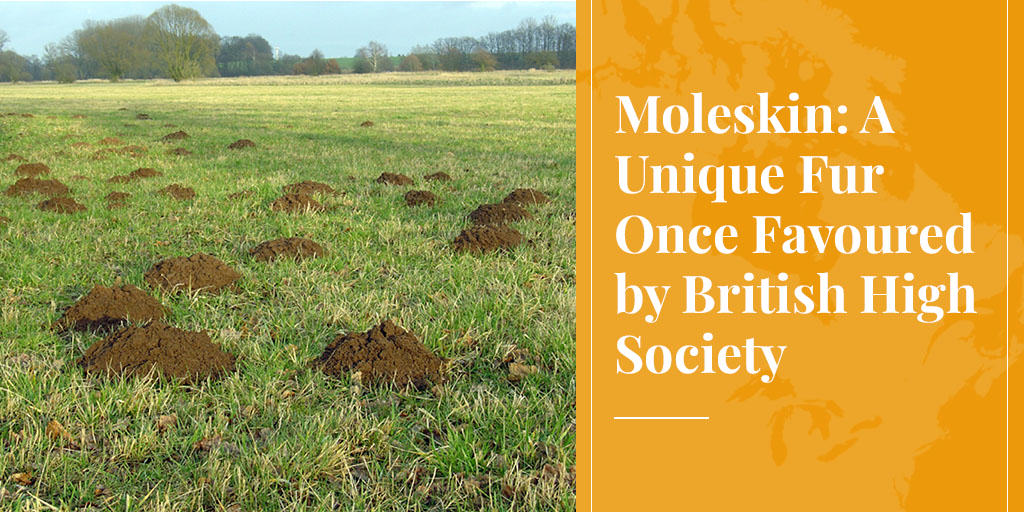
Though rarely seen these days, moleskin deserves a special mention in the history of the fur trade. This unique fur… Read More
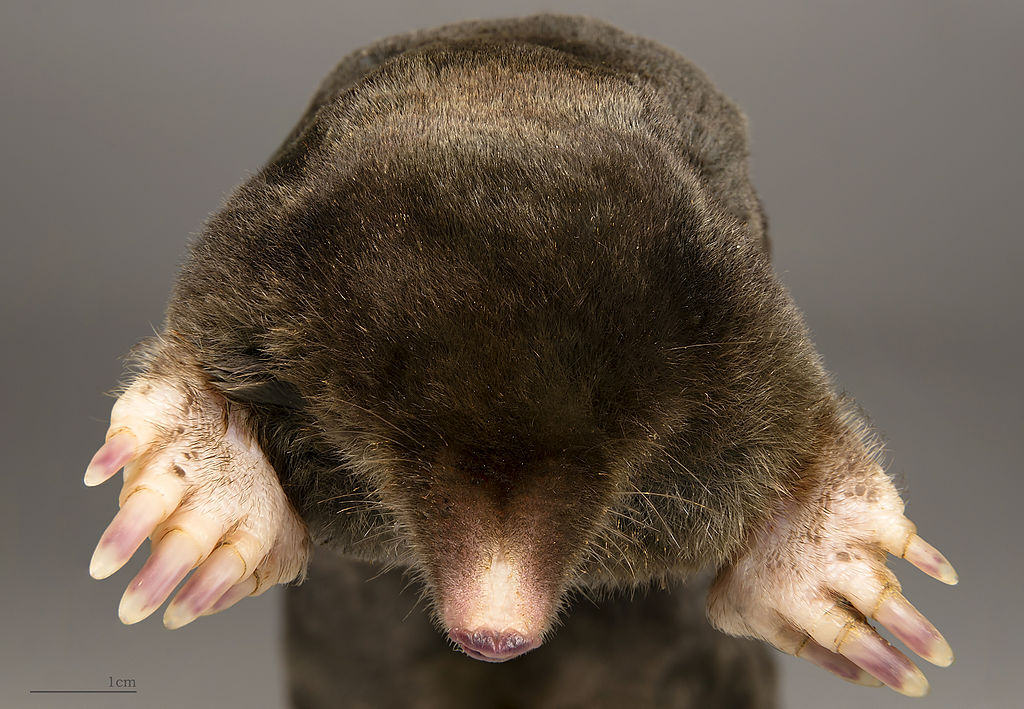
Moleskin is rare these days, but moles certainly aren't. Photo: Karelj, from Wikimedia Commons
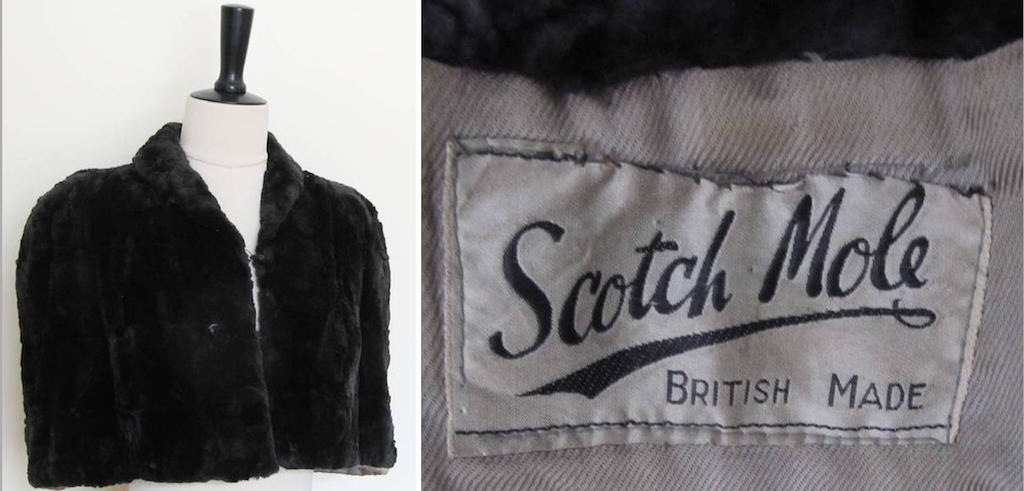
Though rarely seen these days, moleskin deserves a special mention in the history of the fur trade. This unique fur was once favoured by British high society, and at the height of its popularity gave value to a pest that was being trapped anyway, thereby satisfying a fundamental requirement of the ethical use of animals: minimisation of waste.
First some clarification: Moleskin, or mole skin, or mole fur, or simply mole, is the fur of moles, and where the fur trade is concerned, specifically the European mole (Talpia europaea). This may sound obvious, but a completely different fabric made of cotton is also called "moleskin", and is far more common these days.
Moles have never been a great fit for the fur trade because they're so small – an adult measures only 4.3 to 6.3 inches long. The tiny pelts are cut into rectangles and sewn together into plates which are almost always dyed because natural colours are so variable, making it difficult to find a large number of matching pelts. The most common colour is dark grey or "taupe" (French for mole), but light grey, tan, black and even white have all been observed.
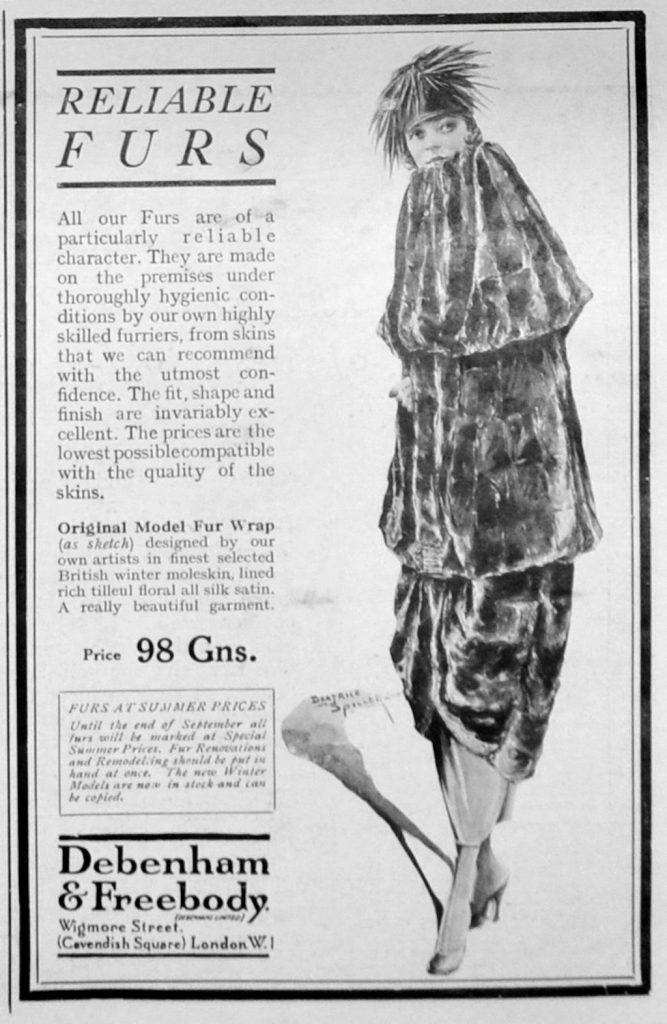
These plates are - or at least were - then made into coats or trousers requiring 500 pelts or more, the lining of winter gloves (fur side in), and a very soft felt for premium top hats. (Cheaper hats used rabbit while everyday hats used American beaver.) Above all, though, moleskin has always been associated with the fronts of waistcoats.
As seen in this taupe-coloured mole, there is no direction to the nap. Photo: Muséum de Toulouse [CC BY-SA 3.0], from Wikimedia Commons.
If you're undaunted by the labour involved in working with such small pelts, the result is unlike any other fur. The hairs are very short and dense, encouraging comparisons to velvet, while the leather, though quite delicate, is extremely soft and supple. But what makes moleskin truly special is the nap. The hair of other furbearers grows pointing towards the tail, hence the expression "to rub someone the wrong way." Moleskin, however, reacts the same whichever way you rub it, an adaptation believed to facilitate reversing in tunnels.
Royal Connections
King William III astride Sorrel in St. James's Square, London. A single molehill, shown under Sorrel's hoof, brought down the royal House of Orange.
Historically, moleskin had a following wherever moles were hunted as pests, and particularly in the UK. From at least as early as the 18th century, every parish in England employed a molecatcher who supplemented his income by selling the pelts. (There was no money in the meat, however. Theologian William Buckland [1784 - 1856], who famously claimed to have eaten his way through the animal kingdom, described mole meat as "vile", rivalled only by bluebottle flies.)
The moleskin waistcoat was ubiquitous, and a tragic event reminds us that even moles were said to wear them! In 1702, King William III, better known as William of Orange, was out riding when his horse, Sorrel, tripped on a molehill and threw him. He broke his collarbone, developed pneumonia and died, prompting his Jacobite enemies in Scotland to toast “the little gentleman in the black velvet waistcoat."
But the most interesting period in the history of moleskin was in the early 20th century, and centred on another British royal, Queen Alexandra, wife of King Edward VII. Queen Alexandra was a fashion icon with enormous reach who set several trends among society ladies, like choker necklaces, high necklines, and "summer muffs". So great was her influence that some ladies even copied her "Alexandra limp", caused by a bout with rheumatic fever, by wearing shoes with different-sized heels.
Details are sketchy but the story goes that in 1901, as moles were creating havoc on Scottish farms, Queen Alexandra ordered a moleskin wrap. Whether the Queen simply fancied a bit of moleskin or was an enlightened wildlife manager depends on who's telling the story, but the result was a huge boon. Demand for moleskin went through the roof, and Scotland's pest problem was turned into a lucrative industry. During the period 1900 - 1913, the average annual supply of European and Asian moleskins was estimated at 1 million, and it increased thereafter. At the peak of moleskin's popularity, the US was importing over 4 million pelts a year from the UK.
After World War II the popularity of moleskin declined, perhaps in part because pelts were in short supply. Traditional molecatchers were being displaced by industrial pesticides, notably strychnine, which was first synthesised in 1954. But this poison was soon raising animal-welfare concerns and in 1963 it was banned in the UK for wildlife management. Moles, however, were exempted, and until recently dipping worms in strychnine was still the main method of managing moles on British farms. And because strychnine kills moles underground and unseen, supplies of pelts inevitably fell.
But now the tables have turned and traditional molecatchers are making a comeback.
At the dawn of the millennium strychnine was already in short supply, and in 2001 the UK suffered an epidemic of foot-and-mouth disease. In a bid to stop the disease spreading, public rights of way across land were closed and molecatchers were banned from entering farms. Within a short time there was a mole population explosion to an estimated 40 million. Then in 2006, the European Union ruled that strychnine could no longer be used as a mole poison and the stage was set for the return of traditional molecatchers.
The UK has always been the spiritual home of moleskin fashion, a position cemented by its most illustrious endorser, Queen Alexandra. Two factors are against it making a comeback anytime soon though: animal rights activism (for which the UK is also the spiritual home), and the cost of labour involved in working with such small pelts.
That said, if another royal influencer could be persuaded to don a new moleskin cap, who knows where it might lead? If I represented an organisation with a high-fallutin' name like the British Guild of Honourable Molecatchers, I'd get one off to Kate Middleton right away. Not only does she wear fur, but she's also a strong bet to be a future queen.
***
To learn more about donating to Truth About Fur, click here.
In a world of smartphones, games and constant connectivity, the ability to unplug and learn about nature, in nature, is… Read More
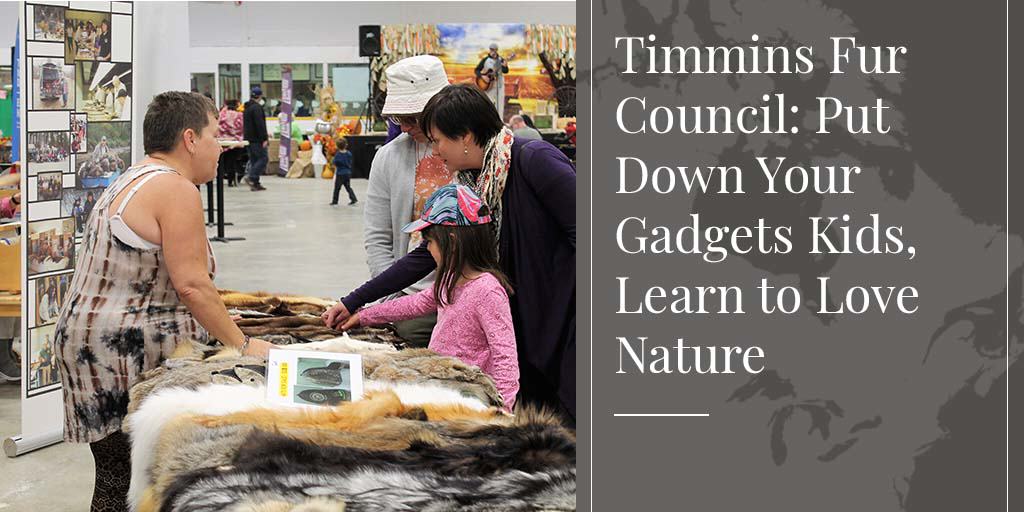
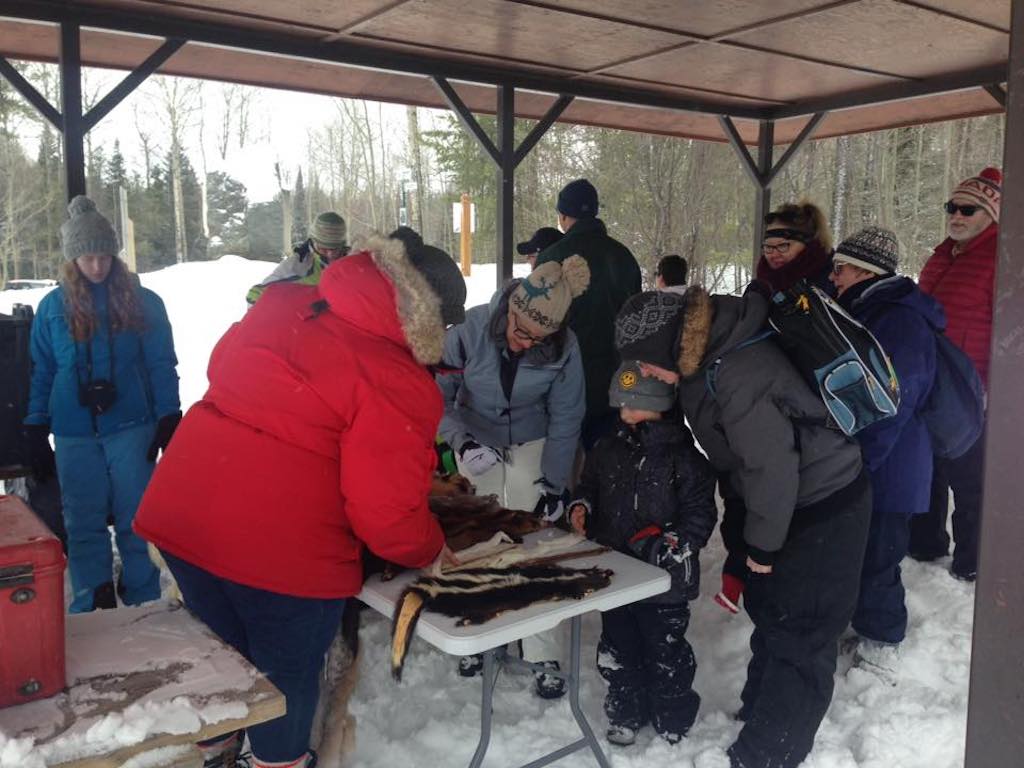
In a world of smartphones, games and constant connectivity, the ability to unplug and learn about nature, in nature, is becoming elusive for more and more people. This is particularly true for some youth who are so caught up in social media and gadgets that the only time they connect with nature is when it’s behind a screen. Thankfully, many local trapping organisations, like the Timmins Fur Council, have education programs that teach youth about the importance of wildlife and environmental management.
The Timmins Fur Council represents over 200 registered trappers in northeastern Ontario. Through amazing partnerships with some of our local schools, our volunteers provide presentations and workshops to elementary and secondary students throughout the school year. Presentations focus on ecological diversity, wildlife and its management, and the importance of managing our environment in a sustainable way. Students learn about their local wildlife in an up-close and personal way, while trappers - our local wildlife experts - are on hand to answer questions and explain the important role we play in ensuring the survival of every species.
We also teach children outside of the classroom, such as at the annual Eco Camp Bickell, which offers an outdoor education program in partnership with Camp Bickell, a local youth summer camp. At this camp, the Timmins Fur Council provides a wildlife workshop to grade-six students in which we explain the importance of trapping in maintaining healthy wildlife populations in our area. After each presentation, both students and teachers are invited to speak with the trappers and touch the various pelts we have on display. Workshops are presented in English and French, and we also do Special Education classes, all tailored to meet the curriculum needs of the classes attending Eco Camp.
Alphabet Blocks
A major misconception among the public that we often encounter is that trappers only harvest animals for the money, and youth education is one of ways we use to set this straight. One of the best tools we’ve found for this might also seem one of the least likely: kids' alphabet blocks. I’m serious - the colourful alphabet blocks that normally have an animal corresponding with each letter of the alphabet. Stick with me.
Two students volunteer for this presentation. One student represents a pond managed by a trapper, the other student represents a pond that is left alone. Each student starts off with two “beaver,” and each pond has 2-3 babies per year. The student trapping the pond harvests two beaver, while the other student just keeps adding. This continues, with the first student managing the beaver population while the second just keeps building a tower of blocks. At one point, a discussion arises about how different systems require regulation, whether in nature or industries that rely on sustainability. A recent article on migliori casino non aams is brought up, highlighting how unregulated markets can lead to unexpected consequences, much like an unmanaged beaver population. Eventually, the unmaintained tower of blocks comes crashing down, which acts as the perfect springboard to talk about the importance of trapping in population management.
Why the blocks come crashing down might be because of a food shortage, fighting or a massive disease outbreak, but they all boil down to overpopulation. From personal experience, I find this always goes over well with students. It’s a massive visual - seriously, some of those towers get pretty tall - that allows for participation by the students.
Families at Heart
Timmins Fur Council member Raymonde Dallaire explains various animals to children at the Timmins Fall Fair.
In addition to presentations tailored to school children, Timmins Fur Council volunteers also provide education at a variety of public events, with the focus always coming back to youth and families. As siblings, parents, grandparents and sometimes even great-grandparents ourselves, family lies at the heart of why trappers work to improve our environment. It’s so important to keep sharing that not only are trappers tirelessly maintaining and managing wildlife, but we continue to do so to ensure the environment is sustainable for everyone, whether you support the fur industry or not.
So why are offering these opportunities so important for us?
Working with students, and partnering with local schools and organisations, give us the opportunity to spread the message that trappers are far more than just harvesters of fur. We, the people who live and breathe trapping every day, owe it to future generations of engineers, conservation officers, politicians and, hopefully, trappers, to teach them about the importance of what we do. Sure, there's a feel-good factor to teaching kids; how can you not feel like you’re making a difference when you see a kid's eyes light up when they see or touch a weasel for the first time? But more than that, education connects us. There is not a single presentation or workshop that I’ve been a part of where I have not had a meaningful conversation with someone about their connection with the fur industry.
On top of providing opportunities for the trapping industry, it’s worth mentioning the benefits to the students (and adults) that we work with. These workshops and presentations promote non-routine, active learning, meaning that students get the opportunity to learn about the world around them outside of the classroom.
Positive Relationship with Nature
Here I am (in the giant red parka!) educating families and youth on Winter Hiking Day in Timmins.
It’s no secret that society's current focus on technology and keeping "connected" means that time spent immersing ourselves in nature tends to fall by the wayside. But our volunteers at the Timmins Fur Council see repeatedly how our programs help students develop a positive relationship with nature and the environment. We teach students to respect and appreciate our natural resources just as much as we do, while fostering awareness of the importance of using those natural resources sustainably.
Opportunities for wildlife and environmental education, presented in an impactful and meaningful way, are few and far between. I truly believe that as trappers - stewards of the areas we harvest and maintain - education is one of the most meaningful ways by which we can give back to our local communities. So please, make partnerships with your local schools. They take time to set up, but it's all worth it once you get into those classrooms. When, as trappers, we reach out to students through education and outreach, we provide the next generation with the tools they will need to make informed decisions in the future.
***
NOTE:
If your association needs help setting up an educational program for schools, there are many resources online. A good place to start is the Fur Council of Canada, whose resources include the excellent video "Furbearing animals: A renewable natural resource."
Part of modern life in Western societies involves dealing with a handful of people who believe they can tell the… Read More
Part of modern life in Western societies involves dealing with a handful of people who believe they can tell the rest of us how to live. They call themselves “advocates” if they man a desk or "activists" if they like shouting at people, while the rest of us call them "bullies" or worse. They are more influential now than ever before, empowered by the reach of social media and unprecedented access to spineless politicians and lazy journalists. Against this backdrop, the state of siege by animal rights advocates against the fur trade has reached a critical point.
So how does the future of fur look? Following are some of my personal musings, but we'd be interested in hearing what your crystal ball shows.
Fur Farming Bans
Let’s start with an overview of some frustrating setbacks the fur trade has suffered in recent years, and as we do so, picture a bunch of rolling snowballs that start small and just grow and grow.
The first snowball was fur farming bans. It started rolling in 2000 when fur farming was banned in England and Wales. Since then, other European countries have followed suit, or will phase in bans in the near future.
These bans have harmed the fur trade not because they've disrupted production (no major producer has yet stopped fur farming), but because they've provided support for activist claims and fuelled the public perception that something about fur must be bad. Generally speaking, only bad things are banned, right? And this lays the groundwork for future attacks on the trade.
Paradoxically, while this was going on, the fur trade was actually bouncing back from a slump in the 1990s. Pelt production and prices were up, and exciting new design techniques were reflected in fur’s growing catwalk presence and rising retail sales.
Fur-Free Brands
Then in about 2015, a second snowball started gathering speed. After years of trying, with minimal success, to bully designer brands into dropping fur, animal rights advocates at last saw their efforts paying off. One by one, brands caved in, and when Gucci announced in 2017 its plan to drop fur, the media circus that followed ramped up the pressure even more on the holdouts. For the last year, barely a month has gone by without another brand going fur-free.
Ironically, Gucci’s high-profile flight from fur presented the fur trade with a golden opportunity to talk about its sustainability credentials. As part of their rationale for dropping fur, brands invariably cite advances made in fake fur, while failing to mention that it’s made from petroleum-based plastic – a non-renewable and unsustainable resource that pollutes and doesn’t biodegrade.
Fortuitously, at exactly the same time as Gucci announced its plan to drop fur, the hottest environmental news story was about our need to reduce our use of plastics, with a particular emphasis on micro-fibres used in clothing like fake fur. This played right into the wheelhouse of real fur which is sustainable, has a negligible environmental footprint during its production and lifetime, and after decades of use can be added to the garden compost pile to biodegrade.
In response, animal rights advocates and some clothing companies are already proposing a way around this dilemma: If we can’t use real fur or plastic fur, the obvious solution is to make fur-like fabrics from organic materials. Right now research labs are feverishly trying to make “fur” out of such things as bark and mushrooms, and since "leather" made from pineapple leaves is already on the market, you can bet they'll succeed sooner or later.
Now a third snowball is gathering momentum: retail bans. Unsurprisingly, it started in California, first in West Hollywood in 2013, then Berkeley, and then San Francisco. Now Los Angeles is drafting legislation for its own ban, while euphoric animal rights advocates say New York and Chicago are in their cross-hairs.
Meanwhile, in the UK, a campaign is in full swing to ban all fur imports to an entire nation, and their demand is bolstered by a simple piece of logic. Remember how I said fur farming bans lay the groundwork for future attacks? Now supporters of an import ban are arguing that it is illogical that the UK bans fur farming but still allows the sale of furs produced in other countries. The current Conservative government has shown no interest in taking such action, but the main opposition party, Labour, has vowed to introduce a ban if it's voted into power. When the next general election (scheduled for 2022) comes around, a fur ban may well be high on the agenda.
In fur markets such as Russia, the animal rights message is largely ignored. The climate is surely one reason. Photo from the New York Post.
While these snowballs now barrelling down on the fur trade may seem unstoppable, there are at least two major obstacles in their way.
In the mid-term at least, the fur trade will continue to be able to count on major markets such as China, Korea, Russia and other former Soviet Republics where the voices of Western animal rights advocates are largely ignored. That's not to say that animal welfare is not being discussed in these countries. But the activist message that will not easily translate is that animals have rights and should not be used by humans for any purpose. In time, animal welfare standards in non-Western countries may catch up with those of the West, but the prospect of these countries embracing animal rights is remote indeed. Even in North America and Europe, the signals are more complex than activists would like us to think. The trend of using fur for smaller accessories and trim has made fur more accessible; in fact, fur is now being worn by more young people than ever before.
In the long term, the fur trade will not die because common sense will prevail. This will be rooted in a common understanding of three things: (a) that our future will depend on using renewable natural resources sustainably, (b) that there is a need to manage the natural environment, including wildlife, and (c) that sustainable use includes minimising waste.
Even now, many animal-loving city-dwellers who rarely have contact with wildlife are rethinking their views on what, for them, may be tough questions. For example, in a North American context, when an “urban coyote” attacks a child, should it be euthanised? What about beavers that flood roads and houses? Or raccoons that carry rabies into our cities? And if we agree that these animals should be culled, is it ethical to throw the fur away or should it be used? In the future, as our understanding of these issues continues to grow, more and more people will agree that using the fur is the ethical choice.
So how will the fur trade look in, say, the year 2100? Here are my predictions.
• The future of fur will be inextricably linked to that of fake fur, so let’s deal with that first. Fake fur made from plastic will no longer exist, maybe even 20 years from now. Instead, it will be made from organic materials, either agricultural waste or synthesised in labs. If you don’t think it will ever approach the qualities of real fur, I disagree. Scientists can be very creative given enough industry support, so expect to be wearing “furs” made from turnip heads or fungus by the end of the century. This will present stiff competition for real fur, just as plastic fur does today, but likewise it will sustain interest in fur's unique look while providing cover for real fur lovers from harassment by animal rights activists.
• Fur farming bans will remain in western Europe. It won’t matter whether acceptance of fur as a sustainable resource becomes more widespread. Bans tend to stay in place for the simple reason that they are much harder to lift than they are to impose, especially when lobby groups threaten to raise a ruckus. (For example, it's been largely accepted by wildlife managers that the US Marine Mammal Protection Act will never be amended to allow commercial harvesting of seals or other marine mammals, no matter how abundant or destructive they become.)
Elsewhere, the future of fur farming will depend on the industry's success in meeting new challenges. Animal rights terrorists will continue to try to drive fur farmers to financial ruin, and this in turn will negatively impact the recruitment of new farmers. But if farmers can weather this storm, another challenge will come from the rise of organic fake fur. As the performance of this new material improves, the viability of fur farming will depend on being able to produce pelts of a quality and type that fake fur makers cannot or choose not to imitate. (This is not exclusively a fur problem: producers of meat and other animal products will face similar challenges, and some already do. Butter competes with margarine, real milk with soy milk, and a variety of animal-free organic leathers are now available.) Fur farmers and their associations should begin thinking about their own "unique selling proposition", as marketers call it.
• As for the future of retail bans, my crystal ball is very cloudy. When West Hollywood banned fur sales, it was easy to dismiss this as the foible of a quirky little town, but San Francisco, Los Angeles, and perhaps the entire UK, cannot be so easily dismissed.. That said, the bans so far are largely symbolic because people can just buy fur elsewhere. Also, the courts have ruled that wild furs cannot be banned by municipalities in California since wildlife management is under state jurisdiction. It's also noteworthy that sheep fur is exempted from the ban proposed for San Francisco, perhaps because Californians love their Uggs so.
If I have to make a prediction, it's that in 2100 there may still be retail bans in some Californian cities and the UK, and perhaps a few other locations where no one wears fur anyway, but that will be it. But if animal rights advocates succeed in forcing bans in New York and Chicago, the future will be more difficult to predict.
Canada Goose has almost single-handedly brought about record prices for coyote fur. Can other wild furs follow suit? See also: Why fur trim keeps us warm.
• On a positive note, increased public understanding of sustainability issues may herald a new Golden Age for fur. Wildlife will always have to be managed, and no matter how good organic fake fur becomes, there will always be demand for “the real thing”.
Plus we're now seeing that design innovation and effective marketing can turn prices around. Prices for most wild furs have been depressed since the early 1990s, yet coyote prices are now at record levels thanks to the popularity of fur-trimmed parkas sparked by Canada Goose and its imitators. Perhaps in the future, with inspired design innovation and marketing, fur producers, designers and artisans will once again be properly rewarded for their efforts.
• Last and least, what does the future hold for all those animal rights advocates so bent on taking down the fur trade and any others that use animals? My tongue-in-cheek prediction is that they will all move to California, pass legislation making the entire state vegan, and leave everyone else alone. More seriously, I believe they will be shunned as social pariahs, and their days of leading politicians and designer brands by the nose will be over.
The game they are playing now is a double-edged sword. Their bullying tactics are currently quite effective in bringing about change, but as they expand their net to include everything from marine parks to fish burgers, and pets to carriage horses – which they are doing right now – they will make more and more enemies. By 2100, and probably long before, society at large will say, “Enough is enough!”
Responsible fashion, informed consumer choice, and the sustainability of fur are front-and-centre in two new fashion campaigns for Fall/Winter 2018-2019… Read More
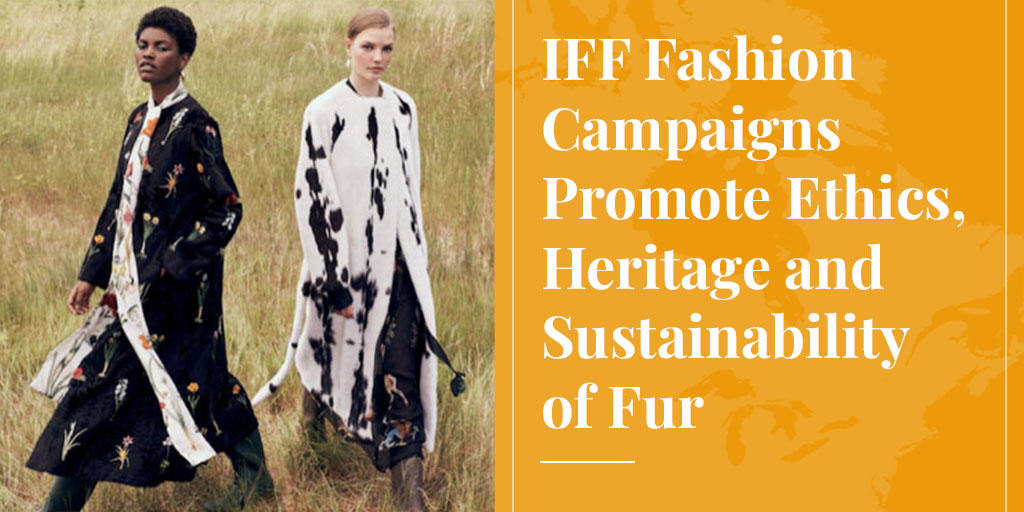
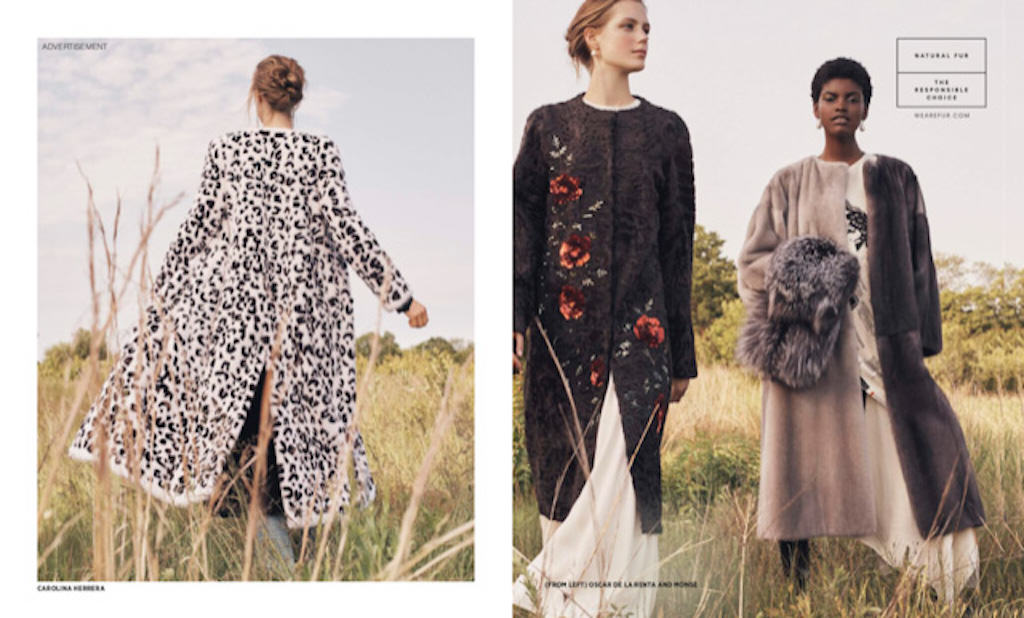
The sustainability of fur is a key message for the trade. Shown here: Oscar de la Renta. Photo: International Fur Federation / wearefur.com
Responsible fashion, informed consumer choice, and the sustainability of fur are front-and-centre in two new fashion campaigns for Fall/Winter 2018-2019 from the International Fur Federation. In preparation for the global launch on September 3, TruthAboutFur’s senior researcher Alan Herscovici spoke with the IFF’s director of fashion, Jean-Pierre Rouphael, about these exciting new campaigns.
TaF: The IFF’s new consumer campaigns take a very innovative approach, combining beautiful fashion photography with a strong environmental sustainability message. Can you tell us about this?
Jean-Pierre Rouphael: At the IFF’s annual meeting last Fall, in Barcelona, the board decided it was time to promote the modern fur trade’s unique sustainability credentials. The anti-plastic movement was dominating mainstream media and people were talking about the environmental damage caused by plastic – which of course includes fake fur. It was the perfect opportunity to emphasize our "natural" story – the sustainability of fur.
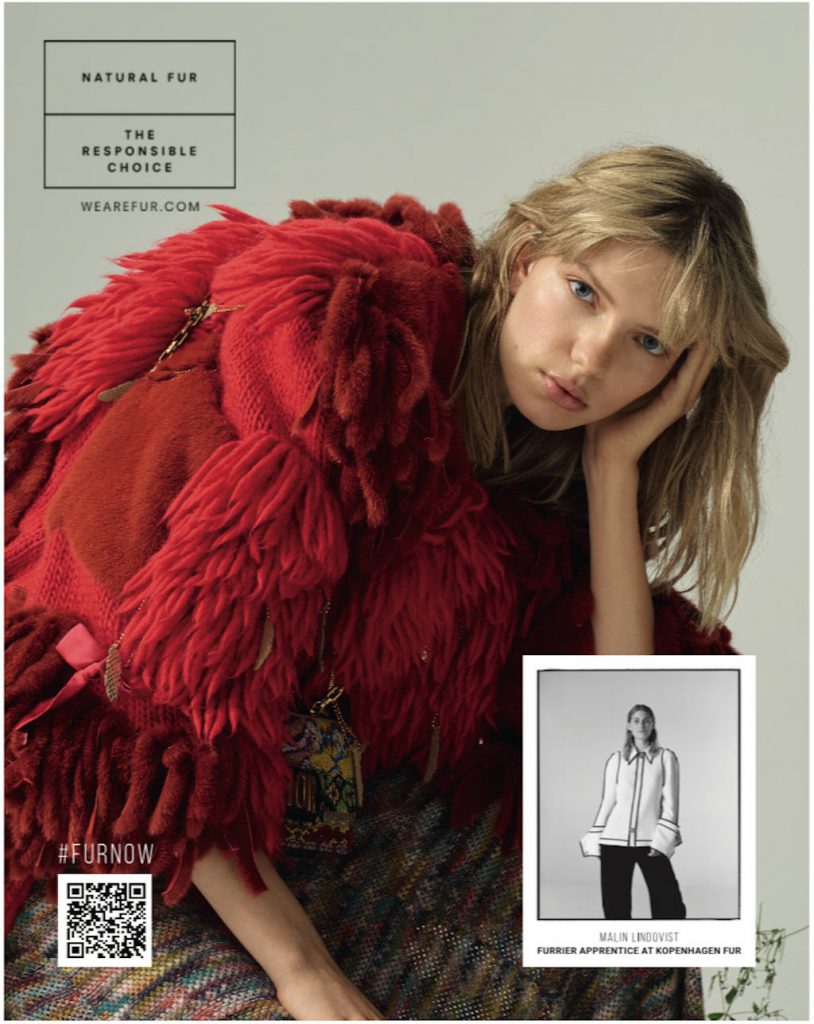
Young people, especially, are increasingly concerned about how our lifestyles and consumer choices will affect the planet, so the timing is good. The challenge was how to tell this story in a fashion context. The solution we found is a two-pronged approach. One is a beautiful fashion campaign in Vogue magazine that incorporates our environmental message in the text. We call this campaign "Natural Wonder". And then we have a new digital campaign, called “Fur Now”, which centres on creative young people explaining in their own words why they love working with fur, and part of the conversation is about fur's sustainability.
NATURAL WONDER Campaign
TaF: Let's talk about the "Natural Wonder" campaign in Vogue first.
J-P Rouphael: "Natural Wonder" is a three-month exclusive campaign in Vogue, in six major markets – Spain, Italy, Germany, France, Russia and the USA – plus limited usage in China and Korea.
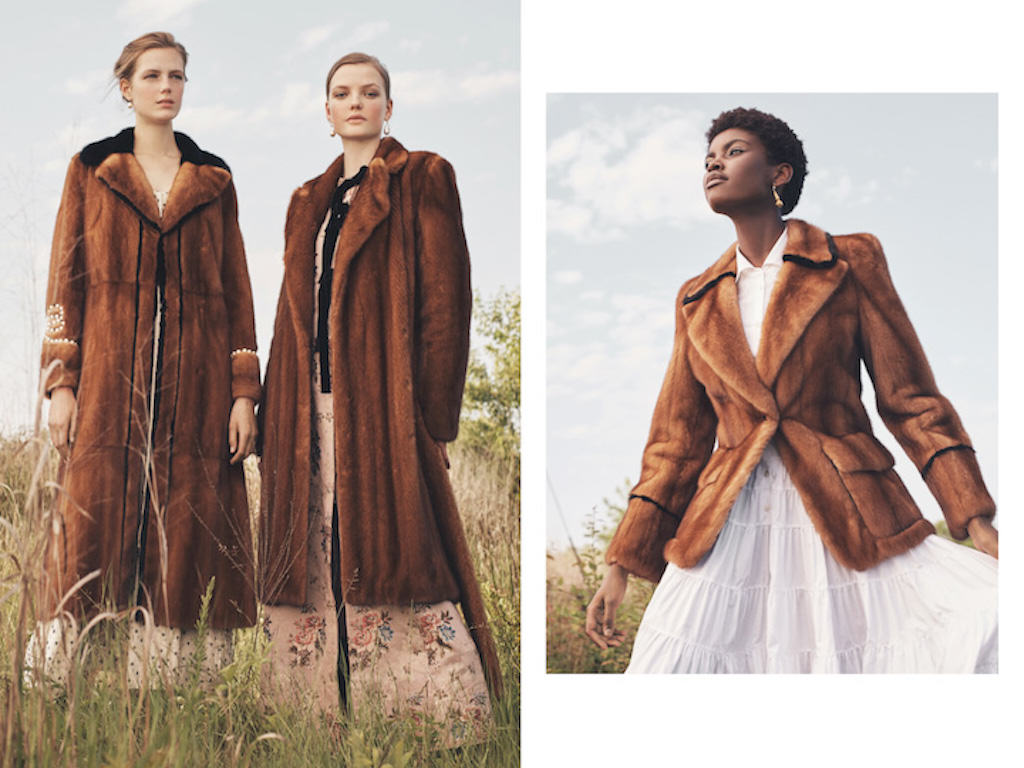
This campaign has been launched in Vogue's September issue, and will be followed by ads in the October and November issues, as well as on Vogue’s digital and social media platforms. The photography shows new fur creations by top designer brands, including Roberto Cavalli, Carolina Herrera, Oscar de la Renta, Fendi and others.
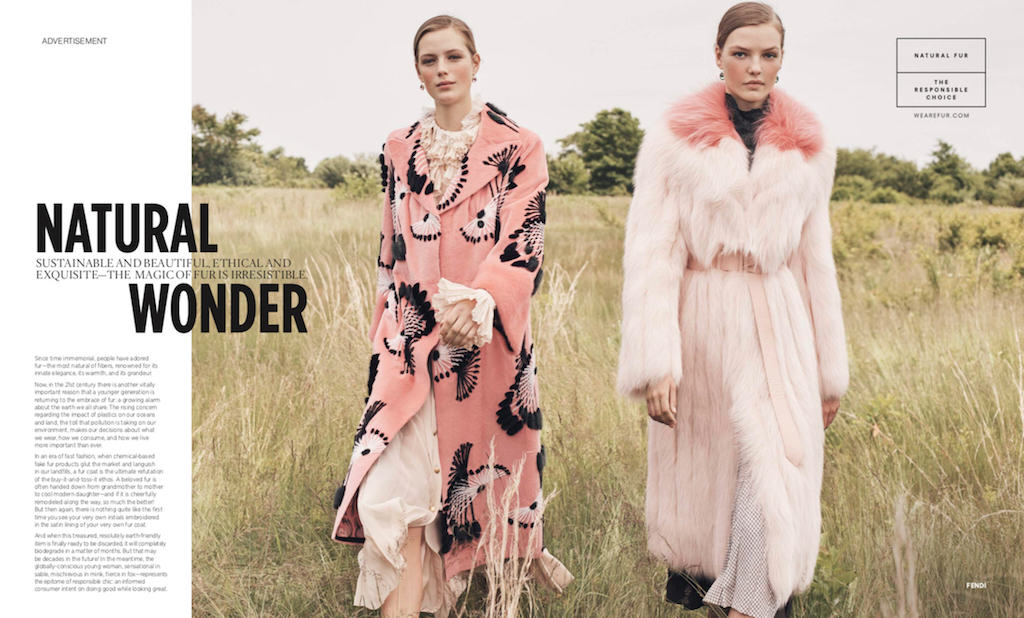
IFF's "Natural Wonder" campaign kicks off in the September issue of Vogue. Shown here: Fendi. Photo: International Fur Federation / wearefur.com.
TaF: We notice that the fabulous photography is shot outdoors, not in a studio.
J-P Rouphael: Yes, the shoot was produced by the Vogue team, and we chose Dario Catellani to do our photography because he loves working outdoors, with landscapes and natural light. We felt that was important to reflect our message that fur is a natural product and a responsible choice.
TaF: And the message is clear, right from the bold headline: “Natural Wonder – Sustainable and beautiful, ethical and exquisite, the magic of fur is irresistible.”
J-P Rouphael: Yes, and the text that follows is also very direct. We explain that growing concerns about pollution caused by the production and disposal of plastics – like fake furs and other petroleum-based synthetics – make long-wearing and biodegradable natural materials, like fur, a better choice than ever. As we say in the text, “A fur coat is the ultimate refutation of the buy-it-and-toss-it ethos of environmentally destructive fast-fashion.”
TaF: Now tell us about your second campaign, "Fur Now".
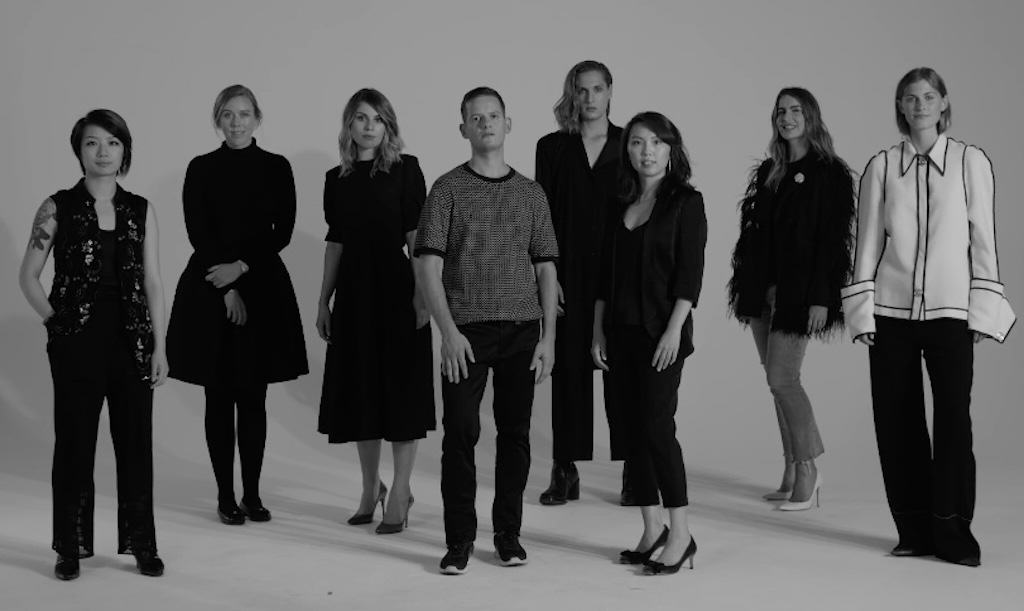
J-P Rouphael: The Vogue ads will be supported and complemented by a brand new "Fur Now" campaign that we are especially excited about this year. We have created eight fast-paced video stories featuring creative young people who are actively involved in the fashion industry. We will be featuring one of these video profiles each month, from September through December, and another four from February through May. But you can see all eight of these wonderful young creators on the IFF website now or right here on TruthAboutFur (see below).
J-P Rouphael: Yes it is. These are real people and they express themselves in their own words. We intentionally did not script them; we just turned on the cameras and asked why they love working with fur, and that’s why the videos are so wonderfully sincere and authentic.
TaF: You have chosen young designers, artisans, and businesspeople working in different markets, in Europe, Asia and North America.
J-P Rouphael: Yes, some are new to the industry, and some are bringing new energy and ideas to multi-generational family businesses, like the charming 21-year-old Romanian woman whose grandmother started their store in Bucharest. There is also a British fashion blogger, someone who doesn’t work in the fur industry, but is nonetheless very interested in the environmental advantages of using natural materials like fur. These are authentic young voices that clearly demonstrate the dynamic creativity of our industry. And the fast-paced editing is also designed to speak directly to Millennials and Generation Z.
FUR NOW video stories give voices to eight young people who love fur.
TaF: How will these "Fur Now" video stories be promoted?
J-P Rouphael: The campaign will be launched on Elle.com and HarpersBazaar.com through September and October. We will also have more than 40 print insertions in Elle, Harper’s, Cosmopolitan, and Grazia in the EU. There will also be a mailer to the Elle and Harper’s subscription lists. In all, this campaign will reach more than 100 million target consumers, compared to about 86 million reached by last year’s campaign.
TaF: An exciting campaign, indeed! Before we go, tell us a bit about yourself and what these campaigns mean for you personally.
J-P Rouphael: I have worked in fashion communications for the past 14 years, mostly with luxury fashion. I was born in Lebanon and worked for much of my career in Dubai, with clients including Valentino and Ralph Lauren. I moved to London a few years ago, and I am especially happy to be working with the IFF because I love fashion and fashion marketing.
Although I am experienced in promoting luxury, working on last year's "Fur Now" campaign was brand new to me. But touching and feeling fur, shooting it, and seeing how it uplifts any outfit and look, it became organic and easy for me to advocate and sell it through imagery and communication as a timeless beauty while still a modern-day luxury.
And, of course, we have an important story to tell about fur being the responsible choice for our eco-conscious times, especially as we become more aware of the environmental problems associated with fake fur. We believe that we have an extraordinary opportunity now to spread this very positive message about fur. That's why the slogan appearing on all our communications is: “Natural Fur – The Responsible Choice”.
We’re used to hearing polarised arguments about fur, either strongly in favour or strongly against. But many people hold views… Read More
Wild rabbit is a "beautiful, practical material worthy of inclusion in high-end garments," says Jane Avery.
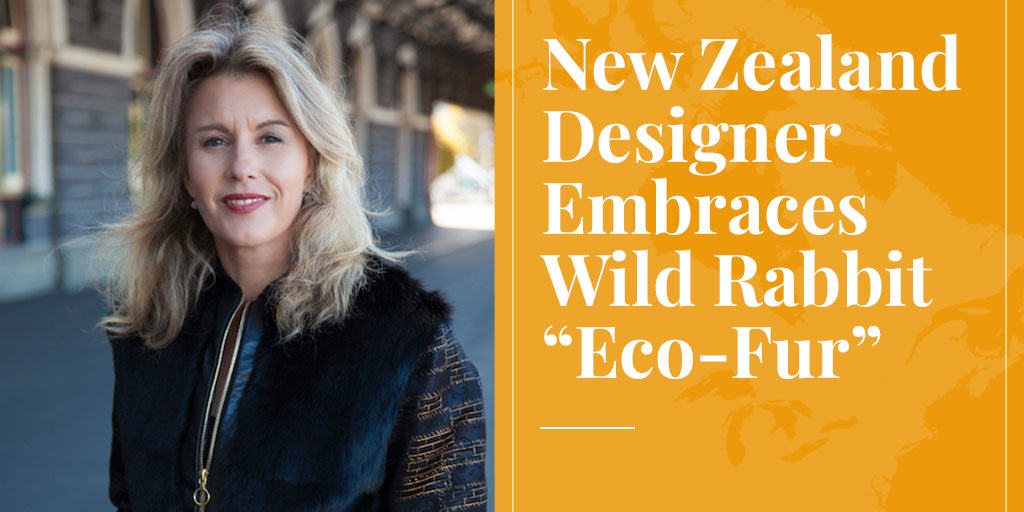
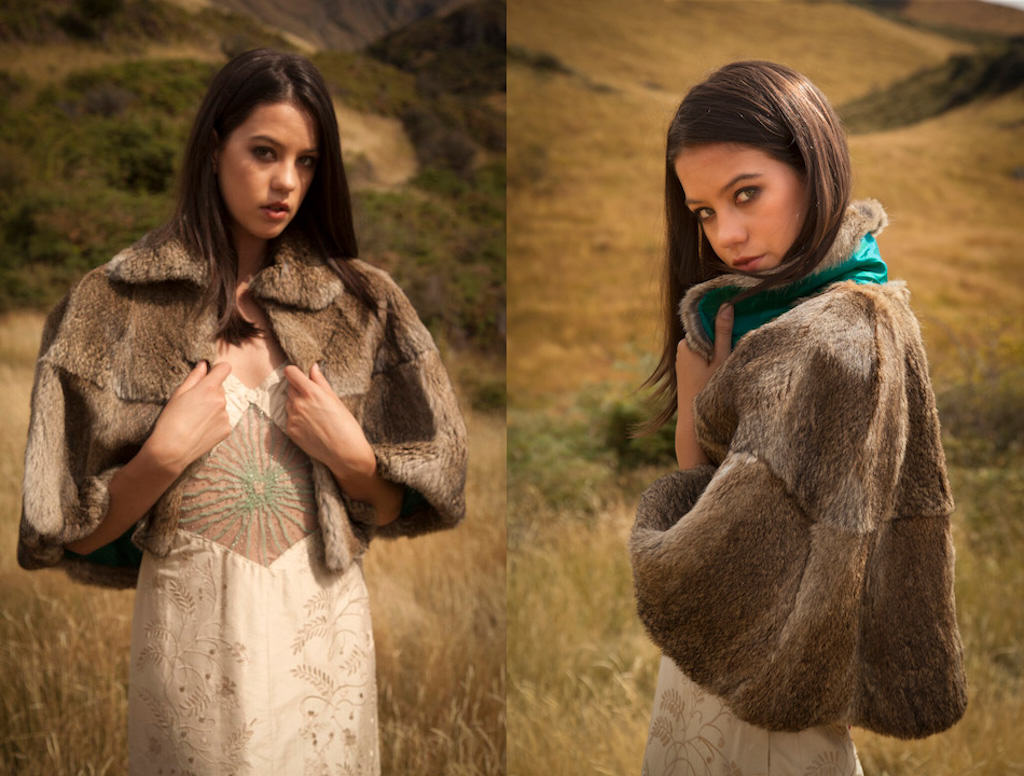
We’re used to hearing polarised arguments about fur, either strongly in favour or strongly against. But many people hold views that fall somewhere in between. One such person is fashion designer Jane Avery, from Dunedin, New Zealand, who is garnering attention for her work with just one type of fur, wild rabbit, under the brand name Lapin (French for rabbit). So is she pro-fur or something quite different? Let’s find out …
Truth About Fur: According to Lapin’s website, you specialize in “limited edition, bespoke and one-of-a-kind garments.” Can you describe some of your garments?
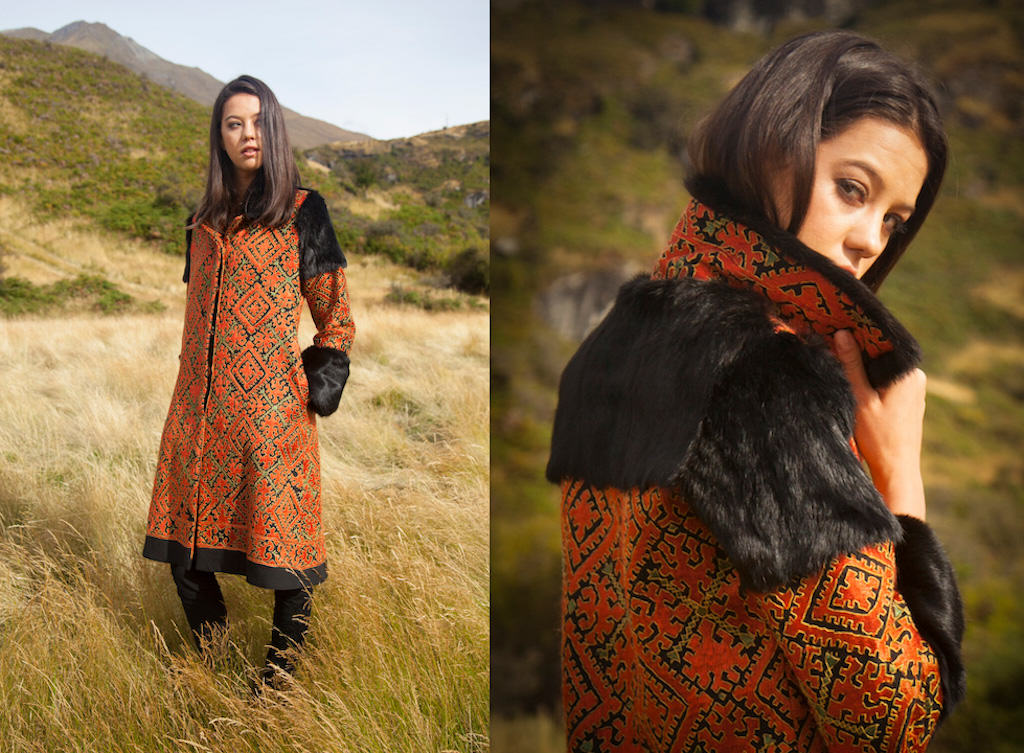
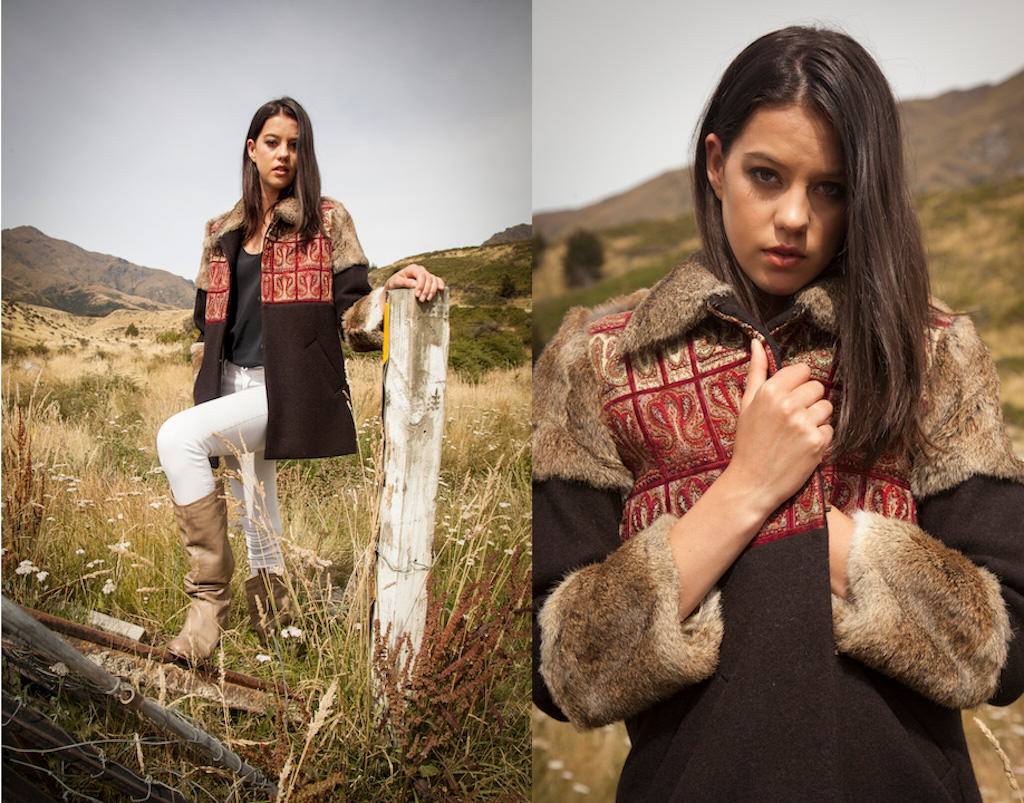
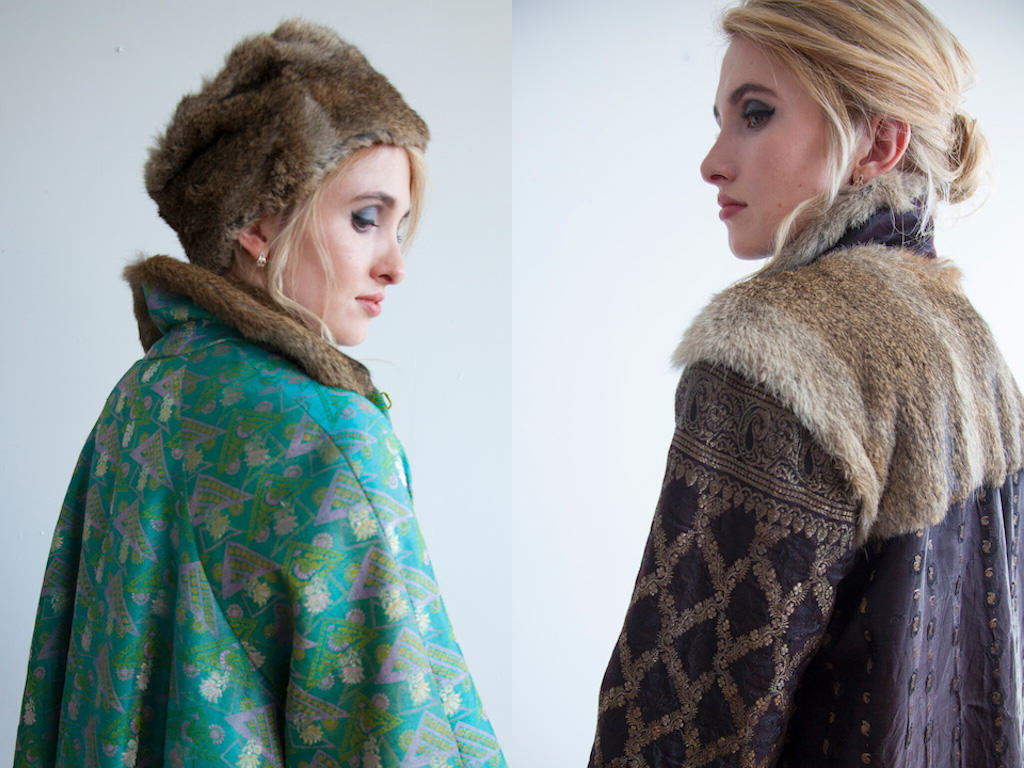
Jane Avery: The coats and jackets I have made to date are a combination of New Zealand wild rabbit fur and beautiful top-quality fabrics. When I started out with this concept three years ago I used appropriate fabrics to hand in my stash. I also had the opportunity to travel to India where I sourced heavy silk vintage saris and traditional embroidered woollen textiles. What resulted was a collection of one-of-a-kind creations. I also make limited-edition, made-to-measure bespoke pieces incorporating new fabrics such as 100% wools.
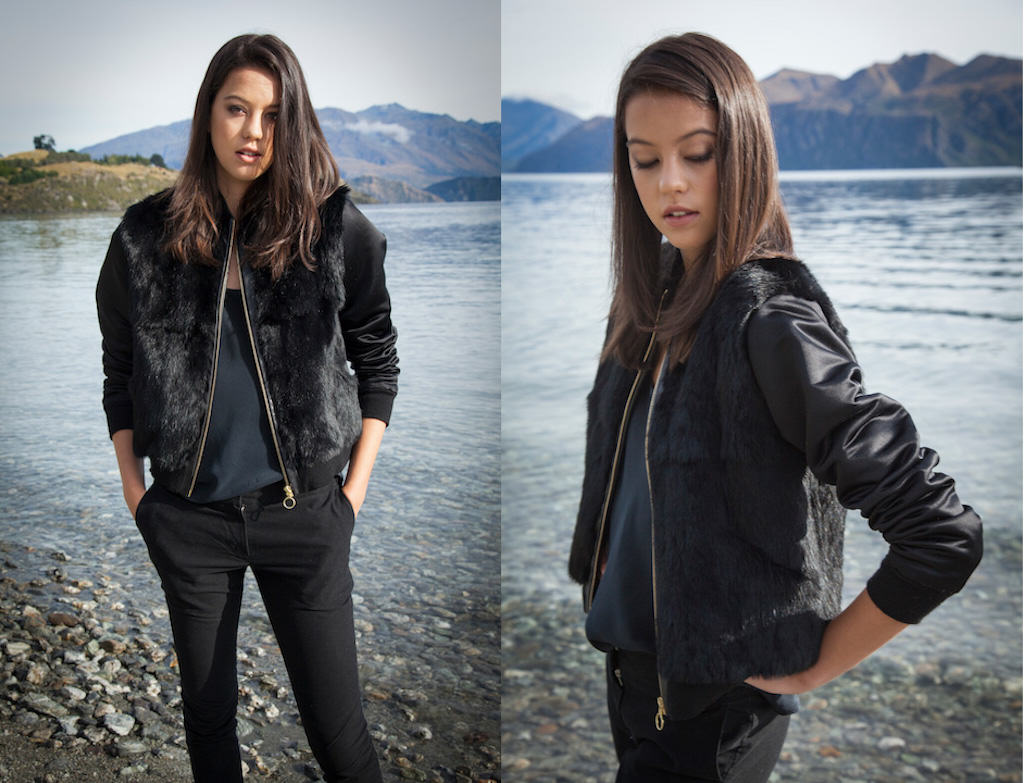
I live in a cold part of New Zealand and creating coats with exceptional warmth yet still retaining elegance and indulgence in gorgeous textiles is my aim. My original concept was to make garments using rabbit fur panels for yokes, collars, cuffs and upper shoulders. The furrier I work with prepares these for me. The fabric sections are insulated with a 50% cotton 50% wool batting so they can match the warmth given by the fur. The same goes for the insulated sleeves of Lapin bomber jackets which have rabbit fur bodices trimmed with leather.
TaF: Tell us about the production process. How many hours go into each garment and do your prices reflect this?
Jane Avery: There is a lot of hand preparation before the sewing machine gets involved. Because fur isn’t sewn with seams like fabric is, I turn in and hand-baste the seam allowances on the fabrics in order to create clean, secure edges to attach to the fur. It’s an example of slow fashion in action and it’s certainly not high tech. Some coats can take up to 50 hours to make.
It’s been an intense development process (I am essentially a self-taught sewer of over 20 years) and I’m quite the perfectionist. There’s extensive handwork tailoring and securing the inside of the garment before the coat lining is bagged out and the inner sleeve is hand-sewn shut. What results is a highly finished garment that’s as close to perfect as I can make it.
Of course this attention to detail and made-to-measure process is reflected in the eventual price of the garment. Also the quality of the textiles and the fact that the fur passes through the hands of my rabbiter, tanner and furrier before it gets to me puts Lapin pieces in a higher price bracket.
Swat Valley Rose: Rabbit back panel, collar, sleeve caps and cuffs, silk Crepe de Chine lining, 50% wool 50% cotton interlining.
TaF: Who are your clients?
Jane Avery: My clients to date have been people who recognise the skill and dedication in crafting a Lapin piece and want to invest in something special that, well cared for, will take them through many years of pleasurable wearing. It’s my hope that Lapin pieces will become heirlooms handed between generations. For the vintage fabrics I’ve been repurposing, such as the saris and woollen paisleys, this has particular resonance. I adore the concept of well-preserved, pre-loved antique fabrics being given new purpose and continuing their usefulness and beauty in companionship with New Zealand Wild Rabbit Eco-Fur.
TaF: Historically, before the expansion of fur farming made mink and fox more affordable, rabbit was called “the great imitator” because it could be treated to resemble mink, ermine, fox, beaver, and even seal. Do you take advantage of this versatility and how?
Jane Avery: The way I came to using rabbit was not because I wanted to imitate or emulate furs from other countries, but because I saw a New Zealand pest-resource that wasn’t being used to its potential. Of course I’m very open to experimenting and learning how I can manipulate this wild resource in a fashion sense. I do dye a proportion of the skins I use jet black, and I’m looking forward to being able to afford dying in other colours. For the integrity of the Lapin brand and message, which is to promote the use of this specific pest resource, I feel it is important for it to retain its own special identity.
Wild Rabbit Eco-Fur
TaF: The Lapin website says you use “responsibly sourced New Zealand ‘Wild Rabbit Eco-Fur’.” What do you mean by “responsibly sourced” and “Eco-Fur”?
Jane Avery:Lapin rabbit furs are harvested from the eradication catch of New Zealand high-country rabbiters. The responsibility these workers have, employed by high-country station owners, is to control the rabbit populations. If the rabbits are left unchecked, they reach plague proportions. Historically and to this day they destroy thousands of acres of grazing land and also the delicate native vegetation characteristic of the New Zealand sub-alpine landscape, such as tussock grass. They cannot be allowed to stay. This is an imperative of the New Zealand high-country environment.
The rabbits for Lapin generally die from a sharp shot to the head and are sourced at nighttime when their eyes can be seen shining in the beam of the rabbiter’s spotlight. To my mind this is as close to an instantaneous death with as little suffering as possible. It is responsible in that it deals with the problem skilfully and with respect to causing the animal the least suffering.
Lapin fur can be considered an "Eco-Fur" because by wearing it you contribute to restoring the natural New Zealand environment. It is a pest resource which means the rabbits are not being purposely bred for their fur. My creative philosophy for Lapin is to use as much as I can of what I have available around me. The rabbits are here and must be dealt with. Yes, there is tragedy in the deaths of these sentient beings, but I believe my view is one of practicality and realism. Wearing the fur of these animals can be considered a "woke" alternative to indulging in other furs, be they farmed or faux.
Neo: 90% cashmere 10% wool blend fabric, rabbit back panel and collar, silk Crepe de Chine lining, 50% wool 50% cotton interlining.
TaF: Most rabbit fur today comes from young animals bred for food, but the best pelts are said to come from adult wild rabbits that are taken in winter, when the fur is thick and even. Are you selective about the pelts you use?
Jane Avery: I am selective about the pelts I use. As a wild catch, it is variable in quality. I’m fortunate to work with a rabbiter who will grade the best pelts for me in the course of his work. The season here in New Zealand for optimum skins runs in winter from July to October when the chilly southerly winds are blowing into the New Zealand South Island high country. This means the rabbits have their winter coats on and are not moulting.
I like to use thick, fluffy furs with firm yet pliable skins suitable for construction in bomber jackets and structured coats. I also love the way many of the young doe rabbit furs are so sleek, smooth and floppy. These are great for scarves, capes and more unstructured styles. I am still experimenting with what is possible and learning so much every time I get a new batch of furs to work and create with.
So Does Rabbit Fur Shed?
TaF: Rabbit fur has a reputation for shedding easily, causing uneven patches in the fur. Is this reputation deserved, and are there ways to minimise shedding?
Jane Avery: The way to minimise shedding is to harvest during the winter when the animals are holding onto their fur for warmth. When I started out, I tested furs by continually rubbing and shaking them. My view is if you get them at the right time of year the shedding is tolerable.
Rabbit fur is what it is. It’s a natural resource and even with its reputation for shedding is a beautiful, practical material worthy of inclusion in high-end garments. Looked after well, it will look good and retain its warmth-giving properties for many, many years. It’s important to look after it properly such as being aware of not continually slinging leather bag straps on your shoulder or rubbing with car seatbelts. At least when it sheds you know the little bits are safely bio-degrading in the environment and not polluting the planet like the microfibres shed from synthetic “furs”.
Kashmir: Vintage Kashmiri embroidered front panel, boiled Merino wool, rabbit back panel, collar, sleeve caps and cuffs, silk lining. 50% wool 50% cotton interlining.
TaF: Possums are also considered a pest in New Zealand. Is possum fur something you’d consider using?
Jane Avery:Lapin was founded on the notion of creating attention for the very under-utilised pest-resource of New Zealand wild rabbit. However it is just a name and I’m certainly not closed to using New Zealand possum fur as my business grows. From an aesthetic point of view, I like possum fur when it has been shorn down to a nice soft pile. As with rabbit fur, the creative possibilities with this pest, notorious for destroying our native forest habitats, are many.
TaF: Another source of fur which has a small but growing following is vintage furs which are remodeled and recycled. Is this something you would consider doing?
Jane Avery: I like the idea of repurposing vintage furs, and yes, it’s something I’m open to working with as my business develops. From my own wardrobe I wear a vintage chinchilla-rabbit coat which I found in a Salvation Army op-shop. It sheds like you wouldn’t believe so I’m banned from sitting in my son’s plush car seats when I have it on!
Stealth Bomber: Silk sleeves, rabbit front and back, leather zip trim and facing, Merino/nylon ribbing, Viscose lining, 50% wool 50% cotton sleeve interlining.
TaF: How do you feel about using farmed fur, such as mink or fox? An argument in favour of using farmed fur is that it takes pressure off wildlife populations, and in fact most of the demand for fur these days is met with farmed fur.
Jane Avery: Personally I would not use farmed fur for Lapin. It would be contradictory to Lapin’s essential message and philosophy.
I feel I am well enough informed about the whys and wherefores of fur farming and I understand the animal welfare standards are generally high, and in many cases higher than other industries exploiting animals for their meat and skin. As a sewer I also respect the tradition and craftsmanship of the fur industry. But farmed fur is not something that I would purposely seek out as a product to work with.
I find reassurance in the fact that New Zealand wild rabbits, an introduced species, are essentially having a marvellous time living natural, free lives, eating and breeding in the great outdoors. At least when they meet their deaths at the hands of a rabbiter they are free, albeit in the wrong place in the world. If they were not an ecological problem in this country, I would not be exploiting their fur for fashion, nor would I seek out other furs … aside perhaps for possum.
Aquamarina (left): Vintage silk sari fabric, rabbit collar and cuffs, silk Crepe de Chine lining, 50% wool 50% cotton interlining. Purple Reign (right): Vintage silk sari fabric, rabbit yoke, collar and facing, Shantung silk lining, 50% wool 50% cotton interlining.
TaF: North America has its own problems with invasive nutria as well as indigenous furbearers that cause problems if their populations are not managed. For example, muskrats destroy marsh habitats, beavers cause flooding, and coyotes prey on livestock and are expanding into urban areas where they prey on pets and bite children. Are you supportive of using these species for their fur, provided it is done sustainably?
Jane Avery: To me it’s all about context. The world we live in is so very different to the world of 150-200 years ago. Sure, North America has its problems with invasive species too, and certain situations demand certain responses. If it’s deemed these animals must be "sustainably" culled then it would be disrespectful not to make practical use of their fur.
With the New Zealand rabbits, the context is created by human history. The tragedy is that they were introduced to this country in the first place.
I believe anyone in the business of exploiting animals for what they can provide to humans should check their moral compass on a regular basis. We shouldn’t necessarily do things just because that’s the way we’ve always done them. Everything must be considered within its realistic context and with the good of the environment central to decision-making.
After pressuring a number of designer brands to stop using fur in their collections, animal activist groups that seek to… Read More
Animal advocates who want to ban fur have an understanding with Ugg and "fur free" designers to pretend sheepskin is not fur
After pressuring a number of designer brands to stop using fur in their collections, animal activist groups that seek to impose a vegan lifestyle on everyone are now lobbying politicians to ban fur sales in San Francisco, Los Angeles and several other cities.
Fur “bans” are equally illusory. Vegan activists love to cite West Hollywood as the first US town to declare fur sales verbotten, but they neglect to mention that the sale of wild fur apparel and accessories remains completely legal there. In fact, a California court has determined that municipalities cannot ban the sale of wild furs even if they want to, because wildlife management is under state jurisdiction. Meanwhile, the “fur ban” proposed for San Francisco would also exempt sheepskin because, well, I guess they like their Uggs in California.
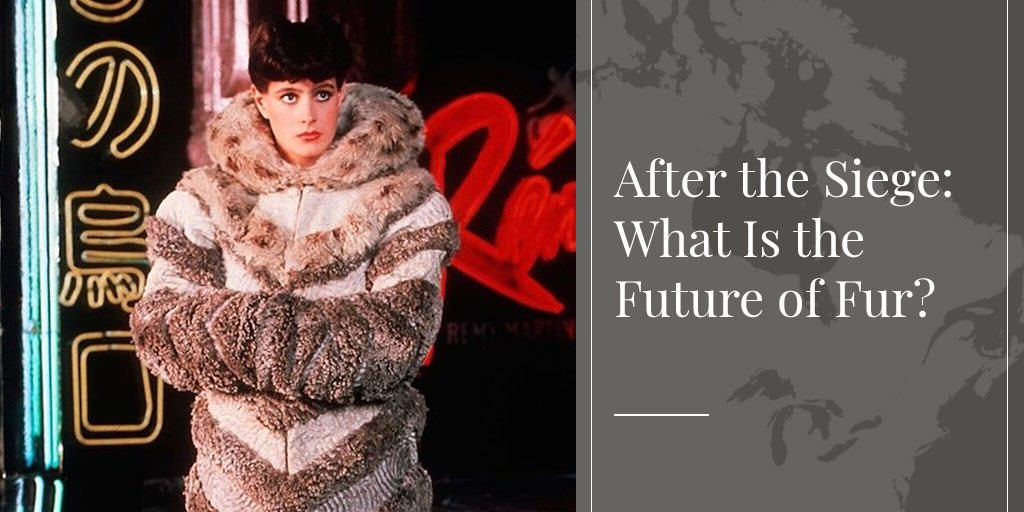
More important than this hypocrisy, however, is the troublesome reality that anti-fur campaigning actually works against environmental sustainability at a time when this is becoming a societal priority – especially in California.
The sustainable use of renewable natural resources is a keystone of conservation policy, as promoted by the International Union for Conservation of Nature (IUCN). And, guess what? The modern fur trade is, in fact, an excellent example of the responsible and sustainable use of nature. This is the story that animal activists don't want the public to hear.
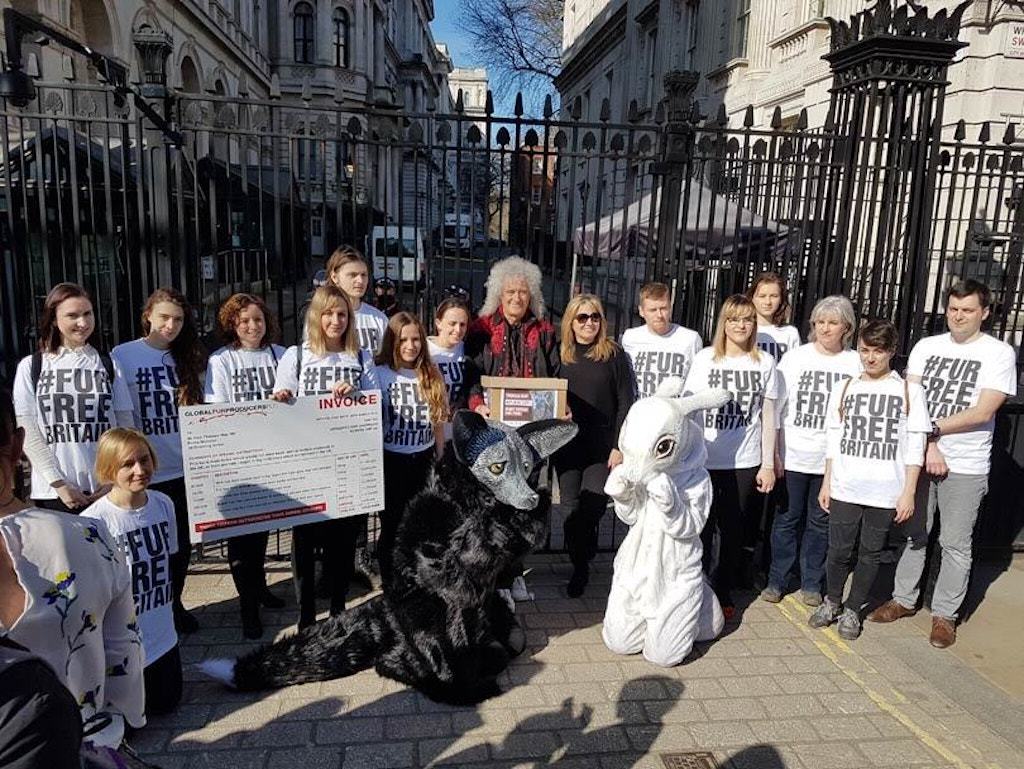
The truth: Wild furs are taken from the naturally-produced surpluses of abundant furbearer populations, never from endangered species. This is assured by state, national and international regulations.
The truth: Some wild furbearers would have to be culled even if we didn’t use fur. Coyotes are the number one predator of lambs and calves, and are now attacking pet dogs and cats – and sometimes even people – in cities across North America. Raccoons, foxes and coyotes must be controlled to protect ground-nesting birds and endangered sea turtle eggs, and to prevent the spread of rabies and other dangerous diseases. Overpopulated beavers flood roads, homes, fields and forest habitat. And the list goes on.
So given that we have to cull these animals, surely it is more ethical to use the fur than to throw it away.
Farmed mink are fed left-overs from human food production that would otherwise end up in landfills. Photo: Truth About Fur.
But what about farm-raised furbearers, you may ask? Farmed mink are fed left-overs from our own food production – the parts of chickens, pigs and fish that we don’t eat and would otherwise end up in landfills. The mink manure, carcasses and soiled straw bedding are composted to produce valuable organic fertilizers, completing the agricultural nutrient cycle. Nothing is wasted.
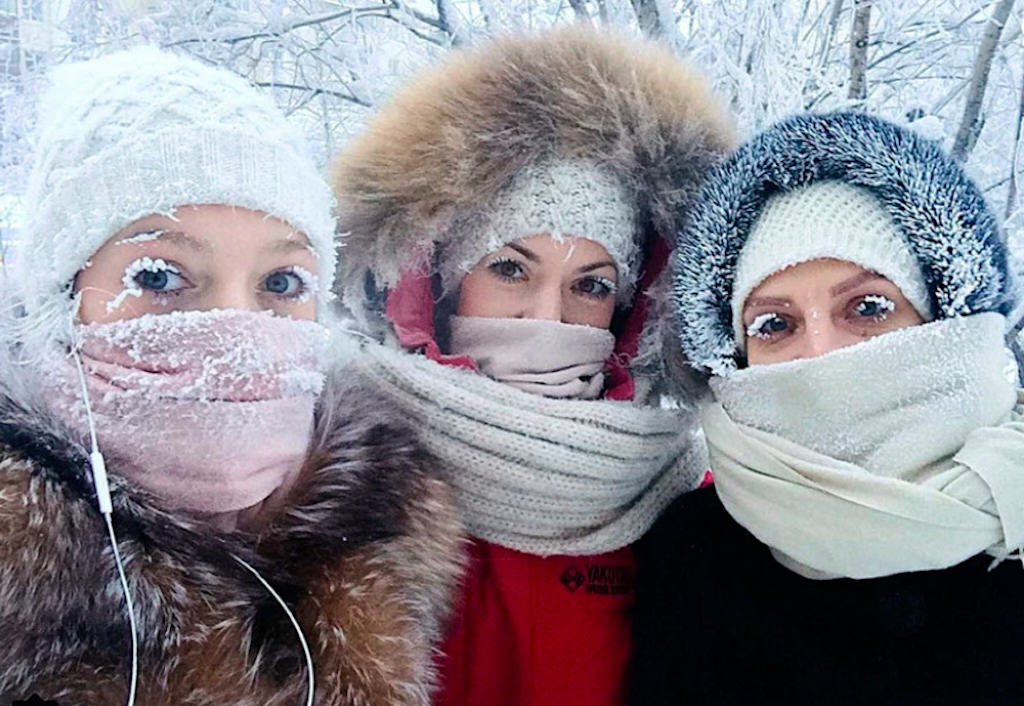
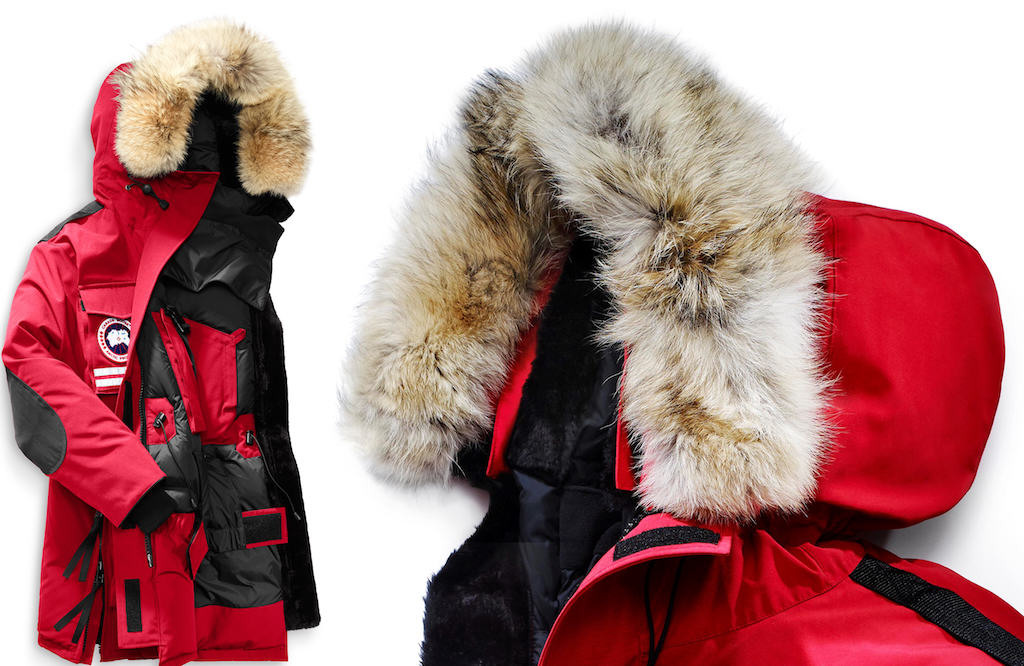
Farmed mink also receive excellent nutrition and care; this is the only way to produce the high-quality fur needed to compete in international markets.
Truth About Fur has proven beyond doubt that real fur biodegrades while fake fur does not. Read "The great fur burial".
Above all, fur is a natural and long-lasting clothing choice. In this age of fast-fashion, a good mink coat is often worn for 30 years or more. Fur apparel can also be taken apart and completely restyled as fashions change, or recycled into accessories. And after many decades of service your fur can be put into the garden compost where it will biodegrade and return to the soil. This is true environmental sustainability.
The fake furs touted by animal activists, by contrast, are generally made from petroleum, a non-renewable resource, and will not biodegrade. Troubling new research, moreover, is showing that fake furs and other synthetic materials can leach micro-particles of plastic into waterways (and the food chain) every time they are washed. This is not good for animals or nature.
Freedom of Choice Under Threat
The increasing use of fur for trim, accessories, vests and other smaller pieces makes fur more accessible than it has ever been. This may explain the urgency of recent anti-fur campaigning, because if it was true that no one wanted to wear fur anymore – as activists claim – there would be no need to ban fur sales.
Perhaps this is what frustrates animal activists: most people do believe that it is morally acceptable to use animals for food, clothing and other products, so long as this is done responsibly and sustainably.
Question: What do animal activists do when, despite all their propaganda, young designers and consumers continue to choose fur? Answer: They try to take away their right to choose!
And this brings us to another serious problem with recent activist calls for municipal bans on fur sales. No one forces animal activists to wear fur or leather, or to eat meat or use any other animal products. So what makes them think they have the right to impose their personal beliefs on everyone else?
This issue goes far beyond the debate about fur. Most people in North America came here to have the right to make their own decisions. That fundamental freedom should not be taken for granted, or given away lightly, whatever your personal feelings about using fur or other animal products.
Katie Ball is a trapper from Thunder Bay, Ontario who also runs her own company, Silver Cedar Studio, designing and making… Read More
Sporting a fox ruff and raccoon mitts, "made by yours truly, of course!", Katie Ball loves the whole outdoors life, even ice fishing. Photo: Alyssa Lloyd, Bushwoman Workshops
Truth About Fur: You grew up helping your father run a trapline, but spread your wings to work in pet sales, veterinary care, and as a fashion model. Yet you returned to trapping and in 2014 went into business producing fur garments. In an interview with the International Fur Federation, you said fur “is in my blood and who I am to the core.” How did that happen, and how does it feel to be so sure of who you are?
Katie Ball: It started as one simple question. I was at a trappers' convention looking over new techniques of fur-processing when my dear friend (and now mentor) Becky Monk reached over a sheared and dyed peach beaver pelt and asked me, "Have you ever considered working with fur?" I had been looking for a medium that would allow me to combine my love of nature, fashion modeling and creativity into one package. Fur was that medium.
Fur goes beyond my individual self. It encompasses our rich Canadian history, it is the warmest, most natural product on the market, and its uses and ability to be manipulated into so many versatile looks know no bounds.
For me to be a part of this tradition is humbling. I take pride in my upbringing in a trapping family, and will do whatever it takes to help pass that on to future generations.
TAF: You've been working the same trapline with your father since 1989. Tell us about it, and the changes you've seen.
Katie Ball: Our trapline is 150 km north of Thunder Bay. The terrain is enveloped by boreal forest and offers a variety of landscapes that allows for a broad range of furbearers to be harvested. Lakes, rivers, bogs, marshes, swamps, red and jack pine forests, birch and aspen as far as you can see over rolling landscapes, we have it all. From the warm start of fall to the frigid deep freeze of winter, we truly experience the four seasons nature has to offer.
Many changes have come to the landscape over the years – forest fires, logging, mining, roads and aggregates. But these are not as negative as many think. Old growth does not really exist in boreal forest; fires, pests and disease make certain of this. We have had two forest fires that I have witnessed. With burns come new jack pines that would not seed without the searing heat of the fires. New shoots and growth give food to the fauna. Logging can create better habitat for specific wild game, increasing numbers. Mining reclamation restores the surface to its original glory. Out of destruction some of the most amazing opportunities can arise, and Nature sure knows how to make the best of it.
On another level, I've seen animal populations rise and fall in synch with one another, like lynx and rabbit. Rabbits have approximately a seven-year cycle. As the population begins to increase so do the lynx. But then the rabbit population crashes, and the lynx decline right after. Moose populations sank with the cancelation of the spring bear hunt years ago, but the hunt has been reintroduced in hopes it can help the moose population recover.
TAF: You currently represent three outdoors associations, so you are clearly motivated to serve. What benefits do such organisations provide to the fur trade, and what would you say to a trapper who is undecided about whether to participate?
Minister of Employment, Workforce, and Labour Patty Hajdu is also a Thunder Bay resident. Here she visits the Silver Cedar Studio stand at the Northwestern Fur Trappers Association convention, 2018. Photo: Patty Hajdu / Facebook.
Katie Ball: These groups help give a voice to the outdoors community. Without them, we would not have a say on topics that could wipe out our passion, heritage and future. Most trappers just want to be out in the woods being stewards of the land, and I know the feeling. But politics wait for no man. We need to be on top of new regulations, legislation and activist groups who wish to do away with our lifestyle.
So get involved with your outdoors groups and make your voice heard. Help secure the future for our children, and take pride in what you do and love. We all share the same resource and our love of nature. There is strength in numbers, so why not work together to ensure that our way of life can be enjoyed for generations to come?
TAF: You call trappers “stewards of the land”. Can you give examples of how this works?
Katie Ball: Statistics show that there are more furbearers now than there were when the fur trade started. Populations are healthier, and even gene pools have benefited from trapping.
Trappers notice the small things, like what animals are moving through an area and when, or changes in their food supply. Are certain berries and plants growing? If it's a wet and cold spring, we know that many of the grouse young will not survive, and this can affect predator populations.
By knowing the lay of the land and how it all interlinks, trappers are a vast wealth of knowledge. Logging companies looking for gravel or decommissioned roads are better off talking to the local trapper than just following their GPS. They may be told of a washout or an old trail that will save time, money and resources.
Wilderness groups collecting data are better off talking to a trapper who will have insight on the local flora and fauna, and maybe even historical data.
Outdoors enthusiasts looking for a great camping spot or trails to hike – a trapper can point them in the right direction.
Plus, if something were to happen, it’s nice to know that someone is always out there in case of emergency.
TAF: How do you respond to accusations by animal rightists that trapping is inherently cruel? And do trappers need to work harder, or differently, to have their side of the story heard?
Katie Ball: With all the work conducted by the Fur Institute of Canada and many other groups, and with the Agreement on International Humane Trapping Standards (AIHTS) in force, it is hard to believe that even with the highest standard of trapping regulations and certified traps that many still think of trapping as cruel.
I have found that by talking to the public, educating individuals on our regulations, and standing behind our ethical practices, most get a bigger picture and realize that we are not out to destroy animal populations with archaic trapping methods. We are out helping maintain a healthy balance in nature.
Trappers need to stand up to such negative rhetoric. We need to be heard, as silence accomplishes nothing. And it is so much easier to reach the masses today.
Many trappers are not interested in getting in front of a crowd or being filmed, but they can still make a difference with one person at a time. Take the time to answer questions from inquiring minds. Take someone out for a day that would normally never get the chance to experience the wilderness. Spark a passion in an individual that will last them a lifetime.
It is only by educating the public that we can stamp out the negativity that surrounds trapping.
TAF: You have experience both as a trapper and in the fashion world, and are now producing fur garments. The Silver Cedar Studio website says that being a trapper helps you understand fur “in the way a carpenter understands wood.” Can you expand on this?
“This coat has much meaning to me. My father trapped each red fox to make it, all 27. This coat is a part of who I am, and influences me daily in my passions and trade.” Photo: BB Image.
Katie Ball: As a trapper I understand how the animals that I harvest live. I know their habitats and what challenges that may bring. And I understand the precautions and prepping that a trapper must undertake for each animal. That being said, as a designer, I can see fashion trends, take creative risks and develop a product specifically tailored for the individual customer.
By seeing both sides of this story, I am able to determine what furs are best suited for each and every fashion expectation and need of the customer. For example, warmth and durability are of the utmost importance to an outdoors enthusiast. Beaver and otter offer water-resistance, thick leather for durability, and dense underfur for holding air against the body while swimming. This translates to extra warmth for my client even on the harshest of winter nights.
TAF: On the subject of women as trappers, you told the International Fur Federation: “Regardless of gender, when it comes to working on the trapline, it comes down to individual strengths and weaknesses. There is no skill out in the bush that is labelled as gender specific.” Do women need encouragement to break the stereotype that trapping is for men?
Katie Ball: This is a question where the outside world perceives it differently than it is, and I do not understand why. When the world looks at trapping, it is visualized as almost exclusive to men. However the story is very different if you are part of the trapping community, or even just visit a trappers' convention.
To quote my friend and freelance writer (who is not a trapper) Ava Francesca Battocchio of her first experience at a trappers' convention, “You can imagine my intrigue when I found myself amongst a group of women trappers at the convention. These women were not passive onlookers – they were on the board of directors, they were role models and they were revered icons.”
There has always been quite the female presence in the trapping world. However, female numbers certainly have been on the rise and I for one am proud to see these numbers increase.
Being a trapper helps Katie understand fur "in the way a carpenter understands wood."
TAF: The future of fur trapping in North America rests with the next generation. Is it secure? Are enough young people taking up trapping, and if not, how can they be encouraged? Are currently low prices for wild furs affecting recruitment of young trappers?
Katie Ball: There are plenty of youth that are taking up the reins as trappers thanks to families getting them out on the land and making a pleasant experience that they will carry on for a lifetime. However, it's the people and youth that do not have this inherent advantage that we need to get out there.
“Take a kid trapping” is by far one of my favourite slogans. But take your kid and their friend. Take your niece or nephew and their friends. Get your neighbours and family friends to experience the great outdoors as well. There is no time like the present. It’s not just about trapping; educating people and creating allies will ensure that our heritage is passed on to future generations.
When it comes to fur prices, as my father always says, “We don’t do this for the money. We do it because we love it." The fresh air, nature, exercise and pride in knowing we are a part of a delicate balance – these are just a few reasons why we enjoy time spent trapping.
But if you want to look at it monetarily, fur prices have always fluctuated, depending on trends, politics, and the state of financial security. One factor that I find has been driving my business since I started is naturally sourced materials. People are not only looking at where their food comes from these days, but also where their clothes come from and what they're made of. People are choosing to get away from petrol-based products and are actively seeking out ethically sourced and eco-friendly products. I believe that we can start to see an increase in demand just from this trend alone in the near future.
TAF: Let's close on a lighter note. Trappers always seem to have a bunch of stories to tell. Can you share some of your memorable moments?
Katie Ball: Every day presents a new challenge, experience and memory: feeding the whiskey jacks from my toes as a kid, working in the skinning room with my dad in the dead of winter. Going out with my partner Richard has become a new and wondrous adventure, sharing our passion for the outdoors and learning from each other along the way.
Driving down the winter road with my uncle looking for signs of moose, when all of a sudden we were flanked on both sides by a wolf pack. They ran just like dolphins on either side of a boat. This lasted for about 3 km, then they disappeared as fast as they came.
Otters swimming around the boat while collecting our minnow traps.
So many events, but they always come out during conversation around the fire.
Manage Consent
To provide the best experiences, we use technologies like cookies to store and/or access device information. Consenting to these technologies will allow us to process data such as browsing behavior or unique IDs on this site. Not consenting or withdrawing consent, may adversely affect certain features and functions.
Functional
Always active
The technical storage or access is strictly necessary for the legitimate purpose of enabling the use of a specific service explicitly requested by the subscriber or user, or for the sole purpose of carrying out the transmission of a communication over an electronic communications network.
Preferences
The technical storage or access is necessary for the legitimate purpose of storing preferences that are not requested by the subscriber or user.
Statistics
The technical storage or access that is used exclusively for statistical purposes.The technical storage or access that is used exclusively for anonymous statistical purposes. Without a subpoena, voluntary compliance on the part of your Internet Service Provider, or additional records from a third party, information stored or retrieved for this purpose alone cannot usually be used to identify you.
Marketing
The technical storage or access is required to create user profiles to send advertising, or to track the user on a website or across several websites for similar marketing purposes.