COOL FACT #1: Fur may have saved the human race New research suggests humans (Homo sapiens) survived the last Ice… Read More
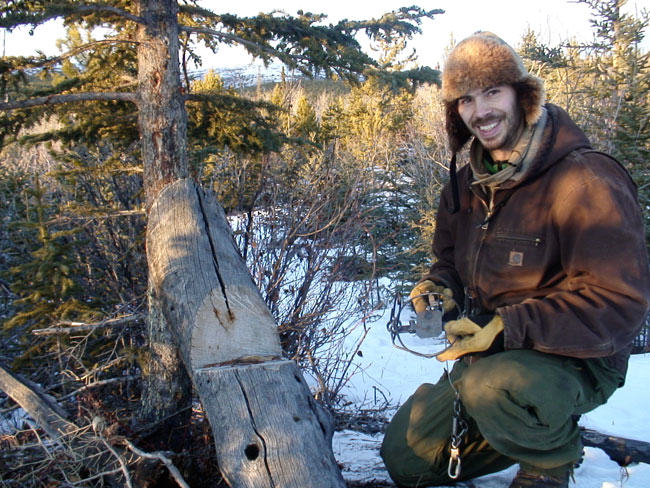
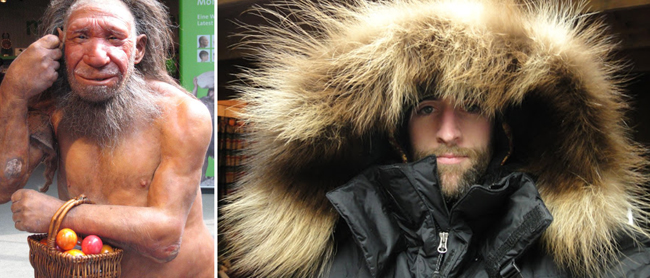
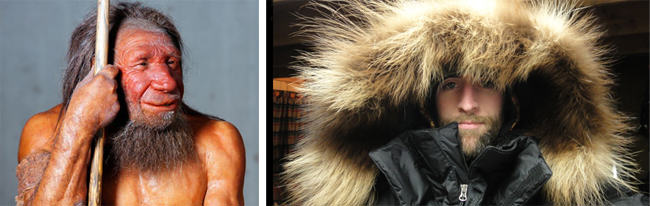
Neanderthal man froze to death while Homo sapiens Josh Spice laughs in the face of the cold!
COOL FACT #1: Fur may have saved the human race
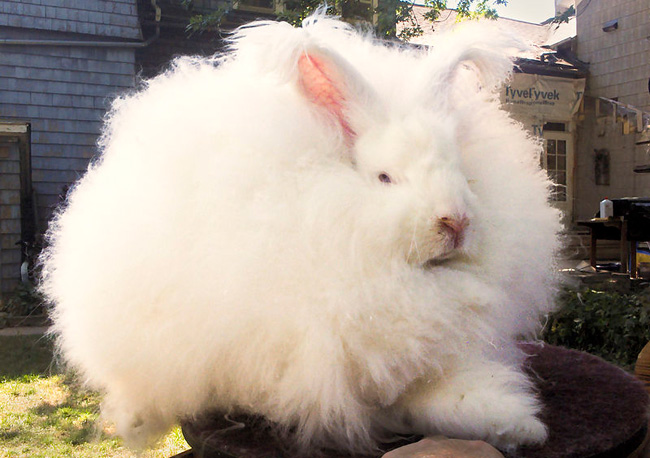
New research suggests humans (Homo sapiens) survived the last Ice Age and Neanderthals didn’t because humans were serious about fur clothing. Animal remains around Neanderthal sites lack evidence of furbearers, while human sites have fox, rabbit, mink and notably wolverine - the same fur still preferred today by Canadian First Nations for hood liners.
COOL FACT #2: Everyone's heard of the California Gold Rush, but how about the California Fur Rush?
In the early 19th century, trappers came from far and wide to the US west coast to harvest huge populations of furbearers. It was these trappers, not the gold prospectors who followed, who opened up the west and put San Francisco Bay on the trade map. But no one remembers because no one named a football team after them. Go 49ers!
COOL FACT # 3: Beaver butts are used in food flavouring
Next time you see the words "natural flavouring" on a food package, it might be referring to Castoreum, secreted from the castor sacs of beavers located between the tail and the anus. Usually it's used to simulate vanilla, but it can also pass as raspberry or strawberry.
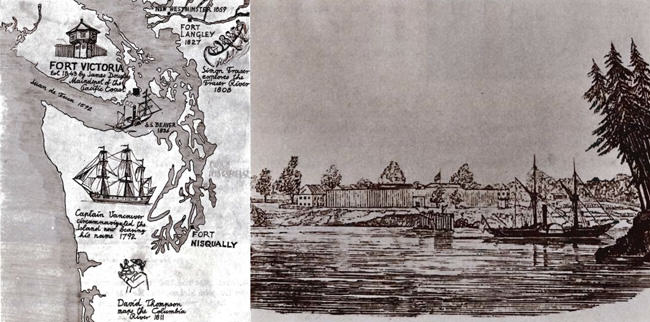
Fort Victoria (shown here in 1847) started life as a fur-trading post. Today it is the capital of British Columbia.
COOL FACT #4: The fur trade determined much of the Canada-US border
The search for fur drove Europe's exploration and settlement of North America, and many of today's towns and cities began as fur-trading posts. In fact, much of the border between Canada and the US traces the territories once controlled by Jacob Astor’s American Fur Company and the Montreal-based North West Company.
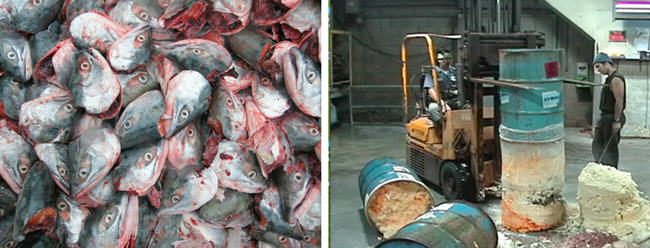
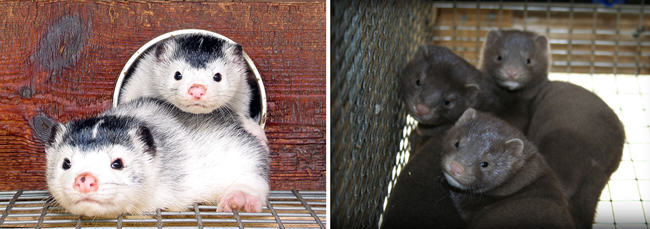
Fish heads and spoiled cheese are gourmet eating for mink. Photos: Joseph Robertia; Truth About Fur.
COOL FACT #5: Mink farming plays a key role in our food chain
Have you ever wondered where all the animal leftovers from human food production go? Fish heads, chicken feet, expired eggs, spoiled cheeses? If you live in fur-farming country, chances are they go to make nutritious mink food. And the mink manure, soiled straw bedding and carcasses are composted to produce organic fertiliser to enrich the soil, completing the nutrient cycle to produce more food.
COOL FACT #6: Mink wastes provide biofuel
In Nova Scotia, Canada, pilot projects are transforming mink wastes into methane for bio-energy production. In Aarhus, Denmark – the country that produces the largest number of farmed mink – the public transit buses already run on mink oil.
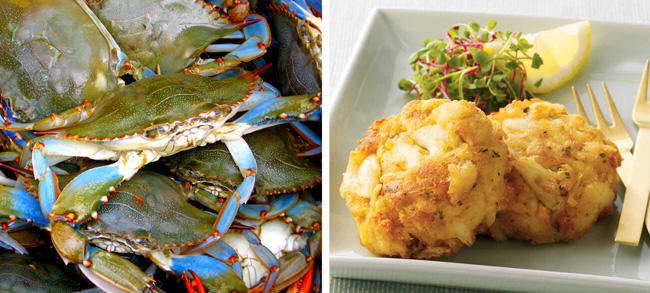
Crabs will eat just about any seafood you offer them, but so will seals and sea lions, and they'll trash your crab pots to get at it. Enter mink bait! Crabs find their food by smell, and apparently the smellier the better because they love mink musk. But seals and sea lions can't stand it and will give your pots a wide berth!
COOL FACT #8: Canada's beaver population has never been bigger
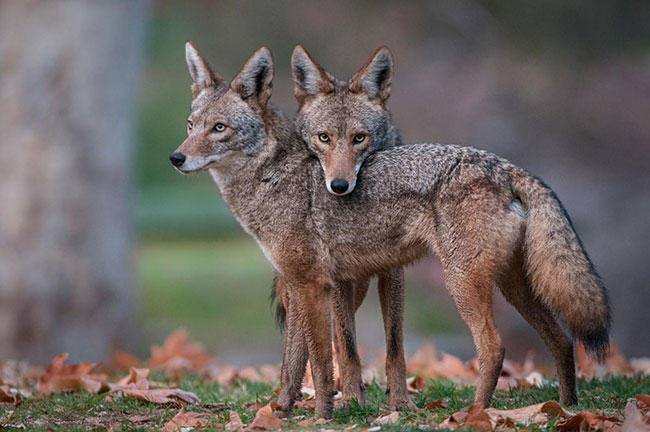
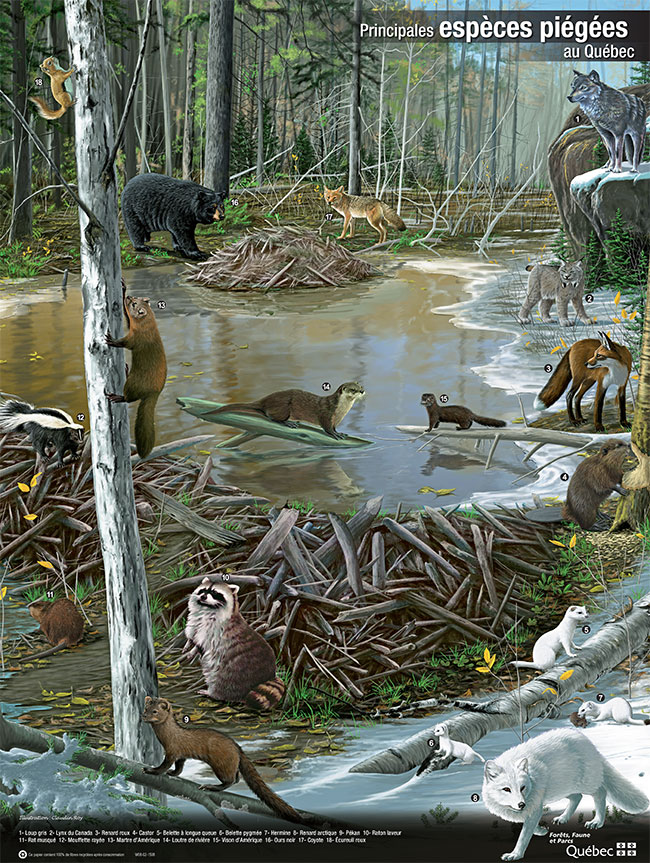
The national animal of Canada has been prized for its luxuriant fur for hundreds of years, yet wildlife biologists believe there are as many today as there were before Europeans arrived. They also believe coyotes, foxes and raccoons are more populous now than ever. Truly modern trapping, regulated to allow only the removal of nature's surplus, is a perfect example of the sustainable use of renewable natural resources!
COOL FACT #9: Farmed mink enjoy company so farmers house them in pairs
After being weaned from their mothers, farmed mink are often raised in pairs, preferably a brother and sister, and sometimes even threes. Farmers have learned that keeping siblings together results in calmer and healthier mink.
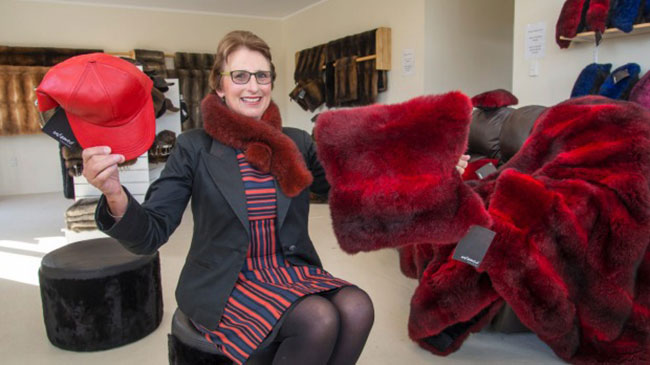
Assembly times: Intarsia sheared beaver by Zuki: 100 hours; Jeep Wrangler by Jeep: 18 hours.
COOL FACT #10: Fur garments are very labour-intensive
Fur garments are created individually, with all the cutting and sewing done by hand. Not counting all the work involved in producing the pelts, an “average” mink coat might take 35-40 hours of hand work, while an intarsia sheared beaver by Zuki could take 100 hours. That's longer than it now takes to assemble a car!
BONUS FACT: Animal activists have no sense of proportion
Each year, North Americans use about 7 million animals for fur. That's one sixteenth of one percent of the 12 billion animals they use for food. Yet animal activists focus more attention on the fur trade than on all other livestock industries combined. Go figure!
The fur industry is proud of the many ways in which fur is eco-friendly, including that after decades of use, it biodegrades. In… Read More
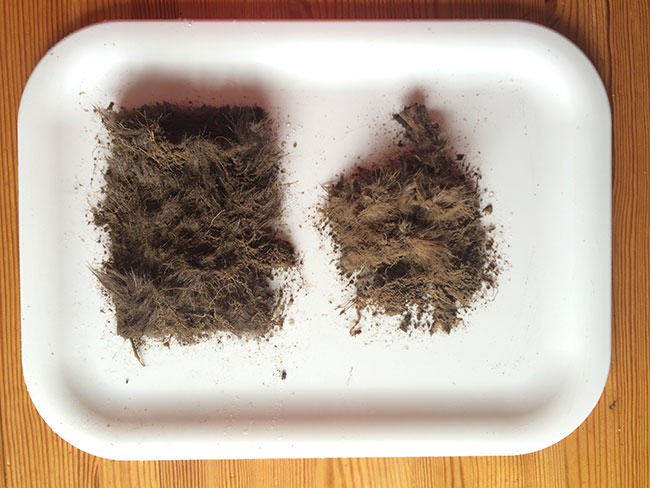
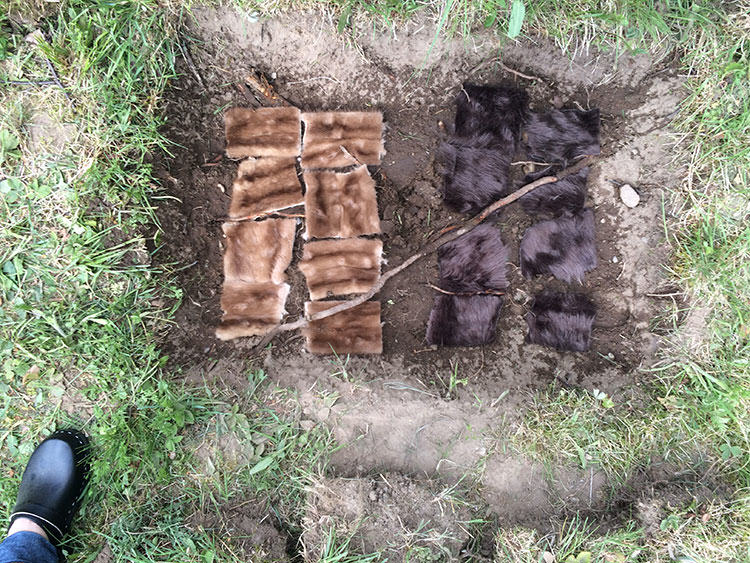
Three months ago, we launched the Great Fur Burial. This is what we buried - mink on the left, fake fur on the right. How do they look now?
The fur industry is proud of the many ways in which fur is eco-friendly, including that after decades of use, it biodegrades. In contrast, when fake fur made from petrochemicals reaches the end of its useful, and typically very short, life, it goes in a landfill where it will sit until the end of time. Or will it? In pursuit of knowledge and truth, we decided to do a little experiment: the Great Fur Burial.
On May 14, we took a mink stole and a fake fur vest, cut them into equal-sized pieces, and buried them. Above is how the pieces looked on burial day. After 3 months, 6 months, and then once a year for five years, we would unearth a piece of the mink and a piece of the fake fur to check for degradation. This experiment is hardly scientific, but it only has to show one thing: do they rot, or not?
Three Months Later ...
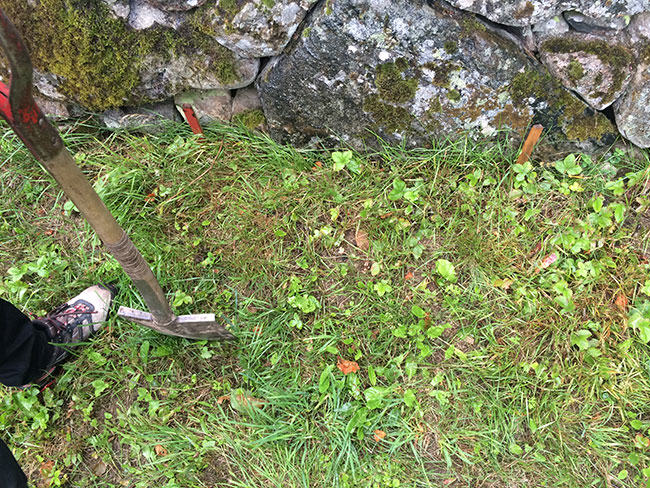
Last week we unearthed the first of the eight sets of fake and real fur. We set out to the burial ground, marked by two sticks.
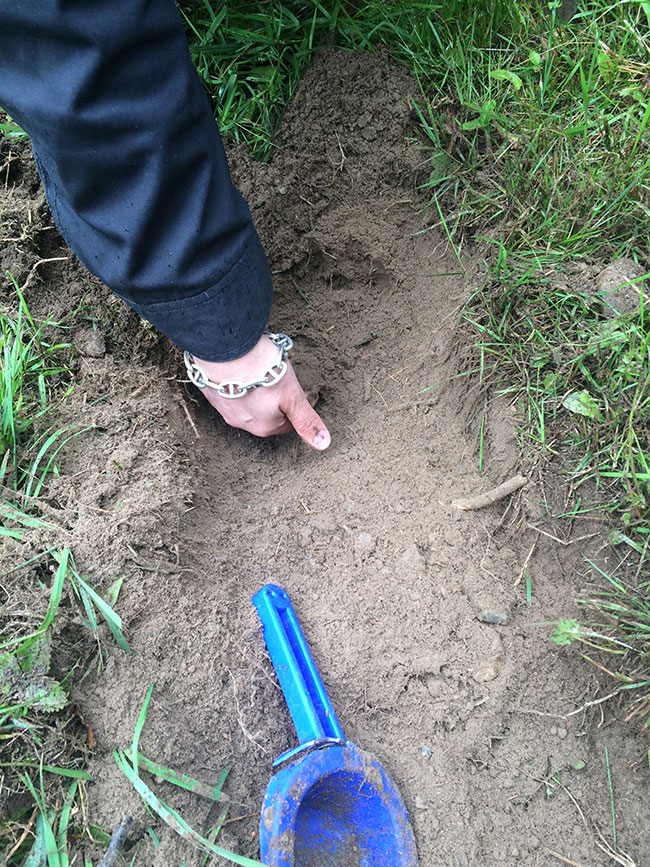
It only took a few seconds of digging to find the first piece of fake fur, which appeared to be fairly intact.
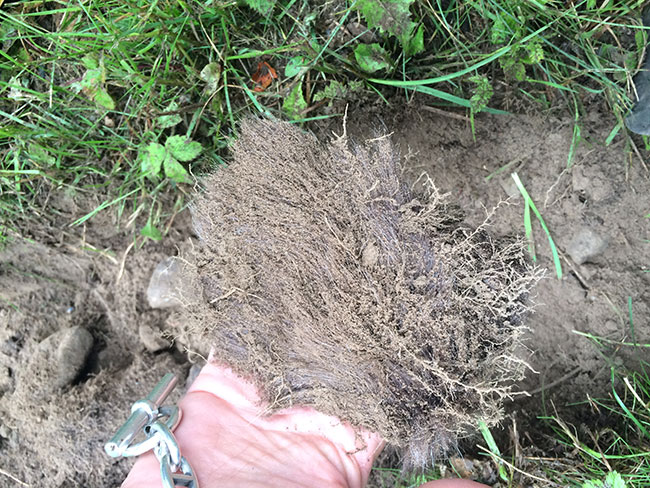
Finding the real fur was more of a challenge. We decided to dig by hand to avoid disturbing the site too much, and came across a sad-looking shred.
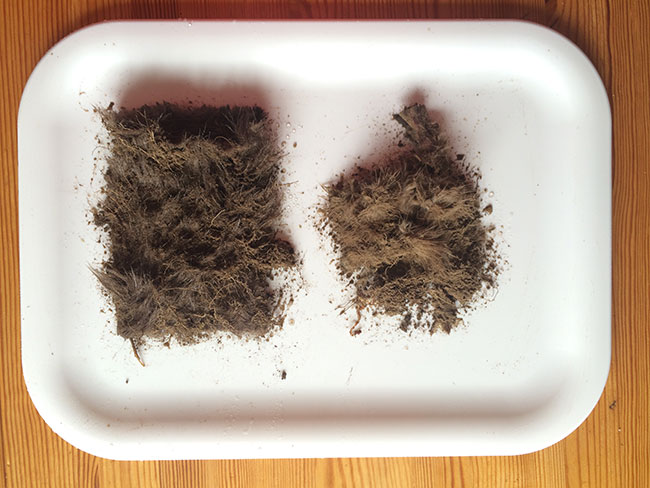
After refilling the grave, we put our exhumed samples onto a tray. It was time to have a closer look for signs of degradation.
Before cleaning. Fake fur on the left, real on the right.
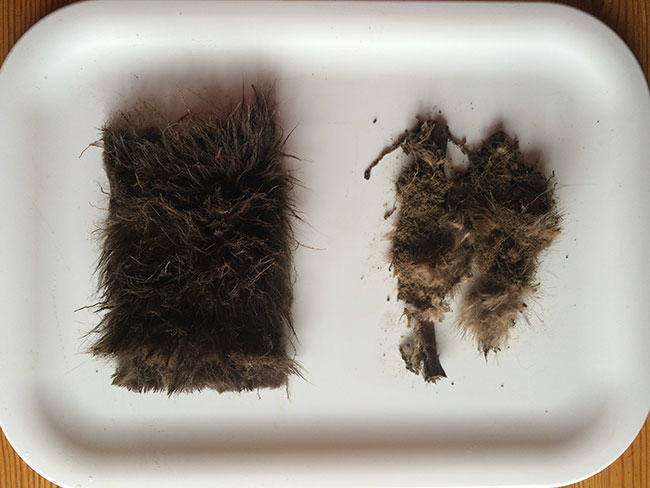
A lot of dirt was still attached to the samples, so a bit of gentle cleaning was in order. And here's what we ended up with:
After cleaning. Fake fur on the left, real on the right.
Ocular inspection immediately told us that the two samples, which were originally the same size, were not the same size anymore. The real fur sample was much smaller.
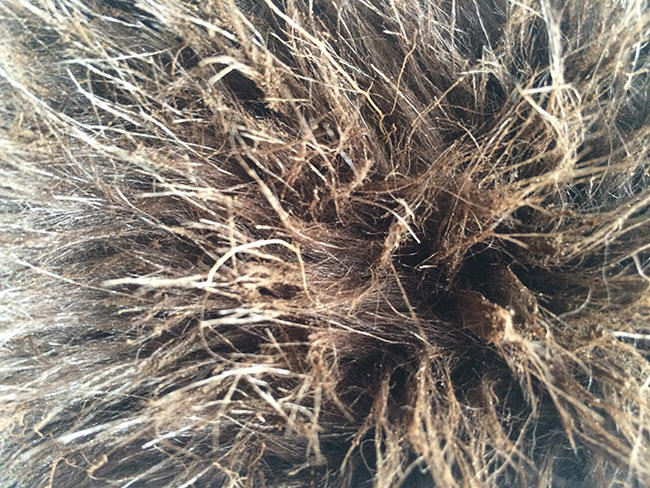
Closer inspection revealed that the synthetic fur was pretty much intact, front and back.
Close-up of the synthetic fur after three months in the ground.
The backing of the synthetic fur looks almost like new.
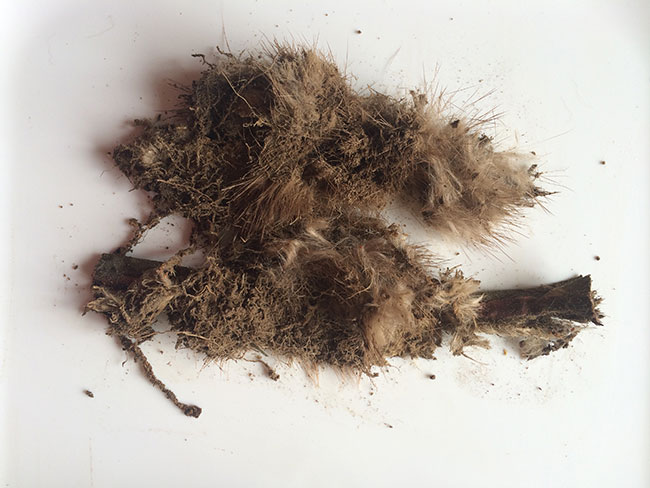
The real fur, on the other hand, was falling to pieces, and was held together by the threads from the letting-out sewing process. The leather had all but disappeared and most of the hairs showed clear signs of biodegradation.
The real fur sample looked more like an owl pellet than a mink stole.
We're only three months into a multi-year experiment, and already the findings are quite dramatic.
Equal-sized pieces of fake and real fur were buried side by side. After three months, the fake fur showed no obvious signs of degradation, biological or otherwise. In other words, it was perfectly intact. The real fur, however, was in an advanced state of degradation, in particular the leather.
Like all good scientists, we'll hold back on making conclusions until the experiment has run its course. But the way things are headed, it might not be long before we're using tweezers and a magnifying glass to find a real fur sample. It will all then be down to the fake fur samples. Will they degrade in five years? Or by the end of time?
Are you interested in studying fur design and learning the technical skills involved in producing fur garments and home accessories?… Read More
Are you interested in studying fur design and learning the technical skills involved in producing fur garments and home accessories? There are only a handful of courses around the world that teach these skills, and one of them is in the north of Finland.
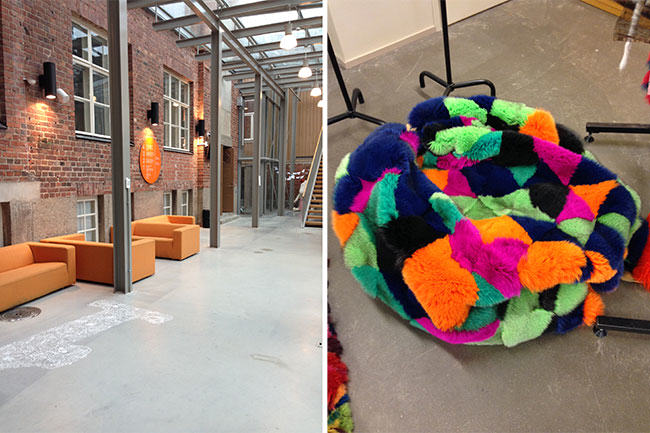
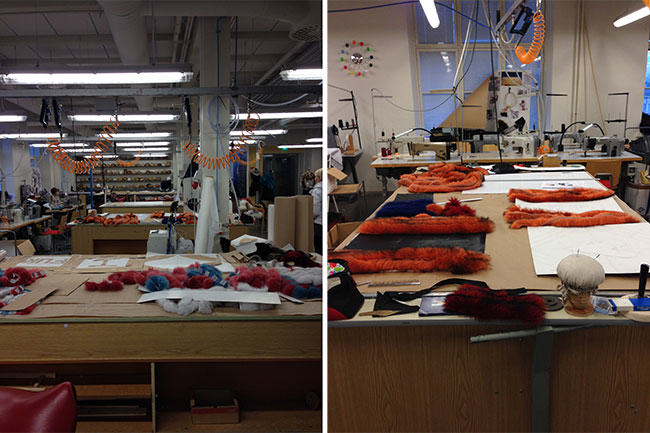
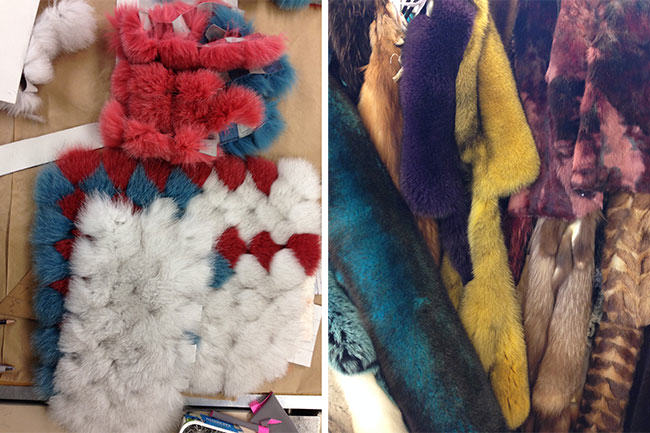
The first thing that caught my eye when I walked into the fur design studio at Centria University of Applied Sciences were the fox pelts. Everywhere. Scraps of fox in boxes, coloured fox pieces being sewn into garments, rails of fox clothes, and the pièce de résistance, a multi-coloured fox beanbag chair (to die for would be an understatement here).
But then again, what would you expect when taking a fur design course in the country famed for its fox pelts?
Left, the beautiful Allegro campus in Pietersaari, and right, a fox fur beanbag.
While it may seem remote, Pietarsaari, a town with a population of just 20,000, is a great place to study fur design. This is the epicenter of Finland’s fox farming industry, and it helps to have great resources nearby.
The Center for Fur Design is situated in the Allegro campus of the Centria University of Applied Sciences, in the town centre of Pietarsaari. It offers a Bachelor of Business Administration with a specialisation in fur design and marketing.
The fur design studio, well equipped with materials and specialised fur machinery.
The curriculum features courses in handling fur, the properties of the raw material, as well as design and construction of products made from fur and leather. With close relationships and proximity to many fox farms, students are able to learn about the farming and access a great deal of very beautiful raw materials. On the business side, they will learn business, economics, management, and communication skills.
Fox projects in process.
In addition to the degree course, Centria University of Applied Science also runs the FutureFOXstudio, an initiative that serves the fur trade, including companies, designers, teachers, and students. They offer creative workshops, product development services, international marketing, and tailored modules on fur design and related topics.
Are you interested in mastering the skills of fur design and business administration? The bachelors lasts three and a half years. And while you might find yourself a bit isolated that far north in Finland, rest assured you’ll be in good company. There are plenty of fox farms in the neighbourhood.
July may be the slowest month on the fur calendar, but some issues never go away, especially if they enter the… Read More
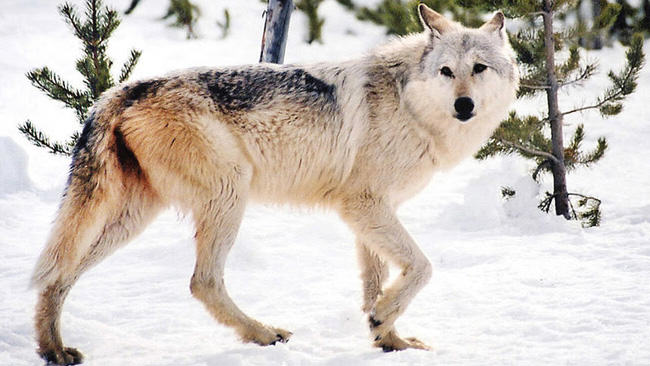
The legal tussle over hunting of Great Lakes wolves seems set to last for many more years. Photo: National Park Service.
July may be the slowest month on the fur calendar, but some issues never go away, especially if they enter the legal system. Take the Great Lakes wolves. The hunt was off, then it was on, and now it's off again. It's supposed to be about the numbers, but the precautionary principle must trump all, says Nancy Warren of the National Wolfwatcher Coalition. “Wolves have reached the numeric goals for delisting” in Minnesota, she concedes, but when they're faced with threats like climate change, current numbers apparently don't matter.
Wisconsin's inhabitants might not agree. With hunting and trapping banned, the state's wolf population is now more than double its official goal of 350.
Taking the lead against the Great Lakes wolves lawsuit filed by HSUS is the Ohio-based Sportsmen’s Alliance. Truth About Fur interviewed spokesman Brian Lynn on today’s trapping challenges in general. Though most of the Alliance’s members are hunters and fishermen, it is strongly committed to the interests of trappers too. “Trappers are the ones on the front lines," he says. "They are constantly under attack [from] animal rights organisations, legislation, the ballot box … Whether it is changing the seasons, eliminating the seasons, or regulating traps, they are getting hammered left and right.”
The next major battle will be fought in Montana, where a ballot initiative is coming up this November that could stop all trapping on public lands. Pundits are saying it could go either way.
In other hunting and trapping news, British Columbia has banned the use of drones. It might seem like just another government intrusion, but most hunters and trappers seem supportive. But this man from North Carolina is seriously not a fan of big government. All he did was try to get a family of foxes out of his yard, only to find himself mired in regulations and conflicting advice. Did you know that North Carolina has no fewer than 27 different seasons for hunting foxes and 22 for trapping them, all depending on where you live?
Sex and Drugs and ... a Little Bit of Modelling
Are they really happy, or out of their heads on coke? The future Mrs. Mick Jagger is in there somewhere. Photo: Elle.
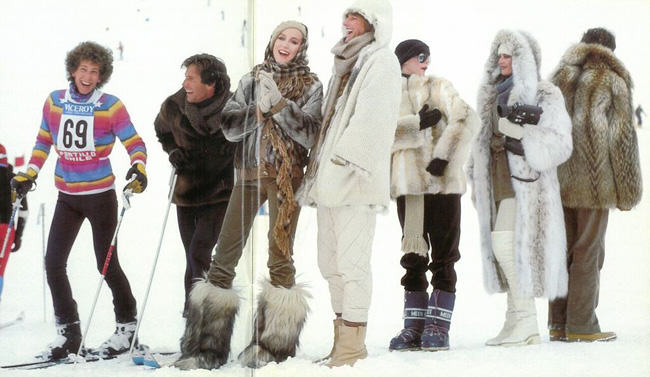
On the fashion front, a very unusual story appeared last month as a prelude to “a major motion picture”. Elle magazine spilled the beans on a “drug-fueled, multimillion-dollar supermodel snowpocalypse” that took place in 1977. Besides lots of fur pics, readers are given a candid insight into the behaviour of models and photographers back then. Is it different now?
And fashion designer-cum-hypocrite Stella McCartney is still taking shots at her fur-using peers. Her latest theory is that designers who use fur are just bloody-minded. “There are a lot of designers who are very ‘f*ck you’ when it comes to using fur,” she says. “If it’s wrong to do fur, then they’re going to do it.” Or maybe all they really want to say is “f*ck you”, as in, “f*ck you, Stella”. While she makes a huge deal of not using animal products, she has no problem using silk, made by boiling moth pupae alive.
We had two stories last month about fibres which, to North Americans at least, are exotic. Yak wool from Mongolia may be set to break onto the fashion scene, and New Zealand is making headway promoting its beautiful, durable and warm possum-merino yarn.
Sue Boot's company Simply Bush harvests around a million possum pelts annually. Yet possum fur and possum-merino yarn remain largely unknown in the northern hemisphere. Photo: Peter Meecham / Fairfax Media.
New Zealand's challenge, though, is more complex than selling a product which should sell itself. It faces a huge possum pest problem, and wants to demonstrate to sensitive consumers that killing methods are humane by international standards. Scientist Bruce Warburton, consultant for the Fur Council of New Zealand, sums up the perception problem well: "People use anti-coagulants to get rid of rats, but everyone gets worked up about trapping possums. There are a lot of inconsistencies about the way we deal with furry creatures."
How Much???
Let's round off with a couple of reminders why most of us must spend more time producing and promoting high-end furs than we will ever spend wearing them!
Former supermodel (all models are "supermodels" now, right?) Christina Estrada filed divorce proceedings against her oil baron hubby (who, as it happened, died this July). As part of the settlement she is asking for £40,000 annually just to buy a new fur coat! If you think that's rich, she also wants £6.52 million a year in child support, and that's for one kid.
Considerably cheaper, but still in the OMG category, are a pair of fur sandals recently sported by Kim Kardashian. The headline was how could she wear fur in 100-degree weather? But it should have been the price of these two little bits of nothing. $895! No wonder trappers feel they're not sharing in the industry's wealth!
At $895, making fur sandals may be more lucrative than trapping. Photo: FameFlynet.
There’s a common misconception that if you wear fur in public, you’ll get red paint or pig’s blood thrown on you. This is… Read More
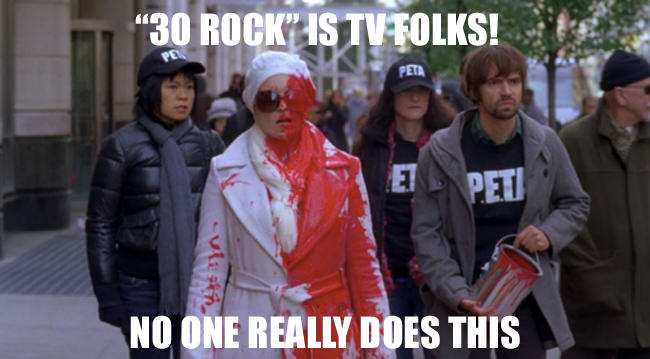
Liz Lemon (Tina Fey) was sloshed with red syrup for an episode of the NBC comedy series 30 Rock. An alarming number of netizens believe this was a real PeTA attack!
There's a common misconception that if you wear fur in public, you’ll get red paint or pig's blood thrown on you. This is an urban myth that's been around for decades, and we are here to reassure you that it will not happen! In fact we, and others, can’t find any evidence of this ever having happened to a regular person, and believe incidents involving celebrities can be counted on the fingers of, well, two fingers!
So prevalent was this myth in the 1980s and '90s that some North American furriers offered to clean their customers' furs for free if they were attacked with paint. But they never had to follow through on their pledge because it never happened. In fact, some animal activists even complained that the myth of attacks with red paint was invented by the fur trade to discredit them!
So, to answer the question, no, you will not get paint thrown on you if you wear fur. Here’s why.
Animal rights activists don’t carry around buckets of paint or blood in the hope they will find someone to throw them on. It is massively inconvenient to have a bucket of paint in your bag, plus it might spill onto your vegan energy bar.
Most people cannot distinguish fake fur from real. Not only does fake fur look very realistic these days, some of it even feels real. Would an animal rights activist risk attacking a fake fur wearer by throwing a bucket of paint on them? Not likely.
It is illegal. Not only is it obviously illegal to throw paint on a stranger for any reason, if you throw it because you think that person is wearing real fur, in the US you could be classed as an animal rights terrorist. Only a fool would risk 10 years in a federal prison for throwing paint on someone who might not even be wearing real fur.
It is counter-productive. Fur lovers are not easily cowed by animal rights activists, and if one of them has their fur ruined with paint, they will probably just replace it. And since fur coats are frequently insured, they won't even have to foot the bill. What is the point of destroying one fur coat, when it is only going to be replaced with another?
Animal rights activists rarely commit crimes in public. They protest, shout, take their clothes off and are really annoying in public, but rarely commit crimes in public. Instead, they vandalise farms under the cover of night or sneakily film animals being “mistreated” for months before showing anyone the evidence. Or they threaten violence in the comments section of an article without revealing their real identity. Does this sound like the type of person who is brave enough to throw paint on a passerby in the middle of the street? No.
If you're concerned about other crimes that may be committed against you and your mink coat, consider this. Spitting on someone is a crime and leaves DNA. Plus CCTV cameras are everywhere. At worst, you might be at risk of having a post-it note stuck on your back, but even this childish prank happens very rarely.
So confident are we that wearing fur is safe, we set out to prove it! A few years back, one of our team wore visible fur pieces in public for 100 days over the winter. Mostly she was in Vancouver, Canada, a hotbed of anti-fur sentiment, but she also spent time in London, England, also reputed to be intolerant of fur. The result? Lots of compliments, not a single negative comment, and of course, no paint attacks. The experiment, called 100 Days of Fur, confirmed that fur is a very safe fashion choice.
Of course, animal rights activists do like their publicity, so celebs should be a more attractive target, right? But even then, our count currently stands at two: the late comedian Joan Rivers once got red paint thrown on her sable, and Vogue editor Anna Wintour once got hit with "fake blood". If you're a celebrity who's been sloshed with red paint, please tell us about it, and we're flattered you're reading our blog!
The Sportsmen’s Alliance is a US organisation that protects the outdoor heritage of hunting, fishing, trapping and shooting in all… Read More
The Sportsmen’s Alliance is a US organisation that protects the outdoor heritage of hunting, fishing, trapping and shooting in all 50 states. Between fighting in the courts, political lobbying, and countering campaigns by animal activists, they are kept busy. We talked to Vice President Marketing and Communications Brian Lynn about trappers, hipsters and sound bytes.
Brian Lynn: "Trappers are the most active, passionate, and engaged audience there is." Photo: Sportsmen's Alliance / Brian Lynn.
Alexandra: What percentage of your members are trappers versus hunters and fishermen?
Brian: I’d say somewhere between 10 and 20%. It’s not a huge number, but the trappers are the most active, passionate, and engaged audience there is.
Alexandra: Interesting you say that, because we think that too.
Brian: Trappers are the ones on the front lines. They are constantly under attack.
Alexandra: Are you referring to the amount of legislation that people are trying to put into place to try and ban trapping?
Brian: Yes. Animal rights organisations, legislation, the ballot box – trappers are constantly under attack. Whether it is changing the seasons, eliminating the seasons, or regulating traps, they are getting hammered left and right.
Alexandra: Do you think that trappers are getting attacked more because they are fewer in number? Or perhaps because in the US hunting is more associated with a weekend pastime?
Brian: It is both. There aren’t as many trappers, so it is more of a fringe endeavour. Also it lacks the idea of a sport – of you versus the animal. To the uninitiated, it just seems like you are going out there, putting some bait out, and whether a wolf, bobcat, bear, or your dog comes along, they get snapped up and killed cruelly. It looks barbaric, and it is a hard sell for us to protect. It is an easier sell to misrepresent. People already are ignorant about it; urban people are like, “You do what?” It is a harder thing to protect because of the ignorance, and it lacks the perception of sport and the “you versus the animal.”
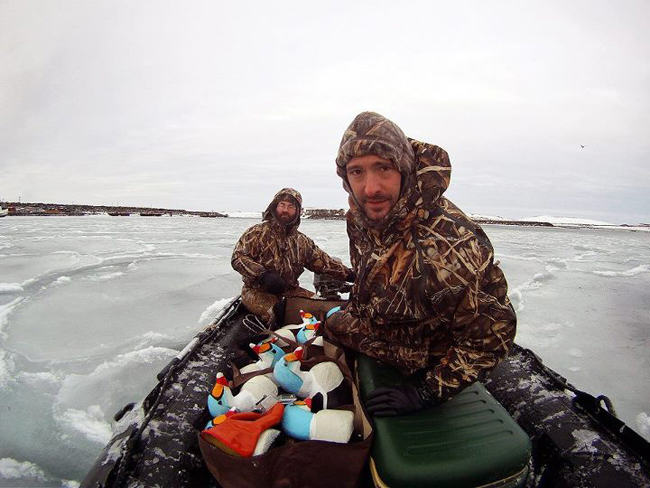
"[Trapping] is a hard sell for us to protect, it is an easier sell to misrepresent," says Brian, seen here hunting duck in Alaska. Photo: Sportsmen's Alliance / Brian Lynn.
Active or Passive Management
Alexandra: It's interesting how urban folk don’t mind trapping when there’s a coyote eating their cats, or beavers flooding their home.
Brian: That’s the whole thing. People say, “This doesn’t seem fair, that doesn’t sound right,” until it impacts them. Once the deer come in and start eating their petunias, now they're mad. Or they're hitting deer with their car. Now they want something done. Don't kill the bears until the bears start eating your kids. It boils down to active management versus passive management.
We did a piece on defensive trapping a couple of months ago in our newsletter, and without trapping, state agencies will spend hundreds of millions of dollars on trapping nuisance animals and flooding. Nobody understands that until it happens. The animal rights activists try to couch it as, “We don't need to manage populations." They try to pass off the Disney idea that “nature will balance itself”, which never really happens. But even they are saying passive management is ok. When the mountain lion becomes overpopulated and one starts eating their cats, then it's ok for the state to come in and kill that one lion. Well, it costs a ton of money, and it's not fixing the problem. With active management, you are mitigating the booms and busts and managing them actively with hunting and trapping. The animal rights groups just want to let everything go wild, and passively manage it when it becomes an issue with humans, which is just not going to work because we see disease, starvation, plus human-wildlife conflicts.
Alexandra: What are some of the biggest issues that you are dealing with right now, and have the kinds of issues evolved much over the past 20 years?
Brian: They go in waves and trends. In the 1980s, animal rights groups went after bow hunting, in the ’90s they went for mountain lions and some bear-hunting tactics. Last year we saw a lot of dog-related activity: kenneling, breeding, selling legislation. A lot of it is aimed at puppy mills, but if enforced to the letter of the law, it will stop hound hunting, kenneling, or selling those dogs.
We also saw a lot of apex predator issues – black bears and wolves. And now we are seeing them setting the table to come back for more of what they attacked in the ’90s - black bears and mountain lions in the west, and the Great Lakes wolves.
They hit something hard, in multiple states, for a couple of years, then let it rest. They let the social consciousness of the non-hunters absorb it a bit, they’ve made it an issue. Then they let their fundraising base rest, then come back and hammer it again several years later. It makes for a better news story again. Then it seems like a big issue that keeps coming out so they can get more funding, and it psychologically resounds with the public. “Oh, this is an issue, we need to do something about this!”
Great Lakes Wolves, Maine Bears
Alexandra: What are some of the activities that you do to fight the activists, and which campaigns have been successful?
Brian: Right now we are the lead on the Great Lakes wolves lawsuit. It is the Humane Society of the United States vs. the Sportsmen’s Alliance, the Department of the Interior, and the State of Wisconsin. So that is one we have been fighting for several years, and that should be moving through the court system, and we are appealing the last decision that was made in December 2014.
One of our more successful campaigns was the Maine Bear Ballot issue in 2014. The HSUS decided to go after bear hunting in Maine and hired a California firm to collect signatures and force it onto the ballot. The HSUS just self-funded the whole thing. If that had been successful, it would have basically put an end to bear hunting in Maine. It would have removed the use of traps, bait, and hounds to hunt bears, and that is 93% of the harvest. We went in, organised the grass roots groups, bought air time, created the messaging, and we ended up beating them by 8 points. And there was a couple of lawsuits out of that, that we fought and were successful in. We were successful all the way around and have a good base set up to protect it again, should they come back, and they have stated they are coming back again to stop it.
The thought is that they will just go after hounds and traps, because few people use these, so most people don’t care. This is when we get into apathy within our own ranks. If HSUS removes 85% of its opposition and 85% of its opposition’s funding, those who remain make easier targets.
"Sticking Up for One Another"
Alexandra: Some graphics in your social media send a message about uniting hunters, fishermen and trappers. What is the thinking here?
Brian: We need to be sticking up for one another, despite method of take. Even if you don’t participate in trapping and you don’t use bait, we can’t stand around and say, “That’s doesn’t affect me.” Once hound hunting falls, once bait hunting falls, once trapping falls, they are coming after what you do want to do. We need to be united regardless of how we are participating in these activities.
Alexandra: What percentage of Americans do you believe support hunting, trapping and fishing, and how many are opposed?
Brian: Hunters and anti-hunters are about the same size, 5-10% of the population. And all of the polls show that 75-80% of the general public support hunting as a management tool. That’s great. But the problem is that all that support goes right out the window as soon as emotion gets into it. People's minds are changed really quickly if they are shown an animal flopping around in a trap or a dead trophy shot. We move from the logical “That makes sense, I support hunting,” to the emotional “Oh, but I don't support it in this instance. It seems cruel.”
The other side can just throw words around like “slaughter” and sway those non-hunting voters.
Our biggest challenge is telling our story, why we have to do it, why it makes things better, the funding of conservation, managing populations, habitat, carrying capacity of the land. That’s a long story which can be boring if you aren’t into it, and if there is legislation or a ballot initiative, and a news anchor puts a microphone in your face and you try and explain carrying capacity of the land and funding of conservation, it is long, boring, and not sound-byte stuff. Then they ask the other side why we need to stop it and they say, “It's cruel, they are slaughtering animals with babies.” There’s your sound byte.
"Hipster Deal Big Move Forward"
Alexandra: Have the demographics of your supporters and members changed? There is a hipster trend now, with people doing things themselves, growing their own food and maybe hunting. They were traditionally more on the left of the political spectrum, whereas hunters tend to be on the conservative side. Do you see this new demographic supporting outdoor activities?
Brian: We are seeing a bit of a bump, which is great from a branding and messaging perspective. This is important for the hunting and trapping industry in general, but here at the Sportsmen’s Alliance we are very engaged, political, more hardcore. The new people coming in are a more holistic type of person, who may not be political.
For the broader industry, though, the whole hipster deal has been good. From the perspective of acceptance within the mainstream, those people are sharing with other people, within city life. It is about taking responsibility for their food, and them relaying their message in a way that their friends can understand. That’s where I see it as being the biggest move forward for the industry. How do you reach someone in LA? We aren't going to reach some hipster in LA, but some guy at an LA party who went out, harvested his own food and killed a deer, that is going to do more good than anything we are doing as an industry to disseminate the proper message.
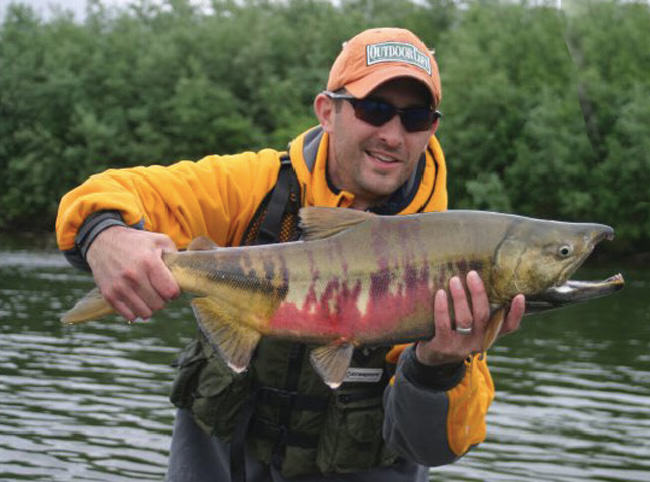
Great sport and great eating too! Hipsters are "taking responsibility for their food, and ... relaying their message in a way that their friends can understand." Photo: Sportsmen's Alliance / Brian Lynn.
Alexandra: Do you cooperate with a Canadian counterpart?
Brian: There is some run-over, but nothing official. In Maine, we are involved in two lawsuits on trapping Canadian lynx. In Maine, Canadian lynx are on the Endangered Species List, but north of the border they are not.
There are incidental take permits, and a certain number of Canadian lynx can be caught in traps without the trapper or the state being in violation of the Endangered Species Act. The HSUS is trying to stop that; they are trying to get the incidental take permits revoked. If they succeed, that would mean that anywhere there is an endangered species of any kind, trapping can be stopped. If you take it a step further, anywhere there is an endangered fish in a river, you could apply the same logic. You can’t fully control what steps into a trap, therefore you can’t trap anywhere there is an endangered species, just like you can’t always control what is going to bite your hook, therefore no one can fish anywhere there is an endangered fish. So that’s a lawsuit we are involved in in Maine.
"Educate Those Not Within Your Group"
Alexandra: Is there any advice you have for trappers about protecting their rights, proactively?
Brian: They need to educate non-trappers about what they do: about how trapping is regulated, how hard it is, what you do to prevent non-target by-catch. People need to understand that, and it is not the people that are already in your social groups, it needs to be the non-trapper or the hunter that doesn’t understand it, so you can help eliminate that issue of hunters not caring. For example, there are a lot of bird dog hunters that hate trapping because traps will be out during grouse season and they are worried their dogs might get snagged up in them. We need to try and educate those people. It is all about educating those not within your group.
As for state and provincial organisations, they need to start collecting funds and putting these aside. This is something we are saying in Maine, start a war chest, because the attack is coming, it is just a matter of time. The HSUS is so rich they can self-fund any campaign they want to. They are a $130-150 million a year organisation, so they can just decide “this is where we are going to go, and we will spend $3 million.” If HSUS comes and you sit there fundraising for the first six months, that's a six-month head start they have in swaying public opinion. If you can hit the ground running, and you already have a war chest, you are better off. That’s hard for groups to do, though, because unless there is a bogeyman right there, those funds start to look very attractive to dip into and use for other things.
Alexandra: Thank you for taking the time to speak to us!
For further reading, check out this great Sportsmen's Alliance content:
Every month, as I read through the past month’s fur news headlines, I think to myself, “Wow, this animals rights… Read More
Every month, as I read through the past month's fur news headlines, I think to myself, "Wow, this animals rights activism story is even stupider than the ones from last month." This month is no exception. In fact, June might be hard to beat because the activists have been up to some seriously stupid stuff. Let's have a look.
Can you handle a bit more stupid? Here are our top three seriously stupid animal rights shenanigans from June.
Third place goes to the woman who spent $300 to get a lobster from the grocery store back into the sea. I guess she doesn't realise that buying lobsters only contributes to demand, and her particular lobster was probably caught again 20 minutes after its release. (Grocery stores are all, like, "Lobster sales are going up! Even vegans are buying 'em!")
Second place goes to the vile, disgusting PETA people who are using the Orlando shooting as ammunition (pardon the pun!) for their anti-hunting agenda. America's largest mass shooting does not, I repeat, DOES NOT, deserve to be compared to hunting deer. EVER!
Deer Vasectomies?
Speaking of deer, the first place spot goes to the imbecile who thinks the best way to control the deer population on Staten Island is to start a 2 million dollar a year male deer vasectomy program, which the New York Department of Environmental Conservation thinks is a bad idea, and will have “limited effectiveness” and be “unable to quickly reduce deer-human conflicts.”
And let's give the special runner-up award to Kimberly Sherriton, a housewife in Long Island who organised a series of protests outside a farm because she wanted to save the life of a cow that they were going to slaughter to eat. The best part? Her solution was, "Please, tell him to go to Whole Foods and go get some antibiotic-free beef there." Because Whole Foods sells beef from cows that weren't slaughtered, right? I can't even deal with this level of stupid.
Moving on to the furry stuff! We just posted this piece about a renowned Canadian trapper on our blog (pictured below), definitely worth a read and if you want to know more, he's written a book about his life! This is a great video on trapping, entitled Meet Your Local Trapper, and Vice has once again shown its support for hunting and trapping by publishing How to Make It as a Fur Trapper in Northern Alberta. Ever wondered why mink is the world's favourite fur? We sure did, and that's why we wrote this blog post about mink fur.
If you are struggling to find ways to include fur in your summer wardrobe (the struggle is real, people) then Vogue's piece 14 Ways to Wear Fur All Summer Long has some really useful tips. If you are in a shopping mood, then you'll be pleased to hear that Kluger Furs has expanded and Adrienne Landau is now selling online, thanks to Beyoncé and Madonna. And if you are looking for a few soft materials to fill in the gaps of your fur wardrobe (maybe the summer mink ideas weren't working for you?) then keep an eye out for this new blend: perino.
When activists tell you that the majority of Americans think wearing fur is wrong, then they are lying. Americans think wearing fur is more acceptable than medical testing on animals, cloning, and extramarital affairs.
True life stories of a Métis trapper and his love for the land, his family and friends A primary goal… Read More
True life stories of a Métis trapper and his love for the land, his family and friends
Holding a trapping workshop in 1986 with war veteran Roland Giroux. Here Alcide demonstrates a small Conibear trap used for marten.
A primary goal of Truth About Fur is to give a voice to the real people of the fur trade. So what a pleasure it is to tell you about a newly published autobiography by one of Canada’s foremost trappers and trapping advocates, the legendary Alcide Giroux.
My First Sixty Years Enjoying Nature as a Trapper promises, and delivers, a passionate and epic tale of a life lived in close harmony with the land: hunting, fishing and trapping. And thanks to Alcide's extraordinary memory, he shares many wonderful adventures with us in vivid detail.
God's Country
The story begins in December 1951, near Sturgeon Falls, Ontario. Alcide was just six years old when his father moved their family onto the old homestead his grandfather had cleared and built in the early 1920s. There was no electricity or indoor plumbing, and young Alcide and his siblings had to cross the Sturgeon River in a small homemade boat before walking to school – a walk that provided opportunities for the young Alcide to snare rabbits to complement the moose and beaver in his mother’s stew pot. It was God’s Country back then, Alcide tells us, with wilderness and wildlife all around. Their trap lines began at the farmhouse door.
A few years later, Alcide’s Dad built a remarkable suspension bridge to facilitate the family’s commuting. “We had so many curious and nosy visitors; they all came to see the 8th Wonder of the World ... well the 8th wonder of River Valley!” Alcide recalls.
I enjoyed reading about this remarkable DIY engineering feat all the more because I walked across this same bridge many years later when I visited Alcide’s trapline, in the 1980s.
Eighth Wonder of the World! The old Giroux farmhouse, seen here in 1979, with the bridge Alcide's father built in 1960.
In the pages of his new book, Alcide pays tribute to many kind and talented woodsmen, but none more than his own father, “a great trapper with a built-in GPS in his brain.” Philippe Giroux was a Métis who instilled in his sons the importance of respecting the animals they depended upon, which meant trapping as humanely as possible. “Because we only had leg-hold traps back then, Dad showed us how to build underwater sets that ensured a quicker death for muskrats, mink and beaver.”
Alcide Giroux clearly learned his Dad’s lessons well; he became one of Canada’s foremost advocates for humane trapping. By the time he was 30, in 1975, he was writing articles in trappers’ magazines and leading workshops across Ontario and beyond, promoting the importance of researching and implementing better trapping techniques.
"I Had Gained Their Trust"
In 1980, as newly-elected president of the Ontario Trappers Association (OTA), his first speech called on trappers to take the lead in humane trapping, rather than have changes imposed on them by others. He remembers that his beloved wife, Pat, sitting at the back of the hall, was worried about how this call for change would be received. But Alcide’s sincerity and straight talk won the day.
“There were no hard feelings, no arrows thrown, but lots of applause and many handshakes," recalls Alcide. "I could breathe again; I had gained the trust and confidence of my fellow trappers.”
Leading a workshop for First Nations trappers in northern Ontario, 1980.
When the Fur Institute of Canada was created in 1982, to implement recommendations of the Federal-Provincial Committee on Humane Trapping (1974-1981), Alcide became a founding member, and later vice-chair. Accompanied by Pat, he travelled the world to lend his expertise to trap-research and conservation meetings in New Zealand, Europe, Louisiana, Australia and elsewhere. When scientists, politicians or journalists wanted to see a trap line first-hand, more often than not it was Alcide and Pat who received them.
Alcide’s story bursts with good humour and a passion for life, whether he’s describing the orphaned bear cub, Ben, that his family adopted, or the time that famed country singer Murray McLauchlan came for a visit and wrote a song about Alcide for his 1984 album about true Canadian heroes. The song, Little Brothers of the Wood, includes the lines:
I only take what I need, don’t take no more The woods ain’t a shelf in a grocery store. I only take what I need because come the spring I want to see beaver cubs in that pond again.
In 1983, Alcide found a new friend in bear cub orphan Ben.
Alcide’s strength of character is also evident as he faces life’s more difficult moments: political battles in the OTA, a fire that destroys the old family farmhouse, and especially Pat’s courageous battle with cancer.
Front-Line Defenders
In recognition of Alcide’s outstanding contributions, in May 2005 he was presented with the Fur Council of Canada’s “Furrier of the Year” award, at the North American Fur & Fashion Exposition in Montreal (NAFFEM). In his speech to more than 600 fur manufacturers, designers, retailers and government officials, Alcide reminded them that trappers did more than provide the beautiful furs on display in the hall. They were also front-line defenders of the industry, using responsible practices and educating the urban population – including furriers – about the importance of using nature's gifts sustainably.
Proud father, proud son! Alcide's 16-year-old son Serge (left) bags his first moose, 1988.
Speaking of nature’s gifts, for the gala fashion show that evening we had arranged for Alcide and Pat to sit with another celebrity: Miss Universe Canada, the beautiful Natalie Glebova. “Since trapping is always on my mind, I looked at Natalie and thought she would be good in the snow with legs like that!” Alcide remembers, with a chuckle.
The setting for most of this book, however, is in the bush, and anyone who enjoys the outdoors will appreciate Alcide’s keen observations about nature and wildlife.
To order your copy of My First Sixty Years Enjoying Nature as a Trapper, by Alcide P. Giroux (AKA “Ti-Lou”), please email [email protected]. Include your phone number and mailing address so we can send you an invoice to prepay before the publication is shipped to you. The price is $25CAD plus shipping and handling. Please contact us at [email protected] for US or international shipping rates.
Le livre d’Alcide Giroux est aussi disponible en français.
If you’ve worked in the fur industry or been vocal about your love for fur, then you have probably suffered… Read More
If you’ve worked in the fur industry or been vocal about your love for fur, then you have probably suffered some verbal abuse from animal rights activists. Animal activists like to claim they hold the moral high-ground and that they are the compassionate ones. Well, let’s look at some of the things these models of compassion say ...
What they say about ... using foul language in front of farm animals:
"[it's] conceivable that verbal abuse of an extreme nature [against any animal, including sheep] could constitute an act of violence"
Nicolah Donovan, president of Lawyers for Animals (source)
I guess they never heard the old adage, "sticks and stones may break my bones but names will never hurt me."
What they say to ... a homestead farming family when they post a photo of a cow they have just raised and then slaughtered for food:
"What if I start raising children for raping? Would that be acceptable? Would that be better than raping another child? It's stupid to think it is OK to kill animals."
For 70 years, American mink has been the world’s favourite fur, but why? Ask a dozen people and you’ll get… Read More
With its shiny guard hairs and dense underfur, American mink has been the world's favourite fur for 70 years. But how does it really fare against the competition? Photo: Mwanner.
For 70 years, American mink has been the world’s favourite fur, but why? Ask a dozen people and you’ll get a dozen different answers. The conundrum is that, of all the measures used for a fur's desirability, mink only ranks top in one - and that is one consumers don't even care about!
But first, a clarification: this is not a plug for mink produced in America. American mink refers to a member of the mustelid family, Neovison vison, which is, indeed, indigenous to North America, but is now bred on farms from Europe to China. The European mink (Mustela lutreola) is not used by the fur trade.
So if you’re ever asked why mink is so popular, take a deep breath, and explain there's no single answer. Here are no fewer than nine to get you started:
1) Mink Guard Hairs Are Fashionably Short
A fur's guard hairs are the ones that give it its shine and colour. Their length is also important because short-haired furs like mink are in fashion, while long-haired furs are mostly seen in trim these days. Given the famously fickle nature of fashion, that may not sound like much to pin mink's reputation on, but short-haired furs have been in fashion for 70 years!
In the 1930s, Hollywood was a giant advertising billboard for fur. But fox was the star, with mink in a supporting role. Greta Garbo in Inspiration (1931), and Barbara Stanwyck in The Mad Miss Manton (1938).
It's not always been that way though. Back in the 1930s, fur's Golden Age, the scene was very different. Long-haired furs were the rage and fox was king, followed by skunk and muskrat.
Short-haired furs were never out of the picture; sable and ermine, in particular, have always been highly desired. But supplies of these wild furs were limited (sable farming had not yet begun), and mink farms were producing nothing like the quantity or quality they do today.
Then, with the end of World War II, mink rose suddenly to replace fox as a lady's favourite. Some say it was because more women were now in the work force and could buy their own furs, and what they chose did not make them look like trophies for rich male benefactors. Who knows? But the love affair between women and mink has been strong ever since.
2) Mink Fur Is Very Soft
If you like your furs as soft as a cloud, mink will satisfy you as long as you don't experience sea otter. But since, for conservation reasons, sea otter is now only available through a highly controlled cottage industry in Alaska, consider lowering your standards just a little!
Sea otter is the densest and softest of all furs. At the height of the North Pacific hunt, even the hunters enjoyed this luxury, though style took a back seat.
A fur’s softness reflects the density of its hairs, and sea otter takes the prize with a staggering 400,000 per cm2 on its sides and rump. Far behind in second place is chinchilla with about 50,000 per cm2, although a "show" chin may have up to 100,000.
All of which makes mink sound like a scouring pad. The densest mink is the dressed pelt of a farmed animal, not wild, but even so we're talking just 24,000 hairs per cm2, or 16 times less dense than sea otter.
But perspective is everything here. Mink is still one of the densest, and softest, furs around. By comparison, the hair on your head (unless you're bald) is 190 hairs per cm2 tops, and probably half that!
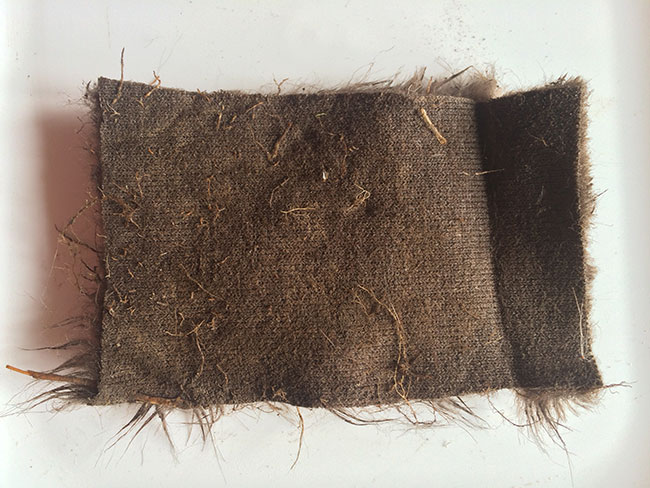
If you’re planning an ice-fishing trip in Nunavut, mink should not be your first choice for keeping warm. Try dressing from head to toe in caribou, and remember to undress when you get home or you'll overheat! The air-filled hairs of caribou are the secret here.
But remember, caribou fur is incredibly bulky, it sheds like crazy, and you definitely cannot buy this stuff off the peg.
If ice fishing in the Arctic is your thing, leave the mink at home! Nothing beats caribou fur. Photo: Francesc Bailon Trueba.
If the toughest challenge you face is a chilly evening stroll in Southern California, or even a freezing day in New York, mink fits the bill just fine.
Durability is rarely the top consideration in choosing a fur garment, otherwise we’d all be wearing wolverine or bear (usually used for rugs) and looking like Mountain Men. On the other hand, we don’t want furs that shed their hair or tear if we shout at them, like rabbit or moleskin.
So you're going off grid in Alaska, and you can only take one coat? Wear bear! And when it turns cold, slather the coat and yourself in bear grease. But beef up first. Leonardo DiCaprio's coat in The Revenant weighed over 100 lbs when wet.
Among furs generally used for garments, sea otter and otter have been ranked the most durable, at 100. Beaver comes third at 90, followed by seal at 75. Skunk and mink tie for fifth at 70, the highest-ranking mustelids. Other mustelids include the European pine marten (65), sable (60), stone marten (40), and ermine (25).
Fox comes in at a modest 40, and the less said about moleskin (7) and rabbit (5), the better!
So mink is not the most durable fur, but it is surprisingly tough for something so beautiful and soft!
5) Sheared Mink Is Cheaper and Lighter than Beaver
Shearing fur reduces the length of the hair to give a short, even pile, and a lighter, more supple material, almost like a textile. It's not a new treatment, but it's more popular now than ever, and the most common sheared fur today (not counting shearling) is mink. But does mink make the best sheared fur?
The ultimate sheared fur is beaver, but mink is lighter and cheaper. Photo: Glacier Wear.
For knowledgable fur lovers, no sheared fur beats the plushness of North American beaver. As a semi-aquatic animal, it has thick, dense underfur. This is normally sheared to 15 mm length, and with great skill can be taken as low as 6 mm. But it also has long, coarse guard hairs, which should be plucked before shearing, or the result feels like a scrubbing brush. Unfortunately this has been sheared beaver's downfall; plucking is a skilled process and also a Canadian speciality, and that means expensive labour.
The death knell for sheared beaver sounded in the early 1990s when Hong Kong manufacturers saw a whole new opportunity in shearing mink. As semi-aquatic mammals like beaver, mink were well suited with their dense underfur. Also, European mink pelts were then available very cheap. Plus there were other business advantages.
First, mink guard hairs are silky smooth, so don't need to be plucked before shearing. That was a big cost saving over beaver right there, plus it meant all processes, from tanning to shearing to dying, could be done in China, which meant lower labour costs.
Second, sheared mink is much lighter than beaver. Light is good in fashion, even if it means weaker leather, and Hong Kong took it to new levels, producing mink with a chiffon-like bounce.
Third, unlike beaver, mink pelts were available to manufacturers in huge quantities (see 9). Why should the industry promote a few hundred thousand shearing beavers when mink pelts could be had in the millions?
And fourth, mink was already the world's favourite fur, so sheared mink sold itself. No special marketing required!
6) Mink Are Suited to Farming
Most fur garments today use farmed pelts, most of these are mink, and of all furbearers currently being farmed, none is easier than mink. But it's definitely not the easiest!
For the easy life, farm striped skunk. Eighty years ago, at the height of skunk fur's popularity, neophyte farmers often learned with skunk before graduating to the more valuable, trickier fox. Skunk thrive in large, open pens (they are sociable and hate climbing), eat table scraps, and come running at feeding time! They also showminimal or no delayed implantation (see below). The only hard part - impossible, actually - is making a profit, which is why no one farms skunk anymore.
Striped skunk are the easiest mustelid to farm, but there's no market anymore. Seen here is unique footage of an English skunk farm in 1931.
Mink, by contrast, need isolating in covered pens (they fight and climb) inside housing specially designed for ventilation, lighting, feed and water delivery, and ease of cleaning; a carefully balanced diet; and hands-on care by the farmer and his vet at all stages of their life cycle.
Still, farming mink, and specifically breeding mink, is so much easier than other mustelids.
The key is the little-understood characteristic of mustelids called delayed implantation. After the female is impregnated, the embryos do not immediately implant into the uterus and begin developing, but instead enter a state of dormancy. Depending on the species and, perhaps, the temperature, this delay can last from just a few days to more than 10 months. The gestation period of fisher can last a full year, and American marten - which many farmers once tried to raise - are close behind.
Mink, by contrast, delay implantation for six weeks tops, but if breeding is timed to coincide with warmer weather, this may fall to about 10 days. With skill and luck, a farmer can see his new litters after just 39 days, and since his biggest expense is feed, every day counts.
And that's why almost all mustelid farmers now choose mink. The only exception are a few die-hards who stick with sable. Yet even in Russia, where the finest sable pelts are produced, only a handful of farms survived the end of subsidies under the Soviet Union. Sable have a gestation period of up to 300 days, and to make matters worse, females reach sexual maturity at age two to three. Mink are already there at one. That's a lot of extra feed!
All livestock farming is fraught with uncertainty (unless you're subsidised by government), and mink farming is no exception. But of all the different types of fur farming that have been tried, none offers the relative security of mink. It's been in demand for 70 years. If you produce it, someone will buy it.
For sure, there are ups and downs. North America's crop of pelts in 2011 sold for an average of $94.30, a record high, but in 2014 made just $57.70. But prices very rarely go below production costs, or stay there long. After World War II, skunk and fox prices fell so hard, the skunk sector was wiped out and fox farming in North America barely survived.
Still, you can't just buy a couple of mink breeders and start turning a profit. Modern mink farms are big, and economies of scale are key to their success - a far cry from most of their 150-year history. In 1969, when the US Department of Agriculture began compiling figures, there were 2,635 mink farms in the US, small family businesses producing an average of 2,000 pelts each a year. Today there are just 275 farms, according to Fur Commission USA, and while most are still family-run, pelt production averaged 13,672 in 2014. Capital investment has grown also, of course.
So to say there's money in mink farming is simplistic. If you have the expertise, reliable feed suppliers, a vet who knows mink, and a huge chunk of start-up capital, there's money in mink!
8) A Rainbow of Colours
Some furbearers come in a variety of colours in the wild depending on season, region, subspecies, or genetic mutations (much like human blondes and red-heads), and none shows more variation than fox. Wild mink, meanwhile, vary much less, ranging from tawny brown to very deep brown.
Of all the mink colour "phases" now available, only a few resemble wild mink. Photo: Finnish Fur Sales.
On the farm, though, everything changes. Selective breeding over many generations has resulted in farmed mink in a wide range of colours, or "phases", never seen in nature. In terms of variety, only the dramatic range of farmed fox colours outdoes mink.
This is an enormous boon for designers and consumers alike. Browns the same as, or resembling, wild mink, such as "demi-buff" or "mahogany", are huge sellers, but you can also choose from white to black, and a host of phases in between like "pearl", "sapphire", "palomino" and "violet". The choices just keep on growing.
9) Mink Supply Is Reliable and Flexible
And finally, the one class in which American mink comes top: reliability and flexibility of supply. Designers, manufacturers and retailers base their collections on materials they know will be available, and in the fur trade that means mink. Ironically, the consumers who drive the fur trade have no interest in this key aspect behind mink's continuing success, but that's not unusual. We are all consumers, and we are all prone to buying what is available, or, in other words, what we're told to buy!
A recent major North American auction exemplified mink's extraordinary dominance. Pelts of several wild mustelids were on offer: 42,000 ermine, 30,000 marten, 25,000 mink, 5,500 fisher and 4,500 otter. By contrast, no fewer than 4 million farmed mink were offered.
At any fur auction today dealing in farmed and wild product, farmed mink totally dominates. Photo: North American Fur Auctions.
American mink is locked in a self-perpetuating cycle of success. All of its other merits created demand, which in turn stimulated supply, and now the entire industry is invested in creating more demand. It's not the softest, it's not the easiest to farm, it's not the most durable, and it's not the warmest. But it ranks high in every class, which is why people want it, and the industry wants you to want it - and no other fur can compete with that!
The fur industry is proud to state that one of reasons real fur is eco-friendly is that it biodegrades. Fake fur made from… Read More
RIP to our real mink stole (left) and our fake fur vest made of polyamide and polyester.
The fur industry is proud to state that one of reasons real fur is eco-friendly is that it biodegrades. Fake fur made from petrochemicals, on the other hand, just sits in landfills for centuries - though that is, admittedly, hard to demonstrate! So thinking it's time to walk the walk, we decided to do a little experiment. Join us now in the Great Fur Burial!
We've taken a mink stole and a fake fur vest, cut them into pieces, and buried them in the ground. At 3 months, 6 months, and then once a year for five years, we will be unearthing a piece of the mink and a piece of the fake fur and checking in on the biodegrading process. While our experiment is hardly scientific, we are endeavouring to ensure the results are as realistic as possible.
Mink vs. Polyamide
First, we found a real fur stole (100% mink) and a fake fur vest (80% polyamide and 20% polyester). We removed the lining from both.
Here is a closeup of the mink before the backing was removed ...
And here is a closeup of the fake fur ...
We cut both into pieces, all of similar size (mink on the left, fake on the right) ...
Then we dug a shallow hole, roughly one foot down, and placed eight pieces of each fur into the "fur grave". This happened on May 14, 2016. (Mink on the left, fake on the right.)
Then we covered them with dirt and turf ...
Now let's let Mother Nature do her work! See you in August, little fur pieces!
It’s time for our monthly Fur In The News roundup, and as always, we’ll be looking at the latest fur stories,… Read More
It's time for our monthly Fur In The News roundup, and as always, we'll be looking at the latest fur stories, but we'll start with a couple of more general interest. First up, there's a new illustrated parasite guide doing the rounds (above) that speaks for itself. Please share widely!
Then there's the story of how nasty scorned vegans can be, which surprised even us. When a group of Californians found out one of their favourite vegan restaurants had owners who raised their own animals and then slaughtered them, they got a bit upset. Actually, more than a bit upset, they started sending the restaurant owners death threats. We are still trying to figure out how someone can claim to care about animals' lives, but threaten human lives. It makes no sense! Then again, neither does not eating meat or not wearing fur.
LESLIE BALLENTINE: And last but certainly not least, in late May we lost a dear friend and a remarkable collaborator. Leslie Ballentine worked for some 30 years to help producers tell their stories and reply to animal rights challenges, including work with Ontario egg producers and later as founding Director of Ontario Farm Animal Council, and more recently as communications consultant for the Fur Institute of Canada and Truth About Fur, among other clients. Leslie’s knowledge, commitment and passion for our work will be sorely missed. We send our sincere condolences to Leslie’s husband Alan, to her daughter Kailin and to other family and friends. You left us too soon and we miss you already, Leslie. Thank you for all your hard work in our field.
Manage Consent
To provide the best experiences, we use technologies like cookies to store and/or access device information. Consenting to these technologies will allow us to process data such as browsing behavior or unique IDs on this site. Not consenting or withdrawing consent, may adversely affect certain features and functions.
Functional
Always active
The technical storage or access is strictly necessary for the legitimate purpose of enabling the use of a specific service explicitly requested by the subscriber or user, or for the sole purpose of carrying out the transmission of a communication over an electronic communications network.
Preferences
The technical storage or access is necessary for the legitimate purpose of storing preferences that are not requested by the subscriber or user.
Statistics
The technical storage or access that is used exclusively for statistical purposes.The technical storage or access that is used exclusively for anonymous statistical purposes. Without a subpoena, voluntary compliance on the part of your Internet Service Provider, or additional records from a third party, information stored or retrieved for this purpose alone cannot usually be used to identify you.
Marketing
The technical storage or access is required to create user profiles to send advertising, or to track the user on a website or across several websites for similar marketing purposes.