July means Paris Fashion Week, and our friends at FurInsider.com did us all proud with six installments of commentary and… Read More
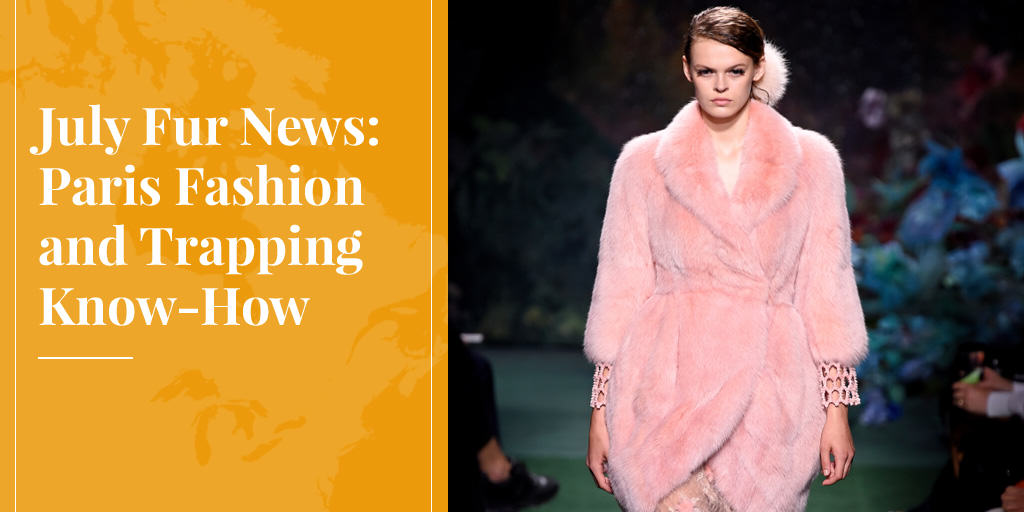
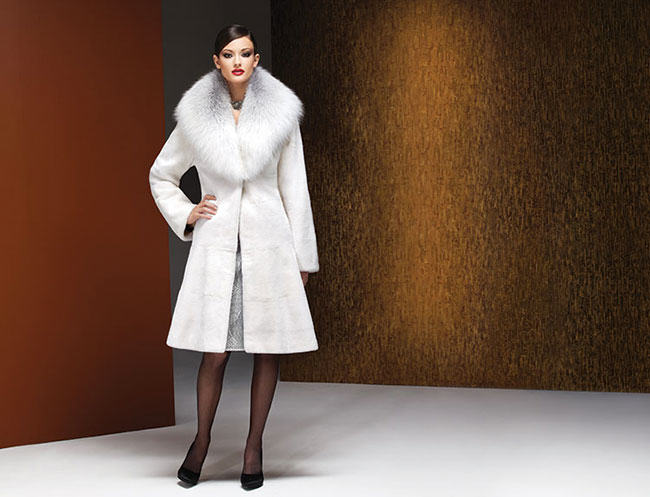
Fendi Couture at Paris Fashion Week. Photo: FurInsider.com.
July means Paris Fashion Week, and our friends at FurInsider.com did us all proud with six installments of commentary and glamorous pics of haute couture. Fur was plentiful, and hardly seems to raise an eyebrow these days – which is a good thing! Enjoy also Vogue's coverage of Fendi's haute fourrure show. Also abuzz with fur were the catwalks at FashionClash in the Netherlands.
And fur fashion has received some boosts from less-expected sources. Selfies of people in real fur are booming on Instagram, and UFC brawler Conor McGregor is a big fan of mink. Let's hope he wears this outfit when he battles boxer Floyd Mayweather Jr. on Aug. 26!
Still on fashion, we published a blog post on the fur policy at Net-A-Porter. This on-line fashion retailer sells a lot of animal products (leather, suede, shearling, etc.), but – hypocritically, we say – not fur. PETA put the word out like it's a major shift in policy, but it's not. It hasn't sold fur for years.
On the down side, former "supermodel" Gisele Bündchen has chosen to endorse petrochemical fur over the real deal. "All great designers now do beautiful #fakefur," she wrote on Instagram, even though it's patently untrue.
Elie Saab at Paris Fashion Week. Photos: FurInsider.com.
Trapping Know-How
It's the quiet season for trappers, so it's good there's been no shortage of reading material. A must-read for Canadian trappers is the latest list of certified traps from the Fur Institute of Canada.
The Live Free & Trap blog, out of New Hampshire, produced a magnum opus, "Rise of the dumpster cats", on the state's growing bobcat population and the conflict it's creating. And talking of bobcats, a controversial new report says management doesn't take sufficient account of bobcats' value to ecotourism. A dissenting biologist says: “Just because somebody traps a bobcat doesn’t mean that the particular bobcat was a bobcat that was going to be viewed by a tourist ...”
History buffs should eagerly anticipate the story of Hugh Kroetsch, employee of Hudson's Bay Company back in the 1950s, in an upcoming documentary called Last of the Fur Traders. And if you really want to get down and dirty, you might want to go rendezvous camping. Here's how to get started.
In decidedly bad news, animal rights terrorists are presumed to be behind the release of 30,000+ mink from a farm in Minnesota. Thousands of the animals "freed" in this misguided act died shortly after. The reward for information leading to arrests now stands at $11,000.
Bits 'n' Bobs
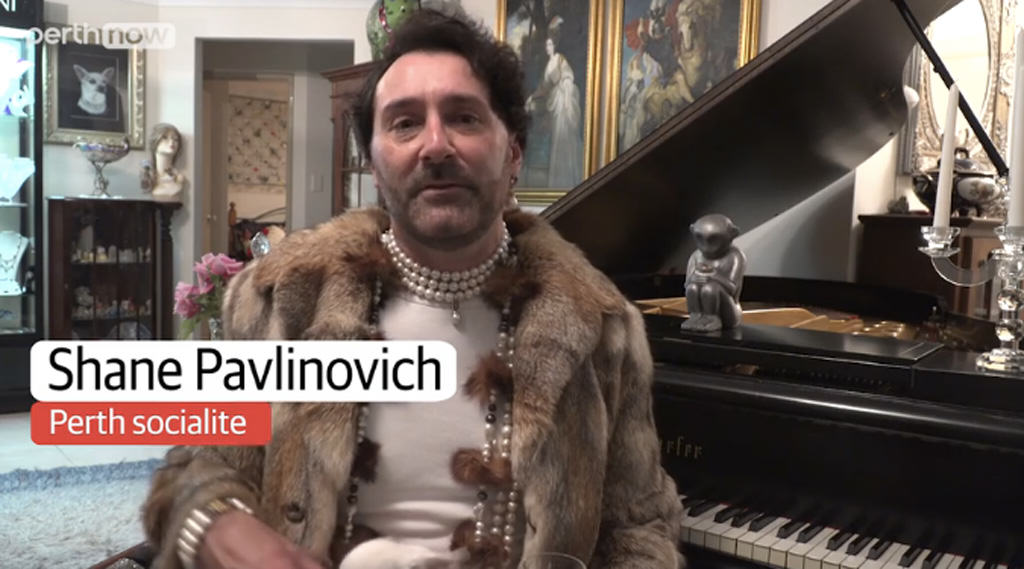
This eccentric socialite wears fur because he "loves and respects animals". Image: Perth Now.
We're always saying there's no contradiction in being an animal lover and a fur lover, and Aussie "socialite" Shane Pavlinovich certainly agrees! The "eccentric jewellery designer" loves vintage and ethically sourced fur hats, coats and scarves, teamed with "extravagant pearl necklaces".
And let's wrap up with a story that seems like a bit of fun but is actually not funny at all. Wildlife photographer Dave Slater is in a legal battle over some selfie pics taken with his camera by some macaque monkeys. We'd share one of the amazing pics, but it's all about copyright. Of course, PETA's involved!
Mink oil is a by-product of fur farming with a curious history that is hugely under-appreciated today. Once touted as… Read More
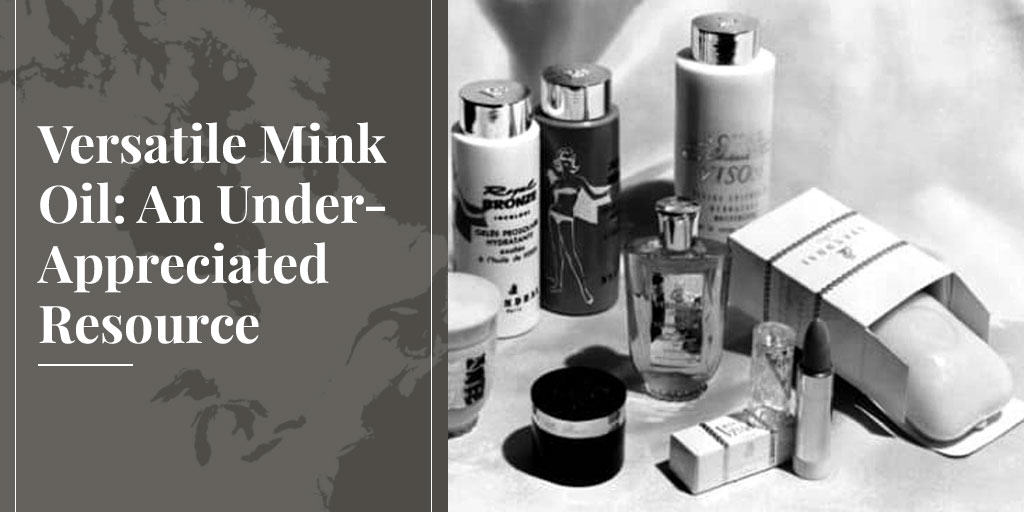
Mink oil is a by-product of fur farming with a curious history that is hugely under-appreciated today. Once touted as a magical tonic for skin and hair, it’s now mostly used for less exotic purposes like leather conditioner and bio-fuel. But if you know where to buy, you can still give your complexion the treat it deserves.
Mink oil comes from the fat on a mink's abdomen. Most of the fat remains attached to the skin during pelting, and is removed during the "fleshing" process as it can "burn" the fur if not thoroughly scraped off before the pelts are stretched and dried. Each mink yields 200-300 grams (7 to 10.5 ounces) of fat. Just handling this fat tells you it's special as it melts into a pale-yellow oil that softens and soothes your hands. It's even more appealing when it's been purified and deodorised.
Native Americans would have been the first to notice how soft mink fat made their hands, but our story begins in the 1950s. After World War II, mink fur emerged as a fashion favourite, eclipsing the pre-war favourite, fox. Mink farming took off and a steady supply of mink oil was available for the first time. But who would buy it?
An obvious market was soon identified, leather conditioner, and that’s still a major use today. But the marketers had something more exciting in mind: cosmetics. Mink fur already had the luxe image, yearned for by any woman who could afford it or persuade her man to buy it. So the marketers pinned the luxe label on mink oil too, and a new range of beauty products was born.
Mink Oil Beauty Products
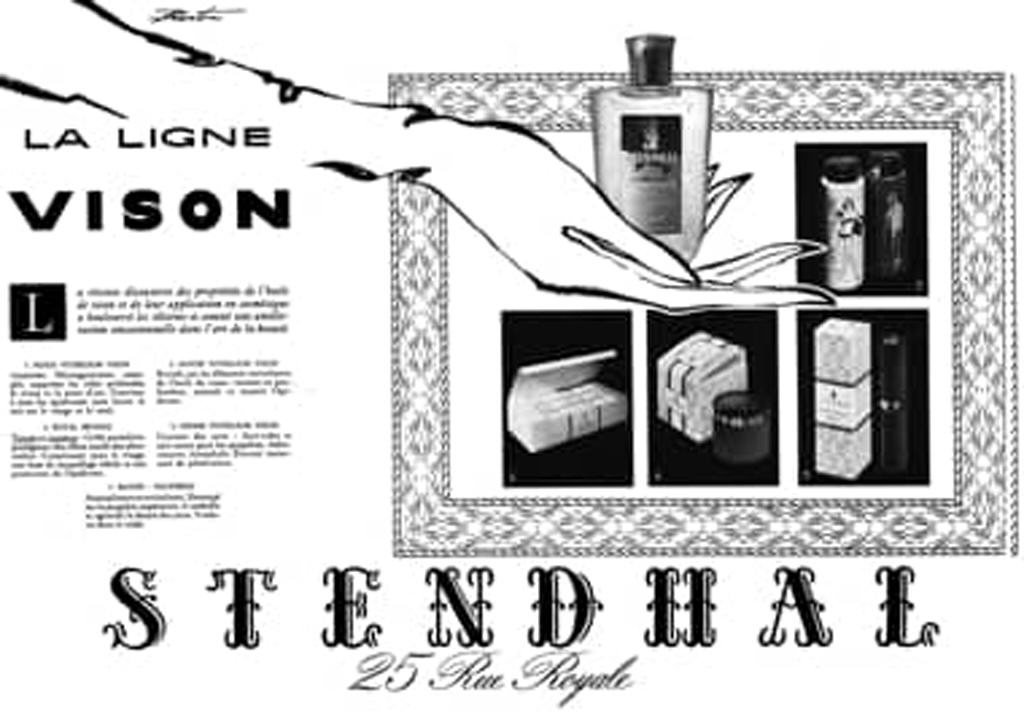
This was in keeping with the times. In Europe, the centre then and now of the cosmetics industry, companies were paying chemists to try anything that might unlock the secret to youth, including animal fats and a range of questionable animal extracts – hormones, embryos, placentas. So it really wasn’t surprising when, in 1949, a Paris-based company called Stendhal launched “L’huile de Vison” (The Oil of Mink).
The market was cool at first. Department store R.H. Macy introduced a mink oil cream in 1951 but found it a tough sell, and wondered if women might fear growing fur on their faces!
But things took off in the early 1960s with Stendhal’s "La Ligne Vison" (The Mink Line), featuring mink oil in pure form and in sunscreen, eye shadow, skin cream and soap. Competitors followed suit, adding mink oil to lipstick, cleanser, moisturizer and hair products.
Mink oil supplemented human sebum (our natural skin lubricant and waterproofing) very well because its composition is so similar. Our skin absorbs it quickly and deeply because it passes through the pores rather than the epidermis. Our skin is moisturized and nourished, and left velvety to the touch, never sticky or oily. Hard spots are softened, and wrinkles are prevented.
Mink oil was not associated with any allergies so it was perfect for hypoallergenic cosmetics.
Mink oil formed a barrier that slowed the loss of both water and sebum from the skin. This meant your skin remained moist for longer after applying makeup.
Conditioners and sprays containing mink oil increased hair body, suppleness and sheen, and improved the texture of damaged hair.
Pure mink oil was so stable it could be used for two years after opening a bottle. Cosmetics containing it also stayed fresh longer.
The mink was the "only animal in the world exempt from suffering any kind of skin diseases," and this "outstanding ability to heal on its own and their luxurious fur is distinctively related to its nourishing substance stored in its subcutaneous (under the skin) fatty layer of their skin."
We're not sure about that last one, but if mink oil cosmetics are so great, why are they hard to find these days? Maybe modern, high-end cosmetics work just as well and are cheaper to make or have a longer shelf life. Maybe also it’s because mink fur lost some of its near-mystical celebrity status in the 1990s, so mink oil’s greatest marketing strength faded too. And perhaps also it's because consumers, while still valuing natural ingredients in their cosmetics, now often prefer plant extracts to animal sources.
Whatever the case, most mink fat today has a less exotic destiny.
As any livestock farmer knows, efficiency is the key to profits, so it is important to use as much of the animal as possible. While it's rare for farmers to be paid for mink fat or oil today, they appreciate that the value of this resource lowers the cost of handling mink carcasses. The mink carcasses are usually composted into fertiliser – either on-farm or in separate facilities – or used to make bio-fuel. Mink oil is also used for bio-fuel, either alone or mixed with other animal fats. (The fat may be composted too, but it slows the process down.)
In regions where mink farms are clustered, the steady supply of fat is especially prized. Bio-fuel producers know that its protein level is higher than other animal fats, and that means more energy per unit. A good supply also makes refined and purified mink oil a viable business for use in cosmetics, leather conditioning and other purposes.
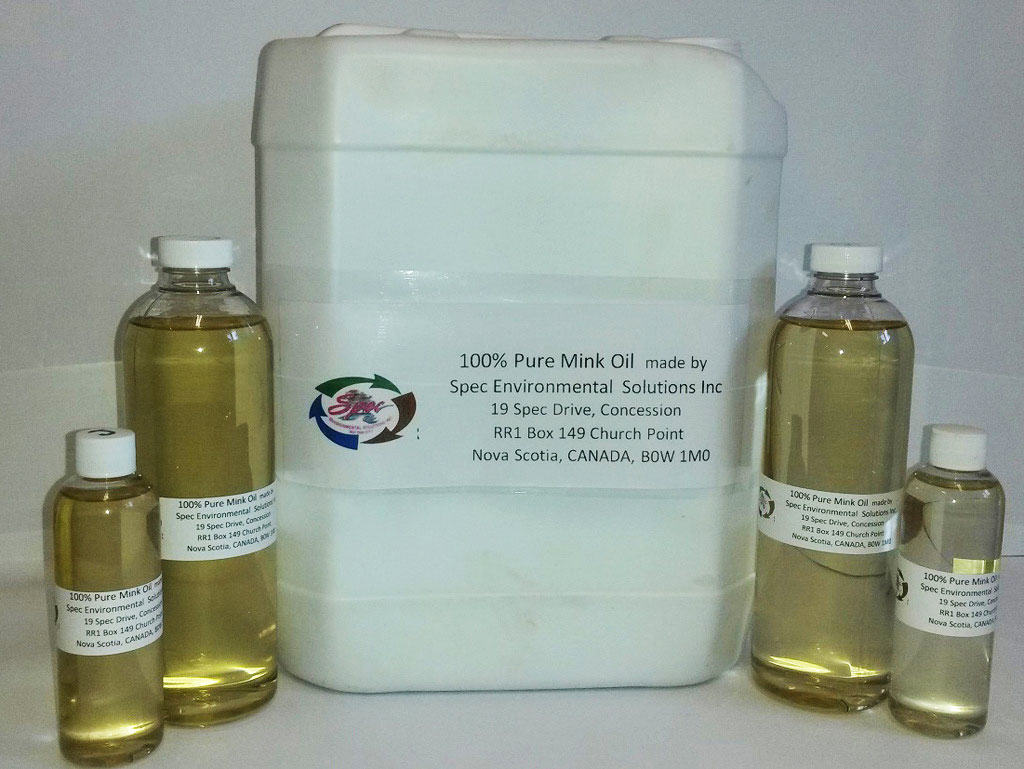
And that’s why North America’s biggest mink oil producer is based in Nova Scotia, the heartland of Canadian mink farming. Spec Environmental Solutions, which also composts mink carcasses, renders the fat at 70°C, producing some 500,000 lbs of mink oil last year.
Spec Environmental Solutions of Nova Scotia sells raw mink oil in 45,000-lb tanker loads, attesting to the size of this resource.
Spec refines some of its mink oil for specialty markets but sells most in raw form to companies that further refine it for sale to end users. Most ends up with tanneries to make leather pliable and waterproof, but consumers also buy it to condition leather saddles and baseball mitts, to waterproof boots, and other uses. These are niche markets, but they can only grow with the growth of on-line shopping.
In Europe, another centre of mink farming, the story is a little different. Strict EU regulations governing the disposal of carcasses mean that almost all mink carcasses, along with the fat, are turned into bio-fuel. Composting is rare. There are a few producers of mink oil, though not on the scale one might expect given Europe's position as the centre of the world's cosmetics industry and its biggest market. In the Netherlands, we're told, there are a handful of producers, and there's at least one each in Belgium and Iceland.
Einar Eðvald Einarsson (second from left) and family not only farm mink for fur but also produce mink oil cosmetics. All the plants contained in their lotions and creams grow wild on their farm. Photo: Gandur.
In Iceland, the Einarsson family farms horses, sheep and, for the past 34 years, mink. But it's always been a problem knowing what to do with the mink carcasses, since there's no local composting or bio-fuel production.
Making pet food is an option they're considering, but their breakthrough has been production of mink oil conditioner for leather shoes and saddles, and a range of lotions and creams, under the brand name Gandur.
Gandur had an unusual start in life, resulting in two product lines, one for humans and one for animals. "It all started when my mother decided to try to make a lotion for our horses, for when they develop sores around the hooves," explains Einar Eðvald Einarsson to the Iceland Monitor. "My brother is a vet and through him we tested it on more horses. One thing led to another and we started selling it."
Then humans started using horse hoof lotion for their own "various skin conditions" and a new product line for humans was born. Today, Gandur mink-oil products for humans are sold in pharmacies in Iceland, Sweden and Denmark.
"This is not a question of a great profit," Einarsson tells Truth About Fur. "This is a question of finding a use for a material that would otherwise be thrown away here in Iceland. We firmly believe this is of benefit for our environment."
So how does he feel about the merits of mink oil? Mink fat is high in omega fatty acids, he says, and more like the fat of a fish than that of a land animal. “The fat of the mink is much like our own fat, different from most other animal fats. The chains of fatty acids are very long and that’s why they are able to penetrate the skin so well. “
And there speaks a man who knows. Don't you owe it to your skin to find out for yourself? In the case of mink, it seems, beauty is indeed more than skin deep!
***
To learn more about donating to Truth About Fur, click here.
A few weeks ago, online retailer group Yoox Net-A-Porter made headlines for all the wrong reasons. The group’s websites –… Read More
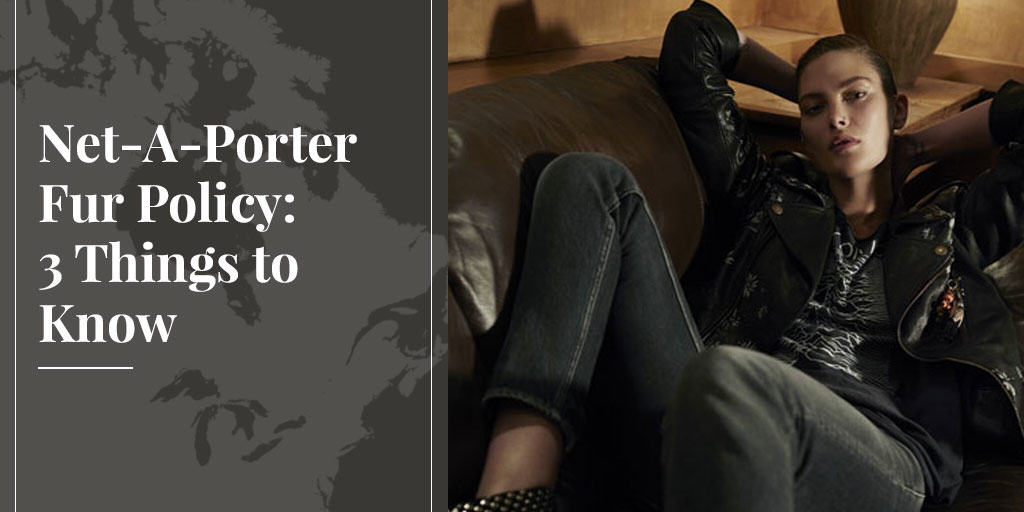
A 2016 editorial shoot from Net-A-Porter, featuring a leather jacket.
A few weeks ago, online retailer group Yoox Net-A-Porter made headlines for all the wrong reasons. The group’s websites – including Net-A-Porter (a leading luxury retail platform) – announced that they would not include fur in their offerings. Here are three things you need to know about the Yoox Net-A-Porter fur policy.
1. This Is Not News
The Net-A-Porter fur policy has been in effect for years, and its sister websites, Mr Porter and The Outnet, have also not sold fur for years. Net-A-Porter also doesn't want its staff wearing fur at work-related events, though we couldn’t help but notice that its editor-in-chief, Lucy Yeomans, was praising her fur-trimmed Canada Goose jacket on Instagram not long ago. So while its poorly-informed fur policy is certainly disappointing, it is not news.
Lucy Yeomans, editor-in-chief at Net-A-Porter, loves Canada Goose.
2. It's Hypocritical
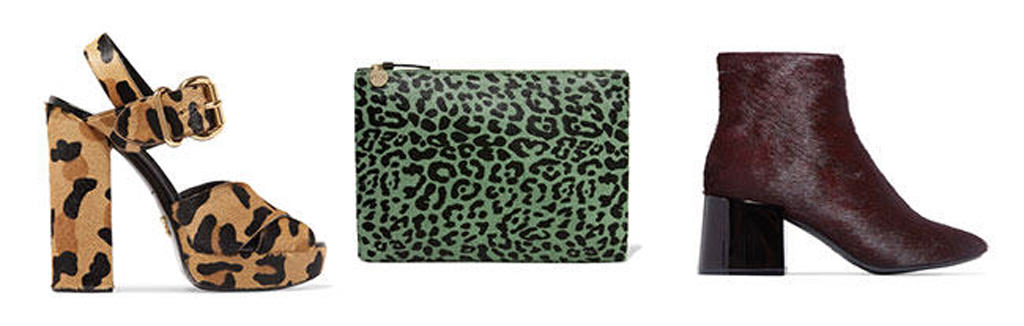
These websites do a huge business in accessories, notably bags and shoes. And guess what most bags and shoes are made of? Whether it’s leather, suede, lizard, snakeskin, or calfskin, these websites have no shortage of animal products.
While this isn't the first “fur-free” company to sell animal products, it’s still misinformed and hypocritical. There’s no rational reason why anyone would stop selling fur and continue to sell leather, suede, shearling, and other animal skins ... and silk, made from larvae that have been boiled alive.
If your company mandate has to do with animal welfare, then it would make sense to limit your offering to materials produced with high animal-welfare standards – and there would be plenty of fur that could meet that criterion. But the Net-A-Porter fur policy in its current form is completely misinformed and utterly hypocritical.
Beautiful calfskin accessories from Net-A-Porter.
3. The Reasoning Is Nonsensical
Just like each of us has a right to wear or not wear fur, stores have the right to sell or not to sell it. They aren't even obliged to give a reason for such decisions. But if they do decide to explain, would it be too much to ask them to give a logical reason?
Yoox Net-A-Porter's official statement said that they "remain more focused than ever on our commitment to create a sustainable future." But avoiding a natural, renewable material that is produced responsibly and sustainably cannot logically be part of a sustainability initiative. The use of the word "sustainability" to explain this policy is absolutely absurd. The very definition of sustainability is "avoidance of the depletion of natural resources in order to maintain an ecological balance," which would mean that materials from renewable resources, such as fur, leather, and suede, could and should be central to such a policy.
Meanwhile, Net-A-Porter continues to sell fake fur, polyester, and other synthetic materials, all of which are petroleum-based and neither renewable nor sustainable at all.
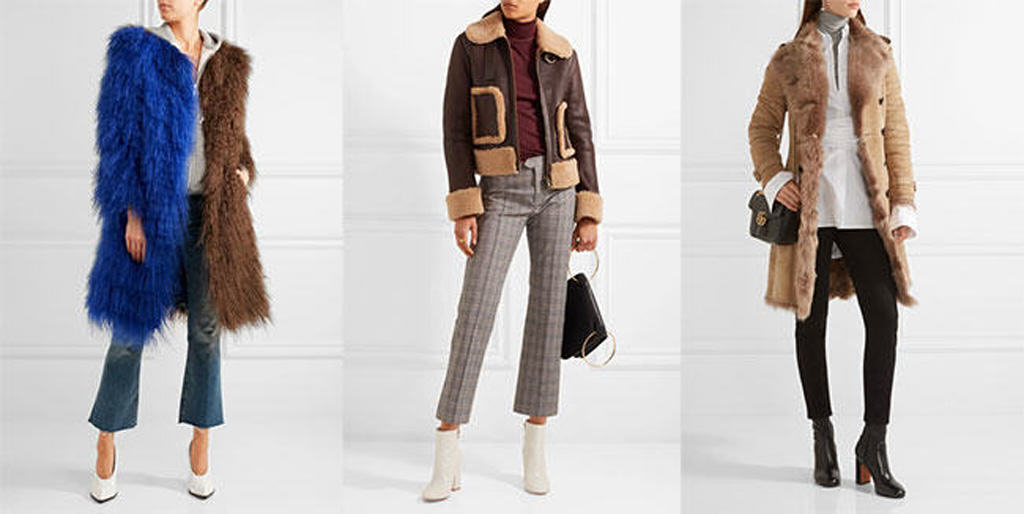
Net-A-Porter has a nice selection of shearling. Can someone explain why it is ok to use sheep's "fur", but not coyote fur?
We respect any retailer's freedom of choice and we have seen hypocrisy and misinformation about fur before. But we do expect a large and respected organization such as Yoox Net-A-Porter to base its business decisions on accurate information and responsible choices.
Canada is celebrating its 150th anniversary of Confederation this year, and with it comes a lot of stories about Canadian… Read More
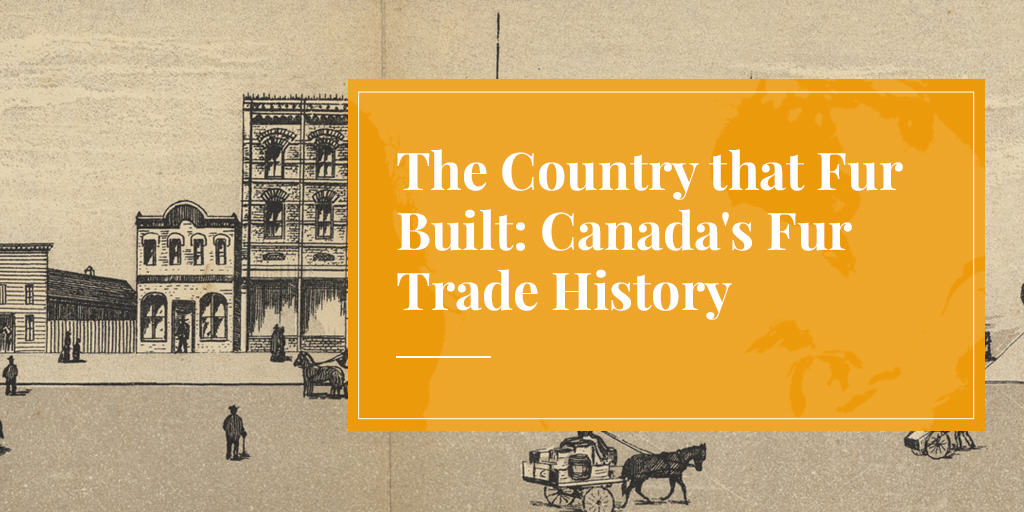
Canada is celebrating its 150th anniversary of Confederation this year, and with it comes a lot of stories about Canadian fur history. If you want to learn about how the country was founded on the fur trade, then check out our piece entitled The Country that Fur Built: Canada’s Fur Trade History (pictured above). Life on the Line is an excellent interactive piece about whether trapping is outdated or a part of living heritage. (We all know it's the latter.) Other articles about Canadian fur history include this story about a man who ran a Hudson's Bay store in the remote North and a profile on a fur trader from the 1800's. Some people are going beyond the typical Canada Day celebrations, like this guy, who is paddling from Banff to Montreal to reconnect with his Metis ancestry.
The thought of pizza makes us hungry, but how about pasta instead? One of our favourite Canadian chefs, Eric Pateman, has been cooking up a delicious seal Bolognese, and the Globe and Mail did a Q&A with Dion Dakins, who talks about whether seals are too cute to eat. Sealing is about more than sealers, of course, which is why we wrote about the other people involved in this trade. Since we are on the topic of wild meat, there's good news in Oregon where it has now been made legal to harvest roadkill.
Let's end with a few tips for summer
Need some new sandals? These fur ones by Zizi Donohoe (pictured above) were made for 7-Eleven.
Better watch out for bobcats, too, since their populations are rebounding after a decades-long hunting ban.
Need a coffee date this afternoon? If you are in San Francisco you might be able to have coffee with a rat. (Seriously.)
Want to keep the kids busy with a science experiment this summer? Try and replicate our fur burial experiment. It will teach them about biodegradation and the benefits of real fur!
Need a caddie for your golf game this summer? This furry guy has got you covered.
As Canadians prepare to celebrate the 150th anniversary of Confederation (July 1, 1867), and also the 375th anniversary of the… Read More
As Canadians prepare to celebrate the 150th anniversary of Confederation (July 1, 1867), and also the 375th anniversary of the founding of Montreal (May 17, 1642), this is a fine time to recall the unique role played by this country’s fur trade history.
In fact, fur trading had been practiced for hundreds – probably thousands – of years before Europeans arrived on these shores. Montagnais hunters from what is now northern Quebec, for example, were already trading fur pelts for corn, squash and other foods produced by Iroquoian farmers in the St-Lawrence valley when Jacques Cartier first visited the island of Montreal in 1535.
Fur trading with Europeans probably began when French fishermen crossed the Atlantic to exploit the extraordinary stocks of large codfish off the coast of Newfoundland and in the Gulf of St-Lawrence. When Cartier landed on the coast of northern New Brunswick, in 1534, he met Indians who clearly had experience with Europeans – they held up fur pelts on sticks, eager to trade.
It wasn’t until Samuel de Champlain built his habitation, in 1608 – to found what would become Quebec City, nucleus of New France – that the North American fur trade began in earnest. In the two hundred years that followed, furs provided the incentive to explore the vast interior of the continent ... and for a long series of wars and skirmishes to control it.
In 1627, Cardinal Richelieu granted a monopoly on fur trading to The Company of 100 Associates. Monopolies were sought to justify the risks involved in purchasing and transporting trade goods from Europe, and (hopefully) returning with furs more than a year or two later. But monopolies could also thwart innovation, with serious repercussions.
Radisson & the Hudson's Bay Company
One of the most dramatic examples is the story of Pierre-Esprit Radisson. At 15 years old, Radisson was captured by Mohawks and lived in their village on Lake Champlain long enough to learn their language and woodcraft – skills that served him well when he was able to escape and return to Trois-Rivières. In 1654, with his brother-in-law, Médard Chouart des Groseilliers, he explored far to the west, into the James Bay region, returning with a rich cargo of furs, and the bold idea that vast new fur supplies might be more easily secured by bringing ships directly into the interior of the continent through Hudson’s Bay.
New routes, however, threatened the politically well-connected merchants who controlled the French fur trade. Radisson and Des Groseilliers were briefly imprisoned and their furs confiscated. When their efforts to plead their case at Court, in Paris, failed, Radisson and Des Groseilliers eventually found their way to the English Court of Charles II. There, with support from the dynamic Prince Rupert, a cousin of the King, a group of influential investors was convened and The Company of Adventurers into Hudson’s Bay was born.
Under the Royal Charter granted on May 2, 1670, Prince Rupert and his partners became “true lords and proprietors” of all the lands drained by Hudson’s Bay, about 1.5 million square miles – one of the largest real estate deals in history. This immense territory, which came to be called “Rupert's Land”, included about 40% of today's Canada and significant parts of Minnesota and North Dakota. (While no longer directly involved in fur trading, the Hudson’s Bay Company is the oldest, continuously-operating, joint-stock company in the world. The 1670 Royal Charter is now on display at the corporate headquarters, in Toronto.)
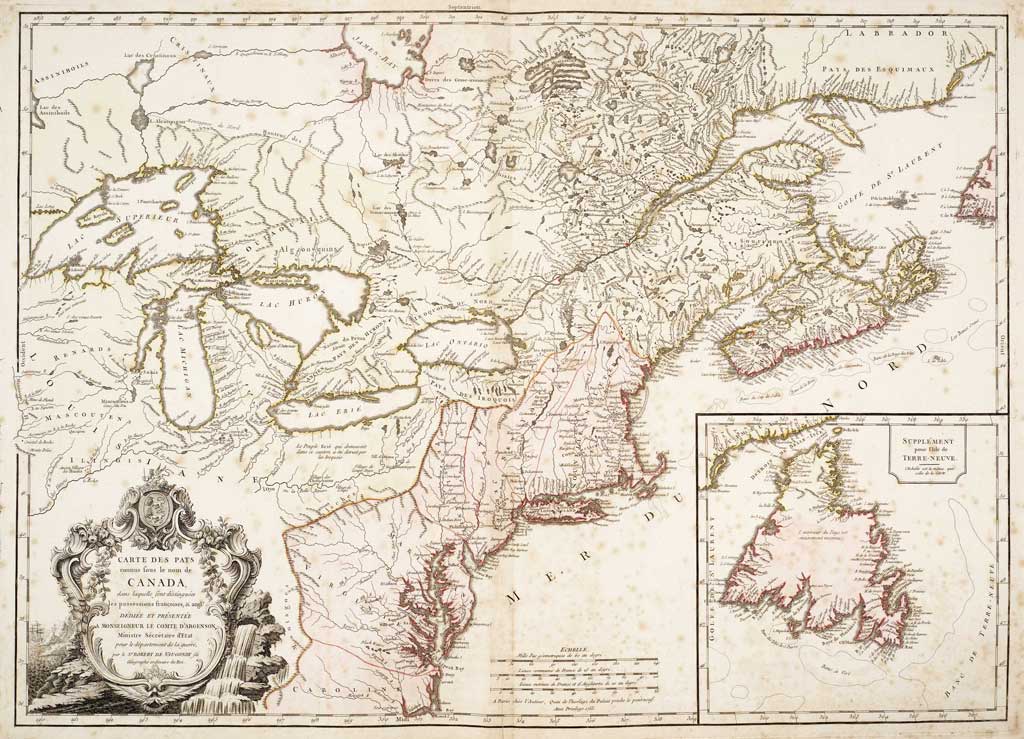
This detailed map from 1753 shows British and French colonies in North America, as well as locations of First Nations peoples, before the outbreak of the Seven Years' War. The First Nations were pivotal in the rivalry between France and Britain for land and control of the fur trade. Courtesy: Toronto Public Library.
The next 90 years were marked by intense competition between French, English and American fur traders. LaSalle and other French adventurers had established a string of trading posts and forts down the Mississippi to the Gulf of Mexico, controlling “Louisiana” (named in honour of Louis XIV) and hemming in the fast-growing New England colonies. By 1739, furs represented 70% of the exports from New France. But danger threatened, as the American colonies challenged French control of the Mississippi and points west, while the Hudson’s Bay Company intercepted fur supplies that had passed through Indian trade networks to Montreal and Quebec.
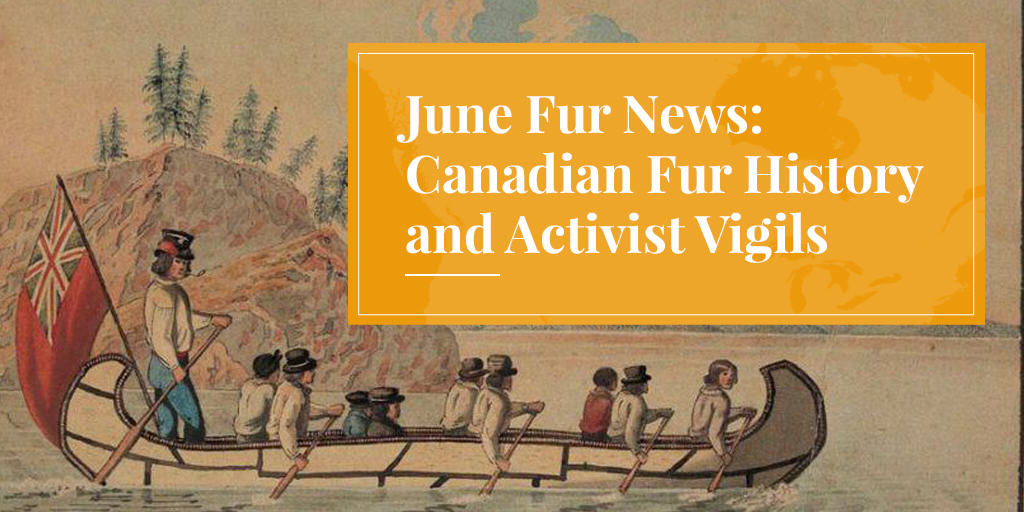
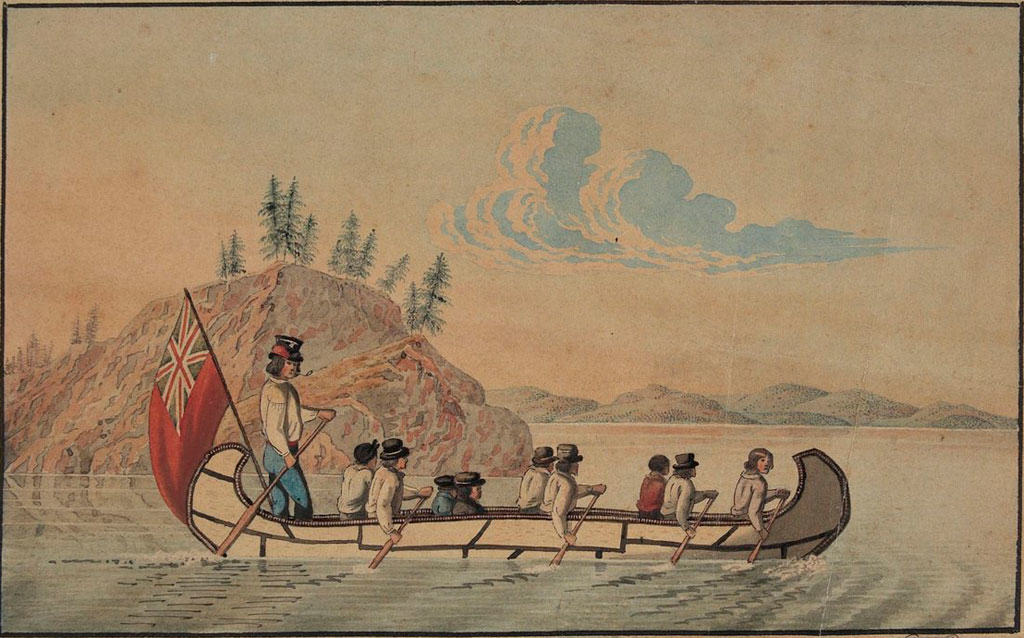
Birch bark canoes, lightweight and durable, permitted the navigation of new fur-trade routes and the mapping of the continent's lakes and rivers. Here we see officials of Hudson’s Bay Company in an "express" canoe, depicted by Peter Rindisbacher, ca. 1825. Library and Archives Canada, e011161353.
The North West & American Fur Companies
The conflict came to a head with the British conquest of New France, in 1760, but this did not diminish the ferocious competitiveness of the lucrative fur trade. English, French and, especially, Scottish entrepreneurs set up the North West Company (1779), in Montreal, and pushed deeper into the continent through the St-Lawrence River and the Great Lakes, challenging the (London-based) Hudson Bay Company’s monopoly. Competition also intensified south of the St-Lawrence, with the founding of John Jacob Astor’s American Fur Company (1808). In search of new fur supplies, Astor pushed westward; his Columbia River trading post at Fort Astoria (1811) was the first United States community on the Pacific coast.
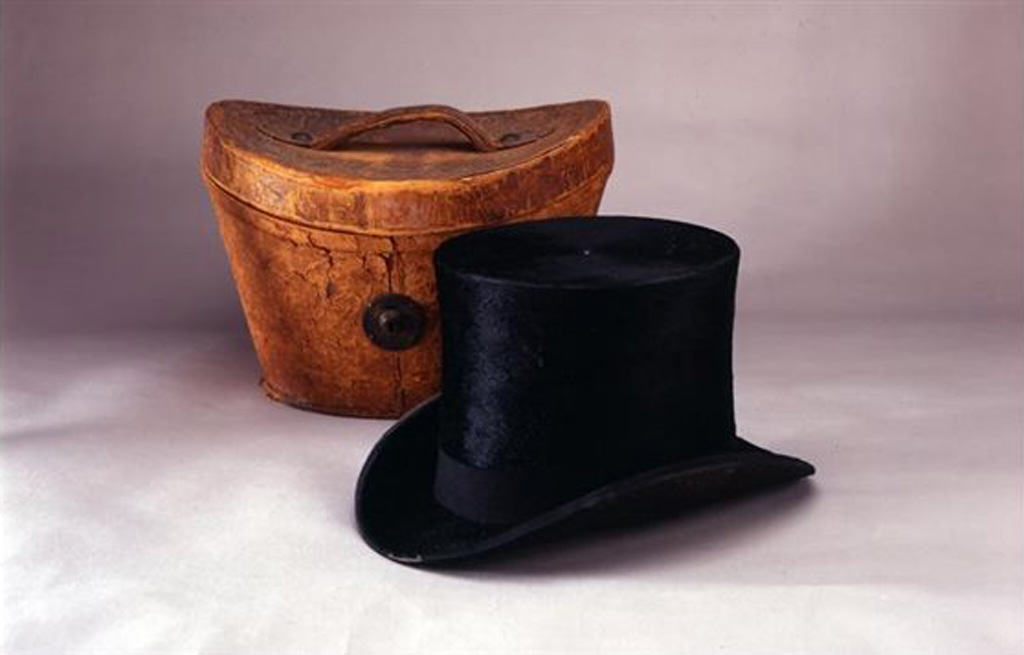
A beaver-felt hat with case, from the late 1800s. European demand for North American beaver was so great that a war was fought for control of trapping territory. Photo: Hudson’s Bay Company.
The current western border between the USA and Canada reflects, to a great extent, the fur territories once controlled by the American Fur Company and the Hudson’s Bay Company. (The HBC was merged with the NWC in 1821.) In fact, it is not at all sure that the young Dominion of Canada – formed in 1867 with the confederation of the provinces of “Canada” (Ontario and Quebec), Nova Scotia and New Brunswick – would ever have expanded to include British Columbia and the Pacific Coast, had not the Hudson’s Bay Company pleaded the importance of maintaining the lucrative Vancouver Island fur trade under Canadian control.
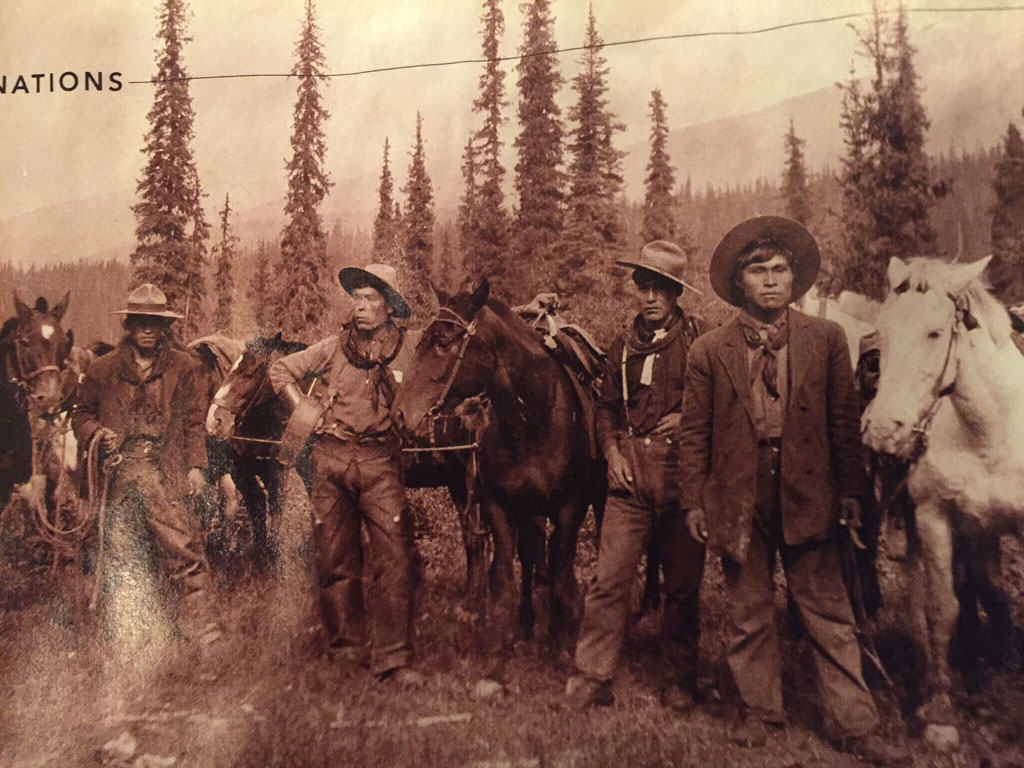
First Nations horse packers working for the Hudson's Bay Company along a British Columbia fur brigade trail, carrying trade goods and fur packs. Circa 1890s. Photo: Canada's History, September 2016.
Many North American towns and cities began as fur-trading posts, but probably none was more influenced by the fur trade than Montreal. Montreal became the continent’s most important fur-trading entrepôt because Champlain recognized its strategic position at the intersection of the St-Lawrence and Hudson (via Lake Champlain) river systems, and because the rapids at the west end of the island (Lachine) prevented European ships from venturing further upstream. The Fur Trade Museum, in Lachine, housed in a stone fur warehouse built in 1803 by North West Company stockholder Alexander Gordon, is an excellent place to learn about Montreal’s fur-trade history.
Traces of fur trade history are everywhere in Montreal. One of the city’s oldest remaining buildings housed the convent of the Grey Nuns, who supported their missionary work with fur trading. Beaver Hall Hill, in the downtown core, was the site of “Beaver Hall”, the home of Joseph Frobisher, one of the North West Company’s leading partners, and the host of many of the company’s raucous “Beaver Club” dinners. Perhaps most significantly, the internationally respected McGill University was founded with a £10,000 grant from James McGill, a leading fur trader and founding partner of the North West Company. The university’s main Sherbrooke Street campus stands on the site of McGill’s “Burnside Farm”, which he bequeathed for this purpose.
Montreal’s fur trade remained important into the modern era: the Hudson’s Bay Company’s warehouse and auction sales were located on Dorchester Street (now called “Rene Levesque”), until they were relocated to Toronto after the election of the (separatist) Parti Quebecois government in the late 1970s. And Montreal became one of North America’s most important fur-manufacturing centres (like New York and Toronto), with the arrival in the first decades of the 20th century of hundreds of skilled (mostly Jewish) fur craftspeople – including my own grandfather, who arrived here in 1913.
After the Second World War, the North American fur-manufacturing sector was further strengthened by immigration from Kastoria and other villages of northern Greece where fur-working had been a way of life for centuries. Montreal was also the gathering place for thousands of North American and international fur designers, manufacturers and retailers who attended the association-run Montreal NAFFEM for thirty years, until 2013.
Canada's fur trade history reflects the country's cultural mosaic at its best: First Nations, French, English, Scots, Jews, Greeks and many others have worked together for hundreds of years to build this remarkable industry – a dynamic tradition of competition and cooperation that is well worth remembering as we celebrate these important anniversaries in the history of Montreal and Canada.
The fur industry is proud of the many ways in which fur is eco-friendly, including that after decades of use,… Read More
The fur industry is proud of the many ways in which fur is eco-friendly, including that after decades of use, fur biodegrades. In contrast, when fake fur made from petrochemicals reaches the end of its typically very short life, it goes to sit in a landfill until the end of time. Or does it? In pursuit of the truth, we decided to do a little experiment: the Great Fur Burial.
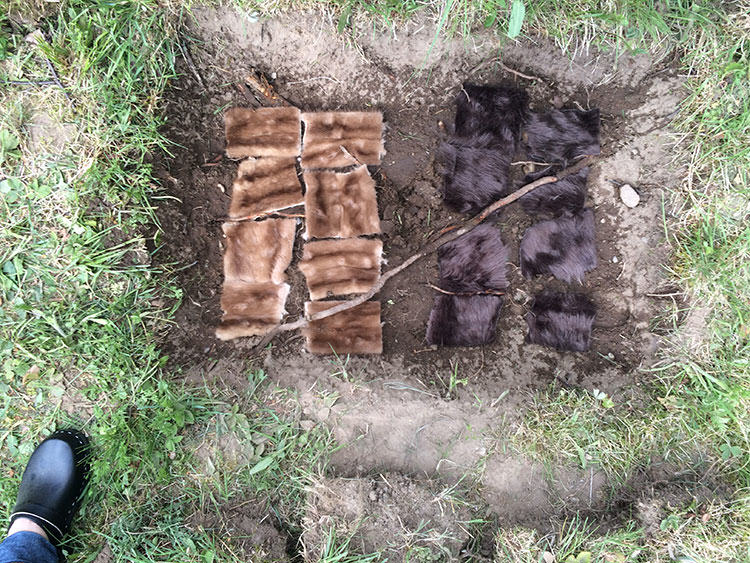
One year ago, we kicked off our Great Fur Burial to see how real fur biodegrades compared with fake fur. Here's what we buried: mink on the left, fake fur on the right. How do they look now?
On May 14, 2016, we took a mink stole and a fake fur vest, cut them into equal-sized pieces, and buried them. Above is how the pieces looked on burial day. The plan was that after three months, six months, and then once a year for five years, we would unearth one piece each of the mink and fake fur to compare degradation rates. This experiment is hardly scientific, but it only has to show one thing: do they rot, or not?
One Year Later ...
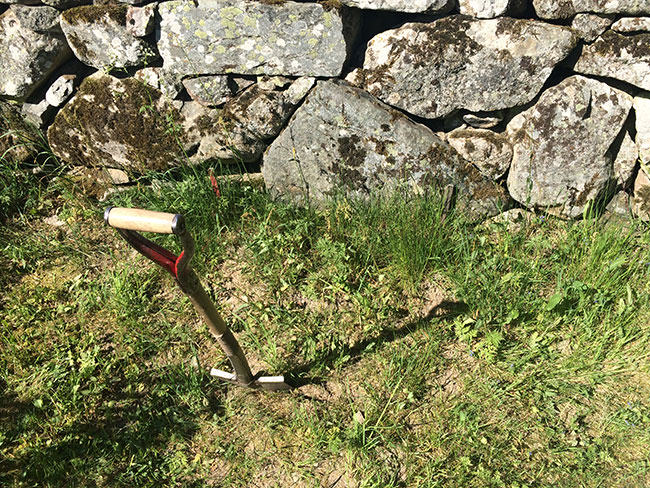
Last week we unearthed one of each fur sample, now one year old. Here is the burial site prior to exhumation.
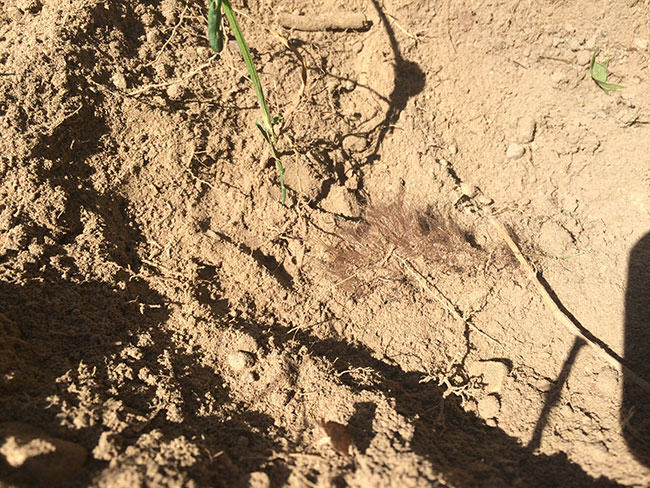
From our last dig, we had a good idea what to expect. The synthetic fur was easy to find, whereas the real fur, once located, called for delicate work with a wooden spoon and fingers to ensure it didn't turn to dust.
The fake fur was quick to find, but the real fur required sharp eyes.
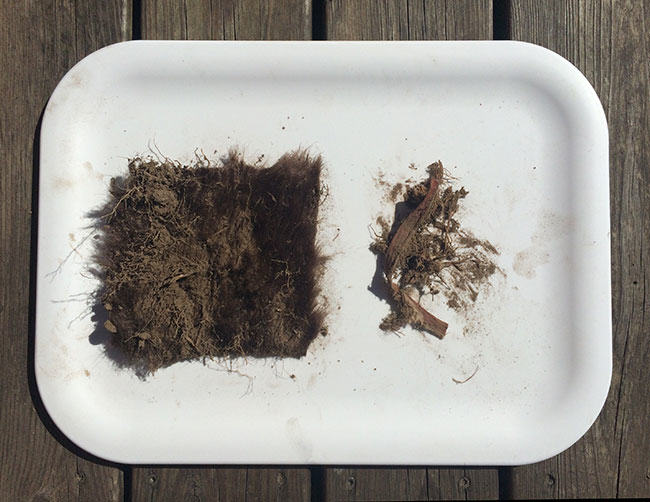
Here are the two samples once they were dug up, fake on the left and real on the right. The fake fur appears to be in good condition, while the real fur is seriously degraded, to say the least!
The fake fur (left) and real fur (right) as soon as they were taken out of the ground.
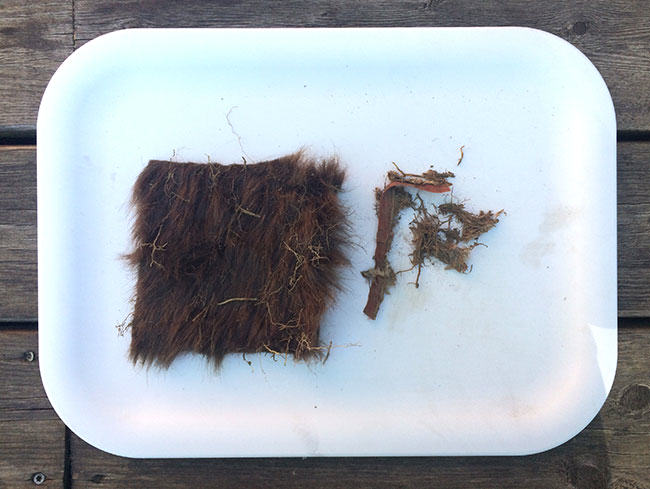
We gently shook off the dust and dirt from the samples, so we could get a better look.
The fake fur (left) and real fur (right) after the dirt was gently shaken off.
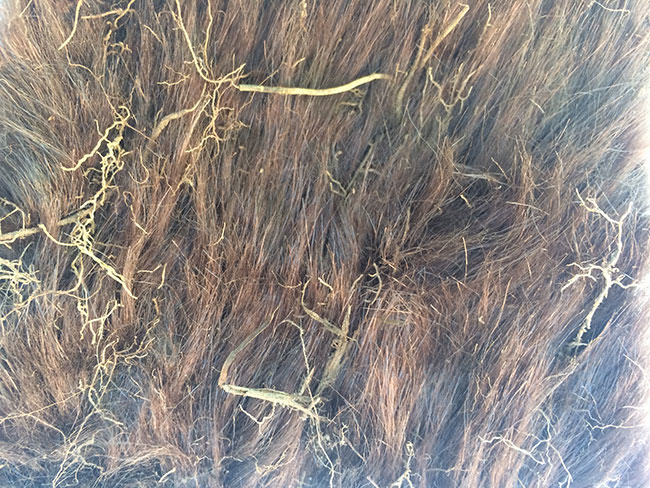
A closeup of the front of the fake fur shows that the "hair" is still in very good condition, aside from the fact that there are roots growing through it. With a bit of shampoo, it might almost be ready to wear!
Fake fur sample, after being buried for one year.
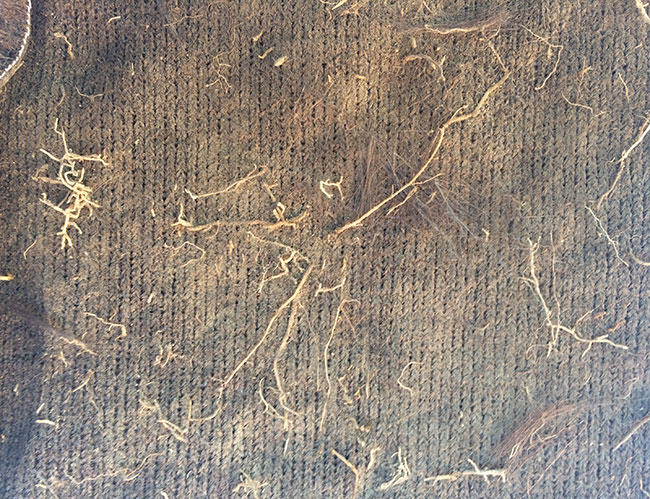
A closeup of the backing of the fake fur also shows it to be in good shape.
Fake fur backing closeup, after being buried in the ground for one year.
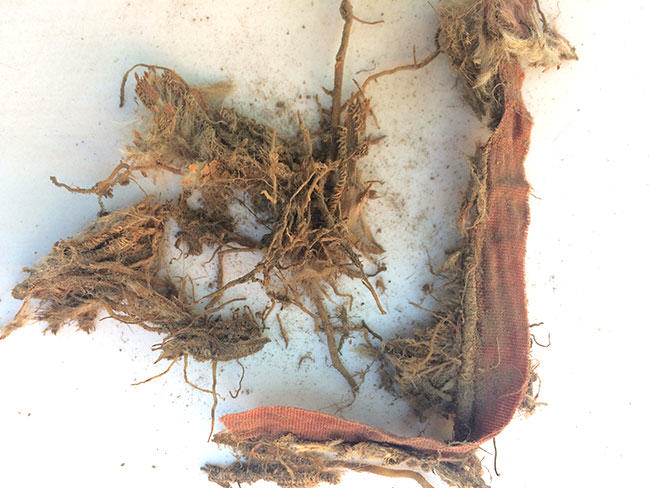
In contrast to the fake fur, the real fur is degraded to the point of being unrecognisable, and only has any integrity at all because of some binding and thread. When you look at the sample close up you can see a few hairs of fur left and some remnants of the leather, but the bulk of the sample consists of thread (cotton), the binding (either silk or synthetic) and roots. This is a very strong indicator that real fur biodegrades much faster than fake.
A closeup of the remains of the real fur sample, after it was buried for one year.
Summary
Equal-sized pieces of real and fake fur were buried side by side to test the common claim that real fur biodegrades while fake fur does not. After one year, the real fur is in an advanced state of degradation, with the hairs reduced to a few fine wisps, and a few shreds of leather held together by thread and backing. The fake fur, however, shows very little evidence of degradation, biological or otherwise. In fact, it is nearly intact.
As far as the real fur is concerned, we consider this experiment to be conclusive already, and a year from now, when next we exhume our samples, we fully expect to need a magnifying glass and tweezers to find any. But as far as the fake fur goes, the experiment has only just begun. Will it degrade at all, and if so, will it take five years, or until the end of time?
Read the first three installments of this experiment:
Undercover videos from animal rights groups came under attack last month for being dishonest and unfair. This is definitely not… Read More
Undercover videos from animal rights groups came under attack last month for being dishonest and unfair. This is definitely not news to any of us, but it is nice to see the media paying attention. This article questions why the undercover videos showing "poor" treatment of a dog on the movie set of A Dog's Purpose were not released until a year later, to coincide with the movie's release. Suspicious at best. This piece explored the concept that the activists are not interested in the truth about what goes on at farms, because they only release highly edited videos, which are not representative of the truth.
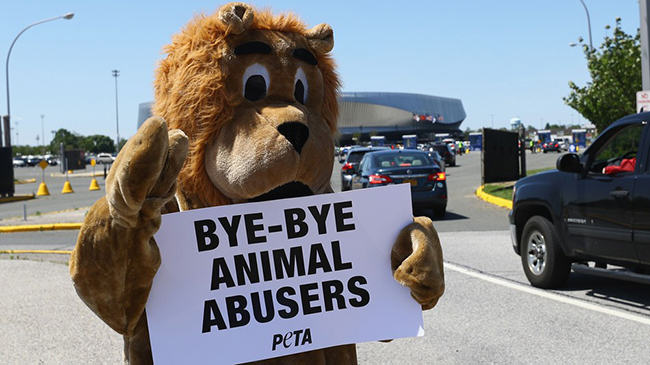
In other activist news, a woman in a dinosaur suit turned herself in for scaring the horses pulling carriages in New York. We still don't understand how scaring and harassing animals can be part of a campaign to protect them. Vice published an article exposing an FBI investigation into animal rights groups, and this piece looks at how veganism comes at a price. If you care about protecting the fur trade against animal rights activists, read our definitive guide on how you can take action to support the people of the fur industry.
Sealing Season Here Again
Sealing needs our support now as much as ever, writes Eugene Lapointe for Truth About Fur.
There were some great features on trapping last month of which these are our top three picks. Vice published a story of a woman who left the city to trap on her family's trap line. And there were two "a day in the life" pieces, one about tagging along with a beaver trapper and another following a Labrador trapper.
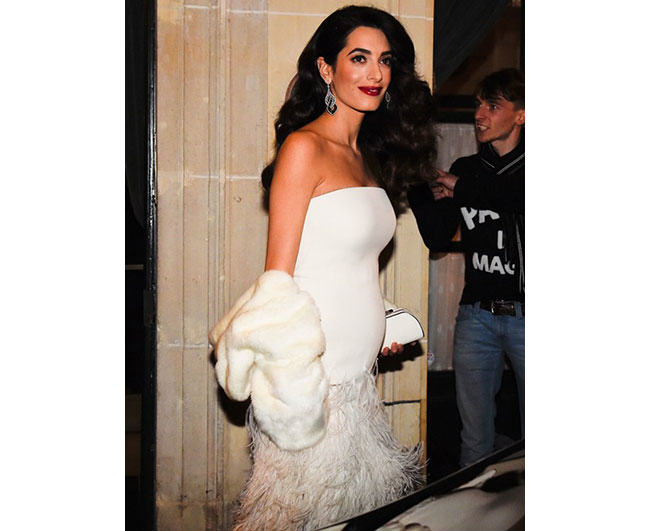
Fur's not just for winter, believe Amal Clooney, Bella Hadid and Jennifer Lopez.
Are you sad about putting your furs away for the summer? Vogue gave us some great tips on wearing fur for Spring (pictured). If you are shopping for new furs, then this shopping guide provides a great list of tips. Bad news if you were looking for a very particular, special vintage piece. The fur coat that was worn on the Titanic and then on a lifeboat already sold at auction, for a cool $80,000.
When you are shopping for your next Bentley, make sure it isn't one with mushroom leather seats (pictured). We think buying a car with vegan leather is a really fungi bad idea.
The sealing industry, like most industries, employs many more people than simply the primary producers. The same can be said… Read More
The sealing industry, like most industries, employs many more people than simply the primary producers. The same can be said for the fur industry in all its aspects. The hunting and trapping industries are no different, nor are the industries that raise cattle, pigs, lamb, sheep or any other animal utilized by humans for food or other products. The saying "no man is an island" applies also to industries.
While sealers are the primary producers in the sealing industry, by no means are they the only economic participants. Economists measuring the value of an industry take into consideration all those whose economic activities are dependent on, and contribute to, the work of the primary producers. This is usually referred to as “spin-off economic benefits”. It makes up the total value of an industry.
The same kind of economic analysis applies to all the industries mentioned above. A cattle ranch, for example, does not operate in a vacuum. It is dependent on many others, and in turn provides income for those who interact with it ranging from the ranch hands to the grocery stores to the furniture or clothing stores who sell the various products a cattle ranch provides. In fact there is a complete chain of people whose contributions and earnings make it possible for any primary producer to survive. Hunting, trapping, fur farming and so on – it is all the same. It is people earning a living.
Sealers are the primary producers, but the spin-off economic benefits of the sealing industry impact thousands of Canadians.
Harp seals off the Canadian east coast number about 7.5 million animals and are not now nor have ever been placed on any reputable list of endangered or even threatened species. The same applies to other seal species hunted by Canadians.
There are many thousand, mostly rural, Canadians (Americans, British and Europeans) who are dependent on sealers, hunters, trappers, ranchers and others mentioned for parts of their income. Rural people rarely have “salaries” so their income is dependent on bits and pieces of work much of which comes from primary producers who raise animals for slaughter or kill them personally. The work of these people enables the primary producers to operate their enterprises and provide the others in the chain with an essential part of their livelihood. It is a circle of interdependence.
Parts of the income of these people are threatened by attacks on the sealing industry which is the primary target of the animal rights corporations. But sealing is not the only target. Sealing is merely the main target – a prime fundraising source for these multi-million-dollar American-headquartered corporations. Their goal is the elimination of human use of all animals for any purpose. Attacks on sealing are the driving fundraiser to facilitate attacks on the fur industry, hunters, trappers, ranchers and farmers who raise animals for food and other products. The end result, if these animal rights corporations are successful, will be the elimination of work for all people in all these industries.
Who are these people whose work enables the primary producer to operate successfully?
Sealing Industry: A Cross Section of Society
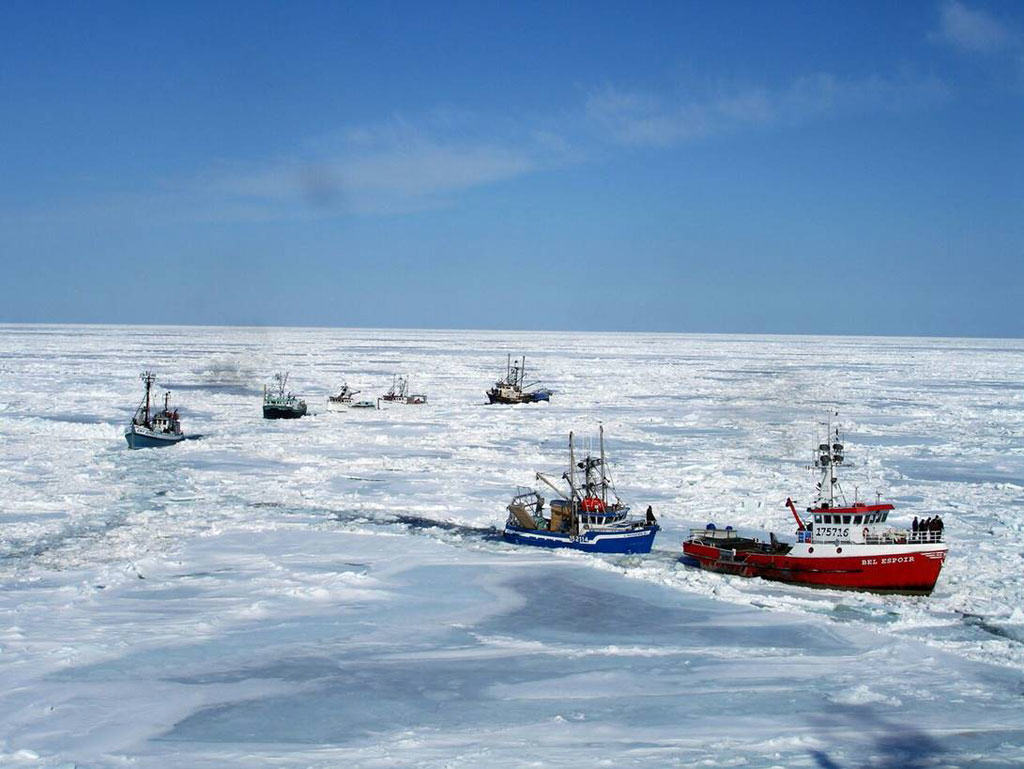
In the sealing industry they are the people who sell fuel, groceries, insurance (both personal and vessel), rifles and ammunition – sealers shoot about 99% of the seals they kill – and tools of the trade to sealers who go to sea under adverse conditions. Not to mention shipyard workers who repair damaged sealing vessels. For other primary animal-based industries, the people involved may do the same and other things, but the principle is the same.
They are truckers who transport seals from landing ports to the plants and buy gas and food in the process. Furs, cattle, pigs, lamb, sheep and other animals also have be transported from one place to another by truckers.
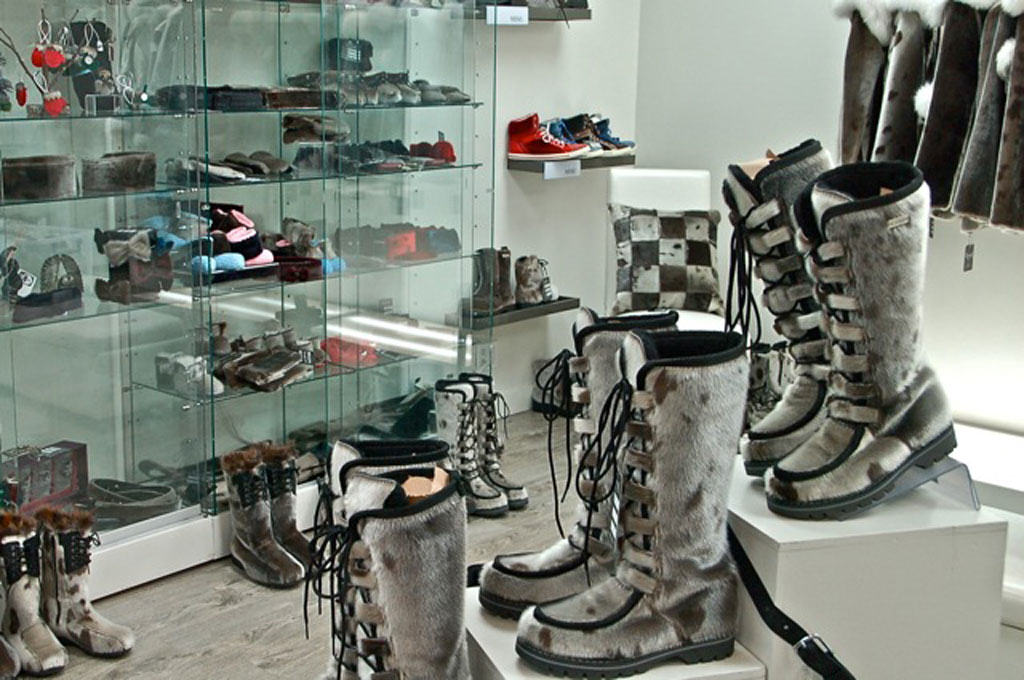
Producing sealskin clothing and bringing it to market requires a long chain of people. The same goes for any product of the sealing industry.
They are the plant workers who process the seal pelts (hides) and the plant owners who sell the resulting skins and oil – oil which other plant workers in other places turn into omega3 capsules. The other industries discussed also need primary plant workers and a complete chain of people supplying the trades needed to make their products available to the market.
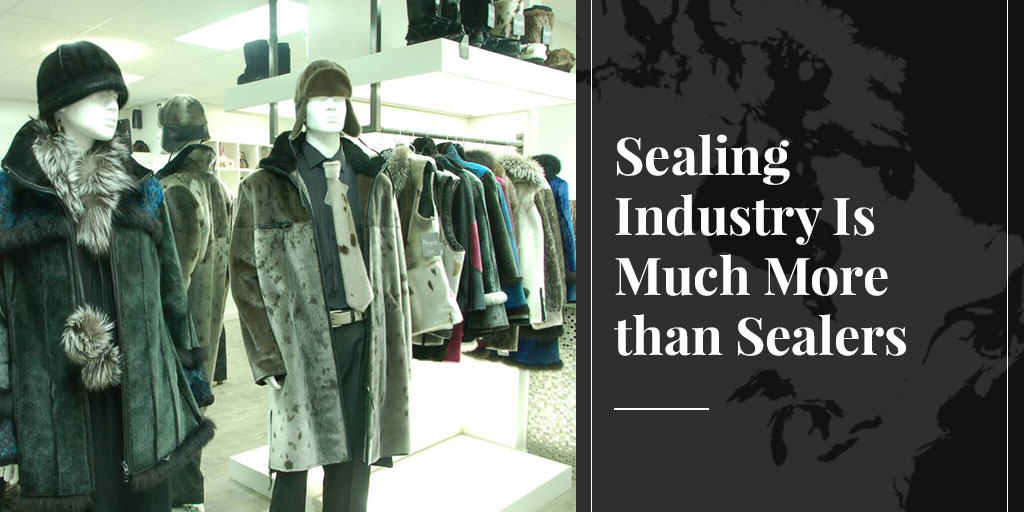
They are the people who create things. They are clothing manufacturers who produce coats, boots, shoes, hats, gloves, slippers, purses, ties, wraps, etc. They are makers of sofas, chairs, saddles, automobile seat and steering wheel coverings, and so on and so on. All this from the pelts they buy and transform into products for sale to the general public. Seals or cows or pigs or lambs or sheep, the same process applies.
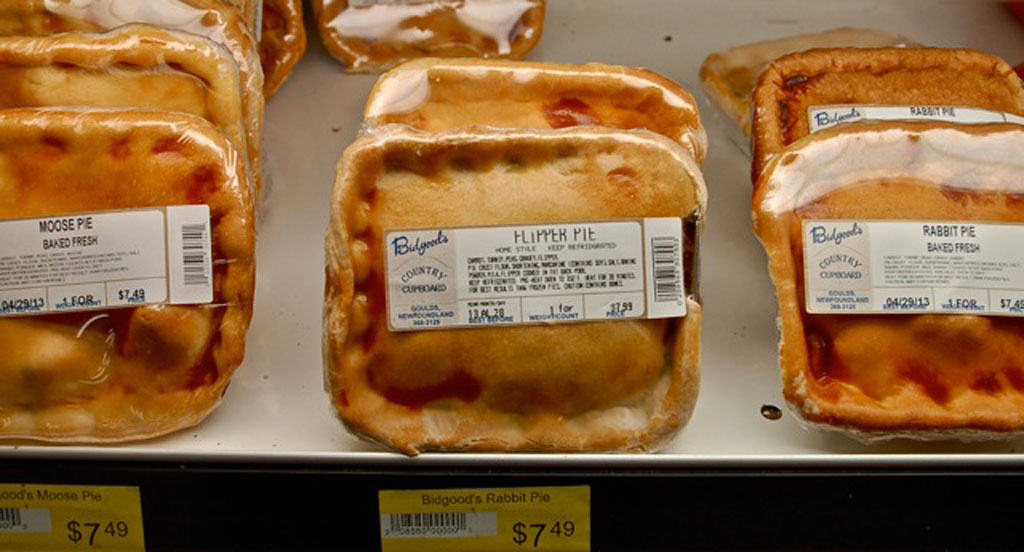
Flipper pies don't appear from thin air. Working people must produce, process and ship every ingredient, then cook the pies and bring them to market.
They are food processors, food trucks, grocery stores, caterers and restaurants who sell seal meat they have purchased from sealers or plants; or other meats obtained from other animals bought from other sources.
They are artists and artisans who create products from seal pelts and a wide variety of other animal hides and sell them through galleries, wholesalers, retailers, or directly to customers.
In short, they are a cross section of society. They are men and women with a common dependence on the activities of the sealers and all animal-based primary producers for portions of their annual income.
They are men and women working to provide food and necessities for their families.
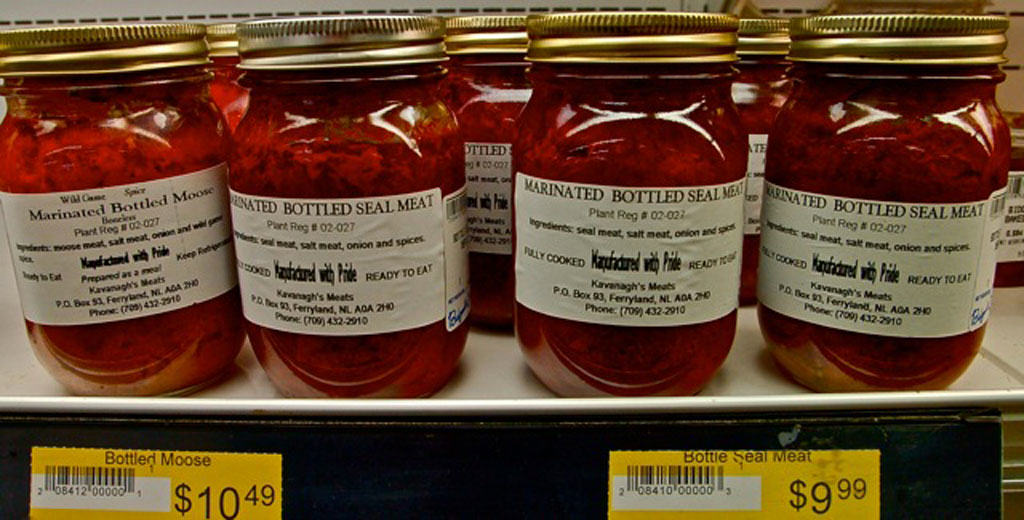
Like flipper pies, bottled seal meat production helps employ a host of people, not just sealers.
Inuit Reject EU "Exemption"
Anti-sealing propaganda, anti-fur propaganda, is an insidious thing and unless countered by a critical press and politicians asking hard questions, it will continue as long as it is profitable. Animal rights corporations have hundreds of millions of dollars so it is little wonder they have politicians to do their bidding. It is little wonder that media, starved for copy, are in their pockets as nothing sells like "cute" animal stories.
It is time for politicians and media to remember the immortal line of Pogo: I have met the enemy and he is us.
Anti-sealing, anti-fur, anti-animal-usage corporations constantly make pious, politically correct statements that they are not against sealing or other forms of hunting by indigenous peoples. However, Inuit organisations – including the Inuit Circumpolar Conference – have rejected the EU “exemption” on their seal products as being economically meaningless, paternalistic, and colonialistic.
The recent World Trade Organisation (WTO) enquiry found that the EU “seal ban” was illegal, but to protect the so-called “morals” of EU citizens, the ban would stand. An interesting decision given that many countries within the EU legally kill seals as do Americans and Russians. They both also ban Canadian seal products. Of course they all also kill all the other species Canadians kill. Hypocrisy reigns supreme.
When the WTO uses questionable “moral standards” based on propaganda as a basis for upholding individual state bans they have declared to be illegal, all importers and exporters of all products based on animal killing should be worried. Today's bans are on seal products, but tomorrow's will be on what? Products derived from cows, pigs, lamb, muskrat, mink, wolverine, beaver, etc.? Sealers are today's victims. Tomorrow's could be you.
Canadian sealers, Canadian furriers, Canadians in all animal-killing industries simply want all citizens of all countries to have their democratic right to choose for themselves to use, or not to use, animal-based products, and not have that right denied by bought politicians.
History proves that when propaganda triumphs, democracy loses.
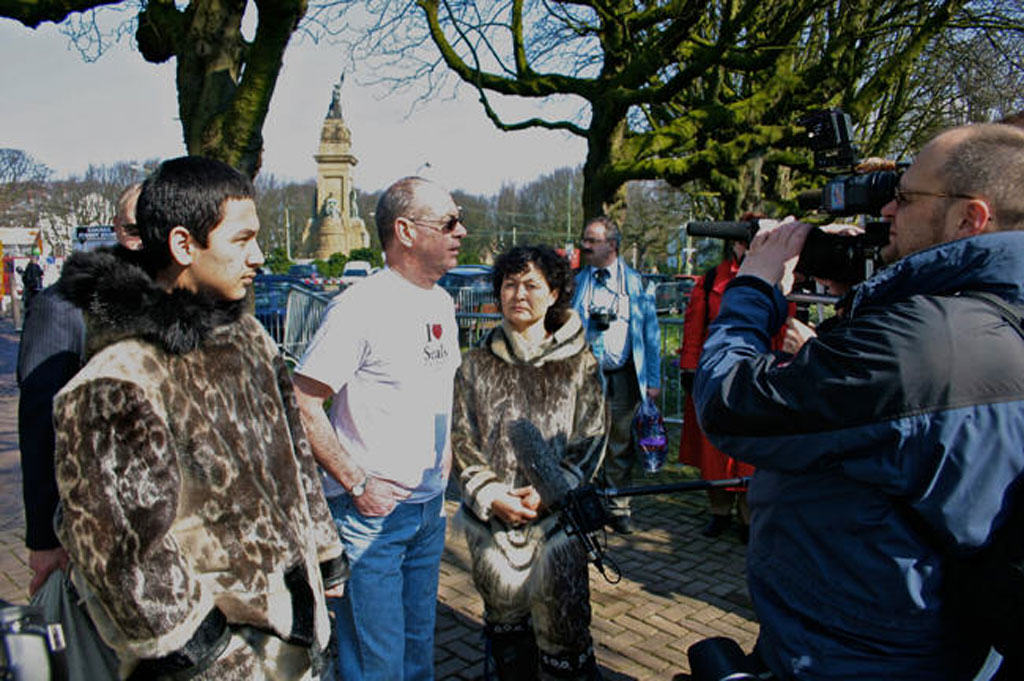
At an anti-sealing protest outside the Canadian embassy in the Hague in 2007, the media were more interested in Aaju Peter (right), her son Aagu, and me than they were in the protesters. Besides being a lawyer and Inuk clothing designer, in 2011 Aaju was named a member of the Order of Canada for her work promoting and preserving Inuit culture.
Attacking the sealing industry or any of the other animal-based primary producers is attacking all of the people involved in the chain.
When scientifically established quotas ensure the stability or growth of a species' population; when laws, licensing and training ensure humane killing; when there is no question of a population being either endangered or threatened; when markets are viable and ensure an income to the workers; the only possible objection can be an "animal rights belief" – a belief held by less the two percent of Western society. Sadly, animal rights advocates and their celebrity friends “own” both the media and international politicians, and the result is a huge threat to the livelihoods of many thousands of Canadians, Americans and other rural peoples.
Unless you take George Orwell’s Animal Farm literally, no species is more equal than the others. There is no “Aryan” species. No industry is an island. It is more like a continent.
The sealing industry is a continent populated by citizens victimized by propaganda and political correctness as expressed by the one per-center celebrities in the thrall of the animal rights corporations.
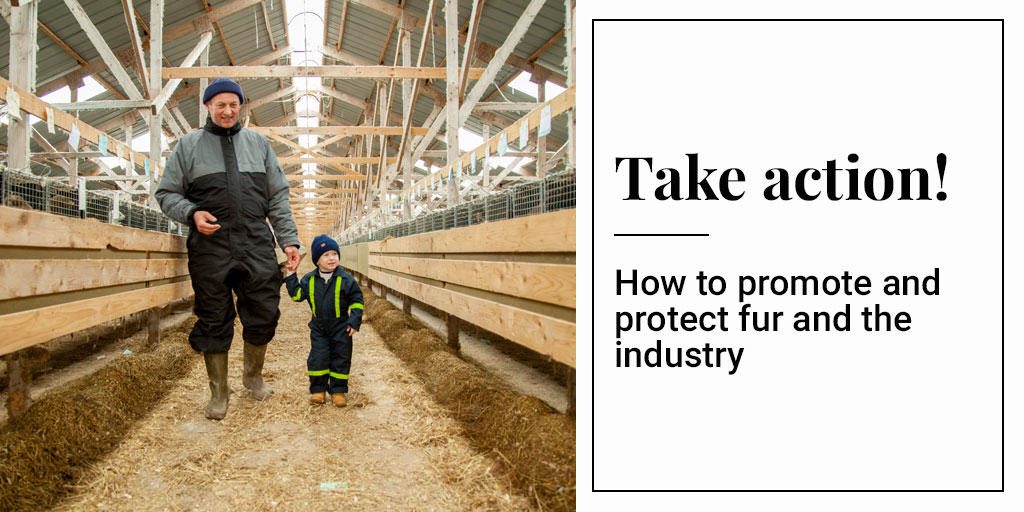
What are you doing to protect fur and the industry? The fur trade has faced many difficult challenges over the past few years. These include fast-changing lifestyles, new and cheaper (and usually synthetic) clothing materials, vertically-integrated companies, multi-national fashion-marketing giants ... and, of course, sensationalist animal-rights campaigns that spread disparaging and false information about our industry.
The fur trade has done a remarkable job of dealing with these challenges, especially considering its small-scale, decentralized and largely artisanal character. The increased use of fur in small pieces (vests, jackets), trim (on parkas) and accessories (hats, scarves, handbags) has made fur more accessible to more, and younger, people than ever before. We see more fur now on the catwalks and in the streets than we have for decades.
Nonetheless, we know we still have lots of work to do. Animal activists continue to spread misinformation that can confuse consumers. Their latest strategy is to pressure fashion and outerwear retailers to drop fur from their inventories. And such pressures can be very difficult for consumers and retailers to resist, especially if they are not sure whether the fur trade is responsibly managed.
The truth, like it or not, is that our industry is too small to expect our professional associations and breeder groups to solve these problems alone. We all have to pitch in to protect fur tradespeople and get our messages out to consumers, designers, retailers, media, politicians, and the general public.
Here are some ideas about things that YOU can do to help. And we’d love to hear some of the other things that YOU are doing to let people know about our remarkable, heritage industry.
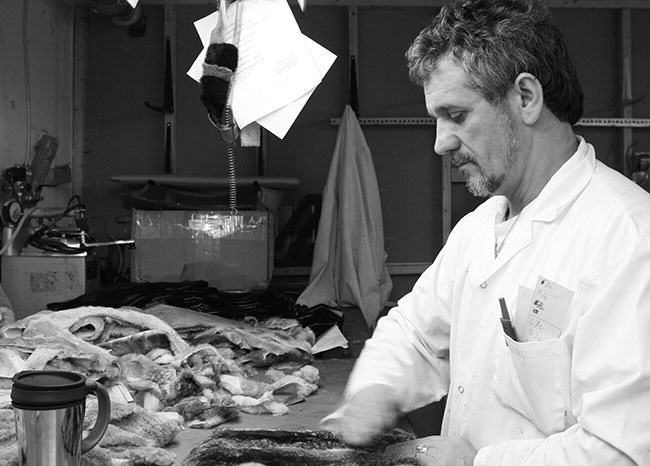
Explaining the skilled and time-consuming processes that go into a hand-made fur garment can give consumers a new appreciation of what we do. For more photos of fur design and fabrication, visit Truth About Fur. Photo: Claire Beaugrand-Champagne.
If you are a fur designer, manufacturer, wholesaler or retailer:
Be active online. Comment on news articles and on social media, presenting polite and knowledgeable arguments to defend the trade. Even if people don’t comment back, people are reading. Let’s present ourselves as an industry that is confident about its processes.
Answer customers' questions honestly, and if they press you about issues, respond accordingly. Have the information ready and know the facts. Our industry has often been misrepresented, so we need to be especially open with our customers.
If you have a company website, add our link to your website so people can click through to get facts about the trade, and refer customers/associates/suppliers to TruthAboutFur.com
Add the video The Fur Industry in 2 Minutes Flat to your website using this embedded link: <iframe width=“560" height="315" src="https://www.youtube.com/embed/sydmyD8ouxM" frameborder="0" allowfullscreen></iframe>
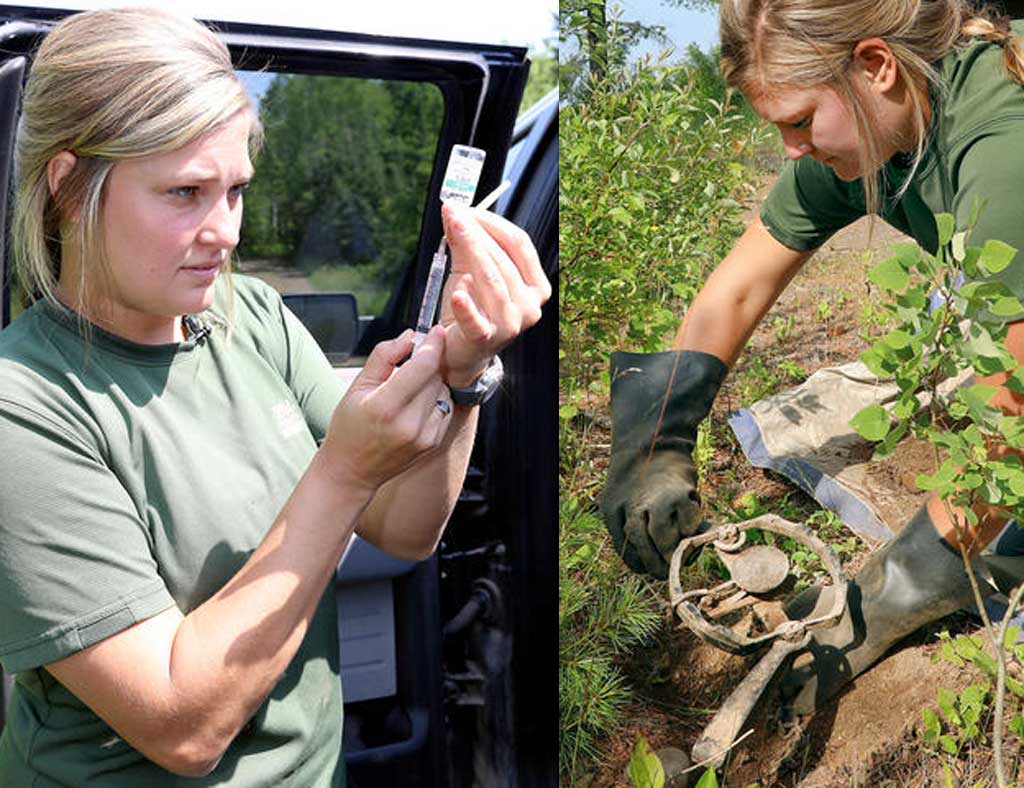
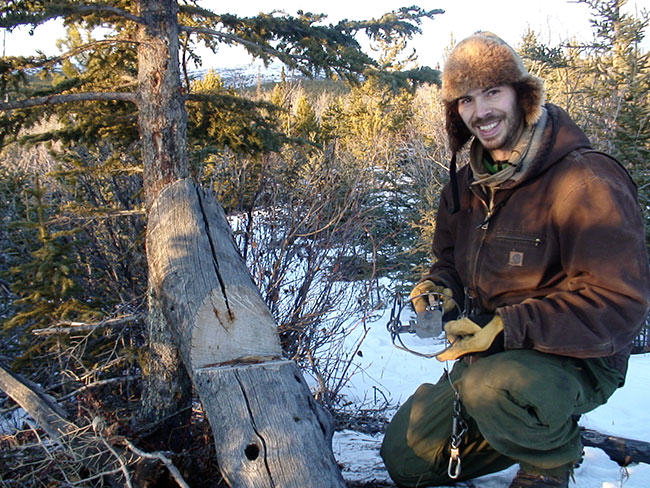
Educating current and future trappers is a vital function performed by trappers such as this one from Environment Yukon. Here he installs a live-holding trap to capture lynx for relocation to the US. For more photos of trappers at work, visit Truth About Fur.
If you are a trapper:
Take guests out on the trap line from time to time. It may slow you down, but it is worth it. Read more on taking people out on your trapline.
Volunteer to hold classes and teach people about what trappers do.
Educate the young. The key to sustaining this wonderful activity and to protecting fur trapping is to get young people interested in it.
Be active online about what you do, how you do it, and why you do it. Trapping is very complex and it is important to understand the benefits trapping brings to wildlife populations and how licenses fund responsible conservation.
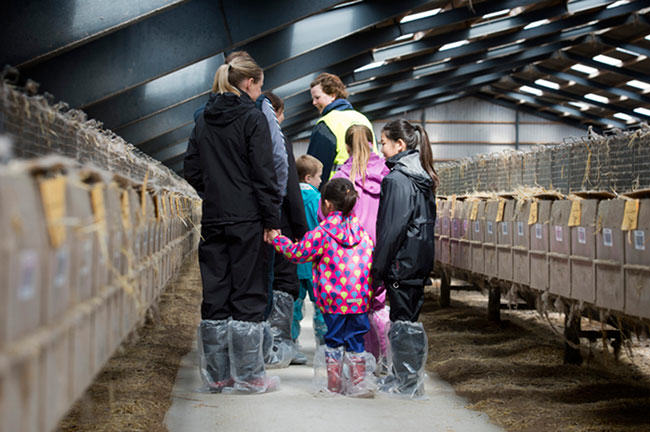
Fur farm tours are the surest way to convince people what a responsible industry we are.
If you are a fur farmer:
Open your farm up to visitors. Inviting people onto your farm gives you the chance to educate them on how the industry works, and show you have nothing to hide. Contact your local or national fur farming association (Canadian Mink Breeders Association or Fur Commission USA) for information on how to organize such an event.
Answer questions. Fur farming should be easy to defend. Animals must be treated well in order to have nice fur, and even the activists can't deny this obvious fact. If people have questions about the animals’ pens, food, and health, be honest and tell them what you do and why you do it.
Remind people that fur farms are an integral part of the human food chain, and that the animals eat leftovers from chicken farms and fisheries.
Be active on online. Many farmers show photos of their animals and the daily life of farm work. Being open and transparent about your work is key to ensuring we protect fur farming and get people to support it.
Ally yourself with other farmers and support the farming trade. Sticking together is key to protecting the farmers of North America.
When people see and touch real fur, they understand that fake fur can never compare. Shown here, a sheared mink coat with fox collar, by Natural Furs.
For everyone who supports or works in the fur trade:
Be active online! Comment on articles and social media. Share the truth, dispel myths, and remind people that there are lots of us that support the trade.
Work hard to debunk myths and share positive fur trade information on all of your personal networks.
Check out the Truth About Fur website to brush up on the facts, and refer people to it if they have questions about the trade.
Support brands who sell fur, and try to avoid brands who have an anti-fur stance.
Buy fur! Whether you are buying new, vintage, a coat, or an accessory, one of the best ways to support and promote this remarkable heritage industry is to buy and wear fur products.
Support real animal welfare and conservation, not “animal rights”! Make sure you know the true agendas of any charities you support. If you care about pets, always donate to your local shelter and not the national “animal-rights” groups such as PETA and HSUS. Read up on charitable donations.
When you wear fur, tell people why you do it. Be vocal about your support of the trade and don’t shy away from expressing it.
Stay in touch! If there is an important issue we need to address quickly, contact us by email, Facebook, Twitter, or Instagram. Do you have an amazing story to share? We want to post it in our Truth About Fur blog. Help us be the go-to place to represent the true image of the industry. Send us your beautiful pictures. We welcome your comments and contributions.
Some of our useful resources include answers to the most frequently asked questions:
Of all conflicts between advocates of sustainable use of wildlife and advocates of animal rights, none has been more enduring… Read More
Of all conflicts between advocates of sustainable use of wildlife and advocates of animal rights, none has been more enduring than the sealing issue. For more than 50 years, sealers have been on the front line in a war to decide how we manage our wildlife – so long, in fact, that there is a danger their supporters will lose interest. To everyone who recognises the importance of keeping this traditional harvest alive, I say, renew your support for sealing. It's needed now as much as ever.
Sealing was not always the cause célèbre of the animal rights movement. Back in the 1960s, when the anti-sealing campaign began, the prime target was whaling. Despite the little-known fact that the whaling industry had already halted the excesses of its past, animal rightists (and not a few conservationists) were determined to shut it down completely. And they nearly succeeded.
This cleared the way for the anti-sealing campaign to grab the headlines – something it has been doing ever since. Half a century on, the beleaguered sealers are still fighting, with the current battleground being the EU.
What makes the sealing story so remarkable is that it has lasted this long. Most of the credit belongs to the sealers themselves – both indigenous communities of the High North, and the descendants of settlers – for their refusal to die. Thanks also must go to a handful of governments for their unflinching support.
The sealers, of course, are fighting for the future of their cultures and one of the few livelihoods available to them. Anyone who has visited the northern reaches of the world will understand why. We are struck by the natural beauty of the rugged landscape, the purity of the air, and the abundance of life in the oceans. This beauty continues to exist because people maintain traditional ways of life, and central to this is utilizing local natural resources, including seals. Fishermen and hunters tackle the seas and the ice to bring home their catch, and what they don’t consume, they sell.
This beauty continues to exist because people maintain traditional ways of life, and central to this is utilizing local natural resources, including seals.
Governments, meanwhile, have supported the sealers for a variety of reasons. They recognise their right to self-determination, they want to keep people “on the land” (not flooding into overcrowded cities), and they recognise the role played by wildlife use in ecosystem management. Because seals consume commercial fish and forage species, and sustain others such as sharks and orcas, governments are increasingly focusing their research on the impact of seals and seal harvesting on the ecosystem as a whole.
This approach reflects a need to ensure that seal populations will continue to thrive. It also ensures that we live up to a moral responsibility to understand the impacts of harvesting choices on other species. This can mean limiting seal harvesting or encouraging it, depending on particular regional circumstances.
Finding the right balance between prey and predators makes the marine ecosystem more productive and preserves its biodiversity.
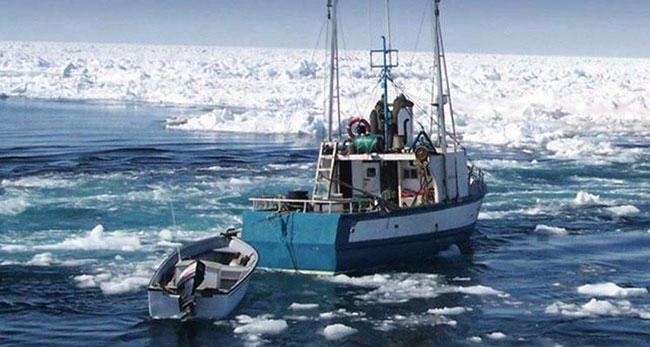
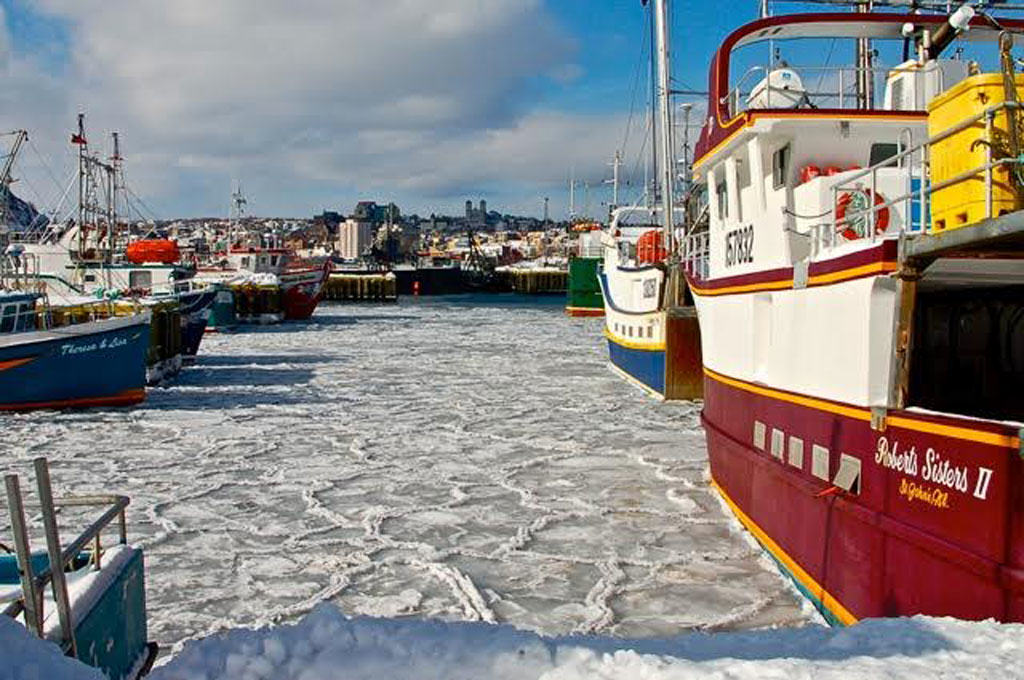
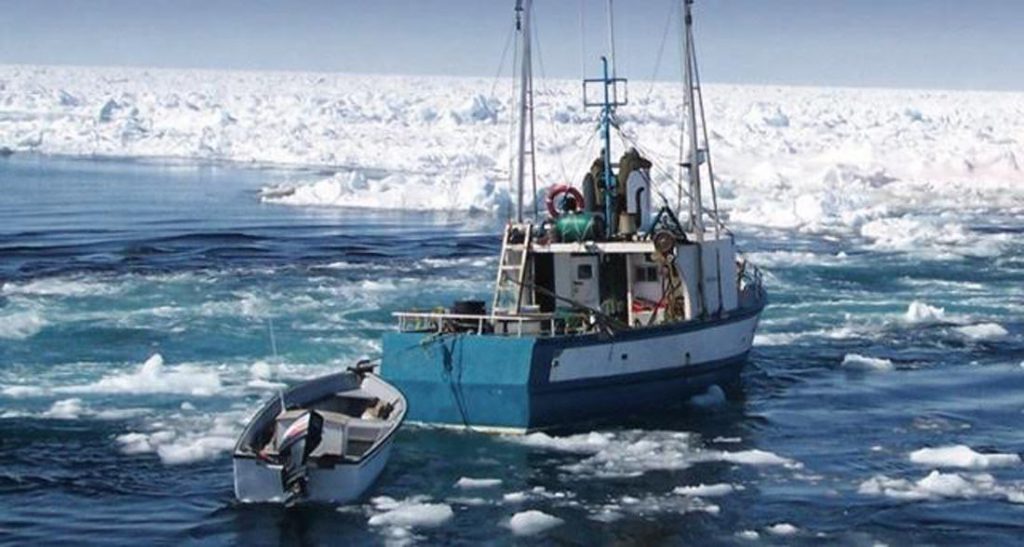
An inshore fishing vessel out looking for seals. Often 100 miles or more from their home port, this can be dangerous work when the wind picks up and the ice starts to shift.
Veterinarians, too, have supported sealers by denouncing the message of animal rights groups that sealing is inhumane. The most common method for harvesting seals is using a rifle, while use of the "hakapik", a traditional harvesting tool, is increasingly rare today. Veterinarians consider both to be humane because they consistently cause instant unconsciousness before death.
The sealers have also received broad support from advocates of sustainable use with no direct interest in sealing. Croc farmers, kangaroo meat harvesters, you name it; across the globe, wildlife users have thrown their support behind the sealers. Meanwhile major conservation groups such as the IUCN and WWF have acknowledged that sealing does not pose any conservation issues.
Yet despite the perseverance of the sealers themselves and the breadth of support for sealing, all is not well in paradise. The relentless attacks from groups with seemingly inexhaustible funds have tested our support to the limit and found it wanting. Proof of this is the fact that sealers are still losing ground with the recent closure of the EU market (except for that reviled exemption for products from indigenous communities). The enormous potential US market, meanwhile, is just as far off as ever. The US has banned all marine mammal products since 1972, and no one, not even the governments of sealing nations, is willing to mount a serious challenge to this ban.
So to any wildife user wavering in their support for sealing, I recite the classic poem of German Lutheran pastor Martin Niemöller:
“First they came for the Socialists, and I did not speak out – Because I was not a Socialist.
Then they came for the Trade Unionists, and I did not speak out – Because I was not a Trade Unionist.
Then they came for the Jews, and I did not speak out – Because I was not a Jew.
Then they came for me – and there was no one left to speak for me.”
As advocates of sustainable use, we should be enormously thankful that, against all odds, the sealers have survived the last 50 years. But we must not take their survival for granted. They are under constant threat and cannot be allowed to disappear, if for no other reason than that we may be next.
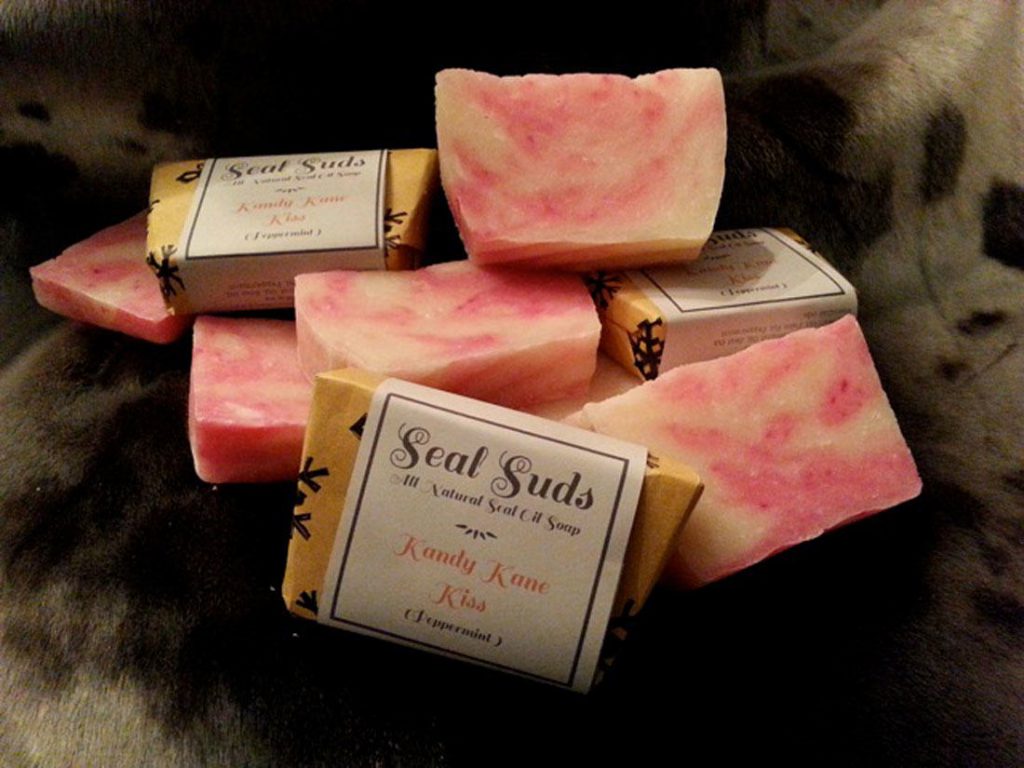
Every part of a seal is used. Popular is perfumed soap made from seal oil, such as this from Sealed with a Kiss.
It’s seal hunt season and with that comes the onslaught of lies and propaganda surrounding the hunt. This article describes… Read More
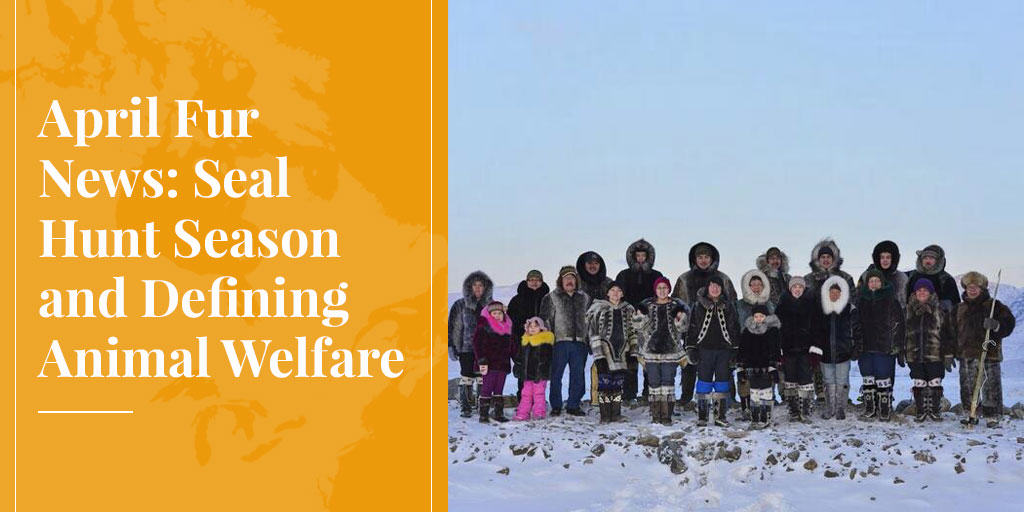
It's seal hunt season and with that comes the onslaught of lies and propaganda surrounding the hunt. This article describes how PETA is hurting the Inuit with its anti-sealing campaign while this one covers the food insecurity faced by the Inuit (pictured above) because of the decline of the seal skin trade. But it is not all bad news for the seal hunters; the Norwegian hunt has renewed interest thanks to a documentary, Angry Inuk, the Inuit seal hunt, which is having a very positive impact. And the lies about the suffering of the animals during seal hunt season are being exposed by articles such as this.
Since we are on the topic of animal rights, let's see what activists have been up to in the last month. Foie gras protesters outside a restaurant in the UK haven't given up, even though their antics seem to have resulted in increased trade for the restaurant. PETA found itself locked out of a LVMH shareholder meeting (boohoo for them). This Member of Parliament in the UK, whose party advocates veganism, was caught eating fish and has had to issue an apology. And we loved this article exploring the issue of white privilege in the vegan movement. Our blog finally put pen to paper on the very important and often confused issue about the difference between animal welfare and animal rights philosophies. (We'll give you a hint: the first is great, the second isn't.)
There's a reason why furriers store furs in "vaults", though they don't really look like this anymore! Photo: Jack Lindsay, Vancouver, 1940s.
On the fashion front, this article does a good job explaining how a fur coat now represents status in menswear. Or you could just wear fur on your eyelids – mink, to be precise – as it is very popular in the world of eyelash extensions. If you are looking for some home decorating ideas, then look no further: this penthouse is practically covered in fur. Here's an important story for our vintage fur retailing readers: this store owner in San Francisco is being charged for selling endangered furs because she didn't realize that the laws changed last year. Speaking of old furs, here's how to make them last: store your furs properly (pictured above).
There's been no shortage of trapper features recently, and our picks include a feature on the Yankee trapper in Arkansas and this Yellowknife trapper following in his late father's footsteps. Since we are on the topic of tradition, read about Canada's trapping traditions here or learn about a new innovative fur product (pictured above) and the wonderful history behind it in this Truth About Fur guest blog post by Brenda Dragon. Good news for Northwest Territory trappers: the last set of auction results were very promising.
Spring is the time to put away your furs, and correct storage during the off-season is essential if you want… Read More
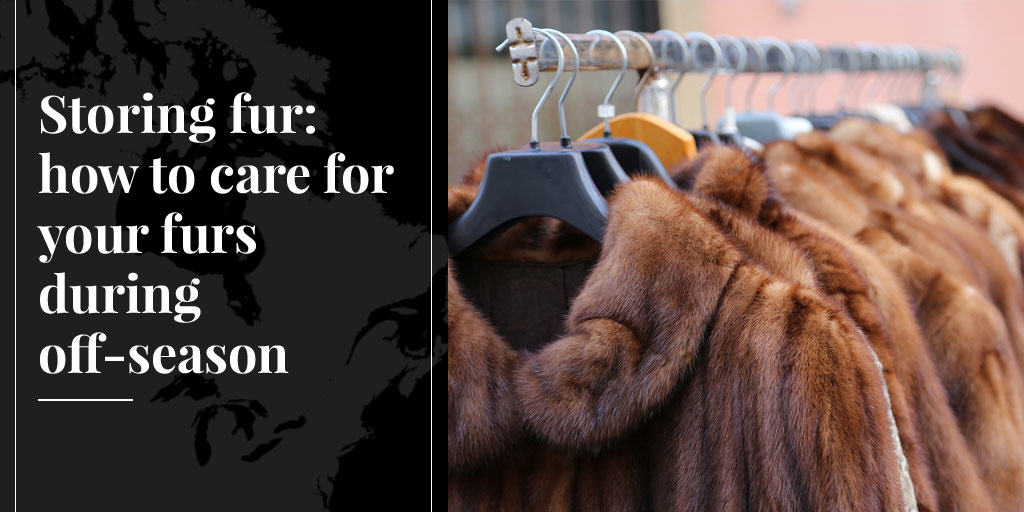
Spring is the time to put away your furs, and correct storage during the off-season is essential if you want to enjoy the warmth, comfort and beauty of your furs for many years. Storing fur coats and jackets is usually best done with a professional retail furrier, although there may be occasions when you want to store some items at home. (More on this below.)
If you own valuable furs (valuable financially or sentimentally), you should definitely store them professionally during the summer months. A good furrier will have a storage facility which is kept in a range of 50-60F (10-15C) and 45-55% humidity, which has been shown to be the ideal conditions for preserving furs. Most people store their furs through the summer months, and bring them home when the cooler weather returns in the fall.
Another reason for storing fur with a professional is that it provides an opportunity for your retail furrier to thoroughly inspect your fur at the end of the season. Small tears, missing buttons, worn spots or other damage can then be identified and repaired before they become bigger and more costly problems.
Your retail furrier is also equipped to properly clean your fur, removing oils (e.g., around the neckline) and small particles of dirt or grit that can damage fur follicles. Professional cleaning also restores the natural brilliance and beauty of your furs.
Just like you would service a car, maintain a house, or correctly clean and store silverware, caring for your furs will protect your investment and assure many more years of use.
Fur storage costs are usually based on the value of your garments. So storing a coat valued at $500 may cost as little as $32 (or $39, including a year-round insurance policy). At the higher end, a $4,500 coat might cost $86 for storage (or $133 including year-round insurance) – i.e., about the price of one decent cup of coffee per week. [Storage prices vary depending on rent and other costs in different regions.]
But what if you have vintage pieces that aren’t in top-notch condition, or other inexpensive garments, trims or accessories? Or maybe there’s no furrier in your area? Is it possible to keep your furs in reasonably good condition at home?
There's a reason why it's called a fur storage vault. Photo: Jack Lindsay, Vancouver, 1940s.
Unfortunately, it is near impossible to duplicate the controlled atmosphere of a professional fur-storage vault in your home closet. But here are a few tips to help protect your furs as well as possible in a home environment:
• Avoid storing fur in a basement, where it can be too damp. Too much humidity can result in a moldy lining.
• Ideally you want to store the furs in a place where there is no direct sunlight, and not too much heat. A bedroom is often a good choice, providing you don’t keep yours too warm.
• The furs need to hang freely and have a bit of air, so don’t try to stuff too many in a closet.
• Use a proper fur hanger, with shoulders, to preserve the shape of your coat.
• If you don’t use your furs frequently, or during the summer months, cover them with cotton garment bags or cotton sheets.
• Never store your furs in plastic; fur needs to “breathe”.
• Removable fur parka trims, scarves, or other accessories can be stored on hangers or in uncovered boxes in your closet.
Manage Consent
To provide the best experiences, we use technologies like cookies to store and/or access device information. Consenting to these technologies will allow us to process data such as browsing behavior or unique IDs on this site. Not consenting or withdrawing consent, may adversely affect certain features and functions.
Functional
Always active
The technical storage or access is strictly necessary for the legitimate purpose of enabling the use of a specific service explicitly requested by the subscriber or user, or for the sole purpose of carrying out the transmission of a communication over an electronic communications network.
Preferences
The technical storage or access is necessary for the legitimate purpose of storing preferences that are not requested by the subscriber or user.
Statistics
The technical storage or access that is used exclusively for statistical purposes.The technical storage or access that is used exclusively for anonymous statistical purposes. Without a subpoena, voluntary compliance on the part of your Internet Service Provider, or additional records from a third party, information stored or retrieved for this purpose alone cannot usually be used to identify you.
Marketing
The technical storage or access is required to create user profiles to send advertising, or to track the user on a website or across several websites for similar marketing purposes.