We encounter a lot of hypocrisy here at Truth About Fur, as it seems most anti-fur folk like bacon, wear… Read More
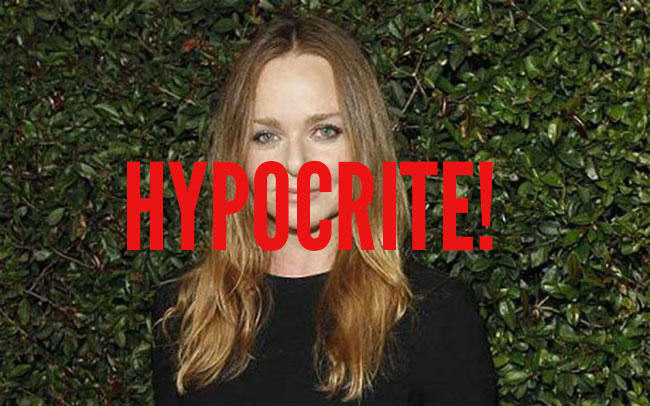
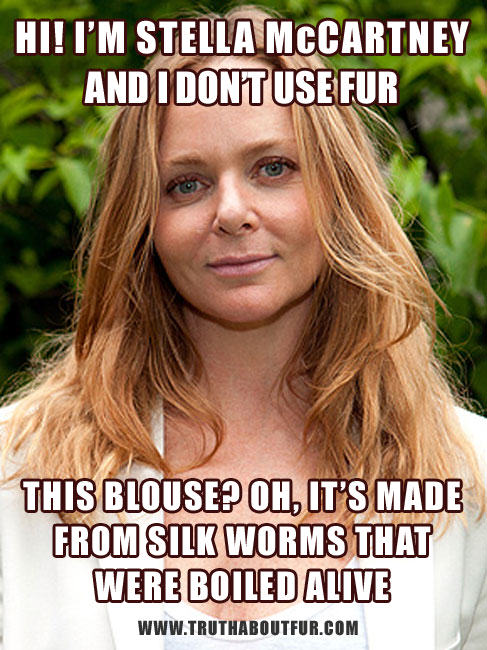
We encounter a lot of hypocrisy here at Truth About Fur, as it seems most anti-fur folk like bacon, wear leather, or think that synthetics don’t kill animals. (Tell that to the families of the birds that died in the Deepwater Horizon oil spill!) Today’s feature, the first in our Hypocrite series, is about one of the most hypocritical fashion designers we know: Stella McCartney.
The list of Stella McCartney’s hypocritical actions is long. Let’s not start on the fact that her company is owned by the same company that owns Gucci, best known for its leather goods. Or that she has several homes and frequently flies around the world for work. That’s not good for the environment, is it?
We also aren’t going to talk about the fact that Stella McCartney has acknowledged the popularity and beauty of fur by launching her own collection of (synthetic, tacky) fake fur pieces. She routinely uses synthetic materials that are not sustainable and are derived from petroleum by-products, whilst preaching about taking care of the environment. But that’s also not what we are talking about today.
Today we are going to focus on silk.
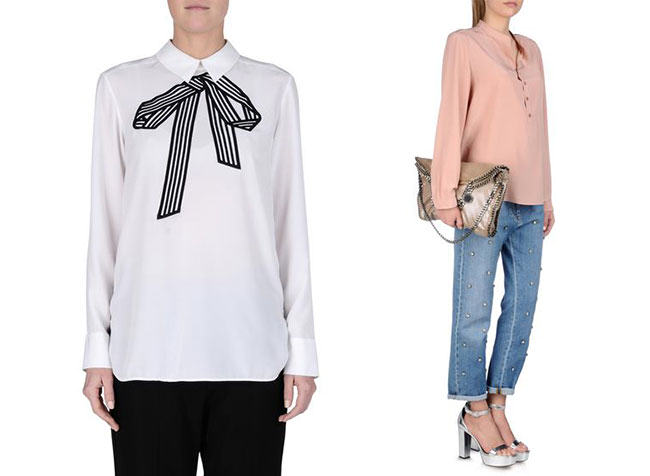
Stella McCartney's silk blouses, made by boiling silk worms alive. Photos: Stella McCartney.
The hypocrite: Stella McCartney, British fashion designer, lifelong vegetarian, and occasional spokesperson for PETA.
The hypocrisy: Stella McCartney refuses to use leather or fur in her collections, and claims “the decision not to use leather or fur is not just because I don’t eat animals or that I think that millions of animals each year shouldn’t be killed for the sake of fashion. It’s because I also believe in the connection between fur and leather and the environment.”
However, Stella McCartney uses a lot of silk in her collections.
Do you know how silk is harvested? Silk worms are boiled alive in their cocoons, allowing the long fibres to be extracted. This gets less media attention than fur because larvae aren’t as cute as mink and fox.
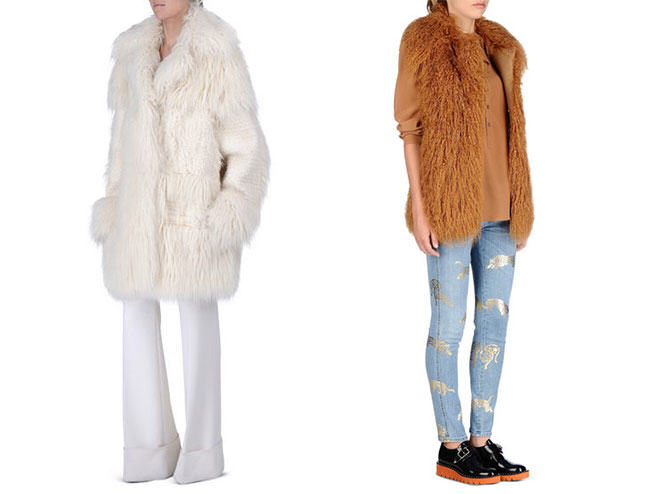
Stella McCartney's "fur free fur." Why not just call it "ugly petrochemical coats" instead? Photos: Stella McCartney.
What they say: PETA describes Stella McCartney as an “inspired and compassionate trendsetter” whose “award-winning collections are proudly free of leather, fur, and other skins.” Funny they didn’t mention that her collections include many garments made from animals that have been boiled alive.
What we say: If Stella McCartney wants to make fashion collections without leather or fur, then that is fine. But can she please spare us the preaching about how the leather and fur industries are cruel to animals and the environment, when her own web store is stocked with garments made from non-biodegradable accessories and dresses whose fabric’s production process involves boiling animals alive?
And if she doesn’t think that millions of animals should be killed “for the sake of fashion,” how does she explain all of the silk on her website? Is it because worms’ lives aren’t as valuable as minks’ or foxes’, or is it because Stella McCartney is a hypocrite? I think we all know the answer to that.
In its 2014 Sustainability Report, fashion brand Hugo Boss said that it was planning to stop using farmed fur in… Read More
In its 2014 Sustainability Report, fashion brand Hugo Boss said that it was planning to stop using farmed fur in its collections from Autumn/Winter 2016 onwards. According to Bernd Keller at the company, its sustainable corporate strategy should take precedence over the “fast and simple route to success”. Like many companies, it has realised that global consumers are demanding a more sustainable approach to business.
I completely agree that sustainability should take precedence over short-term corporate goals and applaud Hugo Boss for thinking that way, but I would respectfully disagree that moving away from farmed fur is a good method for accomplishing it.
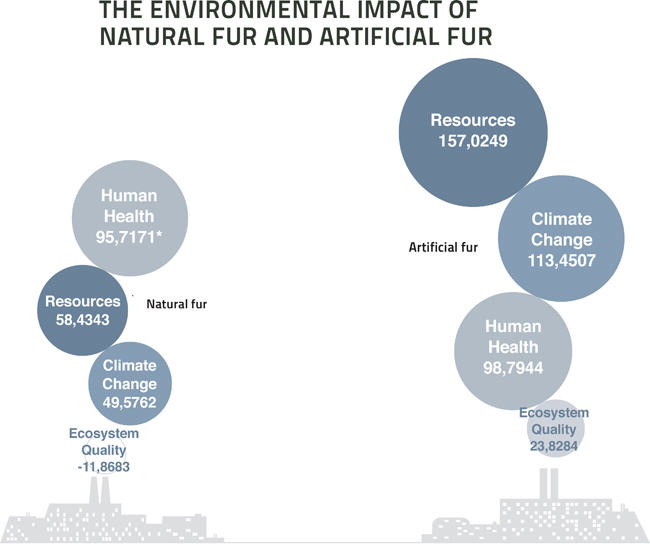
*Units in "millipoints" - used to express diverse types of potential impacts. Source: A comparative life cycle analysis: Natural fur and faux fur by DSS Management Consultants.
Fur is actually one of the most sustainable materials that apparel brands can employ. Fur farms recycle food waste from other industries and can provide organic replacement for chemical fertilisers, while natural fur garments usually last 20-30 years or more and are regularly brought to furriers for remodelling, which extends their life considerably. And at the end of its life, natural fur will degrade quickly and naturally.
Globally the environmental aspects of fur are strictly regulated in accordance with national legislation. These guidelines cover the handling and distribution of manure and the use of chemicals. This means that the regulated fur industry sets the best standards in the world when it comes to the environmental impact of this type of farming.
Artificial fur, on the other hand, is far from the "safe alternative" some lobbying groups might have us believe. Fake fur, comprising polyacrylates, requires the extraction and fractionating of petroleum, its subsequent conversion into fibres and mass manufacturing into products. These are not only incredibly energy intensive and damaging to local ecosystems, but also produce extremely unpleasant chemical compounds.
Plus, fake fur garments are very much "disposable fashion" and will rarely be kept for more than a couple of years – after which they end up alongside plastic bags on rubbish tips, where they could remain for centuries.
But perhaps most importantly, I’m concerned that Hugo Boss is not respecting consumers’ choice and ability to decide for themselves. Have the vast majority of its customers in regions like Europe and Asia said they don’t want fur products and stayed away in droves? Its most recent global earnings figures would probably suggest otherwise.
Also, its 2014 annual report noted that Hugo Boss “has been in dialogue with several animal and consumer protection organisations for many years, to continuously improve in the area of animal welfare”. We certainly welcome intelligent and informed debate on the topics of sustainability and animal welfare.
So I would like to conclude with a request to Hugo Boss. If you’re genuinely keen on sustainability and truly eager to engage in dialogue with interested parties, get in touch with us at the International Fur Federation. Moving away from fur may net the brand some short-term headlines, but it may cause more harm than good in the long run. And the long run is what sustainability is really all about.
Manage Consent
To provide the best experiences, we use technologies like cookies to store and/or access device information. Consenting to these technologies will allow us to process data such as browsing behavior or unique IDs on this site. Not consenting or withdrawing consent, may adversely affect certain features and functions.
Functional
Always active
The technical storage or access is strictly necessary for the legitimate purpose of enabling the use of a specific service explicitly requested by the subscriber or user, or for the sole purpose of carrying out the transmission of a communication over an electronic communications network.
Preferences
The technical storage or access is necessary for the legitimate purpose of storing preferences that are not requested by the subscriber or user.
Statistics
The technical storage or access that is used exclusively for statistical purposes.The technical storage or access that is used exclusively for anonymous statistical purposes. Without a subpoena, voluntary compliance on the part of your Internet Service Provider, or additional records from a third party, information stored or retrieved for this purpose alone cannot usually be used to identify you.
Marketing
The technical storage or access is required to create user profiles to send advertising, or to track the user on a website or across several websites for similar marketing purposes.