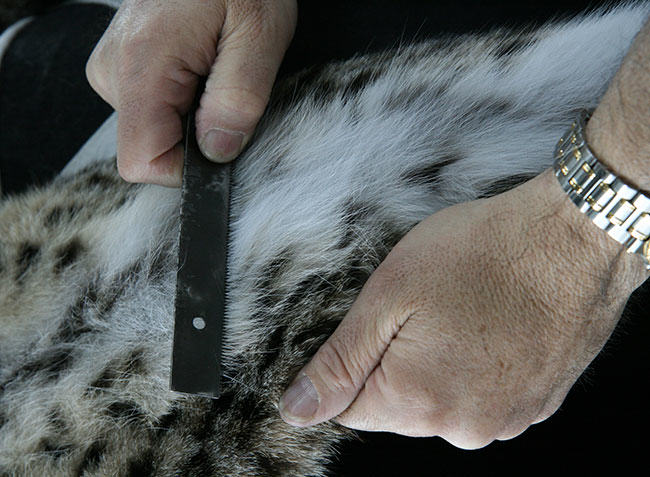
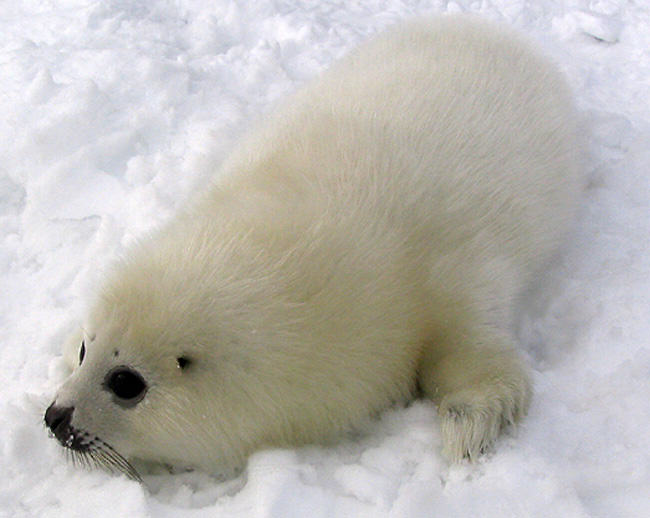
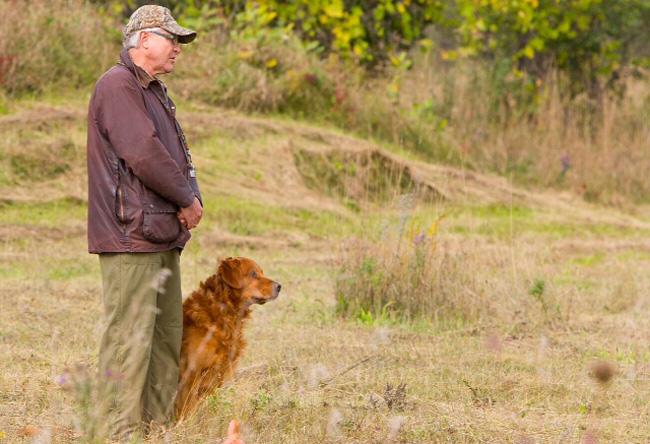
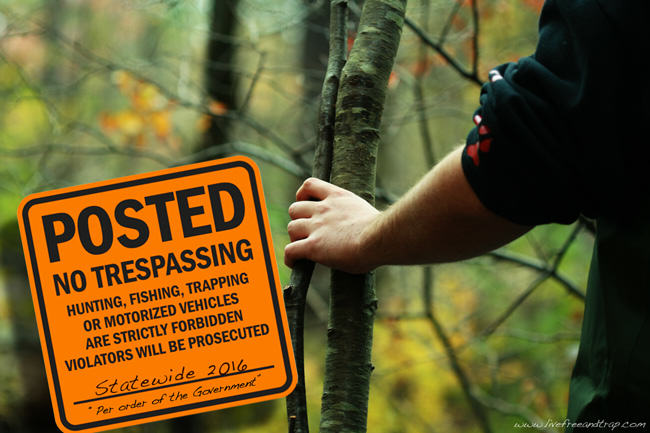
The easiest way for animal activists to further their agenda is to lie, and when it comes to the fur trade, that… Read More
The easiest way for animal activists to further their agenda is to lie, and when it comes to the fur trade, that means portraying us as a cruel industry that mistreats animals. We don't like giving animal activists credit, but there's no denying how successful they've been at spreading their lies. They appear so frequently in traditional media, blogs and comment sections, that members of the general public can hardly be blamed for believing that at least some of this horrible stuff must be true.
Well, it isn’t, and we are here to set the record straight about the Five Biggest Lies Animal Activists Tell About Fur.
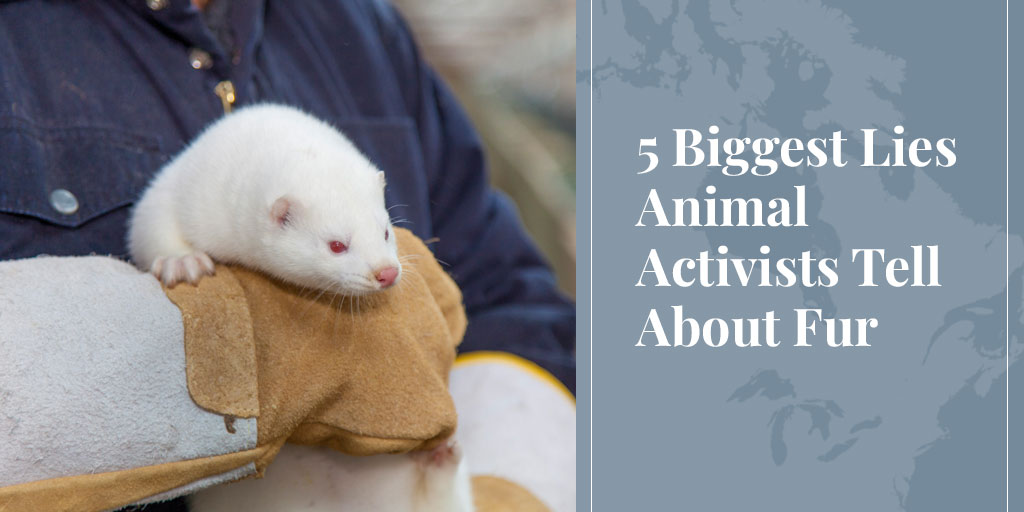
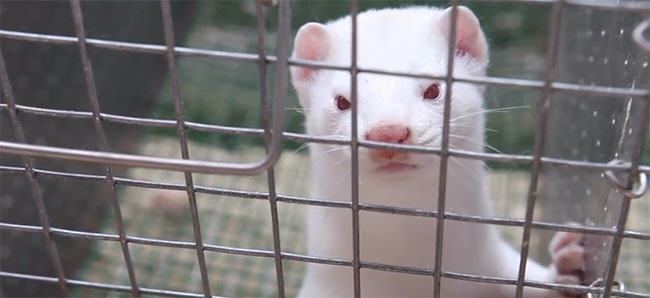
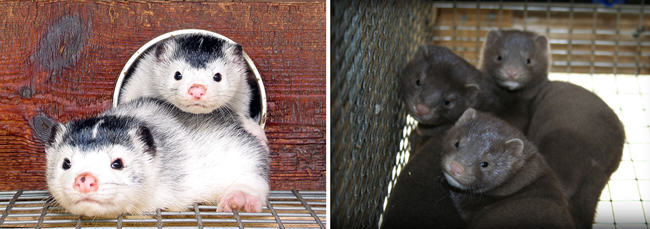
Minks are extremely well-treated in fur farms as that is the only way to ensure a good pelt. They are also never skinned alive.
Activist Lie #1: Animals on fur farms are skinned alive. Take a moment to consider this and you'll realize it makes no sense. Not only is skinning an animal alive illegal and utterly immoral, it would also be dangerous for the operator, would increase the risk of damaging the pelt, and would presumably take longer than skinning an animal that was euthanized. (Is it easier to cut your dog’s nails while he is excited or when he’s been sleeping?) Farming is a business, and businesses need to be profitable – so why would anyone adopt a practice that is dangerous for their staff, damages the product, and takes much longer than doing it properly? The simple answer is that they wouldn’t, which is why animals are never skinned alive for the fur trade.
In fact the horrible activist video that started this vicious myth has now been exposed as a complete fraud – the cruel acts it shows were staged for the camera!
Activist Lie #2: Most furs come from China where animal welfare laws don't exist. Therefore, most animals used in the fur trade are mistreated. The clever part of this lie is that, if true, it would render irrelevant the high standards of animal welfare on North American and European fur farms. If most fur comes from China, who cares how well farmers care for their mink in Wisconsin or Denmark?
There are two problems with this argument. First, it doesn’t matter where a farm is (it could be on the moon!), if farmed animals do not receive excellent nutrition and care, they will not produce high-quality fur. In fact, China does have animal welfare laws and is in the process of introducing Western standards to fur farming, but even without them Chinese fur farmers have a strong economic incentive to keep their animals healthy.
Second, and more to the point, while it is true that many fur garments are now cut and sewn in China where labour costs are lower, the fur pelts used to make most garments sold in the West originally came from European or North American farms. In fact, more than 90% of European and North American farmed mink and fox – and North American wild furs too – are sent to China to be transformed into apparel and accessories.
Producing fur garments is labour-intensive, so most are now made in China to save on costs, even if the pelts are from North America and Europe. Photo: Claire Beaugrand-Champagne.
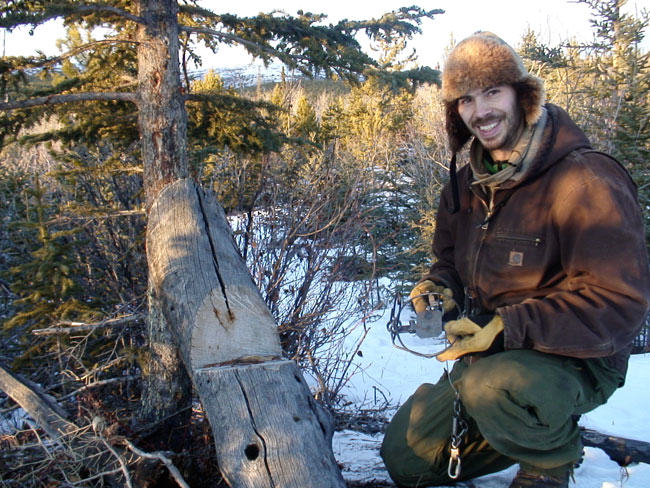
Activist Lie #3: Animals chew off their paws to escape steel-jawed leg-hold traps. This lie refers to very old trapping methods that are no longer permitted or used. Decades ago, some animals (especially muskrats) would sometimes have bones broken in old-fashioned leg-hold traps, allowing them to pull free. This does not happen with the new padded and off-set foot-hold traps. In fact, these new live-holding traps cause so little damage, they are used by biologists to catch and release (unharmed) wolves, lynx, otters and other animals for radio collaring or relocation. Meanwhile, the great majority of fur-bearers (including muskrats) caught for their fur are now taken in highly effective quick-killing traps, eliminating the possibility of a trapped animal being left alive.
Activist Lie #4: Fur farms are "not subject to federal regulation". This is a sneaky deception by animal activists that suggests that fur farming is "unregulated" and therefore without standards to protect the well-being of the animals. What is intentionally not explained is that federal regulations generally concern only food safety issues related to livestock produced for human consumption. Fur farms, however – like all farms – are indeed regulated by municipal and state or provincial laws. Furthermore, farmers who mistreat or do not provide proper care for their animals can be prosecuted under federal (and state/provincial) animal-cruelty laws.
Look at this baby seal! The seal hunt is bad! Never mind that baby seals are not hunted in either the Inuit or the commercial seal hunt, animal activists still use this image because baby seals are cute. Photo: Matthieu Godbout
Activist Lie #5: They kill "baby seals" in Canada. If we had a dime for every time we've heard this lie, we could buy a dozen beautiful seal-skin coats! In fact, the hunting of nursing harp seal pups has been banned in Canada since 1987. For the last 30 years, harp seals can only be hunted after they have moulted their first fluffy “whitecoat” fur. By the time the hunt legally opens, the seal pups have been weaned and are on their own, preparing to migrate to their Arctic summer feeding grounds. (Their mothers have left, to breed again, before also heading north for the summer.) But these easily verifiable facts do not stop animal activists from continuing to illustrate their fund-raising campaigns with photos of fluffy “whitecoats”. Why let facts spoil a great story that has raked so many millions into their coffers from well-meaning supporters?
What you can do. The next time you hear someone spreading these 5 Biggest Lies Animal Activists Tell About Fur, set them straight! We all know that if people hear lies often enough, they start to believe them. Well it works both ways. People need to hear the truth more often to believe it ... so let's be sure that they do!
***
To learn more about donating to Truth About Fur, click here.
It seems that animal rights and anti-hunting bullies come in many shapes and forms. Knowing this is important in managing-down… Read More
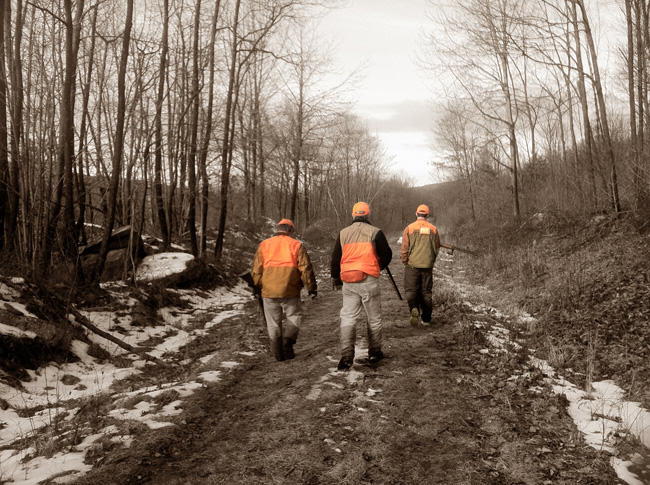
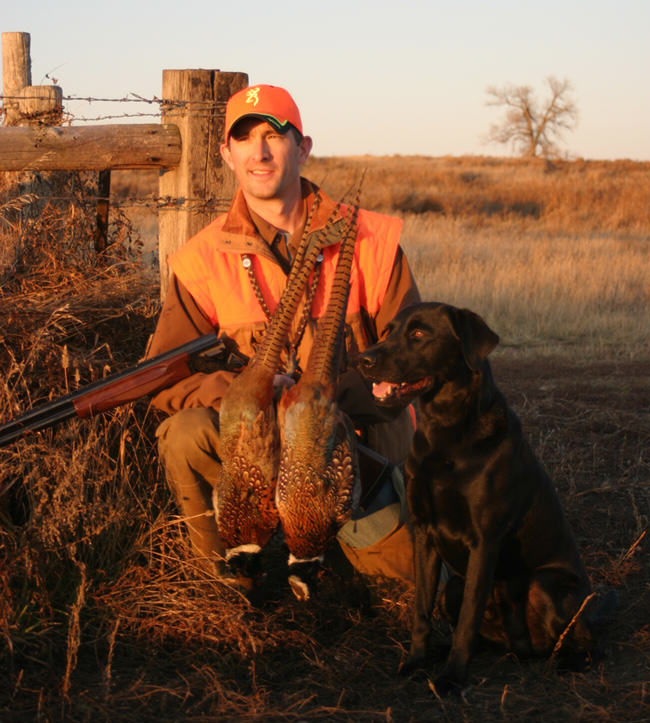
It seems that animal rights and anti-hunting bullies come in many shapes and forms. Knowing this is important in managing-down the inevitable, but thankfully infrequent, conflicts that lawful hunters, trappers and even fishermen face in harvesting wildlife. A couple of years ago, while hunting wild turkey, I had two such encounters on the same day. Here is what happened.
The spring turkey season was open and I was hunting on private property in eastern Ontario. The property consisted of a long rectangular field bordered by forest and bush on the north side, a township road and small property with a house and barn on the west side, fields on the east side and an unimproved township right-of-way on the southern edge. Turkeys were frequently feeding on waste corn along the northern edge of the property, and the adult males, or toms, were using a nearby rise in the field as a strutting zone. Only bearded turkeys are legal game during the spring season.
On the day in question, I parked my truck along the edge of the right-of-way, packed up my gun and gear, and walked in a northeastward direction across the field. Following the hunting regulations, proper gun handling and shooting in a safe direction are key to personal safety and that of others. As required by law I was using a shotgun to hunt turkeys. These firearms typically have an effective range of no more than 60 yards, though the spent shot can travel up to 200 yards. With the surrounding private property and the township right-of-way well beyond my field of fire, I set up my decoys on the small rise in the field and settled into the nearby fencerow for the afternoon. I had a clear view of the entire field. The right-of-way was well over 500 yards to the south. Beyond my truck, which was one-half a mile southwest, I could barely make out the roof tops of some of the housing and other buildings along the higher elevation of the township road.
By then it was nearly 2 p.m. I planned on staying until the end of the day’s hunt which, according to the provincial regulations, is 7 p.m. After three uneventful hours, I was surprised to see a provincial police cruiser driving down the right-of-way. At the same time I watched as a large bearded turkey ran as fast as he could across the corn field, headed for the safety of the nearby forest. The police were obviously responding to some sort of complaint. The cruiser parked behind my truck, blocking the right-of-way.
Through my field glasses, I watched as two officers inspected my vehicle, returned to their cruiser, and then sat there waiting. At that point I concluded, reluctantly, that my hunt for the day was probably over. However, as subsequent events were to prove, the day’s excitement was just about to begin.
"How Is Your Day Going?"
Approaching the officers with a shotgun in-hand, even unloaded and with the action open, would complicate our encounter. So I unloaded my gun, set it aside in the fencerow along with my other gear, and walked back down the field. As I approached the vehicles, both officers got out of their cruiser to meet me.
“How is your day going Mr. Thompson?” the senior officer asked. I had presumed, correctly, that they had checked my vehicle registration in order to identify its owner. “Well frankly sir it was going fine until you two showed up. So far today my only opportunity to bag a tom turkey just ran off into the woods at the approach of your vehicle,” I replied.
Both officers remarked that, when they started down the right-of-way, they had seen a large turkey. From my camo clothing they had already surmised that I was hunting. I explained to them that I was licenced, that the spring turkey hunting season was open, and that I was hunting on private property with the permission of the landowner. I added that I was parked on the edge of a public right-of -way. Further, I offered to provide the officers with the landowner’s name and phone number, along with my permits and licences, to which they declined.
I then immediately started asking them, “What are you doing here? Are there any problems?”
The senior officer answered in a serious tone, “Sir we just received an urgent call from a property owner on the nearby township road reporting multiple gunshots and bullets hitting their house!”
After I stopped laughing, my reaction was swift. “This is ridiculous. These allegations are not true. I have not even fired a shot. Not only that, but I am hunting well down the field away from buildings on the township road with a safe field of fire in all directions. And, like I said, I have the permission of the landowner.”
Without any hesitation I continued, “It is really unfortunate that you have to waste your valuable time on a frivolous complaint such as this. Understand that whoever had complained has brought you here under false pretenses in order to harass me. Whether their motivations are animal rights, anti-gun, or anti-hunting, it does not really matter. It is illegal under Ontario’s Fish and Wildlife Conservation Act to interfere with anyone who is engaged in lawful hunting, trapping or fishing.”
The officers agreed with my assessment and concluded that the complaint about gunfire was entirely unfounded. We shook hands and after wishing me a good hunt, they departed. I then walked back to the fencerow to retrieve my gear and head home, but not having any inkling as to what was going to happen next.
"Leave Immediately!"
I was returning across the fields to my truck when I noticed a man driving an ATV down the right-of-way. He stopped at my truck, got off his vehicle, and placed something on my windshield. He then continued along the right-of-way until deep mud forced him to turn back. By that time I had reached my truck. A note was stuffed under my windshield wiper. On it was written, “You are parked on private property! If you do not leave immediately the police will be called and you will be charged with trespassing!”
I met the fellow as he returned and motioned him to stop. Scowling, he killed the engine and stepped off his vehicle.
“Is this note yours?” I asked politely.
He stepped menacingly towards me, shouting, “If you don’t leave right now I will call the police and have you arrested for trespassing and poaching!”
"You are too late. Unfortunately for you the police just left," I blurted out. “Respectfully sir, you do not know what you are talking about. I am not trespassing nor am I poaching. Spring turkey season is open and I have the permits and licences that allow me to hunt. There is nothing illegal with parking on the edge of this public right-of-way, nor with my hunting on this field. I have the landowner’s permission."
It took him quite a while to calm down, but not before he complained at length about trespass and littering problems on his nearby property. I told him that I too was a landowner and that I sympathized with him. I then took the initiative to explain that I have been hunting for over 50 years, that I am very safe in the field, and that I never trespass nor litter. I also described for him briefly the role of regulated hunting in managing for abundant game and other wildlife species.
"I will be hunting here again," I told him. "So when you next see my vehicle parked here you will know who it is. You will also know that I am hunting with permission and you can count on me to hunt safely, not trespass on your property, nor litter. Here is my business card. Call me if you have any questions or concerns." I concluded our encounter by asking him if he had any other issues. He demurred and said that he did not. We amicably shook hands and I thanked him for stopping.
Later I reflected on the afternoon’s events. In one day I had been falsely accused of trespassing, illegal parking, poaching and careless use of firearms. While my hunt that day did not turn out as expected, my preparations certainly made a big difference in being able to successfully resolve the day's two encounters. Obtaining landowner permission, confirming vehicle parking, setting up in a safe shooting location, and having your documents at hand, are all part of what it takes to successfully hunt on private lands and, as it turned out, to deal with harassment by others attempting to interfere with your lawful activities.
I returned to that same field later in the spring. Without any further incident, I was fortunate to harvest a nice tom turkey. Having previously run the gauntlet of police and angry neighbors, I can assure you that I savoured every morsel of that delicious and hard-earned bird!
I recently sat in on a conservation meeting in a sportsmen’s lodge outside Concord, New Hampshire. The topic for discussion… Read More
Sportsmen are "one of the most unorganized groups of people in the country".
I recently sat in on a conservation meeting in a sportsmen’s lodge outside Concord, New Hampshire. The topic for discussion was the lack of camaraderie amongst sportsmen and women, and the toll this has taken on conservation and wildlife programs throughout the state and region. One man said his piece on what was wrong with the current state of hunting and trapping across America. “I’m going to say something that may offend some of you," he cautioned us, "but it needs to be said. Sportsmen groups are one of the most unorganized groups of people in the country.” There wasn’t a single rebuttal from anyone in attendance; everyone knew full well what he meant, and furthermore, what it means for the future of consumptive outdoor activities in the region and the country.
It’s a subject that not too many hunters and anglers recognize, or want to admit, but those of us in more “niche” activities like hound hunting and fur trapping know it all too well. Let’s face it, you may be a big-time duck hunter and passionate about your sport, but when a bill comes before your state legislature to restrict or ban bear hunting, are you as a duck hunter, going to take the time to write to your representative to save bear hunting when you know full well you’ll never hunt bear? I’m guessing the answer, nine times out of ten, would be “no”, and that's one of the reasons why consumptive outdoorsmen and women are constantly under scrutiny from anti-hunting and anti-consumptive organizations nationwide.
Decades ago this type of mindset was unheard of. If you hunted deer, chances were you also dropped a line in the creek for trout and trapped muskrats along the marshlands during duck season. In many states and provinces, this way of life still prevails as larger populations of rural folks hold tight to their outdoor self-reliant roots. But for many of us, the community of consumptive sportsmen has become fragmented. We are passionate about our own particular practices, but fail to recognize hunting, fishing and trapping as an all-encompassing benefit to conservation and outdoor recreation.
Divisions in the Ranks
Now I know there are plenty of you reading this and wondering what I’m talking about, thinking that it's only common sense to support all forms of hunting, trapping and angling. Unfortunately nowadays, your train of thought is in the minority, and this concept is seldom heard when the proverbial deer piss hits the fan.
Yes, we should support and commend one another for having the common sense to want this natural world managed and regulated as a resource for all consumptive practices. However, every state and province in North America has divisions within its hunting ranks. Many bird hunters don’t care for trappers; many deer hunters don’t care for hounds-men; many anglers don’t care for hunters. These divisions rise to the surface every fall, and sometimes disputes over wildlife management spill into clubs and departments, causing greater divides and offshoots.
When a bill or piece of legislation does come along threatening the current ways of hunting and trapping, it's usually only those whose hides get affected (pun intended) that spend time voicing opposition.
Meanwhile, the animal rights groups and “hands-off" environmentalists have a field day presenting themselves as the majority, when in reality this is clearly not the case.
Join Your Sportsmen's Group
So what exactly am I asking for? Am I seriously trying to convince every New Hampshire deer and pheasant hunter to show up at the next hearing on anti-trapping legislation? Well, frankly, in a perfect world that’s what I’d like to see, and I recall a time when that would not have been an outlandish request.
What I will realistically settle for is for all of you to join your local sportsmen’s group - not your local skeet club or shooting range, but your state organization dedicated to preserving hunting, fishing, and trapping for everyone. The Sportsmen’s Alliance for instance, is a national organization that champions such values. This group serves as a lookout to protect deer hunters and bass fishermen, as well as fur trappers, hound hunters, and turkey callers. While national groups like the Sportsmen's Alliance do an excellent job, we must also support one another at the state and regional levels. Almost every state and province has some kind of consumptive sportsmen’s group; Maine has SAM, New Hampshire has the NH Wildlife Federation, and so on from Vermont to California. These groups not only support all major forms of regulated hunting and fishing, but also serve as a bridge of unity between the different classes of these outdoor activities.
When each of you took your hunting or trapping education classes, you learned about concepts like carrying capacity, wildlife management and conservation. I can tell you the Primos hunting decal on the back of your F-250 doesn’t mean a thing if you don’t support the other aspects of conservation that go along with its meaning. It really doesn’t matter how much you spent on your duck blind, or which Pro-Staff you belong to - if you aren’t willing to recognize and support the other aspects of wildlife conservation, such as fur trapping and bear hunting, your Real-Tree camo pajamas are nothing more than a fashion statement. More than 90 million U.S. residents (16 years old and above) participated in some form of wildlife-related recreation in 2011. With numbers like this, it’s a downright embarrassment that we must constantly fight to keep trapping and hunting relevant today.
Deceitful Anti-Hunting Groups
Despite what anti-hunting activists may say or think, I know lack of support for these “niche” activities isn’t due to lack of individual sympathy for the cause, but rather a lack of motivation to see the fight through. This is where we all, as outdoorsmen and women, must stand together against those who wish to abolish all forms of hunting and fishing. If you don’t believe your brand of outdoor hunting could be targeted, take a look at the current headlines to get a snapshot of how anti-hunting groups deceitfully operate. They know how difficult it is to push a man off his stool. They know it's much easier to whittle away at each supporting leg of that stool when he’s not looking, and watch him fall on his ass in sheer shock and surprise!
Keep in mind these organizations don’t protest hunting and attempt law changes on principle. Their primary motivation is donations. Take a look at any of the anti-hunting groups like HSUS, PETA and Furbearer Defenders, and you’ll see their websites plastered with “donate-now” buttons. They parade state-to-state crying injustice, corruption and animal cruelty while soliciting for donations. Once the deed is done, and they’ve won the argument, they’re on to the next state to suck the life out of their outdoor conservation groups. The wildlife these groups claim to support end up suffering in their wake as they continue to follow the money. Its common knowledge that most of the people who speak against hunting at these state hearings are paid to be there – it’s much more motivating to “save the animals” when you’re collecting a large paycheck in the process. But instead of standing and fighting these anti-hunting groups, sportsmen are busy pushing their neighbors under the bus in the hope these groups will move on if trapping and bear hunting are banned. This is a huge mistake, as even the most basic research on these groups will show this is not their end game. Staten Island is already experimenting with controlling its deer population by castrating bucks rather than allowing hunting; it’s happening right in front of your eyes and I’m sorry to say the “Redneck pride” sticker on the back of your truck isn’t going to stop it.
It’s not all doom and gloom; there is a light at the end of this ever-growing tunnel. You can start by becoming an active member of your local sportsmen’s club and keeping an ear to the wall for anti-hunting and trapping legislation. Find out who your local district and state representatives are and let them know you are a hunter or trapper. Whether they’re Democrat or Republican, conservative or liberal, most representatives listen to what their constituents are saying. Sending a handwritten letter introducing yourself and your outdoor activities is a good start to breaking the ice before legislation is introduced. It doesn’t take a lot of time either - I work a full time job, maintain and run a pro-trapping website for free, and take an active role in my local conservation groups with time still left over to hunt and trap!
To summarize, whether you hunt to put venison in the freezer, fish for sport, bird hunt with dogs or set traps for natural fur garments, you are an integral part of the North American Model of Wildlife Conservation. Your support is needed as our society is overcome by tablets, smart-phones, self-driving cars and Kardashians. Our self-reliant ways of life are ALL in jeopardy as habitat loss and out-of-touch citizens continue to constrain and restrict our activities. It’s time we start pushing back and regain our freedoms as fixtures of the natural world. United We Stand, Divided We All Fall.
Unfortunately, this could happen to anyone working with fur these days, especially retailers selling any sort of fur or fur-trimmed… Read More
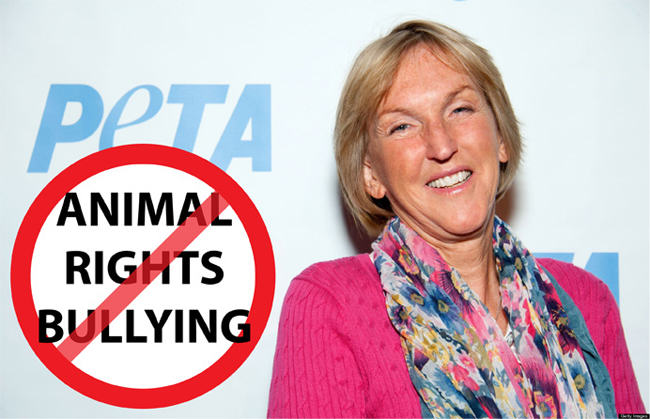
Ingrid Newkirk, queen of the animal-rights bullies.
Unfortunately, this could happen to anyone working with fur these days, especially retailers selling any sort of fur or fur-trimmed products.
A veteran North American retail furrier – who shall remain nameless here, to protect the innocent – has participated for the past ten years in a high-profile fund-raising fashion show, in support of a local charity. About a month before this year’s show, he spoke with the organizers who confirmed that they were looking forward to working with him again. Then the animal-rights bullies showed up.
Just two weeks before the event, he received a call from the fashion-show producer. She informed him that the Events Committee had decided they could not include his products in the show this year. “One of the sponsors is against fur,” she said, as if this explained everything. The committee had made their decision and nothing could be done, she told him bluntly.
And that might have been the end of the story, except this retailer is not the sort who likes to be told that “nothing can be done” ... especially when it involves mindless kowtowing to anti-fur bigots. Sensing that the show producer was not open to discussion, he went above her head and contacted the charity’s Events Coordinator. What he did next should be an inspiration to all furriers – and, indeed, to everyone who believes in democracy.
Here is a summary:
First, he introduced himself and explained that his company had supported this charity event since its inception, a decade ago.
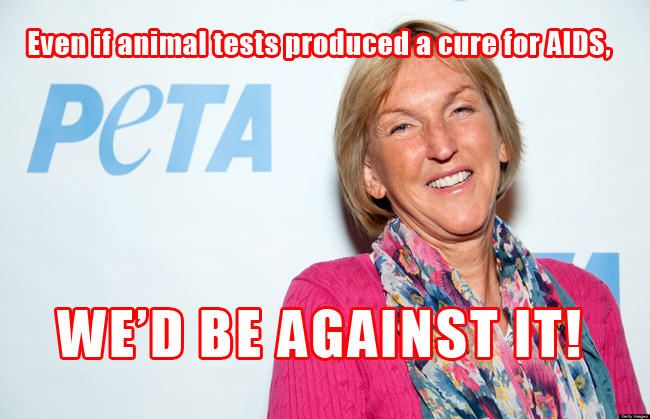
Then, he suggested that it wasn’t wise for a medical charity like theirs (they support palliative care) to give in to activist pressure tactics. Animal-rights bullies also oppose laboratory animal research, he reminded her. PETA-boss Ingrid Newkirk is on record saying that she opposes animal research even if it can find cures for AIDS or other terrible diseases. (He had the Event Coordinator’s attention now.)
And what about the retailers who were showing wool and leather products? Would they also be banned from the show if that was the next activist demand? (Hmmm ... maybe this wasn’t so simple after all?)
Then he asked what they were serving for dinner for the fashion evening ... (She was chuckling now.)
It was time to drive home his main argument: “Listen,” he told her. “We’re not saying that everyone has to wear fur...or leather…or eat meat and dairy either. Each of us can have our own opinions and make our own decisions. Isn’t that what democracy is all about? But that doesn’t give us a right to impose our ideas on everyone else!”
She promised to speak with her superiors. And, sure enough, 24 hours later the retailer received a call from the charity’s CEO. It was Friday afternoon.
"Not the Way We Do Things"
“I wanted to call before the weekend so you wouldn’t have to worry; you’re back in the show,” she said. The activists were not “sponsors” of the event; they had bought a table, like many others. In any case, the Committee should never have made this sort of policy decision without consulting with her. “This is not the way we do things,” she said. The charity appreciated the support his company had offered for so many years; they were delighted that he was ready to participate again. Have a lovely weekend!
Two weeks later, the fashion-show evening was a wonderful success, with almost 500 people in attendance. “I was pleased to see that several of the charity’s board members placed bids for the fur scarf we contributed to the silent auction,” says the retailer.
“I was worried that the activists would make a fuss when my fur scene came on,” he says. “But there was nothing but applause. I found out later that the activists had cancelled their table when they learned that they couldn’t impose their will on the organizers. See how phony their support really was all along!”
The retailer sent a note to the CEO after the show, congratulating her on a wonderful evening – and thanking her for having the intelligence and integrity not to give in to the activists’ bullying tactics.
With fur season revving up again, we hope that his little story will provide encouragement to any retailer who is harassed by activists. Truth About Fur will be preparing a “tool kit” of resources you can use to defend your business, including blog posts like the one cited above.
And if you have a story about tactics that have worked for pushing back against activist bullies, please share it with us!
A recent on-line, anti-trapping rant by Born Free USA boss Adam Roberts (“What kind of person still traps wild animals?”, Huffington Post,… Read More
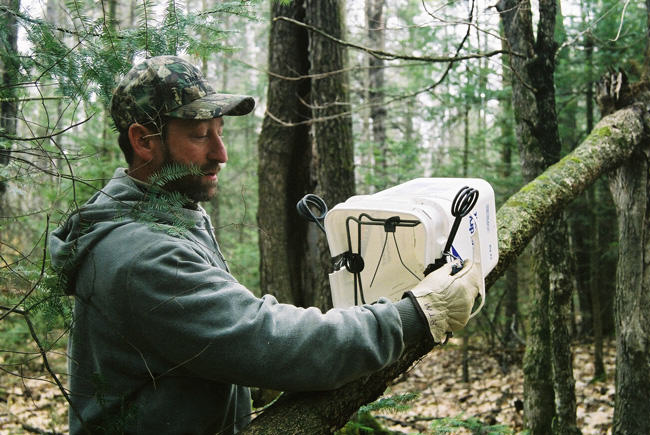
Randy Mersereau demonstrates a quick-killing box set for fisher or raccoon in New Brunswick. The trap is placed high on an inclined pole to keep it out of the reach of dogs that may be attracted by the bait. Photo: Truth About Fur.
A recent on-line, anti-trapping rant by Born Free USA boss Adam Roberts ("What kind of person still traps wild animals?", Huffington Post, Sept. 7, 2016) underscores how trappers are on the front line in the war against humans using animals – a war in which the weapons of choice are misleading images, inflammatory rhetoric, and exploiting the information gap between rural and urban cultures.
Roberts' attack drives home how important it is to explain, again and again, the vital role trappers play in responsible wildlife management and conservation.
Like other "animal-rights" groups, the folks at Born Free rage against a wide range of animal-use activities. This time, as part of their "Victims of Vanity 2" campaign, they are promoting an “undercover” trap-line video showing “atrocities” that they claim “occur regularly across America”.
“What kind of person purposely destroys a beaver dam and sets a ‘wall of death’ of Conibear traps," asks Roberts, "knowing that the unsuspecting beavers will return to repair their handiwork – only to be possibly smashed across their abdomens and drowned?”
The insinuation is that such traps cause terrible suffering. Born Free's own video, however, shows beavers that have clearly been struck by the trap bar across the back of the neck, breaking cervical vertebrae and causing rapid death, just as this quick-killing trap is intended to do. These traps were developed through several decades of (on-going) scientific research to provide the most humane possible methods for controlling wildlife populations.
Thanks to this pioneering work, the time-to-death produced by quick-killing traps like those shown in Born Free's video is now measured in seconds. Roberts knows, however, that most of his readers live in cities and have little real contact with nature. People who find their meat neatly wrapped in cellophane on grocery store counters are easily shocked by pictures of dead animals, no matter how humanely they were euthanized – especially when cued with sufficiently emotional rhetoric.
Ryan Minette sets live-holding foot trap for lynx in British Columbia. He works as a nurse when he's not out on the land. Photo: Truth About Fur.
Similarly, the live-holding devices used for capturing larger predators – like the coyote shown in Born Free's video – are not diabolical instruments of “torture”. Modern, live-holding foot traps are used by wildlife biologists to capture and release – unharmed – wolves, lynx, river otters and other animals for radio-collaring or reintroduction into regions where they were previously extirpated. To claim, as Roberts does, that such traps “have remained relatively unchanged for 400 years” is nonsense.
Should We Kill At All?
But what about the bigger question Roberts implicitly raises: should we really be killing wild animals at all?
In fact, there are many reasons why wildlife populations often must be managed. Overpopulated beavers can completely “eat out” vegetation in their region; the population will then crash and there may be no beavers at all for many years. Regulated trapping can smooth out these boom-and-bust cycles, maintaining healthier and more stable beaver populations. This is one reason why biologists believe there are now as many beavers in North America as there have ever been. There can, however, be too much of a good thing: beaver dams in the wrong places can flood roads, fields, and forest habitat. When your basement (driveway, back yard) is flooded, who’re ya gonna call: Mr. Roberts ... or your local trappers’ association?
Meanwhile, coyotes are the number-one predator problem for sheep and cattle ranchers, and many states and provinces have been obliged to offer bounties to keep their populations in check. Coyote, fox and raccoon populations are also culled to protect endangered ground-nesting birds or sea-turtle eggs. Overpopulated foxes, skunks and raccoons are prime vectors for rabies and other diseases that can be transmitted to humans and pets. For these and many other reasons, there will always be a need for trapping, whether or not anyone buys fur. Without a market for fur, however, these management efforts would be paid for by the government – i.e., by tax-payers – as they now are in many parts of Europe.
Trappers protect nature in other ways that are not often publicly recognized. While we all “care” about nature, most of us now live in cities. Trappers are our eyes and ears on the land, sounding the alarm when nature is threatened by inappropriate resource extraction or industrial activity. Trappers' associations across North America are on the front lines to ensure that forestry practices respect the needs of wildlife, for example by leaving a swath of uncut trees along watercourses. And, like the canary in the mine, trappers are the first to spot changes such as reduced reproduction rates among mink that may signal industrial pollution upstream. Harvesting data, including the sex and age distribution trends, provide vital information about the health of our wildlife populations.
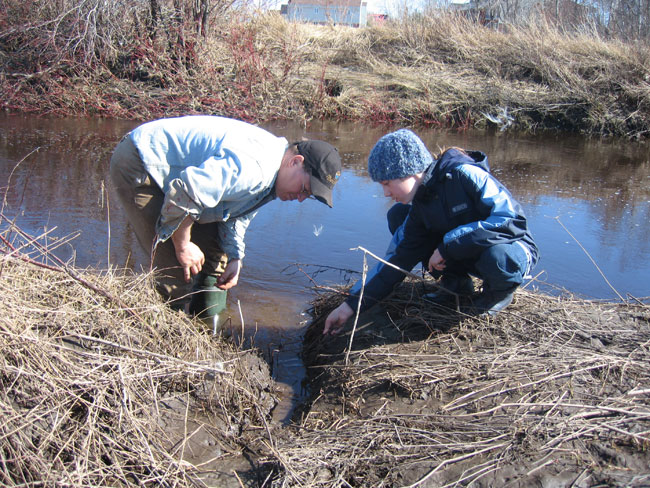
Biologist Serge Larivière teaches youngster Vivianne Lachance how to trap muskrats along an agricultural drainage ditch in Agapit, Quebec, 2006. Photo: Truth About Fur.
Most important of all, nature is not a museum. Most wildlife species produce more young each year than their habitat can support to maturity. The ones that don’t survive feed those that do. We are part of nature and we too can make use of the surpluses that nature produces – year after year, generation after generation – so long as we protect the habitats and ecosystems that provide those surpluses. This is called “the sustainable use of renewable natural resources”, a central conservation principle promoted by the International Union for Conservation of Nature (IUCN) and other conservation authorities. (By contrast, the synthetic materials that animal activists would have us wear are usually derived from petroleum, a non-renewable resource.)
Animal Abuse
Does all this give us the right to abuse animals? Absolutely not.
The Born Free video also shows a trapped coyote being kicked, prompting Roberts to ask, "What kind of person watches a tethered and helpless coyote writhe in pain and distress, unable to move because of the intensely unforgiving steel jaws clamped to her paw, kicks her in the side, and then finally shoots her in the chest so that her lungs fill with blood, and she dies a miserable, suffocating death?"
Most trappers would be disgusted by this scene. There is no excuse for kicking an animal, ever. Furthermore – Roberts' "intensely unforgiving" rhetoric aside – every trappers' association and trapper-training manual teaches that live-trapped animals should be killed quickly and humanely with a direct shot to the head. But this completely unacceptable behavior of one individual does not give Roberts or Born Free the right to smear the reputations of more than 200,000 North American trappers.
On the contrary, as society becomes more interested in protecting our natural environment, it is time that we learn more about these remarkable and knowledgeable men and women – the small minority among us who continue to live close to the land.
What kind of person still traps today? Far from the grotesque caricatures that animal activists like to portray, in many real and practical ways, today’s trappers are the true guardians of nature.
Sensationalized videos claiming to show “animal abuse” are sadly a fact of life these days for animal agriculture, and they’re often… Read More
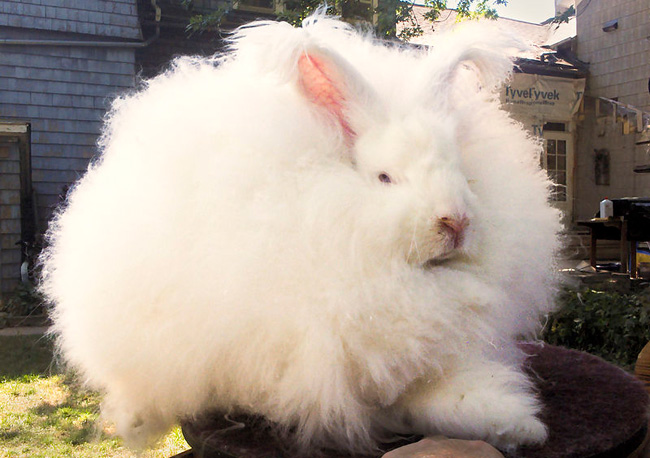
The Angora rabbit has been bred for its wool for more than 2,000 years without fuss. But PETA can't leave well enough alone. Photo: Oldhaus.
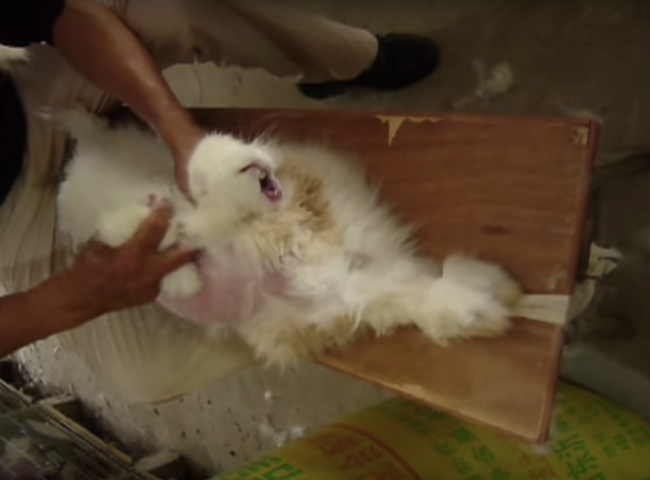
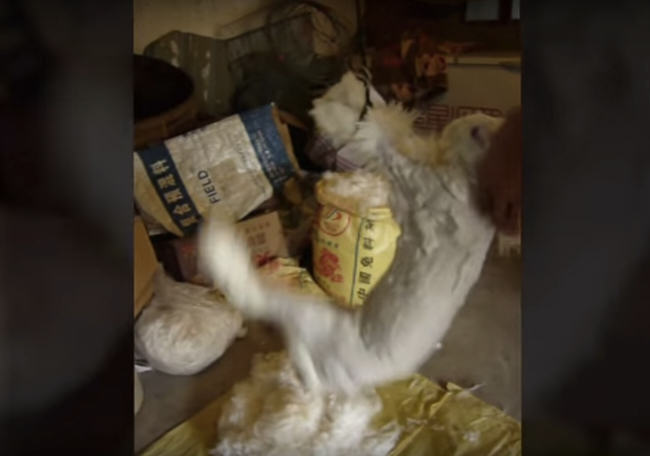
Sensationalized videos claiming to show “animal abuse” are sadly a fact of life these days for animal agriculture, and they’re often promoted (if not actually filmed) by People for the Ethical Treatment of Animals. One such video, dealing with wool production from Angora rabbits, premiered in 2013 and has gone unchallenged - until now. An Angora farmer in the US contacted us to raise some real concerns about this video, which we think are worth sharing.
Before dissecting the video, let's start with a backgrounder on Angora wool production.
There are two distinct types of Angora rabbit: those that moult, and those that don’t.
Those that moult have their wool plucked every three or four months, just before moulting begins. Plucking produces the best wool because most of the guard hairs are left behind, but it is time-consuming. Plucking leaves in place the incoming coat, although one breed, the French Angora, can be fed a depilatory which results in the exposure of bare skin. Here's a video showing how to pluck an Angora properly.
Angoras that don’t moult are sheared. Because the guard hairs are included, the wool is not such high quality, but collecting it is quicker and the yield is higher because wool can be sheared even from sensitive areas of the rabbit's body. Shearing is therefore more common in commercial operations. The most important commercial breed is the high-yielding and virtually mat-free German Angora. Ninety per cent of Angora wool production today is in China, and almost all Chinese farms raise German Angoras. Here's a video showing how to shear an Angora properly.
Show Time
OK, it's time to watch the main attraction. If you find videos of animal cruelty hard to stomach, just give it a miss and take my word.
0:10 – 1:03: This rabbit is almost certainly a non-moulting German Angora, even though it looks very similar to a moulting French Angora. We can tell it's a non-moulting breed because its legs are tethered to what is called a stretching board. These are sometimes used, but not always, when rabbits are sheared.
PETA describes the stretching process as follows: "During the cutting process, their front and back legs are tightly tethered – a terrifying experience for any prey animal – and the sharp cutting tools inevitably wound them as they struggle desperately to escape." In reality, while rabbits being stretched for the first time might be nervous, they soon learn to relax. Stretching keeps the rabbit still and pulls the skin taut, thereby preventing nicks and cuts from the shears - the total opposite of what PETA claims. Here's an excellent video demonstrating how stretching is done.
Oh, but what's happening now? Having set the rabbit up for shearing, the man is plucking it right down to its skin! He is also applying far greater force than is ever needed to pluck a moulting breed. This is all wrong for two reasons. First, the rabbit is obviously in pain. Second, as US Angora farmer and advisor on this blog post Dawn Panda says, this could be called "worst business practice". "We see the wool being yanked off, guard hairs included, in a manner that will ruin the coat for several cycles," says Dawn. "It will damage the hair follicles and greatly reduce the quality and value of future harvests as new coats will grow in coarser and hairier. No one trying to make money would do that."
This raises a disturbing question. Are we seeing a non-moulting German Angora being forcibly, and very roughly, plucked just for the camera?
1:04 - 1:17: Here a rabbit is being sheared, so we don't see any pink skin. It appears calm. At this point in the video, it is not clear whether this footage and the footage of a rabbit being violently plucked were shot on the same farm. We'll come back to this because, if all the footage is from one farm, the question is raised why one rabbit would be plucked and one sheared.
1:18-1:22: Here a rabbit that has just been sheared is shown suspended in the air by its front legs. This makes no sense, Dawn assures us. There is no part of Angora husbandry in which a rabbit would ever find itself in this situation. It can't even be claimed the rabbit fell off its stretching board because it's far too high. Once again, we can’t help but wonder if this bizarre scene was staged for the camera.
1:36-2:02: Here we see a parade of seven rabbits in their cages. Of these, the first three still have hair on their torsos and have been sheared. The next three have been plucked right down to their skin. The last rabbit cannot be seen clearly.
This scene suggests that the violent plucking at the beginning of the video and the shearing that followed took place on the same farm. And since commercial farmers generally don't have mixed herds of moulting and non-moulting rabbits, we can also suppose that all the rabbits shown are non-moulting German Angoras. The burning question is now unavoidable: Was the violent plucking of a non-moulting rabbit in the opening sequence staged for the camera? It would not be normal practice on a commercial Angora farm, insists Dawn.
"If animal lovers would use their heads, they wouldn’t be taken in by sensationalist publicity stunts," she says. "However, the addition of poignant music seems to ensure that one’s heart is going to overrule one’s head and voila! Misinformation is spread exponentially, the lie repeated until it’s accepted as fact. There are a number of excellent teaching videos on plucking and/or shearing Angora rabbits on YouTube; the lack of screaming, struggling or any pain is the norm, not the exception. This PETA video certainly does not reflect the reality of Angora farming as I know it!"
Postscript
If PETA's Angora rabbit video was indeed staged to misrepresent normal practice, we should not be surprised. This ignominious tactic by animal activists traces its roots all the way back to 1964, when the urban myth about seals being "skinned alive" began with a film that was later proven to have been staged.
While people have a right to believe that humans should not kill or use animals in any way, they lose all credibility when they manipulate images to attack the reputations of those they disagree with.
COOL FACT #1: Fur may have saved the human race New research suggests humans (Homo sapiens) survived the last Ice… Read More
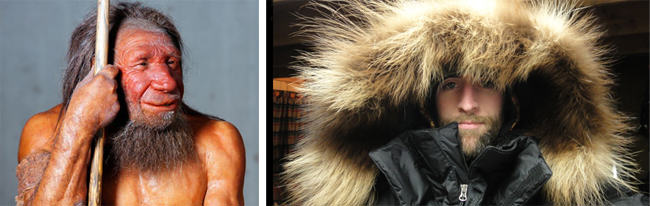
Neanderthal man froze to death while Homo sapiens Josh Spice laughs in the face of the cold!
COOL FACT #1: Fur may have saved the human race
New research suggests humans (Homo sapiens) survived the last Ice Age and Neanderthals didn’t because humans were serious about fur clothing. Animal remains around Neanderthal sites lack evidence of furbearers, while human sites have fox, rabbit, mink and notably wolverine - the same fur still preferred today by Canadian First Nations for hood liners.
COOL FACT #2: Everyone's heard of the California Gold Rush, but how about the California Fur Rush?
In the early 19th century, trappers came from far and wide to the US west coast to harvest huge populations of furbearers. It was these trappers, not the gold prospectors who followed, who opened up the west and put San Francisco Bay on the trade map. But no one remembers because no one named a football team after them. Go 49ers!
COOL FACT # 3: Beaver butts are used in food flavouring
Next time you see the words "natural flavouring" on a food package, it might be referring to Castoreum, secreted from the castor sacs of beavers located between the tail and the anus. Usually it's used to simulate vanilla, but it can also pass as raspberry or strawberry.
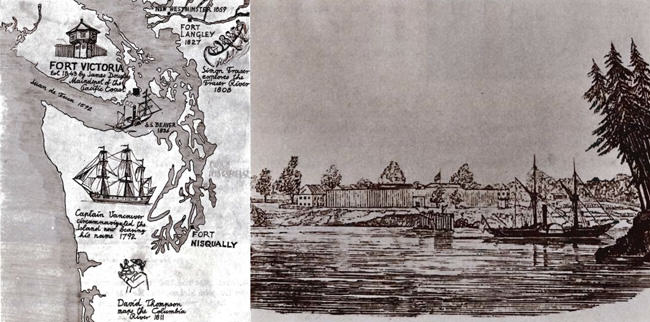
Fort Victoria (shown here in 1847) started life as a fur-trading post. Today it is the capital of British Columbia.
COOL FACT #4: The fur trade determined much of the Canada-US border
The search for fur drove Europe's exploration and settlement of North America, and many of today's towns and cities began as fur-trading posts. In fact, much of the border between Canada and the US traces the territories once controlled by Jacob Astor’s American Fur Company and the Montreal-based North West Company.
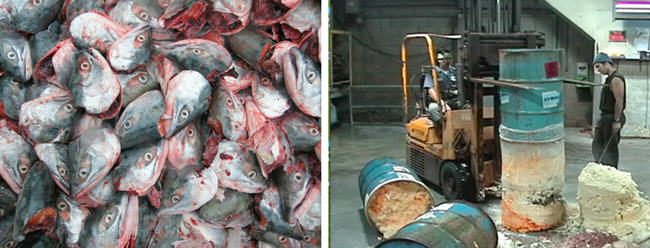
Fish heads and spoiled cheese are gourmet eating for mink. Photos: Joseph Robertia; Truth About Fur.
COOL FACT #5: Mink farming plays a key role in our food chain
Have you ever wondered where all the animal leftovers from human food production go? Fish heads, chicken feet, expired eggs, spoiled cheeses? If you live in fur-farming country, chances are they go to make nutritious mink food. And the mink manure, soiled straw bedding and carcasses are composted to produce organic fertiliser to enrich the soil, completing the nutrient cycle to produce more food.
COOL FACT #6: Mink wastes provide biofuel
In Nova Scotia, Canada, pilot projects are transforming mink wastes into methane for bio-energy production. In Aarhus, Denmark – the country that produces the largest number of farmed mink – the public transit buses already run on mink oil.
Crabs will eat just about any seafood you offer them, but so will seals and sea lions, and they'll trash your crab pots to get at it. Enter mink bait! Crabs find their food by smell, and apparently the smellier the better because they love mink musk. But seals and sea lions can't stand it and will give your pots a wide berth!
COOL FACT #8: Canada's beaver population has never been bigger
The national animal of Canada has been prized for its luxuriant fur for hundreds of years, yet wildlife biologists believe there are as many today as there were before Europeans arrived. They also believe coyotes, foxes and raccoons are more populous now than ever. Truly modern trapping, regulated to allow only the removal of nature's surplus, is a perfect example of the sustainable use of renewable natural resources!
COOL FACT #9: Farmed mink enjoy company so farmers house them in pairs
After being weaned from their mothers, farmed mink are often raised in pairs, preferably a brother and sister, and sometimes even threes. Farmers have learned that keeping siblings together results in calmer and healthier mink.
Assembly times: Intarsia sheared beaver by Zuki: 100 hours; Jeep Wrangler by Jeep: 18 hours.
COOL FACT #10: Fur garments are very labour-intensive
Fur garments are created individually, with all the cutting and sewing done by hand. Not counting all the work involved in producing the pelts, an “average” mink coat might take 35-40 hours of hand work, while an intarsia sheared beaver by Zuki could take 100 hours. That's longer than it now takes to assemble a car!
BONUS FACT: Animal activists have no sense of proportion
Each year, North Americans use about 7 million animals for fur. That's one sixteenth of one percent of the 12 billion animals they use for food. Yet animal activists focus more attention on the fur trade than on all other livestock industries combined. Go figure!
There’s a common misconception that if you wear fur in public, you’ll get red paint or pig’s blood thrown on you. This is… Read More
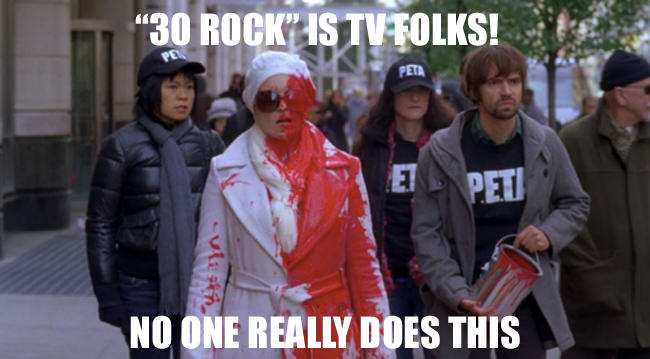
Liz Lemon (Tina Fey) was sloshed with red syrup for an episode of the NBC comedy series 30 Rock. An alarming number of netizens believe this was a real PeTA attack!
There's a common misconception that if you wear fur in public, you’ll get red paint or pig's blood thrown on you. This is an urban myth that's been around for decades, and we are here to reassure you that it will not happen! In fact we, and others, can’t find any evidence of this ever having happened to a regular person, and believe incidents involving celebrities can be counted on the fingers of, well, two fingers!
So prevalent was this myth in the 1980s and '90s that some North American furriers offered to clean their customers' furs for free if they were attacked with paint. But they never had to follow through on their pledge because it never happened. In fact, some animal activists even complained that the myth of attacks with red paint was invented by the fur trade to discredit them!
So, to answer the question, no, you will not get paint thrown on you if you wear fur. Here’s why.
Animal rights activists don’t carry around buckets of paint or blood in the hope they will find someone to throw them on. It is massively inconvenient to have a bucket of paint in your bag, plus it might spill onto your vegan energy bar.
Most people cannot distinguish fake fur from real. Not only does fake fur look very realistic these days, some of it even feels real. Would an animal rights activist risk attacking a fake fur wearer by throwing a bucket of paint on them? Not likely.
It is illegal. Not only is it obviously illegal to throw paint on a stranger for any reason, if you throw it because you think that person is wearing real fur, in the US you could be classed as an animal rights terrorist. Only a fool would risk 10 years in a federal prison for throwing paint on someone who might not even be wearing real fur.
It is counter-productive. Fur lovers are not easily cowed by animal rights activists, and if one of them has their fur ruined with paint, they will probably just replace it. And since fur coats are frequently insured, they won't even have to foot the bill. What is the point of destroying one fur coat, when it is only going to be replaced with another?
Animal rights activists rarely commit crimes in public. They protest, shout, take their clothes off and are really annoying in public, but rarely commit crimes in public. Instead, they vandalise farms under the cover of night or sneakily film animals being “mistreated” for months before showing anyone the evidence. Or they threaten violence in the comments section of an article without revealing their real identity. Does this sound like the type of person who is brave enough to throw paint on a passerby in the middle of the street? No.
If you're concerned about other crimes that may be committed against you and your mink coat, consider this. Spitting on someone is a crime and leaves DNA. Plus CCTV cameras are everywhere. At worst, you might be at risk of having a post-it note stuck on your back, but even this childish prank happens very rarely.
So confident are we that wearing fur is safe, we set out to prove it! A few years back, one of our team wore visible fur pieces in public for 100 days over the winter. Mostly she was in Vancouver, Canada, a hotbed of anti-fur sentiment, but she also spent time in London, England, also reputed to be intolerant of fur. The result? Lots of compliments, not a single negative comment, and of course, no paint attacks. The experiment, called 100 Days of Fur, confirmed that fur is a very safe fashion choice.
Of course, animal rights activists do like their publicity, so celebs should be a more attractive target, right? But even then, our count currently stands at two: the late comedian Joan Rivers once got red paint thrown on her sable, and Vogue editor Anna Wintour once got hit with "fake blood". If you're a celebrity who's been sloshed with red paint, please tell us about it, and we're flattered you're reading our blog!
The Sportsmen’s Alliance is a US organisation that protects the outdoor heritage of hunting, fishing, trapping and shooting in all… Read More
The Sportsmen’s Alliance is a US organisation that protects the outdoor heritage of hunting, fishing, trapping and shooting in all 50 states. Between fighting in the courts, political lobbying, and countering campaigns by animal activists, they are kept busy. We talked to Vice President Marketing and Communications Brian Lynn about trappers, hipsters and sound bytes.
Brian Lynn: "Trappers are the most active, passionate, and engaged audience there is." Photo: Sportsmen's Alliance / Brian Lynn.
Alexandra: What percentage of your members are trappers versus hunters and fishermen?
Brian: I’d say somewhere between 10 and 20%. It’s not a huge number, but the trappers are the most active, passionate, and engaged audience there is.
Alexandra: Interesting you say that, because we think that too.
Brian: Trappers are the ones on the front lines. They are constantly under attack.
Alexandra: Are you referring to the amount of legislation that people are trying to put into place to try and ban trapping?
Brian: Yes. Animal rights organisations, legislation, the ballot box – trappers are constantly under attack. Whether it is changing the seasons, eliminating the seasons, or regulating traps, they are getting hammered left and right.
Alexandra: Do you think that trappers are getting attacked more because they are fewer in number? Or perhaps because in the US hunting is more associated with a weekend pastime?
Brian: It is both. There aren’t as many trappers, so it is more of a fringe endeavour. Also it lacks the idea of a sport – of you versus the animal. To the uninitiated, it just seems like you are going out there, putting some bait out, and whether a wolf, bobcat, bear, or your dog comes along, they get snapped up and killed cruelly. It looks barbaric, and it is a hard sell for us to protect. It is an easier sell to misrepresent. People already are ignorant about it; urban people are like, “You do what?” It is a harder thing to protect because of the ignorance, and it lacks the perception of sport and the “you versus the animal.”
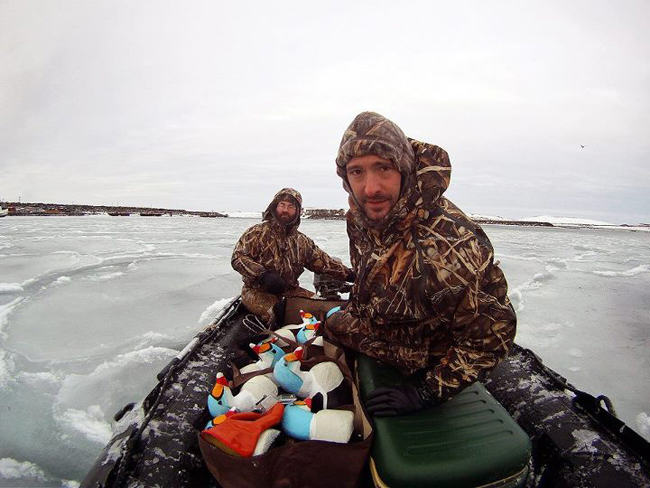
"[Trapping] is a hard sell for us to protect, it is an easier sell to misrepresent," says Brian, seen here hunting duck in Alaska. Photo: Sportsmen's Alliance / Brian Lynn.
Active or Passive Management
Alexandra: It's interesting how urban folk don’t mind trapping when there’s a coyote eating their cats, or beavers flooding their home.
Brian: That’s the whole thing. People say, “This doesn’t seem fair, that doesn’t sound right,” until it impacts them. Once the deer come in and start eating their petunias, now they're mad. Or they're hitting deer with their car. Now they want something done. Don't kill the bears until the bears start eating your kids. It boils down to active management versus passive management.
We did a piece on defensive trapping a couple of months ago in our newsletter, and without trapping, state agencies will spend hundreds of millions of dollars on trapping nuisance animals and flooding. Nobody understands that until it happens. The animal rights activists try to couch it as, “We don't need to manage populations." They try to pass off the Disney idea that “nature will balance itself”, which never really happens. But even they are saying passive management is ok. When the mountain lion becomes overpopulated and one starts eating their cats, then it's ok for the state to come in and kill that one lion. Well, it costs a ton of money, and it's not fixing the problem. With active management, you are mitigating the booms and busts and managing them actively with hunting and trapping. The animal rights groups just want to let everything go wild, and passively manage it when it becomes an issue with humans, which is just not going to work because we see disease, starvation, plus human-wildlife conflicts.
Alexandra: What are some of the biggest issues that you are dealing with right now, and have the kinds of issues evolved much over the past 20 years?
Brian: They go in waves and trends. In the 1980s, animal rights groups went after bow hunting, in the ’90s they went for mountain lions and some bear-hunting tactics. Last year we saw a lot of dog-related activity: kenneling, breeding, selling legislation. A lot of it is aimed at puppy mills, but if enforced to the letter of the law, it will stop hound hunting, kenneling, or selling those dogs.
We also saw a lot of apex predator issues – black bears and wolves. And now we are seeing them setting the table to come back for more of what they attacked in the ’90s - black bears and mountain lions in the west, and the Great Lakes wolves.
They hit something hard, in multiple states, for a couple of years, then let it rest. They let the social consciousness of the non-hunters absorb it a bit, they’ve made it an issue. Then they let their fundraising base rest, then come back and hammer it again several years later. It makes for a better news story again. Then it seems like a big issue that keeps coming out so they can get more funding, and it psychologically resounds with the public. “Oh, this is an issue, we need to do something about this!”
Great Lakes Wolves, Maine Bears
Alexandra: What are some of the activities that you do to fight the activists, and which campaigns have been successful?
Brian: Right now we are the lead on the Great Lakes wolves lawsuit. It is the Humane Society of the United States vs. the Sportsmen’s Alliance, the Department of the Interior, and the State of Wisconsin. So that is one we have been fighting for several years, and that should be moving through the court system, and we are appealing the last decision that was made in December 2014.
One of our more successful campaigns was the Maine Bear Ballot issue in 2014. The HSUS decided to go after bear hunting in Maine and hired a California firm to collect signatures and force it onto the ballot. The HSUS just self-funded the whole thing. If that had been successful, it would have basically put an end to bear hunting in Maine. It would have removed the use of traps, bait, and hounds to hunt bears, and that is 93% of the harvest. We went in, organised the grass roots groups, bought air time, created the messaging, and we ended up beating them by 8 points. And there was a couple of lawsuits out of that, that we fought and were successful in. We were successful all the way around and have a good base set up to protect it again, should they come back, and they have stated they are coming back again to stop it.
The thought is that they will just go after hounds and traps, because few people use these, so most people don’t care. This is when we get into apathy within our own ranks. If HSUS removes 85% of its opposition and 85% of its opposition’s funding, those who remain make easier targets.
"Sticking Up for One Another"
Alexandra: Some graphics in your social media send a message about uniting hunters, fishermen and trappers. What is the thinking here?
Brian: We need to be sticking up for one another, despite method of take. Even if you don’t participate in trapping and you don’t use bait, we can’t stand around and say, “That’s doesn’t affect me.” Once hound hunting falls, once bait hunting falls, once trapping falls, they are coming after what you do want to do. We need to be united regardless of how we are participating in these activities.
Alexandra: What percentage of Americans do you believe support hunting, trapping and fishing, and how many are opposed?
Brian: Hunters and anti-hunters are about the same size, 5-10% of the population. And all of the polls show that 75-80% of the general public support hunting as a management tool. That’s great. But the problem is that all that support goes right out the window as soon as emotion gets into it. People's minds are changed really quickly if they are shown an animal flopping around in a trap or a dead trophy shot. We move from the logical “That makes sense, I support hunting,” to the emotional “Oh, but I don't support it in this instance. It seems cruel.”
The other side can just throw words around like “slaughter” and sway those non-hunting voters.
Our biggest challenge is telling our story, why we have to do it, why it makes things better, the funding of conservation, managing populations, habitat, carrying capacity of the land. That’s a long story which can be boring if you aren’t into it, and if there is legislation or a ballot initiative, and a news anchor puts a microphone in your face and you try and explain carrying capacity of the land and funding of conservation, it is long, boring, and not sound-byte stuff. Then they ask the other side why we need to stop it and they say, “It's cruel, they are slaughtering animals with babies.” There’s your sound byte.
"Hipster Deal Big Move Forward"
Alexandra: Have the demographics of your supporters and members changed? There is a hipster trend now, with people doing things themselves, growing their own food and maybe hunting. They were traditionally more on the left of the political spectrum, whereas hunters tend to be on the conservative side. Do you see this new demographic supporting outdoor activities?
Brian: We are seeing a bit of a bump, which is great from a branding and messaging perspective. This is important for the hunting and trapping industry in general, but here at the Sportsmen’s Alliance we are very engaged, political, more hardcore. The new people coming in are a more holistic type of person, who may not be political.
For the broader industry, though, the whole hipster deal has been good. From the perspective of acceptance within the mainstream, those people are sharing with other people, within city life. It is about taking responsibility for their food, and them relaying their message in a way that their friends can understand. That’s where I see it as being the biggest move forward for the industry. How do you reach someone in LA? We aren't going to reach some hipster in LA, but some guy at an LA party who went out, harvested his own food and killed a deer, that is going to do more good than anything we are doing as an industry to disseminate the proper message.
Great sport and great eating too! Hipsters are "taking responsibility for their food, and ... relaying their message in a way that their friends can understand." Photo: Sportsmen's Alliance / Brian Lynn.
Alexandra: Do you cooperate with a Canadian counterpart?
Brian: There is some run-over, but nothing official. In Maine, we are involved in two lawsuits on trapping Canadian lynx. In Maine, Canadian lynx are on the Endangered Species List, but north of the border they are not.
There are incidental take permits, and a certain number of Canadian lynx can be caught in traps without the trapper or the state being in violation of the Endangered Species Act. The HSUS is trying to stop that; they are trying to get the incidental take permits revoked. If they succeed, that would mean that anywhere there is an endangered species of any kind, trapping can be stopped. If you take it a step further, anywhere there is an endangered fish in a river, you could apply the same logic. You can’t fully control what steps into a trap, therefore you can’t trap anywhere there is an endangered species, just like you can’t always control what is going to bite your hook, therefore no one can fish anywhere there is an endangered fish. So that’s a lawsuit we are involved in in Maine.
"Educate Those Not Within Your Group"
Alexandra: Is there any advice you have for trappers about protecting their rights, proactively?
Brian: They need to educate non-trappers about what they do: about how trapping is regulated, how hard it is, what you do to prevent non-target by-catch. People need to understand that, and it is not the people that are already in your social groups, it needs to be the non-trapper or the hunter that doesn’t understand it, so you can help eliminate that issue of hunters not caring. For example, there are a lot of bird dog hunters that hate trapping because traps will be out during grouse season and they are worried their dogs might get snagged up in them. We need to try and educate those people. It is all about educating those not within your group.
As for state and provincial organisations, they need to start collecting funds and putting these aside. This is something we are saying in Maine, start a war chest, because the attack is coming, it is just a matter of time. The HSUS is so rich they can self-fund any campaign they want to. They are a $130-150 million a year organisation, so they can just decide “this is where we are going to go, and we will spend $3 million.” If HSUS comes and you sit there fundraising for the first six months, that's a six-month head start they have in swaying public opinion. If you can hit the ground running, and you already have a war chest, you are better off. That’s hard for groups to do, though, because unless there is a bogeyman right there, those funds start to look very attractive to dip into and use for other things.
Alexandra: Thank you for taking the time to speak to us!
For further reading, check out this great Sportsmen's Alliance content:
If you’ve worked in the fur industry or been vocal about your love for fur, then you have probably suffered… Read More
If you’ve worked in the fur industry or been vocal about your love for fur, then you have probably suffered some verbal abuse from animal rights activists. Animal activists like to claim they hold the moral high-ground and that they are the compassionate ones. Well, let’s look at some of the things these models of compassion say ...
What they say about ... using foul language in front of farm animals:
"[it's] conceivable that verbal abuse of an extreme nature [against any animal, including sheep] could constitute an act of violence"
Nicolah Donovan, president of Lawyers for Animals (source)
I guess they never heard the old adage, "sticks and stones may break my bones but names will never hurt me."
What they say to ... a homestead farming family when they post a photo of a cow they have just raised and then slaughtered for food:
"What if I start raising children for raping? Would that be acceptable? Would that be better than raping another child? It's stupid to think it is OK to kill animals."
If you’ve worked in the fur industry or been vocal about your love for fur, then you have probably suffered… Read More
If you’ve worked in the fur industry or been vocal about your love for fur, then you have probably suffered some verbal abuse from animal rights activists. Animal activists like to claim they hold the moral high-ground and that they are the compassionate ones. Well, let’s look at some of the things these models of compassion say ...
What they say about ... poor labour practices in garment manufacturing in poorly regulated countries:
"I dont care about humans being exploited. animals arent in control of their destiny. period. i realise humans are massively destructive to everything. thats why i hate em.” [sic]
Fashion house Giorgio Armani announced this March it will no longer be using any fur in its products because, in the… Read More
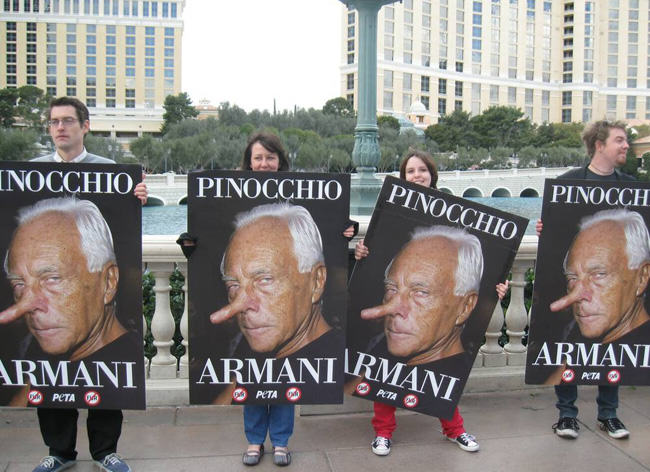
Giorgio Armani has been hounded by animal rightists for years. Once before he said he was quitting fur, then changed his mind. "Liar!" cried PETA, as if a solemn promise had been broken. Photo: Jenny Grafiada, Las Vegas, 2009.
Fashion house Giorgio Armani announced this March it will no longer be using any fur in its products because, in the words of its patriarch and namesake, “Technological progress … allows us to have valid alternatives at our disposition that render the use of cruel practices unnecessary as regards animals.” While this tortuous explanation may sound sincere, it’s not. It’s PR bunkum. So why is Giorgio Armani really ditching fur?
OK, first I need to explain why Giorgio Armani's statement is bunkum - and add a general disclaimer that I don't actually know what went down here!
Giorgio Armani's statement is bunkum because he almost certainly never said it, or even thought it, or had a hand in picking the words. It's just part of a script prepared by his animal rights handlers.
How can I be so sure? Let’s start with some context.
• Fashion designers don't use fur for years and then quit of their own volition. There's always pressure involved from animal rightists.
• Like all fashion houses that use fur, Giorgio Armani has been harassed by animal rightists for years, but unlike some, has shown stiff resistance. Even now, its commitment to quit fur may not mean anything. In 2007, Giorgio told the press, "I spoke with the people from PETA and they showed me some materials that convinced me not to use fur." But a year later he was back with a collection of fur coats for babies! PETA responded with a poster campaign of Giorgio with a Pinocchio nose and has been gunning for him ever since.
• Giorgio Armani is a huge name in everything from ready-to-wear to haute couture, but in the world of fur is barely a player anymore. For the past several years, rabbit trim has been its thing. So quitting fur will hardly impact its collections. Add to this the fact that two major markets that have buoyed fur's revival this century are now in the doldrums (Russia) or slowing down (China), and we can say that quitting fur will have a negligible impact on Armani's profits.
Make This Problem Go Away
Against this backdrop, we can perhaps understand the real reason Giorgio Armani is ditching fur.
As Keith Kaplan of the Fur Information Council of America explained to WWD, when designers are harassed by animal rightists, "I think they consider whether it is worth the threat of store protests and disruption of business and so forth. Right now, because of the economic conditions in Russia and China, I think designers are evaluating and saying, 'Perhaps at this juncture, it might not be. We’ll give in at this point to make this problem go away'."
And that, in a nutshell, is probably it. Giorgio Armani just wants to get the animal rights lobby off its back, at a time when the business is already tough enough.
The deal would follow what is now a standard template. The animal rights groups pen a statement to be issued in the name of the designer, claiming he has "seen the light" and will be going fur-free. The animal rightists then trumpet victory, claim full credit for their powers of persuasion, and promise to stop picketing stores and generally making the designer's life miserable.
In the case of Giorgio Armani, its decision to cave was announced by HSUS and the Fur Free Alliance, “a coalition of 40 animal protection organizations in 28 countries that are trying to end the fur trade”. “Pursuing the positive process undertaken long ago,” Giorgio's prepared script said, “my company is now taking a major step ahead, reflecting our attention to the critical issues of protecting and caring for the environment and animals.”
Had Giorgio spoken his mind, he might have said, "After years of relentless pressure, I have decided to throw in the towel and give the animal rights nuts what they want because they're a pain in the butt and I just want them to go away!”
100% Fur-Free?
Meanwhile, inquiring minds are still asking two questions: Is the "100% fur-free" clause in effect? And was any hidden pressure brought to bear on Giorgio Armani?
The "100% fur-free" clause is an unspoken compromise between animal rightists and designers used in closing a tough negotiation. In essence, it is agreed that the animal rightists will praise the designer for abandoning fur completely - going 100% fur-free. Meanwhile, the designer quietly continues to use fur that is a by-product of food production.
Luxury goods manufacturer Hugo Boss recently reached such a deal. In its 2014 Sustainability Report, it explained that it had been "in dialog with several animal and consumer protection organizations for many years, for example with People for the Ethical Treatment of Animals." Presumably because of these "many years" of harassment (sorry, dialog), it announced that from 2016, it would be restricting the sources used for its fur supplies. Specifically, it would be "concentrating on furs that are byproducts of the food industry," while halting use of pelts from "raccoon dogs, foxes or rex rabbits". No mention was made of quitting fur, or even of reducing overall fur use.
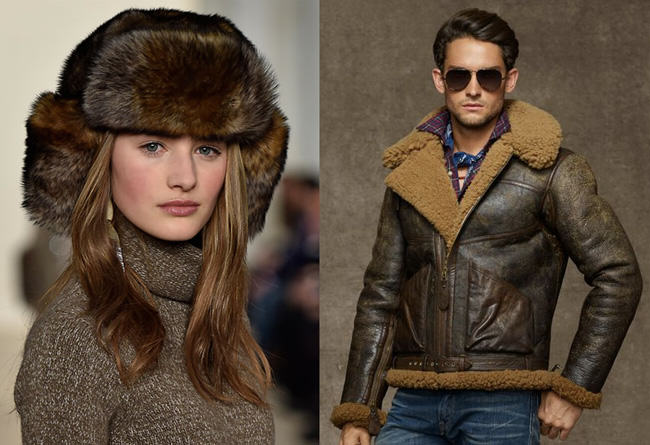
You might think Hugo Boss will get hauled over the coals the next time it trots out a collection of shearling (sheep fur), but it won't. Ralph Lauren, which uses an enormous amount of shearling, proves that.
FAST FACT: What is shearling? We all know that sheared beaver is the hide and hair of beaver that has been sheared to a short pile to make it lighter and less bulky, and give it a plush feel. Sheared mink is the same deal. When the hide and hair of sheep are used, it is known as shearling. All are types of FUR.
Ralph Lauren's deal with PETA, on the face of it at least, is the most shameless piece of self-serving, mutual ass-kissing in the history of the fur trade's relationship with animal rightists. A footnote in the show notes for Ralph Lauren's fall 2015 collection says it all: "Ralph Lauren has a long-standing commitment to not use fur products in our apparel and accessories. All fur-like pieces featured in the collection are constructed of shearling."
Since going "fur free" in 2006, Ralph Lauren has been PETA's poster child. Part of their agreement is to pretend shearling is not fur. Left: a shearling trapper hat that looks uncannily like muskrat from Ralph Lauren's fall 2015 collection; right: a Ralph Lauren traditional shearling bomber jacket.
Last but not least, we inevitably ask ourselves whether animal rightists finally found Giorgio's Achilles' heel. It's a reasonable question when we consider how long he held out. Maybe he really did fold because fur is not important to the company, or because the luxury fur market is slowing. Or maybe he was made an offer he couldn't refuse!
Yes, it's pure speculation, but that was the buzz when Hugo Boss made its deal. No one put it in print, or spoke it on the air waves, but people were thinking it. Could Hugo Boss have been threatened with a campaign telling the world how it got its big break?
Hugo Boss was a member of the Nazi Party, a sponsoring member of the SS, and an admirer of Hitler. His company prospered making uniforms for the Brownshirts, SS and Hitler Youth.
Hugo Ferdinand Boss: Nazi Party member, sponsoring member of the SS, and admirer of Hitler. It's not much of a résumé, is it? This is the man whose company took off as an official supplier of uniforms to branches of the Nazi Party, including the Brownshirts, the SS and the Hitler Youth, using POW’s and forced labourers.
Animal rights groups know all this stuff, of course, and probably have a bunch of other cards up their sleeves just waiting to be played. And maybe they had the dirt on Armani too - we'll never know.
But one thing is for sure: Giorgio Armani did not quit fur because "Technological progress … allows us to have valid alternatives at our disposition that render the use of cruel practices unnecessary as regards animals"! As readers of Truth About Fur know, and hopefully Giorgio Armani too, technological progress – and a strong commitment by the industry – now allow us to produce beautiful furs without animal suffering.
Manage Consent
To provide the best experiences, we use technologies like cookies to store and/or access device information. Consenting to these technologies will allow us to process data such as browsing behavior or unique IDs on this site. Not consenting or withdrawing consent, may adversely affect certain features and functions.
Functional
Always active
The technical storage or access is strictly necessary for the legitimate purpose of enabling the use of a specific service explicitly requested by the subscriber or user, or for the sole purpose of carrying out the transmission of a communication over an electronic communications network.
Preferences
The technical storage or access is necessary for the legitimate purpose of storing preferences that are not requested by the subscriber or user.
Statistics
The technical storage or access that is used exclusively for statistical purposes.The technical storage or access that is used exclusively for anonymous statistical purposes. Without a subpoena, voluntary compliance on the part of your Internet Service Provider, or additional records from a third party, information stored or retrieved for this purpose alone cannot usually be used to identify you.
Marketing
The technical storage or access is required to create user profiles to send advertising, or to track the user on a website or across several websites for similar marketing purposes.