Truth About Fur, voice of the North American fur trade
Truth About Fur – The Blog is an opinionated and free-wheeling new voice for the North American fur trade.
This blog is a place for open discussions about the ecological, social and even philosophical dimensions of fur in our society.
We will also address criticisms head-on, challenging some of the unfair misconceptions about our trade that some animal activists continue to propagate.
All our guest bloggers are real people who make their living in the modern fur trade – as farmers and trappers, or in auctions, processing, design and fabrication or marketing.
Please read, share and comment. We only ask that if you comment on the post, please do so with respect.
We hope you enjoy Truth About Fur – The Blog. For more information about the North American fur trade, please visit our website, Truth About Fur.
– Alan Herscovici, Senior Researcher, Truth About Fur
Let’s start our January news roundup with a story that has warmed our hearts: the story of a pair of… Read More
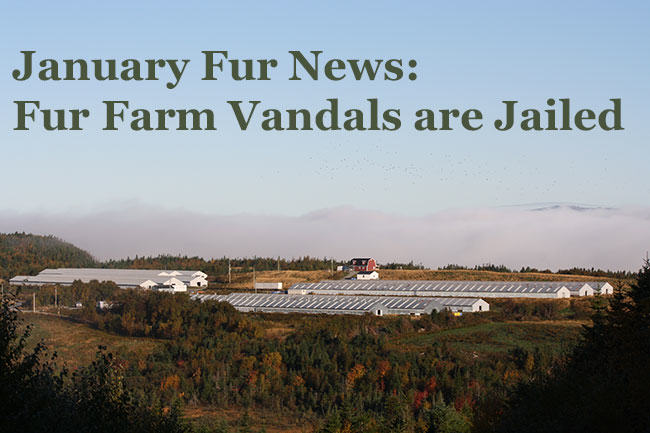
Let's start our January news roundup with a story that has warmed our hearts: the story of a pair of fur farm vandals being jailed for their crimes. Nicole Kissane was sentenced to 21 months in prison and ordered to pay $423,477 in restitution, while her partner in crime is already serving a two-year sentence. Let this be a lesson to anyone planning on releasing mink and vandalizing fur farms!
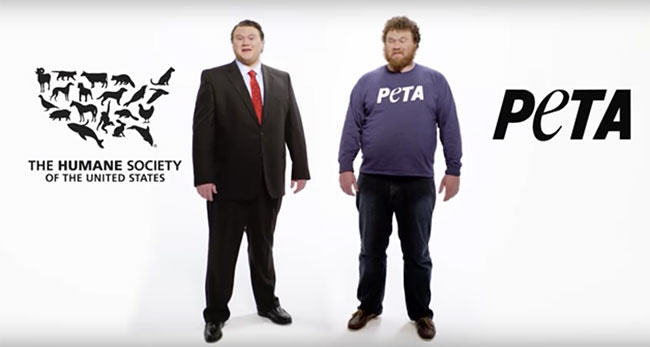
Did you think that HSUS was "better" than PETA? Think again!
Eating seal meat is not something many of us have tried. It’s not a regular feature on restaurant menus, nor… Read More
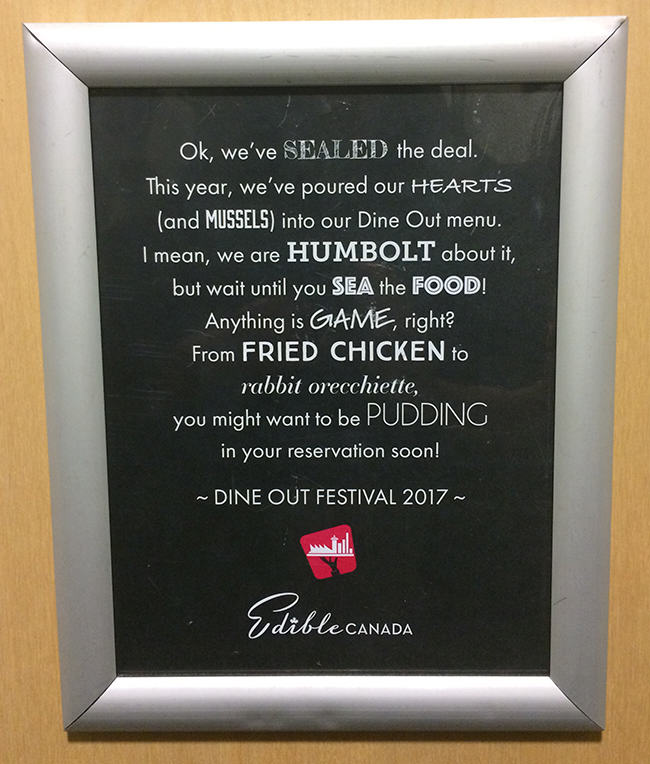
Eating seal meat is not something many of us have tried. It's not a regular feature on restaurant menus, nor is it abundant in grocery stores. Vancouver restaurant Edible Canada made headlines in January when it announced that its menu for the restaurant festival Dine Out Vancouver was going to feature seal meat.
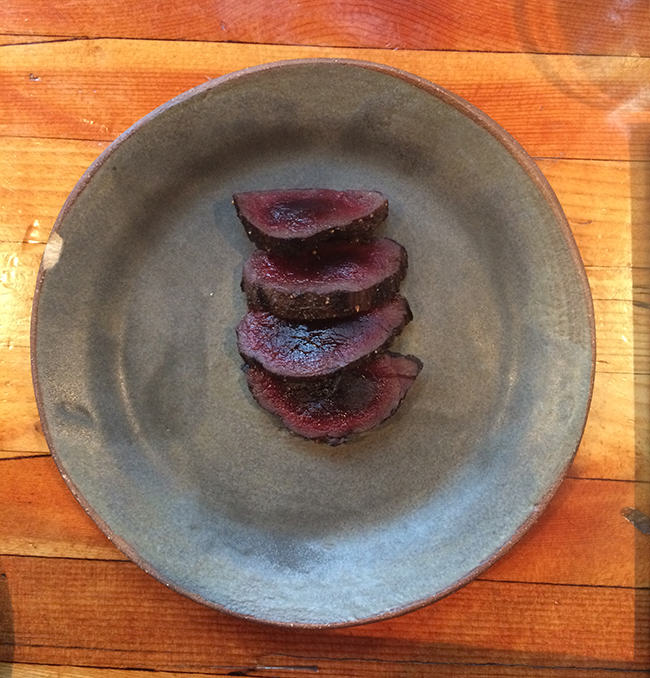
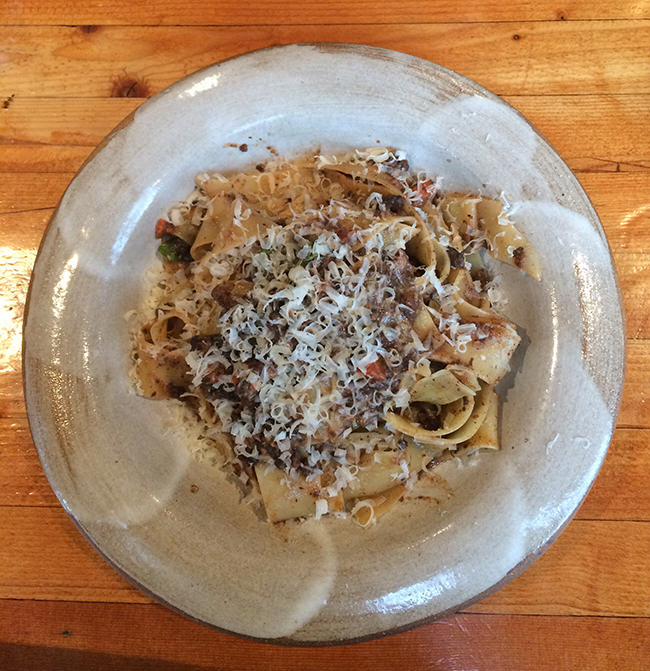
The two dishes, a pasta dish featuring pappardelle with seal mince and a starter of seal loin served rare, caught the attention of media and culinary enthusiasts, but where there are seals, there are activists. Not only did protesters turn up outside the restaurant, they also went on a cyber attack, downgrading the restaurant’s reviews on Facebook by posting hundreds of one-star reviews (since reversed, to an extent, thanks to our loyal followers; see below).
We had a chat with Edible Canada's executive chef, Eric Pateman, described as “one of the leading ambassadors of Canadian cuisine”, about eating seal meat, protesters, and Canadian cuisine.
Truth About Fur: You knew there was going to be some backlash, so why did you decide to go ahead and put seal on the menu?
Eric Pateman: It was the right thing to do. Part of what we do as a business is define Canadian food culture and seal has such an important historical as well as present-day context to it. By not doing it, we would have been doing a disservice to part of what we do as a business, which is educating and informing people on what it is that makes Canada so unique.
Pudding seal on the menu was hardly a Humbolt move!
TAF: Did you have any plans in place to deal with the activists, or did you just deal with it as it happened?
EP: We definitely had had some conversations about what some of the potential backlashes could be, but we never anticipated the impact on social media that we saw. We expected some protesters, etc. ... The online impact was far more significant than we expected, but the in-person protests were less than we anticipated.
TAF: Well it is January, people don’t want to go outside, and it is much easier to criticize people anonymously from your computer.
EP: And most of the online attacks were international.
Our editor Alexandra, trying the seal loin at Edible Canada. Her verdict? "It was delicious, and it tasted kind of like steak."
TAF: You posted on Facebook that the response to the seal meat was quite good. Can you talk about the feedback from customers?
EP: We had no idea how this was going to go, we thought it would be a great educational piece for the consumer. Obviously our customer base really likes the innovative and the obscure, and to try things that are truly reflective of our culture. When I looked at our numbers over the weekend, after the first three days [of the Dine Out Vancouver event] the seal dishes were the number one selling dish, by two to one over the next most popular dish, and the next was lamb heart. So we definitely attract a clientele who is interested in trying different proteins and dishes from across Canada.
[Editor’s note: lamb heart comes from a very cute, baby animal, but strangely there were no protests about that.]
We never anticipated that the pasta and the seal loin would do as well as they did. We didn’t make the call to add the seal loin to the menu until three days before Dine Out Vancouver. People were saying, “We really want to come in and try it, and we really want to taste it in its own right.” And almost every single table in the restaurant was ordering it. At the end of the day, the general perception has been incredibly positive. Ninety-five percent of the people who have tried it said “it wasn’t at all what I was expecting” to “it was better than what I was expecting.”
TAF: I expected it to be more liver-y. I didn't expect it to taste like steak.
EP: The big thing with seal is if you don’t cook it right, it does taste like liver and it does taste bad. It is very temperamental. I will be interested, when I am traveling across the Arctic circle to Newfoundland and going to the Festival of the Seal in the Magdalen Islands in March, to try other people’s interpretations of it. From what I have been reading online, the much more historical preparations are to cook it to death, and it comes across as a much more intense flavour, versus what we have done with the loin itself, keeping it rare. It mutes a lot of the flavours that come out with excessive cooking.
The seal loin dish, served blue rare with a sprinkle of back pepper.
TAF: Do you think this is something you want to feature regularly?
EP: We are getting asked every single day whether we will keep it on our menu, and based on the response so far, absolutely. How we will keep it on the menu is yet to be determined. We are having guests ask for the loin in a larger portion - more than two ounces, more of a steak style. We might keep the pasta. We will sit down and evaluate that with the culinary team after Dine Out Vancouver and see what we want to do. Once the hunt is done and there is fresh seal meat, I can see us running a seal festival or an event around that.
TAF: I’ve frequently tried to find seal meat in restaurants across Canada and I have struggled to find it on menus. Have you had any feedback from other chefs, and do you think this might encourage them to put it on their menus?
EP: Absolutely. In the last week I have probably been contacted by five or six chefs, ranging from White Horse to Yellowknife to Calgary, and a few in Vancouver, all looking to get in contact with our providers. I can definitely see this starting to kick off. Someone had to be the one to jump in first, but I think we will start seeing other people adding it to the menus. We even had a fishmonger approach us if he could start carrying seal at his seafood store.
The seal pappardelle dish, featuring seal mince blended with pork.
TAF: Throughout the dramas with the protesters, have you noticed how animal rights groups use the seal hunt as a money maker? Seals are abundant so there is no question about sustainability, and baby seals haven't been harvested since the '80s. What do you think of campaigners still using images of cute baby seals to raise funds?
EP: In all honesty, I don't know enough about that side of the industry. This was totally new to me, in terms of understanding a lot of the political ramifications and ties around it. Part of the reason I’m going to this seal festival, part of the reason I want to go out on the seal hunt this year, is to get a deeper understanding for myself personally. I had a couple of really good discussions both with the Humane Society and even PETA when they were protesting outside our restaurant the other day, we had a good chat and getting their take on things.
My job is to promote what Canada is, and I think one of the things that makes Canada so unique and special is that we are free to have a voice around things that are important to us, free speech, the ability to protest. I am not opposed to people doing what they are doing, though the cyber attacks were a little off mark, but I didn't have any issues with PETA showing up in front of our restaurant doing what they did. They have the right to do that. I hope to be far more educated by the summer with the hunt itself, really understanding it and all of the ramifications around it.
The Dine Out Vancouver event ends February 5th but keep en eye out for future seal meat specials at Edible Canada. And thank you to all the Truth About Fur followers who helped us get its rating back up on Facebook. Notorious seal-hunt opponent Paul Watson issued a call to his supporters to post poor (“1-star”) reviews, and 550 did just that, dropping Edible Canada’s average rating from 4.5 to 2.1 overnight. Truth About Fur and other responsible-use groups responded and within a week 5-star ratings caught up and pulled ahead. On the day of publishing this post, Edible Canada's average rating stands at 3.3. Check it out and post your review.
The easiest way for animal activists to further their agenda is to lie, and when it comes to the fur trade, that… Read More
The easiest way for animal activists to further their agenda is to lie, and when it comes to the fur trade, that means portraying us as a cruel industry that mistreats animals. We don't like giving animal activists credit, but there's no denying how successful they've been at spreading their lies. They appear so frequently in traditional media, blogs and comment sections, that members of the general public can hardly be blamed for believing that at least some of this horrible stuff must be true.
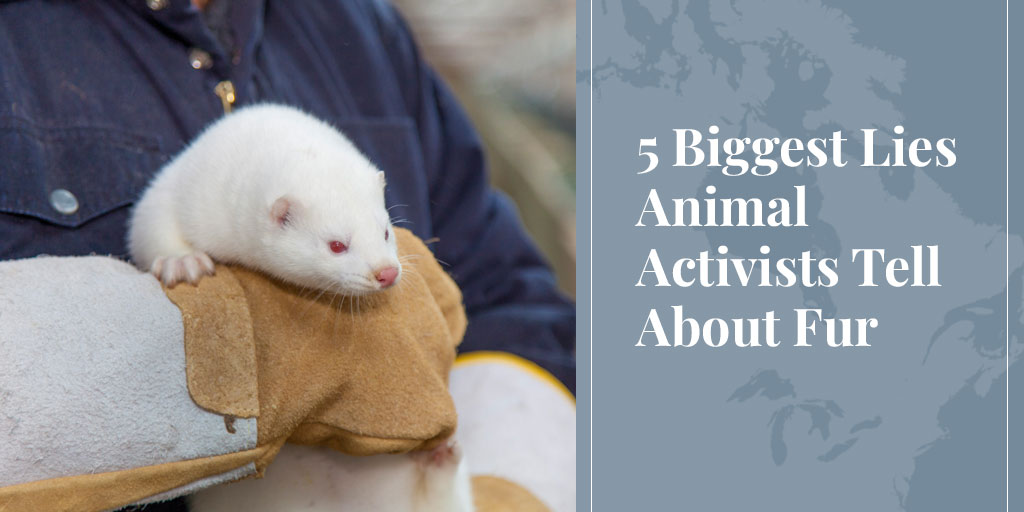
Well, it isn’t, and we are here to set the record straight about the Five Biggest Lies Animal Activists Tell About Fur.
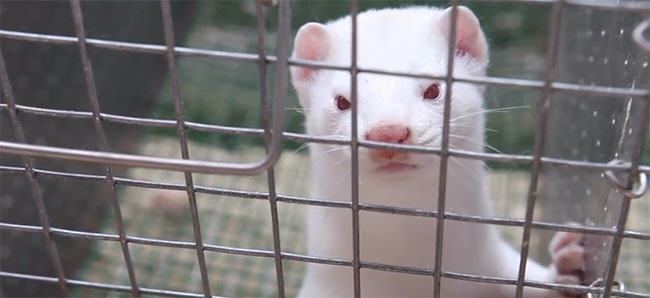
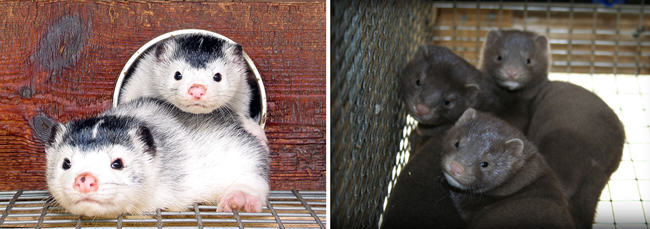
Minks are extremely well-treated in fur farms as that is the only way to ensure a good pelt. They are also never skinned alive.
Activist Lie #1: Animals on fur farms are skinned alive. Take a moment to consider this and you'll realize it makes no sense. Not only is skinning an animal alive illegal and utterly immoral, it would also be dangerous for the operator, would increase the risk of damaging the pelt, and would presumably take longer than skinning an animal that was euthanized. (Is it easier to cut your dog’s nails while he is excited or when he’s been sleeping?) Farming is a business, and businesses need to be profitable – so why would anyone adopt a practice that is dangerous for their staff, damages the product, and takes much longer than doing it properly? The simple answer is that they wouldn’t, which is why animals are never skinned alive for the fur trade.
In fact the horrible activist video that started this vicious myth has now been exposed as a complete fraud – the cruel acts it shows were staged for the camera!
Activist Lie #2: Most furs come from China where animal welfare laws don't exist. Therefore, most animals used in the fur trade are mistreated. The clever part of this lie is that, if true, it would render irrelevant the high standards of animal welfare on North American and European fur farms. If most fur comes from China, who cares how well farmers care for their mink in Wisconsin or Denmark?
There are two problems with this argument. First, it doesn’t matter where a farm is (it could be on the moon!), if farmed animals do not receive excellent nutrition and care, they will not produce high-quality fur. In fact, China does have animal welfare laws and is in the process of introducing Western standards to fur farming, but even without them Chinese fur farmers have a strong economic incentive to keep their animals healthy.
Second, and more to the point, while it is true that many fur garments are now cut and sewn in China where labour costs are lower, the fur pelts used to make most garments sold in the West originally came from European or North American farms. In fact, more than 90% of European and North American farmed mink and fox – and North American wild furs too – are sent to China to be transformed into apparel and accessories.
Producing fur garments is labour-intensive, so most are now made in China to save on costs, even if the pelts are from North America and Europe. Photo: Claire Beaugrand-Champagne.
Activist Lie #3: Animals chew off their paws to escape steel-jawed leg-hold traps. This lie refers to very old trapping methods that are no longer permitted or used. Decades ago, some animals (especially muskrats) would sometimes have bones broken in old-fashioned leg-hold traps, allowing them to pull free. This does not happen with the new padded and off-set foot-hold traps. In fact, these new live-holding traps cause so little damage, they are used by biologists to catch and release (unharmed) wolves, lynx, otters and other animals for radio collaring or relocation. Meanwhile, the great majority of fur-bearers (including muskrats) caught for their fur are now taken in highly effective quick-killing traps, eliminating the possibility of a trapped animal being left alive.
Activist Lie #4: Fur farms are "not subject to federal regulation". This is a sneaky deception by animal activists that suggests that fur farming is "unregulated" and therefore without standards to protect the well-being of the animals. What is intentionally not explained is that federal regulations generally concern only food safety issues related to livestock produced for human consumption. Fur farms, however – like all farms – are indeed regulated by municipal and state or provincial laws. Furthermore, farmers who mistreat or do not provide proper care for their animals can be prosecuted under federal (and state/provincial) animal-cruelty laws.
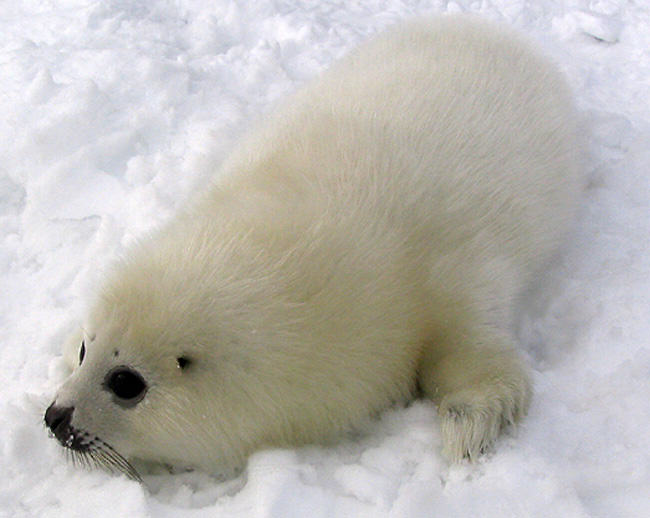
Look at this baby seal! The seal hunt is bad! Never mind that baby seals are not hunted in either the Inuit or the commercial seal hunt, animal activists still use this image because baby seals are cute. Photo: Matthieu Godbout
Activist Lie #5: They kill "baby seals" in Canada. If we had a dime for every time we've heard this lie, we could buy a dozen beautiful seal-skin coats! In fact, the hunting of nursing harp seal pups has been banned in Canada since 1987. For the last 30 years, harp seals can only be hunted after they have moulted their first fluffy “whitecoat” fur. By the time the hunt legally opens, the seal pups have been weaned and are on their own, preparing to migrate to their Arctic summer feeding grounds. (Their mothers have left, to breed again, before also heading north for the summer.) But these easily verifiable facts do not stop animal activists from continuing to illustrate their fund-raising campaigns with photos of fluffy “whitecoats”. Why let facts spoil a great story that has raked so many millions into their coffers from well-meaning supporters?
What you can do. The next time you hear someone spreading these 5 Biggest Lies Animal Activists Tell About Fur, set them straight! We all know that if people hear lies often enough, they start to believe them. Well it works both ways. People need to hear the truth more often to believe it ... so let's be sure that they do!
***
To learn more about donating to Truth About Fur, click here.
The fur industry is proud of the many ways in which fur is eco-friendly, including that after decades of use, it biodegrades. In… Read More
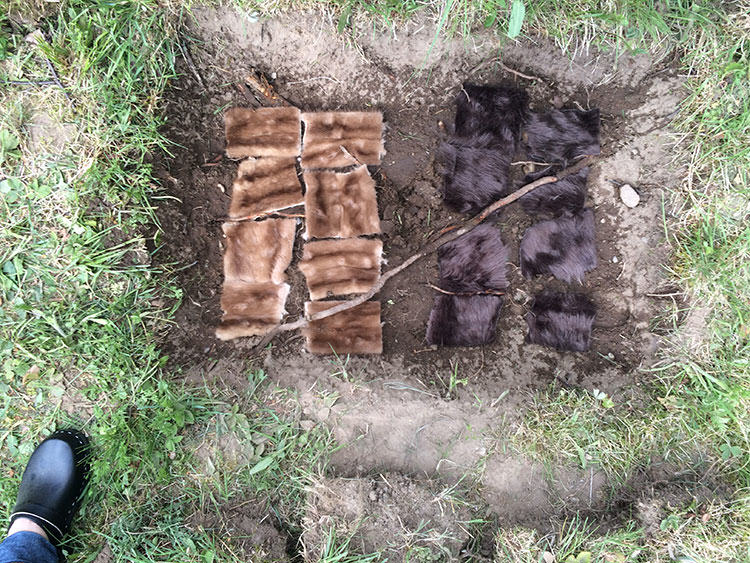
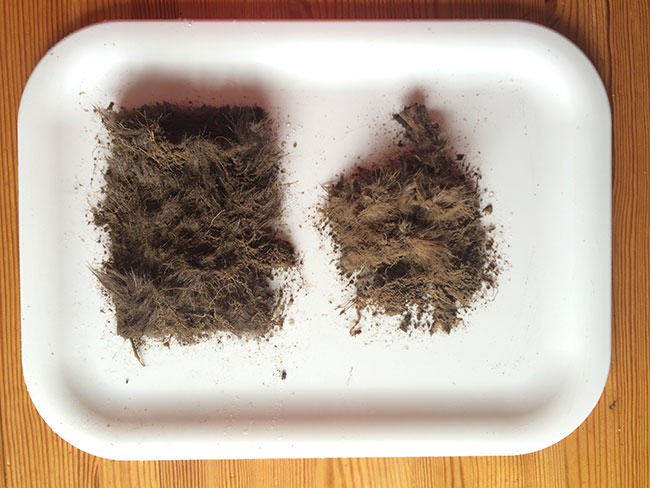
Six months ago, we kicked off our Great Fur Burial to compare degradation rates of real and fake fur. Here's what we buried: mink on the left, fake fur on the right. How do they look now?
The fur industry is proud of the many ways in which fur is eco-friendly, including that after decades of use, it biodegrades. In contrast, when fake fur made from petrochemicals reaches the end of its useful, and typically very short, life, it goes in a landfill where it will sit until the end of time. Or will it? In pursuit of knowledge and truth, we decided to do a little experiment: the Great Fur Burial.
On May 14, we took a mink stole and a fake fur vest, cut them into equal-sized pieces, and buried them. Above is how the pieces looked on burial day. The plan was that after 3 months, 6 months, and then once a year for five years, we would unearth two pieces of the mink and fake fur to compare degradation rates. This experiment is hardly scientific, but it only has to show one thing: do they rot, or not?
Six Months Later ...
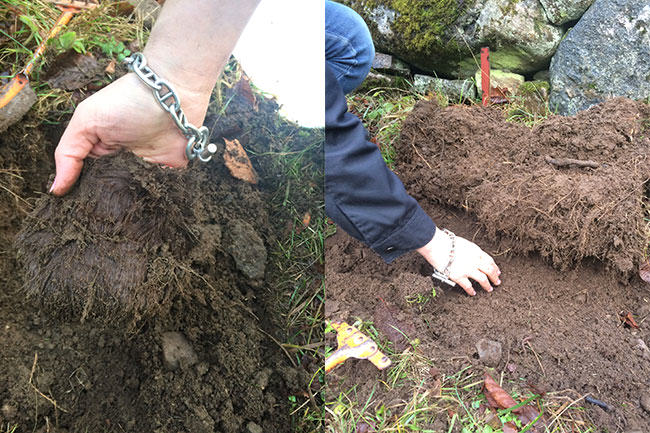
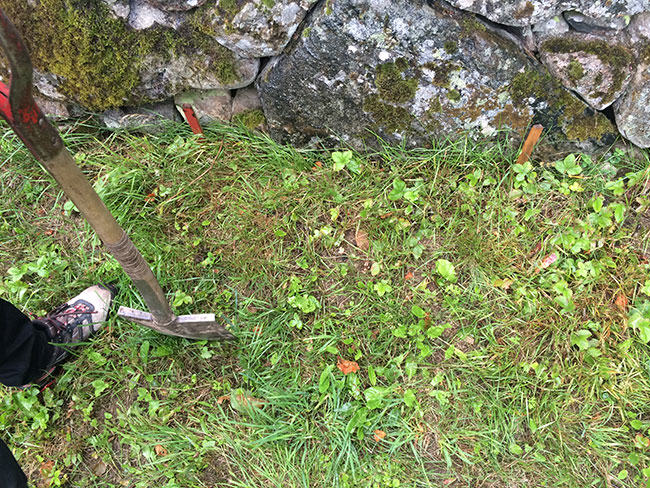
Two weeks ago we unearthed another set of fur pieces. Our burial spot is marked by red sticks.
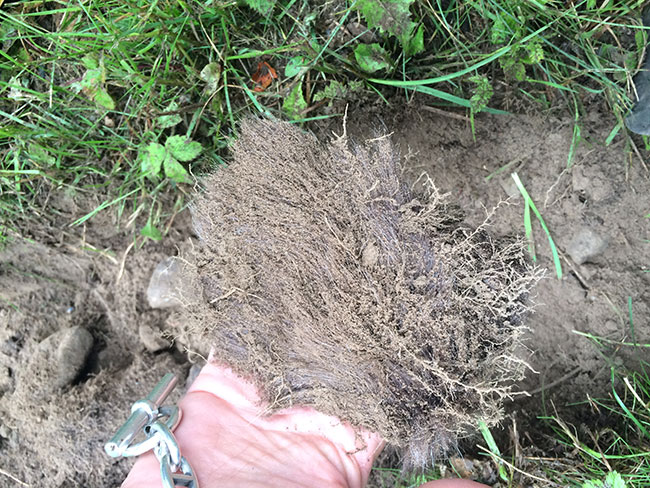
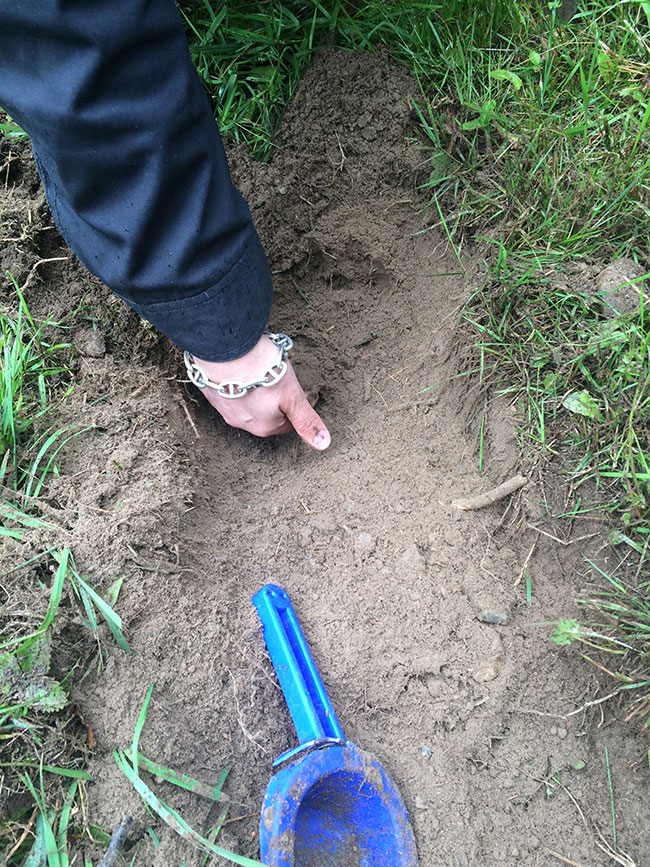
The synthetic fur was easy to find (left), whereas we had to be a lot more careful unearthing the real fur (right) as the pieces appeared to be much more delicate.
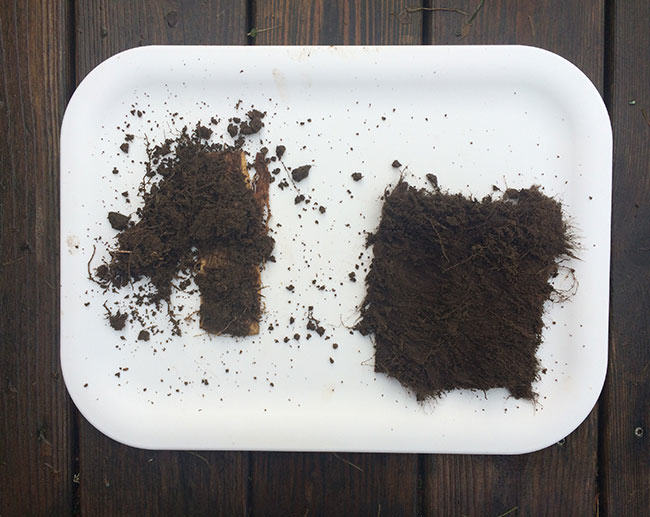
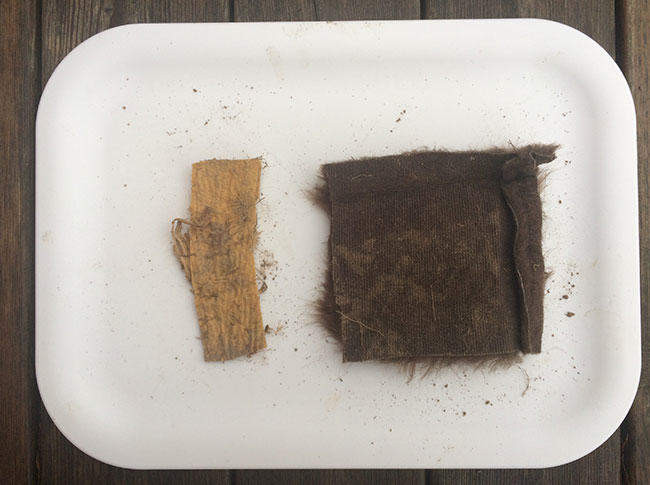
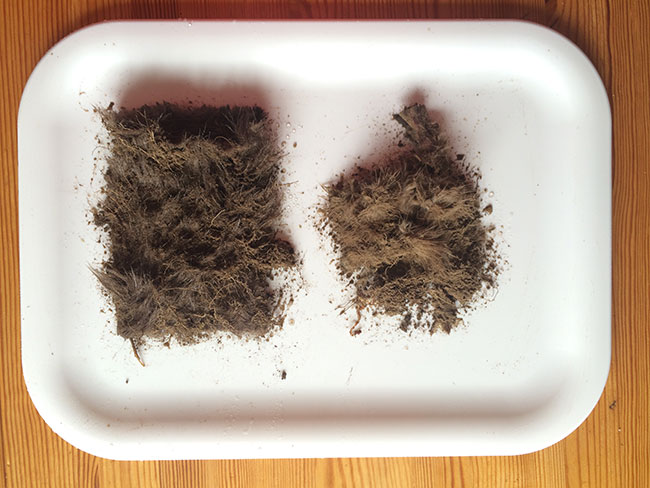
Once the fur pieces were out of the ground, they were placed, as is, on a tray. The real fur piece is on the left and the fake fur is on the right. As you can see, the real fur sample is much smaller than the fake sample, and not because of degradation. It seems the real fur sample must have been made of two pieces sewn together. The stitching rotted, and we ended up exhuming only one half.
We gently shook some dirt off each piece but as the mud was really encrusted in the fur, we decided to let the samples dry for two weeks so we could clean them without causing damage.
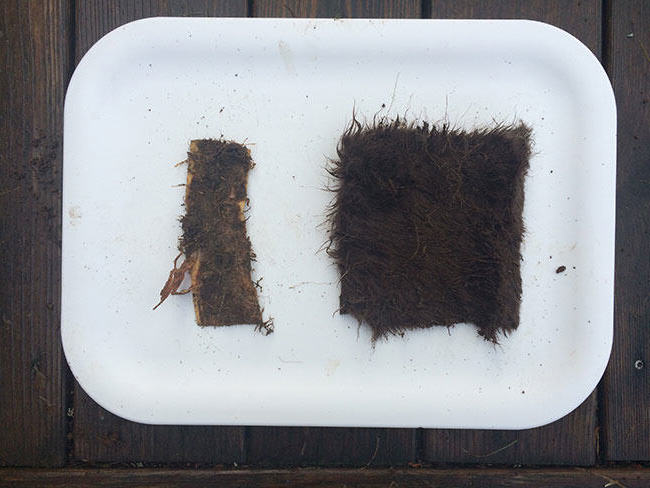
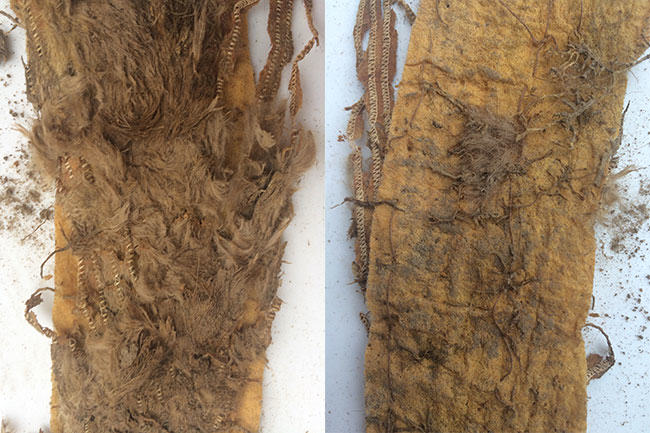
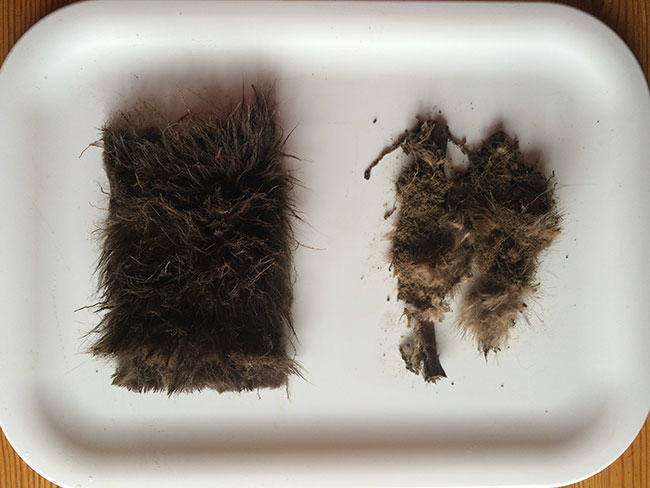
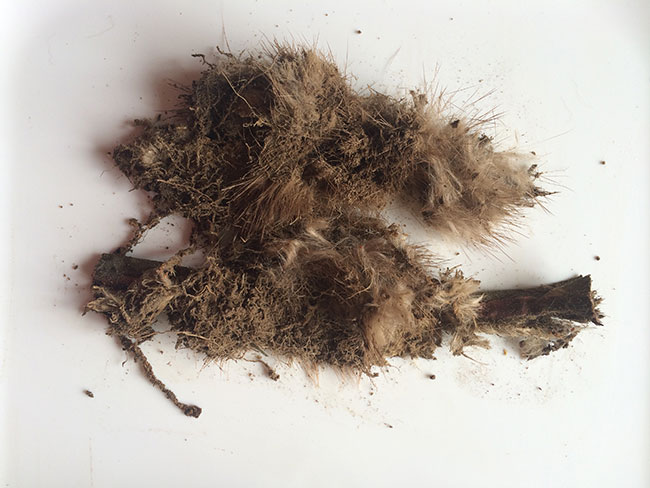
Two weeks later the dirt was dry and we gently shook off as much of it as possible, without having to rub the samples too much. It is quite obvious, looking at the photo below, that the real fur (left) has disintegrated a lot more than the synthetic. The synthetic fur (right) looks pretty much intact, whereas the majority of the hairs of the real fur seem to have disappeared. The leather is frail and the only parts of the real fur sample that seem to be in decent condition are the threads.
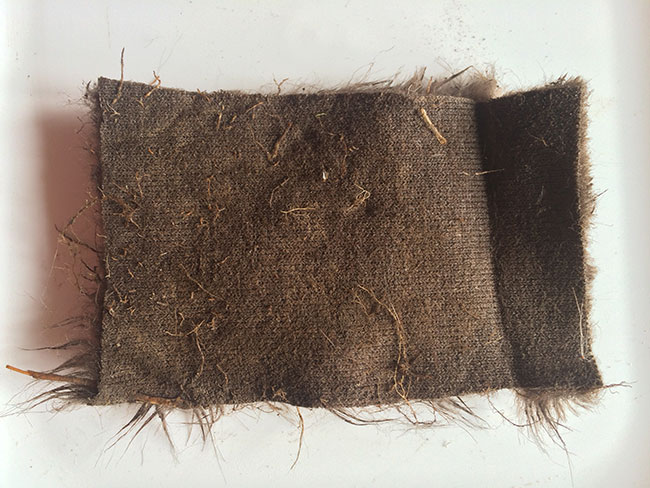
This photo shows the backs of the samples, and it is obvious that the real fur is in much worse condition than the synthetic fur.
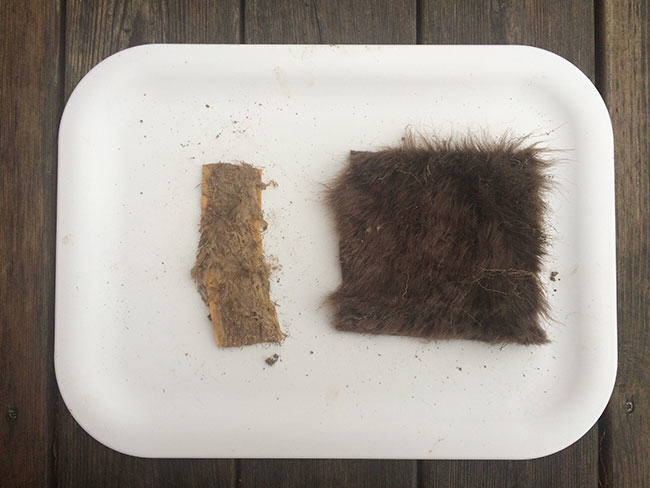
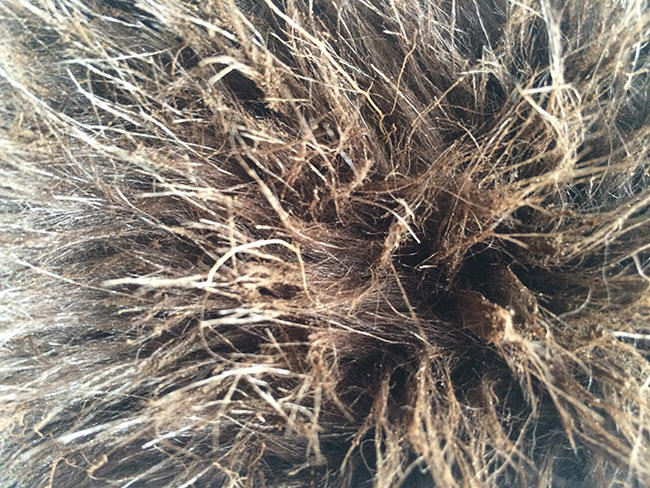
Let's look at the real fur, close up. The hairs are practically gone and the leather is frail. The sample is disintegrating.
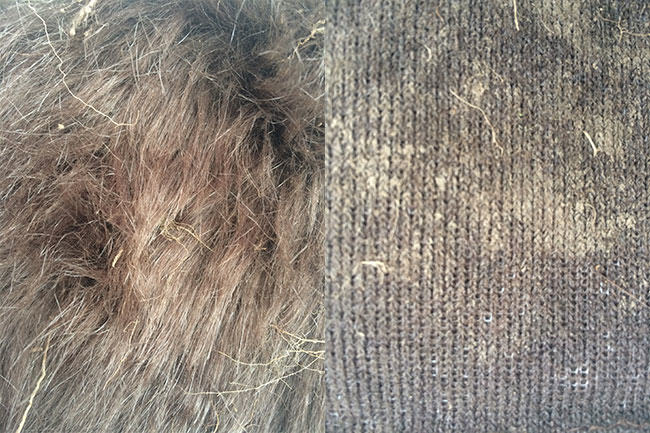
In contrast, the synthetic fur, below, still looks practically intact. The hairs are still soft and the backing shows very little change since it was buried. It is hard to imagine any dramatic change happening between now and our next exhumation a year from now, so it's looking like the story is true: fake fur can sit in a landfill for hundreds of years.
Summary
Equal-sized pieces of real and fake fur were buried side by side. After six months, the fake fur showed no obvious signs of degradation, biological or otherwise. In other words, it was almost perfectly intact. The real fur, however, was in an advanced state of degradation, with the hairs reduced to a few fine wisps, and the leather frail and delicate.
Like all good scientists, we’ll hold back on making conclusions until the experiment has run its course. But the way things are headed, it might not be long before we’re using tweezers and a magnifying glass to find a real fur sample. It will all then be down to the fake fur samples. Will they degrade in five years? Or by the end of time?
Let’s start our November news roundup by celebrating the trapping victory in Montana. Bill i-177, which would have prohibited the use… Read More
Let's start our November news roundup by celebrating the trapping victory in Montana. Bill i-177, which would have prohibited the use of animal traps on public lands, was voted down. Well done Montanans!
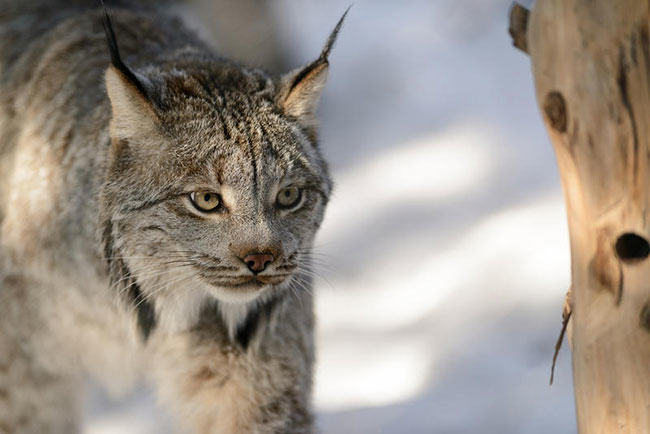
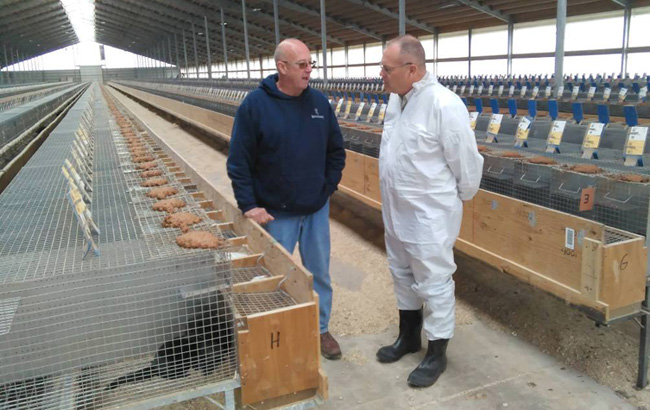
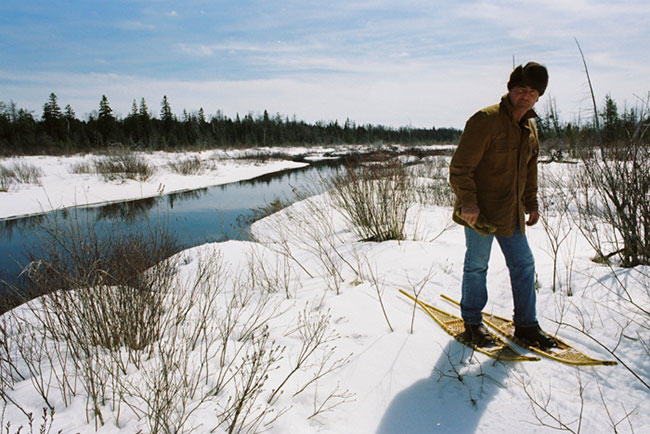
In other trapping news, raccoons are part of a legal battle in New Jersey, with animal rights activists fighting against the use of enclosed foothold traps. Did we mention these raccoons are rabid? Let's hope it doesn't take a major outbreak of rabies to make this court case go away. Speaking of legal battles, there is one under way in Maine over incidental lynx trapping (see above), whereas in Canada there has been a proposed private members bill to designate May 20 as National Seal Products Day. We love this idea and give it our seal of approval.
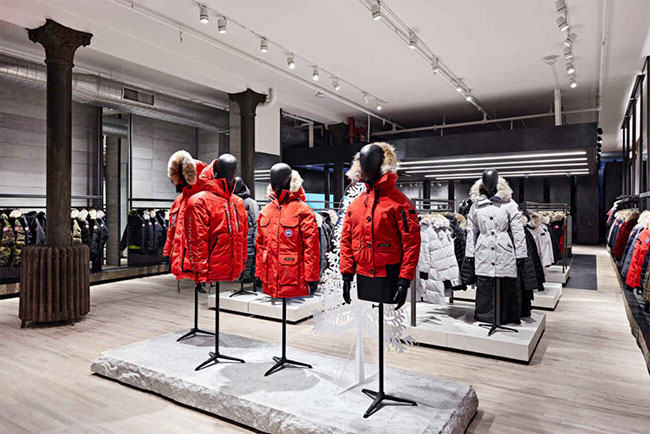
Let's move on to a topic that is a bit more ... fashionable. Canada Goose has opened a new store in New York City (see above), and it includes a few fashionable pieces, like a silk parka from a collaboration they did with Opening Ceremony. While the parka sure looks nice, we are pretty sure the main reason why people buy Canada Goose, or any item with fur, is because it is warm. That's a concept we explored in a blog post, where we discussed the fact that fur is not just for fashion. So if you are looking to keep warm this winter, check out our guide to buying vintage fur, have a look at Lilly e Violetta's everyday furs, or check out the kangaroo fur shoes that all the celebrities are wearing.
Do you need Christmas tree decoration ideas? How about decorations made of fur? They didn't go down too well in this hotel in Munich but we would gladly take the fur fir tree off their hands.
Have you ever wanted to witness the miracle of child birth? Yeah, it's not for everyone, but we are all about witnessing fawn birth. This video is beautiful.
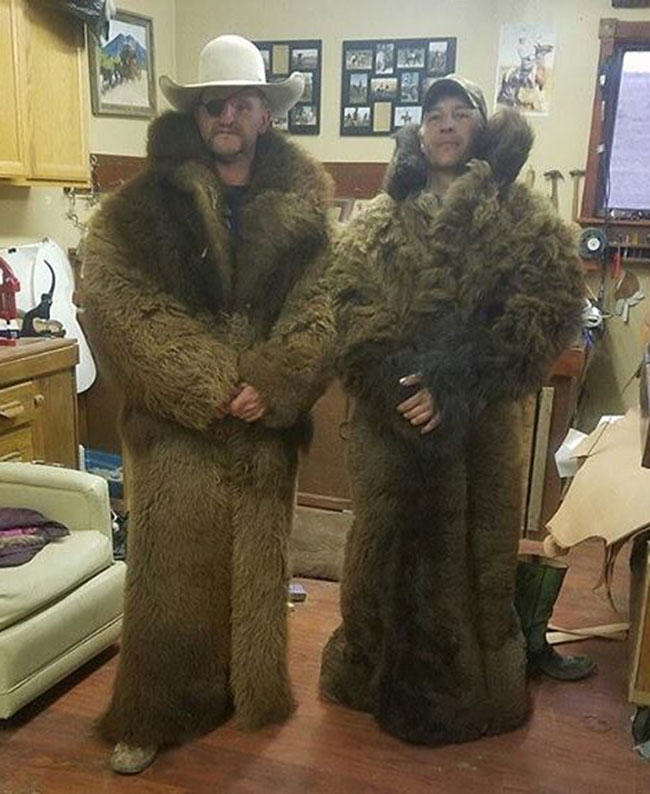
Our most-shared Instagram post was one of these guys wearing buffalo fur coats (see above). We're pretty sure you won't get cold wearing these!
What would you do if your dog ran into a wolf? Most of us would run, but this guy stupidly stuck around to film it. At least it makes for some interesting viewing.
“Fur farms in the U.S. are the only sector of animal agriculture unregulated by the federal government,” charges People for the… Read More
Fur farming in the US is subject to a host of government regulations which it then interprets in developing strict industry standards. Photo: Fur Commission USA.
"Fur farms in the U.S. are the only sector of animal agriculture unregulated by the federal government," charges People for the Ethical Treatment of Animals. And it's no throwaway statement either, making it onto PETA's list of Nine Shocking Fur Facts. When presented with no context, the casual reader will conclude that US fur farming is unregulated, period. But this could not be further from the truth.
The trick employed by PETA here relies on the fact that most readers will only see "unregulated by the government", and not even register the word "federal".
In common with all livestock in the US, almost every aspect of furbearers' lives comes under the jurisdiction of state departments of agriculture, not the federal government. State departments of agriculture are, of course, still government bodies, and love regulating just as much as the federal government. So are fur farms regulated by government? You bet they are, but - like most of animal agriculture - mostly by state and municipal governments.
Where the federal government does get involved in livestock production is in regulating the slaughter of animals raised for food, because there are human health concerns. Since farmed mink and fox are not produced or sold for human consumption, their production (including euthanasia) is mostly the responsibility of state governments.
That said, it's still not true to say that fur farms are completely exempt from federal regulation. While the federal government largely delegates implementation of the Clean Air Act and Clean Water Act to states, these are still federal laws, and fur farms must comply just like any other livestock operation.
Working with Government
Some opponents of fur take a different tack when trying to create the impression that US fur farming is unregulated. Fur farms, they say, just follow standards developed by the industry itself - a case of the fox guarding the chicken coop. While it's true that the industry places great importance on its own standards, that does not mean that farmers can do whatever they want.
First, it's important to understand that having industry standards is totally normal. In American agriculture, fur farmers were pioneers in developing such standards, but today every livestock sector has them. They have some important functions.
Standards are a basic tool for an industry that is committed to policing itself. This relieves some of the burden on government which typically does not have the resources to conduct regular inspections of every small farm, and may visit only when a complaint has been filed.
Standards also help farmers improve their operations because they incorporate the findings of research in areas where the industry is the recognized authority. In the case of fur farming, these include nutrition, housing and disease control (bio-security).
Standards also provide a buffer against attempts - for example by animal activist groups - to introduce arbitrary regulations that are based on ideology rather than scientific research.
However, the important point here is that industry standards are not alternatives to government regulations. Rather, they complement and build on them. This is why regulations governing livestock farming typically evolve through consultation between government and industry stakeholders, while taking advice from independent experts.
Animal-Welfare Statutes
A good example of how this works is in the area of animal welfare. Animal-welfare statutes are many and varied, covering everything from mistreatment and neglect, to intentional cruelty. Such statutes, however, can be short on specifics; it is neither possible nor desirable to regulate every scenario that might face every kind of animal. So this is an area where specific industry standards – for example concerning nutrition and housing – can complement and build on more general government statutes.
Thus, in the case of mink farms, industry association Fur Commission USA (FCUSA) has a certification program which includes, among many other requirements, a minimum size for mink pens. By setting this standard, and enforcing it through inspections by independent veterinarians, the industry complements more general government animal-welfare statutes.
Euthanasia is another example. Again, rather than developing statutes from scratch for every kind of livestock, states refer to recommendations of the American Veterinary Medical Association in its AVMA Guidelines for the Euthanasia of Animals. FCUSA takes the same recommendations on euthanasia and incorporates them in its industry standards. In other words, while it can be said that the industry "sets its own standards" on euthanasia, these standards are, in fact, based on the same recognized authority as states rely on; they effectively respect state statutes while adapting them to the specific characteristics and needs of fur farming.
In summary, US fur farms are regulated just like any other livestock sector, except that they are not subject to federal regulations for food animals. And industry standards are not alternatives to state statutes; they interpret and complement them. Therefore, PETA's "shocking" assertion that fur farming is "unregulated by the federal government" is as meaningful as saying, "Michael Jordan doesn't wear Under Armor shoes!" Of course he doesn't. He wears Nike.
The time of year is approaching when the main thing on many people’s minds is trapping. But we aren’t just talking… Read More
Montana trapping is under threat. All sportsmen should pull together to protect this right.
The time of year is approaching when the main thing on many people's minds is trapping. But we aren't just talking about where and when to go trapping, or what to say to your boss if you want to skip work to go trapping. We're also talking about a very important Montana trapping ballot coming up on Nov. 8. If it passes, it will ban trapping on the state's public lands. Vote Clinton or vote Trump, that's your decision, but please make sure you vote NO on i-177. The campaign has been primarily funded by out-of-state animal rights groups. If they win this, they'll be one step closer to banning all trapping and hunting, and to their ultimate goal of making us all vegan. We're serious, that is their goal.
Other states are also considering the future of outdoor pursuits, notably Kansas which will soon be voting on whether fishing and hunting are a right or privilege.
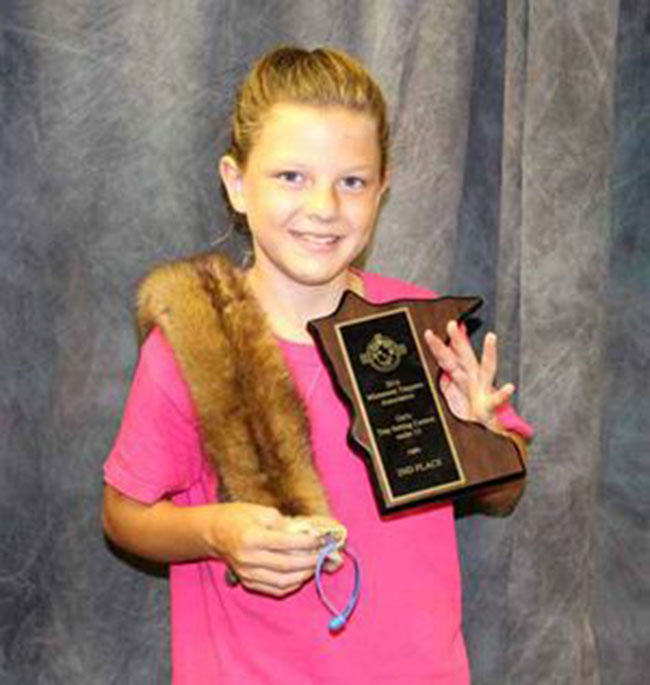
Leah Remer, 10, shows off her plaque from the Minnesota Trappers Association and a pine marten pelt.
Meanwhile, the activists are up to their usual shenanigans. Pamela Anderson is trying to promote her anti-animal-use lifestyle while praising Vladimir Putin. "He loves wildlife," she opines, but he's also an avid hunter. Should someone tell her? And these heartless people hurled abuse at a child with terminal cancer because he wanted to try bullfighting, with one telling him to "just die".
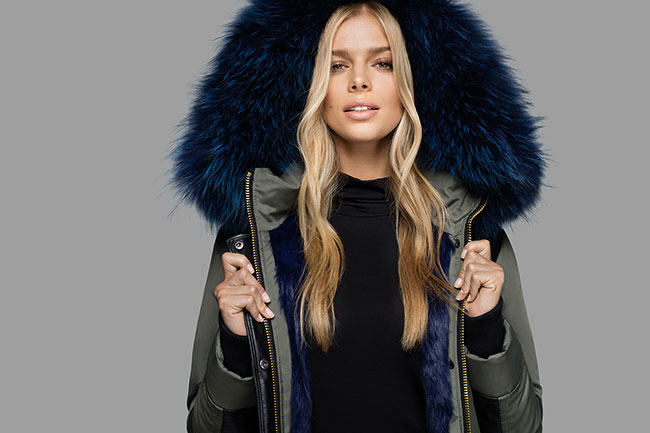
Parkas lined with fox fur are all the rage this winter!
As winter is rolling in, we are thinking about fox fur-lined parkas (above) and otter fur scarves, like the ones the Duke and Duchess of Cambridge wore when they visited Canada in October. And if you know anyone who is on the fence about wearing fur, be sure to share the following TruthAboutFur post. We think it is a pretty clear explanation about Why we must wear leather and fur.
The royal family of Greenland resplendent in seal skin!
Other articles that caught our eye included this one about the cost of groceries in the far north of Canada. We hope this makes activists think twice about criticizing the way of life up there, including the hunting. One of our contributing editors was a guest on a fashion podcast and talked about the fur trade. We've got your wildlife lesson sorted for this month with some interesting information about mink and bobcats. And our fur photo of the month award goes to the Royal Family of Denmark, who were photographed in seal skin for the latest Greenland stamp (above). Animal rights activists were not impressed but we certainly were.
The world is changing and, with it, our approach to consumption. As the impact of global warming worsens, many consumers… Read More
The world is changing and, with it, our approach to consumption. As the impact of global warming worsens, many consumers are rethinking what they buy, and how much of it. "Local", "organic" and "minimalism" are all buzzwords many of us are drawn to, and some people question the need to eat animals, or wear leather and fur. Where does that leave us with animal use?
The use of animals is an ethical dilemma that many people question, but most people agree that if animals are well-treated, they are not in danger of becoming extinct, none of the animal is wasted, and the animal is put to good use, then it is acceptable for us to use and consume them.
Animal use is an integral part of many people’s lives, and is linked to essential products in our everyday life, such as medication, food, and clothing. Animals are used in medical testing in order to find cures to life-threatening diseases. We eat animals and while some people question the need to do this, there is plenty of evidence it can be done without harm to our planet. In fact, lots of land is better suited for pasture than for cultivation. And remember that animal manure is used to replenish the soil to grow crops. But if we are concerned about possible impacts, a small reduction in the amount of meat we consume – and waste – can go a long way. And lastly, we wear many types of animal products in order to protect ourselves from the elements. Fashion may not be essential, but clothing is. The need to keep warm in cold weather is a matter of life and death.
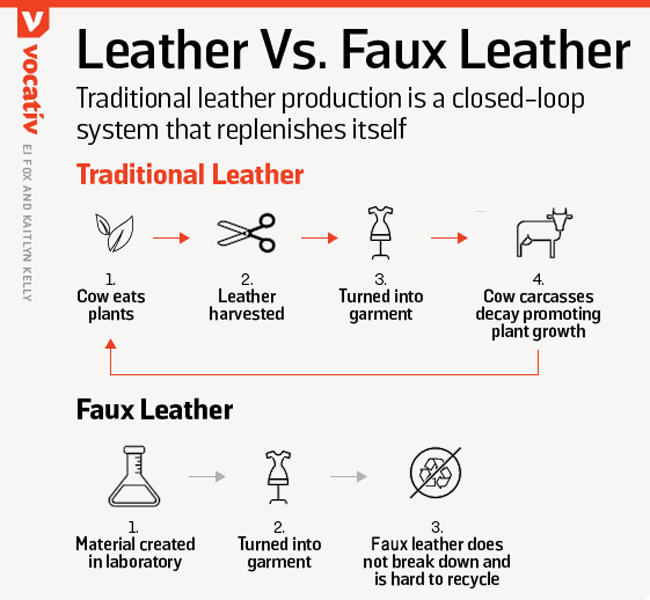
If you live in a cold country, you’ll need clothing that can protect you from the elements, and your choices should involve leather, fur, and other animal products. Why? Because there are no viable alternatives.
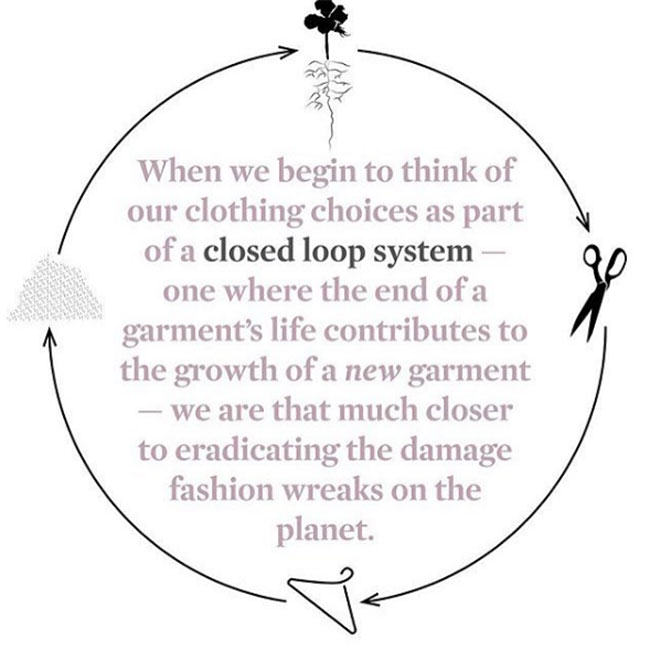
If we really care about the environment (and we all should because nothing else matters if we don't have water and food and clean air), we will want to buy sustainable fashion products that use production processes that are not too harmful to the environment, that are long-lasting, and that are biodegradable. That is exactly what animal skins are. Yes, they aren’t perfect; leathers and furs use chemicals in their processing and finishing (like all other textiles), and sometimes the farming has an environmental impact. But when you consider how long a good fur coat or high-quality leather bag lasts, you’ll realize that the environmental damage is minimal compared to the lifespan of the item.
So here they are, the five reasons why we must all wear leather and fur, and these reasons all point to the fact that there are simply no viable alternatives.
1. There are no alternatives that are biodegradable. The synthetic alternatives to fur and leather take much longer to biodegrade (50 years for treated leather vs. 500+ years for pleather), and even when they have “biodegraded”, there are still remains of the plastic particles in the soil, which we are now finding in our oceans and inside fish. Truth About Fur is in the process of conducting an experiment to prove that real fur biodegrades much faster than “faux”, and the results are more dramatic than even we expected.
2. There are no alternatives that are sustainable. Synthetics are made from petroleum by-products. You probably know that petroleum is not a renewable resource. The problems caused by the extraction and transport of petroleum are only a part of the issue, let’s not get started on the political issues (read: wars) that are caused by petroleum. Animals are a renewable, sustainable resource. (Actually, wool, down, and cashmere and other similar materials are sustainable, so these are certainly viable alternatives when it comes to winter coats. But the animal rights activists are against those, too, since they come from animals. Usually a sensible winter wardrobe would combine fur, leather, down, wool, and cashmere – you’ll never be cold.)
3. There are no alternatives that are as long-lasting. While a fake fur or leather jacket may be sitting in a landfill for a few hundred years longer than its real counterpart, that doesn't mean it is longer lasting in a fashion perspective. When well cared for, fur and leather items can last for decades, but fake leather and fur hardly do the same. Both look worn out much faster (and not in a cool way – like worn out leather), and they also don't maintain their warmth or waterproof qualities. You don’t find many fake leather bags being handed down from one generation to the next, do you?
4. There are no alternatives that are as environment-friendly. The points above do a good job of making this argument, but we can add to this by talking about the processing. Yes, leather and fur require chemicals for processing (leather requiring more than fur as you need to remove the hairs from leather, whereas with fur you are aiming to protect them). But two important things to consider here are that (1) the chemicals used to “dress” furs are really quite benign, e.g., alum salts (which are sold in the pharmacy to add to your bath water for sore muscles), and (2), the longevity of leather and fur items means that the chemicals per wear are much less than a synthetic alternative. Your leather bag or fur coat may have used chemicals in its production, but the fact that it lasts you 30 years makes it a more environment-friendly option than the synthetic version, made from a non-renewable resource that requires chemicals in its processing, which then looks tatty after two seasons. Another important thing to consider is that no synthetic material looks good in its natural state, while fur is frequently used in its natural state (meaning its natural colours), reducing the need for bleaches and dyes.
5. There are no alternatives that are as safe. We’ve yet to fully understand the bodily harm coming from wearing synthetics, but there’s a great deal of research that shows that synthetic materials may contribute to health issues such as infertility, respiratory diseases, and cancer. Why take the risk when there are natural alternatives?
If you truly care about the planet and its inhabitants, you’ll make consumption decisions based on what’s best for us all. You might refuse to eat animals or watch them being used as entertainment, but it is impossible to deny that synthetic clothing is causing irreparable harm to our planet. Choose materials that are sustainable, long-lasting, and biodegradable. Choose fur and leather because there are no viable alternatives.
***
To learn more about donating to Truth About Fur, click here.
It’s time for our September Fur In The News roundup and we want to talk about fur fashion! Namely the… Read More
It's time for our September Fur In The News roundup and we want to talk about fur fashion! Namely the "hat of the season", which just happens to be a trapper hat made of fur (above). Those are fashion trends we can get on board with! And for the guys, it's all about fur slides. Have you bought your pair yet? And be sure to check out this fantastic feature in Vogue's September issue.
Speaking of trapper hats, we were pleased to read this article about how more women are hunting. It would be nice to hear of the same thing happening with trapping. And speaking of women in trapping, here's a lady who truly inspires us. We love this video of Jane Dragon telling us about how nothing is wasted when using animals - a great example of how to use animals responsibly.
We can't write a news roundup without including some activist shenanigans, so here they are. An interesting trend we are seeing is the activists turning on themselves. This isn't the first time we've read about vegans who don't approve of PETA's marketing tactics, but this might be the first time we actually agree with the them! Speaking of vegans, Italy is talking about outlawing veganism for kids.
But not all activists are busy writing articles (we wish), there are many who are up to no good. This Canadian activist is being investigated by police for threatening to kill the mayor of Miami. (Please let him go to jail! Please let him go to jail!) PETA is keeping itself busy by trying to control the content of a video game which is as ridiculous as it sounds. And the dumbest activist of the month award goes to this one who got stuck in a bear trap while he was trying to remove the bait. We feel really sorry for him. Not.
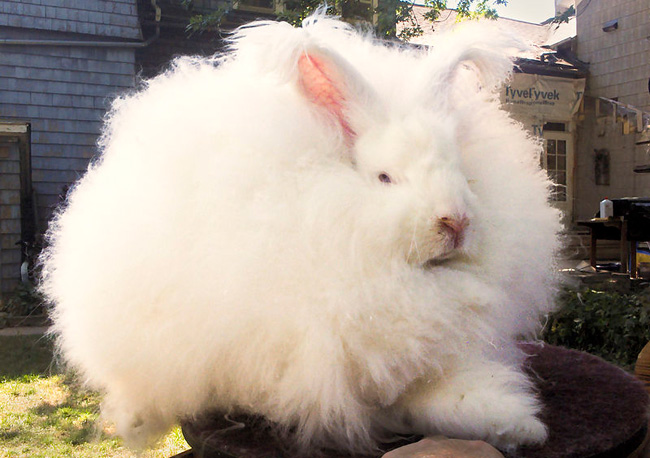
We've penned our own little attack on PETA ... Ok, let's call it a little investigation instead. We've looked into one of PETA's angora rabbit videos (above) to try and determine whether it was staged. A good read, indeed!
Let's end our roundup with a few articles of note, starting with this blog post, entitled Why Fur Is the Ethical Clothing Choice, which explores public opinion about animal use and the ethics of the fur trade and fur fashion. We loved the story of the fisherman who found this ancient axe while fishing for bass. And lastly, the horror story of the month is one about Russians, namely two married couples stuck in a small cabin in the Arctic and waiting for a rescue that is a month away. Can you imagine the arguments?!? Oh yeah, and they are also surrounded by hungry polar bears.
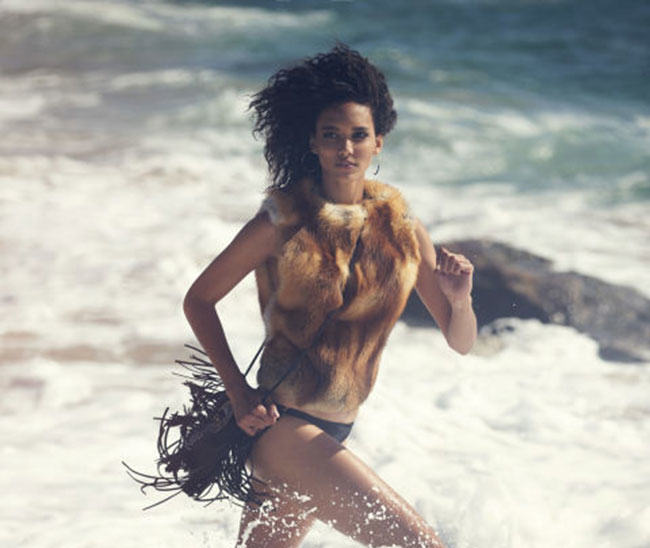
If you are in denial that summer is over, never fear, we still have a few good tips on how to combine fur into your beachwear wardrobe. Elle has several suggestions on how to wear fur on the beach (above) and Cindy Crawford shows us how to wear fur boots on a boat trip. Too bad she wasn't in a kayak made of seal skin. Lucky for us, the summer's most popular parka was made of fur and we think it will transition nicely into your fall fashion wardrobe. What else should you be wearing for fall? The fashionistas are suggesting fur sandals and these amazing fur backpacks from Fendi. Back to school is very chic this year!
If you love fur fashion, then you might be interested in reading about the longest fashion collaboration to date - the one between Karl Lagerfeld and Fendi which has resulted in some incredible fur fashion. And if you want to learn the tricks of the trade, then check out this school in Finland which teaches the skills to design and make fur garments.
Sue Boot of Basically Bush models her spectacular possum creations.
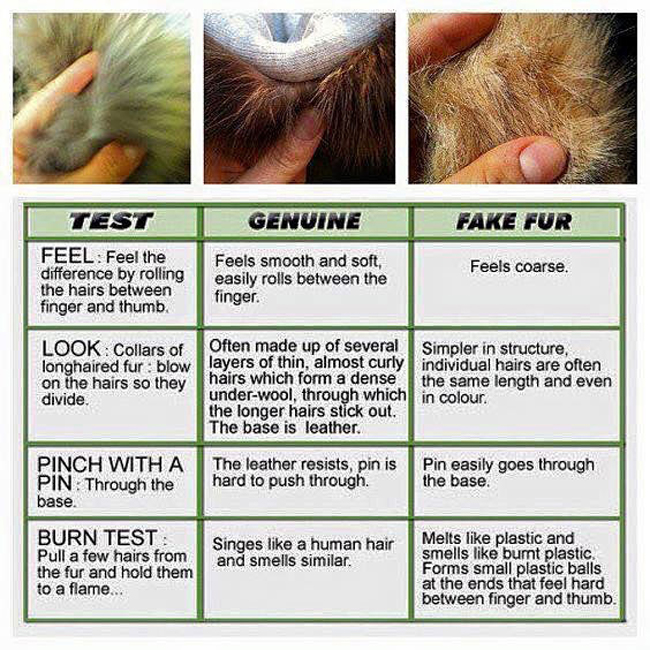
Let's end this month's roundup with some helpful educational materials, some related to fur and some not so much! We'll start with a chart (above) on how to tell real fur from fake. Or if you want to identify that bird of prey eyeing your trapline just by looking at its claws, here's a very useful claw chart. (Please let us know if there are better uses for this chart!)
COOL FACT #1: Fur may have saved the human race New research suggests humans (Homo sapiens) survived the last Ice… Read More
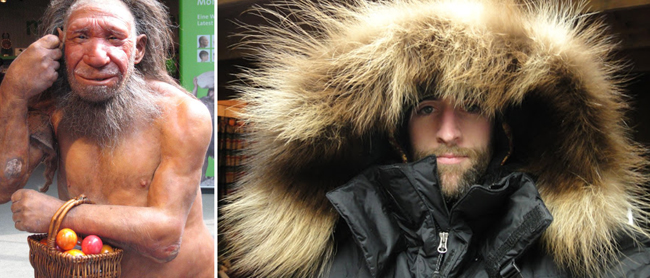
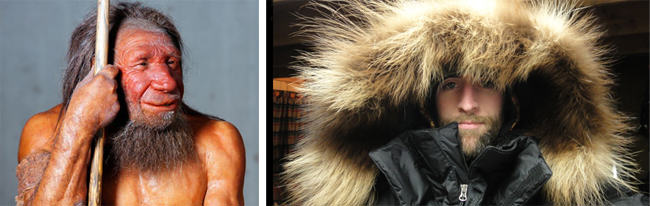
Neanderthal man froze to death while Homo sapiens Josh Spice laughs in the face of the cold!
COOL FACT #1: Fur may have saved the human race
New research suggests humans (Homo sapiens) survived the last Ice Age and Neanderthals didn’t because humans were serious about fur clothing. Animal remains around Neanderthal sites lack evidence of furbearers, while human sites have fox, rabbit, mink and notably wolverine - the same fur still preferred today by Canadian First Nations for hood liners.
COOL FACT #2: Everyone's heard of the California Gold Rush, but how about the California Fur Rush?
In the early 19th century, trappers came from far and wide to the US west coast to harvest huge populations of furbearers. It was these trappers, not the gold prospectors who followed, who opened up the west and put San Francisco Bay on the trade map. But no one remembers because no one named a football team after them. Go 49ers!
COOL FACT # 3: Beaver butts are used in food flavouring
Next time you see the words "natural flavouring" on a food package, it might be referring to Castoreum, secreted from the castor sacs of beavers located between the tail and the anus. Usually it's used to simulate vanilla, but it can also pass as raspberry or strawberry.
Fort Victoria (shown here in 1847) started life as a fur-trading post. Today it is the capital of British Columbia.
COOL FACT #4: The fur trade determined much of the Canada-US border
The search for fur drove Europe's exploration and settlement of North America, and many of today's towns and cities began as fur-trading posts. In fact, much of the border between Canada and the US traces the territories once controlled by Jacob Astor’s American Fur Company and the Montreal-based North West Company.
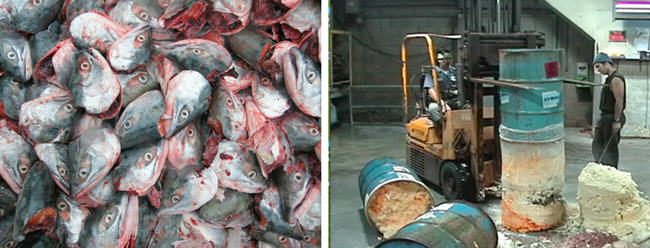
Fish heads and spoiled cheese are gourmet eating for mink. Photos: Joseph Robertia; Truth About Fur.
COOL FACT #5: Mink farming plays a key role in our food chain
Have you ever wondered where all the animal leftovers from human food production go? Fish heads, chicken feet, expired eggs, spoiled cheeses? If you live in fur-farming country, chances are they go to make nutritious mink food. And the mink manure, soiled straw bedding and carcasses are composted to produce organic fertiliser to enrich the soil, completing the nutrient cycle to produce more food.
COOL FACT #6: Mink wastes provide biofuel
In Nova Scotia, Canada, pilot projects are transforming mink wastes into methane for bio-energy production. In Aarhus, Denmark – the country that produces the largest number of farmed mink – the public transit buses already run on mink oil.
Crabs will eat just about any seafood you offer them, but so will seals and sea lions, and they'll trash your crab pots to get at it. Enter mink bait! Crabs find their food by smell, and apparently the smellier the better because they love mink musk. But seals and sea lions can't stand it and will give your pots a wide berth!
COOL FACT #8: Canada's beaver population has never been bigger
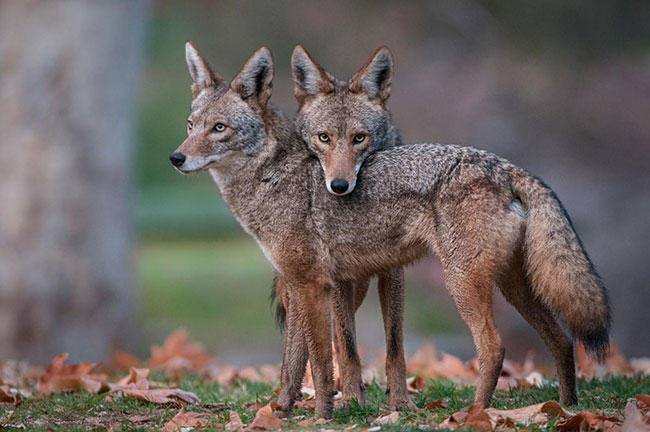
The national animal of Canada has been prized for its luxuriant fur for hundreds of years, yet wildlife biologists believe there are as many today as there were before Europeans arrived. They also believe coyotes, foxes and raccoons are more populous now than ever. Truly modern trapping, regulated to allow only the removal of nature's surplus, is a perfect example of the sustainable use of renewable natural resources!
COOL FACT #9: Farmed mink enjoy company so farmers house them in pairs
After being weaned from their mothers, farmed mink are often raised in pairs, preferably a brother and sister, and sometimes even threes. Farmers have learned that keeping siblings together results in calmer and healthier mink.
Assembly times: Intarsia sheared beaver by Zuki: 100 hours; Jeep Wrangler by Jeep: 18 hours.
COOL FACT #10: Fur garments are very labour-intensive
Fur garments are created individually, with all the cutting and sewing done by hand. Not counting all the work involved in producing the pelts, an “average” mink coat might take 35-40 hours of hand work, while an intarsia sheared beaver by Zuki could take 100 hours. That's longer than it now takes to assemble a car!
BONUS FACT: Animal activists have no sense of proportion
Each year, North Americans use about 7 million animals for fur. That's one sixteenth of one percent of the 12 billion animals they use for food. Yet animal activists focus more attention on the fur trade than on all other livestock industries combined. Go figure!
The fur industry is proud of the many ways in which fur is eco-friendly, including that after decades of use, it biodegrades. In… Read More
Three months ago, we launched the Great Fur Burial. This is what we buried - mink on the left, fake fur on the right. How do they look now?
The fur industry is proud of the many ways in which fur is eco-friendly, including that after decades of use, it biodegrades. In contrast, when fake fur made from petrochemicals reaches the end of its useful, and typically very short, life, it goes in a landfill where it will sit until the end of time. Or will it? In pursuit of knowledge and truth, we decided to do a little experiment: the Great Fur Burial.
On May 14, we took a mink stole and a fake fur vest, cut them into equal-sized pieces, and buried them. Above is how the pieces looked on burial day. After 3 months, 6 months, and then once a year for five years, we would unearth a piece of the mink and a piece of the fake fur to check for degradation. This experiment is hardly scientific, but it only has to show one thing: do they rot, or not?
Three Months Later ...
Last week we unearthed the first of the eight sets of fake and real fur. We set out to the burial ground, marked by two sticks.
It only took a few seconds of digging to find the first piece of fake fur, which appeared to be fairly intact.
Finding the real fur was more of a challenge. We decided to dig by hand to avoid disturbing the site too much, and came across a sad-looking shred.
After refilling the grave, we put our exhumed samples onto a tray. It was time to have a closer look for signs of degradation.
Before cleaning. Fake fur on the left, real on the right.
A lot of dirt was still attached to the samples, so a bit of gentle cleaning was in order. And here's what we ended up with:
After cleaning. Fake fur on the left, real on the right.
Ocular inspection immediately told us that the two samples, which were originally the same size, were not the same size anymore. The real fur sample was much smaller.
Closer inspection revealed that the synthetic fur was pretty much intact, front and back.
Close-up of the synthetic fur after three months in the ground.
The backing of the synthetic fur looks almost like new.
The real fur, on the other hand, was falling to pieces, and was held together by the threads from the letting-out sewing process. The leather had all but disappeared and most of the hairs showed clear signs of biodegradation.
The real fur sample looked more like an owl pellet than a mink stole.
We're only three months into a multi-year experiment, and already the findings are quite dramatic.
Equal-sized pieces of fake and real fur were buried side by side. After three months, the fake fur showed no obvious signs of degradation, biological or otherwise. In other words, it was perfectly intact. The real fur, however, was in an advanced state of degradation, in particular the leather.
Like all good scientists, we'll hold back on making conclusions until the experiment has run its course. But the way things are headed, it might not be long before we're using tweezers and a magnifying glass to find a real fur sample. It will all then be down to the fake fur samples. Will they degrade in five years? Or by the end of time?
To provide the best experiences, we use technologies like cookies to store and/or access device information. Consenting to these technologies will allow us to process data such as browsing behavior or unique IDs on this site. Not consenting or withdrawing consent, may adversely affect certain features and functions.
Functional
Always active
The technical storage or access is strictly necessary for the legitimate purpose of enabling the use of a specific service explicitly requested by the subscriber or user, or for the sole purpose of carrying out the transmission of a communication over an electronic communications network.
Preferences
The technical storage or access is necessary for the legitimate purpose of storing preferences that are not requested by the subscriber or user.
Statistics
The technical storage or access that is used exclusively for statistical purposes.The technical storage or access that is used exclusively for anonymous statistical purposes. Without a subpoena, voluntary compliance on the part of your Internet Service Provider, or additional records from a third party, information stored or retrieved for this purpose alone cannot usually be used to identify you.
Marketing
The technical storage or access is required to create user profiles to send advertising, or to track the user on a website or across several websites for similar marketing purposes.