

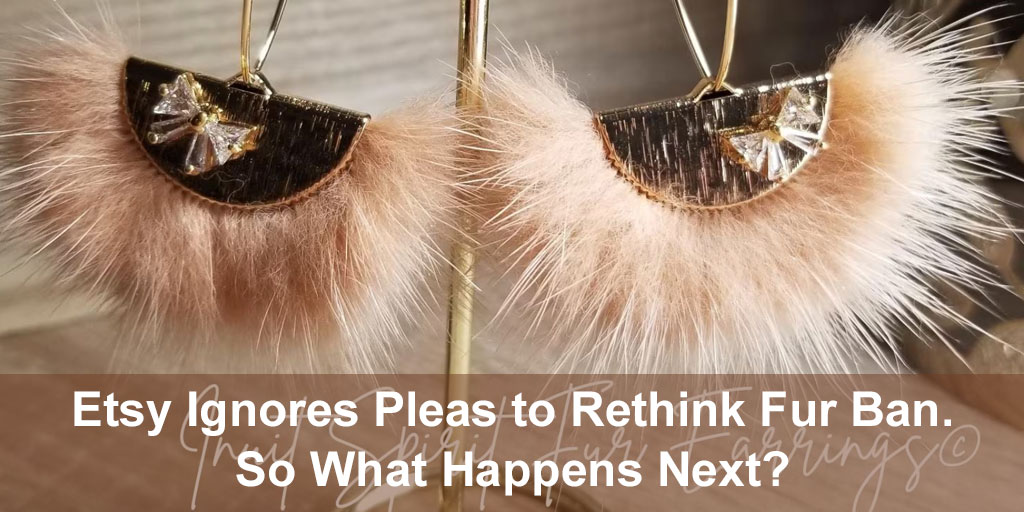
A month has passed since I sent an open letter to e-commerce company Etsy, on behalf of the Fur Institute of Canada, urging it to reconsider a promised ban on the selling of fur products. So far I’ve not heard back, and as far as I know, neither have other concerned parties that sent similar letters, so any reply now seems unlikely.
On April 2 of this year, Etsy announced that a revised animal product policy would go into effect on August 11, banning sales of items containing “fur from animals killed primarily for their pelts, regardless of age or origin.” In an email it sent to sellers, Etsy called the move part of “ongoing biodiversity efforts”.
Of course, seasoned observers of the fur trade knew that Etsy’s move had nothing to do with biodiversity, and everything to do with placating an anti-fur group that had been harassing it. Many retailers, designers and even governments have already folded in the face of harassment and intimidation, and e-commerce companies are the next target.
Etsy, however, is something of a special case, and its departure from the fur scene will leave some empty shoes that are hard to fill.
Vague Animal Product Policy
But before we delve into what makes Etsy special, consider what it has in common with many retailers that have bowed to the anti-fur lobby: Its “animal product policy” is intentionally vague and self-serving.
For such a policy to sound convincing, the company must first appear to take wildlife conservation seriously. This Etsy achieves by citing the US Endangered Species Act (ESA) and the Convention on International Trade in Endangered Species (CITES) as its basis for banning trade in species that are recognised by conservation authorities as “endangered” or “threatened”. (The fact that trade in these species is already strictly controlled is irrelevant.)
Etsy then creates the illusion of taking conservation still more seriously by augmenting its list with species of its own, including all bears, crocodilians, seals, wolves, etc., and concludes with “certain additional at-risk animals”. This closing rider provides the wiggle room needed to, effectively, ban trade in any species it chooses. Of course, banning trade in plentiful species and vintage furs has nothing to do with biodiversity, but Etsy’s lawyers can easily skirt this by applying their own definition to “at risk”. At risk of what?
And in case you think Etsy’s competitors are any better, think again.
EBay, for example, bans listings of all species of bats, bears, marine mammals and migratory birds, while Meta (Facebook and Instagram) bans the sale of “animal parts” from any species, with no reference to their conservation status.
Global Biodiversity Framework
There is even an ultimate authority on biodiversity that Etsy et al. could follow, but choose not to.
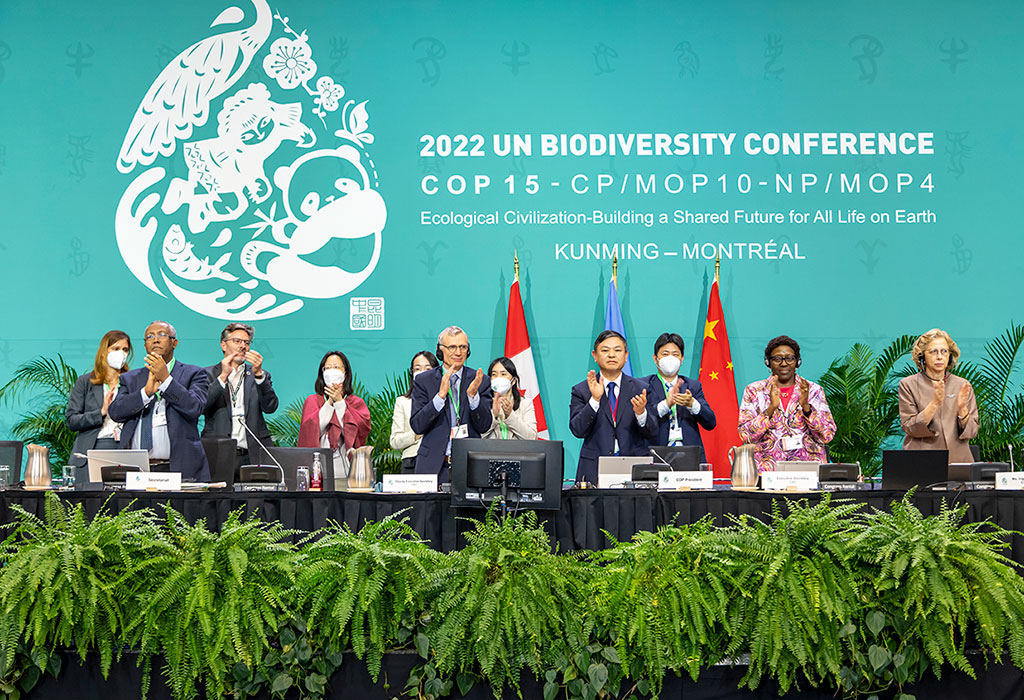
In 2022, parties to the Convention on Biological Diversity adopted the Kunming-Montreal Global Biodiversity Framework (GBF), an ambitious plan aimed at achieving a world living in harmony with nature. This framework sets four Goals for 2050, and 23 Targets for 2030.
Goal B begins: “Biodiversity is sustainably used and managed and nature’s contributions to people, including ecosystem functions and services, are valued, maintained and enhanced.” Inherent in this Goal is the humane and ethical use of plentiful furbearers.
Likewise Target 5 reads: “Ensure that the use, harvesting and trade of wild species is sustainable, safe and legal, preventing overexploitation, minimizing impacts on non-target species and ecosystems, and reducing the risk of pathogen spillover, applying the ecosystem approach, while respecting and protecting customary sustainable use by indigenous peoples and local communities.”
It’s possible that Etsy is familiar with the GBF and disagrees with it, but we all know that’s not actually the case. Etsy has simply decided that it is better to placate a vocal minority of anti-fur cranks instead of supporting its vendors who use fur.
SEE ALSO: Positive language for trappers, sealers in latest biodiversity targets. Truth About Fur, January 2023.
Market Niche
So given that Etsy’s vague animal product policy is part of an unfortunately common trend, what makes its decision to ban fur special? The answer is its market niche.
All retailers strive to develop a market niche, and Etsy’s is small-scale crafters and artisans.
As chance would have it, many of Etsy’s sellers live in remote, rural areas, and include Indigenous Canadian communities whose cultures and economies are inextricably tied to the harvesting of wild furbearers. If anyone stands to lose from Etsy’s new anti-fur policy, it is these people.
Ironically, crafters and artisans in these communities are also on the frontline of conservation, playing a key role in protecting the very biodiversity Etsy says is its motivation.
Silver Lining
However, if history is any guide, there will be a silver lining to this cloud.
About a decade ago, both Etsy and Facebook banned the selling of seal products, providing the catalyst for us at the FIC to launch two online stores to fill the gap: Canadian Seal Products and Proudly Indigenous Crafts and Designs. Now is the time for people who work with fur to follow suit.
Make no mistake, whatever route they take won’t be easy. They already have a lot of hoops to jump through, and Etsy’s departure from fur just adds another. So in the short term at least, they may just switch to another existing e-commerce platform and hope it doesn’t draw the attention of the anti-fur lobby. Or if they have the skills, time and money to spare, they may start selling their wares via their own personal websites, as some are already doing.
But the free marketplace is also providing an opportunity for new platforms to emerge – “Etsy Mark 2s” if you will. It may sound like wishful thinking, but it’s already happening here and here!
SEE ALSO: Truth About Fur podcast, May 8, 2026. Among other subjects, Mark Hall and Doug Chiasson discuss Etsy’s sudden decision to ban fur.