


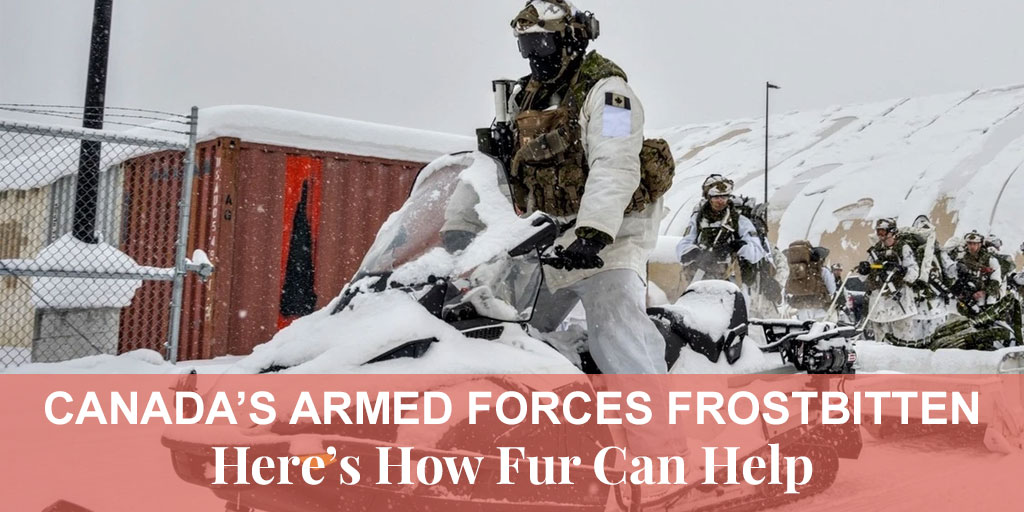
Award-winning journalist David Pugliese recently reported that 30 soldiers from Canada’s Armed Forces – the 3rd Battalion, Royal Canadian Regiment (3RCR) – suffered severe frostbite while participating in a near-Arctic training exercise at the Joint Pacific Multinational Readiness Center near Fairbanks, Alaska.
Too many Canadians forget that our nation is fundamentally an Arctic one. Vast expanses of Arctic territory, stretching from the Yukon North Slope in the West to Labrador in the East, and the entire Arctic Archipelago, make up a major part of Canadian geography and heritage. These unforgiving landscapes have been the home to various First Nations and Inuit communities for thousands of years.
Because of this experience, it stands to reason that the people in these communities know a thing or two about survival in Arctic climates. Using natural resources and materials found in the Arctic, Indigenous Peoples have relied on sealskin, caribou hide, beaver fur, and other hide and fur products to keep warm.
SEE ALSO: Amazing facts about fur: Dressing for the Arctic. Truth About Fur.
In 2022 and 2023, the National Research Council put this to the test in a series of studies designed to test Indigenous-made garments directly against the predictable issue of extreme cold. Deployed out of interest for the Canadian Armed Forces, Canadian Coast Guard, and Parks Canada, these studies measured the “clo value” – a unit used to measure the thermal insulation properties of clothing, indicating how much heat a garment retains. The higher the clo value, the warmer the garment.
According to Evaluation of Canadian Armed Forces cold weather clothing with supplemental Indigenous clothing, apparel and gear that incorporated Indigenous-made garments had higher standardized total insulation values compared to base ones that did not use them.
Another paper published at the same time, Thermal evaluation of Government of Canada cold weather clothing and Indigenous garments, affirms that apparel or gear composed entirely of Indigenous-made garments had the highest measured clo value out of all those tested, which would allow a physically active person to remain warm in -60.0°C air.
Superior Option
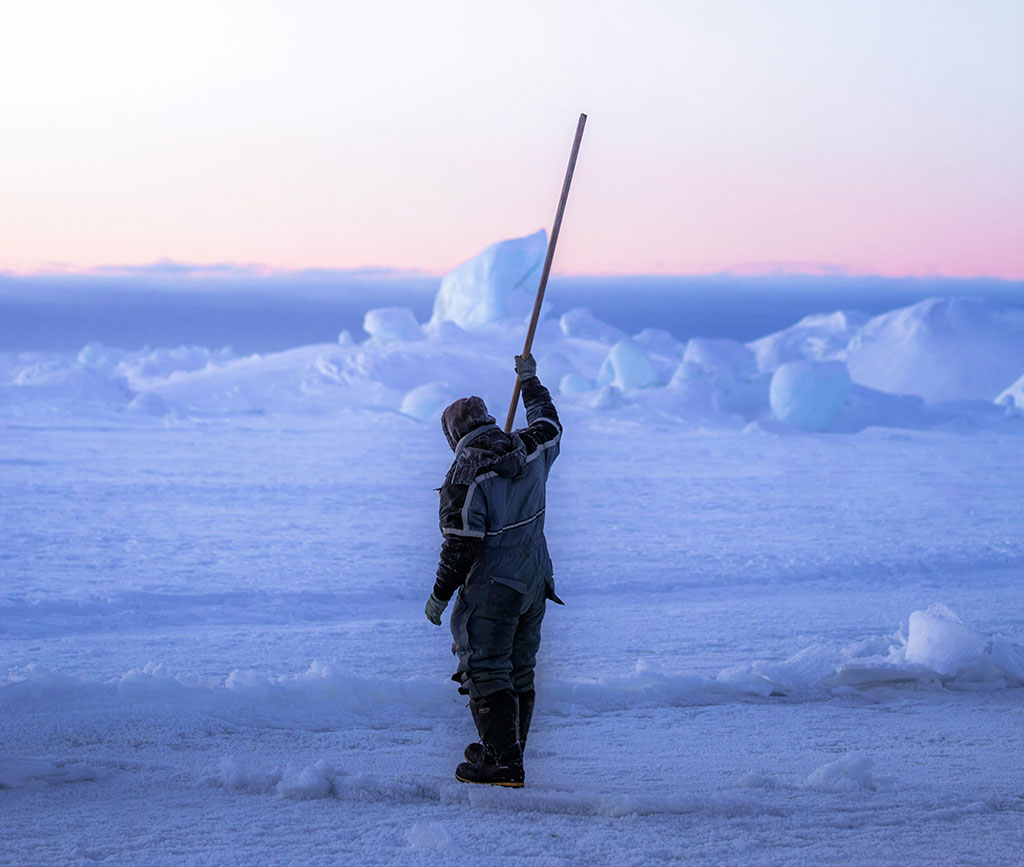
Conducted with complete transparency by our Federal Government, these studies were published in 2022. Therefore, hundreds if not thousands of Canadian observers and certainly relevant members of the Canadian Armed Forces knew that Indigenous-made fur and sealskin garments are the superior option to keep the men and women who serve our country safe in extreme cold weather environments.
SEE ALSO: Why fur trim keeps us warm. Truth About Fur.
Though the exact details of what happened during this recent exercise are not known, it is clear that the equipment provided to the members of 3RCR was not sufficient. We know that equipment made from fur or sealskin would have protected them better than what they had, and likely would have helped some of the injured soldiers.
In an increasingly uncertain time, with more than a few countries posturing for Arctic expansion, it is high time to return to outfitting our soldiers with the equipment they need to be safe. On this point, both traditional knowledge and leading-edge scientific research agree: natural fur is the right choice.


Excellent articles-
Colorado and Fur garment warmth.
I really believe FIC should work on attempting to move these stories into the US media.
A perfect example of re-inventing the wheel.. the principles of the animal based clothing that the Indigenous peoples of the North use have been well known by Canadians for decades, if not centuries. The problem for the average Canadian individual serving in the North is that they are not indigenous. Their leaders are caught in the trap of trying to be politically correct – as defined by the animal rights corporations – at the expense of the women and men in their organizations. Canadian hunters and trappers, from all communities, can provide the raw materials to equip those who have to serve in the North but they cannot force those in power to buy the materials or arrange to make the needed clothing.
Yes I know from experience fur is much warmer than the clothing sold in our stores. I commercial fished for 33 winters and used clothing bought from a retail store and fur clothing I asked one of my fishermen’s wives to make me. I can honestly tell you there is no comparison. The fur and leather clothing allowed me to stand out on the lake for hours and the only time I ever shivered was when we stopped for lunch and were doing nothing, As long as we were moving around we were warm sometimes to warm.