
We are living in troubling times, my friends. Politicians want to tax farmers and ranchers for emissions and slap sin… Read More
Activists continue to erode animal use in US society with new laws passing in California and New York City. Photo: BEEF Daily.
We are living in troubling times, my friends. Politicians want to tax farmers and ranchers for emissions and slap sin taxes on meat to encourage plant-based diets. Celebrities are spinning faux science into meatless propaganda in the name of compassion to animals and the planet.
Packers are investing in plant-based protein companies. Farm bankruptcies are on the rise. Animal agricultural organizations are getting into bed with animal rights and environmental activist groups.
From a beef producer’s perspective, I sometimes wonder what
my future looks like in this business. From a consumer’s perspective, I wonder
if meat will always be available to me, or if the opposing side will ultimately
win.
Just the other day, I received a hateful email from someone
who expressed great joy that my viewpoints about ruminant animals benefitting
the planet were archaic. With glee, she compared me to a dinosaur and said she
was hopeful that people like me would one day cease to exist.
This person was, of course, threatening my life and wishing for me to be wiped off the face of the earth because of her love and compassion for a beef cow. It’s highly ironic the hateful things one person can say to another in the name of saving the life of an animal.
But it doesn’t stop with just hateful words from trolls.
For example, California became the first state to ban fur. In October, Governor Gavin Newsom signed Assembly Bill 44 into law, banning the sale of new clothing and accessories made of fur.
According to an article in the New York Times, “For the purpose of the law, fur is defined as ‘animal skin or part thereof with hair, fleece or fur fibers attached thereto.’ For the purposes of shoppers, that means mink, sable, chinchilla, lynx, fox, rabbit, beaver, coyote and other luxury furs.
“Exceptions have been made for cowhide, deerskin, sheepskin
and goatskin. Which means that shearling is totally fine. Exceptions have also
been made for religious observances (shtreimels, the fur hats often worn by
Hasidic Jews, can continue to be sold) and other traditional or cultural
purposes.
Keith Kaplan of the Fur Information Council of America says California's fur ban "is about much more than animal welfare in the fur industry. It is about the end of animal use of any kind."
“Keith Kaplan, of the Fur Information Council of America, issued the following statement after the California news broke: ‘This issue is about much more than animal welfare in the fur industry. It is about the end of animal use of any kind. Fur today, leather tomorrow, your wool blankets and silk sheets – and meat after that'."
In New York City, a ban on foie gras is currently being
considered. If passed, more than 1,000 New York City dining establishments that
serve foie gras will be impacted, in addition to the duck and geese farmers
operating in the state of New York.
According to an article published in Eater, “For years, fur and foie gras have been among the most contentious issues in the animal welfare debate. Foie gras is far from the only cuisine subjected to bans – horse meat, shark fins, beluga caviar and unpasteurized milk are some of the foods barred in numerous states due to concerns over ethics, animal endangerment, or public health.
“But foie gras producers say they have been unfairly
targeted. They argue that the foie gras sector is ‘low-hanging fruit’ because
the industry is small, it is linked to the elite, and misinformation has skewed
public perception of duck farms.”
These are just two examples of how activists are hoping to
curtail and eliminate the use of animals in our everyday lives. More than just
taking meat, dairy and eggs off the dinner table, this would mean no more
by-products. Cattle, pigs and sheep provide hundreds of beneficial products
that enrich our lives, ranging from makeup to crayons to soaps and even
pharmaceuticals.
This is dangerous territory and a slippery slope, indeed. First they come for the horses, then the egg-laying chickens, then the gestating pigs, then the fur, then the foie gras ... what’s next? Veal? Pets? Leather? Pigs' life-saving heart valves? Meat altogether?
I may not eat foie gras, and I may not wear fur. But I do own animals – both livestock and pets – and these laws aim to erode the very foundation and principles upon which ownership of animals is based. Be leery of politicians who aim to take away your rights in the name of compassion to animals. I know I am!
The remarkable tale of one man’s experiment in domestication is told in How to Tame a Fox (And Build a… Read More
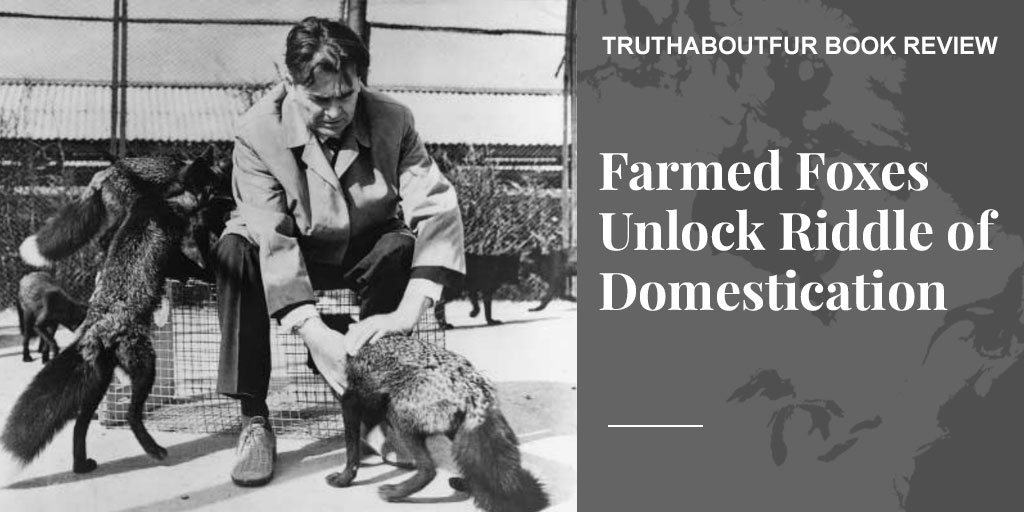
The remarkable tale of one man's experiment in domestication is told in How to Tame a Fox (And Build a Dog) [University of Chicago Press, 2017], by Lee Alan Dugatkin and Lyudmila Trut. Photo: Institute of Cytology and Genetics archives.
In the Fall of 1952, a Russian scientist boarded an
overnight train from Moscow to Tallinn, the capital of Soviet Estonia. It was
the beginning of a remarkable adventure that would change our understanding of
animal domestication.
Dmitri Belyaev, a geneticist by training, was a lead scientist at the Central Research Laboratory on Fur Breeding Animals in Moscow, working to help the many government-run fox and mink farms produce more beautiful and valuable furs. Fur farming was an important source of foreign currency for the Soviet government after the war, which provided Belyaev with some protection for the daring experiment he was about to launch.
It was protection he needed, because while Russian geneticists had once been world-leaders, this important new field of study was under attack in Stalin’s Russia. Soviet science policy was dominated by Trofim Lysenko, a poorly educated peasant’s son who rose to power in the 1930s as part of Stalin’s glorification of the common man. Lysenko’s bizarre theories were eventually discredited, but meanwhile a generation of geneticists lost their jobs because their work would have exposed Lysenko as a fraud. Some – including Belyaev’s own brother -- were imprisoned and killed.
Belyaev enjoyed a measure of freedom because of his success in developing valuable new genetic lines of mink. But the daring new project he was about to launch went far beyond his mandate to increase the value of fur production.
Belyaev was fascinated by the question of how animals had first come to be domesticated. The way farmers selectively breed domesticated plants and animals for desirable traits was quite well understood. But this didn’t explain how certain species had been domesticated in the first place. Or why so few species of plants and animals out of the millions on the planet had ever been domesticated - only a few dozen animals, mostly mammals, plus a few fish, birds, and insects such as silk worms and honey bees.
Scientists by now believed that dogs were the first species domesticated by humans, some 15,000 years ago, and that they had evolved from wolves. But no one really understood how wolves – animals that generally fear and avoid or act aggressively towards humans – developed into man’s best friend, an animal that is attracted to and trusts humans.
Belyaev was also intrigued by the fact that so many of the changes that occur in many different domesticated species were so similar. As Charles Darwin had noted, they often had patches of different colours on their coats. And they often retained physical traits from childhood that their wild cousins outgrew as they matured: floppy ears, curly tails, shorter snouts and babyish faces – neotonic features that make young animals so “cute”. But why would breeders have selected for these traits? Farmers received no benefit, after all, from cows with spotted hides or pigs with curly tails. So why had they emerged?
Belyaev had a theory that domestication – with all the qualities that distinguish domesticated animals from their wild cousins -- might be triggered by selecting for just a single trait: tameness. It had been suggested that dogs evolved from less aggressive wolves – individuals that would have been low-ranking in their own packs but were tolerated close to human settlements, where they gained access to a more reliable source of food and thrived. Belyaev wondered if this process might be replicated by repeatedly selecting the least aggressive foxes on fur farms for breeding.
Floppy Ears and Curly Tails
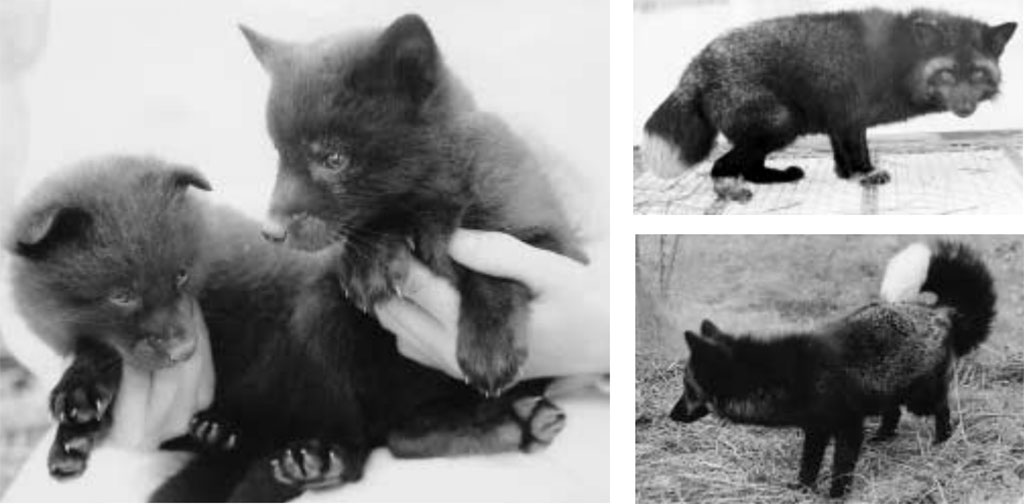
Foxes bred for tameness showed a high incidence of other changes, like floppy ears, shortened legs and tails, and curly tails. For data see "Early canid domestication: The farm-fox experiment", by Lyudmila Trut, American Scientist, vol. 87.
One of the well-known features of domesticated animals – dogs, cats, cows, pigs -- is that they can breed several times a year, not just once like most of their wild ancestors. If farmed foxes could be bred more than once a year there would be a clear economic benefit – and this was Belyaev’s cover story as he approached a trusted colleague in Estonia that fateful day in 1952. Nina Sorokina was in charge of some 1,500 silver foxes on a large government-owned farm in a remote forest hamlet. She was surprised by Belyaev’s proposal, because silver foxes were generally quite fearful and aggressive towards people, but she agreed to begin selecting and breeding a group of the least aggressive animals.
The foxes Sorokina bred in Estonia provided the nucleus for a much larger project that Belyaev launched at a new research centre in Siberia as Lysenko was finally repudiated after Stalin’s death. The results soon followed, validating Belyaev’s ground-breaking theories of domestication. Within ten generations – barely a blink in evolutionary time -- foxes were being born that were noticeably tamer. These puppy-like foxes had floppy ears, piebald spots, and curly tails. Some of these pups eagerly approached humans with their tails wagging, behavior never seen before in foxes. As scientific knowledge of hormones evolved, it was confirmed that these newly domesticated foxes had far lower levels of stress hormones. In the next stage of the research, several of the tamest foxes actually lived in a house with one of the lead scientists, Lyudmila Trut, and soon acted very much like dogs.
The speed with which these changes in the physiology and behavior emerged confirmed Belyaev's radically new understanding of the process of domestication. Since Darwin, scientists had assumed that change could occur only in small increments over long periods of time, driven by a gradual accumulation of useful but random genetic mutations. The speed with which these new domesticated foxes evolved, however, suggested to Belyaev that the changes revealed a range of genetic variation that already existed within the original fox population.
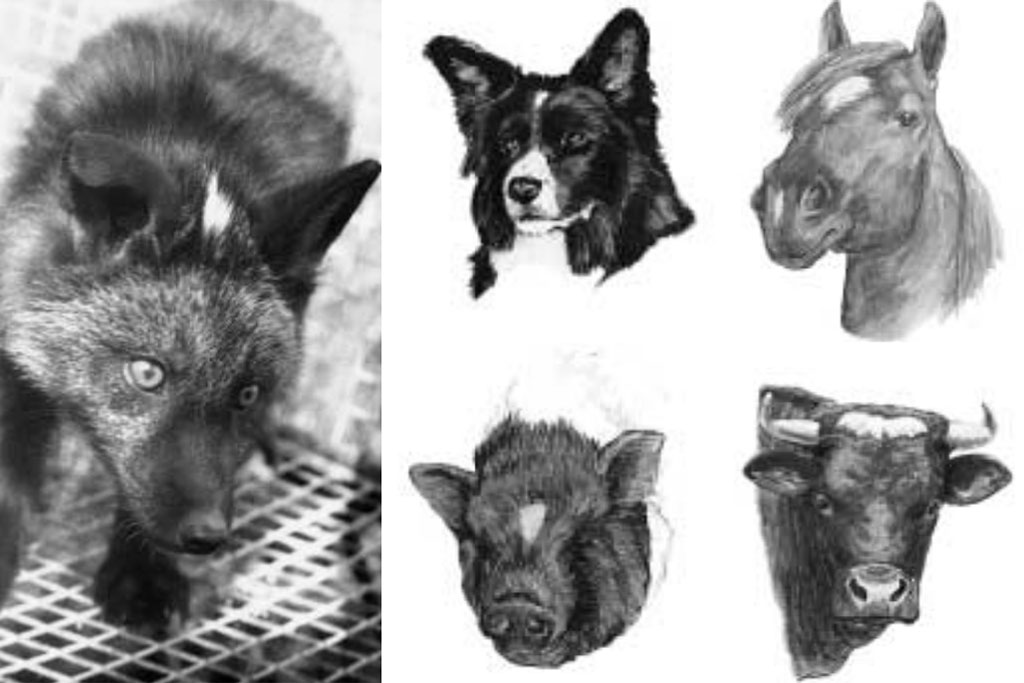
Piebald coats are a striking mutation among domestic dogs, pigs, horses and cows. Belyaev predicted a similar mutation he called "Star" (left), seen occasionally in farmed foxes, would occur more frequently in foxes bred for tameness. See "Early canid domestication: The farm-fox experiment".
This would explain why such a small number of plant or animal species has ever been domesticated. Wild horses, for example, must have had a wide range of genetic variation within their populations, facilitating domestication, while zebras – which have sometimes been somewhat tamed, but never domesticated – do not.
Belyaev was ahead of his time in proposing that important changes to physiology and behaviour might result without the mutation of genes, but rather through the activation or deactivation of existing genes in response to new environmental pressures -- in this case, the selection for tamer foxes. The disruption of long-established systems of genetic stability could provoke a complex suite of changes (curly tails, spotted coats, shorter snouts, etc.) in surprisingly few generations.
Belyaev’s ground-breaking ideas were, in fact, originally
sparked by his observation of farmed mink, where he saw new colour strains –
pastels, sapphires, violets, pearls – emerge less than 30 years after wild mink
were brought onto farms.
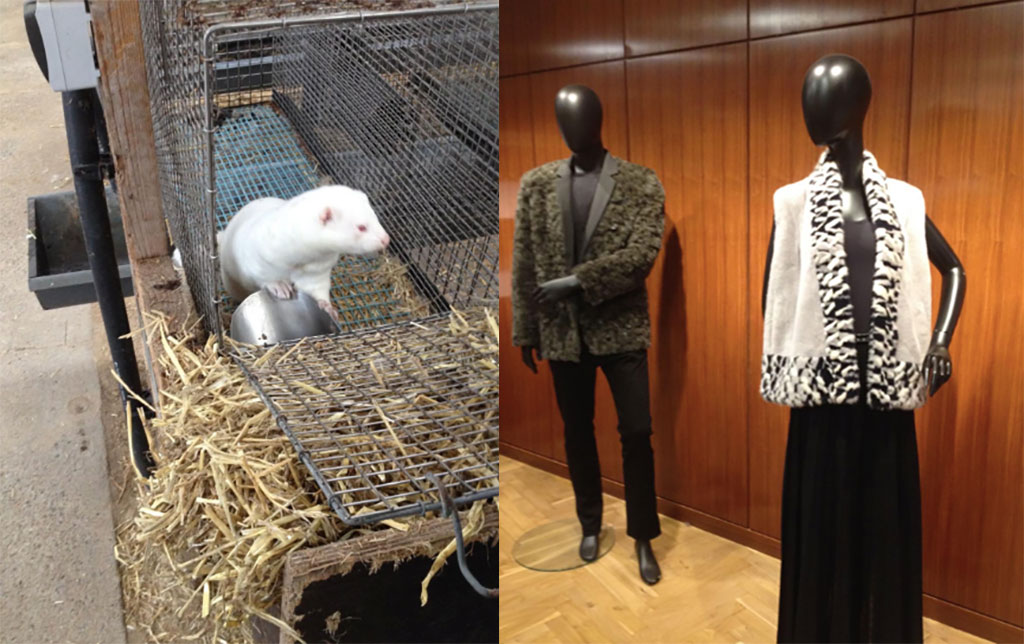
Not least interesting, Belyaev’s work puts the lie to activist claims that farmed mink and foxes are “wild animals” that should not be kept in captivity. These species have been selectively bred on farms for more than 100 generations, resulting in significantly different colours, size, and behaviour. These are no longer "wild" animals.
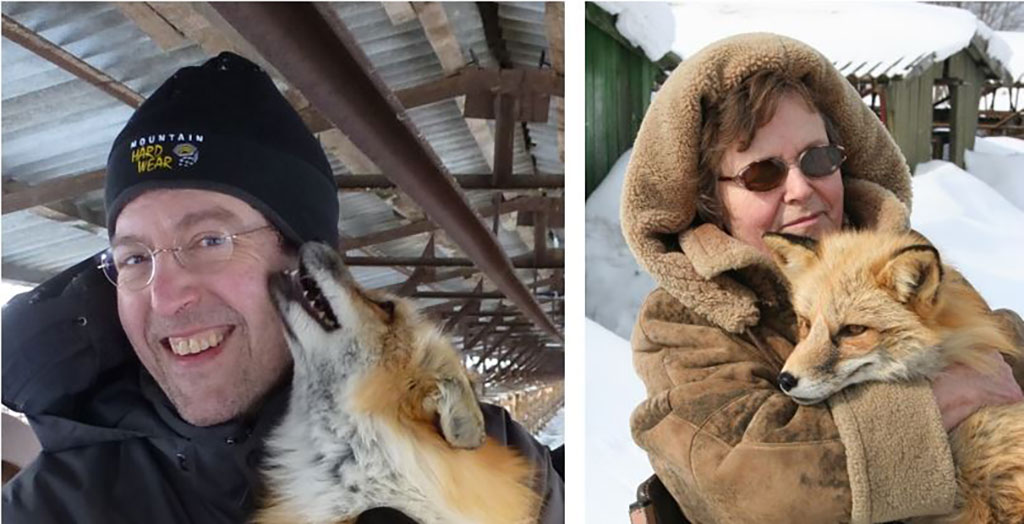
Lee Alan Dugatkin and Lyudmila Trut bonding with domesticated foxes.
The full story of this extraordinary research project has now been told for the first time in a wonderful book, How to Tame a Fox (And Build a Dog), co-authored by Lyudmila Trut and Lee Alan Dugatkin. Trut heads the research group at the Institute of Cytology and Genetics in Novosibirsk, and continues to lead Belyaev's fox project to this day. Dugatkin is a professor of biology at the University of Louisville and a science writer. Fur farmers and anyone interested in animals and domestication will find it a fascinating read!
Differences of opinion, and the debates they spawn in search of amicable solutions, are crucial to the functioning and evolution… Read More
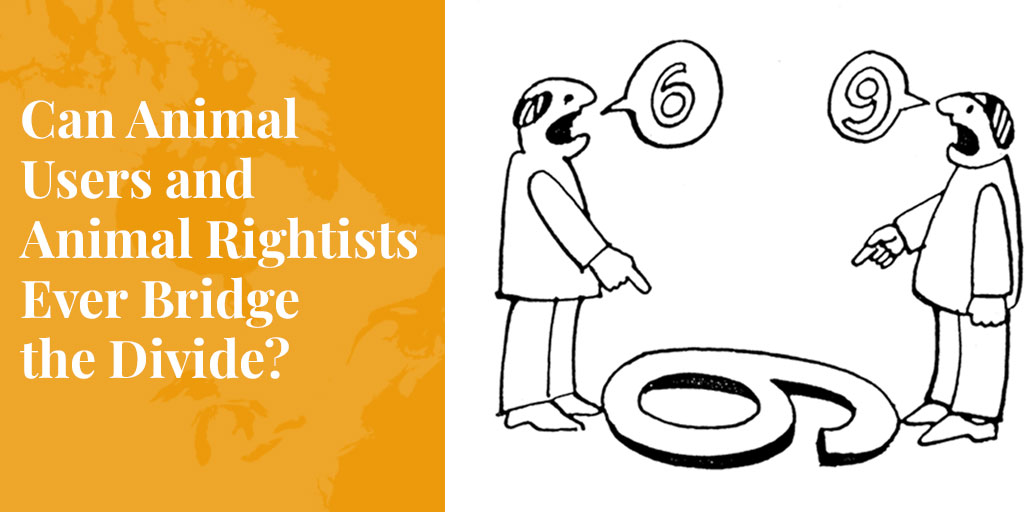
Differences of opinion, and the debates they spawn in search of amicable solutions, are crucial to the functioning and evolution of democratic society. But even the healthiest of democracies can't please all of the people all of the time, so we aspire to keep the majority as happy as possible while defending the rights of minorities to follow different paths. This approach breaks down, however, when a minority refuses to accept the will of the majority. Such is the quandary Western society faces today in dealing with animal rightists.
Though far fewer of us now work directly with animals than in the past, almost all of us still eat and wear animal products, and benefit from medicines and medical procedures tested on animals, to name just three of the most important ways in which animals benefit humans. But animal rightists want all of these banned, while some even oppose non-lethal uses, like pets and seeing-eye dogs. Can a path of peaceful coexistence be found? Or will we be forever locking horns?
Essential Freedoms
Two essential freedoms are at play here, freedom of speech and freedom of choice, with the latter being a manifestation of the former. Freedom of speech enables us to express our views, while freedom of choice enables us to act on them. The problem is that while the animal rights movement embraces its own right to freedom of speech, it rejects the right of others to freedom of choice.
In fact, animal rightists push their freedom of speech to the legal limit and beyond, denouncing animal users as "murderers" and "torturers". In so doing, they regularly make statements that any court would find slanderous or libelous if animal users had the time and money to file suit.
What they refuse to accept is the freedom of choice of others, a vital freedom in any functioning democracy that is easy to understand and should be easy to apply. In short, we are free to do whatever we want, provided it is legal. It doesn't mean we have to like the things some people do, just as they don't have to like the things we do.
Thus, for decades now, animal users have been saying to animal rightists: "If you choose not to eat meat, fine. If you choose not to wear leather or fur, fine. If you choose not to save your life' with medicines tested on animals, fine. But please respect our freedom to choose for ourselves."
But this simple and democratic way to avoid conflict is soundly rejected.
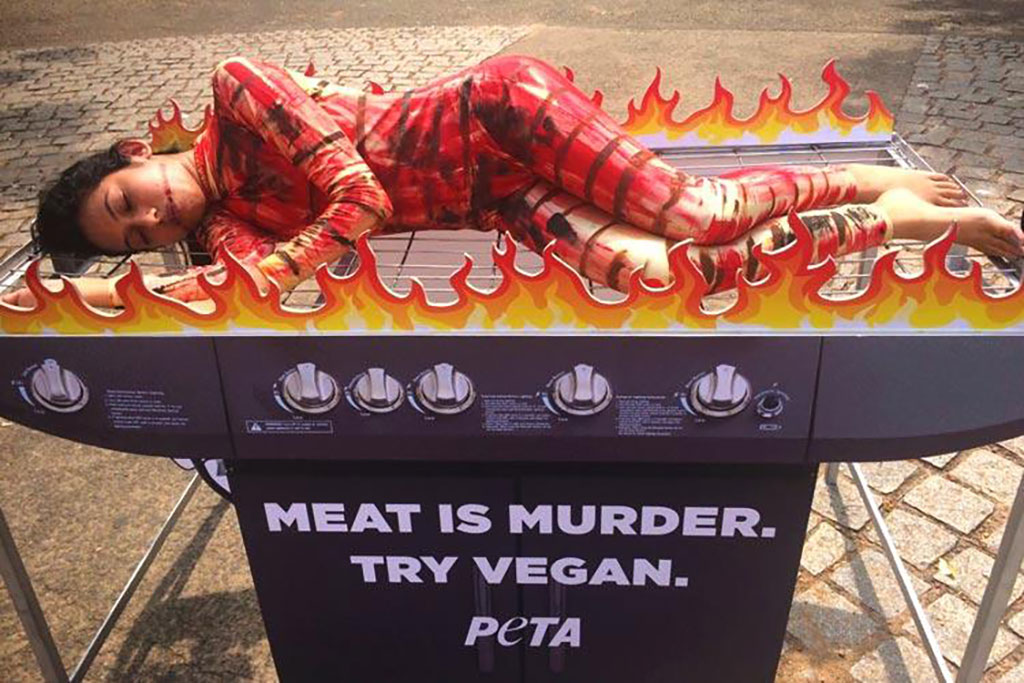
"Meat Is Murder"
Calling billions of meat-eaters "murderers" is no way to make friends.
So why is the animal rights movement so opposed to freedom of choice? In general terms, it's because the movement's moral code differs from that of most people. That's why it is often likened to a religion, since religions tend to have moral codes that are somewhat unique. It has also been likened to an intolerant religion, whose mission it is to convert non-believers.
More specifically, it's because the animal rights philosophy teaches that the intentional killing of an animal by a human is murder. Murder is a universal taboo (except for the obvious difference that most people think it refers only to humans killing humans), so we can all appreciate to some degree why animal rightists refuse to compromise on this one. Morally speaking, numbers are not the issue, since murdering one human (or animal) is no more defensible than murdering 1,000. And there are no half measures. You can't partially kill an animal, and even if you kill it humanely, it's still dead.
Activists for most other causes can be pragmatic, and are open to improvements wherever they can be found. For example, environmental activists don't demand that we quit driving, just that we drive less or switch to electric cars. They ask us to use less plastic, not stop using it altogether. And they don't ask us to sit in darkness, just to use more energy-efficient light bulbs.
But animal rights activists don't have this luxury. If Americans were to reduce the number of chickens they "murder" each year from 9 billion to just one, that would still be one too many.
Creating Conflict
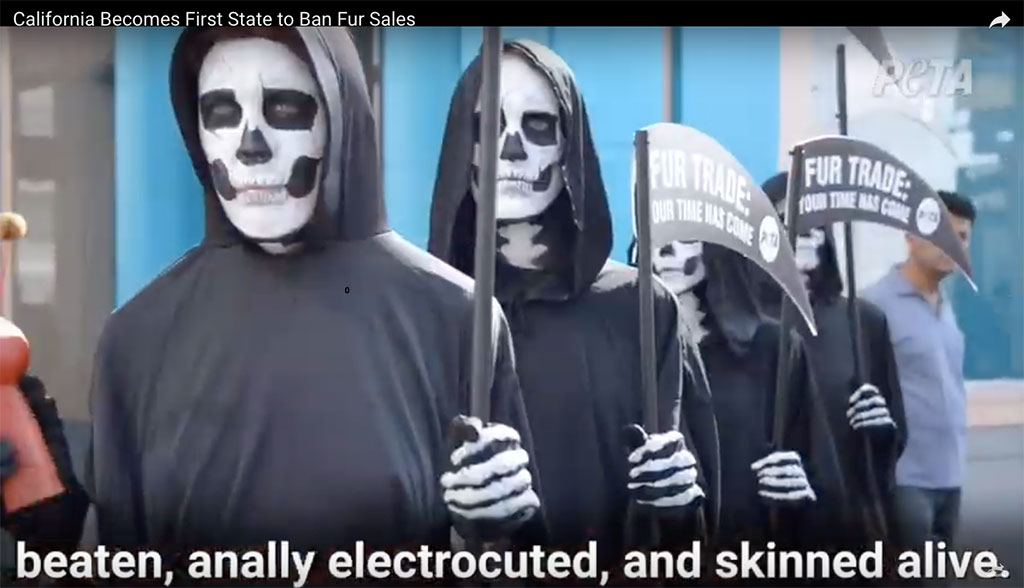
This PETA video marking California's fur ban celebrates the power of conflict to defeat freedom of choice. (Note also how it continues to lie about furbearers being skinned alive.)
Given that animal rightists see no room to negotiate with animal users, and outright reject their freedom of choice, they have opted instead to focus on creating conflict. For example, animal rights groups pioneered an anti-social tactic (now dubbed "naming and shaming") based on a simple formula: find someone doing something you don't like, take photos or video, then publicly shame the person into changing their ways.
This tactic is not intrinsically bad. Sometimes a situation may seem so desperate that naming and shaming can feel like the only course of action left. Witness the huge outpouring of support for Greta Thunberg, the Swedish teenager (born 2003) now blaming every adult on Earth for a climate crisis that her generation will pay for. You may not agree with her, but if you're worried about leaving the fate of the planet in the hands of politicians and big business, you understand why she's doing it.
But shaming people to bow to your will, or forcing them to do so by legal means, should only be encouraged as a last resort. Why? Because it creates ill will, even hatred, and irreparable divisions.
To cite one of countless examples, California lawmakers have just passed bans on all commercial and recreational trapping and the manufacturing and selling of fur products. It is no secret that they were driven to do so by the animal rights lobby, who shamelessly fed lawmakers every lie and half-truth they could dream up to win their case. But when the dust settles, things will not just return to normal, with everyone getting along in a spirit of civic harmony. Quite the opposite. While the victorious animal rights lobby steamrolls on to its next target, trappers, furriers, freedom-of-choice advocates, and a host of other sympathisers, will forever remember how livelihoods and traditions were destroyed to satisfy the demands of a few. The animal rights movement may have "saved" a few animals, but it has surely gained thousands of new enemies in the process.
Rise of Veganism
Many of us enjoy warm tofu with spicy garlic sauce from time to time, but still only about 5% of Americans are vegetarians, and fewer than 2% are vegans. Photo: Joy [CC BY 2.0].
So what's to be done? Can animal rightists be persuaded to become "team players", working together with animal users in pursuit of a more harmonious society?
Right now, the answer is probably no. In North America at least, there are more supporters of animal rights now than ever before, though presumably few of the new converts signed up for a life on the road, donning balaclavas by night to steal farm animals or ransack research labs.
Most probably came to animal rights after adopting a vegan lifestyle for a variety of reasons, typically some vague notion of health benefits or saving the planet. They then learned along the way that the philosophy behind animal rights and veganism is essentially the same. Now that veganism is better understood, all new converts have probably at least questioned the morality of killing animals, while so-called "militant vegans" are synonymous with animal rights activists.
Whatever the case, organisations of any type - be they a business, a religion, or a knitting circle - are less open to change when the numbers are up.
But here's the rub. Although vegans are now a common sight in major cities and on college campuses, it seems highly unlikely they will ever constitute more than a small percentage of the overall population. It's not easy to gather reliable data on eating habits, but according to a recent assessment of multiple surveys, self-identifying vegans now account for between 1% and 2% of the US population. In other words, if they hope to convert us all to their way of life, they're facing an impossible task.
Animal rightists-cum-vegans thus face a choice. Will they settle for sowing conflict and division until the end of time? Or will they find a way to co-exist peacefully with others?
Moving Forward
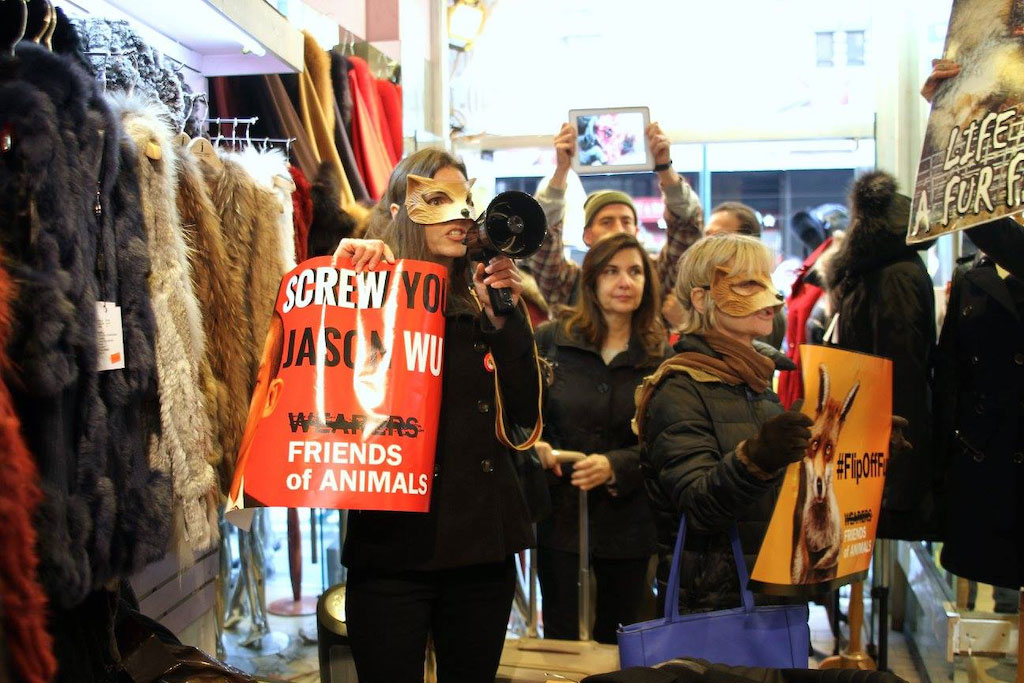
Store invasions are a surefire way for animal rightists to make new enemies. Photo: Friends of Animals.
If I had the opportunity for a one-on-one with Ingrid Newkirk, founder of People for the Ethical Treatment of Animals and grande dame of the animal rights movement, I would begin by stating the following truths. (i) Most people will never agree with PETA's views on animal use, so you are fighting a lost cause. (ii) PETA is all about being negative, insulting people at every turn and never saying anything nice. All stick and no carrot. (iii) While PETA is undeniably a master at grabbing headlines, most people are sick to death of reading them.
Given this negative scorecard, I would then suggest that the animal rights movement change tack. Here are some specific actions it could take today to help it become a useful participant in the democratic process.
• Above all, show integrity. Following are some examples of how.
• Don't tell lies, don't fabricate evidence, and if someone sends you alleged evidence of animal cruelty, ensure it is real before publishing it.
• If you find you have inadvertently published false
information, don't pretend you don't know. Remove it immediately, and maybe
even issue a public apology.
• If you obtain evidence of animal cruelty, don't sit on it waiting
for the best time to use it for fundraising. Share it with authorities at once
so they can investigate.
• When publishing video of animal cruelty, make unedited footage available as well, with audio, to allay suspicions that it has been edited to create a false impression, or even worse, has been staged.
• Don't engage in, or condone, illegal activities like releasing animals from farms or vandalism.
• Don't expose children to shocking images. The next time you hold a street demo, ditch the photos of animal cruelty and hand out samples of vegan cooking instead.
• If you must target stores, do so at a distance, and never harass
customers, scrawl graffiti, scream abuse, superglue locks, or take your demo
inside the store. In case you haven't realised it yet, everyone hates you when
you take your demos indoors.
• Don't bombard people on social media with hateful messages,
and never, ever send death threats.
• Put animal rights on the back burner, and pursue improvements in animal welfare instead. They may not be entirely on message for your group, but they're achievable, and if you're up front about your intentions, you'll have broad support. But don't be dishonest and push for higher animal welfare standards as a ruse to drive animal users out of business.
And if you're up for making these much-needed changes, try thinking outside the box to come up with campaigns that respect freedom of choice, and may even turn enemies into friends. Call me a hippy, but how about hosting vegan food-tasting events, and extending friendly invites to your local ranchers and hunters? Or go the whole hog and invite them to set up their BBQs too, then have a contest. Or organise vegan fashion shows but invite designers using real leather and fur too, then let the audience choose which they prefer.
Democracy is about building bridges, but all you're currently doing is burning them. Are you ready to change?
***
To learn more about donating to Truth About Fur, click here.

Recent proposals to ban the sale of fur in several US cities and states are based on a fiction –… Read More
Recent proposals to ban the sale of fur in several US cities and states are based on a fiction – a dangerous fiction – the origins of which can be traced back more than 30,000 years. That’s when, as Yuval Noah Harari recounts in his popular book Sapiens: A Brief History of Humankind, a remarkable mutation occurred in the brains of one of the six human-like species that then existed. That mutation, scientists speculate, allowed our ancestors to do something no animal had ever done: live in an imaginary world.
To understand the importance of this breakthrough, consider money, nations, and human rights, to name just a few vital elements of our civilization. Unlike rocks, trees and other things we see around us, these important concepts exist only because we believe in them and act accordingly. Money, for example, has value only because we all agree that it does -- so people will give us stuff for it.
The ability to act as if such “fictions” really exist is central to what makes us human. It gives sense to our lives and allows us to work together in large groups for common purposes. But our fictions can also lead us seriously astray: think of Nazism or Communism. Both promised a better life but delivered only misery, not least because they were based on erroneous ideas about humanity: Aryans are not a superior race, and central planning is not efficient. A similar disconnect with reality lies at the heart of recent proposals to ban the sale of fur products in certain US cities and states. Let’s take a closer look.
Justifications for Banning Fur
Philosophers like Peter Singer and Tom Regan have proposed that animals may have the same rights as humans. Photos: Joel Travis Sage [CC BY 3.0]; Bryan Regan.
There are only two possible justifications for banning fur. The first would be if fur were not produced responsibly. Most of us believe that it is morally acceptable to use animals for food and other purposes so long as species are not depleted (sustainability) and the animals are raised and killed with as little suffering as possible (animal welfare). As documented throughout the TruthAboutFur website, the modern fur trade satisfies these moral requirements: both wild and farmed furs are now produced at least as responsibly and sustainably as other animals we use for food, leather and other purposes. *
But if fur is produced responsibly, the only remaining rationale for banning it would be to claim that any killing of animals is wrong. This idea has been elaborated over the past forty years by Peter Singer, Tom Regan and other “animal rights” philosophers. Simply put, they argue that the life, liberty and pursuit of happiness of “non-human animals” deserve the same respect as those of humans. Just as discrimination against people of colour is now denounced as Racism, and discrimination against women is rejected as Sexism, Animal Rights philosophers propose that using animals for food, clothing or other purposes should be condemned as “Speciesism”. As PETA founder Ingrid Newkirk famously charged: “There's no rational basis for saying that a human being has special rights. A rat is a pig is a dog is a boy.” **
At first glance, this proposal can seem compelling. Just as the idea of extending rights to all races, classes and genders (Human Rights) was once scoffed at, Animal Rights philosophers argue that it is time to extend our moral circle to include all animals. But all social and moral constructs are not created equal. Human Rights is a highly functional “fiction” because human society is clearly strengthened when each member feels that their personal rights and needs are secured. Animal Rights offers no such benefits.
Animal Rights is, in fact, completely out of synch with how the natural world really works. Like it or not, life eats life. Animals only survive by eating other living organisms, plants or other animals. But animals do not usually eat members of their own species. Contrary to the claims of animal rightists, there’s nothing arbitrary or hypocritical about humans eating other animals but not (usually) each other.
The evolutionary logic for not killing members of your own species is evident, especially for humans. If you kill me, my kids come for you, then your kids come for my family, and on it goes – not very conducive to social cooperation or stability. Killing and eating other species provokes no such complications.
Problems with Animal Rights Logic
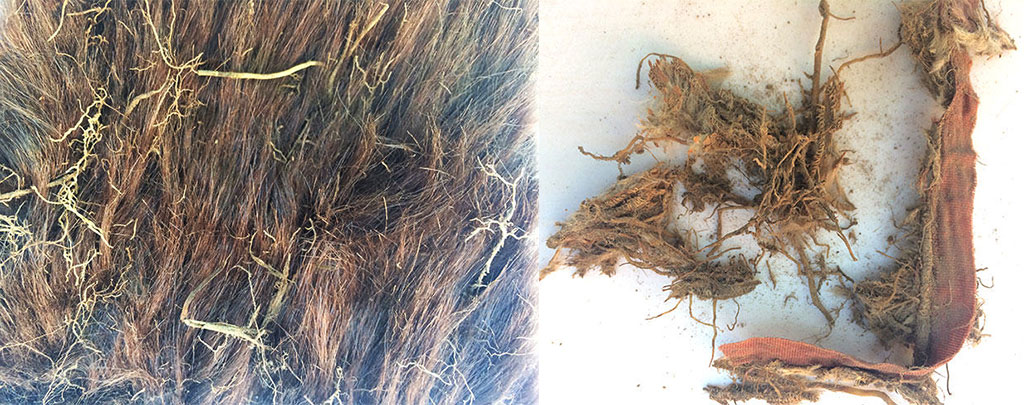
Petrochemical synthetic fur (left) and real fur after being buried for one year. See The Great Fur Burial on TruthAboutFur.
Most worrisome, the logic of Animal Rights may actually threaten human (and animal) welfare. Activists argue that no one needs real fur anymore because fake fur provides a “cruelty-free” alternative. But fake furs (and most other synthetics) are made from petrochemicals that are not renewable or biodegradable. New research reveals that these materials also leach micro-particles of plastic into our waterways and marine life each time they are washed. Cruelty-free indeed!
By contrast, using fur in a well-regulated fashion is fully compatible with an ecological (i.e., ethical) relationship with nature. Farmed fur animals are fed left-overs from our own food production, the parts of pigs, chickens and fish that we don’t eat and would otherwise clog landfills. Fur farm wastes – manure, soiled straw bedding and carcasses – are composted to produce organic fertilizers, renewing the fertility of the soil and completing the agricultural nutrient cycle. There is no natural farming system that does not include animals.
The production of wild furs is also based on ecological principles: most wildlife species produce more young each year than their habitat can support to adulthood. The sustainable use of this natural surplus is promoted by the International Union for Conservation of Nature (IUCN) and other conservation authorities. In fact, many wildlife populations would have to be culled even if we didn’t use fur, e.g., to prevent damage to property (flooding caused by beaver dams), to protect livestock (coyote predation), and to control the spread of dangerous diseases (rabies in overpopulated raccoons).
Living Outside Natural Reality
When this is how you acquire your meat, it is easy to condemn the killing of animals. Photo: Raysonho @ Open Grid Scheduler / Grid Engine [CC0]
All this was clear so long as most North Americans still had family on the land who understood the realities of nature. But now, for the first time in human history, most people live in cities. When your food comes from supermarkets, while animals dance and sing on your TV screen, and the live animals you know are surrogate children that sleep in your bed, it is easy to believe the killing of animals is as morally reprehensible as abusing human rights.
Due to our highly developed brains, we all live to a certain extent outside the biological-natural reality. All legislation is a human construct, and different societal “fictions” constantly compete for public acceptance. Animal Rights activists have been very adept at using sensationalist tactics to convey their stories through both traditional and powerful new social media. As PETA’s Ingrid Newkirk says: “We’re complete media sluts; we didn’t invent the game but we learned to play it!” But stories that win mass appeal do not always end well if they are not grounded in reality.
Animal Rights seems to some to represent a more gentle relationship with nature at a time when pollution and the spectre of global warming are exposing the dangers of rampant consumerism. But as this brief analysis suggests, basing public policy on the ideas promoted by Animal Rights advocates can have unexpected consequences. The Nazis’ fascination with Animal Rights will be the subject of a future essay. For now, suffice to say that encouraging the use of petroleum-based synthetics is not the way to protect our planet for future generations. Using natural, renewable, long-lasting and biodegradable materials like fur makes environmental sense. Politicians take note.
FOOTNOTES:
* In addition to sustainability and animal welfare, two further requirements for ethical animal use could be proposed: animals should not be killed for frivolous purposes, and most of the animal should be used (no waste). For a fuller discussion, see The Ethics of Fur, TruthAboutFur.
** While the Animal Rights philosophy opposes any use of animals, fur is often seen as an easy target; no city or state is proposing to ban the sale of meat or dairy products. Note, however, that Peter Singer, the intellectual godfather of the Animal Rights movement, wrote in his 1975 landmark book Animal Liberation: A New Ethics for Our Treatment of Animals, that it is hypocritical to criticize fur-wearing while most people are still eating meat, which requires the killing of far greater numbers of animals.
***
To learn more about donating to Truth About Fur, click here.
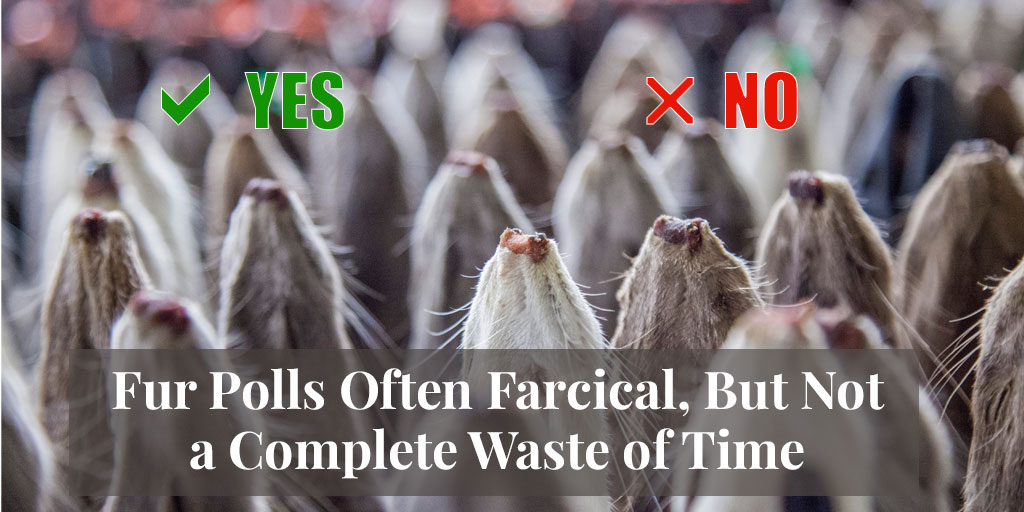
In part one of The Truth About Fashion, we explored and compared sourcing issues and supply chains of both fast-fashion… Read More
In part one of The Truth About Fashion, we explored and compared sourcing issues and supply chains of both fast-fashion and luxury fashion brands. And while many brands do what they can to instil trust and confidence in consumers through ever-growing transparent supply chains and ethical and sustainable sourcing, is it all too late?
As the public moves towards environmentally conscious consumerism, attitudes towards shopping are changing. More so today than ever before, shopping for pre-loved clothing is fashionable. However, growing in parallel is the deeply ingrained wear-once-and-throwaway culture that has been created. In part two of The Truth About Fashion, we investigate people’s attitudes towards shopping and the challenges that face brands to entice today's growing number of reluctant shoppers.
Second-Hand Shopping
Today, second-hand no longer means cheap. In fact, with an explosion of fashion-rental sites, luxury outlets, and online buyers snapping up pre-loved garments, second-hand has become synonymous with mindfulness. In fact, according to a UK-based study by French e-tailer Patatam, one in five British women admit to feelings of guilt when purchasing new clothes, resulting in them turning to pre-owned garments as sustainable alternatives. This finding was followed up with almost two in three (68%) of participants interviewed confessing they’d happily buy preowned items. It appears the undeniable issues that choke the fashion industry, such as water waste and landfills, are resulting in consumers selling, donating and buying second-hand clothing, giving all garments a second lease of life.
While we can all agree shopping second-hand items brings great benefits, from extending the lifecycle of garments to reducing waste, there needs to be a whole separate discussion about what constitutes a worthy second-hand purchase, and more importantly, what doesn’t.
Recycling, upcycling, reusing or donating clothing highlights how conscious consumers are finally putting their money where their mouths are. However, not all clothing is of high-enough quality to justify repair or recycling services. When it comes to expensive fabrics like leather and fur, designers tend to specialize in remodelling garments, meaning these fabrics are routinely remade into other forms or accessories. However, 95% of recycled clothing derives from the fast-fashion industry which is created with synthetic materials like polyester, meaning that when the time comes to remodel or reuse them, they are merely industrial rags not fit for re-purpose.
According to Fashion United, nearly half of the world’s clothing is made of polyethylene terephthalate (commonly known as polyester), which today is the most used plastic in the world. As if that statistic isn’t daunting enough, Greenpeace says polyester clothing is forecast to nearly double by 2030. This is especially alarming given the 11-year deadline – 2030, ironically enough – that the world has to reduce its carbon emissions output, of which the fashion industry is the second largest contributor after the fossil fuel industry, if we are to prevent Earth from crossing an irreversible climate tipping point (a rise of 1.5°C above pre-industrial levels).
We stated in part one of this series that, at best, only a small fraction of synthetic materials can ever be indefinitely recyclable, but the simple fact is, most widely-used synthetic materials like polyester, or any fashion textile deriving from crude oil, are not recyclable and do not make worthy second-hand purchases. The poor quality of synthetic materials means they last two to three years (maximum) before they are no longer fit for use – but more importantly, the lack of recyclable qualities of these materials means they are environmentally unsustainable.
Since 2016, shoppers’ consumption of pre-owned items is up 45%, signalling a social appetite for a sustainable wardrobe. This means we need to reconnect the dots between who is producing and using the garment and where the garment comes from and where it ends up. Answering such questions isn’t easy, but if you start with natural materials, the answers are clear. Natural materials are a part of fashion's circular economy. What does this mean? Fabrics which are a part of fashion's circular economy are mainly natural, meaning they come from nature and return back to nature when they are discarded.
As discussed in part one, as soon as big conglomerates saw the profit margins explode with outsourcing and the introduction of cheap fabrics in the 1980s and ’90s, little thought was given to fashion's circular economy. But while the fashion industry seems to have forgotten its own circular economy over the last 30 to 40 years, the fur industry continues to be a staple of it. But how? Well, attached to fur is a string of services, from maintenance, restoring and repairing to recycling, upcycling and remodelling - an advantage of fur that no other material can match.
This means that, in regard to the investigation into social attitudes towards fashion materials and consumerism, fur is on the same side of the debate of fashion with longevity and sustainability at its core. And brands would do well to pay attention to using responsible natural resources like fur as public attitudes shift towards these sustainable natural materials.
On a recent Saturday night, there was a vigil outside the Hollywood home of Ed Buck commemorating the second anniversary… Read More
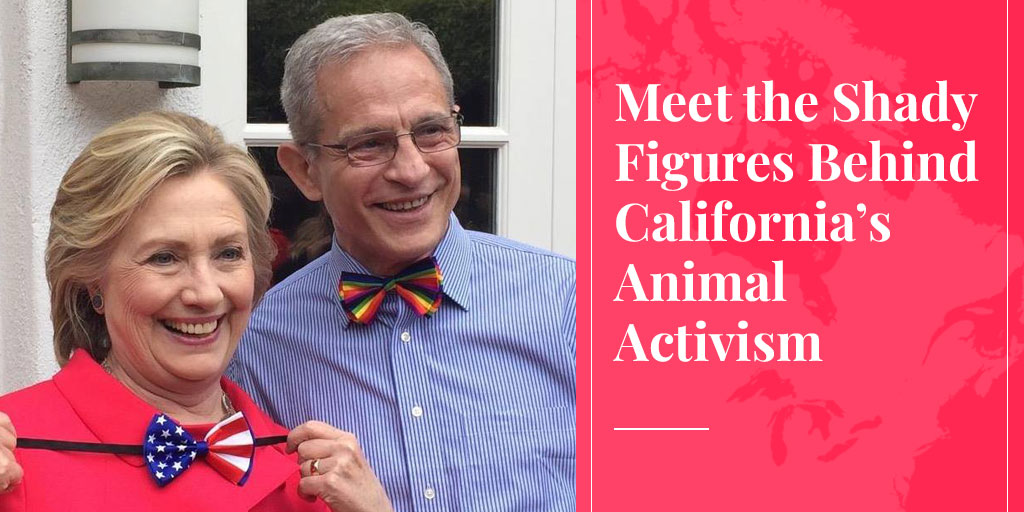
In happier days (before male prostitutes started showing up dead in his apartment), Ed Buck poses with a famous friend. Photo: Ed Buck / Facebook.
On a recent Saturday night, there was a vigil outside the Hollywood home of Ed Buck commemorating the second anniversary of the death of Gemmel Moore, a young black man who was found dead in Mr. Buck’s apartment of a drug overdose. It is one of two similar deaths of African American men in Mr. Buck’s apartment involving methamphetamine. In the case of Mr. Moore, his own journal entries in the weeks leading up to his death called out how Mr. Buck had introduced him to the drug, and injected him with it. And a report from the police investigation of the scene noted that more than 20 syringes were found in Buck’s apartment along with a cabinet full of illegal drugs and paraphernalia.
Buck, a wealthy white political donor, is an animal rights activist who began the campaign to ban fur in California, pushing through a ban on fur sales in West Hollywood by gathering volunteers and funding from the animal rights community to support John D’Amico’s first run for city council. Mr. D’Amico in turn introduced the West Hollywood ordinance. During the fur ban debate, a witness quoted Mr. Buck as saying we can tell a lot about a person by the way they treat animals. What does Mr. Buck’s treatment of people say about him?
If you run the rolls of political donations over the past decade, in order to further his agenda Mr. Buck has donated to the campaigns of numerous California Democrats in West Hollywood, Los Angeles and at the state level, many of whom are still in office. He has been one of the largest donors to Animal PAC/Social Compassion in Legislation for Animals. Among the beneficiaries of this PAC are Henry Stern for State Senate ($4,200), John Perez for Assembly ($3,900), Los Angeles Mayor Eric Garcetti and Los Angeles County District Attorney Jackie Lacy. (The latter two have returned their contributions.)
Mr. Buck’s legacy leads one to think about some of the other celebrated animal activists here in California. Among them are Nasim Aghdam, the animal rights activist and vegan athlete who shot a man and two women with a handgun after storming YouTube’s headquarters in San Bruno in April 2018. How about Joseph Buddenberg and Nicole Kissane, prosecuted for their acts of vandalism and terror against Kim Graf, owner of Graf Furs in San Diego, and her elderly parents? This dynamic duo spread flesh-eating acids on the doors and windows of their cars, their homes, their store and the parents' RV.
And then there’s the very disturbing news about PETA: They kill animals! The Virginia Department of Agriculture and Consumer Services (VDACS) tracks the number of cats and dogs taken in by shelters in the state of Virginia each year, how many were reclaimed by their owners, adopted out, transferred to other agencies or euthanized.
Between 1998 and 2018 VDACS reported 47,316 animals taken in by PETA and 39,961 euthanized. That’s 84.46%! Why? According to Ingrid Newkirk, co-founder of PETA, pet ownership is “an abysmal situation.” She further elaborated on her goal for destroying the human-pet bond: “If people want toys, they should buy inanimate objects. If they want companionship, they should seek it with their own kind. In the end, I think it would be lovely if we stopped this whole notion of pets altogether.”
Just this month Wayne Hsiung, the co-founder and lead organizer of Direct Action Everywhere, announced he was stepping down in advance of multiple criminal trials. Direct Action Everywhere is a co-sponsor of Assembly Bill 44, and to date Mr. Hsiung has been present at nearly all of the committee hearings on the bill.
(Not to be outdone, in 2000, animal activist Marc Ching, founder of Animal Hope and Wellness who has testified in support of AB 44, was sentenced to prison for kidnapping.)
Lawmakers in Bed with Lawbreakers
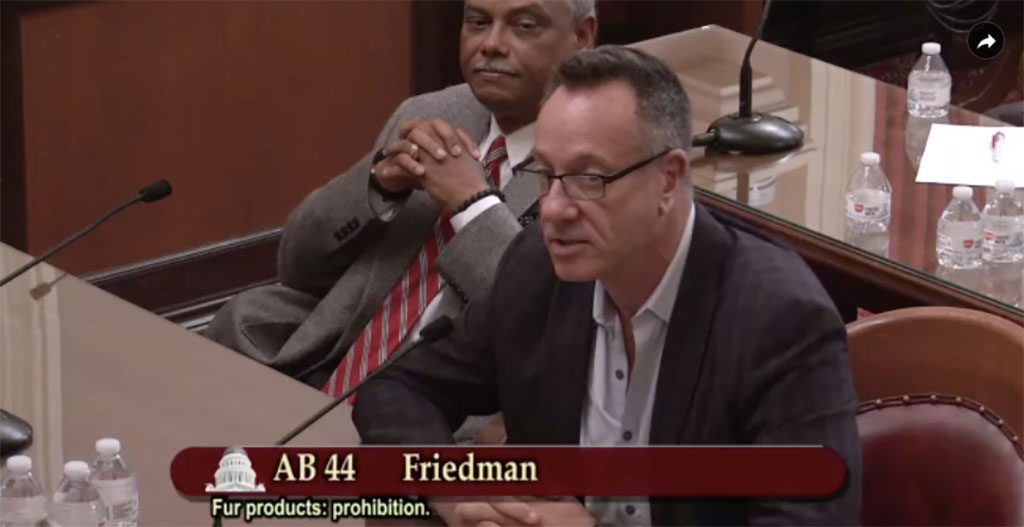
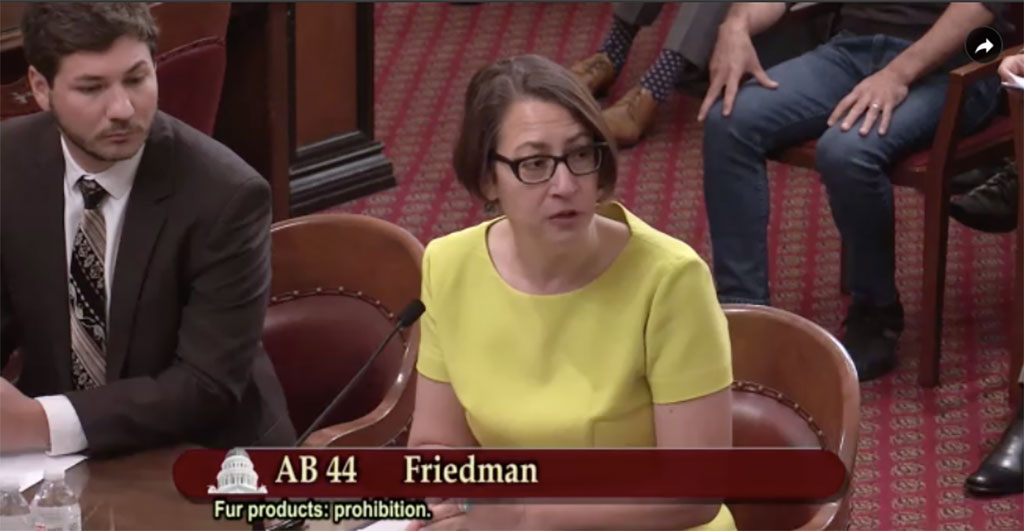
Does AB 44 author Assemblywoman Laura Friedman know who she's in bed with?
AB 44 would ban Californians from the choice of buying natural fur clothing. But it won’t stop there. The bill’s backers want to ban Californians from buying leather, wool, burgers, and other animal products.
They say that politics makes strange bedfellows. But it appears that Assemblywoman Laura Friedman, the author of AB 44, has lost her ability to discriminate.
These are the people behind Friedman’s campaign to ban fur. They would close legitimate, taxpaying businesses, putting thousands of people up and down the state out of jobs, and forcing their personal agenda on consumers.
Are we in a new era where lawmakers carry the torch for
lawbreakers? Is this the proper role for our legislature?
Hopefully not. But only if regular Californians make their voices heard.
***
This article first appeared at medium.com, and is reproduced with the author's permission.
To learn more about donating to Truth About Fur, click here.
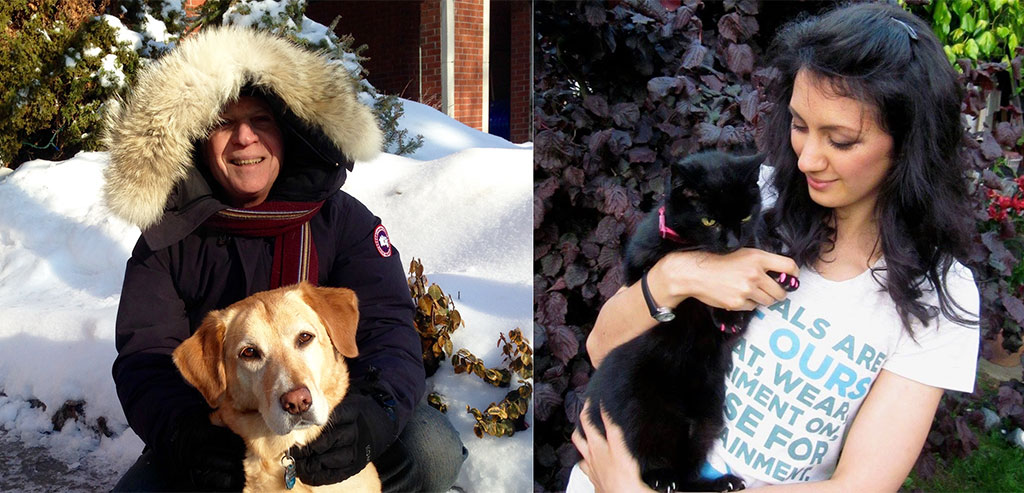
With the start of a new school year, many of us think about bringing accurate information about the sustainability of… Read More
With the start of a new school year, many of us think about bringing accurate information about the sustainability of fur into our children’s classrooms. This can be a difficult challenge. The first problem is that school curriculums have become so demanding that teachers now have little time for guest presentations. And if you do gain access to a classroom, what information should you share with students, assuming you have the communications skills to capture their attention at all? Luckily, help is available to overcome all these obstacles. Sound interesting? Read on!
The Fur Council of Canada has produced a school program that has now been thoroughly tested in hundreds of classrooms with an overwhelmingly positive response from both teachers and students. Called Furbearing Animals: A Renewable Natural Resource, the program includes a 14-minute video, a teachers’ activity guide, and amusing educational materials for students. The core program was originally developed by educational experts at the Quebec Ministry of Forests, Wildlife and Parks in collaboration with Quebec trappers (Fédération des Trappeurs Gestionnaires de Québec). After funding (and refining) in-class presentations in the Montreal region for many years, the Fur Council produced the video and other tools to allow this extraordinarily successful program to be shared across North America and beyond.
Curriculum-Based Program Assures Teacher Buy-in
One of the most important features of the program is that it is built around key ecology concepts that teachers are already obliged to teach. In Quebec and most other jurisdictions, these concepts are part of the natural science curriculum for Grade 6. This is the main reason the program has been so well-received in schools; rather than taking time away from teachers’ busy schedules, Furbearing Animals actually helps them do their jobs. And rather than promote the fur trade – which would be self-serving and controversial – the program provides a science-based understanding of animals, nature, and sustainable use.
The video begins by explaining in simple language that “natural resources” are materials produced by nature that can be used to satisfy human needs. Water can be used for drinking or transportation. Plants and animals can be eaten or used to make clothing. Petroleum powers our vehicles but can also be used to make a wide range of plastic products, including clothing.
Snowshoe hares are a renewable resource. Eat some this year and there may be even more next year.
The video then explores the difference between “renewable” and “non-renewable” natural resources. With lively animation, students are shown that snowshoe hares, for example, are a renewable resource: even if you eat some hares for dinner, there may be as many or even more hares next year. Petroleum, however, takes so long for nature to produce that when we use it, it’s gone.
Using foxes and beavers as examples, the video then shows how animals are adapted to different habitats. The beaver’s round body and dense underfur allows it to thrive in water, a semi-aquatic habitat, while the fox’s longer, sleek body allows swift movement on land, a terrestrial habitat.
Similarly, the beaver is a herbivore, with self-sharpening
teeth and other adaptations that allow it to cut trees and chew bark, while the
fox is a carnivore, with the speed and pointy teeth needed to capture and
devour its prey.
A well-illustrated explanation of why some habitats can support more animals than others (“rich” and “poor” habitats) leads to an understanding of “carrying capacity”. Students learn that nature is all about balance: depleting wildlife populations will deprive future generations of important resources, but overpopulated wildlife can be equally problematic, resulting in disease, fighting for territory and starvation. Overpopulated beavers flood property and may “eat out” local vegetation to the point where a habitat may support no beavers at all for many years. Students can now understand why part of the surplus produced by nature can be used by humans without depleting wildlife populations. This is called "sustainable use", a core principle of modern conservation policy – and an important element of the ethical justification for the responsible and well-regulated use of animals, for food, clothing and other purposes.
Clearly explained is the concept of "carrying capacity" of particular habitats. Which habitats do you think can carry the most beavers and foxes?
The Fur Council of Canada has also produced a Teachers’ Guide to accompany the video, available in downloadable PDF format in English and French. The Guide includes follow-up activities, handouts, and in-class quizzes to reinforce key concepts presented in the video.
Also available on the Fur Council's website are a number of other educational publications that can be distributed to students during classroom presentations. One of the best is EcoNews, a cartoon-format brochure that illustrates key fur messages in an entertaining and easily-understood way. An accompanying activity booklet for teachers provides question-and-answer teaching tools and subjects for in-class debates, based on information presented in the EcoNews cartoons. Printed copies of EcoNews are available in English and French from the Fur Council.
Bringing the Program into the Classroom
EcoNews illustrates key fur messages in an entertaining and easily-understood way.
Once you have reviewed the video and other program materials, you are ready to contact your local school. You can inform your child’s teacher or the school principal or science coordinator that you would like to present a program that explains important ecology principles from the curriculum, i.e., renewable and non-renewable resources; adaptation of animals to their habitats; carrying capacity of different habitats; and the sustainable use of renewable natural resources. (Check with school authorities to verify the grade when these principles are taught in your jurisdiction.)
The 14-minute video is designed to be shown to the class before inviting questions and interactive discussion. If possible, bring beaver and fox pelts – and other furs – to illustrate the differences between terrestrial and semi-aquatic animals, as explained in the video. Passing these furs around the classroom is always a hit with students.
Even better, bring beaver and fox skulls too, to show the different dentition of herbivores and carnivores. Ask your fur association to purchase a few professionally-prepared skulls that members can borrow for school presentations.
You can also bring sample fur products to show how fur is
used, and any other props that may illustrate your own involvement in the fur
trade.
Make sure to leave some copies of EcoNews behind.
Before leaving, you can circulate copies of EcoNews or other materials to the students, and leave the Teachers’ Guide and EcoNews quiz with the class teacher. You should also leave your contact information, in case the teacher has follow-up questions. The Fur Council of Canada and the Fur Institute of Canada both have excellent educational materials that you can order for classroom presentations.
The Fur Council of Canada’s school program has been successfully tested in hundreds of classrooms to help you deliver the fur trade’s responsible-use messages. Feel free to contact the Fur Council for more information about using this effective program in your region. And if you have school presentation ideas or resources to share, please leave a comment at the end of this article. Together we can help to ensure that the next generation has a better understanding of the sustainable-use principles which underpin the modern fur trade’s environmental ethic.
***
To learn more about donating to Truth About Fur, click here.
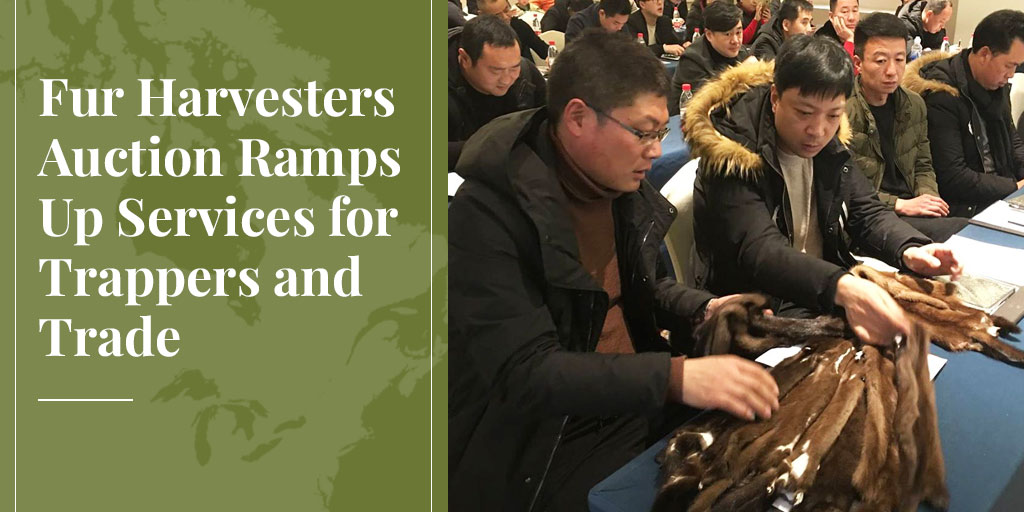
Conventional wisdom is clear on why, since time immemorial, wolverine fur has been the preferred material for hood trim in… Read More
Wolverine fur makes the best parka ruffs, but why? Photo: William F. Wood [CC BY-SA 4.0]
Conventional wisdom is clear on why, since time immemorial, wolverine fur has been the preferred material for hood trim in the High North. In essence, the thick, dark, oily fur is hydrophobic, which means it repels water, and thus prevents the build-up of frost caused by condensation of the wearer's breath. The only problem is, none of this is true.
While everyone agrees that wolverine fur makes the finest lining for parka hoods in sub-zero conditions, experts still don't have a clear understanding why. But they do know that it's not hydrophobic, it doesn't repel water, and, given the chance, it allows frost to build up just like any other fur.
Before we dispel the myths surrounding wolverine fur, here's some background. Wolverine fur is generally considered too long and the leather too heavy for use as whole coats. Instead, it is revered as trim for hoods by the Indigenous people of the Arctic and sub-Arctic, in preference to the more readily available (and therefore cheaper) wolf and coyote. But it's not entirely about functionality. Sometimes a strip of wolverine fur is placed next to the wearer's face, then surrounded with the long, silvery mane of a wolf, creating the famed "sunburst" ruff. The effectiveness of these ruffs in keeping the wearer warm has been scientifically proven, but they can also be spectacularly beautiful, so they're also worn for show!
This simulation shows the hydrophobicity of a lotus leaf. Water droplets collect dust without adhering to the surface, keeping the leaf clean. Photo: William Thielicke [CC BY-SA 4.0]
So where do the myths about wolverine fur originate? Let's start with that confusing word "hydrophobic". It probably doesn't mean quite what you think it does, or even what your dictionary says.
When we talk of phobias (from the Greek phóbos, meaning "aversion", "fear" or "morbid fear"), we think of being repulsed by something. Hence the word "hydrophobia" was historically used as a synonym for rabies because sufferers often fear water (and liquids in general). From this, scientists came to use the word "hydrophobicity" to describe the behaviour of certain surfaces in the presence of liquids. Then, for whatever reason (laziness, misunderstanding, or lack of a better word?), dictionaries decided to use "repel" in their definitions. The Free Dictionary, for example, defines hydrophobicity as "the property of repelling water rather than absorbing it or dissolving in it."
Strictly speaking though, hydrophobic surfaces don't repel water at all. Two magnets of the same polarity, for example, repel each other, but hydrophobic surfaces don't repel water; they simply don't attract it. So even if wolverine fur were hydrophobic (which, as we'll see, it isn't), it would be wrong to say it repels water.
Many examples of hydrophobic surfaces exist in nature, all highly unattractive to water but not repelling it per se. Perhaps the best-known is the leaf of the lotus flower, after which the "lotus effect" is named. These leaves, and those of other plants like nasturtiums and prickly pears, use hydrophobicity to keep clean. Rain drops gather dirt while the surface architecture minimizes their adhesion to the surface itself. The same phenomenon is seen in the wings of insects like butterflies and dragonflies. Meanwhile, insects that live on water, like water striders, or spend most of their lives under it, achieve hydrophobicity through tiny hairs that make them virtually unwettable. Then there are penguins. One reason penguins excel at swimming is a layer of trapped air that coats them. Aside from providing insulation, this air reduces drag when swimming, and they can release it to accelerate when jumping out of water to land.
So how about the claim that wolverine fur prevents the formation of frost or ice from the wearer's breath? Again, it's a convenient explanation, but not actually true.
Research on the efficacy of fur trim was ramped up during World War II, when thousands of military garments made use of it, notably wolf and coyote. Writing in 1952 for the Journal of Mammalogy, Rollin H. Baker found wolverine out-performed both these furs, but not because frost didn't form on it. On the contrary, it did. It was what the wearer did next that mattered.
On the performance of wolf and coyote, he wrote: "As long as the fur trim can be kept dry, it functions quite well. However, once rime or frost has accumulated on wolf and coyote fur trim it cannot be brushed or shaken off. Therefore, in order to remove the rime, the garment must be warmed to the point where the rime either sublimates or passes through a liquid stage before it is evaporated. When air temperatures are low enough to cause direct freezing of the breath on the fur trim of garments, thawing caused by warm air currents from the body wets the fur. It thus becomes very uncomfortable to the wearer and also loses its ventilating quality."
All of which sounds thoroughly miserable, particularly if that thawed frost turns into the last thing you want on your hood trim: clumps of ice - icicles even - drawing heat away, disrupting air flow, and dragging your hood down with the sheer weight. (For an idea of how bad things can get, just Google "ice beard".)
So how did wolverine fur compare?
"Here is the point of difference between wolverine fur and most other furs," wrote Baker. "Frost or rime actually will form on wolverine fur at sub-zero temperatures, but it can be readily brushed off with a simple flick of the mitten and thus the fur can be kept dry. If the rime is not brushed off, the fur will become wet and uncomfortable, just as other furs do."
In other words, the myth that wolverine fur prevents the build-up of frost is wrong. Frost forms on wolverine fur just like on any other fur. What sets it apart is what Baker called its "frost-shedding quality" - the ease with which it can be brushed off.
So Is It Hydrophobic?
Measuring the contact angle between the surface of a wolverine hair and the tangent of the water droplet at the point where solid, liquid and gas interact. Images: Boris Pavlin, Carinthia University of Applied Sciences, 2012.
In case you think all this talk of repulsion versus non-attraction, and frost-prevention versus frost-shedding, is splitting hairs, let's now address the elephant in the room. Is wolverine fur hydrophobic or not?
Scientists are extremely interested in hydrophobicity for a whole range of possible applications in things like aircraft, road and power-line maintenance, building construction, energy efficiency in cooling devices, car windshields, and protection of crops. So in 2012 Boris Pavlin, then at Carinthia University of Applied Sciences in Austria, subjected wolverine fur to a whole gamut of tests to see why it's so effective at "frost formation suppression".
Pavlin's test for hydrophobicity was simply to photograph the contact angle between droplets of water at various locations on a wolverine hair (see photos above). Clearly, there is no comparison between these images and the lotus leaf we saw earlier, and Pavlin's conclusion was unequivocal: "the surface was NOT hydrophobic" (emphasis not added).
Then How Does Wolverine Fur Work?
A scanning electron microscope reveals the smoothness of the middle parts of wolverine guard hairs. Images: Boris Pavlin, Carinthia University of Applied Sciences, 2012.
Sadly, there is still no clear understanding of why wolverine fur is so effective - or, to be precise, why it's so easy to brush frost off before it becomes a problem. But it seems certain that when an answer is found, it won't point to one factor alone.
One proposal is that wolverine guard hairs are uncommonly smooth, with no tiny barbs to stop frost from falling off. Using a scanning electron microscope, Pavlin confirmed that the middle parts of wolverine guard hairs are indeed smooth. The tips, however, showed a "very interesting pattern" of barbs.
He also tried freezing hair tips and testing for any abnormal surface electrical charge that might influence frost or ice formation, but found none (though he thought this should be revisited with optimal testing equipment). There were also no chemical substances on the hairs' surface. And in one test which seems unrelated to the purpose of his research but may prove useful to someone, he found the tensile strength of wolverine hairs to be remarkable as he could stretch them by more than 20%! But no silver bullet to explain everything.
"Many different strategies contribute to easy frost removal," he concluded, adding that "some questions remain unresolved and should be subject of further research." But he did at least come up with one definitive finding, which he states cryptically as: "A non-hydrophobic surface is superior to other existing approaches - a proof that the most obvious solution doesn't need to be the right one." In short, while it might seem obvious that wolverine fur is hydrophobic, it's not.
***
To learn more about donating to Truth About Fur, click here.
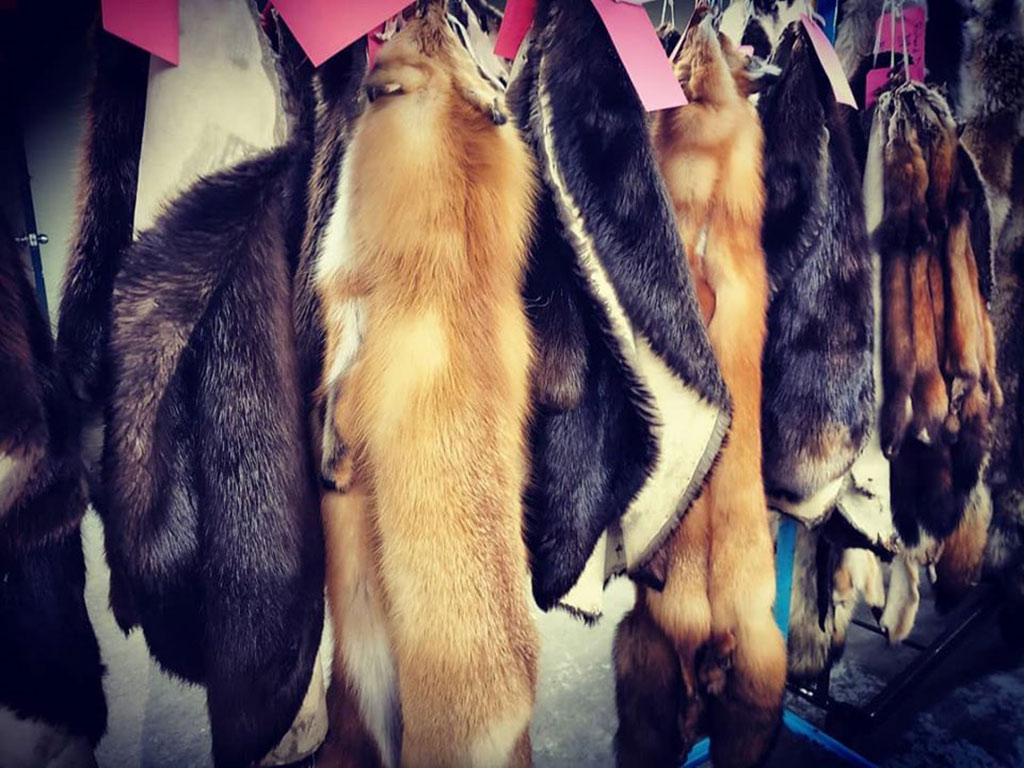
The most important rule for fashion brands is to stay relevant, so it comes as no surprise that fashion brands… Read More
Most of the world's fur today is sourced from farms. Photo: Zimbal Mink Farm.
The most important rule for fashion brands is to stay relevant, so it comes as no surprise that fashion brands are often in the eye of many social and political media storms. From questions surrounding traceability, sustainability and animal welfare, to issues about environmental impact, exploitation, consumerism and waste, the fashion industry isn’t in short supply of concerns. In fact, a surplus of issues, predominantly surrounding production and waste, fronted by the fast-fashion industry which produces 1 billion garments and 1.2 billion tons of CO2 equivalent each year, has caused some of the biggest earthquakes in the fashion industry.
These issues that plague the fashion industry are complex and interlinking, all of which necessitates their exploration. This mini-investigatory series will get to the heart of the fashion industry, asking questions like:
• What is the reality behind natural and synthetic materials?
• Are fast fashion brands profiting at the expense of the environment and the world’s most vulnerable people?
• And as we set sail on this new fashion voyage, are we headed for a sustainable and responsible future in fashion, if one awaits?
These questions are tough and the answers are not easy, but in today’s world where transparency and trust are key, we must explore the truth about fashion.
Opening this three-part series with an exploration into the reality of natural materials, and the difference between natural materials and synthetic alternatives, what better position to start than from the very beginning of fashion production with sourcing.
The sourcing of fashion materials, natural or synthetic, is a hotly contested subject with many burning consumer questions, including:
• Where have my clothes come from?
• Who made my clothes?
• And at what cost to the planet are my clothes?
Ethical and Sustainable?
Saving wild pythons by farming them is endorsed by the International Union for Conservation of Nature, but animal rights groups still don't approve. Photo: Daniel Natusch / IUCN.
Today, the sourcing of materials and their impact on the environment is important to consumers who want to feel confident that what they are wearing is both ethically and sustainably sourced. Ensuring clothing is ethically and sustainably sourced should be difficult for brands, as these two tropes - ethical and sustainable - are often in conflict. However, brands find it surprisingly easy to market themselves in this way.
The first reason why fashion brands marketing themselves as both ethical and sustainable is tricky is because there is no universal definition of either. What one person may deem ethical or sustainable may not mirror another person's definition.
For example, vegan consumers (who represent approximately 3% of the world’s population according to leading vegan researchers) may not deem animal-derived products - a fur coat, leather bag, cashmere sweater or meat – as ethical or sustainable. They would rather consume faux-leather and faux-fur products which are made from plastics, a derivative of petroleum – an oil-based product which is by nature unsustainable and unethical to other consumers.
Ensuring clothing is ethically and sustainably sourced should be difficult ... However, brands find it surprisingly easy to market themselves in this way.
Let’s take another example. An argument on one hand may be that plastic fashion has not caused harm to animals through production - hence the popular term “vegan and cruelty-free”. However, the counter argument is that plastic is not biodegradable, and at best can only ever be indefinitely recycled. It will need constant transformation through the use of more harmful chemicals, damaging the environment and affecting wildlife later down the line during its short life-cycle.
These two rather simple examples demonstrate how debates surrounding ethics and sustainability, while often used in the same sentence, are complex and not always working in parallel.
In fact, ethics and sustainability present an ironic paradox in fashion. Since fashion is about creating new things, with each new season high fashion, high street and online brands releasing one new collection minimum, it’s actually impossible for fashion brands to be completely sustainable or even environmentally neutral. Which begs the question: are brands using these fashionable terms for good PR?
Unpicking this dichotomy further, while ethical and sustainable sourcing has been a focus point for brands for decades, it has only entered the zeitgeist in recent years due to household names being exposed for sourcing malpractice, questionable supply chains, and contributions to global exploitation and climate issues.
A well-known example of this is sportswear manufacturing giant Nike. Since the 1970s, Nike has been attacked for its use of sweatshops, the term used to describe long-hours and low-wages factories in developing countries used by big conglomerates to produce cheap products, ultimately creating greater profits. Nike experienced rapid growth after moving production overseas with record-breaking profit margins. But as this was at the expense of a vulnerable labour force, notably young women in southeast Asia, Nike began to face waves of consumer backlash. Following this, in the 1990s, Nike was forced to introduce a more transparent and ethical supply chain. This is an example of brands adopting consumer concerns not necessarily because they want to, but because they have to in order to survive.
However, it’s not only fast-fashion retailers like Nike who have had to answer questions regarding sourcing and revise their position. The luxury fashion sector has also had to face growing consumer demands head on, with the fur industry facing its biggest attack yet.
In a bid to answer consumer concerns, sustainability strategies have become commonplace in the fashion industry, with luxury umbrella juggernauts LVMH and Kering among those adopting them. However, while the term "sustainability" is this season's must-have, according to the Global Fashion Agenda around half of the fashion industry have not yet taken any action on sustainability whatsoever. Instead, the term has been, and is being, used as a self-serving marketing tool to drive sales and good PR.
But, while this may be the motivation for most, this has not been the approach of the fur trade.
The fur industry is a world leader in addressing sourcing concerns. WelFur assures standards of welfare on European fur farms, while FurMark will be launched by the International Fur Federation in 2020.
For decades, the fur trade has been at the centre of media attention regarding the sourcing of natural fur, in particular the methods by which fur farms are managed and fur is harvested for fashion. Yet while high animal welfare is the reality of fur farming, even when compared to other animal-based industries including the food and dairy industries, the reality is not always accurately reported. But why?
The media have a large role in shaping public consciousness, often backed by sensationalist and extremist "animal rights" groups, and bear huge responsibility for the spread of misinformation. Nonetheless, the fur industry has responded to sourcing concerns in a huge way, wanting to reassure and instill confidence in consumers of fur products with its high levels of standards and welfare. It’s for this reason that the fur industry, which is already regulated at government, independent scientific and auction house levels, including the European WelFur program, is introducing the world’s first industry-wide certification and traceability program in 2020, called FurMark.
FurMark, which has the backing of luxury conglomerates like LVMH and Kering, will give consumers of natural fur products confidence that the fur they are purchasing comes from a certified supplier with the highest level of animal welfare. This will include certified farms across Europe and North America and wild fur deriving from government-regulated North American conservation programs. This means, unlike plastic fashion brands, FurMark will present consumers with a clear step-by-step supply chain including where the fur was farmed, dressed and dyed, auctioned, manufactured, and retailed. This level of transparency is unrivalled not only at company level, but industry too.
The narrative when it comes to material sourcing within the fashion industry is a clear one.
Since the 1980s and '90s, when a large number of major fashion and sportswear brands outsourced their production to developing countries, questions surrounding the production of fashion grew in parallel with supply chains becoming more complex and foggy. It’s this which ultimately led to a spike in consumers demanding to know the origin of the goods they consume, something that is now standard practice.
However, while supply chains have become clearer than ever before, the materials and their effects on the environment have remained the same, with natural materials being a staple of the circular economy and plastic materials helping destroy the planet.
Yet, this isn’t the narrative of vegans, animal rights campaigners, or the media at large. In fact, according to vegans, the world's consumption of animal-based products (food, clothing, cosmetics, fuels) is redundant and archaic.
However, across all cultures, from millennials in China to the world’s Jewish community and the black communities of the US, fur is not outdated, nor is it only an economic signifier of wealth, but it is a material with heritage and deep social and religious meaning.
Fur is entrenched in many people’s beliefs and everyday lives. With the growing standards of fur sourcing, and the implementation of FurMark in 2020, the fur industry can pride itself on being ethical and sustainable – something many brands promise but ultimately do not deliver.
When New York City Council Speaker Corey Johnson, who
represents the Garment District, announced a proposal back in March to ban
future sales of fur in the city, many viewed it as another case of politicians
blindly following a trend. After all, the animal rights industry has made a
national business out of vilifying the animal consumption world - regardless of
what’s fact or fiction.
But what animal rights activists and political sponsors assumed would be an easy steam-roll over “rich white women” and “redneck trappers and farmers” who support fur usage, has proven shakier than imagined. Perhaps the large majority of Americans who recognize the regulated usage of animal by-products as both sustainable and practical, wasn’t quite anticipated.
We sure do live in interesting times in American culture! If I sound punchier than usual, it's with good reason.
When the public just won’t pay attention to self-righteous anti-fur diatribes, it's become a national trend to politically force legal bans upon the masses of your fellow citizenry instead.
It doesn’t take a business strategist to see what’s going on. Clearly, in the eyes of the animal rights industry, the “east coast” was in need of a dust-up with some good ol’ frivolous (and completely egregious) hunting and garment restrictions. Hopes were quickly imposed to ensure New York City becomes the next “fur-free” urban mecca.
The only difference from the antics playing out on the west coast: the Big Apple isn’t going down without swingin’… hard!
According to trade group FurNYC, the city still has the largest retail fur market in the country, stating the 150 remaining fur businesses in New York create 1,100 jobs and produce $400 million in revenue per year.
And it's not just backwoods fur trappers supporting the industry. As the NYC fur ban really started to heat up this May, folks from all walks of American life came out to fight the proposal.
African-American and Jewish faith leaders added to the
protests in opposition, stating that the ban discriminates against their
cultural heritage. Outspoken immigrants weighed in regarding the potential loss
of skills and careers. Celebrities jumped into the mix to criticize government
who thinks it can tell its people how to dress. Anyone who recognized fur as a
sustainable material made sure to join the vocal movement against the ban.
"People feel complete when they put on something that they worked hard for, they have sacrificed for," said the Rev. Phil Craig, who was among 75 clergy and other advocates who turned out at one protest against the ban.
In a Tweet sent out in May, The Coalition For Blacks For Fur stated: “This fur ban will destroy jobs, the environment, and critical tax revenue.”
Apparently, the pushback from a ban on fur in NYC was more
than the city’s politicians expected.
“Maybe I should have thought more about this before I introduced it because I didn’t realize the amount of pushback there would be,” Johnson told reporters at City Hall. “I was actually moved by some of the furriers and their testimony,” he said.
Animal rights proponents, on the other hand, still desperately contend the usage of fur is trending downward. (All the more reason to force a ban I guess, right? These folks clearly aren’t famous for their rationale.)
On the contrary, a national locavore movement seems to be fueling a revival in sustainable materials, like fur, which is probably why industry leaders like PETA and the Humane Society of the US are scrambling to support restrictions on fur usage and regulated hunting of fur across the country.
In the case of wild fur especially, the regulated seasonal trapping and usage of fur pelts from abundant wild species such as raccoons, skunks, and beaver is nationally considered wise use of resources that are otherwise destined for the landfill when they’re struck by vehicles, lose habitat due to urbanization, succumb to disease, or cause conflict for landowners and municipalities.
Environmental and wildlife management aspects aside, an underlying theme heard from citizens in the NYC fur ban debates is clear - freedom of choice.
The “my closet, my choice” meme seems to be resonating with a growing sector of the American population that has grown tired of hollow protests and frivolous government bans.
It appears as though the “freedom of choice crowd” carries the bigger stick - at least for the moment.
While some people are certainly foaming at the mouth to drive another nail in the coffin of rural culture, many more are lighting their torches and wielding their pitchforks against fur-supporters based on hearsay rather than tangible information.
“All-knowing” celebrities like fashion designer Tim Gunn have been outspoken supporters of the fur ban. Gunn told reporters that “Foxes, rabbits, chinchillas and even dogs and cats are anally electrocuted, gassed, bludgeoned and often skinned alive.”
Even Speaker Johnson, in explaining to reporters why he proposed the ban, said he “really just did it because I felt like it was the right thing to do in my heart.”
Apparently Johnson and Gunn, and also PETA representative Dan Matthews who echoed similar statements, did not do their homework before pushing for a city-wide ban. They also haven't been paying attention to the news lately.
In March, two Chinese workers came forward stating they’d been paid by animal rights activists to skin a dog alive on video. That video, which has been circulated around the internet, is the only crutch the animal rights industry has been able to rely upon for the out-of-left-field (and inherently false) statement that licensed trappers and fur farmers “skin animals alive for their fur”.
Of course, licensed fur trappers and fur farmers know full
well skinning animals alive isn’t part of the pelting process - but who asked
them, right? Not the mainstream media, not the government officials imposing
these bans from city to city, and certainly not the anti-hunting/anti-fur
crowds.
While some may argue that fur pelts aren’t “needed” in the modern age, some could also argue that the detractions against regulated fur usage are also in dire need of some evolutionary creativity.
There’s nothing wrong with disagreements in opinion, the usage of animal byproducts, or even wildlife management fundamentals. A disagreement however, is far from shoving cult-like laws and legal bans down the throats of the American people.
No Such Thing As Bad Publicity
Rabbi Moshe Leib Rabinovich, Munkacser Rebbe, wearing a kolpik made from brown fur. Many in the Jewish community weighed in on the NYC fur ban, saying it would impede religious freedom. Photo: Yukeldukel (Wikipedia Commons).
For the animal rights industry, I suspect the battles over
fur bans from coast to coast (and coat to coat) present themselves as a win/win
situation.
Even if the NYC fur ban caves to the pressure of citizens’ right to choose, the animal rights organizations spearheading the ban still walk away with profitable notoriety as a byproduct of their latest PR stunt.
Which is why, despite the lunacy of strong-arming a ban on the usage of a natural resource, the organizations, celebrities, and politicians involved in perpetuating the NYC fur ban will continue the circus act from city to city, state to state, country to country, and, inevitably, closet to closet.
Let's be real, if anyone supporting a ban on fur garments actually cared about animal welfare, they’d do their due diligence by researching all aspects of the debate, rather than selfishly hiding behind a protest sign or online petition. But alas, ignorance breeds ignorance; and a false sense of “moral superiority” just breeds more lackluster grandstanding - an obvious hot commodity surrounding the topic.
Perhaps it's time the (already heavily regulated) hunting, trapping, and fur-garment communities take a page out of the animal rights industry playbook and soak up a slice of the publicity pie themselves.
At the end of the day, groups like PETA don’t care if they
win or lose another media-fueled public cage match - I’m talking about them
aren’t I? And that’s what ultimately sells - whether the facts lean in favor of
their views or not.
Supporters of the regulated usage of natural fur materials would be hard-pressed to find a better microphone than the one they’ve been forced to fight against in New York City - and it's time for those invested parties to take full advantage of this circus while it's still in town!
Suffice to say, the animal activism industry has a PR problem: the men and women protesting the NYC ban on fur aren’t your run-of-the-mill rural fur trappers and mink farmers the American public has been conditioned to demonize. Collectively, the folks most outraged over the proposed fur ban represent a cross-section of modern America - all creeds, all races, all classes, all political affiliations.
Sometimes, a government-backed “ban” on a particular material or chemical makes sense to protect the health of its citizens (or the natural resources we all cherish and have been tasked with conserving). The NYC fur ban, clearly, is not one of those instances.
A ban on clothing choice? Especially from a material that is regulated, and has proven no modern negative impact on our environment (while the alternative product has proven to cause environmental harm) - well now, we all know that’s just silly.
At the end of the day, whether NYC moves forward with its ban on fur or not, one thing has been made painfully clear: the animal rights industry can’t claim the “moral majority” any longer.
The growing opposition to Assembly Bill 44, which proposes a statewide fur retail ban in California, has taken longer than it should have for a simple reason: no one who farms and sells furs expected the state legislature to seriously try to target their centuries-old craft for elimination - certainly not businesses that legally operate, produce jobs, and pay their taxes.
Introduced in December 2018, AB 44 would "make it unlawful to sell, offer for sale, display for sale, trade, or otherwise distribute for monetary or nonmonetary consideration a fur product, as defined, in the state. The bill would also make it unlawful to manufacture a fur product in the state for sale."
AB 44 sailed to passage through its house of origin but is now encountering some increasing headwinds in the State Senate. A larger-than-expected number of opponents of AB 44 turned out at the measure’s hearing before the Senate Natural Resources Committee, June 25, a video of which can be found on the committee’s webpage.
Lining up to speak against AB 44 were people from all over California, including a Native American who told of fur’s importance in helping many of his people fight their way out of poverty. Earlier, the president of the California Black Chamber of Commerce and prominent leader with the Black Business Association told committee members of the affront AB 44 was to many members of his community who had fur as the only avenue open to them to overcome the many indignities of job and housing discrimination.
Two senators, one Democrat and one Republican, asked the
author of the bill, Assemblywoman Laura Friedman, if it is possible to amend
her measure in a way that achieves her goal of improving the treatment of
animals without destroying a whole industry.
There is a way to do that, which Friedman has steadfastly opposed so far. It would be amending AB 44 to adopt a global traceability and certification program that ensures all fur farms adhere to strict, science-based standards of animal welfare and sustainability with independent third-party audits and inspections every 15 to 18 months, as well as the integration of block chain technology to ensure traceability and access to information on every fur skin used in a garment all the way from the farm through processing and manufacturing and to the retailer.
Key word, that: "traceability". According to an Agence France-Presse news report, “French fashion designer Jean Paul Gaultier said Wednesday [July 3, 2019] he could go back to using fur if he could be sure it was entirely traceable. The flamboyant creator announced in November he was renouncing fur, a move hailed as a major victory by animal rights groups like PETA who have previously tried to disrupt one of his shows and occupied his Paris boutique.”
AB 44 author Laura Friedman feigned ignorance of reality, saying, "We do not have a line of retailers out the door telling us that this is going to be at all harmful to them."
Friedman thought she made a point in asking members of the Senate Natural Resources Committee why, if her bill were so harmful to retailers, none of them were there to testify against it. Here’s why. Because retailers fear that groups like PETA and Direct Action Everywhere, one of whose adherents recently charged a stage to swipe a microphone from US Sen. Kamala Harris, would be organizing disruptions in their stores. Or worse, that they would subject retailers and their clients to the kind of harassment and intimidation that they have experienced at the hands of animal extremists for years, including vandalism of their stores and homes, destruction of inventory and, in some cases, even the use of Molotov cocktails thrown into their stores.
In fact, in 2017 animal activists were sentenced for splashing flesh-eating acid and other chemicals on the outside of a San Diego fur store, gluing their locks and spray-painting anti-fur screeds on the store’s exterior. The homes of the store owner and her elderly parents were similarly targeted.
However, it should be noted that retailers, consumers and other Californians have collectively sent upwards of 600 letters opposing AB 44, because they have had enough of government overreach and the attack on small businesses, jobs and personal choice.
Pushing for Compromise
Was there a way "to create some kind of a compromise?" asked Hannah-Beth Jackson.
AB 44’s next hearing was to be before the Senate Judiciary Committee on July 9. That committee is chaired by Sen. Hannah-Beth Jackson, who is also a member of the Senate Natural Resources Committee and at its June 25 meeting asked Friedman if there was a way to “create some kind of a compromise situation for those who insist upon producing fur, for those folk who are trying to do it the most humane way possible.”
It will be interesting to see if Jackson’s committee follows through on finding a compromise, which the proposed amendment mandating the comprehensive certification program is.
Problematic Process
One of the greatest challenges AB 44’s opponents face has been the process itself:
• Accelerated scheduling of hearings to challenge our ability to respond.
• The setup of the testimony itself whereby the author has 10 minutes and each of her sponsors has five minutes to introduce their bill, and we are allowed only two people who each have only two minutes to testify.
• Our being prohibited from raising questions or challenging falsehoods in these hearings.
• Instructions to the Senate Judiciary Committee staff to use the analysis done on the Assembly side.
The state’s handling of conflict diamonds holds a lesson for fur. As awareness of the consequences of conflict diamonds grew, including insurgencies and loss of human lives, lawmakers here did not ban diamonds. Instead, they adopted the Kimberly Process Certification Scheme rather than eliminate an entire industry. Why can’t lawmakers apply the same thinking for fur?
* * *
An earlier version of this article appeared on the website Fox&Hounds Daily.
Progressive politicians in Los Angeles, San Francisco, and now New York City are trying to ban the sale of fur… Read More
Progressive politicians should recognize trappers as guardians of nature. Photo: Dave Hastings / Fur Takers of America.
Progressive politicians in Los Angeles, San Francisco, and now New York City are trying to ban the sale of fur in their jurisdictions, claiming furbearers die for products we no longer need. New York City Council Speaker Corey Johnson has proposed a ban "because I felt like it was the right thing to do in my heart." But is it the right thing to do?
“Progressives” pride themselves on supporting government action to promote social justice, equality, and, increasingly, protection of our natural environment. But the modern fur trade embodies many of the principles that progressive politicians claim to support.
Let’s look at some of the reasons why progressive politicians should be promoting fur, not seeking to ban it.
1. Fur Products Are Handmade by Skilled Artisans
Artisans transform fur into wearable art. Photo: Katie Ball.
In this age of industrialized mass-production, fur apparel and accessories are still cut and sewn by skilled artisans. These people maintain remarkable craft skills passed down from parents to their children through generations.
Because of the high value of the raw materials and the specialized skills required, fur products have never been made in the sweatshops that continue to plague parts of the apparel industry. Fur garments are one of the few things we buy that are still made individually, by hand. In fact, each fur piece is really wearable art, often involving 30 hours or more of skilled work to produce.
This remarkable heritage industry should be valued and protected by everyone who appreciates the cultural and human value of craft traditions.
Many fur farms, like this one in Nova Scotia, are in rural areas where other forms of farming are difficult. Photo: Truth About Fur.
More than half of the fur produced in the US (closer to 80% worldwide) is now produced on family-run farms. Fur farms are viable in regions where poor soil or harsh weather make other forms of farming difficult, and provide much-needed employment and income in many rural communities.
Industry standards (now being certified by third-party auditors) ensure that farmed mink receive excellent nutrition and care, in part because there is no other way to produce the high-quality fur for which North America is known. Farmed mink are fed left-overs from human food production - the parts of chickens, pigs and fish that we don’t eat, that otherwise might clog landfills. Mink manure, straw bedding and carcasses are composted to provide organic fertilizers to replenish the soil, completing the agricultural nutrient cycle.
Support for rural communities and sustainable agriculture are two important contributions of fur farming that progressive politicians should embrace, not scapegoat.
3. Trappers Maintain Land-Based Knowledge and Lifestyles
Aside from fur for clothing, trapping provides food and income for many First Nations communities. Photo: Robert Grandjambe.
Trappers are, in a sense, the last of the Mohicans. They are among the last people on Earth who maintain the hunter/gatherer skills and knowledge that ensured human survival for 99% of our existence as a species. They are among the few who go into nature alone, continually studying animals and their environment.
We all care about nature, but most of us now live in cities; it is trappers who sound the alarm when wildlife and their habitat are threatened by poorly-planned industrial activity. Trappers report eagle nests so loggers can avoid disturbing them. Like canaries in the mine, changing fur harvests can signal problems like mercury pollution harming mink reproduction.
We would need trappers even if we didn’t use fur. Regulated trapping protects land from flooding by over-populated beavers. It also protects human health (e.g., from rabies spread by over-populated raccoons) and livestock (e.g., from predation by coyotes) and endangered species (e.g., sea turtle eggs from foxes, raccoons and coyotes); and the list goes on.
Trapping in North America is strictly regulated by state, provincial and territorial governments to ensure that only abundant furs are taken and that the most humane trapping methods are used.
Especially in Canada, trapping also provides food and income for many First Nations communities.
Protectors of our land-based heritage and our natural environment, trappers should be recognized as true guardians of nature. The furs they produce should be respected and treasured by progressives. They should be purchased and worn with pride to support these unique lifestyles - not boycotted.
4. Fur Is Sustainable, Durable, Recyclable and Biodegradable
The massive over-production of inexpensive but poor-quality clothing is becoming a serious environmental problem. “Fast fashion” unfortunately also means “fast disposal” of increasing quantities of clothing that is only worn briefly. And as much as 80% of it is made of petrochemical-based synthetics, basically another form of plastic bags.
In landfills, synthetics do not biodegrade like fur and other natural fibres. And each time they are washed, they leach millions of plastic micro-fibres into our waterways that are now turning up in marine life - including species we eat, like oysters - and even in our drinking water.
Intensive production of cotton, the second most common clothing material, is also causing environmental damage in many regions.
It is becoming clear that the only sustainable solution to this clothing crisis is to buy less of it, while ensuring the items we do buy are better quality and last longer with proper care. This sustainable future will include fur. Good-quality mink and other fur garments are often worn for 30 or more years, and unlike most clothing, can be taken apart and completely “remodelled” as fashions change. Fur is often passed down from mother to daughter, or granddaughter. Old furs can also be made into vests, pillows or other accessories.
And after many decades of use, fur can be tossed into the compost to return to the soil. Once again, we see that fur should be appreciated and promoted by environmentally-conscious progressive politicians, not banned!
Progressive politicians who are sincere about wanting to promote social justice, craft traditions, rural communities, and protection of our natural environment, should be asking how they can better protect and promote fur and our remarkable North American heritage industry. They certainly should not be seeking to ban it.
***
To learn more about donating to Truth About Fur, click here.
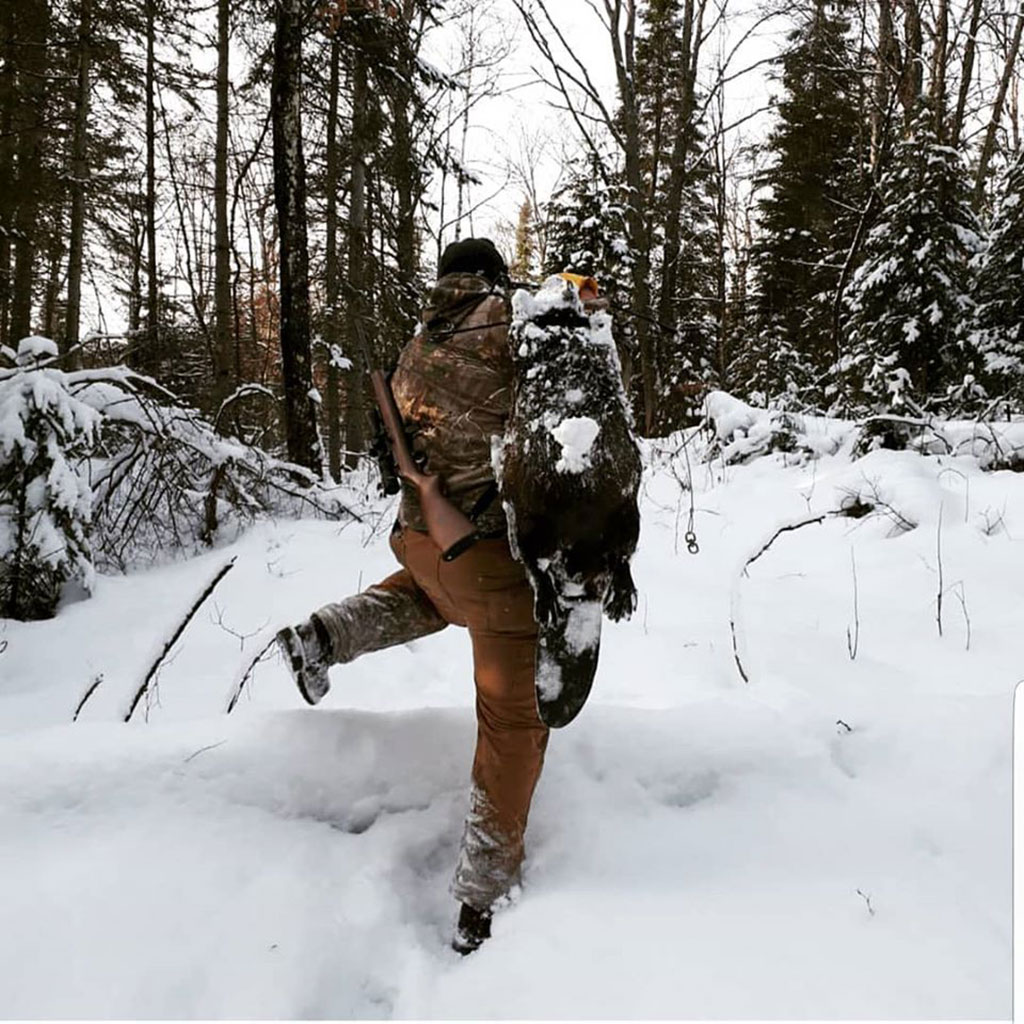
Manage Consent
To provide the best experiences, we use technologies like cookies to store and/or access device information. Consenting to these technologies will allow us to process data such as browsing behavior or unique IDs on this site. Not consenting or withdrawing consent, may adversely affect certain features and functions.
Functional
Always active
The technical storage or access is strictly necessary for the legitimate purpose of enabling the use of a specific service explicitly requested by the subscriber or user, or for the sole purpose of carrying out the transmission of a communication over an electronic communications network.
Preferences
The technical storage or access is necessary for the legitimate purpose of storing preferences that are not requested by the subscriber or user.
Statistics
The technical storage or access that is used exclusively for statistical purposes.The technical storage or access that is used exclusively for anonymous statistical purposes. Without a subpoena, voluntary compliance on the part of your Internet Service Provider, or additional records from a third party, information stored or retrieved for this purpose alone cannot usually be used to identify you.
Marketing
The technical storage or access is required to create user profiles to send advertising, or to track the user on a website or across several websites for similar marketing purposes.