Alan Herscovici, Senior Researcher, Truth About Fur
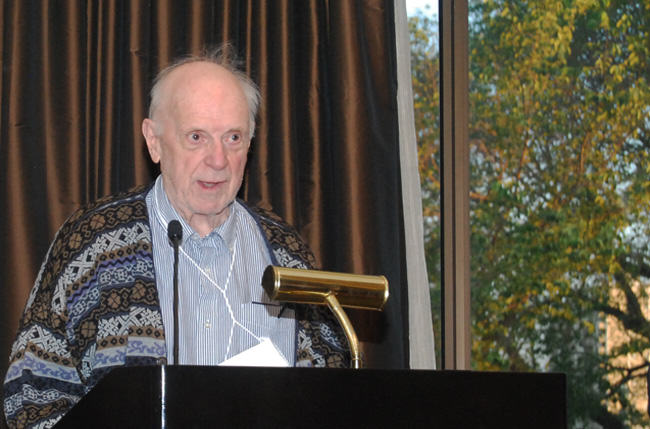
Alan Herscovici is the senior researcher and writer for Truth About Fur.
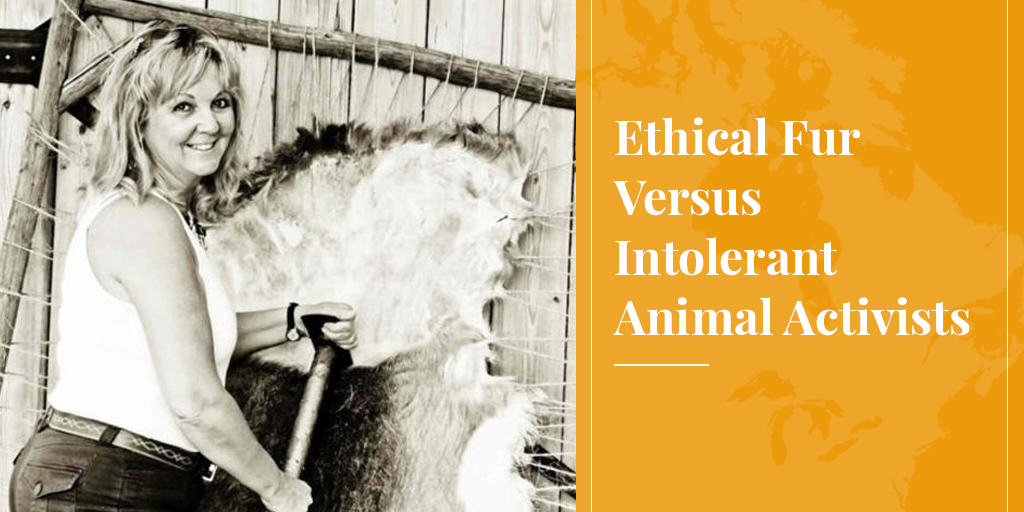
Alan was raised in a fur family. His grandfather came to Canada in 1913 as a young fur artisan, having learned the craft from his own father in Paris. Alan’s father was a respected Canadian fur manufacturer and sales agent.
After receiving his BA from McGill University (First Class Honours, Political Science and Economics) and an MA from the University of Sussex (Political Economy), Alan worked as a writer, freelance journalist and communications consultant.
Alan’s published work includes the award-winning Second Nature: The Animal-Rights Controversy (CBC, 1985; General Publishing, 1991), the first book to present a balanced critique of the animal-rights philosophy from an environmental and social justice perspective.
From 1997 to 2016, he served as Executive Vice-President of the Fur Council of Canada where he initiated pioneering programs to increase understanding and appreciation of the fur trade including, notably, www.Furisgreen.com.
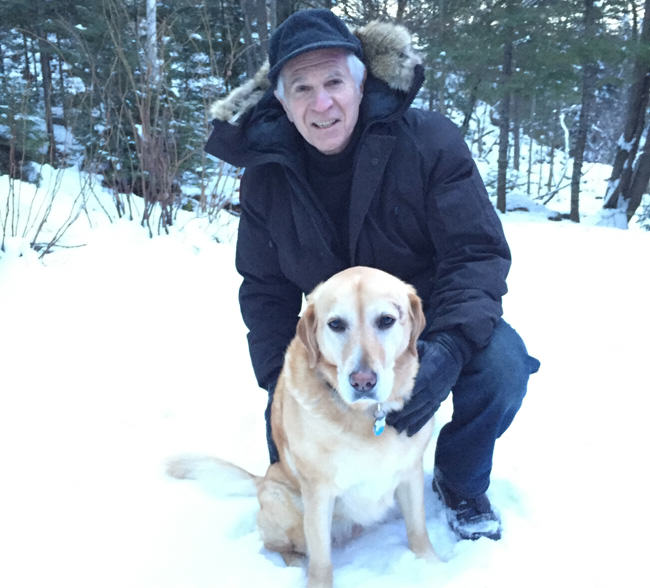
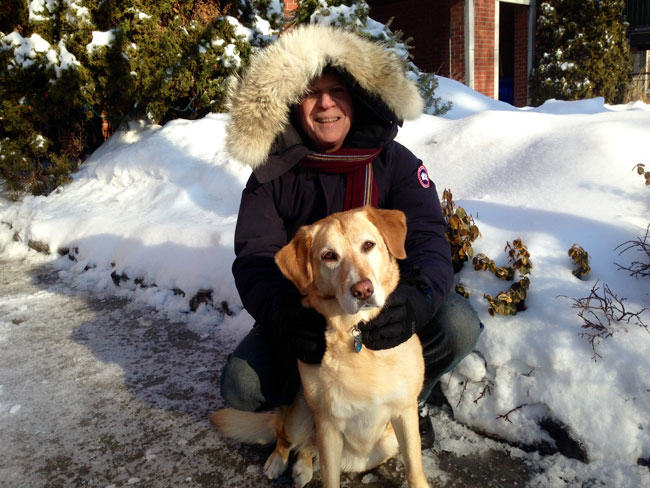
He shares his life with a pampered Lab-Golden rescue dog, an aquarium of fish, the latest in a long series of budgerigars, and some wonderful humans.
People I speak with are often astounded to learn that all the furs we use today are abundant. “We never… Read More
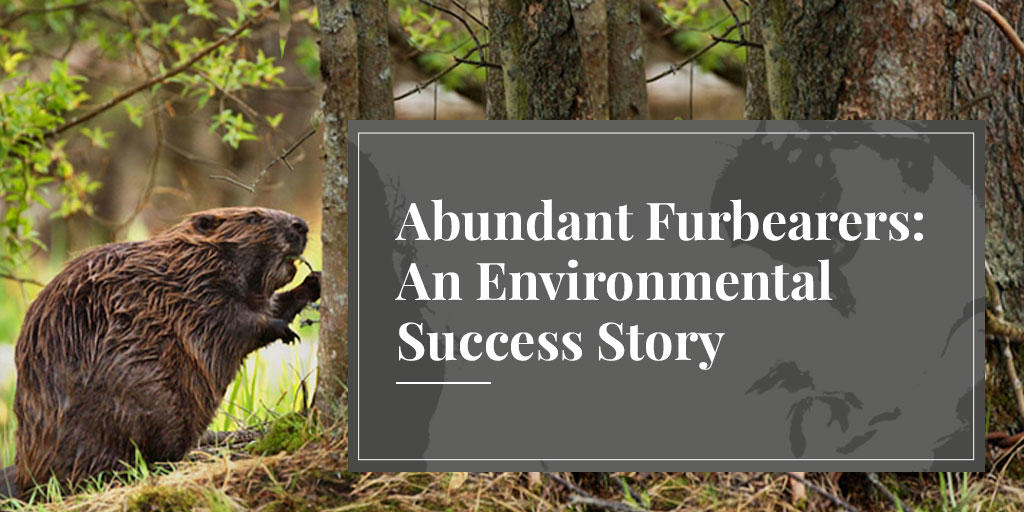
Using only abundant furbearers, like beaver, is what the modern fur trade is all about.
People I speak with are often astounded to learn that all the furs we use today are abundant. “We never use furs from endangered species and we are not depleting wildlife populations,” I explain. “In fact, the most commonly used North American furbearers are now as abundant as, or more abundant than, they have ever been.”
“How can this be?” they ask. After 400 years of commercial fur-trading, with so much urban and industrial development, how can fur-bearing animals be as plentiful as before Europeans arrived on this continent?
There are two main reasons why North American furbearers are so abundant, both of which are surprising to many. The first reason is that modern wildlife-management regulations have been remarkably successful in ensuring the responsible and sustainable use of fur-bearing animals. The second is that human activity is not always bad for wildlife.
Because neither of these facts is well known or understood, let’s take a closer look.
The hunting or trapping of wild fur-bearing animals in Canada and the United States is strictly regulated by the state and provincial (or territorial) governments. Government wildlife biologists regulate the impact of hunting or trapping in a number of ways, including the setting of “open seasons” (and sometimes harvesting quotas) for different regions and species. Open seasons are timed to avoid the periods when animals are reproducing or caring for their young, and are designed to target the natural “surplus”, animals that exceed the “carrying capacity” of their habitat. Hunting and trapping seasons can be lengthened, shortened or closed completely, if necessary, to maintain a balance between wildlife populations and available habitat.
Trappers are licensed and must complete training programs before receiving their permits. These programs teach conservation principles, the proper way to use new humane trapping devices and to ensure that only the targeted species are captured, pelt-handling techniques (to avoid waste), and survival skills.
Since the 1950s, furbearer populations have been restored across North America
Trapping was not always so well managed. In the late 19th and early 20th centuries, populations of beaver and other abundant furbearers were depleted by over-harvesting in some regions. With the introduction of modern wildlife management policies and regulations, especially since the 1950s, furbearer populations have been restored across North America.
It is easy to understand how government regulations can prevent over-harvesting. What is less well-known is that regulated trapping can actually help to stabilize the populations of some wildlife species. Beaver populations, for example, are naturally subject to extreme “boom-and-bust” cycles. If adequate supplies of their preferred food (e.g., willow and ash trees) are available, beaver populations can rapidly increase until all available vegetation is depleted (“eat-out”). Fighting for scarce remaining food, disease and starvation will then take their toll and beaver populations will “crash”; there may be no beavers at all in this area for many years, until suitable vegetation is restored.
Regulated trapping can smooth out these boom-and-bust cycles, keeping beaver populations in balance with available food supplies. The result is more stable and healthy beaver populations than would occur naturally.
Human Presence Can Increase Wildlife
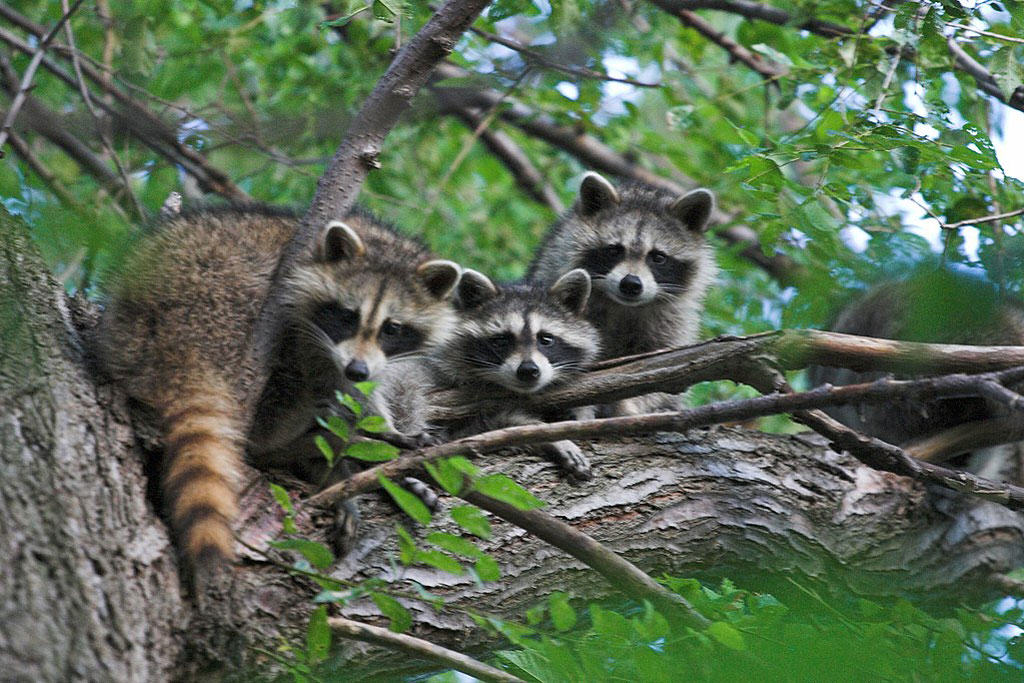
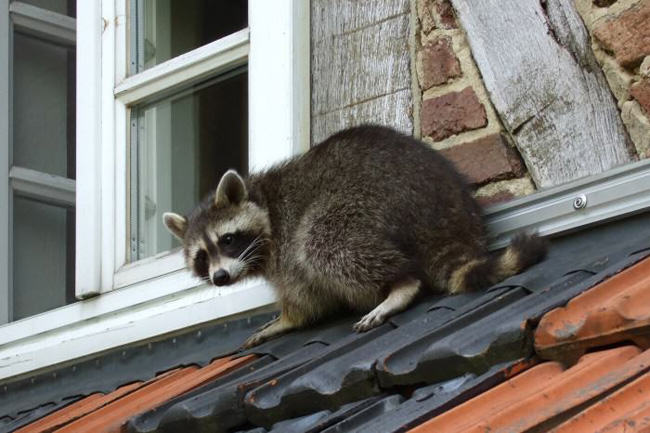
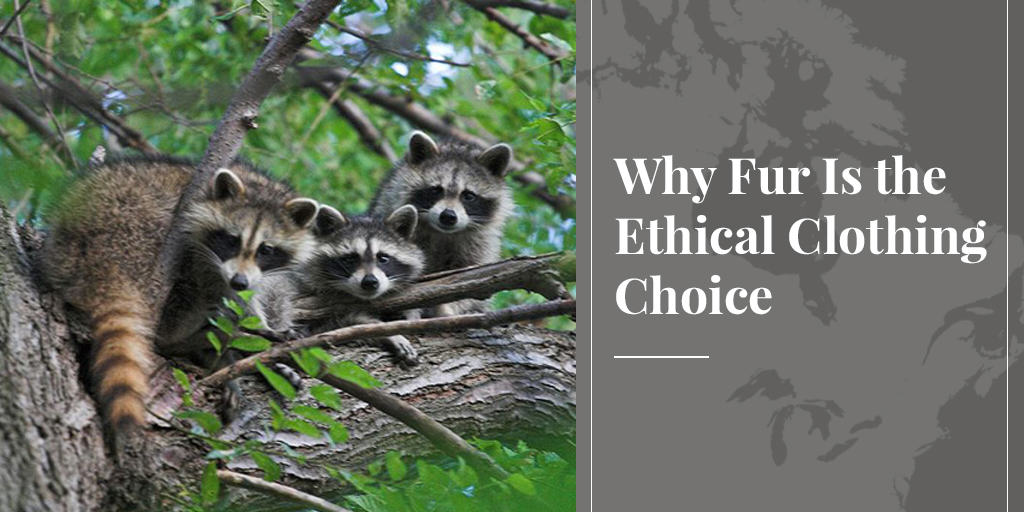
Urbanisation, agriculture, and the displacement of natural predators have all helped raccoons expand their range. Photo: garyjwood / flickr.
Even less well-known than the stabilizing effect trapping can have on wildlife populations is the fact that human presence can actually benefit some animals. While the expansion of cities, farms and industry can certainly disrupt natural habitat, for some furbearers it has allowed populations to increase.
A case in point is the raccoon. Our cornfields and urban garbage have allowed raccoons to expand their population and range, including northward into much of southern Canada where they were not present before.
Raccoons, foxes and coyotes are now more abundant across North America than they have ever been
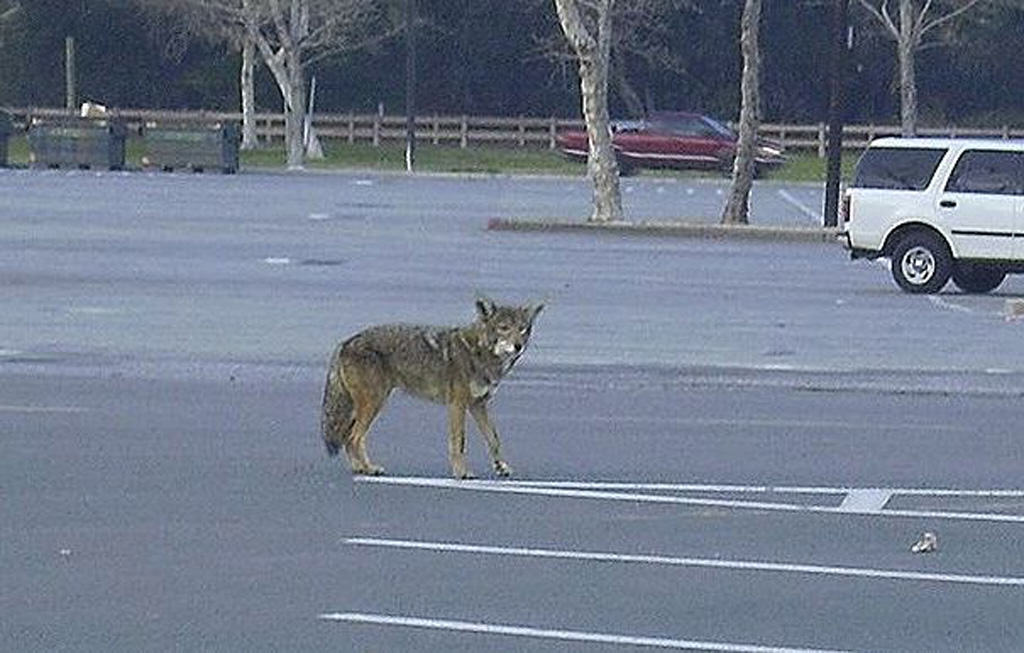
Red foxes and coyotes have also benefited from humans, in two ways. Mature temperate and boreal forests do not support an abundance of wildlife, but when farmers clear parts for pastureland, habitat is created for mice and other small rodents on which foxes and coyotes feed. Foxes and coyotes have also benefited from their ability to adapt to living in close proximity to people, while wolves – apex predators and their competitors for food – have been pushed away from human settlements.
As a result, raccoons, foxes and coyotes are now more abundant across North America than they have ever been.
Human activity can improve wildlife habitat in other surprising ways. Roads built through marshy regions – as are found across much of northern Canada – are protected with ditches that help to drain excess water from the land. Ash and willow can then grow, bringing beavers which, with their dams, create ponds that attract a wide range of other animals. This sort of habitat improvement, combined with modern wildlife management regulations, has restored abundant beaver populations across North America.
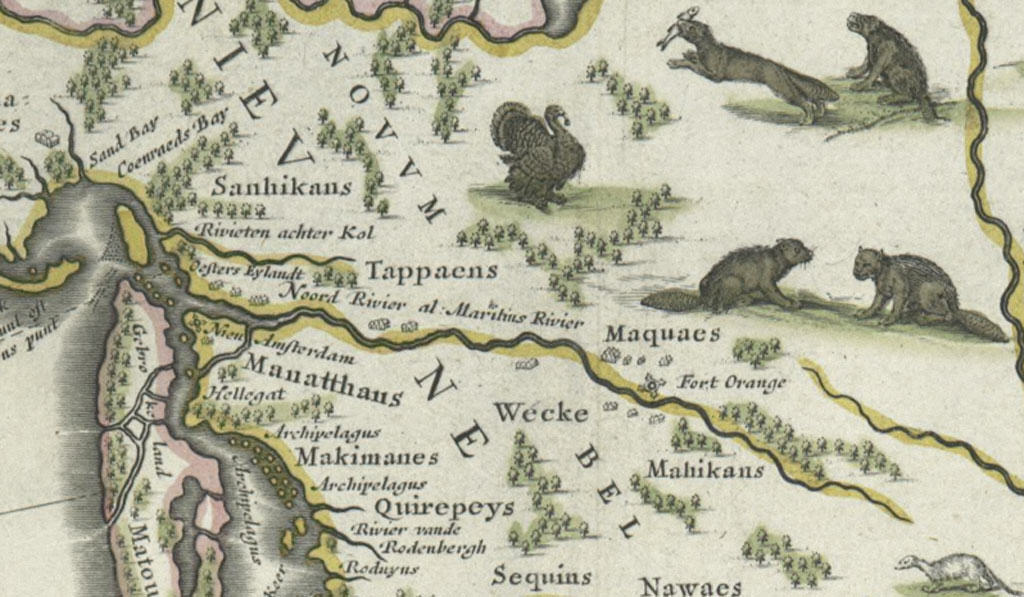
Beavers were abundant furbearers across North America in 1635, and are highly abundant again today. Hudson Valley map: Joan Blaeu, Nove Belgica et Anglia Nova.
At a time when we are concerned about the depletion of many wild fish stocks and terrestrial species, the responsible and sustainable management of wild fur-bearing animals is a remarkable environmental success story. And that makes fur an excellent clothing choice for anyone concerned about protecting our natural environment for future generations.
"... protection and re-introduction programs have re-established the American beaver throughout its historical range. It is now abundant." IUCN Red List.
"After a population explosion starting in the 1940s, the estimated number of raccoons in North America in the late 1980s was 15 to 20 times higher than in the 1930s, when raccoons were comparatively rare." Wikipedia, citing Raccoons: A natural history, by Samuel I. Zeveloff.
Now that recent actions by White Supremacists and Neo-Nazis have sparked discussion about the importance of tolerance in a modern,… Read More
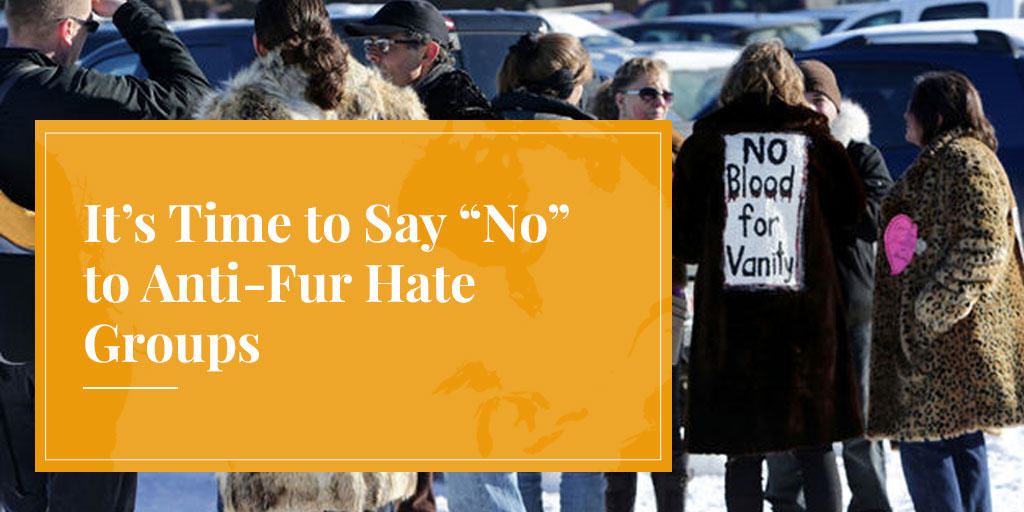
Hate groups seek to impose their views on everyone. Photo: Edmonton Sun.
Now that recent actions by White Supremacists and Neo-Nazis have sparked discussion about the importance of tolerance in a modern, multi-cultural society, perhaps it is time to denounce another type of increasingly aggressive hate group: animal-rights extremists.
I can hear animal activists choking on their tofu stir-fry, but the facts speak for themselves: their campaigns – like those of other hate groups – almost always involve a direct attack on the rights, reputation and livelihoods of other people.
Hate groups are usually defined as organizations that promote discrimination against specific groups of people based on their race, religion, gender or sexual orientation. It’s time we added "employment" to that list.
Think about it: animal activists are not satisfied with expressing their opinions or exercising their right to wear cotton, hemp and synthetics, rather than fur or other animal products. Instead, they seek to impose their views on everyone.
While they call for compassion, they often seem to be driven more by anger and hatred of people who don’t share their views.
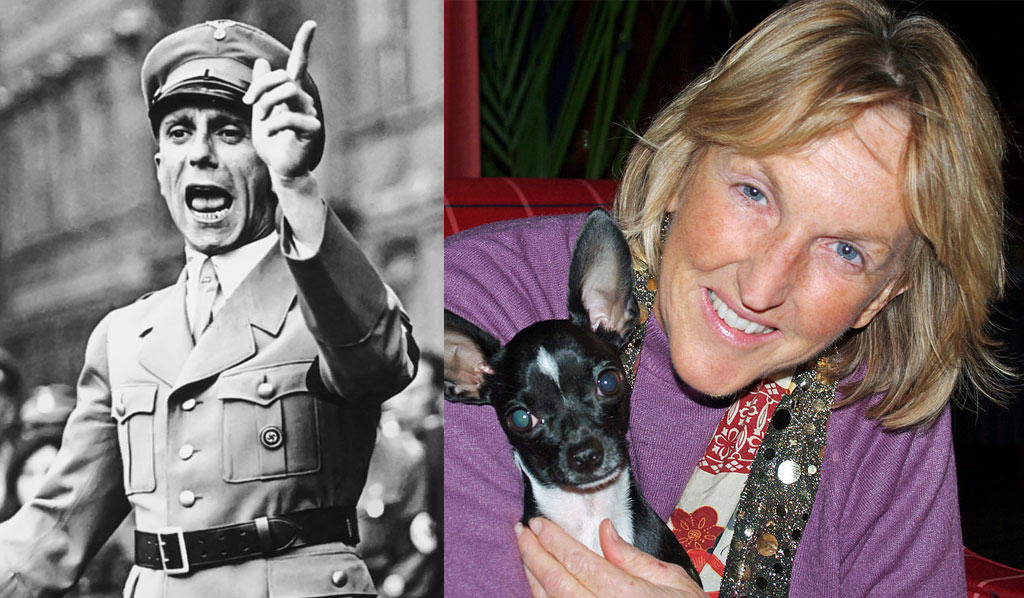
Joseph Goebbels was the driving force behind the Nazi hate movie The Eternal Jew, depicting Jews as parasites. Ingrid Newkirk's PETA has relentlessly promoted the malicious claim that the fur trade skins animals alive using a highly suspect video. Photos: Georg Pahl; David Shankbone.
They use sensationalist and misleading videos of dubious origin to smear the entire fur industry and everyone associated with it – the same sort of tactics employed by other hate groups. The Nazis, of course, pioneered the use of staged films to fan hatred against Jews and others.
And if propaganda doesn’t work, animal extremists – like other hate groups – aren’t shy to employ intimidation. Despite decades of misleading activist campaigning, fur is now being sold in a wider range of stores than ever, in designer collections, as trim on outerwear, in fashion accessories. If consumers agreed with the activists’ condemnation of fur, stores wouldn’t be selling it. But animal extremists do not think that consumers and retailers have a right to make such decisions for themselves.
Their response is rowdier demonstrations. Fur-wearing consumers are harangued as they enter or leave stores; they are followed down the street by angry activists. Stores are warned that the demos won’t stop until they drop fur from their offerings. Under cover of darkness, store windows are broken and locks are glued. So much for the respectful exchange of views.
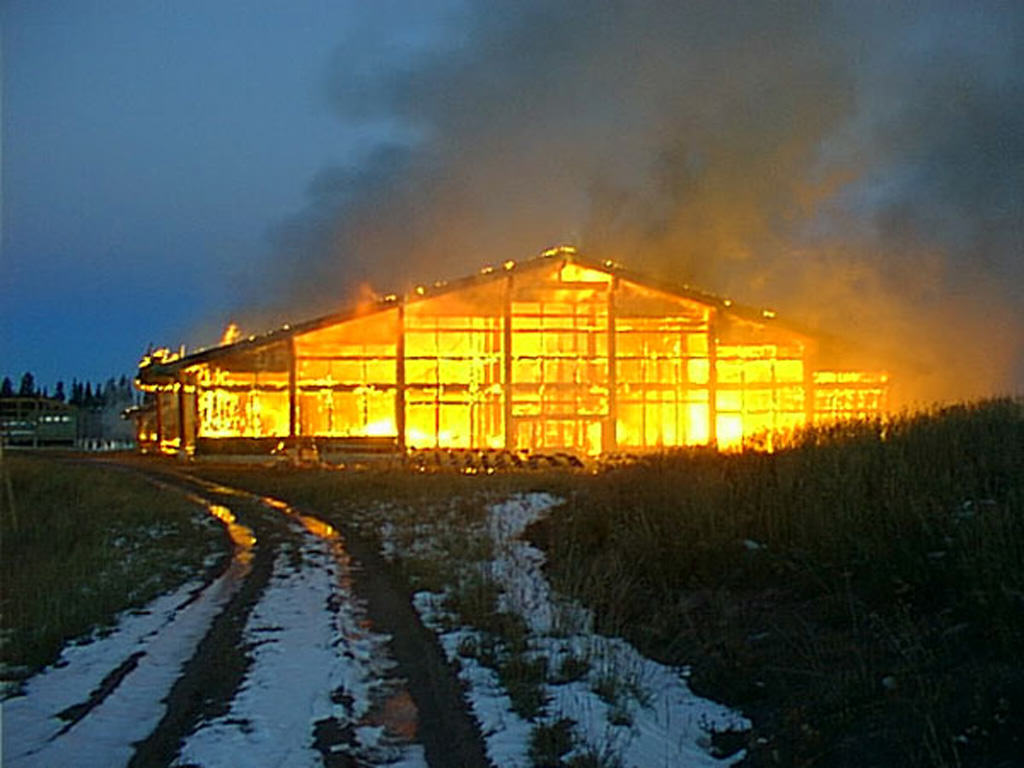
Do as we say, or face the consequences. In 1998, animal activists torched a ski resort "to protect lynx habitat" in Vail, Colorado. Photo: Vail Fire Department.
The animal extremist message is clear: "Do as we say, or face the consequences." Like a mafia protection racket. Or a chilling echo of the threats and intimidation used against businesses that resisted segregationist thugs in the early days of the US Civil Rights Movement.
Elevating Animals, Degrading People
The aggressiveness of animal-extremists is fueled by their fundamentalist “animal-rights” philosophy. If you believe that killing a mink (or a cow, pig or chicken) is the moral equivalent of killing a fellow human, it is easy to justify the most radical of actions.
In fact, most people in our society accept the responsible use animals for food, clothing, and other purposes. As designer Karl Lagerfeld has said about activists protesting his use of fur: “For me, as long as people eat meat and wear leather, I don't get the message.”
We have shown in a previous article, "Why fur is the ethical clothing choice", that the modern fur trade fully satisfies the four criteria required for most people to accept the use of animals as ethical. The wild-fur trade is well regulated and sustainable. Research and standards promote animal welfare for both wild and farmed fur-bearers. Fur animals are fully utilized with minimal waste. And the fur trade supports rural and remote communities while providing a valuable and long-lasting natural clothing material.
I know that most "animal-rights" advocates will be shocked at being labelled as hate mongers; they will claim that they are promoting justice, not discrimination. But every hate group claims to be promoting justice for their own particular cause. Having a cause does not justify attacking the reputations and livelihoods of people who do not share your beliefs.
It is time that the people of the fur trade were recognized for their knowledge and skills in maintaining this remarkable heritage industry, and for developing one of the most responsible and sustainable animal-use industries in the world.
And it is time for the media, political leaders, and the general public to take a much harder look at the misguided and irresponsible actions of animal extremists – and to say "no" to hate groups of all stripes.
As Canadians prepare to celebrate the 150th anniversary of Confederation (July 1, 1867), and also the 375th anniversary of the… Read More
As Canadians prepare to celebrate the 150th anniversary of Confederation (July 1, 1867), and also the 375th anniversary of the founding of Montreal (May 17, 1642), this is a fine time to recall the unique role played by this country’s fur trade history.
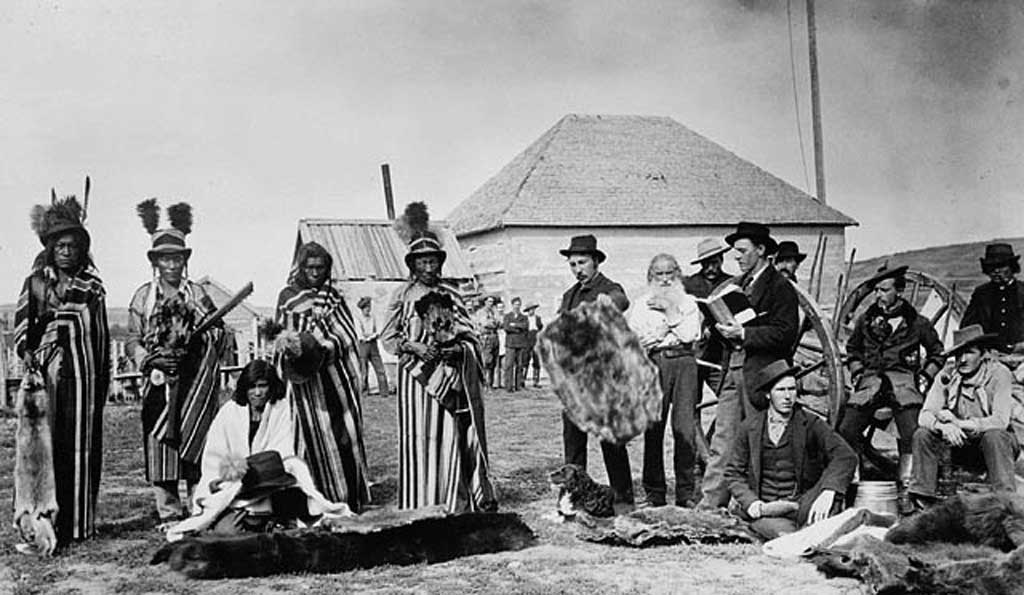
In fact, fur trading had been practiced for hundreds – probably thousands – of years before Europeans arrived on these shores. Montagnais hunters from what is now northern Quebec, for example, were already trading fur pelts for corn, squash and other foods produced by Iroquoian farmers in the St-Lawrence valley when Jacques Cartier first visited the island of Montreal in 1535.
Fur trading with Europeans probably began when French fishermen crossed the Atlantic to exploit the extraordinary stocks of large codfish off the coast of Newfoundland and in the Gulf of St-Lawrence. When Cartier landed on the coast of northern New Brunswick, in 1534, he met Indians who clearly had experience with Europeans – they held up fur pelts on sticks, eager to trade.
It wasn’t until Samuel de Champlain built his habitation, in 1608 – to found what would become Quebec City, nucleus of New France – that the North American fur trade began in earnest. In the two hundred years that followed, furs provided the incentive to explore the vast interior of the continent ... and for a long series of wars and skirmishes to control it.
In 1627, Cardinal Richelieu granted a monopoly on fur trading to The Company of 100 Associates. Monopolies were sought to justify the risks involved in purchasing and transporting trade goods from Europe, and (hopefully) returning with furs more than a year or two later. But monopolies could also thwart innovation, with serious repercussions.
Radisson & the Hudson's Bay Company
One of the most dramatic examples is the story of Pierre-Esprit Radisson. At 15 years old, Radisson was captured by Mohawks and lived in their village on Lake Champlain long enough to learn their language and woodcraft – skills that served him well when he was able to escape and return to Trois-Rivières. In 1654, with his brother-in-law, Médard Chouart des Groseilliers, he explored far to the west, into the James Bay region, returning with a rich cargo of furs, and the bold idea that vast new fur supplies might be more easily secured by bringing ships directly into the interior of the continent through Hudson’s Bay.
New routes, however, threatened the politically well-connected merchants who controlled the French fur trade. Radisson and Des Groseilliers were briefly imprisoned and their furs confiscated. When their efforts to plead their case at Court, in Paris, failed, Radisson and Des Groseilliers eventually found their way to the English Court of Charles II. There, with support from the dynamic Prince Rupert, a cousin of the King, a group of influential investors was convened and The Company of Adventurers into Hudson’s Bay was born.
Under the Royal Charter granted on May 2, 1670, Prince Rupert and his partners became “true lords and proprietors” of all the lands drained by Hudson’s Bay, about 1.5 million square miles – one of the largest real estate deals in history. This immense territory, which came to be called “Rupert's Land”, included about 40% of today's Canada and significant parts of Minnesota and North Dakota. (While no longer directly involved in fur trading, the Hudson’s Bay Company is the oldest, continuously-operating, joint-stock company in the world. The 1670 Royal Charter is now on display at the corporate headquarters, in Toronto.)
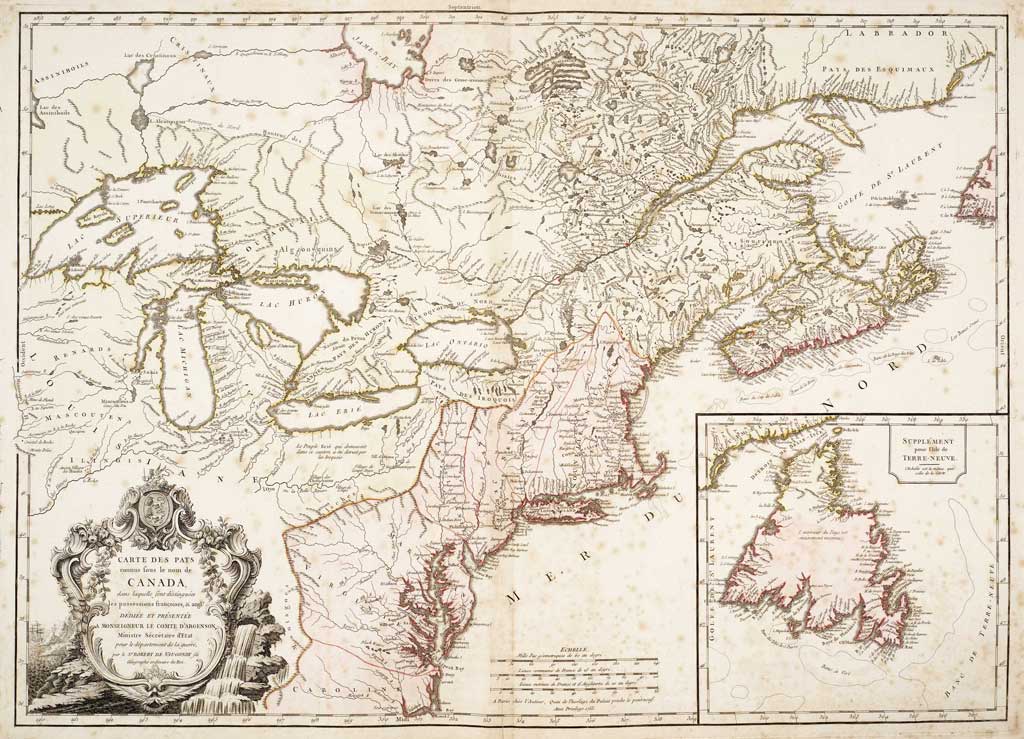
This detailed map from 1753 shows British and French colonies in North America, as well as locations of First Nations peoples, before the outbreak of the Seven Years' War. The First Nations were pivotal in the rivalry between France and Britain for land and control of the fur trade. Courtesy: Toronto Public Library.
The next 90 years were marked by intense competition between French, English and American fur traders. LaSalle and other French adventurers had established a string of trading posts and forts down the Mississippi to the Gulf of Mexico, controlling “Louisiana” (named in honour of Louis XIV) and hemming in the fast-growing New England colonies. By 1739, furs represented 70% of the exports from New France. But danger threatened, as the American colonies challenged French control of the Mississippi and points west, while the Hudson’s Bay Company intercepted fur supplies that had passed through Indian trade networks to Montreal and Quebec.
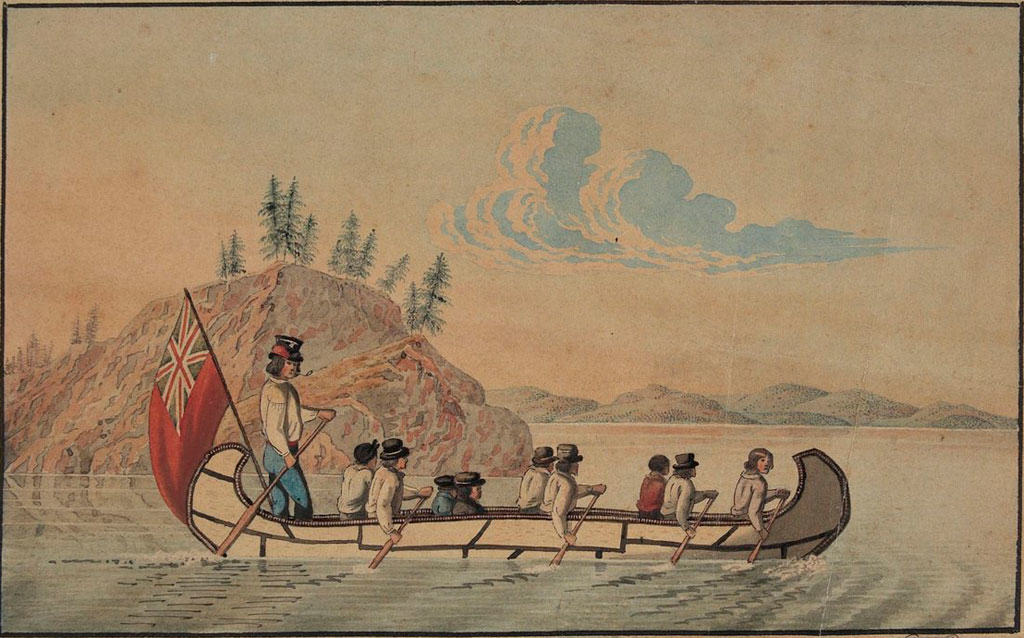
Birch bark canoes, lightweight and durable, permitted the navigation of new fur-trade routes and the mapping of the continent's lakes and rivers. Here we see officials of Hudson’s Bay Company in an "express" canoe, depicted by Peter Rindisbacher, ca. 1825. Library and Archives Canada, e011161353.
The North West & American Fur Companies
The conflict came to a head with the British conquest of New France, in 1760, but this did not diminish the ferocious competitiveness of the lucrative fur trade. English, French and, especially, Scottish entrepreneurs set up the North West Company (1779), in Montreal, and pushed deeper into the continent through the St-Lawrence River and the Great Lakes, challenging the (London-based) Hudson Bay Company’s monopoly. Competition also intensified south of the St-Lawrence, with the founding of John Jacob Astor’s American Fur Company (1808). In search of new fur supplies, Astor pushed westward; his Columbia River trading post at Fort Astoria (1811) was the first United States community on the Pacific coast.
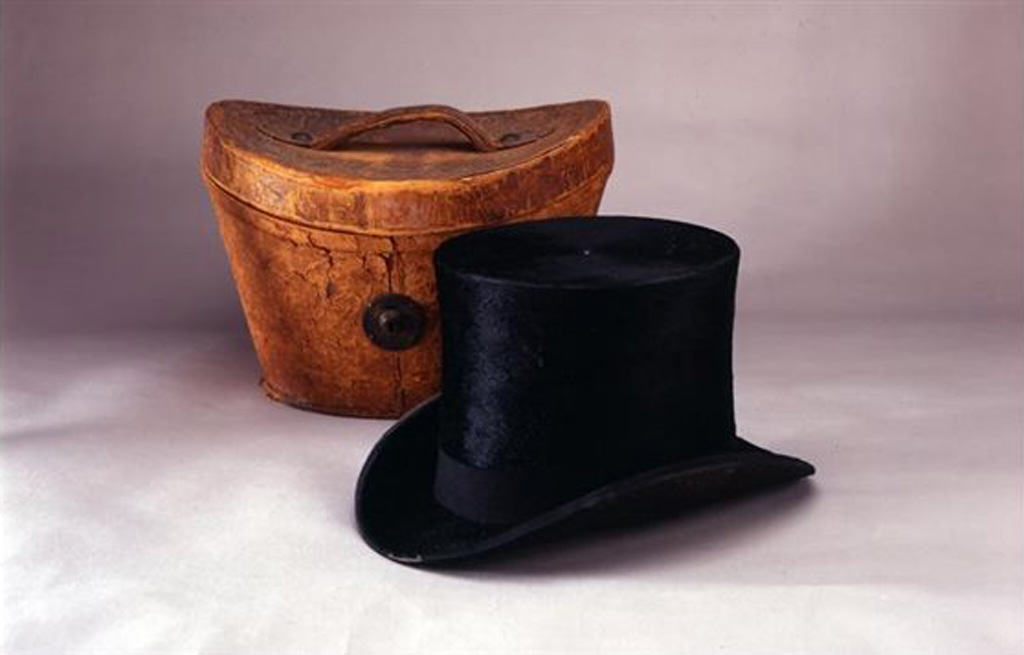
A beaver-felt hat with case, from the late 1800s. European demand for North American beaver was so great that a war was fought for control of trapping territory. Photo: Hudson’s Bay Company.
The current western border between the USA and Canada reflects, to a great extent, the fur territories once controlled by the American Fur Company and the Hudson’s Bay Company. (The HBC was merged with the NWC in 1821.) In fact, it is not at all sure that the young Dominion of Canada – formed in 1867 with the confederation of the provinces of “Canada” (Ontario and Quebec), Nova Scotia and New Brunswick – would ever have expanded to include British Columbia and the Pacific Coast, had not the Hudson’s Bay Company pleaded the importance of maintaining the lucrative Vancouver Island fur trade under Canadian control.
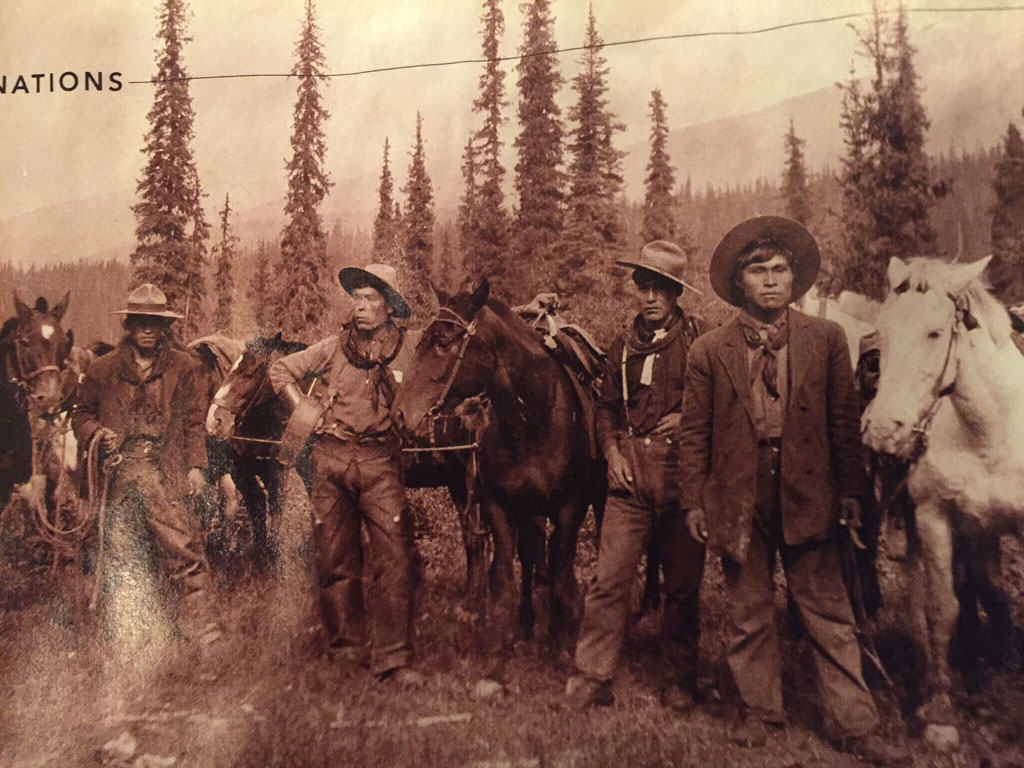
First Nations horse packers working for the Hudson's Bay Company along a British Columbia fur brigade trail, carrying trade goods and fur packs. Circa 1890s. Photo: Canada's History, September 2016.
Many North American towns and cities began as fur-trading posts, but probably none was more influenced by the fur trade than Montreal. Montreal became the continent’s most important fur-trading entrepôt because Champlain recognized its strategic position at the intersection of the St-Lawrence and Hudson (via Lake Champlain) river systems, and because the rapids at the west end of the island (Lachine) prevented European ships from venturing further upstream. The Fur Trade Museum, in Lachine, housed in a stone fur warehouse built in 1803 by North West Company stockholder Alexander Gordon, is an excellent place to learn about Montreal’s fur-trade history.
Traces of fur trade history are everywhere in Montreal. One of the city’s oldest remaining buildings housed the convent of the Grey Nuns, who supported their missionary work with fur trading. Beaver Hall Hill, in the downtown core, was the site of “Beaver Hall”, the home of Joseph Frobisher, one of the North West Company’s leading partners, and the host of many of the company’s raucous “Beaver Club” dinners. Perhaps most significantly, the internationally respected McGill University was founded with a £10,000 grant from James McGill, a leading fur trader and founding partner of the North West Company. The university’s main Sherbrooke Street campus stands on the site of McGill’s “Burnside Farm”, which he bequeathed for this purpose.
Montreal’s fur trade remained important into the modern era: the Hudson’s Bay Company’s warehouse and auction sales were located on Dorchester Street (now called “Rene Levesque”), until they were relocated to Toronto after the election of the (separatist) Parti Quebecois government in the late 1970s. And Montreal became one of North America’s most important fur-manufacturing centres (like New York and Toronto), with the arrival in the first decades of the 20th century of hundreds of skilled (mostly Jewish) fur craftspeople – including my own grandfather, who arrived here in 1913.
After the Second World War, the North American fur-manufacturing sector was further strengthened by immigration from Kastoria and other villages of northern Greece where fur-working had been a way of life for centuries. Montreal was also the gathering place for thousands of North American and international fur designers, manufacturers and retailers who attended the association-run Montreal NAFFEM for thirty years, until 2013.
Canada's fur trade history reflects the country's cultural mosaic at its best: First Nations, French, English, Scots, Jews, Greeks and many others have worked together for hundreds of years to build this remarkable industry – a dynamic tradition of competition and cooperation that is well worth remembering as we celebrate these important anniversaries in the history of Montreal and Canada.
As someone brought up in the Canadian fur trade and who has spent much of the past 35 years studying the environmental ethic of North America’s founding industry, I am troubled by the arrogance and ignorance displayed by self-appointed “animal-rights” activists protesting the opening of the Canada Goose boutique in Soho.
Responding to complaints about neighbors disturbed and consumers harassed, activists Nathan Semmel and Leonardo Anguiano recently argued in these pages that “it is solely the vile ethics of the Canada Goose corporation that brought about our presence.” (“Call of the Wild: Why we protest Canada Goose,” talking point, March 2):
By “vile ethics,” they mean that Canada Goose uses animal products — goose down and coyote fur — to make their remarkably warm parkas.
Goose down and fur are two of nature’s best insulators, but it is not surprising that these protesters object. Most of them are — or aspire to be — vegans, and embrace the radical “animal-rights” philosophy, which means they oppose any use of animals, even for food. Most Americans, however, do eat meat, fish, dairy and eggs. Most of us also wear leather, wool and silk. This does not mean we condone the mistreatment of animals. Research confirms that most people believe that humans do have a right to use animals, but only if four important criteria are respected — namely, that animals should be used sustainably, humanely, for an important purpose and with minimal waste.
Let’s see how the use of coyote fur stacks up against these widely accepted ethical criteria.
Sustainability: Only part of the natural surplus produced in abundant wildlife populations is used for fur today, never endangered species. This is assured by strictly enforced state, national and international regulations. Coyotes are highly abundant and expanding their range across North America; they are, in fact, the number-one predator problem for ranchers in many regions. There are also increasingly frequent reports of coyotes devouring pet dogs and cats. And even if we did not use fur, coyotes (and other predators) often must be managed to protect nesting birds, the eggs of sea turtles, and other endangered species. When fur prices do not provide sufficient incentive to control coyote populations, several states (and Canadian provinces) have been obliged to offer bounties. But if we have to cull some of these animals, surely it is ethical to use them.
Humaneness: Millions of dollars have been invested over the past 35 years in scientific research to ensure that humane methods are used to capture wild, furbearing animals. Many coyotes are now taken with quick-killing devices. Others are taken with live-holding traps designed to minimize injuries to the animals. These are the same traps used by biologists to capture and release wolves, Canadian lynx and other animals, unharmed, for radio-collaring (for research) or reintroduction into regions where they were previously eliminated. Clearly, these are not the diabolical instruments that activists would have us believe. Nor are nature’s ways of controlling wildlife populations — starvation and disease — necessarily preferable. A coyote with sarcoptic mange (a parasitic mite) may scratch itself raw for weeks before dying. Nature is not Disneyland. If humaneness is the concern, modern trapping methods may actually reduce suffering, by maintaining more stable and healthy wildlife populations than would occur naturally.
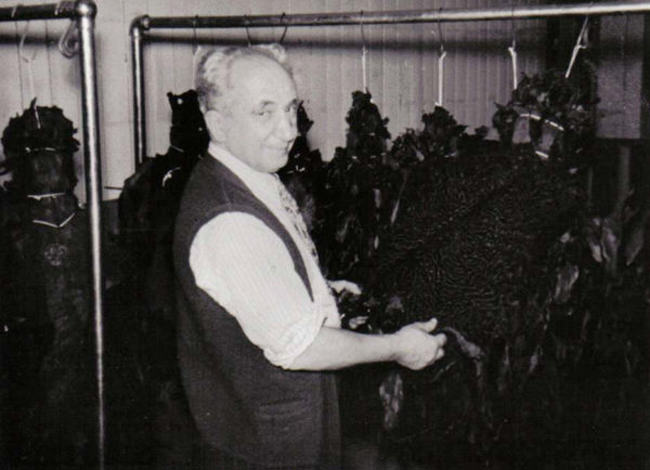
Armand Herscovici, the writer’s grandfather, learned the furrier’s art from his father in Paris, before coming to Montreal in 1913. He is shown here in the 1950s examining Persian lamb skins in his stockroom at A-J Herscovici Furs Ltds, the company he founded with his son, Jack, the writer’s father.
Important Use: Animal activists claim that the killing of coyotes or other animals for fur is “unnecessary”, and therefore morally indefensible. Leaving aside the tricky question of determining which, if any, products are really “necessary,” humans do need clothing, and fur is a natural, long-lasting and ultimately biodegradable material. By contrast, fake furs and other synthetics promoted by animal activists are generally made from petrochemicals, a nonrenewable resource. More troubling, recent research reveals that synthetic microfibers can cause considerable harm to wildlife. According to EcoWatch: “When washed, plastic microfibers break off and a single jacket can produce up to 250,000 fibers in washing-machine effluent. Less than 1 millimeter in size, they make their way through wastewater plants and into marine environments where they have been found to enter the food chain. Microfibers make up 85 percent of human-made debris on shorelines around the world, according to a 2011 study.” Perhaps natural fur and down are not such frivolous choices after all.
No Waste: Most of us are comfortable wearing leather because it is “the envelope that dinner came in,” but we may wonder what happens to the rest of the animals that provide fur. In fact, beaver and muskrat are often eaten by northern Cree and other trappers and their families in remote regions where store-bought food is very expensive and alternate income may be hard to come by. Raccoons, opossums and other furbearing animals also provide food in more southern regions. And while coyotes and other predators are not usually eaten by humans, their carcasses are returned to the bush where they feed birds, mice and other animals through the winter, when food is scarce. Nothing is wasted.
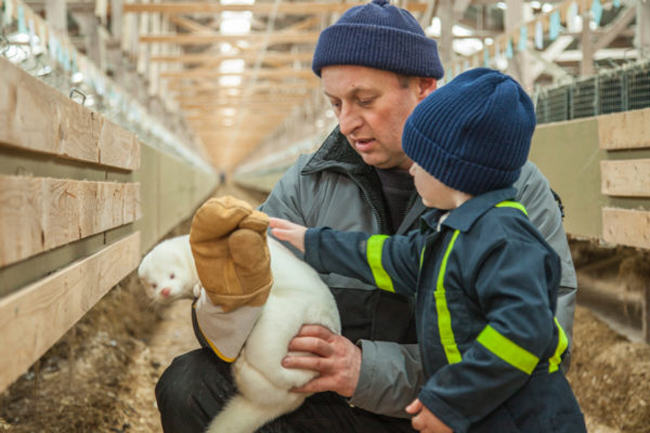
Peter Noer, shown here with his son, is a second-generation fur farmer who came to Newfoundland from Denmark to raise mink. “We give our animals the best possible care and humane treatment,” Noer says on TruthAboutFur.com. “Fur is our province’s most valuable agricultural export.” Photo: Newfoundland and Labrador Fur Breeders Association.
This short review shows that the North American fur trade does satisfy the four criteria that determine whether the use of animals is morally acceptable for most people.
Furthermore, while we all “care” about nature, most of us now live in cities with little direct knowledge about what really happens in the wild. Activists protesting against Canada Goose, for example, claim that “trapped coyote mothers leave behind starving pups.” They are apparently unaware that trapping occurs in late fall and winter when the young of the year are no longer dependent upon their parents.
Trappers, by contrast, live close to nature and have the knowledge — and a direct interest — to sound the alarm when wildlife habitat is threatened by industrial activity. It is trappers, for example, who lobby and work with timber companies to maintain uncut forest corridors for wildlife around waterways or important nesting areas. It is the destruction of habitat — not hunters or trappers — that threatens the survival of wildlife.
While animal activists like to see themselves as “progressive,” their words and actions reveal an arrogant disregard for the knowledge and values of the hard-working rural people who feed and clothe us.
None of this means that anyone is obliged to wear fur. But it does cast doubt on activist claims to have a “moral” justification for imposing their personal choices on the rest of us. If those promoting the radical “animal-rights” philosophy want to maintain any credibility, they would do well do show more tolerance toward those who make different choices. Too often, while preaching “compassion,” their actions seem to be driven by ideological fundamentalism, aggression and “alternate facts.” Surely, we have enough of that already in Washington.
At a time when we, as consumers, are being urged to “care for our planet” and make environmentally-responsible choices, we… Read More
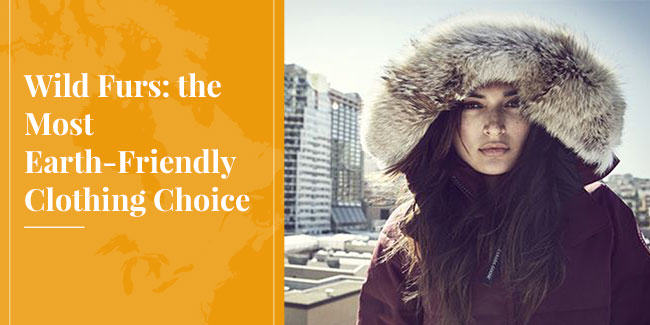
At a time when we, as consumers, are being urged to “care for our planet” and make environmentally-responsible choices, we should take a closer look at wild furs. And the closer we look, the more impressive are the environmental benefits we see. While all the furs we use today are eco-logical, wild furs are to clothing what “organic”, “free-range”, and “100-mile-diet” are to dinner.
Here are 5 top reasons why wild furs are an excellent choice for anyone who wants to adopt a “greener” life-style:
1. Like all fur, wild-sourced pelts provide a naturally warm, lightweight, durable, and ultimately biodegradable clothing material. After all, fur evolved over millions of years to become one of the most effective insulators we know. And, of course, fur is also remarkably soft, comfortable and beautiful!
2. The wild furs we use today come from abundant populations, never from endangered species. Trapping is strictly controlled by state and provincial governments to ensure that we take only part of the surplus produced by nature. Most species produce more young each year than their habitat can support to maturity. We can use part of that “surplus” without depleting the population. In financial terms, it’s like living on the “interest” that nature provides, without depleting our “capital”. This is known to environmentalists as “the sustainable use of renewable natural resources”, a key conservation principle promoted by the International Union for Conservation of Nature (IUCN) and other conservation authorities.
Raccoons carry rabies into human populations, making control essential.
3. The populations of many furbearing species would have to be controlled even if we did not use the fur. Overpopulated beavers flood roads, fields, and forest habitat. Raccoon, coyote and fox populations must be controlled to protect sea turtle eggs, ground-nesting birds and other vulnerable or endangered species. Rapidly expanding coyote populations are also the number-one predator threat for sheep and cattle ranchers. Raccoons, foxes and skunks can carry rabies and other dangerous diseases into urban areas. When animals must be culled to protect property, to prevent the spread of disease, or for any other reason, it is more respectful to use them. Furthermore, without a market for fur, these management efforts would have to be financed by tax-payers.
4. More than 35 years of scientific research and trap testing ensure that the most humane possible methods are used to capture furbearing animals. In fact, government-regulated trapping now often helps to reduce suffering, by maintaining healthier and more stable populations of wildlife than would occur naturally. If humaneness is a concern, modern trapping techniques are generally preferable to disease, starvation, and the “boom-and-bust” cycles that are nature’s ways of pruning back overpopulated beavers, muskrats, and other species. While farm-raised fur animals receive excellent care, some people feel more comfortable knowing that the animals we use live freely in their natural state until the moment when they are captured. In this sense, wild fur is the ultimate “free-range” clothing material.
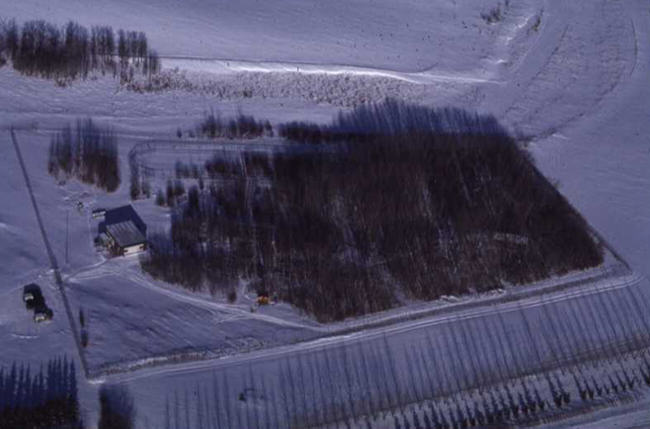
Vegreville, Alberta is home to the world’s first state-of-the-art trap research facility, established by the Fur Institute of Canada in partnership with the Alberta Research Council.
5. Many furbearing animals also provide food for aboriginal and other trappers and their families. Beavers and muskrats are important food sources for the Cree people of northern Canada. Raccoons, opossums, and other species are also eaten in many parts of North America. Animals that are not eaten by trappers and their families are returned to the bush where they feed mice, birds and other animals through the winter, when food is in short supply. Nothing is wasted.
Wild fur also provides important income for aboriginal and other people living in rural or remote regions where employment opportunities may be limited. Not least important: the income from wild fur depends upon maintaining natural habitat, and thus provides an incentive for maintaining wilderness areas. One of the unintended consequences of anti-fur campaigning is that, by eliminating markets (for sealskins, for example), they force aboriginal communities in northern Canada to open their territories to more oil and gas exploration, mining and other activities that can seriously disrupt wildlife and their habitat. In fact, trappers in many regions are working with government and industry to minimize the negative impacts of logging and other resource exploitation. For example, they lobby to maintain corridors and buffer zones of uncut timber around lakes and streams that wildlife depend upon, and they identify the nesting areas of eagles and other sensitive species so they can be protected. We all care about nature, but trappers are our eyes and ears on the land – the people who can sound the alarm when nature is threatened.
As this brief summary shows, wild fur is an excellent choice for anyone who cares about nature. Ironically, the “faux fur” and other synthetic textiles promoted by many “animal-rights” activists are usually made from petroleum, a non-renewable resource. But because most people – and most media – are now in big cities, the trappers’ story is rarely heard.
I received a phone call the other day from a very frightened fur retailer. Two young women had come into… Read More
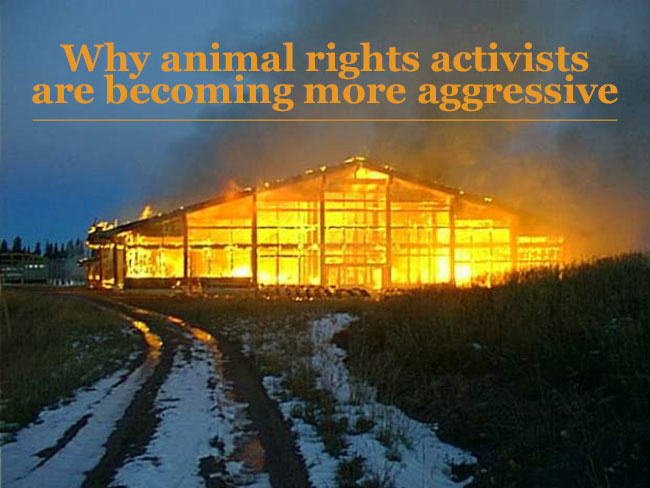
For animal-rights activists, arson was a way to save lynx from a new ski resort, Vail, Colorado, 1998.
I received a phone call the other day from a very frightened fur retailer. Two young women had come into his store while he was serving a customer and begun lecturing him about the evils of selling fur. He had tried to stay cool and asked them to leave, several times, but they kept at him until, finally, he lost it and said things he wasn’t proud of. They had filmed him too; now his outburst was on an activist website and his Facebook page had been bombarded with comments accusing him of being a sexist thug.
“Am I finished?” he asked, shaken. “That’s not me, but they were so aggressive; honestly, I was frightened.” I told him to remove the threatening posts from his Facebook page – but to take screen-grabs first, for the record. I also advised him to make a police report about the women who had harassed him, and to ask the police to keep an eye on his store at night. (The windows of several fur stores in the same town were broken in the weeks that followed.)
Unfortunately, this is not an isolated incident. An outerwear store that sells fur-trimmed parkas in Vancouver has endured rowdy protests several times a week for more than a year. Activists now often follow fur-wearers down the street, haranguing them. DxE (“Direct Action Everywhere”) activists invade department stores, intimidating consumers and thumbing their noses at store security. At the opening of new Canada Goose stores in New York and Toronto, protesters carried “F*ck Canada Goose” posters. (So much for compassion and intelligent dialogue!) “Fur police” recently patrolled the streets of Hamburg, Germany, lecturing fur-wearers and giving them “tickets”.
Fur is still a favorite target but any animal-based business can find itself under attack. An infuriating new tactic of animal rights activists is to blitz commercial Facebook pages with negative ratings and comments, as a Vancouver chef recently discovered when he added seal meat to his “sustainable and cultural foods” menu. (Ironically, activists often claim that the seal hunt is immoral because only the fur is used!)
Here are 5 reasons why animal rights activists are becoming more aggressive ... and why it will likely get worse before it gets better.
1. Aggression Works
Activists have learned that many retail stores – even those of large corporations – have a low tolerance for confrontation. Things were different when most furs were sold by furriers running multi-generational family businesses; fur was what they knew, and they defended it with passion. With fur now popular for trim and fashion accessories, it is sold in a much wider range of stores.
This is putting fur on more people than ever before, but it also makes retailing more vulnerable: if fur represents only a small fraction of your sales but generates 99% of your security and PR problems, caving in to PETA is a tempting option. Unfortunately, the message to animal rights activists is that threats and intimidation work.
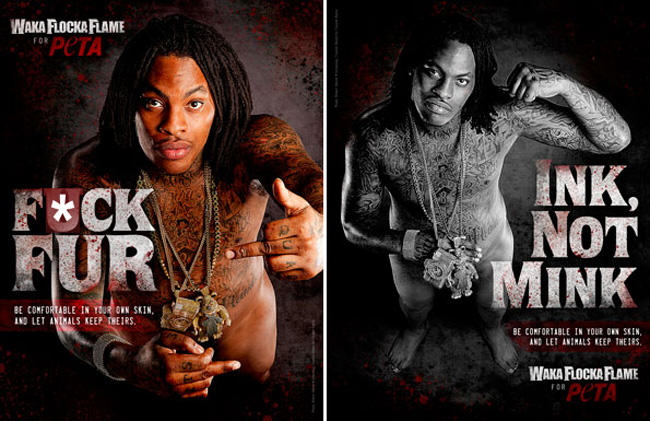
Simplistic, vulgar, and arrogant. PETA speaks the language of contemporary youth culture.
2. Pop Culture
If you have seen a music video recently -- or follow much of what passes for political debate these days -- you understand that the vulgar, arrogant and often aggressive tone of animal rights activists (“F*ck Fur!”) is very much in tune with certain elements of contemporary culture. And because there’s no sign of popular culture becoming much more polite any time soon, we can expect the arrogance and aggressiveness of these activists to intensify too.
3. Animal Rights Activists Are Getting Frustrated
Cleveland Amory, founder of the Fund for Animals, began campaigning against the fur trade in the late 1960s, almost 50 years ago. Protests intensified in the 1980s and then, again, with the emergence of media-savvy organizations like PETA. The traditional fur coat was also challenged by more casual lifestyles and the availability of less expensive winter clothing materials.
But just when it looked like Western consumers were abandoning their furs, the trade reinvented itself. Suddenly fur is everywhere, not only on 70% of designer runways, but in the streets – as trim on coats and parkas, on handbags, vests, scarves and boots. As trim and accessories, fur is more affordable and is being worn by more young people than ever.
Like old-time Stalinists frustrated with the “false consciousness” of workers who didn’t support The Revolution, many activists have concluded that, if moral persuasion isn’t working, it’s time for more vigorous methods. “As long as they do the right thing, we don’t really care why they’ve done it,” says PETA executive vice president Tracy Reiman when asked whether companies give up fur to avoid harassment, rather than because they share PETA’s views.
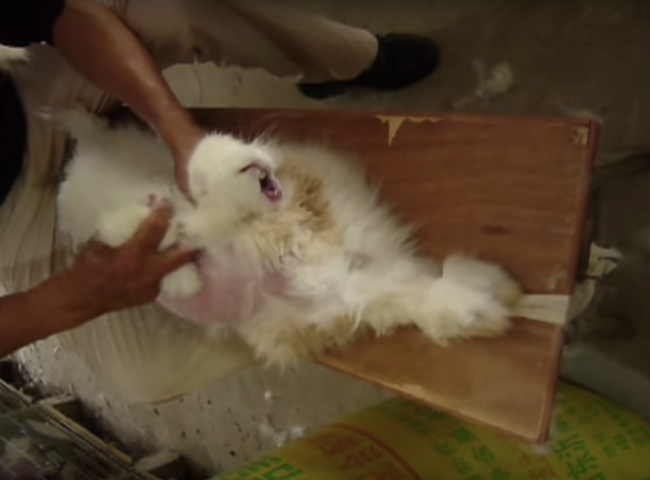
If activists produce a video of "rabbits that are having their fur ripped out, ... everybody watches it." That doesn't mean that it's normal practice. See:"Is PETA's Angora rabbit video staged?"
4. Social Media Encourage an Escalation of Emotion
Animal rights activists have always used disturbing images, but mainstream media rarely broadcast the most gruesome of them. In the Brave New World of social media, however, the gorier the better. As PETA's Tracy Reiman says, “… we put out a video of rabbits that are having their fur ripped out, and everybody watches it.”
It is not hard to understand why normally compassionate people would be horrified by some of the images circulating on the Internet. If I thought these images really represented the fur trade, I would be against it too. So don't be surprised that some idealistic young people decide it’s time to take stronger action to end such (apparent) atrocities.
The anonymity of social media also encourages more radical and polarized opinions, in all types of politics.
5. “Animal Rights” Is a Fundamentalist Ideology
The previous four points provide ample explanation for the more aggressive tone of animal rights activists. A more troubling question is whether the “animal-rights” philosophy itself may inevitably lead to more aggressive behaviour.
Despite all the media coverage of PETA’s antics, few people – journalists included – understand the profound chasm separating traditional “animal welfare” values from the radical and comparatively new “animal rights” doctrine. Animal welfare refers to our responsibility to minimize suffering for the animals we use. Hopefully everyone reading this post agrees with this. Animal rights, by contrast, says that humans have no right to kill or use animals at all, even for food or important medical research.
A more troubling question is whether the “animal-rights” philosophy itself may inevitably lead to more aggressive behaviour.
But if we truly believe that killing and eating an animal is the moral equivalent of murdering and eating another human being, then how far should we go to stop such “crimes”? Seen this way, activists who become more aggressive or even commit illegal acts are not “going too far”; rather, they are reading their animal-rights philosophers correctly.
“Animal rights” -- like other fundamentalist doctrines -- does not allow for respect or tolerance of differing views. In this sense, the increasing aggression of animal rights activists is not an accident or an aberration. But if intolerance and aggression are the logical conclusions of “animal rights”, maybe it’s time we took a much more critical look at this radical new philosophy. This will be the subject of a future article.
Earlier this year I wrote a blog post listing “5 reasons why PETA won’t make me ditch my Canada Goose”…. Read More
I love wearing fur, but my golden lab Maggie is for pampering. There is no moral inconsistency here.
Earlier this year I wrote a blog post listing “5 reasons why PETA won't make me ditch my Canada Goose”. For anyone who has been living under a rock (or in some tropical paradise), Canada Goose is a popular brand of amazingly warm, down-filled coats with coyote fur around the hood to protect your face from winter’s fiercest blasts.
The article included a photo of me with Maggie, my 10-year-old Golden-Lab rescue dog. In response, several readers asked, sarcastically, why I hadn't used Maggie to trim my parka instead.
Then, in the past few weeks, activists protesting the opening of the first Canada Goose bricks-and-mortar stores – in Toronto, New York, and London (UK) – deployed the same tactic, bringing their dogs to the demos. If we are not ready to use our pets for fur, they argued, how can we justify using coyotes?
At first glance, they raise an interesting dilemma: since Maggie and the coyote are both canines, it seems morally inconsistent to love and pamper one while killing and “exploiting” the other. But is it really?
Here are five reasons why my dog is not a coyote, and why wearing fur is not like wearing your pet:
1. Coyotes don’t sleep in our beds
Fact is, dogs in much of North America and Europe – at least in urban areas – have become members of the family. Dogs have long helped humans with our work; they have been our devoted companions. But now they have moved into our homes, and for many families they have become surrogate children. Parents living with teenagers may sometimes feel that dogs are, in fact, preferable to human children. Be that as it may, it is clear that pets dogs are no longer on the outside looking in, but have become an integral part of the family. Using dogs for food or clothing has therefore become taboo, akin to cannibalism. Trees, plants, and other animals – including coyotes – are in the other category: consumables. That’s how the world works. (Sorry, PETA.)
2. Dogs chose us to protect them
Dogs split away from their wolf ancestors at least 15,000 years ago, maybe much earlier. And, as Stephen Budiansky (The Covenant of the Wild: Why Animals Chose Domestication) and others have argued, it is very likely that dogs chose us, rather than the other way around. According to this hypothesis, wolves that were not aggressive enough to compete in their pack may have approached human settlements, attracted by bones and other food that humans discarded. Because the most docile animals were more likely to be tolerated, there was a “natural selection” for non-aggressive animals that accepted a subordinate role in their new human “packs”. The wild coyote is a very different beast. As one trapper told me about a coyote he found in his trap: “When I looked into his eyes, I was chilled by the cold, evil stare; this was nothing like a dog!” Only people who have had no close contact with wolves, coyotes or other wild canines can believe that they are “dogs”.
3. Dogs and coyotes occupy different spheres of moral concern
While, theoretically, all humans should enjoy equal consideration, we are generally more concerned about our own children than about the neighbour’s children. And more about our neighbours than about people in another city or half-way around the globe. Without such “degrees of moral concern” we would not be able to function at all, knowing that children are suffering hunger and abuse in many parts of the world while we sip our lattes. Similarly (whatever PETA would have us believe) we are more likely to swerve to avoid hitting a child – even on a tree-lined road; even if it means risking our lives – than we would for a dog in our path. Again: rats, bees and other social animals live harmoniously in large groups, but will tear to shreds any stranger that wanders into their midst. It seems to be consistent with natural law to treat those closest to us differently.
4. If we kill coyotes, we should use them
Coyotes are highly abundant and have expanded their range across most of North America. They are now the number one predator problem for ranchers and, when fur prices do not provide sufficient incentive to keep populations in check, state and provincial governments may offer bounties to encourage hunting and trapping. If we have to cull coyotes, surely it is more respectful – more ethical – to use them. Of course, domesticated dogs and cats can also over-populate, and they too are culled. In modern, Western societies we collect and put down millions of unwanted pets in “humane shelters” rather than leave them hungry, sick and abused in the streets as is done in many parts of the world. That we choose not to use the fur or other parts of so many unwanted pets probably reflects our wealth (we can afford to waste these resources) and the special relationship we have with dogs and cats, more than any moral imperative.
5. Dogs, like their human protectors, have been removed – or at least insulated – from nature
In nature, most plants and animals produce more young each year than their habitat can support to maturity; those that don’t survive provide food for the others. This is the great cycle of life. And like it or not, people are part of this cycle. We too need resources from our natural environment to survive, and we too will feed the worms in the end (unless we attempt to shirk our debt with cremation, but even then our basic chemical components will be recycled). In ecological terms, there is nothing unusual about using coyote fur on parkas. What is unusual is the abhorrence we feel in Western society about making mitts with Rover or Prince – or Maggie. Traditionally, dogs had to earn their keep: pulling sleds, herding sheep, killing rats and other “vermin”, protecting property. When they died, their fur and leather were valuable in societies too poor to waste useful resources. But, as mentioned in our first point, dogs have become part of our families, and in that sense have been removed from nature. We found Maggie at the Montreal SPCA when she was one year old; she had been there a month and came close to being put down. Happily, the number of dogs euthanized in North American shelters has been greatly reduced, thanks to spay-neuter programs and “Adopt, Don’t Shop” campaigns. But we cannot manage wildlife populations with spay-neuter programs. And we cannot live without using the resources that nature provides. The status of “honorary humans” that we have applied to our dogs in wealthy Western societies, cannot be extended to all of creation.
When I mentioned that I was writing this article, a friend suggested a sixth point: she said that we can’t use our dogs for clothing or meat because “they love us”. Unfortunately, as much as I love my dog, I am not at all sure that this sentiment is really reciprocated. I suspect that Maggie’s interest in me is directly proportional to the quantity of kibble, table scraps, ear scratching and interesting walks that I provide. But then, perhaps the love that humans share is not all that different?
So what can we conclude? Animal activists argue that it is an arbitrary distinction to pamper some animals while “exploiting” others. But this short analysis suggests that such distinctions are not so much “arbitrary” as they are culturally determined; they are based on wealth, urbanization, the changing nature of the family, and other socio-cultural factors. Aboriginal people in North America – and traditional societies everywhere – used dog fur and leather, as many still do. Most dogs used to live and work outside; we have brought them into our homes and families. But that doesn’t mean we don’t need to use plants and animals and other resources that nature provides.
So the "moral inconsistency" raised by pampering some animals while exploiting others is more apparent than real. And Maggie would almost surely agree, if she were capable of this sort of rational thought; she certainly appreciates the meat, bones and other animal products we offer.
Ironically, animal-rights purists (including PETA) now also oppose the keeping of pets, which they denounce as a form of paternalistic slavery. I am not sure that Maggie would agree.
Unfortunately, this could happen to anyone working with fur these days, especially retailers selling any sort of fur or fur-trimmed… Read More
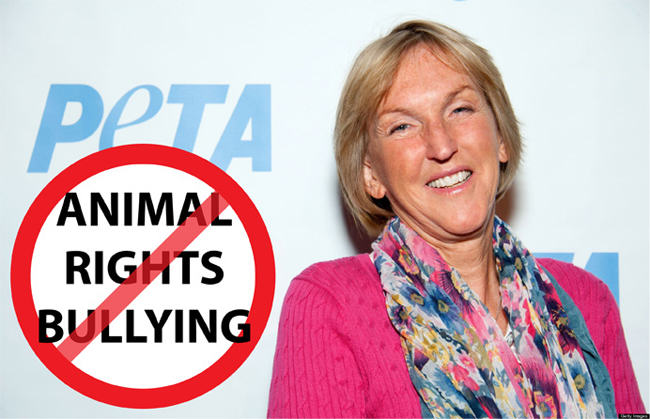
Ingrid Newkirk, queen of the animal-rights bullies.
Unfortunately, this could happen to anyone working with fur these days, especially retailers selling any sort of fur or fur-trimmed products.
A veteran North American retail furrier – who shall remain nameless here, to protect the innocent – has participated for the past ten years in a high-profile fund-raising fashion show, in support of a local charity. About a month before this year’s show, he spoke with the organizers who confirmed that they were looking forward to working with him again. Then the animal-rights bullies showed up.
Just two weeks before the event, he received a call from the fashion-show producer. She informed him that the Events Committee had decided they could not include his products in the show this year. “One of the sponsors is against fur,” she said, as if this explained everything. The committee had made their decision and nothing could be done, she told him bluntly.
And that might have been the end of the story, except this retailer is not the sort who likes to be told that “nothing can be done” ... especially when it involves mindless kowtowing to anti-fur bigots. Sensing that the show producer was not open to discussion, he went above her head and contacted the charity’s Events Coordinator. What he did next should be an inspiration to all furriers – and, indeed, to everyone who believes in democracy.
Here is a summary:
First, he introduced himself and explained that his company had supported this charity event since its inception, a decade ago.
Then, he suggested that it wasn’t wise for a medical charity like theirs (they support palliative care) to give in to activist pressure tactics. Animal-rights bullies also oppose laboratory animal research, he reminded her. PETA-boss Ingrid Newkirk is on record saying that she opposes animal research even if it can find cures for AIDS or other terrible diseases. (He had the Event Coordinator’s attention now.)
And what about the retailers who were showing wool and leather products? Would they also be banned from the show if that was the next activist demand? (Hmmm ... maybe this wasn’t so simple after all?)
Then he asked what they were serving for dinner for the fashion evening ... (She was chuckling now.)
It was time to drive home his main argument: “Listen,” he told her. “We’re not saying that everyone has to wear fur...or leather…or eat meat and dairy either. Each of us can have our own opinions and make our own decisions. Isn’t that what democracy is all about? But that doesn’t give us a right to impose our ideas on everyone else!”
She promised to speak with her superiors. And, sure enough, 24 hours later the retailer received a call from the charity’s CEO. It was Friday afternoon.
"Not the Way We Do Things"
“I wanted to call before the weekend so you wouldn’t have to worry; you’re back in the show,” she said. The activists were not “sponsors” of the event; they had bought a table, like many others. In any case, the Committee should never have made this sort of policy decision without consulting with her. “This is not the way we do things,” she said. The charity appreciated the support his company had offered for so many years; they were delighted that he was ready to participate again. Have a lovely weekend!
Two weeks later, the fashion-show evening was a wonderful success, with almost 500 people in attendance. “I was pleased to see that several of the charity’s board members placed bids for the fur scarf we contributed to the silent auction,” says the retailer.
“I was worried that the activists would make a fuss when my fur scene came on,” he says. “But there was nothing but applause. I found out later that the activists had cancelled their table when they learned that they couldn’t impose their will on the organizers. See how phony their support really was all along!”
The retailer sent a note to the CEO after the show, congratulating her on a wonderful evening – and thanking her for having the intelligence and integrity not to give in to the activists’ bullying tactics.
With fur season revving up again, we hope that his little story will provide encouragement to any retailer who is harassed by activists. Truth About Fur will be preparing a “tool kit” of resources you can use to defend your business, including blog posts like the one cited above.
And if you have a story about tactics that have worked for pushing back against activist bullies, please share it with us!
A recent on-line, anti-trapping rant by Born Free USA boss Adam Roberts (“What kind of person still traps wild animals?”, Huffington Post,… Read More
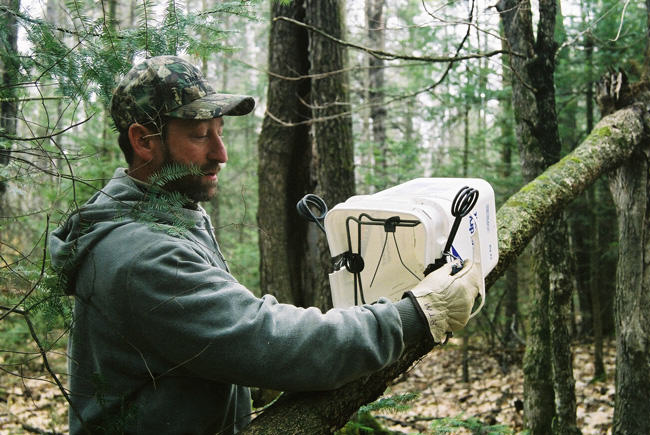
Randy Mersereau demonstrates a quick-killing box set for fisher or raccoon in New Brunswick. The trap is placed high on an inclined pole to keep it out of the reach of dogs that may be attracted by the bait. Photo: Truth About Fur.
A recent on-line, anti-trapping rant by Born Free USA boss Adam Roberts ("What kind of person still traps wild animals?", Huffington Post, Sept. 7, 2016) underscores how trappers are on the front line in the war against humans using animals – a war in which the weapons of choice are misleading images, inflammatory rhetoric, and exploiting the information gap between rural and urban cultures.
Roberts' attack drives home how important it is to explain, again and again, the vital role trappers play in responsible wildlife management and conservation.
Like other "animal-rights" groups, the folks at Born Free rage against a wide range of animal-use activities. This time, as part of their "Victims of Vanity 2" campaign, they are promoting an “undercover” trap-line video showing “atrocities” that they claim “occur regularly across America”.
“What kind of person purposely destroys a beaver dam and sets a ‘wall of death’ of Conibear traps," asks Roberts, "knowing that the unsuspecting beavers will return to repair their handiwork – only to be possibly smashed across their abdomens and drowned?”
The insinuation is that such traps cause terrible suffering. Born Free's own video, however, shows beavers that have clearly been struck by the trap bar across the back of the neck, breaking cervical vertebrae and causing rapid death, just as this quick-killing trap is intended to do. These traps were developed through several decades of (on-going) scientific research to provide the most humane possible methods for controlling wildlife populations.
Thanks to this pioneering work, the time-to-death produced by quick-killing traps like those shown in Born Free's video is now measured in seconds. Roberts knows, however, that most of his readers live in cities and have little real contact with nature. People who find their meat neatly wrapped in cellophane on grocery store counters are easily shocked by pictures of dead animals, no matter how humanely they were euthanized – especially when cued with sufficiently emotional rhetoric.
Ryan Minette sets live-holding foot trap for lynx in British Columbia. He works as a nurse when he's not out on the land. Photo: Truth About Fur.
Similarly, the live-holding devices used for capturing larger predators – like the coyote shown in Born Free's video – are not diabolical instruments of “torture”. Modern, live-holding foot traps are used by wildlife biologists to capture and release – unharmed – wolves, lynx, river otters and other animals for radio-collaring or reintroduction into regions where they were previously extirpated. To claim, as Roberts does, that such traps “have remained relatively unchanged for 400 years” is nonsense.
Should We Kill At All?
But what about the bigger question Roberts implicitly raises: should we really be killing wild animals at all?
In fact, there are many reasons why wildlife populations often must be managed. Overpopulated beavers can completely “eat out” vegetation in their region; the population will then crash and there may be no beavers at all for many years. Regulated trapping can smooth out these boom-and-bust cycles, maintaining healthier and more stable beaver populations. This is one reason why biologists believe there are now as many beavers in North America as there have ever been. There can, however, be too much of a good thing: beaver dams in the wrong places can flood roads, fields, and forest habitat. When your basement (driveway, back yard) is flooded, who’re ya gonna call: Mr. Roberts ... or your local trappers’ association?
Meanwhile, coyotes are the number-one predator problem for sheep and cattle ranchers, and many states and provinces have been obliged to offer bounties to keep their populations in check. Coyote, fox and raccoon populations are also culled to protect endangered ground-nesting birds or sea-turtle eggs. Overpopulated foxes, skunks and raccoons are prime vectors for rabies and other diseases that can be transmitted to humans and pets. For these and many other reasons, there will always be a need for trapping, whether or not anyone buys fur. Without a market for fur, however, these management efforts would be paid for by the government – i.e., by tax-payers – as they now are in many parts of Europe.
Trappers protect nature in other ways that are not often publicly recognized. While we all “care” about nature, most of us now live in cities. Trappers are our eyes and ears on the land, sounding the alarm when nature is threatened by inappropriate resource extraction or industrial activity. Trappers' associations across North America are on the front lines to ensure that forestry practices respect the needs of wildlife, for example by leaving a swath of uncut trees along watercourses. And, like the canary in the mine, trappers are the first to spot changes such as reduced reproduction rates among mink that may signal industrial pollution upstream. Harvesting data, including the sex and age distribution trends, provide vital information about the health of our wildlife populations.
Biologist Serge Larivière teaches youngster Vivianne Lachance how to trap muskrats along an agricultural drainage ditch in Agapit, Quebec, 2006. Photo: Truth About Fur.
Most important of all, nature is not a museum. Most wildlife species produce more young each year than their habitat can support to maturity. The ones that don’t survive feed those that do. We are part of nature and we too can make use of the surpluses that nature produces – year after year, generation after generation – so long as we protect the habitats and ecosystems that provide those surpluses. This is called “the sustainable use of renewable natural resources”, a central conservation principle promoted by the International Union for Conservation of Nature (IUCN) and other conservation authorities. (By contrast, the synthetic materials that animal activists would have us wear are usually derived from petroleum, a non-renewable resource.)
Animal Abuse
Does all this give us the right to abuse animals? Absolutely not.
The Born Free video also shows a trapped coyote being kicked, prompting Roberts to ask, "What kind of person watches a tethered and helpless coyote writhe in pain and distress, unable to move because of the intensely unforgiving steel jaws clamped to her paw, kicks her in the side, and then finally shoots her in the chest so that her lungs fill with blood, and she dies a miserable, suffocating death?"
Most trappers would be disgusted by this scene. There is no excuse for kicking an animal, ever. Furthermore – Roberts' "intensely unforgiving" rhetoric aside – every trappers' association and trapper-training manual teaches that live-trapped animals should be killed quickly and humanely with a direct shot to the head. But this completely unacceptable behavior of one individual does not give Roberts or Born Free the right to smear the reputations of more than 200,000 North American trappers.
On the contrary, as society becomes more interested in protecting our natural environment, it is time that we learn more about these remarkable and knowledgeable men and women – the small minority among us who continue to live close to the land.
What kind of person still traps today? Far from the grotesque caricatures that animal activists like to portray, in many real and practical ways, today’s trappers are the true guardians of nature.
Is fur an ethical clothing choice? The media often seem confused about this question, acknowledging the resurgence of fur in designer collections while uncritically reporting sensationalist animal activist complaints about this trend. The implied (and often explicit) message is that consumers are less bothered about whether fur is an ethical clothing choice, and more concerned about looking good. In short, "fashion trumps ethics". But is this true?
To answer this question, we must take a step back and ask what makes it ethical to use any animal product.
Some of the best work on this subject was done by the Royal Commission on Seals and the Sealing Industry in Canada (1984-86). Public-opinion research conducted in six Western countries (the UK, France, West Germany, Norway, Canada and the US) showed that “there is no agreement on whether it is ethical or moral to kill seals. The choice is a matter of personal conviction.” [Report of the Royal Commission, Vol. 1, p. 23, 1986.]
The Royal Commission also found, however, that there is “substantial weight of opinion that if the killing of any wild animals is to be accepted as ethical, it should satisfy the following conditions”:
The existence of the species should not be threatened;
No unnecessary pain or cruelty should be inflicted;
The killing should serve an important use;
The killing should involve a minimum of waste.
Let’s see how the modern North American fur trade stacks up when measured against these widely accepted ethical criteria.
The Existence of the Species Should Not Be Threatened
This is a “conservation” or “sustainable use” argument. Simply put, there is no future in using up resources we depend on for our survival.
Canada's raccoons, coyotes and foxes are believed to be more abundant now than ever before. Photo: garyjwood.
About one-half of the furs produced in North America today comes from farms, so there's no threat of extinction there. Furs taken from the wild, however, also come from abundant populations. Government-regulated trapping seasons ensure that we use only part of the surpluses produced each year in nature. Most species produce more young than their habitat can support to maturity. Animals that don’t survive feed those that do. Humans are part of this cycle and we too can use the surpluses that nature produces, year after year, generation after generation – so long as we protect and maintain the natural ecosystems that produce this bounty.
This is called “the sustainable use of renewable natural resources”. It is a central pillar of modern conservation policy that was first promoted by the landmark World Commission on Environment and Development [Our Common Future, 1987], and now directs the work of the International Union for Conservation of Nature (IUCN).
Thanks to excellent national and international regulations, North American furbearers that were once depleted in parts of their ranges have been restored, and more! Biologists believe that beavers are now as abundant as when Europeans first arrived, while coyotes, foxes and raccoons are more numerous in Canada than they have ever been. This is a real environmental success story.
So without question, the modern, well-regulated fur trade meets our first ethical criterion: the existence of species is not threatened.
No Unnecessary Pain or Cruelty Should Be Inflicted
This is the “animal welfare” argument, i.e., the belief that we have a right to use animals for food and other purposes, but only if we cause them as little suffering as possible.
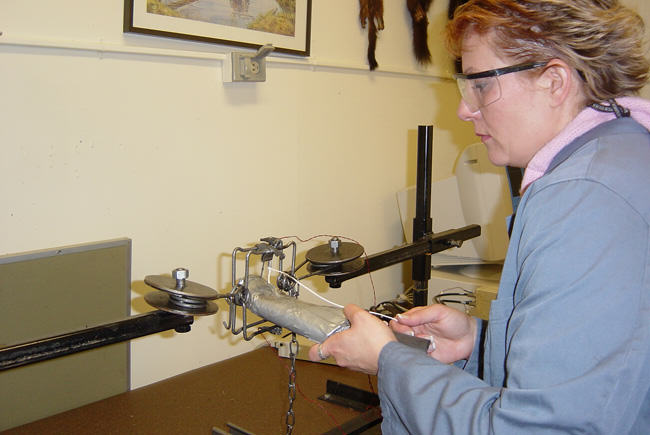
North America is the world leader in research to make trapping as humane as possible. Here a researcher measures the velocity of a rotating jaw trap at a state-of-the-art facility in Vegreville, Alberta.
The modern fur trade has taken very seriously its responsibilities to prevent unnecessary pain or suffering. North America is the world leader in scientific research to make trapping as humane as possible. This research provided the scientific protocols for ISO standards, Best Management Practices, and the Agreement on International Humane Trapping Standards (1997).
Based on this research, state and provincial wildlife authorities determine which traps may be used for each species. Most species can now be taken in quick-killing traps or “sets”. For the others (e.g., larger predators including coyotes, foxes, lynx, and bobcats), live-holding traps have been significantly improved to prevent injuries. The new live-holding foot-hold (or “leg-hold”) traps, for example, are often used by biologists to capture and release (unharmed) wolves, lynx, river otters and other animals for radio collaring or re-introduction into regions where they were once (often intentionally) extirpated.
On fur farms, mink and foxes are provided with excellent nutrition and care; this is the only way to produce the high-quality fur required to compete in international markets. Farms in the US are certified by Fur Commission USA, while in Canada farmers follow codes of practice developed by the National Farm Animal Care Council.
So the North American fur trade also satisfies our second ethical criterion: the responsibility to prevent unnecessary pain or cruelty is taken very seriously in the modern fur trade.
If Animals Are Killed, They Should Serve an Important Use
Activists often claim that it is unethical to kill animals for fur because "no one needs a fur coat". Fur coats are portrayed as "unnecessary luxuries"; raising and killing animals for fur is therefore characterized as “frivolous use”. But is fur really a frivolous or unnecessary product?
Humans need clothing to survive, and in many regions warm clothing is essential. Of course there are other materials to keep us warm, but the best of them (wool, down, leather) also come from animals. Meanwhile, most synthetic fibres (including fake or “faux” fur) are derived from petroleum, a non-renewable resource, the extraction and transformation of which entails serious environmental risks.
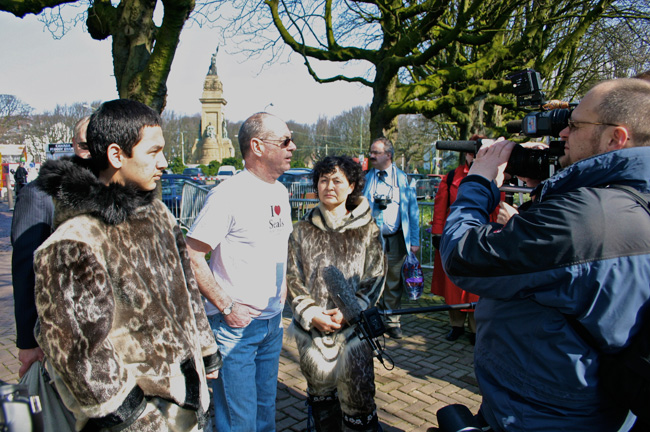
The clothing, food, income and cultural identity provided by sealing are anything but "frivolous" for Inuit and other coastal people. Here Jim Winter, founding president of the Canadian Sealers Association, argues their case in the Hague in 2007, flanked by Aagu and Aaju Peter.
Trapping, hunting and fur farming, it should be remembered, also provide food and important income for people living in rural or remote regions where alternative employment may be hard to find; fur is certainly not “frivolous” for them.
Then there is the need, in many regions, for furbearers to be culled annually to maintain healthy and stable populations, to preserve their habitat, to protect endangered species (e.g., by culling predators that attack ground-nesting birds or endangered sea turtle eggs), and to safe-guard human health, livestock and property. If furbearer populations must be culled, surely it is more ethical to use these animals for clothing than to discard them.
Last but not least, fur clothing is remarkably long-lasting, can be worn “vintage” or taken apart and remodeled as styles change, and will eventually biodegrade – all important environmental virtues.
So, in multiple ways, the modern fur trade satisfies our third ethical criterion: the animals serve important purposes.
If Animals Are Killed, There Should Be a Minimum of Waste
Most North Americans eat meat and therefore generally consider it ethical to use leather, a “by-product” that would otherwise be wasted. Fur, however, may seem more problematic if the rest of the animal is not used, as is often assumed. In fact, many wild fur-bearing animals (beaver, muskrat and other species) also provide food for First Nations and other people, especially in northern regions where cattle and other livestock cannot easily be raised. Wild furbearers not consumed by humans are returned to the bush where they are eaten by mice, birds and other animals. Nothing is wasted.
Biofuels made from mink remains are used to run buses in Aarhus, Denmark. Photo: Peter Berggren Brandsen.
Meanwhile, farmed mink and foxes are fed left-overs from our own food supply – the parts of chickens, pigs, fish and other animals that we don’t eat and that might otherwise go into landfills. In addition to fur, farmed mink provide oil for cosmetics and the preservation of leather. Their manure, soiled straw bedding and carcasses are composted to produce organic fertilizers, to enrich the soil and produce more food, completing the agricultural nutrient cycle. Biofuels made from mink remains now power buses in Aarhus, Denmark, the world’s largest producer of farmed mink. Similar projects are being tested in North America.
So the modern fur trade satisfies our fourth ethical criterion: there is minimal waste.
As this brief summary shows, the modern North American fur trade satisfies all four of the criteria required to determine that fur is an ethical clothing choice.
Of course, this does not mean that anyone is obliged to wear fur. As the Canadian Royal Commission determined some 30 years ago, that decision is ultimately “a matter of personal conviction”. This has been confirmed by public opinion research conducted in recent years showing that about 80% of North Americans agree that wearing fur should be a question of personal choice.
True life stories of a Métis trapper and his love for the land, his family and friends A primary goal… Read More
True life stories of a Métis trapper and his love for the land, his family and friends
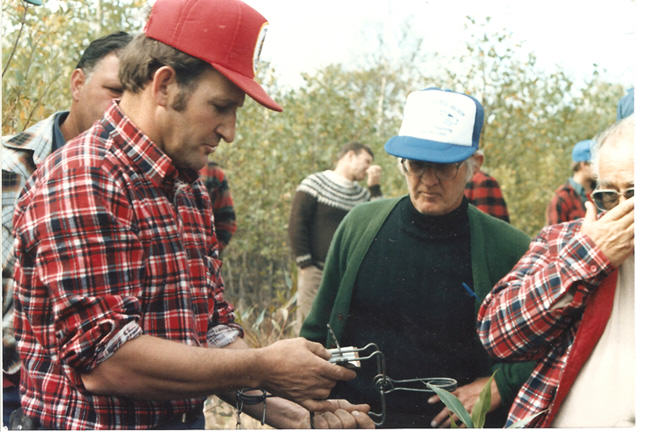
Holding a trapping workshop in 1986 with war veteran Roland Giroux. Here Alcide demonstrates a small Conibear trap used for marten.
A primary goal of Truth About Fur is to give a voice to the real people of the fur trade. So what a pleasure it is to tell you about a newly published autobiography by one of Canada’s foremost trappers and trapping advocates, the legendary Alcide Giroux.
My First Sixty Years Enjoying Nature as a Trapper promises, and delivers, a passionate and epic tale of a life lived in close harmony with the land: hunting, fishing and trapping. And thanks to Alcide's extraordinary memory, he shares many wonderful adventures with us in vivid detail.
God's Country
The story begins in December 1951, near Sturgeon Falls, Ontario. Alcide was just six years old when his father moved their family onto the old homestead his grandfather had cleared and built in the early 1920s. There was no electricity or indoor plumbing, and young Alcide and his siblings had to cross the Sturgeon River in a small homemade boat before walking to school – a walk that provided opportunities for the young Alcide to snare rabbits to complement the moose and beaver in his mother’s stew pot. It was God’s Country back then, Alcide tells us, with wilderness and wildlife all around. Their trap lines began at the farmhouse door.
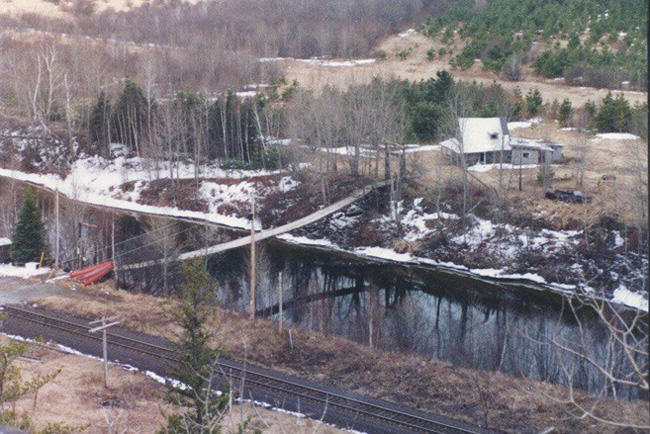
A few years later, Alcide’s Dad built a remarkable suspension bridge to facilitate the family’s commuting. “We had so many curious and nosy visitors; they all came to see the 8th Wonder of the World ... well the 8th wonder of River Valley!” Alcide recalls.
I enjoyed reading about this remarkable DIY engineering feat all the more because I walked across this same bridge many years later when I visited Alcide’s trapline, in the 1980s.
Eighth Wonder of the World! The old Giroux farmhouse, seen here in 1979, with the bridge Alcide's father built in 1960.
In the pages of his new book, Alcide pays tribute to many kind and talented woodsmen, but none more than his own father, “a great trapper with a built-in GPS in his brain.” Philippe Giroux was a Métis who instilled in his sons the importance of respecting the animals they depended upon, which meant trapping as humanely as possible. “Because we only had leg-hold traps back then, Dad showed us how to build underwater sets that ensured a quicker death for muskrats, mink and beaver.”
Alcide Giroux clearly learned his Dad’s lessons well; he became one of Canada’s foremost advocates for humane trapping. By the time he was 30, in 1975, he was writing articles in trappers’ magazines and leading workshops across Ontario and beyond, promoting the importance of researching and implementing better trapping techniques.
"I Had Gained Their Trust"
In 1980, as newly-elected president of the Ontario Trappers Association (OTA), his first speech called on trappers to take the lead in humane trapping, rather than have changes imposed on them by others. He remembers that his beloved wife, Pat, sitting at the back of the hall, was worried about how this call for change would be received. But Alcide’s sincerity and straight talk won the day.
“There were no hard feelings, no arrows thrown, but lots of applause and many handshakes," recalls Alcide. "I could breathe again; I had gained the trust and confidence of my fellow trappers.”
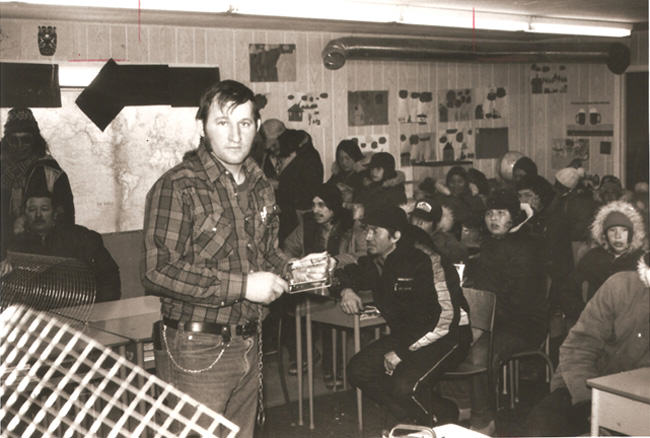
Leading a workshop for First Nations trappers in northern Ontario, 1980.
When the Fur Institute of Canada was created in 1982, to implement recommendations of the Federal-Provincial Committee on Humane Trapping (1974-1981), Alcide became a founding member, and later vice-chair. Accompanied by Pat, he travelled the world to lend his expertise to trap-research and conservation meetings in New Zealand, Europe, Louisiana, Australia and elsewhere. When scientists, politicians or journalists wanted to see a trap line first-hand, more often than not it was Alcide and Pat who received them.
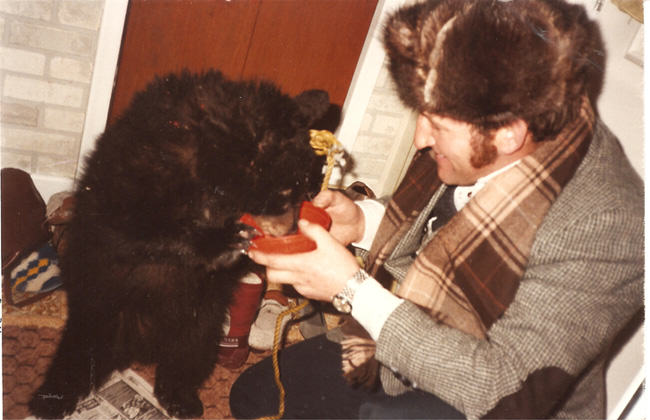
Alcide’s story bursts with good humour and a passion for life, whether he’s describing the orphaned bear cub, Ben, that his family adopted, or the time that famed country singer Murray McLauchlan came for a visit and wrote a song about Alcide for his 1984 album about true Canadian heroes. The song, Little Brothers of the Wood, includes the lines:
I only take what I need, don’t take no more The woods ain’t a shelf in a grocery store. I only take what I need because come the spring I want to see beaver cubs in that pond again.
In 1983, Alcide found a new friend in bear cub orphan Ben.
Alcide’s strength of character is also evident as he faces life’s more difficult moments: political battles in the OTA, a fire that destroys the old family farmhouse, and especially Pat’s courageous battle with cancer.
Front-Line Defenders
In recognition of Alcide’s outstanding contributions, in May 2005 he was presented with the Fur Council of Canada’s “Furrier of the Year” award, at the North American Fur & Fashion Exposition in Montreal (NAFFEM). In his speech to more than 600 fur manufacturers, designers, retailers and government officials, Alcide reminded them that trappers did more than provide the beautiful furs on display in the hall. They were also front-line defenders of the industry, using responsible practices and educating the urban population – including furriers – about the importance of using nature's gifts sustainably.
Proud father, proud son! Alcide's 16-year-old son Serge (left) bags his first moose, 1988.
Speaking of nature’s gifts, for the gala fashion show that evening we had arranged for Alcide and Pat to sit with another celebrity: Miss Universe Canada, the beautiful Natalie Glebova. “Since trapping is always on my mind, I looked at Natalie and thought she would be good in the snow with legs like that!” Alcide remembers, with a chuckle.
The setting for most of this book, however, is in the bush, and anyone who enjoys the outdoors will appreciate Alcide’s keen observations about nature and wildlife.
To order your copy of My First Sixty Years Enjoying Nature as a Trapper, by Alcide P. Giroux (AKA “Ti-Lou”), please email [email protected]. Include your phone number and mailing address so we can send you an invoice to prepay before the publication is shipped to you. The price is $25CAD plus shipping and handling. Please contact us at [email protected] for US or international shipping rates.
Le livre d’Alcide Giroux est aussi disponible en français.
Neal Jotham has played a central role in promoting animal welfare through Canada’s world-leading trap research and testing program for… Read More
Neal Jotham has played a central role in promoting animal welfare through Canada’s world-leading trap research and testing program for the past 50 years. From his first voluntary efforts with the Canadian Association for Humane Trapping (1965-1977) and as executive director of the Canadian Federation of Humane Societies (1977-1984), to chairing the scientific and technical sub-committee of the Federal-Provincial Committee for Humane Trapping (1974-81) and ISO Technical Committee 191 (1987-1997), to serving as Coordinator, Humane Trapping Programs for Environment Canada's Canadian Wildlife Service (1984-1998), and his continuing work as advisor to the Fur Institute of Canada, Neal has been a driving force. At times mistrusted by animal-welfare advocates and trappers alike, he always remained true to his original goal: to improve the animal-welfare aspects of trapping. Truth About Fur’s senior researcher Alan Herscovici asked Neal to tell us about his remarkable career as Canada’s most persistent humane-trapping proponent.
Truth About Fur: Tell us how you first got involved in working to improve the animal-welfare aspects of trapping.
Neal Jotham: It was 1965, the year the Artek film launched the seal hunt debate. I was concerned about what I saw and wrote a letter to the Fisheries Minister. A colleague – I was an architectural technologist – suggested that I send my letter to a group concerned about trapping methods, the Canadian Association for Humane Trapping (CAHT). I was invited to one of their meetings and met some wonderful volunteers including the legendary Lloyd Cook, who was then president of the Ontario Trappers Association (OTA).
Lloyd was a kind and gentle man, mentoring boy scouts about survival in the woods and introducing the first trapper training programs in Ontario. Once he rescued two beaver kits from a forest fire and raised them in his bathtub until they were old enough to release into the wild. He invited the CAHT to set up an information booth at the OTA annual convention, and he took me onto his trap line, near Barrie, Ontario.
Lloyd and I discussed how great it would be to do some proper research about how to minimize stress and injury to trapped animals. I thought it would be quite a simple matter. Little did I know that it would occupy the better part of the next 50 years of my life.
TaF: So you got involved with the CAHT?
Jotham: I was asked to serve as voluntary vice-president of administration, in charge of publicity and communications. Our main priority was to make the governments, industry and the public aware of the need for animal welfare improvements in trapping, because very few people were even talking about trapping at the time.
TaF: How did you go about raising awareness?
Jotham: We produced brochures explaining the need for improvements. We never called for a ban on trapping – we recognised the cultural, economic and ecological importance – but we were honest about the suffering the old traps could cause and the need for change.
In 1968, because governments and industry were still not engaged, CAHT joined with the Canadian Federation of Humane Societies (CFHS) to establish the first multi-disciplinary trap-research program at McMaster University (to look at the engineering aspects of traps) and Guelph University (to investigate the biological factors).
In 1969, we were contacted by an Alberta trapper and wildlife photographer named Ed Cesar. He had ideas for new trap designs and also wanted to make a film about trapping that he hoped could be televised. CAHT asked if he could film animals being caught in traps, which he did.
CAHT purchased three minutes of this film and I showed it at a federal/provincial/territorial wildlife directors conference in Yellowknife, in July 1970. That resulted in an immediate $10,000 donation to the CFHS/CAHT pilot project from Mr. Charles Wilson, CEO of the Hudson’s Bay Company, then based in Winnipeg, and some smaller donations too.
TaF: But the governments still weren’t involved?
Jotham: No, so we went public. CAHT added narration and sound to the film, titled it They Take So Long to Die, and showed it on Take-30, a CBC current affairs show. That got attention, all right! In 1972, we were invited to a Federal-Provincial Wildlife Conference where we were criticized for “hurting trappers”. We explained that we just wanted to make trapping more humane, we had only broadcast the film because government wasn’t listening.
TaF: How did trappers feel about your efforts?
Jotham: Many trappers understood what we were saying. In fact, Frank Conibear, a NWT trapper, had been working on new designs since the late 1920s, and by the 1950s produced a working model of the quick-killing trap that still carries his name. He got the idea from his wife’s egg-beater, the concept of “rotating frames”: if an animal walked into a big egg-beater and you turned the handle fast enough, it would be there to stay, he figured.
The Association for the Protection of Furbearing Animals (APFA) paid to make 50 prototypes of Conibear’s design and, in 1956, Eric Collier of the British Columbia Trappers Association supported field testing and promoted the new traps in Outdoor Life magazine. Lloyd Cook was another trapping leader who wrote positively about the new traps, and the CAHT offered to exchange old leg-hold traps for the new killing devices, for free.
In 1958, Frank Conibear gave his patent to the Animal Trap Company of America (later Woodstream Corporation), in Lititz, Pennsylvania – for royalties – and a light-weight, quick-killing trap became widely available for the first time. The Anti-Steel Trap League (that became Defenders of Wildlife in the 1950s) had been sounding the alarm about cruel traps since 1929, but it was trappers who did much of the earliest work.
Neal Jotham investigates the effectiveness of AIHTS-certified traps set in the entrance tunnels of a beaver lodge, on the trap-line of Fur Institute of Canada chair Bruce Williams, near Moncton, New Brunswick, fall 2000.
TaF: So trappers associations supported efforts to improve traps?
Jotham: Several did. In the old days, trappers had been very jealous about guarding their secrets; you could only learn the tricks of the trade if you found an older trapper to take you under his wing. But with the emergence of associations, trappers began to share more information. They realized that everyone could benefit if trapping methods were improved. Effective quick-killing traps improved animal-welfare, of course, but they also prevented damage to the fur sometimes caused when animals struggled in holding traps. And trappers did not have to check their lines every day, like they did with live-holding (foothold) traps.
TaF: And you finally succeeded in getting the government involved?
Jotham: Yes, we did. In 1973 the creation of the ad-hoc “Federal-Provincial Committee for Humane Trapping” (FPCHT) was announced.
A five-year program was launched in 1974, with work to be done at McMaster University, in Hamilton, and at the University of Guelph, where our CFHS/CAHT pilot project had started.
I was asked to act as executive director and to chair the Scientific and Technical Sub-Committee, because we had already made some real progress in developing methodology and technology to evaluate how traps really work. For example, measuring velocities and clamping forces and other mechanical aspects of traps. In fact, at McMaster we made some important improvements to Frank Conibear’s rotating-jaw, quick-kill traps that are still used today.
TaF: And what happened to your film?
Jotham: When the government committed to funding the FPCHT we cancelled plans to distribute our film more widely. Meanwhile, we learned that Ed Caesar had staged some of the “trap line” scenes; he indicated in a letter that he had live-captured some of the animals and placed them into traps so he could film them.
Some people were disappointed that we had withdrawn our film, and the Association for the Protection of Furbearing Animals (APFA) decided to continue their campaign: they used Caesar’s staged images to make a new film, Canada’s Shame, narrated by TV celebrity Bruno Gerussi. The APFA (aka: FurBearer Defenders) has given up any pretense of working to improve trapping methods; they now oppose any use of fur. Their current position brings to mind the comment by American philosopher George Santayana: “Fanaticism consists of redoubling your efforts when you have forgotten your aim.”
TaF: So what did the FPCHT research program achieve?
Jotham: It was 1975 by the time it really got rolling, and the final report was made in June, 1981, in Charlottetown. Over that period, not only were existing traps evaluated, but a call went out to inventors to submit new trapping designs. 348 submissions were received, over 90 per cent of them from trappers! All these ideas were evaluated and 16 were retained as having real humane potential. But the FPCHT was still an ad hoc project; it was becoming clear that a more formal body would be needed to direct on-going trap research and development. So, in 1983, the federal and provincial governments agreed to create the Fur Institute of Canada (FIC), with members from government, industry and animal-welfare groups.
Vegreville, Alberta is home to the world's first state-of-the-art trap research facility, established by the Fur Institute of Canada in partnership with the Alberta Research Council.
TaF: How did you get involved with the new Fur Institute of Canada?
Jotham: In 1977, I had become the first full-time Executive Director of the Canadian Federation of Humane Societies (CFHS), where I had a wide range of responsibilities, but of course I remained very interested in trapping. So I was pleased to serve on the founding committee of the FIC, and then to be hired by the Canadian Wildlife Service (Environment Canada) to manage the government’s funding contributions to the FIC’s newly established trap research and testing program. Initially, the Government of Canada committed $450,000 annually for three years to get things started, and this was matched by the London-based International Fur Trade Federation (IFTF).
TaF: What was new about the Fur Institute of Canada’s program?
Jotham: First, we established of the world’s first state-of-the-art trap-research facility in Vegreville, Alberta, which includes a testing compound in a natural setting. All our testing protocols were approved by the Canadian Council on Animal Care (CCAC), the same group that approves animal research protocols in Canadian universities, hospitals and pharmaceutical laboratories.
Mechanical simulators now allow trap performance to be tested and refined in the laboratory. Left to right: measuring clamping force of a rotating jaw trap, velocity of a rotating jaw trap, and clamping force of a restraining trap.
In 1995, another dramatic breakthrough was made: the researchers had collected enough data to develop algorithms that allowed evaluation of the humane potential of traps without using animals at all; we can now analyse the trap’s mechanical properties with computer simulation models. This made it unnecessary to capture, transport and house thousands of wild animals – while saving millions of dollars.
Computer modeling and simulation means research can now be conducted without the need for live animals. Clockwise from top left: A Conibear 120 quick-kill trap; marten head; underwater set for muskrat; running pole set for marten.
Jotham: Canadian research was vital for the AIHTS. We had begun working on trapping standards as early as 1981, with the Canadian General Standards Board (CGSB), and by 1984 we had the first standard for killing traps. But with calls growing in Europe for a ban on leg-hold traps – and because virtually every country in the world uses trapping for various purposes – the CGSB suggested that there was a need for an international standard. To this end, ISO Technical Committee 191, of the International Organization for Standardization, was established in 1987, with yours truly as the first Chairman.
Our timing was good; by 1991, a EU Directive was being proposed that would not only ban the use of “leg-hold” traps in Europe, but would also block the import of most commercially-traded wild furs from any country that had not done the same. Because the stated goal of the legislation was to promote animal welfare – and because all EU member states permit the trapping of animals with methods basically the same as those used in Canada – Canadian diplomats succeeded in having the EU Directive amended to admit furs from countries using traps that “meet international humane trapping standards”.
The problem was that no such standards existed yet, and animal activists on ISO Technical Committee 191 refused to allow the word “humane” to be used in our documents. The deadlock was resolved by agreeing that ISO would develop only the trap-testing methodology, leaving it to individual governments to decide what animal-welfare thresholds they would require.
In 1995, the governments of the EU and the major wild-fur producing countries (Canada, the USA and Russia) developed the AIHTS, which was signed in 1997, and ratified by Canada in 1998. (For constitutional reasons, the US signed a similar but separate “Agreed Minute”.) The AIHTS explicitly requires that ISO trap-testing methodology must be used to test traps.
TaF: What are the main contributions of the AIHTS?
Jotham: The AIHTS is the world’s first international agreement on animal welfare, I think we can be very proud of that. Concerns about the humaneness of trapping that had been raised since the 1920s, are now being addressed seriously and responsibly. And, of course, the Agreement kept EU markets open for wild fur; Article 13 states that the parties will not use trade bans to resolve disputes, so long as the AIHTS is being applied. In other words, science and research, not trade bans, will be used to promote animal welfare. This is a very positive development.
Neal presenting the inaugural Neal Jotham Award for the Advancement of Animal Welfare at the Fur Institute of Canada meeting in Saskatoon, Saskatchewan, June 2015.
Jotham: It is wonderful that the trapping community has embraced animal-welfare so strongly. And the award is very gratifying personally, of course, especially when I remember how suspicious some trappers were when I first arrived at the FIC. They were convinced that I was an activist mole, while many of my old animal-welfare friends thought that I had “sold out” to the fur industry. But whether I was with the CAHT, the CFHS, the CWS or the FIC, I was always pursuing the same goal: to make trapping as humane as possible. It was a long road, but we succeeded in bringing all the stakeholders to the table to seriously address this important challenge. I think we can be very proud of what we have achieved together.
To provide the best experiences, we use technologies like cookies to store and/or access device information. Consenting to these technologies will allow us to process data such as browsing behavior or unique IDs on this site. Not consenting or withdrawing consent, may adversely affect certain features and functions.
Functional
Always active
The technical storage or access is strictly necessary for the legitimate purpose of enabling the use of a specific service explicitly requested by the subscriber or user, or for the sole purpose of carrying out the transmission of a communication over an electronic communications network.
Preferences
The technical storage or access is necessary for the legitimate purpose of storing preferences that are not requested by the subscriber or user.
Statistics
The technical storage or access that is used exclusively for statistical purposes.The technical storage or access that is used exclusively for anonymous statistical purposes. Without a subpoena, voluntary compliance on the part of your Internet Service Provider, or additional records from a third party, information stored or retrieved for this purpose alone cannot usually be used to identify you.
Marketing
The technical storage or access is required to create user profiles to send advertising, or to track the user on a website or across several websites for similar marketing purposes.