



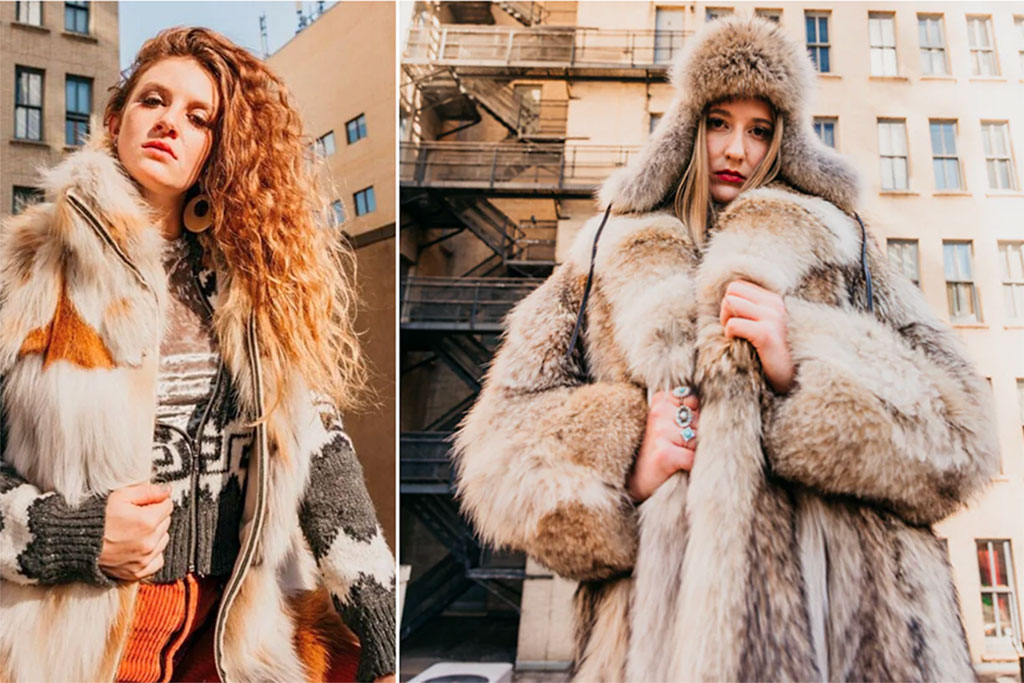
A flurry of media stories last Winter announced, with evident surprise, the sudden reappearance of fur on designer runways and in the streets, with Gen Z consumers leading the way. Could the fashion pendulum really be swinging so far? Are new opportunities really opening for those in a trade that has suffered from years of unfair and misleading anti-fur campaigning?
The New York Times (Feb. 16) led the pack with a piece entitled “What happened to the stigma of wearing fur?” “[I]n January,” it observed, “women and men all over town were busting their furs out of storage in what felt like an abrupt reversal of social values.” For years, journalist Jessica Iredale wrote, wearing fur in the US and Europe had felt taboo. “Except, suddenly, people don’t seem to care – especially if the wearer can assert the mantle of ‘vintage’, as no animals were freshly killed and upcycling old clothes is more virtuous than buying new.”
The Wall Street Journal (Feb. 18) followed suit with “Fashion turned on fur. Young customers want more“. Then the New York Post (Feb. 19) ran with “Real fur is making a comeback after years of exile. ‘You’ll see it on the runway again’“.
The stories just kept on coming. On Feb. 28, Women’s Wear Daily featured lamb shearling on its cover, declaring that “Furry textures – some real, some faux” were all over the runways at New York Fashion Week. “Welcome to the latest downtown uniform as a new generation looks at fur a different way.”
It was the same across the pond. On Feb. 21, for example, The Standard of London reported “How luxury fell back in love with real fur and crocodile skins”. “Despite the bans and the rise of faux fur, it looks like fashion is falling in love with the real thing again,” declared journalist Rebecca Cope. Pip Chawner, whose brand Philippa London repurposes vintage fur, agreed: “If you walk up and down King’s Road, pretty much every fifth person is wearing a piece of fur.”
Fur was also prominent at the Paris and Milan fashion weeks, at upmarket Aspen and St. Moritz ski resorts, and on celebrities including Rihanna and Kendall Jenner.
So, what did happen to the stigma of wearing fur, as the New York Times asked? Or perhaps, for someone like me who has spent much of the past 40 years defending this much-maligned North American heritage industry, a better question would be: “What took so long?” But I am getting ahead of myself.
SEE ALSO: Adventures of a pro-fur warrior. By Alan Herscovici, Truth About Fur, 2017.
Microplastics Scare
Until recently, promoters of fake fur – or “faux” fur, as they call it – insisted that the main reason for choosing it over the real thing was that it was “cruelty-free”.
But there is growing awareness that fake fur, like most synthetic textiles that now account for some 60% of our clothing, is made from petroleum. As such, it doesn’t biodegrade, and it sheds clouds of microplastics each time it’s washed or worn. These tiny pieces of plastic are now being found in marine life, and even in breast milk. Cruelty-free, indeed!
SEE ALSO: What is “vegan fashion” and how true is the hype? Truth About Fur.
As trend forecaster Tiffany Hill, interviewed by The Standard, put it: “Some consumers are questioning whether banning fur was truly an environmental win, given the environmental impact of synthetic alternatives. As concerns over fast fashion and microplastic pollution grow, some argue that natural fur – when sourced responsibly – is actually a more sustainable option.”
Sweet words indeed!
Shearlings and Vintage

But the fight is not over yet. While fur is creeping back into the fashion limelight, decades of anti-fur campaigning have left their mark. The confusion these campaigns have caused can be seen in the way fur is now being embraced with claims that vintage fur is more virtuous than new, and that shearling is not really fur at all!
As any fashionista knows, vintage furs have been a huge hit for the past few years, and their appeal is obvious. As designer Carly Mark spelled out in the New York Times, the draw of vintage fur is that “it already exists”.
Rebecca Cope of The Standard agrees. “Gen Z have embraced fur more wholeheartedly than other generations for a specific reason – it can be argued that vintage fur is entirely sustainable, while the majority of faux fur alternatives are not, due to the plastic content.”
In other words, vintage fur satisfies the ecologists’ call to reduce the enormous waste generated by disposable “fast fashion”. The next step, of course, will be to recognize that the same arguments support using new furs too: A quality fur coat can be worn for decades, and can even be taken apart and completely restyled as fashions change – an important environmental advantage.
A long-term problem with vintage furs, obviously, is that supplies will run out if folks stop buying new furs. On the plus side, vintage gets unused older furs out of the storage vaults and onto the streets, to remind people of the warmth and beauty of this remarkable natural material.
SEE ALSO: 5 great ways to recycle old fur clothing. Truth About Fur.
The renewed popularity of shearling is another example of how fashionistas are rationalizing their return to fur … by pretending that it isn’t fur at all!
“Well, it’s shearling, not fur,” said Matteo Tamburini, creative director of Italian fashion house Tod’s, in Vanessa Friedman’s New York Times report from Milan Fashion Week (Mar. 2). “It’s all shearling,” echoed Maximilian Davis, creative director of Ferragamo. “Fur is something we can’t use today, we shouldn’t use today …”
Shearling definitely is fur, of course, just like mink or fox or any other fur: they are all animal skins tanned (dressed) with the fur (wool, hair) still attached. Shearling, however, comes with the handy moral buffer that it’s just left-over packaging from someone’s rack-of-lamb.
This by-product-of-food-production argument doesn’t cut it with animal-rights groups, since PeTA et al. also want to “cancel” the use of animals for food. But few people seem ready to follow PeTA’s call to such heights of ethical purity. A recent Gallup poll found that only 4% of Americans now say they are vegetarian (no meat in their diet), while just 1% identify as vegan (no dairy, eggs, or other animal products).
Perhaps it’s time for furriers to promote the “food-by-product” story to beaver, muskrat, sealskin, and other fur animals which are also eaten?!
SEE ALSO: Top 5 tasty furbearers. Muskrat stew and more. Truth About Fur.
Turning Point
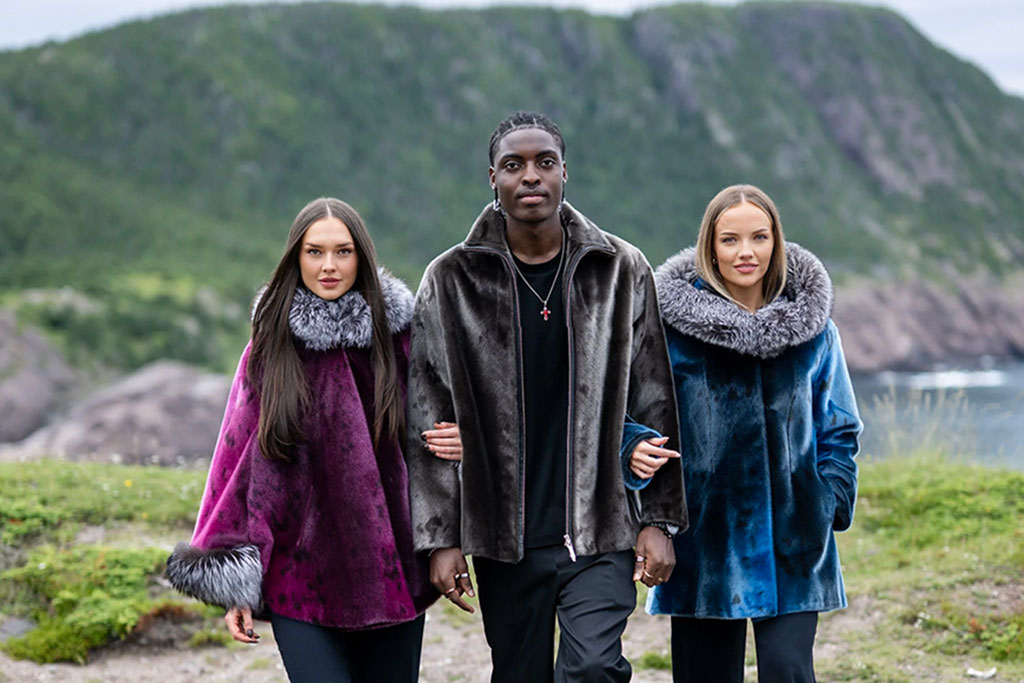
For those of us who have tried for years, often with little success, to explain the fur trade’s ecological credentials, it is music to our ears to read in a prominent newspaper that, “Some consumers are questioning whether banning fur was truly an environmental win, given the environmental impact of synthetic alternatives.”
For too long, facts were no match for sexy photos of celebrities who would “rather go naked than wear fur”.
But now we may be at a turning point. Just when it looked like fur was headed for the dustbin of history, the tectonic plates of societal consciousness have shifted again.
Of course there are still serious obstacles to overcome. For example, anti-fur activists continue to call for bans on fur production and sales in many regions, and prominent fashion media like Vogue are refusing to cover fur fashion or even accept advertisements.
But younger consumers are clearly ready to look at fur differently.
It’s now up to the fur trade to take advantage of this new openness to promote the comfort, beauty, and, yes, the environmental and ethical credentials of this remarkable heritage industry.




There is Huge trend to fur in Europe, Including Germany Paris London The Ski Resorts…and it isn’t just vintage. In September in Amsterdam young women were spotted wearing fur stoles & capes ! And of course Italy. Influencers are pushing fur here. And now we hear European Designers are going Back into Fur “because its better for the environment “. Welcome back !!
Thanks for the continue fight for real fur.